Contents
Download PDF
pdf Download XML
149 Views
28 Downloads
Share this article
Research Article | Volume 2 Issue 1 (Jan-June, 2022) | Pages 1 - 5
Extraction, Diagnose and Evaluation of the Effectiveness of Aromatic Herb Pelargonium Graveolens as an Antiseptic and Disinfectant
 ,
 ,
 ,
 ,
 ,
 ,
1
Ministry of Industry and Mineral, corporation of research and industrial development, Ibn albetar center, Iraq
2
Al-Nisour University College, Department of Pharmacy, Iraq
Under a Creative Commons license
Open Access
Received
Jan. 3, 2022
Revised
Feb. 5, 2022
Accepted
March 10, 2022
Published
April 27, 2022
Abstract

The research aims to diagnose, extract and evaluate the efficacy of the aromatic herb (Pelargonium graveolens) as a disinfectant, antiseptic and maceration method to obtain the aqueous and alcoholic extract. The efficacy of the extracts used (aqueous and alcoholic) in this research was tested against types of positive, negative and fungal bacterial isolates in vitro. E coli , Staphylococcus aureus, Staphylococcus epidermidis, Streptococcus mutants and Candida albicans, Then, the efficacy of inhibition was compared with the comparison factor of Gentamicin and Nystatin as Table (2.3) shows the effect of the extract (aqueous and alcoholic) of the aromatic plant toward the bacterial and fungal species using the drilling method and the results of the inhibition effectiveness of the aqueous and alcoholic extract in concentrations (10-20-25 - 50% and its comparison with the anti - Gentamicin) and the anti-fungal Nystatin . The results showed that the aqueous extract with concentration (50%) is the most effective concentration in all bacterial isolates, as it gave the highest inhibitory value with diameter of (21mm), while the results indicated that Aqueous extract at a concentration (50%) that has no effect on the fungus (Candida albicans) As for the concentration (10%), it was the least effective in the direction of bacteria Which gave an inhibition diameter (17mm). As for the alcoholic extract of the fragrant plant, the concentration was 50% (most effective toward all bacterial isolates (comparison coefficient), where it gave an inhibitory value of (19mm) and had no effect on the Candida albicans). While the concentration (10%) was the least effective relative to the rest of the alcoholic concentrations with an inhibition diameter (15mm) and showed no effect on the bacteria (Staphylococcus aureus). Carbohydrates, glycosides, phenols, saponins, alkaloids, flavonoids, coumarins, terpenes and without the aqueous extract of resins, protein and steroids as free alcoholic extract of resins and steroids.

Keywords
INTRODUCTION

Since prehistoric times, life was completely dependent on plants and not dependent on other living things, so man found himself among plants that are the first and primary source of his food, clothing and medicines through continuous contact with nature. Since then, man has known herbal medicine, so he has linked medicinal plants with the diseases that he suffers from. These plants have been distinguished by containing more than one effective substance and great importance for their physiological effect on the human and animal body. Various diseases as a result of practice and this is called herbal medicine [1-2].


Plants are an important source for the manufacture of medicinal drugs for the presence of some biologically effective chemicals, so they have been approved in the preparation of many medicines and medical drugs. Where plants have drawn the attention of scientists for a long time after the spread of their use as a means of treatment for many medical conditions, especially in recent years, when it became clear that they had the effect of preparing many medicines and medical drugs for their biological effectiveness because of their biological effectiveness and the speed of their pharmacological effect and the lack of negative side effects caused by chemically manufactured drugs, so it became better A remedy for many diseases affecting the human race [3-4]. 


There are also many uses for medicinal plants, not only as a treatment for many diseases, but also in the direct diet of humans, such as vegetables of all kinds and legumes, as well as the intervention of medicinal plants in the manufacture of pesticides, legumes, Perfumes, Cosmetics, oils, textile industries, animal feed and decorations[5].


Fragrantica herbal plants whose scientific name is ( pelargonium graveolens) This genus did not determine its natural origin, but it is believed that its original home is the Mediterranean basin, especially the southern part of the continent of Europe, South Africa and Asia Minor. It grows in all regions of the cold and temperate worlds and its cultivation has spread in many temperate regions. Among the most important producing countries in the world are France, Egypt, Algeria, Morocco, South Africa, China and Hungary [6]. 


Botanical Description 

Vigorous herbaceous perennial plant, evergreen growth, covered with bristles up to one meter in height. The leaves are simple and complex, divided into several lobes of different sizes and covered with smooth tufts. It has an aromatic scent similar to that of roses and flowers. Its color is light purple in cluster inflorescences. The economic importance of the plant and its uses. The economic part used is oil. An aromatic product obtained from the distillation of green grass            


  • Fresh leaves in the Levant are added to tea to improve the taste and smell and the oil is a gas repellent and a calming nerve

  • Essential oil has a rose-like odor, so it is used in the manufacture of cosmetics and perfumes

  • The essential oil is used in the preparation of insect repellents, especially flies and mosquitoes

  • The essential oil is used in the manufacture of medicines to treat infections of the gums, teeth and vaginal infections because it has a fatal effect on bacteria and fungi

  • These plants are widely used as ornamental plants in gardens and balconies[8]


Among the experiments in which plant extracts were used as a sterilizer and disinfectant: Anis and Hamdi (2012) indicated that pelargonium extract had an effect on a number of bacteria such as Staphylococcus aureus, with an inhibition rate between 13-25 mm depending on the method of extraction and bacteria S. epidermidis with a binding ratio between (20-24) mm[9]. Carmem and Hancu 2014 indicated that pelargonium extract had an effect on of bacteria E. coli, with an inhibition rate between 11-15 mm depending on the method of extraction and bacteria S. aureus with a binding ratio between 21-31 mm [10] . Balchin and his group 1998 indicated that pelargonium extract had an effect on S. aureus bacteria 10 mm and s. epidermidis 10mm[11]. pullagummi and his group 2014 indicated that alcoholic extract of pelargonium had an effect on E. coli bacteria with an inhibition rate between 8-9 mm and S. aureus bacteria with an inhibition rate between (11.5 010 mm)[12].
MATERIALS AND METHODS

Instruments

Sample Collection and Diagnosis: The leaves of the pelargonium plant were obtained from local nurseries. The leaves were thoroughly washed with water to remove dust and impurities and left to dry in the shade with constant stirring to prevent rotting. After drying, the leaves are ground with an electric grinder to obtain a fine powder (Table 1).


Table 1: Employed Instruments Countries of Origin

No.Apparatus  Country
1ultrasonic  Korea
2Rotary evaporator Germany
3filterChina
4Oven vacuumKorea
5BalanceGermany
6Grinder  China


Extract preparation

Water Extract: We take 50 g. of pelargonium powder, immerse in 1 L of distilled water in a 2L Erlenmeyer flask, place in an ultrasonic at 40°C for 24 hours and intermittently, then filter it with a Buechner device to obtain a pure, free of unwanted extract. The solution was then dried using an off-vacuum device and the plant powder was obtained dark brown in color, the final dry weight obtained was 9.5 g [13].


Alcoholic Additives

We take 50 g. of pelargonium powder, immerse it in 1 luv of 70% ethanol alcohol in a 2-liter Erlenmeyer flask, place in an ultrasonic at 40°C for 24 hours and intermittently, then filter it with a Buechner device to obtain a pure, free of unwanted extract. The solution was then dried using an off-vacuum device and the plant powder was obtained dark brown in color, the final dry weight obtained was 10 g [10].


Aantibacterial Activity

Agar diffusion method is used to test the potency of the extracts, where bacterial and fungal species were activated in a medium (nutrient broth). 100 ml of the medium was prepared according to the manufacturer's instructions and sterilized by autoclave at 121 °C for 15 minutes. Leave to cool at 25 °C and inoculated with 1 ml of activated bacterial cell suspension, then incubated in the incubator at 37 °C for 24 h. , then 100 ml of medium (Muller Hinton agar) was prepared and left to cool and inoculated with 1 ml of activated bacterial cell suspension, 20 ml of medium was poured into each 9 cm glass dish, let the dishes cool and make 3 pits per layer with a diameter of 8 mm each Puncture using a drill and add 50 µl of the extract to the pits using ::lend the antibiotic gentamicin. As a control, it was then incubated in the incubator at 37 °C for 24 h and the next day the diameter of the inhibitory areas was measured [14].


Chemical Detection of Active Compounds

The presence of active compounds has been investigated using chemical detection methods as follow:


  • Detection of Tannins Test: Add 1 ml of water lead acetate (1%) to 1 ml of extract when a white deposit is found, the result is positive indicating the Tannins [15]

  • Phenol's Test: Dissolve 0.1 g of the extract in 1 ml of distilled water and add 1-2 a drop of FeCl3 solution. When the blue or green color appears, the result is positive and indicates on the presence of phenols [16]

  • Detection of Flavonoids Test: Detection of Flavonoids by addition of 1 ml of the Alcoholic potassium hydroxide reagent 5 N to 1 ml of the extract and when a yellow deposit appears, the result is positive and indicates the presence of flavonoids [17]

  • Alkaloid Test: Detection of alkaloids using the wagners reagent by adding several drops of reagent to 1 ml of the extract and when an acorn appears, the result is positive and indicates the presence of Alkaloids [21]

  • Detection of carbohydrates with Molisch's reagent, mix 1 ml of the form with 5 drops of Alpha Naphthol Alcoholic in tube. Add 2.5 mL of sulfuric acid and a blue ring to indicate the presence of carbohydrates [19]

  • Resin's Test: Add 1 ml lead acetate (1%) to 1 ml of the extract. When white precipitation is found, the result is positive and indicates the presence of resins [15]

  • Detection of Saponin Test: Add 1 ml of Mercury Water Chloride Reagent (5%) to (1) ml of the extract. When white precipitation is found, the result is positive and indicates the presence of soap [19]

  • Protein Detection: Detection of proteins using a papurite detection consisting of (80%) copper sulphate dissolved in distilled water and (1) ml of (10%) of the reagent. When the violet color indicates the presence of proteins [20]

  • Coumarins Test: Detect coumarins by placing a quantity of the sample in a test tube, then cover the tube with a filter paper moistened with diluted sodium hydroxide solution, then heat the tube on boiling water bath for a few minutes and then expose the filter paper to the source of ultraviolet radiation, the coloring of the paper in bright green yellow indicates the presence of coumarin [21

  • Detection of Glycosides Test: Detection of the glycosides by the fehling reagent and the emergence of red deposit indicate the presence of the glycosides [11]

  • Terpene's Test and Steroids Test: Dissolve 1 gm from the model to a little chloroform and adds a drop of acetic anhydride and a drop of concentrated sulfuric acid. When the brown color appears to indicate the containment of the soil model, the dark blue Fidel color contains the steroids [21]

RESULTS AND DISCUSSION

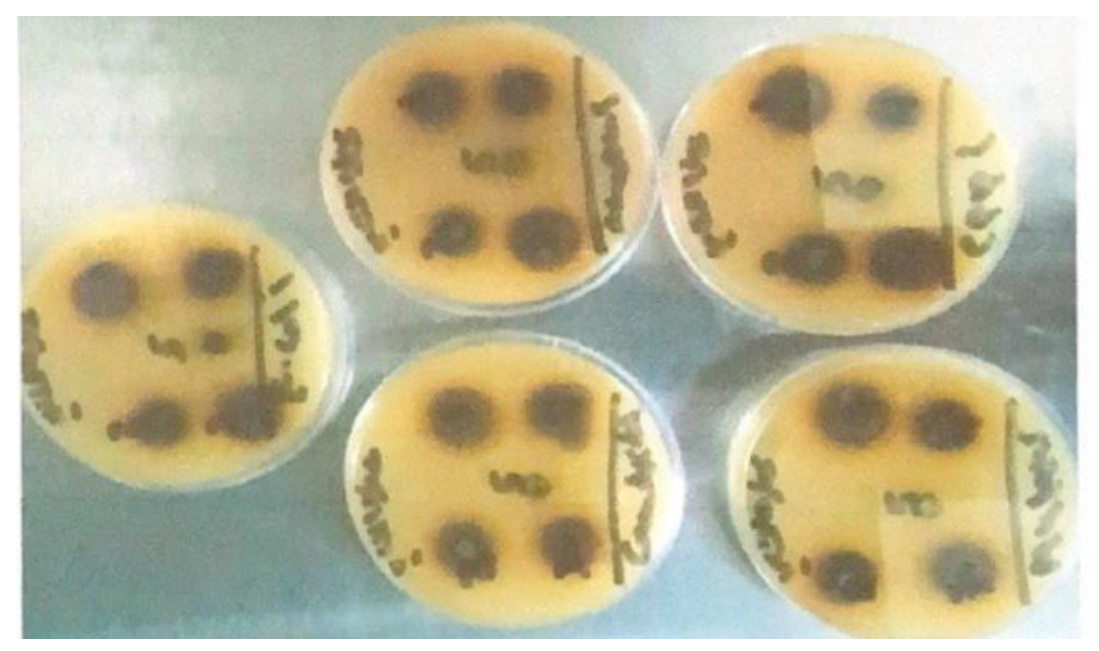
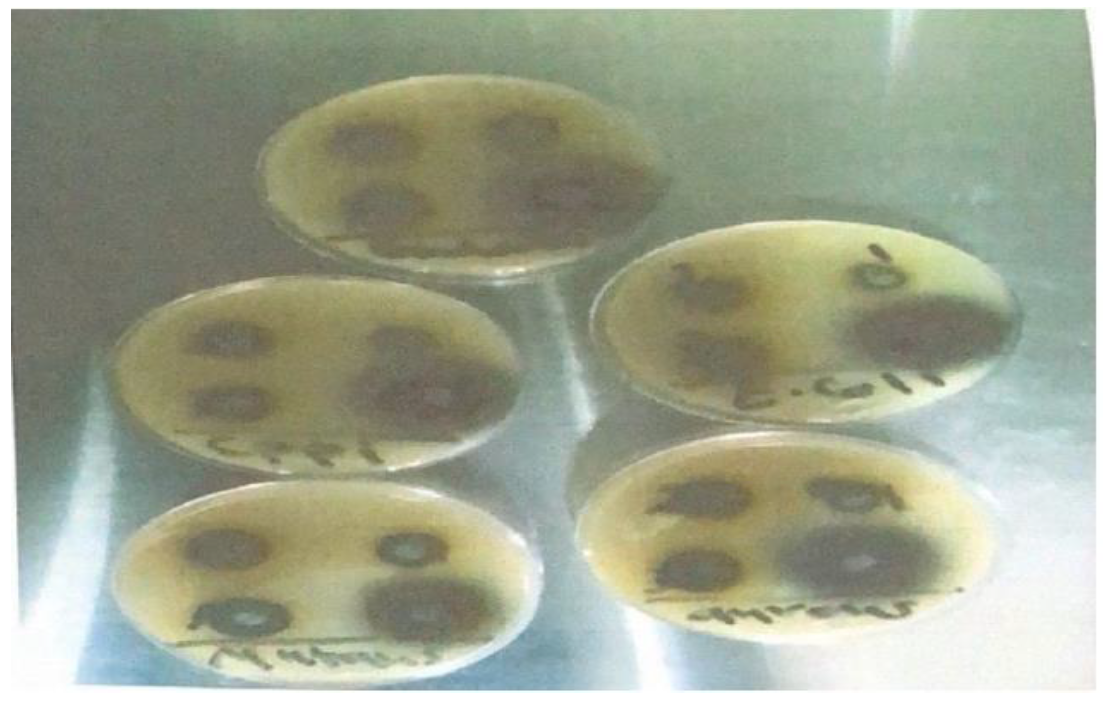
Several studies have been conducted on the biological effectiveness of many medicinal plants against pathogenic and non-pathogenic microorganisms because they contain active substances that inhibit these microorganisms. Pelargonium is one such plant that contains a lot of inhibitory active substances, including carbohydrates, tannins, glycosides, phenols, flavonoids, saponins, alkaloids and other compounds diagnosed by chemical methods. The results in Table é increased in the diameters of inhibition that occurred with the increase in the concentration of the aqueous extract, where the concentration of 50% of the aqueous extract of the plant gave the highest inhibitory diameter compared to the antibiotic gentamycin which is 21 mm. of Streptococcus mutants bacteria and 20 mM of Staphylococcus epidermis bacteria and E.coli , The lowest inhibitory volume of the 50% concentration was 18 mm on Bacteria Staphylococcus aureus This concentration did not show any effect on the fungus candida albicans , As for the 25% concentration, it gave the highest inhibitory value of 19 mM for E. coli and an inhibitory volume of 18 mM for Staphylococcus epidermis and Streptococcus mutants and 17 mM for bacteria Staphylococcus aureus , The concentration of 20 % was more effective on the fungus Candida albicans compared to the antifungal that gave an inhibitory volume of 17 mm. The concentration of 10 percent was the lowest concentration in the volume of inhibition compared to the antibiotic gentamicin and the fungus nystatin, where it was 13 mm. The higher concentrations did not affect it and this is due to the reason. This is due to the possibility of easy entry of the extract into the cells of the fungus at low concentrations and this was not possible as the concentration increased (Figure 1-2).


In a Table 2-4 showing the effect of plant alcoholic extract on bacteria and fungi, 50% concentration was given to the inhibitory value of 19 mm for E. coli , Staphylococcus epidermis and Streptococcus mutants and inhibitory volume of 17 mm for Staphylococcus aureus and showed no effect on candida albicans and between concentration 25 mm The highest inhibitory value was 19 mm on Streptococcus mutants, 18 mm on E. coli and 17 mm on Staphylococcus epidermis and it did not show any effect on Candida albicans. This may be due to the easy entry of the extract into the fungus at low concentrations as opposed to high concentrations and this is consistent with previous studies by researchers [22]. As for the concentration of 20 %, the volume of inhibition on E. coli bacteria was the same as the size of the inhibition of the antibiotic gentamicin, with a diameter of 17 mm of inhibition. It did not show any effect on Staphylococcus aureus, which is attributed to the fact that low concentrations did not affect these bacteria. As for the concentrations of 10 %, it was the least effective concentration on the bacteria. Bacteria, as for its effect on mushrooms, it has an inhibitory value less than Nystatin, which is 15 mm.


Table 2: Chemical Components of the Extract of Alcohol and Water for Sage

Active chemical compounds

pelargonium plant extract

Water

Alcoholic

Tannins

+

+

Carbohydrate  

+

+

Glycoside

+

+

Phenols

+

+

Resins

-

-

Flavonoids

+

+

Soap

+

+

Alkaloids  

+

+

Proteins  

-

+

Coumarins

+

+

Terpenes

+

+

Steroids  

-

-

(+) =The substance is present in the plant. (-) =the substance is not present in the plant


Table 3: Shows the Anti-Microbiological Activity of Aqueous Pelargonium Plant Extracts in Bacterial Species

Bacteria

Inhibition zone diameter (mm)

Aqueous Ex.

Positive control (µg/ml), gentamicin

10%

20%

25%

50%

E. coli

9

16

19

20

17

s. aureas

7

14

17

18

20

s. epidermidis

12

15

18

20

17

s. mutans

12

17

18

21

17

Candida albicans

13

17

-

-

Nystatin16


Table 4: Shows the Anti-Microbiological Activity of Alcoholic Pelargonium Plant Extracts in Bacterial Species

Bacteria

Inhibition zone diameter (mm)

alcoholic Ex.

Positive control (µg/ml), gentamicin

10%

20%

25%

50%

E. coli

15

17

18

19

17

s. aureas

-

-

16

17

20

s. epidermidis

13

15

17

19

17

s. mutans

14

15

19

19

17

Candida albicans

15

17

-

-

Nystatin16


Figure 1: The Efficacy of the Alcoholic Extract of the Pelargonium Plant


Figure 2: The Efficacy of the Aquous Extract of the Pelargonium Plant

REFERENCE
  1. Lefahal, M. et al. “Antimicrobial activity of Tamarix gallica L. extracts and isolated flavonoids.” Advances in Natural and Applied Sciences, vol. 4, no. 3, 2010, pp. 289–292.

  2. Altaweel, D.A. et al. “In vitro synergistic effect of amikacin and levofloxacin in combination with azithromycin against ESBLs-producing Enterobacteriaceae.” Biochemistry and Cell Archives, vol. 21, no. 1, 2021.

  3. Emad, A.M., and E.E. Gamal. “Screening for antimicrobial activity of some plants from Saudi folk medicine.” Global Journal of Research on Medicinal Plants and Indigenous Medicine, vol. 2, 2013, pp. 189–197.

  4. Hamidpour, R. et al.Pelargonium graveolens (rose geranium): a novel therapeutic agent for antibacterial, antioxidant, antifungal and antidiabetic activity.” Archives of Cancer Research, vol. 5, 2017, p. 1.

  5. Patri, G., and A. Sahu. “Role of herbal agents—tea tree oil and aloe vera—as cavity disinfectant adjuncts in minimally invasive dentistry: an in vivo comparative study.” Journal of Clinical and Diagnostic Research, vol. 11, no. 7, 2017, pp. DC05–DC09.

  6. Oalđe, M.M. et al. “Impact of different extracts of six Lamiaceae species on oxidative stress in vitro.” Saudi Pharmaceutical Journal, 2020.

  7. Marwat, S.K. et al. “Three woody plant species mentioned in Holy Quran and Ahadith and their ethnobotanical uses.” Ethnobotanical Leaflets, vol. 12, 2008, pp. 1013–1021.

  8. Walker, J.B. et al.Salvia (Lamiaceae) is not monophyletic.” American Journal of Botany, vol. 91, no. 7, 2004, pp. 1115–1125.

  9. Hsouna, A.B., and N. Hamdi. “Phytochemical composition and antimicrobial activities of Pelargonium graveolens.” Lipids in Health and Disease, vol. 11, no. 1, 2012, pp. 1–7.

  10. Carmen, G., and G. Hancu. “Antimicrobial and antifungal activity of Pelargonium roseum essential oils.” Advanced Pharmaceutical Bulletin, vol. 4, suppl. 2, 2014, pp. 511–516.

  11. Tarek, N. et al. “Comparative chemical and antimicrobial study of nine essential oils.” Beni-Suef University Journal of Basic and Applied Sciences, vol. 3, no. 2, 2014, pp. 149–156.

  12. Pullagummi, C. et al. “Comparative antibacterial activity of patchouli and geranium.” African Journal of Biotechnology, vol. 13, no. 23, 2014.

  13. Layth, D.E. “Effect of water extracts of some plants on two-spotted spider mites.” Journal of Agricultural Sciences, vol. 42, no. 1, 2001, pp. 111–117.

  14. Asmerom, D. et al. “Antimicrobial evaluation of latex and TLC fractions from Aloe adigratana.” Evidence-Based Complementary and Alternative Medicine, 2020.

  15. Formagio, A.S.N. et al. “Evaluation of antioxidant activity and phenolic compounds in Psychotria leaf extracts.” Antioxidants, vol. 3, no. 4, 2014, pp. 745–757.

  16. Sheel, R. et al. “Preliminary phytochemical screening of Clerodendron infortunatum.” IOSR Journal of Applied Chemistry, vol. 7, no. 1, 2014, pp. 10–13.

  17. Ukoha, P.O. et al. “Tannins and other phytochemicals of Samanaea saman pods.” African Journal of Pure and Applied Chemistry, vol. 5, no. 8, 2011, pp. 237–244.

  18. Pandey, P. et al. “Physicochemical and phytochemical screening of Psoralea corylifolia.” Archives of Applied Science Research, vol. 5, no. 2, 2013, pp. 261–265.

  19. Asgharian, P. et al. “Biological activities of Scrophularia frigida.” Iranian Journal of Pharmaceutical Research, vol. 16, no. 1, 2017, pp. 277–285.

  20. Jagetia, G. et al. “Ginger protects mice against radiation-induced lethality.” Cancer Biotherapy and Radiopharmaceuticals, vol. 19, no. 4, 2004, pp. 422–435.

  21. محمد، اشراق منير. “Extraction and identification of flavonoids from grape seeds.” Journal of Kerbala University, vol. 12, no. 1, 2014.

  22. Gong, Y. et al. “Antioxidant activity of extracts from Tagetes erecta residue.” Fitoterapia, vol. 83, no. 3, 2012, pp. 481–489.
Recommended Articles
Research Article
Phytochemical Evaluation of Anti-Diabetic Activity of Syzygium cumini in Alloxan-Induced Diabetic Rats
Published: 30/06/2025
Download PDF
Research Article
Virtualization of the Drug Analysis III laboratories: Systematization of the pedagogical strategy implemented because of the pandemic caused by COVID-19
...
Download PDF
Research Article
Inhalation Insights: Assessing Anesthesia Knowledge among Himachal Pradesh's Resident Anesthetists
...
Published: 29/05/2023
Download PDF
Research Article
Health Educational Program on Nurses' Knowledge at Children with Pneumonia
Download PDF
Chat on WhatsApp
Flowbite Logo
PO Box 101, Nakuru
Kenya.
Email: office@iarconsortium.org

Editorial Office:
J.L Bhavan, Near Radison Blu Hotel,
Jalukbari, Guwahati-India
Useful Links
Order Hard Copy
Privacy policy
Terms and Conditions
Refund Policy
Shipping Policy
Others
About Us
Team Members
Contact Us
Online Payments
Join as Editor
Join as Reviewer
Subscribe to our Newsletter
+91 60029-93949
Follow us
MOST SEARCHED KEYWORDS
Copyright © iARCON International LLP . All Rights Reserved.