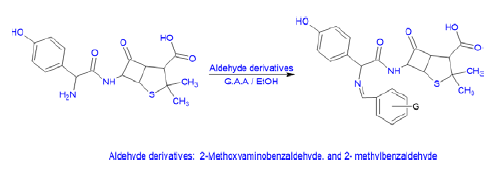
In this study, we report a novel imine derivatives synthesis (A and B) by reacting pure amoxicillin drugs with 2-aminobenzaldehyde and 2-methylbenzaldehyde. Spectroscopic techniques, such as FT‐IR spectroscopy, characterized the derivatives (A and B). All the synthesized derivatives (A and B) were evaluated in vitro against microorganisms such as Bacillus subtilis and E. coli by zone inhibition method and screened for antimicrobial activities and anti-breast cancer MCF-7 cell viability cell lines.
Keywords
Antibacterial
Amoxicillin
Bacteria
Cancer
INTRODUCTION
Breast cancer is a cancer that arises from the excessive growth of cells in the women's breast tissue. After cancer of the skin, breast cancer is the second most common cancer found in women in the United States. Nevertheless, it is worth noting that breast cancer can also manifest in males. Each person has a specific quantity of breast tissue, which means that every individual has the potential for getting breast cancer [1].
The breast cancer treatment rates have been increasing. The fatality rate associated with breast cancer is steadily decreasing. The main factor for this is the substantial support for promoting understanding about breast cancer and allocating funding for study [2].
Recent breakthroughs in breast cancer screening techniques have empowered healthcare professionals to identify breast cancer at its initial stages. Timely identification greatly increases the likelihood of effectively managing cancer [1, 3]. Although breast cancer is not curable, there are numerous medicines available to extend one's lives. Recent breakthroughs in breast cancer research are assisting healthcare practitioners in choosing the most successful therapy approaches [4, 5].
The majority of bacterial species are non-pathogenic. Several of them are even beneficial for your health [6]. The beneficial bacteria are primarily found on the skin and in the stomach or digestive tract [7]. The assemblages of bacteria inhabiting and colonizing your body are referred to as resident flora or your microbiome. The gut microbiota is essential for maintaining health since it aids in the absorption of nutrients, metabolizes food and prevents the growth of harmful bacteria [8].
Amoxicillin is a type of antibiotic called penicillin used to treat bacterial infections. It effectively treats conditions such as tonsillitis, bronchitis, sinusitis, pneumonia and ear, nose, throat, skin, or urinary tract diseases [9].
Amoxicillin clavulanate is a compound that consists of amoxicillin and clavulanate potassium [10]. Amoxicillin has antibacterial properties, while clavulanate potassium aids in preventing the development of antibiotic resistance in some microorganisms [11].
This study synthesized new imine derivatives (A and B), characterized FTIR and screened for antimicrobial activities and anti-breast cancer MCF-7 cell lines.
MATERIALS AND METHODS
Materials
All chemicals used in this study were obtained from Sigma Aldrich and Merch companies.
Methods
Synthesis of Imine-Amoxicillin: Dissolve (0.419 g, 1.0 mmol) of amoxicillin trihydrate in 15 mL of absolute ethanol and added 1.0 mole of 2-aminobenzaldehyde and 2-methylbenzaldehyde to solution with refluxed for 3 hours. The precipitates were cooled, collected and dried at room temperature [12, 13].
Investigation of the Antimicrobial Activity of Imine Derivatives (A and B)
The antibacterial characteristics of the synthesized derivatives (A and B) were assessed using the cup-plate agar diffusion method and the inhibition zone was quantified in millimeters. The synthesized compounds were evaluated for their antibacterial activity compared to amoxicillin, using different concentrations (0.1, 0.001 and 0.00001 M). The derivatives were assessed for their antibacterial efficacy against four microorganisms: Bacillus subtili, Staphylococcus aureus and Escherichia coli. The germs were obtained from infected wounds, nasal swabs, urinary tract infections and surgical operating rooms. The experimentation was carried out utilizing Muller Hinton agar [14]. The sterilized agar medium was placed on Petri dishes and allowed to solidify. The microbial suspensions were evenly distributed over the press surface using a sterilized triangular loop. Aseptic stainless-steel cylinder with a diameter of 12 mm was utilized to generate voids. The various synthetic compounds were sequentially injected into the cavities using a micropipette at varied concentrations (0.1, 0.001 and 0.00001 M). Afterwards, they were authorized to scatter for a duration of one hour. DMSO served as the solvent for all chemicals, however sterile distilled water was used solely for pure ceftriaxone. The plates were placed in an incubator set at a temperature of 37 degrees Celsius for a duration of 48 hours. The diameter of the zone of inhibition surrounding the cups was determined in millimeters following incubation [15].
RESULTS AND DISCUSSION
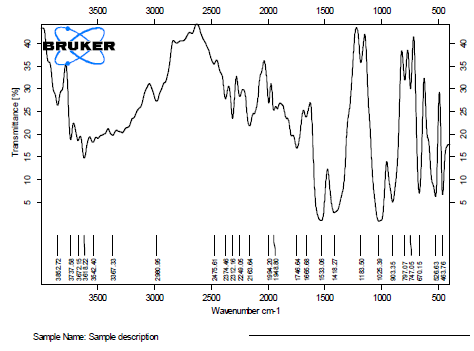
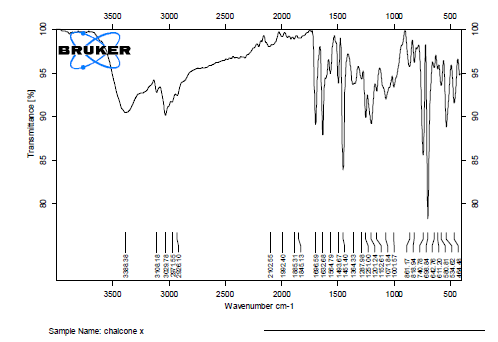
The spectroscopic result the azomethine group appeared in FTIR and disappeared amine group of amoxicillin drug.
Imine derivative (A): Yield: 68%, Color: Brown Yellowish powder, M.p.: 210-213 °C. FTIR (cm-1): 3542 and 3618 (NH2), 3050 (C-H of aromatic ring), 1665 (azomethine group), 1533 (C=C of aromatic ring) [16, 17].
Imine derivative (B): Yield: 70%, Color: Dark yellow powder, M.p.: 206-209 °C. FTIR (cm-1): 3388 (OH), 3029 (C-H of aromatic ring), 1632 (azomethine group), 1564 (C=C of aromatic ring) [18].
Bioactivity
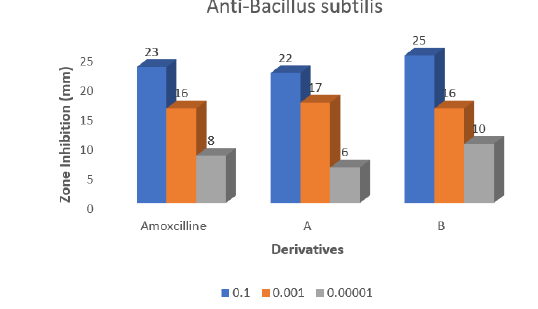
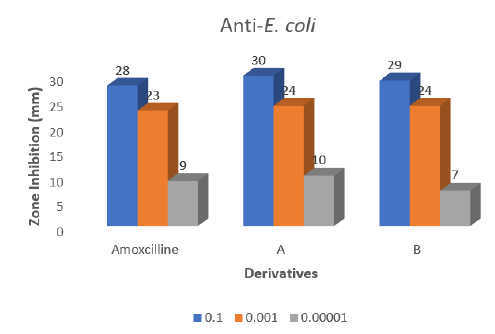
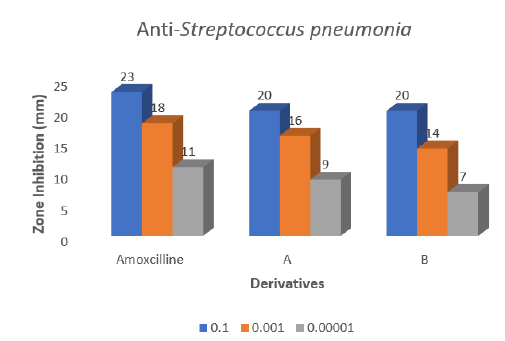
The results of screening a novel group of imine derivatives (A and B) for them in vitro antimicrobial or antibacterial properties. Upon analysis of the inhibitory zone data about Bacillus subtilis, Streptococcus pneumonia and E. coli, it is evident that most of the novel Imine derivatives exhibited superior antibacterial efficacy compared to the original amoxicillin compound. The level of bioactivity exhibits a positive correlation with the concentration. The biggest effects on bacteria were Bacillus subtilis and E. coli by derivative A. However, the standard drug has more activity than derivatives A and B against Streptococcus pneumonia, as shown in Figures 3, 4 and 5. The derivative A has a lone pair of electrons on the nitrogen atom of the amino group that can affect bacteria cells and contact the target enzyme by hydrogen bonds [19].
Figure 1: FTIR Spectrum of Imine Derivative A
Figure 2: FTIR Spectrum of Imine Derivative B
Figure 3: Role of Amoxicillin and Imine Compounds Against Bacillus Subtilis
Figure 4: Role of Amoxicillin and Imine Compounds Against E. coli
β-Lactams function by disrupting the process of peptidoglycan synthesis, which is crucial for forming cellular membranes in Gram-positive bacteria. Transpeptidases, proteins that bind to penicillin [20]. Aid the last transpeptidation phase in the formation of the peptidoglycan layer. The β-lactam nucleus's continued binding to the penicillin-binding proteins causes the cell wall structure to be disrupted, hence hindering the final crosslinking process (transpeptidation) between the linear peptidoglycan polymer chains. As a result, when used together, it expands the effectiveness of AMX to encompass bacterial strains that are susceptible to AMX and prevent the development of β-lactamase [21]. After oral administration as a solution or tablet, AMX is readily absorbed in the gastrointestinal (GI) tract (Figure 6).
Figure 5: Role of Amoxicillin and Imine Compounds Against Streptococcus Pneumonia
Figure 6: Routs of Imine Derivatives
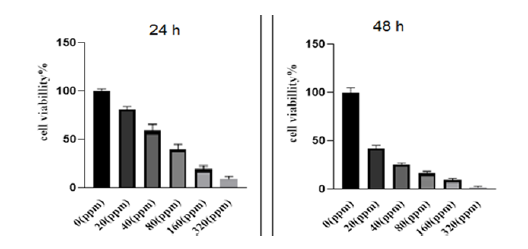
Figure 7: The Effect of Imine Compound (A) on the Functioning of MCF-7 Cells
Table 1: Cell Viability Levels of Compound (A) on MCF-7 Cells Increased
Concentration by (PPM) unit
After 24 hours
After 48 hours
Mean
SD
Mean
SD
0
100
2.87587
100
3.018631
20
81.5324
2.87542
45.8656
2.761031
40
57.9702
2.07435
32.8960
1.963621
80
40.6640
1.94317
17.1965
1.365337
160
17.6613
2.66487
10.75352
1.318675
320
9.7649
2.91464
3.09681
1.578491
Nevertheless, variations have been noted in the assimilation of AMX in different sections of the digestive system, with significant assimilation occurring in the upper small intestine and negligible assimilation in the colon. AMX exhibits an oral bioavailability ranging from 70% to 90%, with peak medication concentrations in the bloodstream achieved within 60 to 90 minutes after ingestion [22].
Viability Assay MTT
The MTT assay revealed that the derivative (A) displayed cytotoxic effects on the MCF-7 cell lines. The cell's vitality was evaluated after 24 or 48 hours and exposed to various concentrations of each derived chemical, with a dose of 0 to 320 g/mL. Figure 7 and Table 1 present the cell viability results for derivative (A) (9 – 100) after 24 hours. The results revealed that the effect on the MCF-7 cell line was closely correlated with the dosage. This derivative (A) was selected due to its potent inhibitory effects on the VEGFR2 protein, making it the most promising option for anti-cancer medications. Figure 7 illustrates the impact of derivative (A). After 48 hours, the concentration (measured in parts per million) rose, resulting in a greater reduction in breast cancer viability compared to the 24-hour mark. The results collected are displayed in Table 1.
CONCLUSION
Imine derivatives (A and B) were synthesized and characterized by FTIR. Chemical reactions between amoxicillin drug and aldehyde derivatives began the synthesis. The antimicrobial activity of imine derivatives, including amoxicillin, against Bacillus subtilis, Staphylococcus epidermidis and Escherichia coli were tested in vitro. The findings demonstrated that certain derivatives exhibit superior antibacterial properties in comparison to the efficacy of the original drug. In future, we will synthesize a new derivatives and tested in vitro and screened for antimicrobial activities and anti-breast cancer MCF-7 cell viability cell lines.
REFERENCES
Trayes, K.P. and S.E. Cokenakes. “Breast cancer treatment.” American Family Physician, vol. 104, no. 2, 2021, pp. 171–178.
Wilkinson, L. and T. Gathani. “Understanding breast cancer as a global health concern.” The British Journal of Radiology, vol. 95, no. 1130, 2022, p. 20211033.
Daly, A.A. et al. “A review of modifiable risk factors in young women for the prevention of breast cancer.” Breast Cancer: Targets and Therapy, 2021, pp. 241–257.
Smolarz, B., A.Z.Nowak and H.Romanowicz. “Breast Cancer—Epidemiology, Classification, Pathogenesis and Treatment (Review of Literature).” Cancers, vol. 14, no. 10, 2022, p. 2569.
Hong, R. and B.Xu. “Breast cancer: An up-to-date review and future perspectives.” Cancer Communications, vol. 42, no. 10, 2022, pp. 913–936.
Palmer, J.D. and K.R. Foster. “Bacterial species rarely work together.” Science, vol. 376, no. 6593, 2022, pp. 581–582.
Kaila, V.R. and M. Wikström. “Architecture of bacterial respiratory chains.” Nature Reviews Microbiology, vol. 19, no. 5, 2021, pp. 319–330.
Muhammad, M.H. et al. “Beyond risk: Bacterial biofilms and their regulating approaches.” Frontiers in Microbiology, vol. 11, 2020, p. 928.
Sánchez-Romero, M.A. and J. Casadesús. “the bacterial epigenome.” Nature Reviews Microbiology, vol. 18, no. 1, 2020, pp. 7–20.
Huttner, A. et al. “Oral amoxicillin and amoxicillin–clavulanic acid: properties, indications and usage.” Clinical Microbiology and Infection, vol. 26, no. 7, 2020, pp. 871–879.
Anastopoulos, I. et al. “Removal of caffeine, nicotine and amoxicillin from (waste) waters by various adsorbents: A review.” Journal of Environmental Management, vol. 261, 2020, p. 110236.
Boulechfar, C. et al. “Schiff bases and their metal complexes: A review on the history, synthesis and applications.” Inorganic Chemistry Communications, vol. 150, 2023, p. 110451.
Uddin, N. et al. “Synthesis, characterization and anticancer activity of schiff bases.” Journal of Biomolecular Structure and Dynamics, vol. 38, no. 11, 2020, pp. 3246–3259.
Cusumano, J.A. et al. “Penicillin plus ceftriaxone versus ampicillin plus ceftriaxone synergistic potential against clinical enterococcus faecalis blood isolates.” Microbiology Spectrum, vol. 10, no. 4, 2022, p. e00621-22.
Sader, H.S. et al. “Antimicrobial Activity of Ceftaroline and Comparator Agents Against Ceftriaxone-nonsusceptible streptococcus pneumoniae from the united states (2008–2020).” Microbial Drug Resistance, vol. 28, no. 9, 2022, pp. 935–940.
Hassan, S.S. et al. “Antimicrobial screening involving helicobacter pylori of nano-therapeutic compounds based on the amoxicillin antibiotic drug.” Helicobacter, vol. 28, no. 5, 2023, p. e13004.
Mousa, E.F. and S.H. Merza. “Synthesis, characterization and biological activity of heterocyclic compounds derived from amoxicillin drug.” Annals of the Romanian Society for Cell Biology, vol. 25, no. 6, 2021, pp. 5087–5102.
Jawad, A.A. and A.J. Alabdali. “Synthesis, characterization and antibacterial activity of some penicillin derivatives.” Al-Nahrain Journal of Science, vol. 23, no. 4, 2020, pp. 29–34.
Alsughayer, A. et al. “Antibiotic resistance and drug modification: synthesis, characterization and bioactivity of newly modified potent ciprofloxacin derivatives.” Bioorganic Chemistry, vol. 108, 2021, p. 104658.
Lima, L.M. et al. “β-Lactam Antibiotics: An overview from a medicinal chemistry perspective.” European Journal of Medicinal Chemistry, vol. 208, 2020, p. 112829.
Srisuknimit, V. Enzymatic Synthesis of Peptidoglycan in Methicillin-Resistant Staphylococcus aureus and Its Inhibition by Beta-Lactams. Harvard University, 2019.
Terrak, M. and J.-M. Frère. “β-lactam antibiotics.” Encyclopedia of Molecular Pharmacology, Springer, 2022, pp. 911–920.
Recommended Articles
Research Article
Leigh Syndrome Should Not Be Diagnosed Exclusively Upon Cerebral MRI
Finsterer J
Published: 15/07/2020
Download PDF
Research Article
It Remains Unproven That the Variant M.8231C>A Causes Coronary Atherosclerosis
Finsterer J
Published: 15/07/2020
Download PDF
Research Article
Vision for a Brighter Kangra: Unmasking the Truth about Pink Eye – A Comprehensive Study on Types, Symptoms, and Proactive Prevention in Himachal Pradesh’s Kangra District
Deepti ,
...
Garima
Published: 11/11/2023
Download PDF
Research Article
Release Kinetic Study of Matrix Type Transdermal Patch Using an Analgesic Drug
Mohit Saini,
...
Mukesh Kumar
Published: 10/08/2020
Download PDF
PO Box 101, Nakuru
Kenya.
Email: office@iarconsortium.org
Editorial Office:
J.L Bhavan, Near Radison Blu Hotel,
Jalukbari, Guwahati-India
Mahmood, N. A., Mohammed, T. T., Abdulridha, R. N., Obaid, A. H. & Abbas, K. A. (2024). Modification of Amoxicillin Drug Antibacterial to Promising Anti-Breast Cancer MCF-7 Imine Derivatives: Synthesis and In Vitro Studies. IAR Journal of Medical Sciences, 5(2), 1-5.
MLA
Mahmood, N. Ahmed, et al. "Modification of Amoxicillin Drug Antibacterial to Promising Anti-Breast Cancer MCF-7 Imine Derivatives: Synthesis and In Vitro Studies." IAR Journal of Medical Sciences 5.2 (2024): 1-5.
Chicago
Mahmood, N. Ahmed, Tasnim T. Mohammed, Reham N. Abdulridha, Aula H. Obaid and K. Abbas Abbas. "Modification of Amoxicillin Drug Antibacterial to Promising Anti-Breast Cancer MCF-7 Imine Derivatives: Synthesis and In Vitro Studies." IAR Journal of Medical Sciences 5, no. 2 (2024): 1-5.
Harvard
Mahmood, N. A., Mohammed, T. T., Abdulridha, R. N., Obaid, A. H. and Abbas, K. A. (2024) 'Modification of Amoxicillin Drug Antibacterial to Promising Anti-Breast Cancer MCF-7 Imine Derivatives: Synthesis and In Vitro Studies' IAR Journal of Medical Sciences 5(2), pp. 1-5.
Vancouver
Mahmood NA, Mohammed TT, Abdulridha RN, Obaid AH, Abbas KA. Modification of Amoxicillin Drug Antibacterial to Promising Anti-Breast Cancer MCF-7 Imine Derivatives: Synthesis and In Vitro Studies. IAR Journal of Medical Sciences. 2024 Jul;5(2):1-5.


 Download PDF
 Download XML