Contents
Download PDF
pdf Download XML
515 Views
131 Downloads
Share this article
Research Article | Volume 1 Issue 1 (Jul-Dec, 2021) | Pages 1 - 5
Comparative Effects of Buprenorphine and Samidorphan on Locomotor Behavior in vivo
 ,
 ,
 ,
 ,
1
Department of Pharmacology, Gourishankar Institute of Pharmaceutical Education and Research, Limb, Satara, India
2
Poona College of Pharmacy, Pune. Maharashtra, India
Under a Creative Commons license
Open Access
Received
July 3, 2021
Revised
Aug. 9, 2021
Accepted
Sept. 19, 2021
Published
Oct. 28, 2021
Abstract

The present study investigates behavioral parallels between stress-induced mice that are treated with antidepressants (Buprenorphine and samidorphan). This is to determine the effect of these drugs on the locomotor Behavior s of mice exposed to stress. Twenty-eight (28) Swiss Mice were divided randomly into four groups of 6 in each group, i.e. group one (control), group two (stressed), group three (stressed and then treated with Buprenorphine) and group four (stressed and then treated with samidorphan). Mice in all the groups were given normal rat chew and water throughout period of experiment. The four groups were then subjected to tests in both open field and elevated-plus maze apparatus. Open field apparatus and elevated-plus maze test were the method used to determine locomotor Behavior. These were determined in the frequency of line crossing, centre-square entry, centre-square duration in the open field apparatus, and open arm entry frequency and duration. Mice that were stressed without treatment with antidepressant had reduced locomotor activity when compared with Mice in control group. The stressed groups treated with Buprenorphine and samidorphan showed significant increase in locomotor activity (p<0.05) compared to the stressed non-treated group. The stress group treated with Buprenorphine had significant improved locomotor activity when compared to the stressed group treated with samidorphan (p<0.05). Buprenorphine and samidorphan administration result in significant improved locomotor activity in stressed mice. Buprenorphine however caused a more significant improvement in locomotor activity than samidorphan in mice recovering from stress when the two agents were compared.

Keywords
INTRODUCTION

Stress is the body’s reaction to any change that requires an adjustment or response. The body reacts to these changes with physical, mental, and emotional responses. When stressed, a chemical reaction occurs in the body that allows it to act in a way to prevent injury. This reaction is known as “fight-or-flight,” or the stress response. During stress response, heart rate increases, breathing quickens, muscles tighten, and blood pressure rises. Stressful events can have a damaging effect on normal physiological functions leading to a variety of diseases. Many of the diseases of the modern life like hypertension, diabetes, behavioral disorders have been suggested as some of the many deteriorating effects of stress [1].


Experimental models are required to better understand the progression of the diseases which elaborate new therapy. Exposure to stressful stimuli produces widespread physiological and behavioral effects in animals including man [2]. Stress is an important factor of depression that causes the changes in various body systems. Animal health including human has been shown to be affected by the stressful events of life including situation which alters cognition, learning, memory and emotional responses, causing mental disorders like depression and anxiety.


Depression is a state of low mood and aversion to activity that can affect a person’s thoughts, feelings, behavior and sense of well-being [3]. However, many of these effects are mediated by stress-induced neurochemical and hormonal abnormalities that are often associated with oxidative stress [4]. People with depressed mood may be notably sad, anxious, or empty; they may also feel hopeless, helpless, dejected or worthless. Other symptoms expressed may include senses of guilt, irritability or anger. These individuals may express a further feeling of shamefulness or an expressed restlessness. They may notably lose interest in activities that they once considered pleasurable to family and friends or otherwise experience either a loss of appetite or overeating. Experiencing problems like concentrating, remembering general facts or details, otherwise making decisions or experiencing relationship difficulties may also be notable factors in these individuals’ depression and may also lead to their attempting or actually committing suicide [5]. 


Antidepressants are drugs used for the treatment of major depressive disorder and other conditions, including dysthymia, anxiety disorders, obsessive compulsive disorder, eating disorders, chronic pain, neuropathic pain and, in some cases, dysmenorrheal, snoring, migraine, attention-deficit hyperactivity disorder, addiction, dependence, and sleep disorders [6].


The most important classes of antidepressants are the selective serotonin reuptake inhibitors (SSRIs), serotonin-norepinephrine reuptake inhibitors (SNRIs), tricyclic antidepressants (TCAs), monoamine oxidase inhibitors (TeCAs), and noradrenergic and specific serotonergic antidepressant [7]. Antidepressants are recommended by the National Institute for Health and Care Excellence (NICE) as a first-line treatment of several depressions and for the treatment of mild-to-moderate depression that persists after conservative measures such as cognitive therapy. There has been controversy regarding the efficacy of antidepressants in treating depression depending on its severity and duration. Two meta-analyses published in 2008 found that in mild and moderate depression, the effect of SSRIs is small or none compared to placebo, while in very severe depression the effect of SSRIs is between ‘relatively small’ and ‘substantial’ [8].


The 2008 meta-analysis combined 35 clinical trials submitted to the Food and Drug Administration (FDA) before licensing of four newer antidepressants (including the SSRIs Buprenorphine and flouxatine, the non-SSRI antidepressant nefazodone, and the SNRI venlafaxine). The authors attributed the relationship between severity and efficacy to a reduction of the placebo effect in severely depressed patients, rather than an increase in the effect of the medication. SSRIs are recommended by the National Institute for Health and Care Excellence (NICE) for the treatment of generalized anxiety disorder (GAD) that has failed to respond to conservative measures such as education and self-help activities. Among the SSRIs, Buprenorphine has the highest specificity for serotonin. Buprenorphine affects chemicals in the brain that may be unbalanced in people with depression, anxiety, or other disorders. It is effective in depression that has proved resistant to other antidepressants and in depression complicated by anxiety [8].


Buprenorphine is used to treat depression, obsessive-compulsive disorder, anxiety disorders, post-traumatic stress disorder (PTSD), and premenstrual dysphonic disorder (PMDD). Common side effects of Buprenorphine may include vision changes; weakness, drowsiness, dizziness; sweating, anxiety, shaking; sleep problems (insomnia); loss of appetite, constipation; dry mouth, yawning; or decreased sex drive, impotence, or difficulty having an orgasm. Other antidepressants used in the treatment of obsessive-compulsive disorder, major depressive disorder, panic disorder, are the tricyclic antidepressants (TCAs). Samidorphan belongs to this group and is a highly selective inhibitor of serotonin reuptake [9]. It is also an antagonist/inverse agonist at the histamine H1 receptor, the muscarinic acetylcholine receptors and the α1 adrenergic receptor. These last three actions likely contribute to its adverse effects [9].


The nervous system is a coordinating system that controls all the activities of the body. It receives millions of bits of information from the different sensory organs and then integrates all these to determine the responses to be made by the body. It is a communication network that allows an individual to interact appropriately with the environment. The nervous system consists of sensory and motor divisions. The sensory division initiates most of its activities emanating from sensory receptors whether visual, auditory, and tactile on the surface of the body or other kinds of receptors. The motor division controls the various body activities like contraction of skeletal muscles, smooth muscles in the internal organs and secretion of both endocrine and exocrine organs [10]. These are collectively called the motor functions of the nervous system. Primarily, the nervous system is divided into two parts namely, the central nervous system and the peripheral nervous system. The central nervous system includes the brain and spinal cord. It is formed by neurons and the supporting cells called neuroglia. The functions of the central nervous system among others include organizing reflexes and other Behaviour al responses responsible for cognition, learning and memory and plans and executes voluntary movements. Memory refers to the storage mechanisms for what is learned, learning and memory are special forms of information processing that permit Behavior to change appropriately in response to environmental challenges based on past experiences. The peripheral nervous system is formed by the neurons and their processes present in all regions of the body. These consist of cranial nerves from the brain and spinal nerves from the spinal cord. It is further subdivided into the somatic nervous system and autonomic nervous system.


The somatic nervous system controls the movements of the body by acting on the skeletal muscles while the autonomic nervous system is concerned with regulation of visceral or vegetative functions [10]. Behaviour consists of the totality of the organism’s responses to its environment. 
MATERIALS AND METHODS

Experimental Animals and Drugs

Twenty-eight (28) Swiss mice, obtained from the Department of Pharmacology, Gourishankar Institute of Pharmaceutical Education and Research, Limb, Satara. with body weight of between 180 to 250g were used for the experiment. The mice were divided into four groups (n = 7). 


  • Group 1: The control

  • Group 2: Stressed group (stressed but not treated)

  • Group 3: Stressed and then treated with buprenorphine (10mg/kg body weight, for 2 weeks)

  • Group 4: Stressed and then treated with samidorphan (10mg/kg body weight, for 2 weeks) 


All animals were allowed access to feed and water. 


Drug Administration Protocol

The doses of drugs, the duration of the administration were done according to previous studies [11]. 


Administration of Buprenorphine and Samidorphan

A 20mg and a 10mg capsule of Buprenorphine and samidorphan was dissolved in 20ml and 10ml of distilled water to form a stock solution of 0.02mg/20ml and 0.01/10ml respectively. Each of the solution was administered at the dose of 10mg/kg body weight orally, once daily for two weeks.


Stress Regimen

This procedure was done through social isolation (prolonged social deprivation), confinement to small cages and exposure to bright light at night for the period of five weeks [12].


Apparatus and Experimental Protocol 

The Open Field Maze: The large open field (72 × 72 cm, with 36cm high walls) constructed of plywood was used following the protocol of Brown et al [13]. Each trial was recorded using a video cassette recorder (VCR) connected to a camcorder. This was for rescoring of Behaviour.


Experimental Procedure in the Open Field Maze

Mice were carried to the neuro-Behaviour laboratory in their home cages from the animal house and were handled by the base of their tails at all times. Each mouse of the four groups was exposed to the open field maze by placing it in the centre square of the maze and allowed to explore the apparatus for 5 minutes. The mouse Behaviour was scored within this period and the mouse returned to its home cage while the open field was cleaned with 70% ethyl alcohol and then allowed to dry between tests. This was to eliminate olfactory cue.


Behaviour Scores in the Open Field

The Behaviour s score [13]:


  • Line crossing: Number of times the mouse crossed a line drawn on the floor with all its four paws

  • Rearing: Frequency with which the animal stands on its hind legs or leans against the wall with front paws


Elevated Plus Maze

Experimental Procedure in the Elevated Plus Maze: The mouse was picked by the base of its tail from the home cage and placed in the centre square between the open and closed arms facing an open arm. Each mouse was allowed to explore the maze for 5 minutes and the Behaviour s scored within this period and then returned to its home cage. The apparatus was cleaned with 70% ethyl alcohol and then allowed to dry between tests in order to eliminate olfactory cue. 


Behaviour Scores in the Elevated Plus Maze

Rearing: Frequency with which the animal stands on its hind legs or leans against the wall with front paws.

 [13]


Statistical Analysis

Values for the result are expressed as mean±SEM. The statistical analysis was done using the analysis of variance (ANOVA) and the post/hoc Newmann Keul’s test. The computer software was Microsoft excel and SPSS for window.        


Differences between means were tested at 0.05 level of significance.

RESULTS

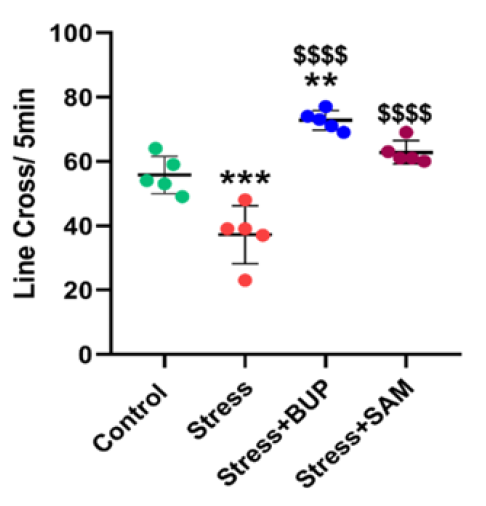
Frequency of line crossing for control, stressed, stressed + Buprenorphine, and stressed + samidorphan groups in the open field maze.


The frequency of line crossing for control, stressed, stressed + Buprenorphine and stressed + Samidorphan groups were, 72±3.0, 56±2.0, 89±4.7, and 73±2.3 respectively. The stressed group mice showed a significant decrease (p<0.01) in the frequency of line crossing compared to control group.


There was a significantly higher (p<0.05) line crossing frequency in stressed + Buprenorphine and stressed + samidorphan group of mice compared to stressed group. The frequency of line crossing in the stressed + Buprenorphine group was significantly higher (p<0.05) compared to that of the control group. The result also showed a significant increase (p<0.05) in the frequency of line crossing in the stressed + Buprenorphine group of mice compared with the stressed + samidorphan group Figure 1. However, there was no significant difference in the frequency of line crossing between the stressed + samidorphan group and control.


Figure 1: Line Cross in the Open Field Maze

**־ Significant at p<0.05 vs control, *** ־ Significant at p<0.05 vs stress + par, $$$$ ־ Significant at p<0.001 vs control


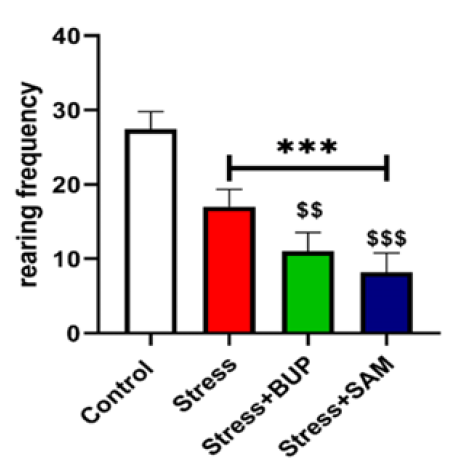
Figure 2: Rearing Frequency in the Open Field Maze

*** ־ Significant at p<0.01 vs control, $$$$ ־ Significant at p<0.05 vs stress + BUP, ++ ־ Significant at p<0.01 vs stress + SAM


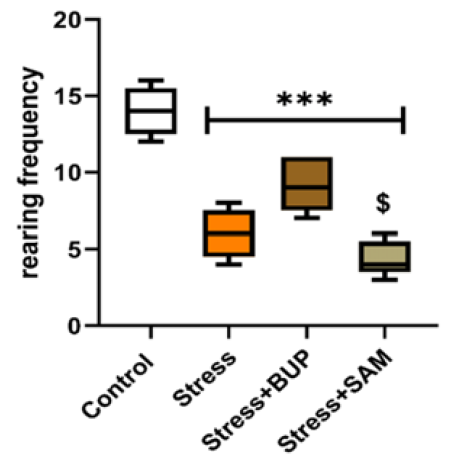
Figure 3: Rearing Frequency in the EPM

*** ־ Significant at p<0.001 vs control, $ ־ Significant at p<0.01 vs treated groups


Frequency of rearing in the open field for the control, stressed, stressed + Buprenorphine and stressed + samidorphan groups.


The frequency of rearing in the open field for the control, stressed, stressed + Buprenorphine, and stressed + samidorphan were, 23±2.0, 15±0.7, 8.8±0.6, and 8.8±0.6 respectively. There was a significant decrease (P<0.01) in the rearing frequency of stressed group and stressed-treated groups compared to control group. It was also noted that there was a significant higher difference in stressed + Buprenorphine rearing frequency compared to stressed + samidorphan Figure 2.


Frequency of Rearing in the EPM

The rearing frequency in the EPM for control, stressed, stressed + Buprenorphine, and stressed + samidorphan group of mice were,16± 1.5, 6.2± 0.48, 7.8±0.40, and 4.3±0.61 respectively. There was a significant decrease in rearing frequency in stressed, stressed + Buprenorphine, and stressed + samidorphan group of mice compared to the control group at p<0.01. 


There was a significant increase (p<0.01) in rearing frequency in stressed + Buprenorphine group of mice compared to that of stressed group and stressed + samidorphan group at p<0.01 and p<0.05 respectively. Figure 3.

DISCUSSION

Locomotor Behavior

The comparative effect of two antidepressants (Buprenorphine and samidorphan) on locomotor behavior in stressed mice was studied using open field test and elevated plus maze. 


The behavior score in the open field test such as line crossing and rearing are measures of locomotor behavior. The scored behavior that is measures of locomotor behavior in the elevated-plus maze also include line crossing and rearing. High frequency in line crossing and rearing indicates an increased locomotor behavior. 


The study showed a significant reduction in these indices of locomotor activity in stressed mice and a significant increase in the stress-treated with Buprenorphine and samidorphan groups of mice as compared with the control for the two neuro Behavior al tests. The study further revealed an improved locomotor activity in stress-treated mice with Buprenorphine when compared with stress-treated mice with samidorphan. This increase in locomotor activity of the stress-treated mice with Buprenorphine could be due to hyper stimulation of motor areas of the brain including motor cortex and cerebellum as well as the discrete areas in the midbrain such as mesencephalic locomotor region that turns on the central pattern generators in the spinal cord that result in locomotor behavior by Buprenorphine [14]. Since drugs like norepinephrine precursor, L-dopa can turn on the central pattern generators for walking in spinal animals [14], and that a single dose of SSRI induces hyper activation of the primary sensorimotor cortex involved in movement [15], it is reasonable to think that drugs that stimulate generators and areas that control them can increase locomotor behavior. It is possible that Buprenorphine may improve the stimulation of generators and motor areas that control locomotor behavior in mice compared to samidorphan.

CONCLUSION

Buprenorphine and Samidorphan administration generally increase locomotor activity significantly, but buprenorphine does it more than samidorphan. This hyper effect could be due to the selectivity properties of Buprenorphine which do not affect other neurotransmitters like histamine and acetylcholine, thereby causing the blockage of histaminic and cholinergic receptor sites. Buprenorphine may therefore be recommended as the first line of treatment for enhancing locomotor behavior and minimizing anxiolytic effects.

REFERENCE
  1. Friedman, H.S. “Personality, disease, and self-healing.” Foundations of Health Psychology, edited by H.S. Friedman and R.C. Silver, Oxford University Press, 2007, pp. 172–199.

  2. Dempsey, J.A. et al. “Pathophysiology of sleep apnea.” Physiological Reviews, vol. 90, no. 1, 2010, pp. 47–112.

  3. Salmans, S. “Depression: Questions you have – answers you need.” People’s Medical Society, 1997.

  4. Kumar, T.P. et al. “Curcumin modulates dopaminergic receptor, CREB and phospholipase C gene expression in the cerebral cortex and cerebellum of streptozotocin induced diabetic rats.” Journal of Biomedical Science, vol. 17, no. 1, 2010, pp. 43–50.

  5. World Health Organization. “On World Mental Health Day (10 October 2012), WHO calls for an end to the stigmatization of depression and other mental disorders.” WHO, Geneva, 2012.

  6. Salvatore, P. et al. “Biological rhythms and mood disorders.” Dialogues in Clinical Neuroscience, vol. 14, no. 4, 2012, pp. 369–379.

  7. Linde, K. et al. “Efficacy and acceptability of pharmacological treatments for depressive disorders in primary care.” The Annals of Family Medicine, vol. 13, no. 1, 2015, pp. 69–79.

  8. Lepola, U. et al. “Controlled-release buprenorphine in the treatment of patients with social anxiety disorder.” Journal of Clinical Psychiatry, vol. 65, 2004, pp. 222–229.

  9. Brunton, P.J. and Russell, J.A. “Prenatal social stress in the rat programmes neuroendocrine and behavioral responses to stress in the adult offspring.” Journal of Neuroendocrinology, vol. 22, no. 4, 2010, pp. 258–271.

  10. Guyton, A.C. and Hall, J.E. “Textbook of medical physiology.” 11th ed., Elsevier/Saunders, 2006.

  11. Adrian, C. et al. “A method for reliable voluntary oral administration of a fixed dosage of chronic daily medication to rats.” Laboratory Animals, vol. 46, no. 4, 2012, pp. 318–324.

  12. Matsumoto, R. et al. “The stress response against denatured proteins in the deletion of cytosolic chaperones SSA1/2.” BMC Genomics, vol. 6, 2005, pp. 141–150.

  13. Brown, R.E. et al. “Differences in measures of exploration and fear in MHC-congenic mice.” Behavior Genetics, vol. 26, 1999, pp. 263–271.

  14. Ganong, W.F. “Review of medical physiology.” 22nd ed., McGraw Hill, 2005.

  15. Mfem, C.C. et al. “Comparative role of buprenorphine and samidorphan on anxiety in mice recovering from stress.” Archives of Neurology & Neuroscience, vol. 4, no. 4, 2019, pp. 1–8.

Recommended Articles
Research Article
Inhalation Insights: Assessing Anesthesia Knowledge among Himachal Pradesh's Resident Anesthetists
...
Published: 29/05/2023
Download PDF
Research Article
Oxidative Stress in Breast and Ovarian Cancer
...
Published: 27/08/2023
Download PDF
Research Article
Extraction, Diagnose and Evaluation of the Effectiveness of Aromatic Herb Pelargonium Graveolens as an Antiseptic and Disinfectant
...
Published: 27/04/2022
Download PDF
Research Article
Exploratory Study of Perception, Knowledge and Awareness of Prostate Cancer
...
Published: 30/06/2025
Download PDF
Chat on WhatsApp
Flowbite Logo
PO Box 101, Nakuru
Kenya.
Email: office@iarconsortium.org

Editorial Office:
J.L Bhavan, Near Radison Blu Hotel,
Jalukbari, Guwahati-India
Useful Links
Order Hard Copy
Privacy policy
Terms and Conditions
Refund Policy
Shipping Policy
Others
About Us
Team Members
Contact Us
Online Payments
Join as Editor
Join as Reviewer
Subscribe to our Newsletter
+91 60029-93949
Follow us
MOST SEARCHED KEYWORDS
Copyright © iARCON International LLP . All Rights Reserved.