The second most typical cancer diagnosis for males is prostate cancer, Early-stage prostate cancer frequently has no symptoms and progresses slowly. The current study aims to learn more about awareness of prostate cancer in people. The study also aims to shed light on more knowledge of prostate cancer in people. Google Forms were used to generate of the questionnaire, which was then shared on social media. The study used the Google Forms method, which consists of a series of questions that are completely answered entirely and randomly. 100 sample were used in the study. The questionnaire's findings included questions about awareness, knowledge and perception of prostate cancer. The data analysis software Excel, Google and the Statistical Package for the Social Sciences (SPSS) are examined using the questionnaire results. Prostate cancer is a specific type of cancer that develops in the prostate glands, a particular area of the body where abnormal cells start to grow in the prostate. Men over fifty are now most likely to have prostate cancer. Prostate cancer is ranked as the sixth kind of cancer worldwide. The second leading cause of mortality in (the United States of America).
Keywords
Prostate Cancer
Perception
Knowledge
Awareness
Prostate
INTRODUCTION
Prostate cancer is a specific type of cancer that develops in the prostate glands, a specific area of the body, when abnormal cells start to grow in the prostate. These cells have the potential to proliferate uncontrollably and occasionally spread to other organs like the bladder, rectum, femoral head and others. Additionally, it can expand to locations other than the prostate, such as the bone, chest and other places. Men have a tiny gland called the prostate that produces semen, which feeds and carries sperm [1,2].
Prostate cancer typically progresses slowly. Most individuals with low-score prostate cancer have survived for many years without showing any signs of the disease or it is progressing and endangering their lives. However, the disease can be lethal, though it spreads quickly and widely. The rate of disease discovery varies around the globe; it is lower in South and East Asia than it is, particularly, in "Europe" and "The United States." Most cases of prostate cancer occur in males over fifty. Prostate cancer is ranked as the sixth kind of cancer worldwide. The second leading cause of mortality in (the United States of America) [1,3].
Prostate cancer is one of the more prevalent cancer kinds in men. Finding out about prostate cancer can be frightening and stressful, not only because it is a serious condition that can kill it, but also because prostate cancer therapy can have some unpleasant side effects. This includes problems with bladder control and impotence (Male Erectile Dysfunction). Additionally, if prostate cancer screening methods and treatment options are available, they have significantly improved in recent years [2].
The prostate gland is typically the sole place where prostate cancer can occur. The harm isn't very severe or harmful. While certain types of prostate cancer have a modest growth rate and require little care. Or the prostate need not be treated at all. Other forms of prostate cancer can be aggressive and swiftly spread. prostate need not be treated at all. Other forms of prostate cancer can be aggressive and swiftly spread [1].
MATERIALS AND METHODS
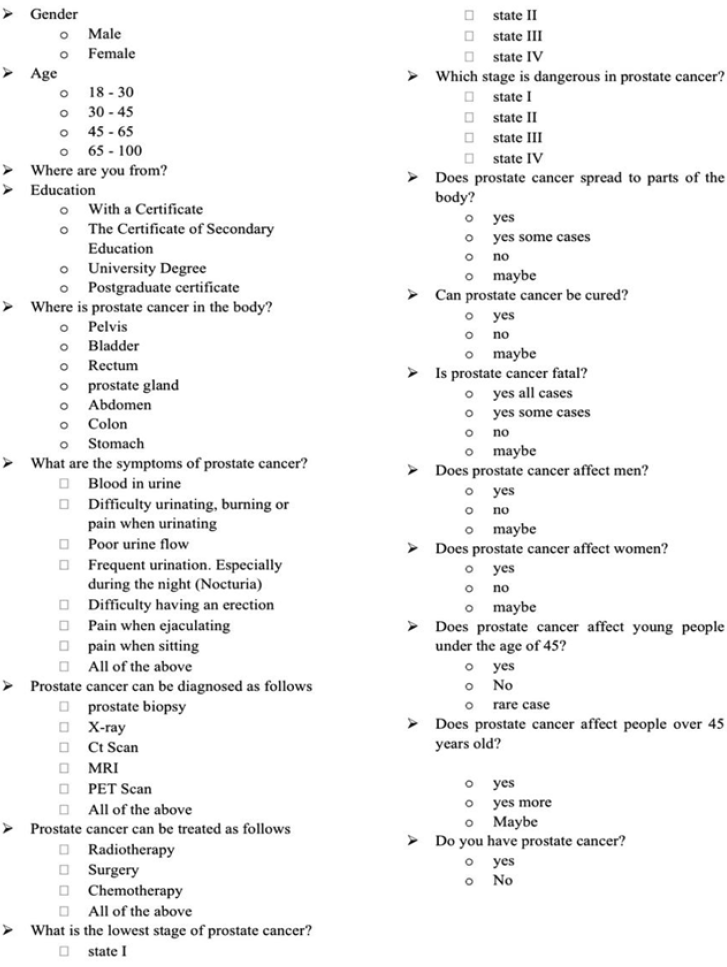
Using the Google forms method for creating the questions in a questionnaire. The set of questions was completely and randomly answered. Questions that are used in a questionnaire are (Figure 1).
Figure 1: An exploratory questionnaire of perception, knowledge and awareness of prostate cancer
RESULTS AND DISCUSSION
The Google Forms method was used to create a questionnaire with 18 questions in both Arabic and English for the study's exploratory knowledge and awareness of prostate cancer. Prostate cancer perception, knowledge and awareness were studied. The number of all participants in the questionnaire is 106 samples. The number of answers of type gender participating in a questionnaire is 104 samples. The number of answers of ages participating in a questionnaire is 106 samples. The number of answers to a question (Where are you from?) participating in a questionnaire is 104 samples. To answer, a multiple-choice question, using 106 samples of answers to a questionnaire's question about education. An answer of 89% to a question for a postgraduate certificate or university degree is very positive for the questionnaire. According to the study, most local communities are adequately informed about prostate cancer.
A questionnaire contains 106 samples of answers to the topic, (Where is prostate cancer located in the body?) and answers to a multiple-choice question. An answer of 76% to a questionnaire item for the prostate gland is very positive for the questionnaire. According to the study, most local communities are sufficiently informed about where prostate cancer occurs in the body. A questionnaire contains 105 samples of answers to the question (What are the symptoms of prostate cancer?) and the answers are presented in box form. An answer of 82% to a question for (all of the above) is excellent for the questionnaire. According to the study, most local communities are well-informed about the signs and symptoms of prostate cancer.
Prostate cancer can be diagnosed as follows, there are 105 samples of answers to this question in the questionnaire and the answers are presented in box form. A score of 63% for "all of the above" and a score of 58% for "prostate biopsy" are both very positive answers to the questionnaire. According to the study, most local communities have sufficient knowledge about diagnosing prostate cancer. The questionnaire contains 105 samples of answers to the topic of prostate cancer can be treated as follows and the answers are presented in box form. The excellent answer on the questionnaire is "all of the above," which received an answer of 84%. The survey found that most local communities have an adequate understanding of prostate cancer treatment.
The number of answers to a question (What is the lowest stage of prostate cancer) in a questionnaire is 104 samples. The number of answers to a question (Which stage is dangerous in prostate cancer?) in a questionnaire is 104 samples. The number of answers to a question (Does prostate cancer spread to parts of the body?) in a questionnaire is 105 samples. The number of answers to a question (Can prostate cancer be cured?) in a questionnaire is 105 samples. The number of answers to a question (Is prostate cancer fatal?) in a questionnaire is 105 samples. The number of answers to a question (Does prostate cancer affect men?) in a questionnaire is 104 samples. The number of answers to a question (Does prostate cancer affect women?) in a questionnaire is 104 samples. The number of answers to a question (Does prostate cancer affect young people under the age of 45?) in a questionnaire is 104 samples. The number of answers to a question (Does prostate cancer affect people over 45 years old?) in a questionnaire is 105 samples. The number of answers to a question (Do you have prostate cancer?) in a questionnaire is 105 samples. A score for answers to these questions in the questionnaire is both very positive answers for the questionnaire. According to the study, most local communities have sufficient knowledge about diagnosing prostate cancer as in the Figures.
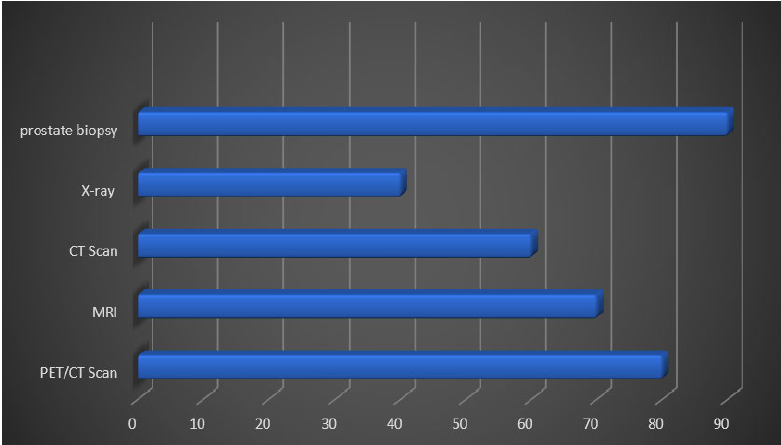
Prostate cancer can be diagnosed by prostate biopsy, MRI, PET/CT scan, CT Scan and X-ray. But the more commonly used diagnoses for prostate cancer are prostate biopsy, MRI and PET/CT scan (Figure 2).
Figure 2: More commonly used diagnostics for prostate cancer
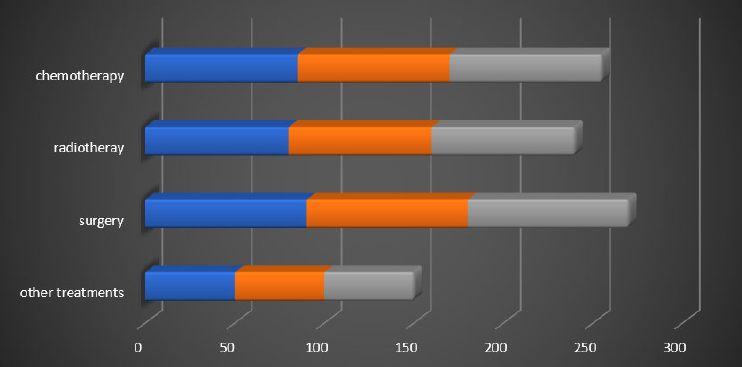
Prostate cancer can be treatment with surgery, radiation, chemotherapy, Cryotherapy, hormone therapy, Immunotherapy, targeted drug therapy or other treatments. But more commonly use treatments for prostate cancer are surgery, radiation therapy and chemotherapy. This depends on several factors, such as how quickly the cancer is growing, how far it has spread and the patient's general health (Figure 3).
Figure 3: More commonly used treatments for prostate cancer
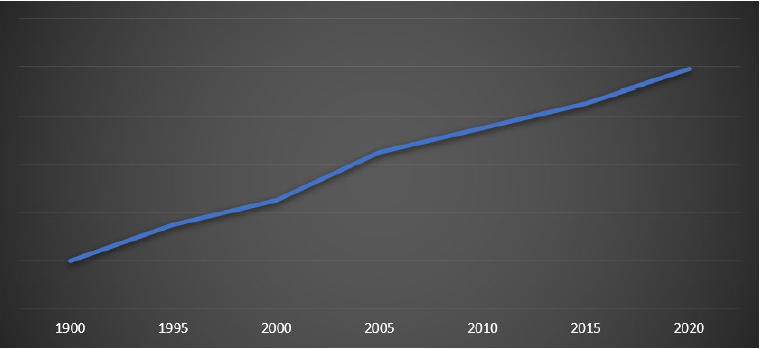
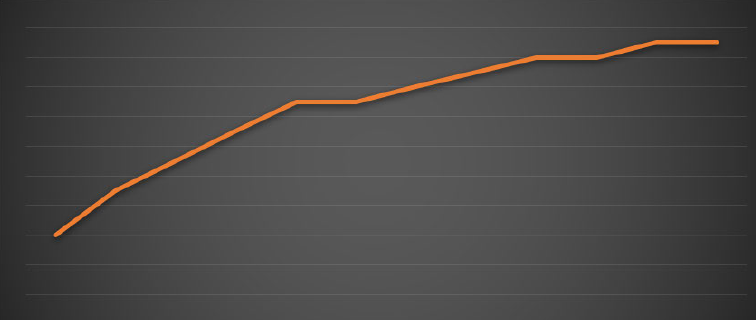
It was shown that there was a low degree of community and individual awareness about prostate cancer in the past, which contributed to a high number of fatalities from the dis-ease (Figure 4). While due to the community's increased understanding and awareness of the disease, prostate cancer mortality rates are anticipated to decrease between his age and his age because of the development of medical devices and the development in understanding awareness of prostate cancer in people. People attending courses, seminars and conferences on prostate cancer increase knowledge and awareness of prostate cancer.
Figure 4:The level of awareness and knowledge of prostate cancer among the people
Figure 5: A global development in medical devices for the diagnosis and treatment of prostate cancer
A rise in prostate cancer cases because of the community's ignorance and lack of understanding of the disease's prevalence in the past (Figure 5). The development of medical equipment for the diagnosis of prostate cancer for a small of patients has increased along with the practical studies on prostate cancer. The community's knowledge and awareness are sufficient to lower the death rate and the number of men with prostate cancer. Prostate cancer treatment rates were previously low and prostate cancer-related mortality was rising. To reduce and prevent mortality from prostate cancer in most recent advancements in medical technologies and therapies include radiotherapy, chemotherapy, surgery therapy and other therapy.
CONCLUSION
The questionnaire's questions received fantastic and brilliant answers. Most communities are sufficiently knowledgeable about prostate cancer. Prostate cancer incidence decreases as a result. It results in a decline in the death rate from prostate cancer because of the community's increased awareness of the disease. Due to the societies' significant awareness of prostate cancer, this results in the acceleration of examinations every six months to limit the occurrence of the disease. It was found that the questionnaire informed people's awareness of prostate cancer, which resulted in lower prostate cancer incidence and mortality. With the continuous development of medical technology, clinical research, diagnosis and treatment of prostate cancer, the death rate of prostate cancer is much lower than it was then. Among them, the questionnaire shows people's awareness of prostate cancer and the answers to the questionnaire are excellent in terms of symptoms, prognosis, treatment, extent of the tumor and others.
We recommend awareness and awareness of prostate cancer in the following points:
Spreading awareness and knowledge of prostate cancer among people
Organizing seminars, workshops and conferences to understand prostate cancer
Consecutive lectures on prostate cancer in oncology centers
Planning successful activities to educate the people about prostate cancer
Using social media to increase prostatic cancer awareness and knowledge
The questionnaire showed that awareness of prostate cancer among people is higher than it was in the past and that the tumor is detected early, which facilitates the treatment of prostate cancer.
REFERENCES
Litwin, Mark S. and Hsiao J. Tan. "The Diagnosis and Treatment of Prostate Cancer: A Review." JAMA, vol. 317, no. 24, 2017, pp. 2532–2542.
Ilic, Dragan, Martin M. Neuberger, Miodrag Djulbegovic, and Philipp Dahm. "Screening for Prostate Cancer." Cochrane Database of Systematic Reviews, no. 1, 2013.
Pienta, Kenneth J. and Philip S. Esper. "Risk Factors for Prostate Cancer." Annals of Internal Medicine, vol. 118, no. 10, 1993, pp. 793–803.
Rawla, Prashanth. "Epidemiology of Prostate Cancer." World Journal of Oncology, vol. 10, no. 2, 2019, pp. 63–89.
Craike, Melinda J., Patricia M. Livingston, and Mari Botti. "An Exploratory Study of the Factors That Influence Physical Activity for Prostate Cancer Survivors." Supportive Care in Cancer, vol. 19, no. 7, 2011, pp. 1019–1028.
Abbood, Ammar A. and Mikhail Piatkevich. "The Use of Accelerated Fractionation Methods for Irradiation of Prostate Cancer: VMAT-SIB and IMRT-SIB." European Journal of Molecular & Clinical Medicine, vol. 8, no. 3, 2021.
Wiafe, Emmanuel, Kofi B. Mensah, Frans Oosthuizen, and Varsha Bangalee. "A Pilot Study of the Knowledge, Awareness and Perception of Prostate Cancer in Ghanaian Women." PLOS ONE, vol. 17, no. 5, 2022, e0267797.
Recommended Articles
Research Article
Inhalation Insights: Assessing Anesthesia Knowledge among Himachal Pradesh's Resident Anesthetists
Akanksha Sharma,
...
Kanika Prashar
Published: 29/05/2023
Download PDF
Research Article
Oxidative Stress in Breast and Ovarian Cancer
Ayad Adnan Sahib,
...
Fatima Saleh Abbas
Published: 27/08/2023
Download PDF
Research Article
Extraction, Diagnose and Evaluation of the Effectiveness of Aromatic Herb Pelargonium Graveolens as an Antiseptic and Disinfectant
Ali, M. K., Abbood, A. A. & Habash, M. M. (2025). Exploratory Study of Perception, Knowledge and Awareness of Prostate Cancer. Scientific Research Journal of Pharmacy, 5(1), 1-5.
MLA
Ali, Marwa Kahtan, Abbood Abbas Abbood and Mohammed Mohammud Habash. "Exploratory Study of Perception, Knowledge and Awareness of Prostate Cancer." Scientific Research Journal of Pharmacy 5.1 (2025): 1-5.
Chicago
Ali, Marwa Kahtan, Abbood Abbas Abbood and Mohammed Mohammud Habash. "Exploratory Study of Perception, Knowledge and Awareness of Prostate Cancer." Scientific Research Journal of Pharmacy 5, no. 1 (2025): 1-5.
Harvard
Ali, M. K., Abbood, A. A. and Habash, M. M. (2025) 'Exploratory Study of Perception, Knowledge and Awareness of Prostate Cancer' Scientific Research Journal of Pharmacy 5(1), pp. 1-5.
Vancouver
Ali MK, Abbood AA, Habash MM. Exploratory Study of Perception, Knowledge and Awareness of Prostate Cancer. Scientific Research Journal of Pharmacy. 2025 Jan;5(1):1-5.



 Download PDF
 Download XML