The Effect of Work Professionalism and Work Motivation on Job Productivity through Job Satisfaction at the Deputy for Placement and Protection of Europe and Middle East Area Protection Agency for Indonesian Migrant Workers (BP2MI)
Husni Muh Nur Pua Upa
1
,
Suharto
1
,
Iwan Kurniawan Subagja
1
1
Faculty of Economics, Universitas Krisnadwipayana Jakarta, Indonesia
This study aims to: (1) Analyze the effect of work professionalism on work productivity, (2) Analyze the effect of work motivation on work productivity, (3) Analyze the effect of job satisfaction on work productivity, (4) Analyze the effect of work professionalism on work productivity through satisfaction, (5) Analyze the effect of work motivation on work productivity through job satisfaction. The research was conducted at the Deputy for Placement and Protection for the European and Middle Eastern Regions, Indonesian Migrant Workers Protection Agency (BP2MI) with a research sample of 71 respondents. The sampling technique used was the saturation technique. The data analysis method used descriptive analysis and path analysis. The results showed that: (1) There was an effect of work professionalism on work productivity, (2) There was an influence of work motivation on work productivity, (3) There was an effect of job satisfaction on work productivity, (4) There was no effect of work professionalism on work productivity through job satisfaction, (5 ) There is no effect of work motivation on work productivity through job satisfaction at the Deputy for Placement and Protection for the European and Middle East Regions of the Indonesian Migrant Worker Protection Agency (BP2MI).
Keywords
Work Professionalism
Motivation
Job Satisfaction
Work Productivity
INTRODUCTION
Human resources are the main actors in every organization. The success of an organization is highly dependent on the human aspect. The human aspect is the main concern of the management control system in an organization. Without human resources, the organization will not exist because human resources are an asset for the organization. Professional human resources are human resources who are reliable and capable in completing the tasks assigned by the organization.
Every individual in an organization has a different social status, both beliefs and attitudes of employees. These differences are a challenge for organizations in dealing with the social status of their employees. In addition, in reality many employees often experience several conditions that are not in accordance with what is expected in the scope of their work. If the facilities and task guidance are not in line with the needs and abilities, employees will experience a decrease in their work productivity.
Work productivity is a very important issue in every organization. There are several factors that must be considered in increasing work productivity, one of which is motivation which is useful as a driver of individual behavior to meet their daily needs. To increase individual productivity while at the same time increasing organizational or organizational productivity, it must be as optimal as possible. In simple terms, it can mean the realization of a task properly and optimally, hitting the goals or objectives of an organization quickly and precisely with various existing resources. is the expertise and ability of the apparatus to reflect the direction and goals to be achieved by an organization [1].
In addition, that can affect employee productivity is motivation for employees. Motivation is very influential to maximize employee work productivity. Motivation will encourage a person's behavior to perform a certain activity. To get the human resources expected by the organization to contribute positively to all organizational activities in achieving its goals, every employee is expected to have high work motivation so that later it will increase high work productivity.
Motivation is very important to make a positive contribution to the achievement of organizational goals. According to Winardi [2] motivation is the desire contained in an individual who stimulates to take action, because with motivation, a person will have a high spirit in carrying out the tasks assigned to him. Without motivation, an employee cannot fulfill his duties according to standards or even exceed standards because his motives and motivations in working are not fulfilled. Motivation is an internal drive that is related to the level, direction and persistence of the consistency of one's efforts at work.
Even if an employee has good operational skills if he does not have the motivation to work, the final results and work will not be satisfactory. The more motivated the employee in doing the work, the higher the employee's work productivity. Conversely, if employees are not motivated in a job, the productivity of work productivity is low. Motivation can also be used as a driving force in increasing employee productivity.
The motivation is so that employees can work together, work effectively with all the efforts of employees to achieve job satisfaction which can have an impact on employee productivity to be better and earlier. Motivation is also very sensitive in achieving organizational goals because motivation is an encouragement given by the organization to its employees so that they are always eager to work so that organizational goals can be achieved.
A successful organization always increases employee productivity but basically it all depends on the quality of its human resources, namely as employees whether employees can work more effectively or not. Likewise for the Deputy for Placement and Protection for the European and Middle Eastern Regions of the Indonesian Migrant Worker Protection Agency (BP2MI), where this organization wants to utilize human resources more optimally, with the aim that employees can work effectively and efficiently.
The Office of the Deputy for Placement and Protection for the European and Middle Eastern Regions The Indonesian Migrant Workers Protection Agency (BP2MI) carries out activities to deal with labor issues, especially workers who will work abroad, namely BP2MI. This agency was formerly known as BP2MI. At this time the agency changed to BP2MI. Organizational performance at the Deputy for Placement and Protection for the European and Middle Eastern Regions (Indonesian Migrant Workers Protection Agency (BP2MI) is influenced by several factors, namely satisfaction, motivation and work productivity.
In carrying out the tasks assigned by the Deputy for Placement and Protection for the European and Middle Eastern Regions, the Indonesian Migrant Workers Protection Agency (BP2MI), employees must always be professional in all tasks that are in accordance with their respective work professionalism. Having a good culture and providing motivation for employees is very important in dealing with the demands that are often experienced by every employee at the Deputy for Placement and Protection for the European and Middle East Regions of the Indonesian Migrant Worker Protection Agency (BP2MI).
LITERATURE REVIEW
Work Productivity
Every organization absolutely needs to adhere to the principle of efficiency. In simple terms, the principle of efficiency basically means avoiding all forms of waste. Given the fact that the ability of an organization to procure and own work facilities and infrastructure which is also referred to as a source of funds and resources needed to run the organization's wheels is always limited, even though the goals to be achieved are unlimited, there is never any justification for allowing waste to occur.
Productivity essentially includes an attitude that always has the view that today's work methods must be better than yesterday's work methods and the results that can be achieved tomorrow must be more or of higher quality than the results achieved today [3]. According to Kusnendi [4] the concept of productivity can basically be seen from two dimensions, namely the individual dimension and the organizational dimension. The study of productivity problems from the individual dimension is nothing but looking at productivity, especially in relation to individual personality characteristics. In this context, the essence of the notion of productivity is a mental attitude that always has the view that the quality of life today must be better than yesterday and tomorrow must be better than today.
In general, productivity according to Hasibuan [5] is a comparison between output and input. Meanwhile, according to Kapustin in Hasibuan states that productivity is sometimes seen as an intensive use of conversion resources such as labor and is still measured accurately and really shows an appearance of efficiency. From the various opinions above, it can be concluded that work productivity is the ability to produce goods and services from various resources or production factors that are used to improve the quality and quantity of work produced in an organization.
Work Professionalism
Talking about professionalism reflects a person's attitude towards his profession. In simple terms, professionalism is defined as the behavior, methods and qualities that characterize a profession. A person is said to be professional if his work has the characteristics of technical or ethical standards of a profession [6].
Professionalism must dare to start the risk of failure and it is not right if you don't start for fear of failure, because people who are afraid to take risks will never do anything, because doing something is always oriented towards achieving goals and objectives.
The professional attitude of the actors in organizations in Indonesia, suggests that they must show attitudes and behavior as shown by Indonesian human resources must have the instinct of innovation and creativity, accompanied by the principle of upholding cultural ethics and morals based on religion, including honesty and openness concerning the public interest.
According to Harefa that professionalism is primarily a matter of attitude. Then he said there are several things that can be considered to represent an attitude of professionalism, namely, high skills, providing services that are oriented to the public interest, strict supervision of work behavior and a system of remuneration which is a symbol of work performance.
Based on the description above, it can be concluded that professionalism is a commitment to produce quality work based on work expertise and professionalism, as well as employee commitment as well as integrity and output to bring satisfaction to others.
Work Motivation
The term motivation comes from the Latin, namely movere, which means "to move". Motivation affects the types of adjustments made by employees in an organization. As for the various formulations for the term motivation, as expressed by Mitchell in Winardi, motivation is a matter that examines how to direct the potential power of subordinates to want to work productively so that they can achieve and realize the goals that have been set. Work motivation consists of two words, namely motivation and work.
Furthermore, according to Siagian [7], motivation is an encouragement to do as much as possible in carrying out their duties in order to achieve organizational success and goals, so that the personal interests of employees will also be maintained.
From the above understanding, it can be concluded that work motivation is a factor that encourages someone to do a certain activity, therefore motivation is often interpreted as a factor driving a person's behavior to get the needs by getting paid and working in place. Activities carried out by someone must have a factor that drives the activity.
Job Satisfaction
Everyone who works expects to get satisfaction from his place of work. Basically job satisfaction is an individual thing because each individual will have a different level of satisfaction according to the values that apply to each individual. The more aspects of the job that match the individual's wishes, the higher the level of perceived satisfaction.
According to Kreitner and Kinicki [8] job satisfaction is an effectiveness or emotional response to various aspects of work. According to Robbins [9] job satisfaction is a general attitude towards a person's job that shows the difference between the number of awards that workers receive and the amount they believe they should receive.
Mangkunegara [10] suggests that job satisfaction is a feeling that supports or does not support employees who are related to their work and their conditions. Feelings related to work involve aspects such as wages or salaries received, career development opportunities, relationships with other employees, job placement, type of work, organizational structure, quality of supervision, while feelings related to themselves include age and health conditions, ability and education. Tiffin quoted by Sutrisno [11], suggests that job satisfaction is closely related to the attitude of employees towards their own work, work situations and cooperation between leaders and fellow employees.
Wexley et al. [12] suggest that job satisfaction is the way an employee feels about his job. Job satisfaction is a generalization of attitudes towards work based on various aspects of work. There are hundreds of job characteristics that an employee considers but a group of job characteristics tends to be evaluated together in the same way. So that it can be concluded that the notion of job satisfaction is a positive attitude regarding the healthy adjustment of employees through psychological and social as well as physical and financial conditions and work situations, including issues of wages, social conditions, physical conditions and psychological conditions.
RESEARCH METHODS
Research Object and Time
The study was conducted at the Office of the Indonesian Migrant Workers Protection Agency (BP2MI), Jalan MT Haryono Kav 52, Pancoran, South Jakarta 12770. The study was conducted from December 2021 to April 2022.
Research Design
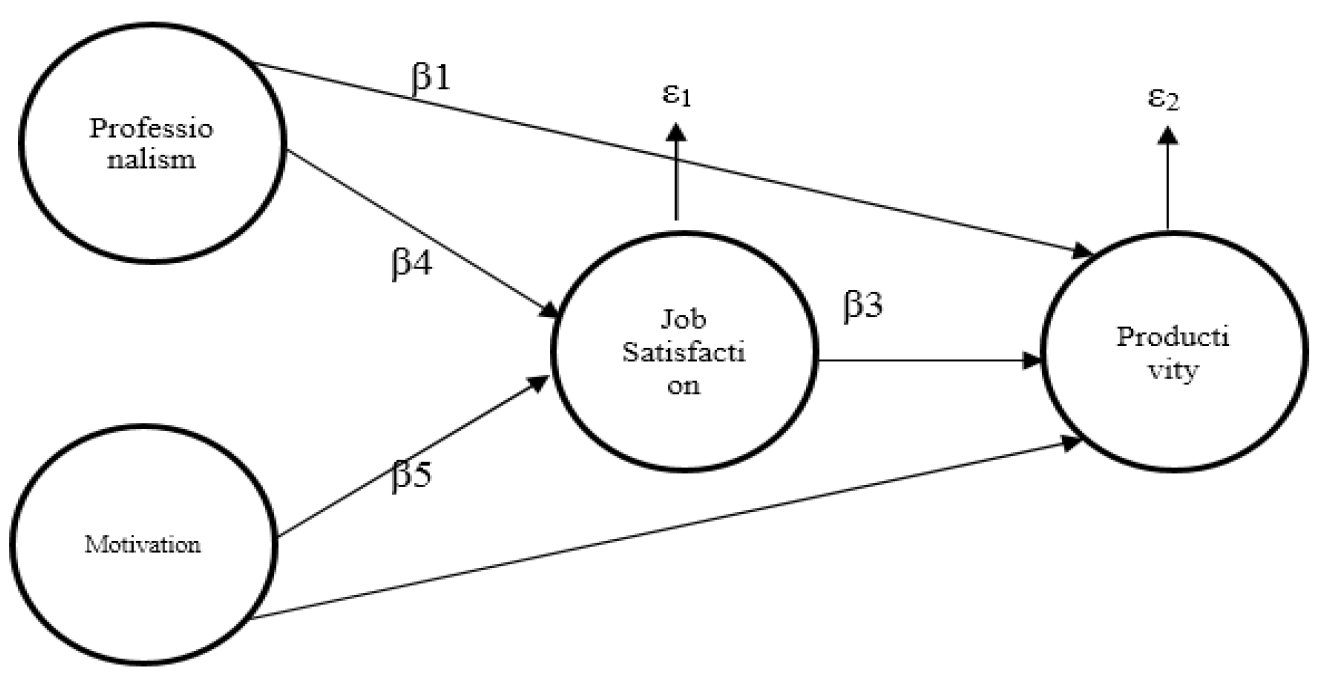
This study uses an explanatory analysis approach. This means that each variable presented in the hypothesis will be observed through testing the causal relationship of the independent variable to the dependent variable. The relationship between variables can be described in the form of a path analysis diagram as follows in Figure 1.
Figure 1: A Path Analysis Diagram
Population and Sample
The population is a generalization area consisting of objects/subjects that have certain quantities and characteristics determined by researchers to be studied and then drawn conclusions. The sample is a part of the population to represent the entire population.
The sample used by the author in this study were employees of the Deputy for the Placement and Protection of the European and Middle Eastern Regions of the Indonesian Migrant Workers Protection Agency (BP2MI). The total number of employees is 71 people. The sampling technique used is Simple Random Sampling, which is said to be simple (simple) because the sampling of members from the population is done randomly without showing the strata that exist in the population. This method is carried out if the members of the population are considered homogeneous because the sample is representative or the sample is taken at random. The number of samples in this study using the saturated technique, as many as 71 respondents.
Data Collection Technique
To obtain a concrete and objective data, it is necessary to conduct research on the problem under study. In this study using the questionnaire method or questionnaire is a number of written questions/statements used to obtain information from respondents in terms of reports about themselves or things they know.
Researchers use this method to find data that is directly related to the subject's condition in the form of influence and work motivation on employee work productivity through employee job satisfaction at the Deputy for Placement and Protection for the European and Middle Eastern Regions of the Indonesian Migrant Worker Protection Agency (BP2MI).
Data Analysis Technique
The stages of data processing in this research are classical assumption test with regression such as linearity test, heteroscedasticity test, normality test, multicollinearity test and autocorrelation as well as search for descriptive statistics, namely the average value, median mode, standard deviation and range.
RESEARCH RESULTS AND DISCUSSION
Analysis of the Effect of Work Professionalism and Work Motivation on Job Satisfaction
The results of the regression analysis of the effect of work professionalism and work motivation on job satisfaction can be seen in the Table 1.
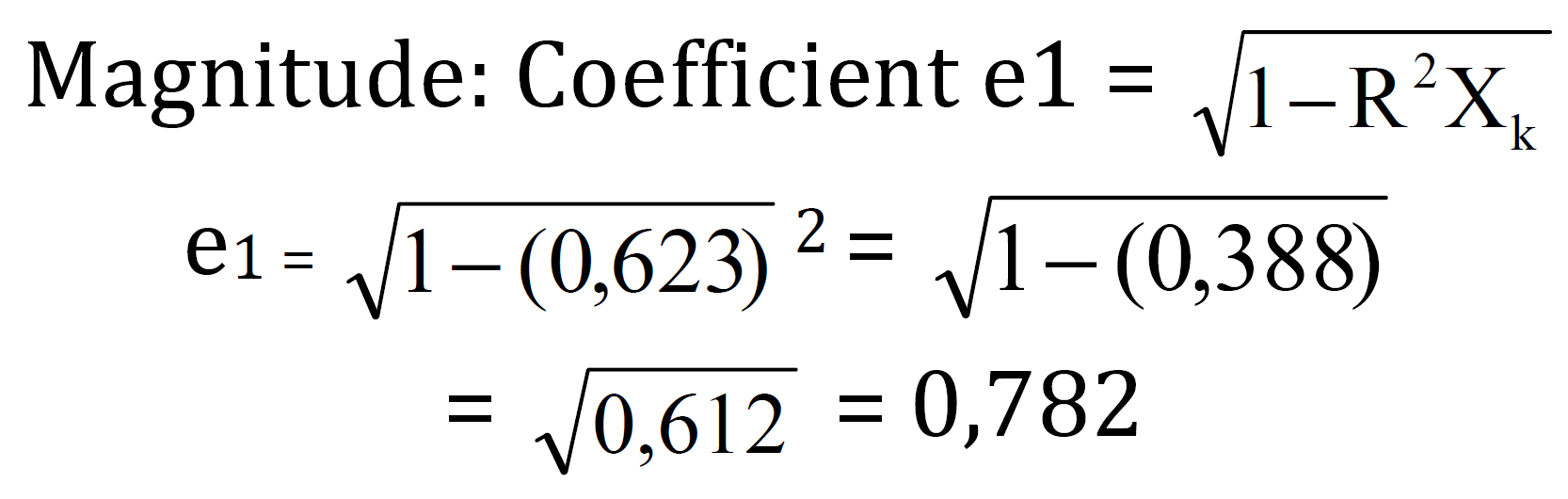
Table 1 shows the value of R2 (R Square) of 0.624. This R2 value is used in calculating the coefficient value of e1. The coefficient of e1 is a variant of job satisfaction that is not explained by and work motivation.
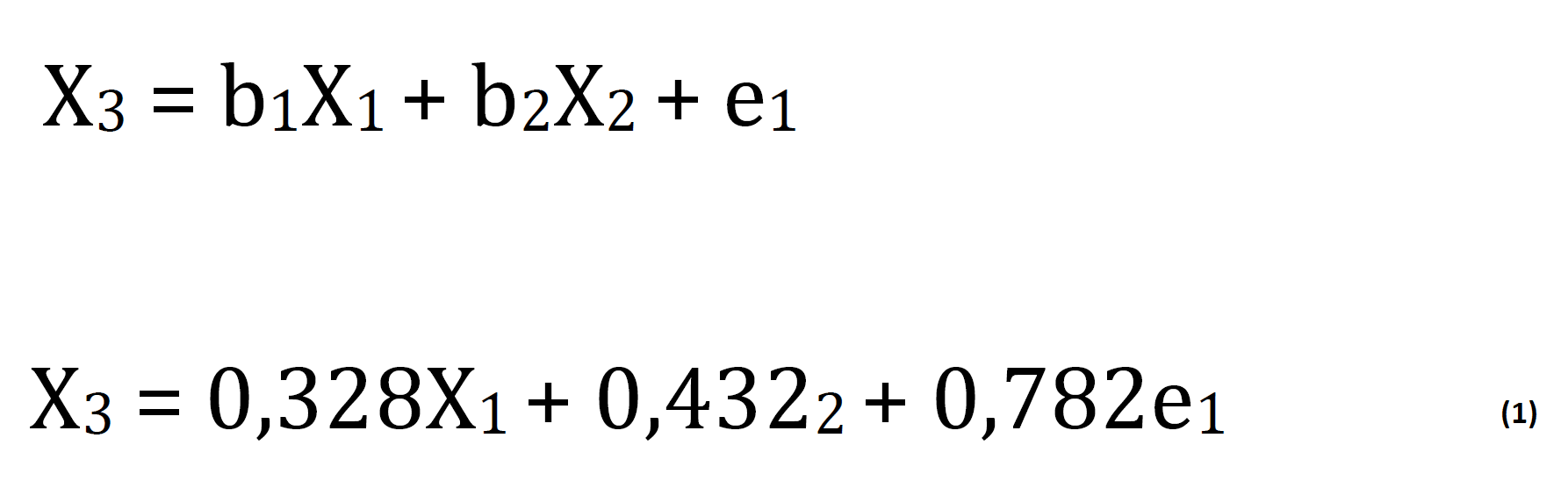
Based on Table 2, it can be seen that the regression equation is as follows:
The equation shows that:
Every 1 increase will be followed by an increase in job satisfaction of 0.328
Every 1 unit increase in work motivation will be followed by an increase in job satisfaction of 0.432
So from Equation 1 it can be seen that if it increases, job satisfaction will increase. Likewise, with increased work motivation, job satisfaction will increase.
Analysis of the Effect of Work Professionalism and Work Motivation on Work Productivity
The results of the regression analysis of the influence and work motivation on work productivity can be seen in Table 3.
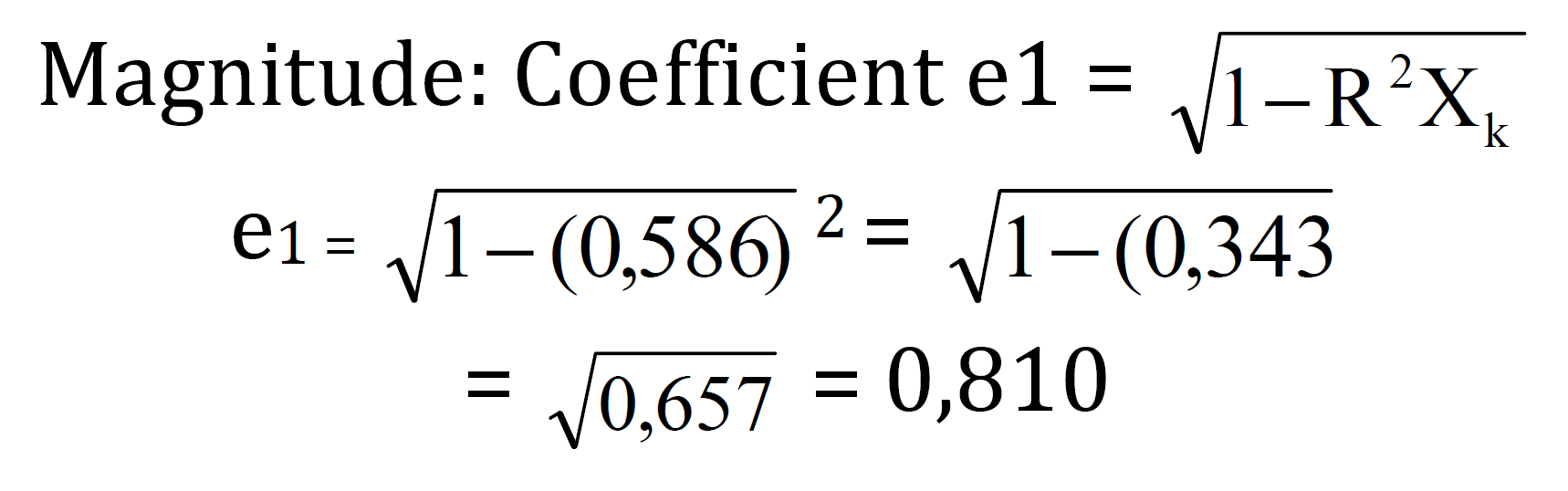
Table 3 shows the value of R2 (R Square) of 0.624. This R2 value is used in calculating the e2 coefficient value. The coefficient of e2 is a variant of work productivity that is not explained by and work motivation:
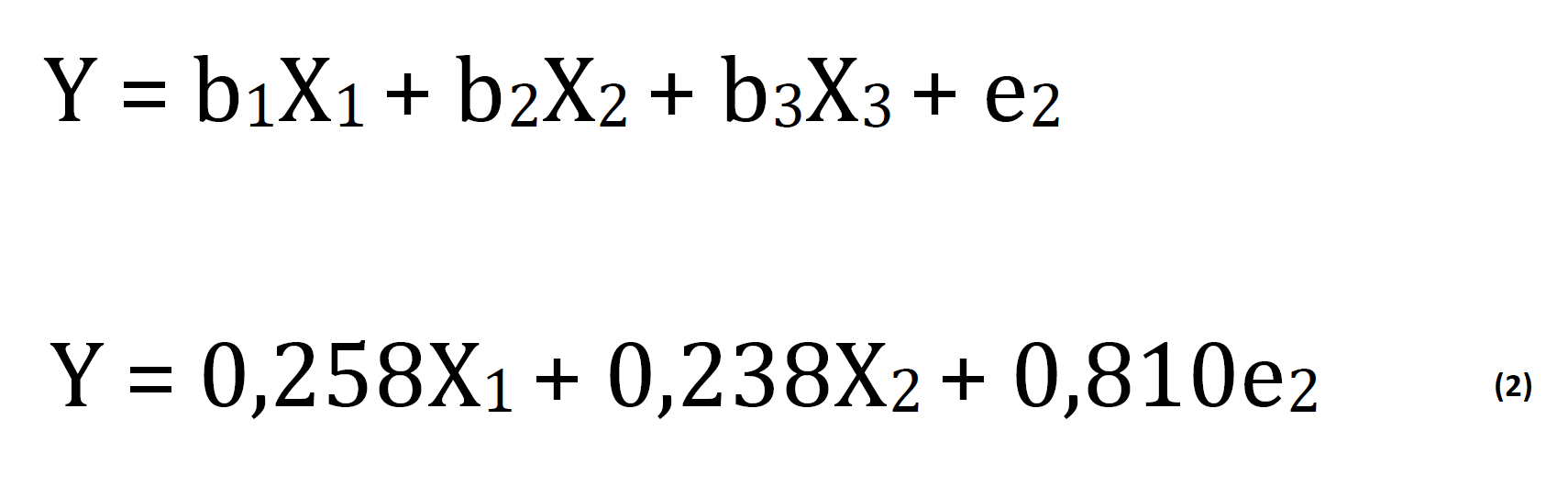
Based on Table 4, it can be seen that the regression equation is as follows:
The equation shows that:
Every time there is an increase of 1 unit of work professionalism, it will be followed by an increase in work productivity of 0.258
Every time there is an increase in 1 unit of work motivation, it will be followed by an increase in work productivity of 0.238
So from Equation 2 it can be seen that if it increases, work productivity will increase. Likewise, with increased work motivation, work productivity will increase.
Analysis of the Effect of Motivation on Work Productivity
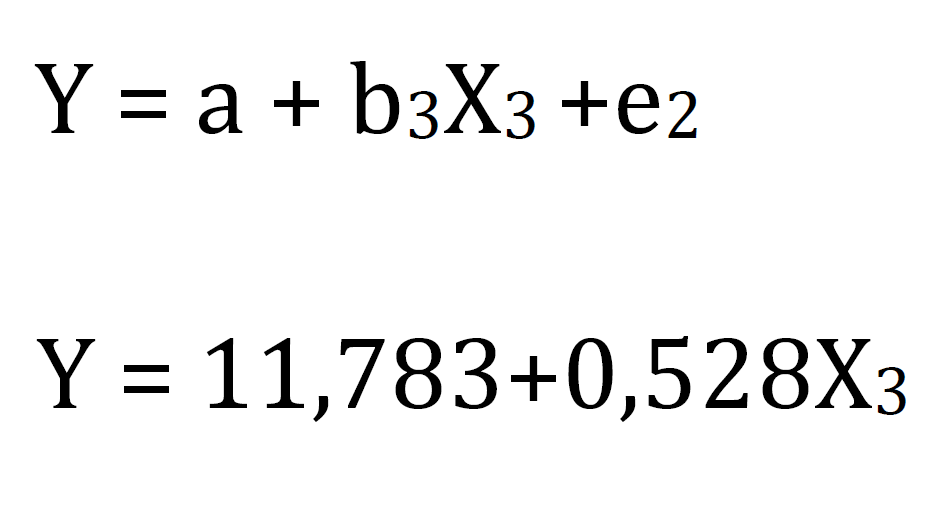
The results of the regression analysis of the influence of motivation on work productivity can be seen in Table 5, as follows:
Based on Table 5, it can be seen that the regression equation is as follows:
Table 1: Test Results of the Effect of Work Professionalism and Work Motivation On Job Satisfaction
Table 2: Results of Job Satisfaction Regression Analysis
Coefficientsa
Model
Unstandardized Coefficients
Standardized Coefficients
t
Sig.
B
Std. Error
Beta
1
(Constant)
4.538
2.786
1.629
0.008
X1
0.328
0.126
0.287
2.601
0.011
X2
0.432
0.086
0.553
5.014
0
Source: Primary Data processed, 2022, a. Dependent Variable: X3
Table 3: Test Results of the Effect of Work Professionalism and Work Motivation On Work Productivity
Model Summaryb
Model
R
R Square
Adjusted R Square
Std. Error of the Estimate
1
0.765a
0.586
0.573
2.59653
Source: Primary Data processed, 2022, aPredictors: (Constant), X1, X2, bDependent Variable: Y
Table 4: Results of Work Productivity Regression Analysis
Coefficientsa
Model
Unstandardized Coefficients
Standardized Coefficients
t
Sig.
B
Std. Error
Beta
1
(Constant)
1.837
1.888
0.973
0.003
X1
0.258
0.085
0.349
3.018
0.004
X2
0.238
0.058
0.471
4.069
0
Source: Primary Data processed, 2022, aDependent Variable:Y
Table 5: Work Productivity Regression Coefficient
Coefficientsa
Model
Unstandardized Coefficients
Standardized Coefficients
t
Sig.
B
Std. Error
Beta
1
(Constant)
2.079
1.522
1.366
0.006
X3
0.528
0.045
0.817
11.783
0.000
Sumber: Data Primer diolah, 2022, aDependent Variable: Y
The equation shows that:
Every time there is an increase in 1 unit of motivation, it will be followed by an increase in work productivity of 0.528
Analysis of the Effect of Work Professionalism and Work Motivation on Work Productivity through Job Satisfaction
Based on the results of the analysis above, it is known: The value of the influence of work professionalism and work motivation on work productivity through motivation is as follows:
X1 → X3 → Y = (ρx3x1) x (ρyx3) = 0,328 x 0,528 = 0,173
X2 → X3 → Y = (ρx3x2) x (ρyx3) = 0,432 x 0,528 = 0,228
In the variable, the indirect influence value is obtained from the path coefficient value x3x1 multiplied by the path coefficient value yx3. The multiplication result shows that the value of the coefficient of indirect influence is smaller than the value of the coefficient of direct influence. This shows that job satisfaction cannot mediate, namely in influencing work productivity.
In the work motivation variable, the indirect influence value is obtained from the path coefficient value x3x1 multiplied by the path coefficient value yx3. The multiplication result shows that the value of the coefficient of indirect influence is smaller than the value of the coefficient of direct influence. This shows that job satisfaction cannot mediate, namely work motivation in influencing work productivity.
DISCUSSION
The Influence of Work Professionalism on BP2MI's Work Productivity
Based on the results of the description analysis on the work professionalism variable, the indicator that dominates the formation of the variable is efficiency, that BP2MI employees can complete their duties efficiently in cost and time. In the work productivity variable, the indicator that gives the greatest value to the formation of the work productivity variable is the quality of work, that BP2MI employees can complete tasks well and BP2MI employees are responsible for their work.
Based on regression analysis, it shows that work professionalism contributes to BP2MI's work productivity. The results of this study are in line with the results of research conducted by Dzulkifli, Prasetyo [13] and Fuadi [14].
The Effect of Work Motivation on BP2MI's Work Productivity
Based on the results of the description analysis on the work motivation variable, the indicator that gives the greatest value to the formation of the work motivation variable is development, that BP2MI leaders are trying to develop the organization and employees are given BP2MI training for the benefit of the organization. In the work productivity variable, the indicator that gives the greatest value to the formation of the work productivity variable is the quality of work, that BP2MI employees can complete tasks well and BP2MI employees are responsible for their work.
Based on the results of the regression analysis, it shows that work motivation is able to provide support for increasing BP2MI work productivity. The results of this study are in line with the results of research conducted by Dzulkifli, Prasetyo [13] and Fuadi [14].
The Effect of Job Satisfaction on BP2MI's Work Productivity
In the job satisfaction variable, the indicator that dominates the formation of the job satisfaction variable is the job satisfaction indicator is the difference, that BP2MI leaders give bonuses from time to time for employees who achieve work targets and BP2MI incentives can stimulate employees to be enthusiastic. In the work productivity variable, the indicator that gives the greatest value to the formation of the work productivity variable is the quality of work, that BP2MI employees can complete tasks well and BP2MI employees are responsible for their work.
Based on the results of regression analysis, it shows that job satisfaction is able to provide support for increasing work productivity of BP2MI. The results showed that it was in line with the research of Dzulkifli, Prasetyo [13] and Fuadi [14].
The Influence of Work Professionalism on BP2MI's Work Productivity Through Job Satisfaction
Based on the results of the description analysis on the work professionalism variable, the indicator that dominates the formation of the work professionalism variable is efficiency, that BP2MI employees can complete their task obligations in cost and time efficiency. In the job satisfaction variable, the indicator that dominates the formation of the job satisfaction variable is the difference, that BP2MI leaders give bonuses from time to time for employees who achieve work targets and BP2MI incentives can stimulate employees to be enthusiastic. In the work productivity variable, the indicator that gives the greatest value to the formation of the work productivity variable is the quality of work, that BP2MI employees can complete tasks well and BP2MI employees are responsible for their work.
Based on the results of the path analysis, it shows that job satisfaction does not support the increase in work productivity of BP2MI. The results of this study are not in line with the research of Dzulkifli, Prasetyo [13] and Fuadi [14].
The Effect of Work Motivation on BP2MI's Work Productivity Through Job Satisfaction
Based on the results of the description analysis on the work motivation variable, the indicator that gives the greatest value to the formation of the work motivation variable is development, that BP2MI leaders are trying to develop the organization and employees are given BP2MI training for the benefit of the organization. In the job satisfaction variable, the indicator that dominates the formation of the job satisfaction variable is the difference, that BP2MI leaders give bonuses from time to time for employees who achieve work targets and BP2MI incentives can stimulate employees to be enthusiastic. In the work productivity variable, the indicator that gives the greatest value to the formation of the work productivity variable is the quality of work, that BP2MI employees can complete tasks well and BP2MI employees are responsible for their work.
Based on the results of path analysis, it shows that job satisfaction does not provide support for increasing work motivation on BP2MI's work productivity. The results of this study are not in line with the research of Dzulkifli, Prasetyo [13] and Fuadi [14].
CONCLUSION
Based on the results of research on the influence and motivation of work on employee work productivity through employee job satisfaction at the Deputy for Placement and Protection for Europe and the Middle East, the Indonesian Migrant Workers Protection Agency (BP2MI), the following conclusions can be drawn:
Based on the results of the description analysis on the work professionalism variable, the indicator that dominates the formation of the work professionalism variable is efficiency, that BP2MI employees can complete their task obligations in cost and time efficiency.
Based on the results of the description analysis on the work motivation variable, the indicator that gives the greatest value to the formation of the work motivation variable is development, that BP2MI leaders are trying to develop the organization and employees are given BP2MI training for the benefit of the organization.
In the job satisfaction variable, the indicator that dominates the formation of the job satisfaction variable is the job satisfaction indicator is the difference, that BP2MI leaders give bonuses from time to time for employees who achieve work targets and BP2MI incentives can stimulate employees to be enthusiastic.
In the work productivity variable, the indicator that gives the greatest value to the formation of the work productivity variable is the quality of work, that BP2MI employees can complete tasks well and BP2MI employees are responsible for their work.
Based on regression analysis, it shows that work professionalism and work motivation contribute to BP2MI's work productivity. Based on the path analysis results indicate that job satisfaction does not provide support for increasing work professionalism and work motivation on BP2MI's work productivity.
Suggestion
Based on the results of research on the influence and motivation of work on employee work productivity through employee job satisfaction at the Deputy for Placement and Protection for the European and Middle Eastern Regions, the Indonesian Migrant Workers Protection Agency (BP2MI), some suggestions can be made as follows:
The results of this study are expected to contribute to sources of information for other researchers who have an interest in the same field. As well as enriching and providing development of knowledge and theory in the field of management, especially human resource management, in a discussion of the effect of work professionalism, work motivation and job satisfaction on work productivity
The results of this study are expected to be used as input and information regarding the effect of work professionalism, work motivation and job satisfaction on work productivity. So that it can be used as a source of information for organizations, especially for the BP2MI Office in order to consider, design and implement effective and efficient human resource management in achieving organizational goals and objectives, in an effort to improve by taking into account the following:
Professionalism: In order to be a concern for BP2MI Leaders, to pay attention to work professionalism indicators that give the lowest value to the formation of variables, namely by means of BP2MI employees must have reliable work skills and BP2MI employees must work according to their work professionalism, given structured and scheduled training
Work motivation: In order to be a concern for BP2MI Leaders, to pay attention to the opportunity indicator that gives the lowest value to the formation of work motivation variables, namely by means that BP2MI leaders must provide opportunities to continue education for their employees in order to develop careers for their employees
Job satisfaction: In order to be a concern for BP2MI Leaders, to pay attention to indicators of fulfillment of needs that give the lowest value to the formation of job satisfaction variables, namely by leading BP2MI to pay attention to salaries of their employees so that BP2MI employees have salaries according to quality of life standards
Work productivity: In order to be a concern for BP2MI Leaders, to pay attention to the work quantity indicator which gives the lowest value to the formation of work productivity variables, namely by means of the leadership having to pay attention to BP2MI employees at work, so that they always pay attention to the aspects of the work being done so that they can complete very important work quickly according to predetermined schedule
Winardi. Kepemimpinan dan Manajemen. Rineka Cipta, 2000.
Komaruddin. Ensiklopedia Manajemen. Bumi Aksara, 1992.
Kusnendi. Ekonomi Sumber Daya Manusia. PPUT, 2003.
Hasibuan, H.Melayu S.P. Manajemen Dasar: Pengertian dan Masalah. Edisi ketujuh, Bumi Aksara, 2006.
Poerwopoespito, Oerip et al.Menggugah Mentalita Profesional dan Pengusaha. Grasindo, 2000.
Siagian, Sondang P. Filsafat Administrasi. PT Bumi Aksara, 2008.
Kreitner, Robert et al.Perilaku Organisasi. Edisi ke-9, Buku 1, Salemba Empat, 2014.
Robbins, Stephen P. Perilaku Organisasi: Konsep, Kontroversi, Aplikasi. Jilid 1, edisi ke-8, Prenhallindo, 2001.
Mangkunegara, A.A.Anwar Prabu. Manajemen Sumber Daya Manusia Perusahaan. PT Remaja Rosdakarya, 2007.
Sutrisno, Edi. Manajemen Sumber Daya Manusia. Edisi pertama, Kencana Prenada Media Group, 2009.
Wexley, Kenneth N. et al.Perilaku Organisasi dan Psikologi Personalia. Rineka Cipta, 2003.
Andi, Prasetyo. Analisis Kinerja Pemerintah Daerah Kabupaten Karanganyar Dilihat dari Rasio Pendapatan Daerah pada APBD 2006–2008. Skripsi, Universitas Muhammadiyah Surakarta, 2011.
Anas Fuadi, Agus. “Pengaruh Kepemimpinan, Budaya Organisasi, dan Kepuasan Kerja terhadap Produktivitas Kerja dengan Komitmen Organisasi sebagai Variabel Moderating.” Informatika, vol. 1, no. 2, 2014, pp. 67.
Recommended Articles
Research Article
The Effect of Employer Attractiveness and Compensation on Job Persuit Intention to Fmcg Companies in Indonesia: Coporate Reputation as an Intervening Variable
Download PDF
Research Article
Country of Origin and Foreign Branding on Perceived Quality of Local Products in Indonesia: The Moderating Role of Consumer Ethnocentrism
Download PDF
Research Article
The Effect of Self-Efficacy and Working Environment on Work Achievement with Organizational Commitment as Mediation
Sri Wahyuni,
...
Veithzal Rivai Zainal
Download PDF
Research Article
The Effect of Beauty Vlogger on Purchase Decision for Local Skincare Products in Indonesia: Brand Image as a Mediating Variable
Download PDF
PO Box 101, Nakuru
Kenya.
Email: office@iarconsortium.org
Editorial Office:
J.L Bhavan, Near Radison Blu Hotel,
Jalukbari, Guwahati-India
Upa, H. M. N. P., None, S. & Subagja, I. K. (2022). The Effect of Work Professionalism and Work Motivation on Job Productivity through Job Satisfaction at the Deputy for Placement and Protection of Europe and Middle East Area Protection Agency for Indonesian Migrant Workers (BP2MI). Scientific Research Journal of Economics and Business Management, 2(2), 1-7.
MLA
Upa, Husni M. N. P., Suharto and Iwan K. Subagja. "The Effect of Work Professionalism and Work Motivation on Job Productivity through Job Satisfaction at the Deputy for Placement and Protection of Europe and Middle East Area Protection Agency for Indonesian Migrant Workers (BP2MI)." Scientific Research Journal of Economics and Business Management 2.2 (2022): 1-7.
Chicago
Upa, Husni M. N. P., Suharto and Iwan K. Subagja. "The Effect of Work Professionalism and Work Motivation on Job Productivity through Job Satisfaction at the Deputy for Placement and Protection of Europe and Middle East Area Protection Agency for Indonesian Migrant Workers (BP2MI)." Scientific Research Journal of Economics and Business Management 2, no. 2 (2022): 1-7.
Harvard
Upa, H. M. N. P., None, S. and Subagja, I. K. (2022) 'The Effect of Work Professionalism and Work Motivation on Job Productivity through Job Satisfaction at the Deputy for Placement and Protection of Europe and Middle East Area Protection Agency for Indonesian Migrant Workers (BP2MI)' Scientific Research Journal of Economics and Business Management 2(2), pp. 1-7.
Vancouver
Upa HMNP, Suharto S, Subagja IK. The Effect of Work Professionalism and Work Motivation on Job Productivity through Job Satisfaction at the Deputy for Placement and Protection of Europe and Middle East Area Protection Agency for Indonesian Migrant Workers (BP2MI). Scientific Research Journal of Economics and Business Management. 2022 Jul;2(2):1-7.


 Download PDF
 Download XML