Cancer is one of the leading diseases that is affecting large number of population in the world. Apoptosis represents a major causative factor in the development and progression of cancer. The challenge currently facing is to translate information gained about mechanisms of aberrant cell death control in tumors into new therapeutic opportunities. The path for accomplishing this has been illuminated by basic research. Damage in the Apoptotic pathway may leads to cause of cancer. Apoptotic signaling pathway which acts a novel drug target for cancer. Cellular FLICE-like inhibitory protein(c-FLIP) is a catalytically inactive Caspase-8 homologue. Laetrile, commonly known as Vitamin B-17 or Amygdaline, is a natural chemotherapeutic agent found in over 1,200 plants. According to Dr. Krebs, we need a minimum of 100 mg/day of vitamin B-17 too nearly guarantee a cancer free life. Foods that contain vitamin B-17 are apricots seeds, Cassava root, Sorghum etc. In the present study we have considered c-Flip protein for homology modeling and further ligand based studies to find out best c-flip inhibitors. This protein is not yet studied because its structure is for not available in PDB so we modeled it and then docked it for finding the compound. Further we searched it in a natural source. After finding the compound same feature like Amygdaline we selected its natural source Cassava and Sorghum then processed it for extracting the same.
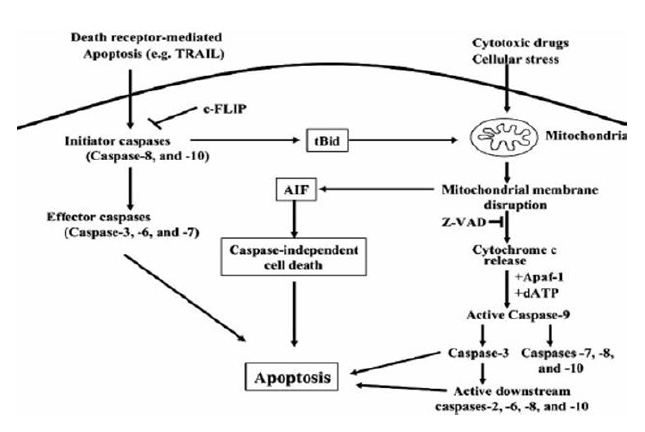
Cancer is one of the leading diseases that is affecting large number of population in the world. Damage in the Apoptotic pathway may leads to the continuous growth of the cells which in turn leads to cause of cancer. Now-a-days various studies have been done on the apoptotic signaling pathway which acts a novel drug target for breast cancer. Apoptosis of the cells is mainly caused in two different pathways: death receptor- induced pathway and mitochondria-mediated pathway [1]. In the Death receptor induced pathway death ligand binds to the death receptor, this helps in the formation of death inducing signaling complex followed by cleavage of Caspase-8 activation. Tumor Necrosis factor–Related Apoptosis-Inducing Ligand (TRAIL) is attaining a high attention due to its activity in apoptosis pathway, Present mutated TRAIL’s are being used as the anti- apoptotic agents which are in their phase trails [2,3] (Figure 1).
Cellular FLICE-like inhibitory protein (c-FLIP) is a catalytically inactive Caspase-8 homologue, Death receptor –mediated apoptosis is mainly inhibited by c-FLIP by preventing the Caspase-8 binding with death inducing signaling complex [4,5].c-FLIP contains various variants, among all the variants c-FLIPL and c-FLIPS which are well characterized. These 2 variants contain two death effectors domains (DED) [6-9]. Due to the increase in resistance to apoptosis which is mediated by TRAIL and FAS leads to the over expression of c-FLIP [10]. In c-FLIP two proteins short form and long form (FLIPL and c-FLIPS) plays a key role in the death receptor mediated apoptosis by binding with the DISC and inhibiting the Caspase-8, Caspase-10 activation [11]. Several studies have proved that TRAIL and FAS mediated apoptosis can be sensitized by down-regulating the c-FLIP activity [12-15]. Various studies have been showed that down-regulation of c-FLIP can be done by various chemical and natural compounds which can inhibit or regulate the activity of the protein molecule [16-18].
It has been studied that various synthetic and natural compounds are showing activity against the c-FLIP protein which is one of the most studied drug target in the death receptor mediated apoptosis pathway. It has also been studied that some of the natural available plant extracts not only inhibit the c-FLIP function but they in turn can inhibit the growth of certain type of cancer cells [19-24].
The Aim of this research work is to study the natural cFlip inhibitors and its processing method for extracting the required entity. In this study we have considered c-Flip protein for homology modeling and further ligand based studies to find out best c-flip inhibitors. Further we searched it in a natural source. After finding the compound same feature like Amygdalin we selected its natural source Cassava and Sorghum then processed it for extracting the same.

Figure 1: Mitochondrial Death Pathway
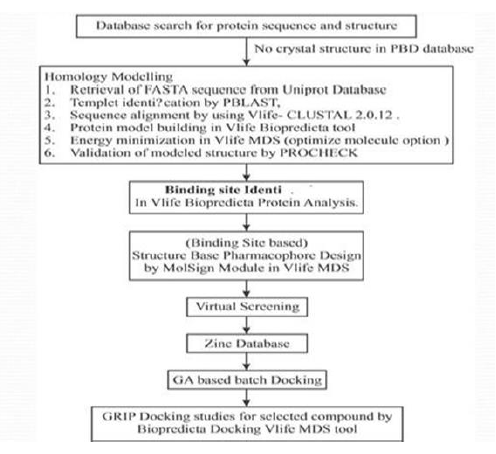
Flow Chart of Protocol Followed for Cflip Protein Insilico Study (Figure 2)
Selection of Natural Plant product from structural output
Extraction of desired anti apoptosis chemical entities from natural sources
Formation of nutritional food products from selected natural sources

Figure 2: Flow Chart of Protocol Followed for Cflip Protein Insilico Study
Cflip Protein Insilico Study
Selection of Protein Molecule: Protein molecule selection is done using swissprot database. In the swissprot database availability of 3D structure is verified and the functional domains of the protein molecules were studied using the Swissprot database.
Template Selection and Sequence Alignment
Structure similar to the protein is selected using the NCBI Blast algorithm. In which highest similarity structure is selected. The 3D structure of the protein and the fasta format were collected and then using. Template sequence and the protein sequence were aligned using the sequence alignment algorithm in Discovery Studio Software.
Homology Modeling and Model Verification of Protein
Using the template selected and the alignment file structure of the protein molecule is modeled in the Discovery studio software using Build Homology model protocol in the parameters file. once the structure is modeled the structure of the protein is verified using the various model verification servers like Procheck, prosa, RMSD.
Protein Preparation and Energy Minimization
Modeled protein molecule is then prepared by cleaning and applying the CHARMm forcefields to the protein molecule. The energy of the prepared protein molecule is minimized using various algorithms like steepest descent and conjugate gradient methods in which the potential energy of the protein molecule is decreased [25-26].
Ligand sketching and preparation
All the ligand molecules were sketched using the chemsketch software and then the preparation of ligand molecules is done by prepare ligands protocol in discovery studio.
Selection of Protein Molecule
Protein molecule is selected from Swissprot database with Accession number: O15519.The FASTA format of the protein sequence is taken from 1-376 amino acids which contain DED1 and DED2 functional domains and the FASTA format is submitted for protein blast to obtain the structure which is similar to the protein sequence.
Selection of Template
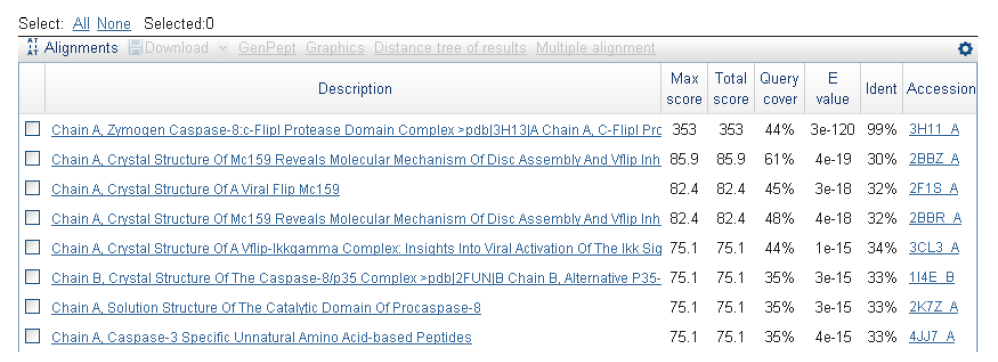
Selection of template is done using PBlast search 3H11 is obtained as the template sequence with an identity of 99%.3H11 is a Zymogene Caspase-8: c-Flip protease domain complex. The structure of the template is downloaded from the PDB database and loaded into Discovery studio (Figure 3).
Sequence Alignment
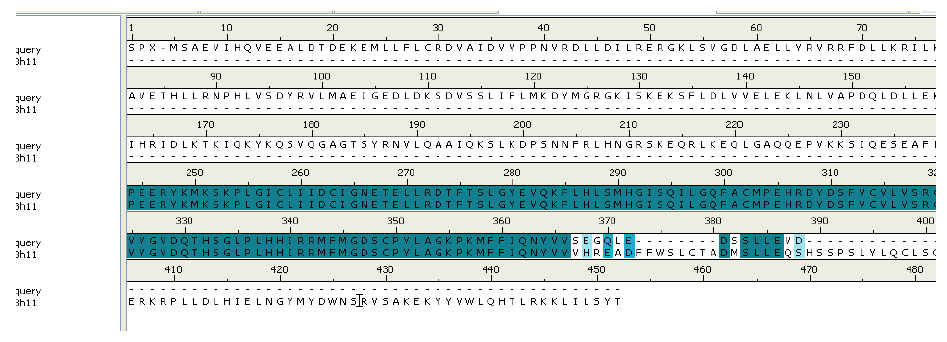
The protein sequence and the template sequences were aligned in the Discovery Studio software and the alignment is done with an sequence identity of 33.9% (Figure 4).
Modeling
Homology modeling of the protein molecule is done using Discovery studio software using build homology models in the protocols (Figure 5).
Model Verification
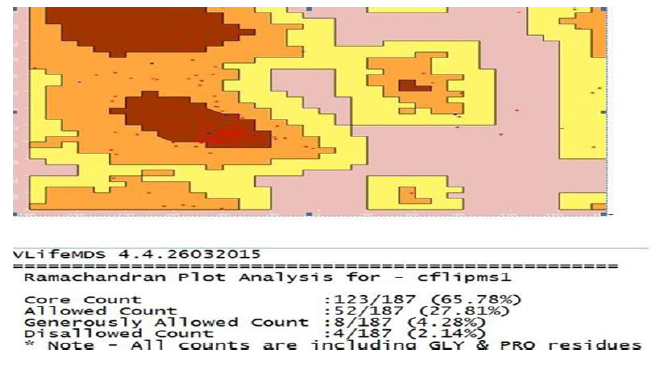
Model verification of the protein molecule is done using the various servers to check the quality of the modeled protein molecule (Figure 6).
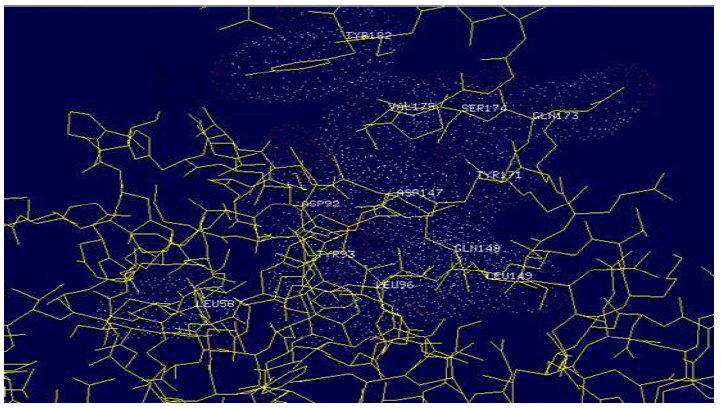
Identification of Binding Site (Figure 7)
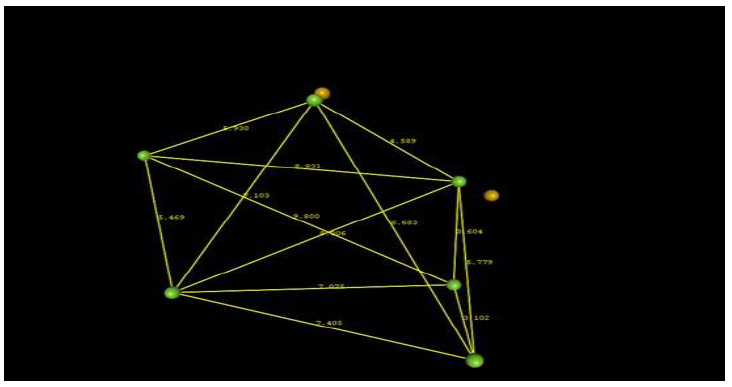
Pharmacophore Identification (Figure 8)
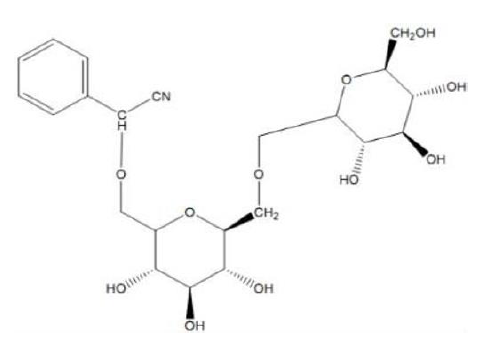
After docking studies, we got core structure having the structural similarities as that of the Laetrile (Figure 9)
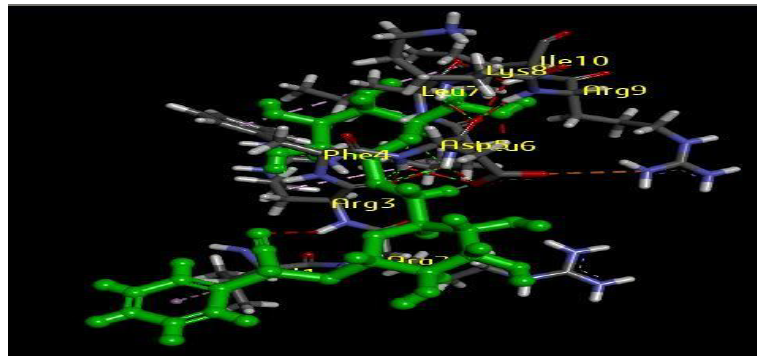
Docking of c- flip with amygdalin (Figure 10)
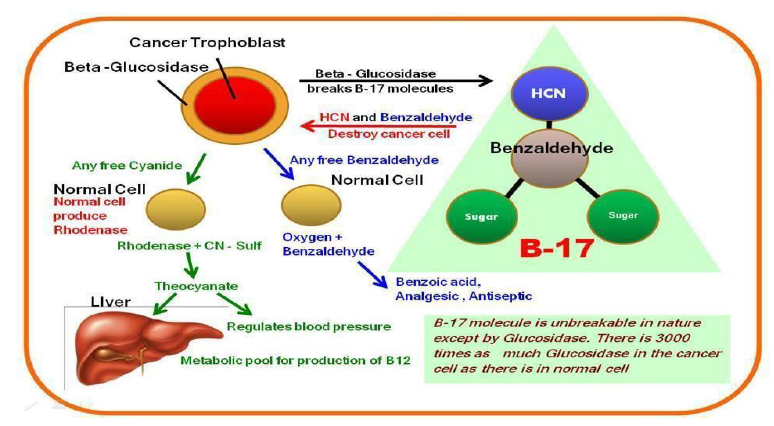
MOA of Amygdaline (Figure 11)

Figure 3: Showing the BLAST Results in NCBI Server Where 3H11 Protein Molecules ‘A’chain is Showing the Highest Identity with the Modeled Protein Structure

Figure 4: Showing the Sequence Alignment of C-FLIP and 3H11 in Discovery Studio Software Where the Shaded Regions in Figure Represent the Similar Amino Acids in the Two Sequences

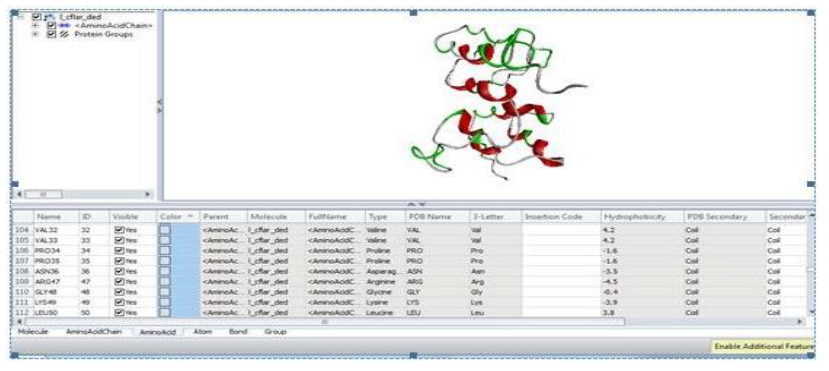
Figure 5: Showing the Modeled Structure of the Protein Molecule in Discovery Studio in Solid Ribbon Format

Figure 6: Model Verification of the Protein Molecule is Done Using the Various Servers to Check the Quality of the Modeled Protein Molecule

Figure 7: Identification of Binding Site

Figure 8: Pharmacophore Identification
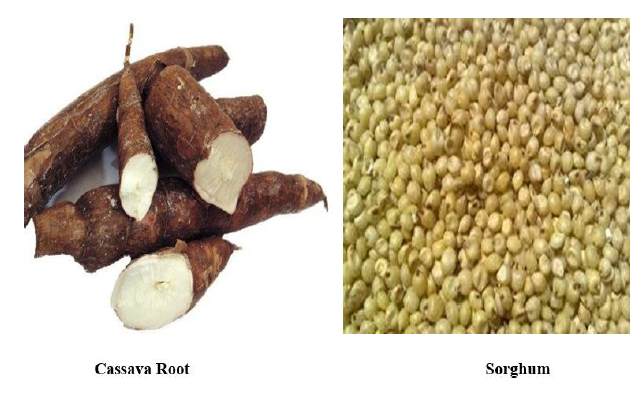
Selection of Natural Plant Product from Structural Output (Figure 12).
Extraction of Desired Anti Apoptosis Chemical Entities from Natural Sources
Processing on Cassava Root
Collection and authentication of plant
Cassava Roots (15kg)
Peeling and Cleaning
Soaking in water for 4 Days-Fermentation
Sun drying and cabinet drying at 750C
Milling and collecting in an airtight container
Determination of Amygdalin content by UV spectrophotometer at 256nm
Amygdalin content -near about13-14mg/g
Processing on Sorghum
Collection and authentication of plant
Sorghum sample (200gm) Cleaning
Soaking in a plastic bucket containing 300ml of water for 3 days at room temperature (28-300C)

Figure 9: Structure of Laetrile (Amygdalin)

Figure 10: Docking of c- Flip with Amygdalin

Figure 11: MOA of Amygdaline

Figure 12: Selected Natural Sources of Laetrile/Amygdalin

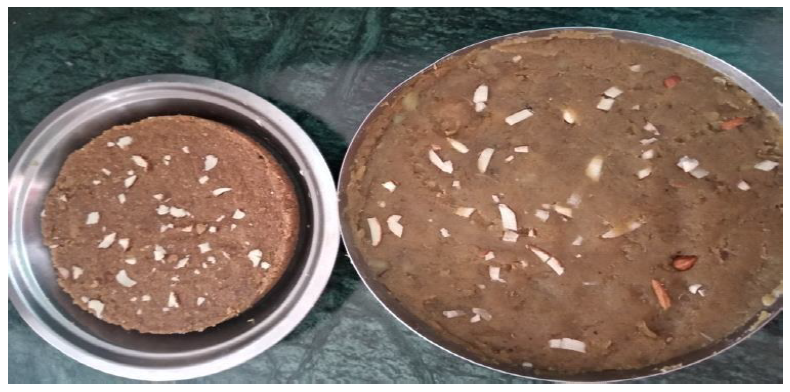
Figure 13: Prepared Food Product from Sorghum and Cassava Root
Steeped water decanting and steeped grains wet-milling
Milled slurry sieving for removing over tails
Collecting the troughs for further fermentation for 2 days at room temperature
Decanting souring water and collecting slurry into muslin cloth for getting the cake for drying at 30-400C
Determination of Amygdalin content by UV spectrophotometer at 256nm
Amygdalin content -near about 44-45mg/g
Formation of Nutritional Food Products from Selected Natural Sources (Figure 13).
Anti-apoptotic protein c-FLIP is one of the important drug target in case of TRAIL and Drug/chemotherapy resistant cell lines. C-FLIP has attained a much importance in cancer treatment; inhibition of c-FLIP could help in increasing the apoptosis of cancer cells. In our present study, we studied the interaction of the c-FLIP with the natural and synthetic inhibitors that stop the activity of c-FLIP. C-FLIP contains two death effector regions (DED1, DED2) which have their activity in inactivating c-FLIP, here we have taken the c-FLIP protein containing the two death receptor and modeled the protein molecule by taking 3H11 as the template structure in Discovery studio. Modeled protein structure is the validated to predict the quality of the structure using Ramachandran plot analysis. After finding the compound same feature like Amygdaline we selected its natural source Cassava and Sorghum then processed it for extracting the same. C-flip protein modelling and its inhibitor study is new pathway for various anticancer studies. Natural c-flip inhibitors like Cassava and Sorghum are having dual advantage as a nutrients and as an anticancer agent or useful for cancer prevention. Prevention is better than cure, the reported sources of Amygdalin/ Vit. B 17 is an ideal food for cancer prevention.
Hengartner, M.O. et al. “The biochemistry of apoptosis.” Nature, vol. 407, 2000, pp. 770–776.
Kelley, S.K. et al. “targeting death receptors in cancer with apo2l/trail.” Current Opinion in Pharmacology, vol. 4, 2004, pp. 333–339.
Rowinsky, E.K. et al. “Targeted induction of apoptosis in cancer management: The emerging role of tumor necrosis factor-related apoptosis-inducing ligand receptor activating agents.” Journal of Clinical Oncology, vol. 23, 2005, pp. 9394–9407.
Krueger, A. et al. “FLICE-inhibitory proteins: REGULATORS of death receptor-mediated apoptosis.” Molecular and Cellular Biology, vol. 21, 2001, pp. 8247–8254.
Budd, R.C. et al. “CFLIP regulation of lymphocyte activation and development.” Nature Reviews Immunology, vol. 6, 2006, pp. 196–204.
Golks, A. et al. “c-FLIPR: A new regulator of death receptor-induced apoptosis.” Journal of Biological Chemistry, vol. 280, 2005, pp. 14507–14513.
Tschopp, J. et al. “Inhibition of Fas death signals by flips.” Current Opinion in Immunology, vol. 10, 1998, pp. 552–558.
Wajant, H. et al. “Targeting the FLICE inhibitory protein (Flip) in cancer therapy.” Molecular Intervention, vol. 3, 2003, pp. 124–127.
Kataoka, T. et al. “The caspase-8 modulator c-FLIP.” Critical Reviews in Immunology, vol. 25, 2005, pp. 31–58.
Djerbi, M. et al. “The inhibitor of death receptor signaling, flice-inhibitory protein, defines a new class of tumor progression factors.” Journal of Experimental Medicine, vol. 190, 1999, pp. 1025–1032.
Scaffidi, C. et al. “The role of c-flip in modulation of cd95-induced apoptosis.” Journal of Biological Chemistry, vol. 274, 1999, pp. 1541–1548.
Galligan, L. et al. “Chemotherapy and trail-mediated colon cancer cell death: The roles of p53, trail receptors and c-flip.” Molecular Cancer Therapeutics, vol. 4, 2005, pp. 2026–2036.
Fulda, S. et al. “Metabolic inhibitors sensitize for cd95 (apo-1/fas)-induced apoptosis by down-regulating fas-associated death domain-like interleukin-1 converting enzyme inhibitory protein expression.” Cancer Research, vol. 60, 2000, pp. 3947–3956.
Kim, Y. et al. “An inducible pathway for degradation of flip protein sensitizes tumor cells to trail-induced apoptosis.” Journal of Biological Chemistry, vol. 277, 2002, pp. 22320–22329.
Longley, D.B. et al. “c-FLIP inhibits chemotherapy-induced colorectal cancer cell death.” Oncogene, vol. 25, 2006, pp. 838–848.
Wajant, H. et al. “Targeting the flice inhibitory protein (Flip) in cancer therapy.” Molecular Intervention, vol. 3, 2003, pp. 124–127.
Abedini, M.R. et al. “Possible role of FLICE-like inhibitory protein (FLIP) in chemoresistant ovarian cancer cells in vitro.” Oncogene, vol. 23, 2004, pp. 6997–7004.
Rogers, K.M. et al. “Cellular FLICE-inhibitory protein regulates chemotherapy-induced apoptosis in breast cancer cells.” Molecular Cancer Therapeutics, vol. 6, 2007, pp. 1544–1551.
Hibasami, H. et al. “Honokiol induces apoptosis in human lymphoid leukemia Molt 4B cells.” International Journal of Molecular Medicine, vol. 2, 1998, pp. 671–673.
Yang, S.E. et al. “Down-modulation of BCL-xl, release of cytochrome c and sequential activation of caspases during honokiol-induced apoptosis in human squamous lung cancer CH27 cells.” Biochemical Pharmacology, vol. 63, 2002, pp. 1641–1651.
Battle, T.E. et al. “The Natural product honokiol induces caspase-dependent apoptosis in b-cell chronic lymphocytic leukemia (BCLL) cells.” Blood, vol. 106, 2005, pp. 690–697.
Shitsuka, K. et al. “Honokiol overcomes conventional drug resistance in human multiple myeloma by induction of caspase-dependent and -independent apoptosis.” Blood, vol. 106, 2005, pp. 1794–1800.
Wolf, I. et al. “Honokiol, a natural biphenyl, inhibits in vitro and in vivo growth of breast cancer through induction of apoptosis and cell cycle arrest.” International Journal of Oncology, vol. 30, 2007, pp. 1529–1537.
Ahn, K.S. et al. “Honokiol potentiates apoptosis, suppresses osteoclastogenesis and inhibits invasion through modulation of the nuclear factor-κB activation pathway.” Molecular Cancer Research, vol. 4, 2006, pp. 621–633.
Levitt, M. et al. “Protein folding by restrained energy minimization and molecular dynamics.” Journal of Molecular Biology, vol. 170, 1983, pp. 723–764.
Kini, R.M. et al. “Molecular modeling of proteins: A strategy for energy minimization by molecular mechanics in the amber force field.” Journal of Biomolecular Structure and Dynamics, vol. 9, no. 3, December 1991, pp. 475–488.