Introduction: Antibiotics Intra Venus (IV) to per oral (PO) conversion is one of the key strategies in the antimicrobial stewardship program (ASP). Early switch over from IV to oral therapy has major advantages, such as reduced risk of catheter related infections, less expensive, reduction in the hidden costs and early discharge from a hospital. Materials and Methods: A prospective and observational study was conducted over a period of six month among respiratory tract infection patients who admitted to general medicine and pulmonary department. The necessary data were collected in specially designed format from respective case sheets. Results: 84 patients were enrolled in the present study and 71 patients were subjected to antibiotic conversion whereas 13 patients were not subjected to antibiotic conversion. The patients who were subjected to antibiotic conversion were divided into 2 groups, Group E and Group L. Group E had subjects who were converted early from IV to oral antibiotic within 1-4 days and Group L had subjects who were converted from IV to oral antibiotics within 5-10 days. Out of 71 patients, 39 patients were subjected to early antibiotic switch whereas 32 patients were subjected to late antibiotic switch. The frequently prescribed IV antibiotic was levofloxacin (39.02%) and same is switched to oral (39.1%). The most common type of antibiotic conversion method was step down therapy (68%) and the most frequently converted class of antibiotics was fluoroquinolones. Conclusion: conversion of antibiotics from IV to per oral, especially early conversion reduce the length of hospital stay and reduce the financial burden of a patients and, minimizes the possible IV complications which influence the faster recovery of a patients and improves the better patient compliance.
Keywords
Antibiotics
Switch Therapy
Intravenous to Per Oral
Minimize Financial Burden
INTRODUCTION
Antimicrobial stewardship program (ASP) is a rational systematic approach to use of antimicrobial agents in order to achieve optimal outcomes. Intra Venus (IV) to per oral (PO) conversion is one of the key strategies in the ASP and considered to prevent the emergence of antimicrobial resistance and prevent healthcare associated infections. IV to Oral conversion practice can affect through three methods of which, the first one is termed as ‘Sequential therapy’ and refers to the act of replacing a parenteral version of a medication with its oral counterpart of the same compound. The second one is called ‘Switch therapy’ involves the conversion of an IV medication to an oral equivalent within the same class and with same level of potency, but of a different compound. The third modality is ‘Step down therapy’ in which an injectable medication is substituted with an oral agent in another class or a different medication within the same class where the frequency, dose and the spectrum of activity may not exactly be similar [1,2]. World Health Organization (WHO) reports that the irrational use of medicines is a major problem. Hence IV to Oral switch over within an appropriate time is one of the major aspects to improve the rational use of antimicrobials [3]. Patients who continue to receive parenteral route therapy are at an increased risk for infusion related adverse events. The presence of an IV catheter provides a portal for bacterial and fungal growth [3]. Early switch over from IV to oral therapy has major advantages, such as reduced risk of catheter related infections, less expensive, reduction in the hidden costs and early discharge from a hospital [2].
Respiratory tract infections can be caused by bacteria, viruses and others. Broad-spectrum antibiotics are most often prescribed to provide a rapid resolution of the infections. Intravenous administration is relatively common in the hospital setting, where it is often reserved for difficult cases, such as patients with severe infection or underlying chronic disease. Intravenous administration is expensive, however, as parenteral formulations have a greater acquisition cost than the corresponding oral form. Furthermore, administration via this route is more labor-intensive, incurring extra costs associated with hospitalization, staffing, delivery and consumables. Therefore, many patients are switched to oral administration after a short duration of IV treatment. As antibiotics can account for up to 30% of the hospital’s drugs budget, considerable cost savings can be made by keeping IV administration to a minimum. The risk of complications such as posts infusion phlebitis, which occurs in up to 70% of infusions, is reduced if the duration of IV administration is reduced [4]. Hence the current study was undertaken to study the effect of early conversion of IV to oral antibiotics in respiratory tract infections.
MATERIALS AND METHODS
Data Source and Research Strategies
A Prospective observational study involves collection of observed data from the patient case files on daily basis and does not include any direct interventions with the patients. This study enrolled the patients above 18 years of age admitted in General medicine and Pulmonology department among inpatients meeting the inclusion criteria of the study. The relevant data such as patient demographics, data regarding diagnosis, prescribed antibiotic drugs, indication and type of conversions were extracted and documented on a specific patient data collection form. Duration of antibiotic switch from IV to Oral route was evaluated to determine the length of hospital stay. The obtained data was subjected to Mann Whitney U test and Chi square test to obtain the level of significance and to compare the data in between.
Inclusion Criteria
The patients enrolled into study who met the following inclusion criteria:
Adult patients (above 18yrs) prescribed with antibiotics admitted in the General Medical Ward and Pulmonary ward during the study period
Patient who are willing to participate and ready to give consent
Patients who are newly diagnosed with respiratory tract infections
Exclusion Criteria
ICU patients
Pregnant women
Out patients
Those with a second site of infection
Criteria Used to Determine Patient’s Eligibility for Intravenous to Oral Antimicrobial Switch Therapy
Temperature <38°C or >36°C for 24-48h; normalizing body temperature; afebrile for at least 8-24 hours
No unexplained tachycardia, hemodynamic instability
Clinical improvement, no clinical indication for intravenous therapy
Oral fluids/food tolerated, no reason to believe oral absorption of antimicrobials may be poor; may be by nasogastric/gastric feeding tube
Improving white blood cell count
Suitable oral antimicrobial therapy
No surgery scheduled within next 24-36 hours
RESULTS
Eighty-four patients were enrolled in the present study (Table 1). Ten patients were taken from Pulmonology ward of both males and females and seventy-four patients were from medical department. Among 84 patients 52(62%) were male and 32(38%) were female. The numbers of patients with habit of smoking were 27(32%) and alcohol consumption were 15(18%), not shown in the tables. The patients were divided into two groups, Group E (Early conversion) and Group L (Late conversion). Group E had subjects who were converted early to oral antibiotic within 1-4 days and Group L had subjects who were converted to oral antibiotics within 5-10 days (Table 2). A systemic inflammatory reflux syndrome (SIRS) criterion was applied for all the patients. Patients who met a minimum of 3 parameters in this criterion were subjected to IV to Oral antibiotic conversion (Table 3 and 4).
Table 1: Patients subjected to early and late conversion
Gender
Group E
Group L
Chi square test
Male
21(49%)
22(51%)
X2=1.635
P=0.2011*
Female
18(64%)
10(36%)
Total
39
32
*No significant difference
Table 2: Type of antibiotic conversion
Types of Conversion
Frequency (%)
Chi square test
Step down therapy
48(68%)
Χ2=56.577
P<0.0001*
Sequential therapy
13(18%)
Switch therapy
10(14%)
*Highly significant
Table 3: Length of hospital stay for early and late conversion
Type of conversion
Length of hospital stay (mean ± sd)
Mann Whitney U test
Early conversion (n=39)
4.9±1.28
U=82.00
P<0.0001*
Late conversion (n=32)
7.9±1.72
*Highly significant
Table 4: Systemic Inflammatory Response Syndrome from each ward
Criteria
Medical ward
n=74(%)
Pulmonology ward n=10(%)
Temperature (%)
<36°C or >38°C
14(18.9)
2(20)
Normal
60(81.1)
8(80)
Not recorded
-
-
Heart Rate (%)
>90 beats per min
5(6.76)
0
Normal
69(93.24)
10(100)
Not recorded
-
-
Respiration rate (%)
>20breaths per min
-
Normal
8(10.81)
1(10)
Not recorded
66(89.19)
9(90)
Pa Co2(%)
<4.3kpa
2(2.7)
-
Normal
72(97.3)
-
Not recorded
-
-
White Blood Cell count (%)
<4000/mm3
-
-
>12000/mm3
30(40.54)
1(10)
Normal
44(59.46)
9(90)
Not recorded
-
-
Note: A minimum of 3 parameters to be met for SIRS in order to switch from IV to oral.
DISCUSSION
The present study was a prospective observational study of supervision of switch from intravenous to oral antibiotics in respiratory tract infections which was similar to study conducted by Cooke et al. [5]. The number of males enrolled in the study based on the inclusion criteria were 62% while females were 38%, which is contradictory to the study conducted by Khan et al. [6] where, included 241 patients out of which 140(58.09%) were females and 101(41.91%) were males.
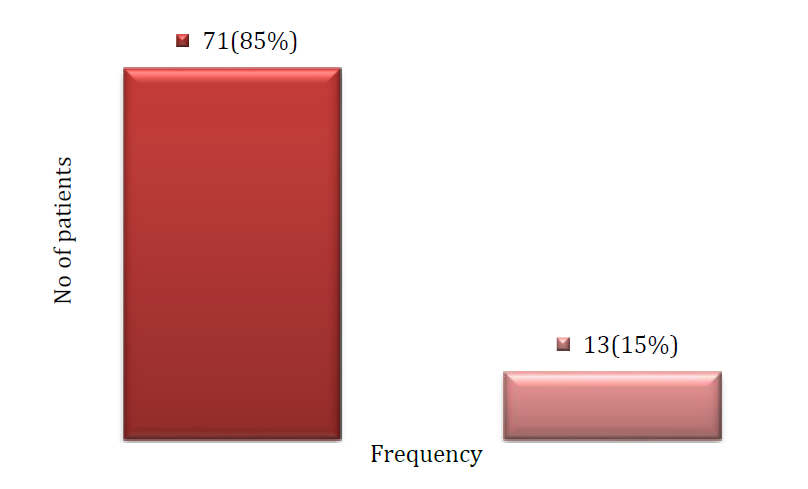
Out of 84 patients, 74 patients were taken from medicine department and 10 patients were taken from pulmonology department for the study. Among 84 patients, 71 patients were subjected to antibiotic switch whereas 13 patients were not subjected to antibiotic switch, as they did not meet the SIRS criteria (Figure 1).
Figure 1: Details of the patients who were subjected to antibiotic conversion and patients who were not subjected to antibiotic conversion
This was contradictory to the study conducted by Tejaswini et al. [7] in which out of 117 patients, 41 patients were subjected to antibiotic conversion whereas 76 patients were not subjected to antibiotic conversion.
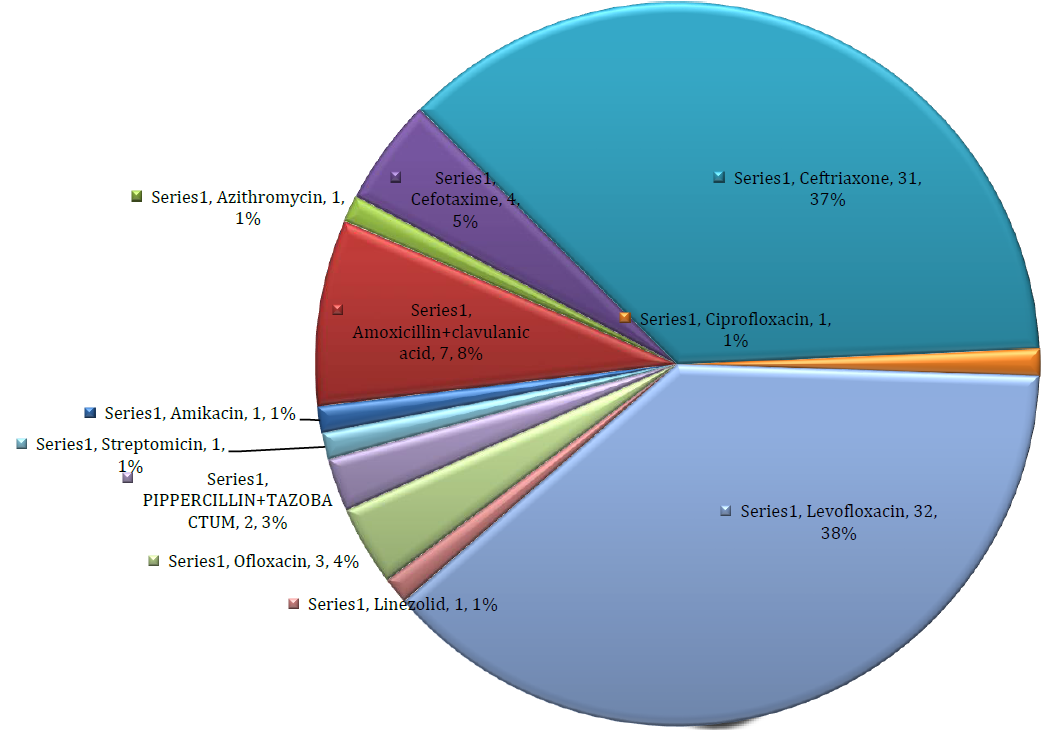
Among 71 patients subjected to antibiotic switch, 39 patients were subjected to early antibiotic switch and 32 patients were subjected to late antibiotic switch. From 39 early switched patients, 21 patients were male and 18 patients were female whereas out of 32 late switched patients, 22 patients were male and 10 patients were female with no significant difference (Chi square test:X2=1.635). This study was compared to the one conducted by Shrayteh et al. [3] in which among 356 patients included in the study, 118 patients were switched to oral route within 3 days of hospitalization whereas remaining two third of patients were subjected to switch beyond 3 days (Figure 2).
Figure 2: Frequency of initial antibiotics prescribed among different antibiotics
Our study was in correspondence to the study conducted by Mertz et al. [8] in which 38% (246/646) of episodes of continued iv antibiotic therapy, patients met all criteria for switching to oral antibiotics on the third day and 151/246 (61.4%) were switched.
In the present study, while comparing early and late conversion it is found that 54% of males were converted early and 46% of females were converted early, which does not make any statistical differences.
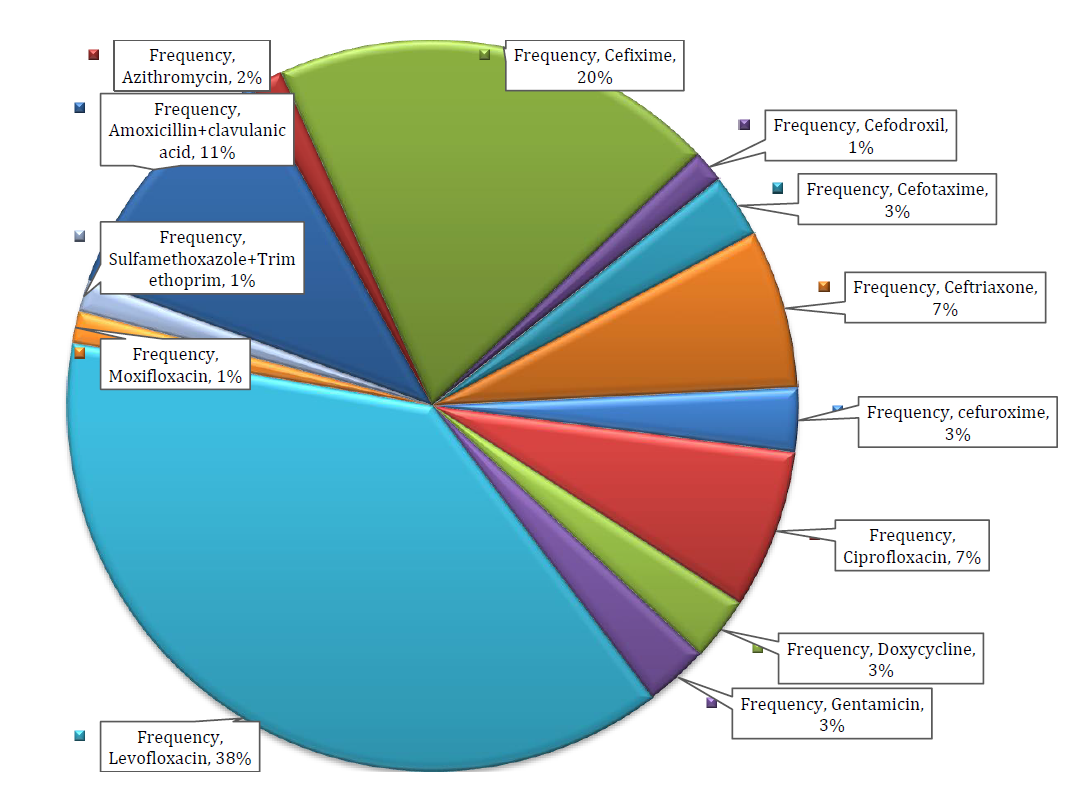
There were 39% of the patients in the study were initially prescribed with levofloxacin which was the most common initially prescribed antibiotic administered intravenously and it was the most preferred option when switching to oral route. These findings were different from the study proposed by Erabelly et al. [9] which showed penicillins+betalactams (38.31%) were widely prescribed antibiotic, followed by cephalosporins (Figure 3).
Figure 3: Frequency of converted antibiotics among different antibiotics
The average length of hospital stay for patients with an early conversion was found to be 4.9±1.28 days and in late conversion was 7.9±1.72 days. This clearly highlights the increased duration of hospitalization for patients undergoing for a late conversion. Similar findings were seen with study conducted by Ooseterhert et al. [10], whereas Total length of hospital stay was 9.6 (5.0) and 11.5 (4.9) days for patients in the intervention group and control group (1.9 days, 0.6 to 3.2). The comparison of length of stay in early and late conversion was obtained from Mann Whitney ‘U’ test. The P value is found to be <0.0001 which is considered to be highly significant between early and late converted patients (Figure 4).
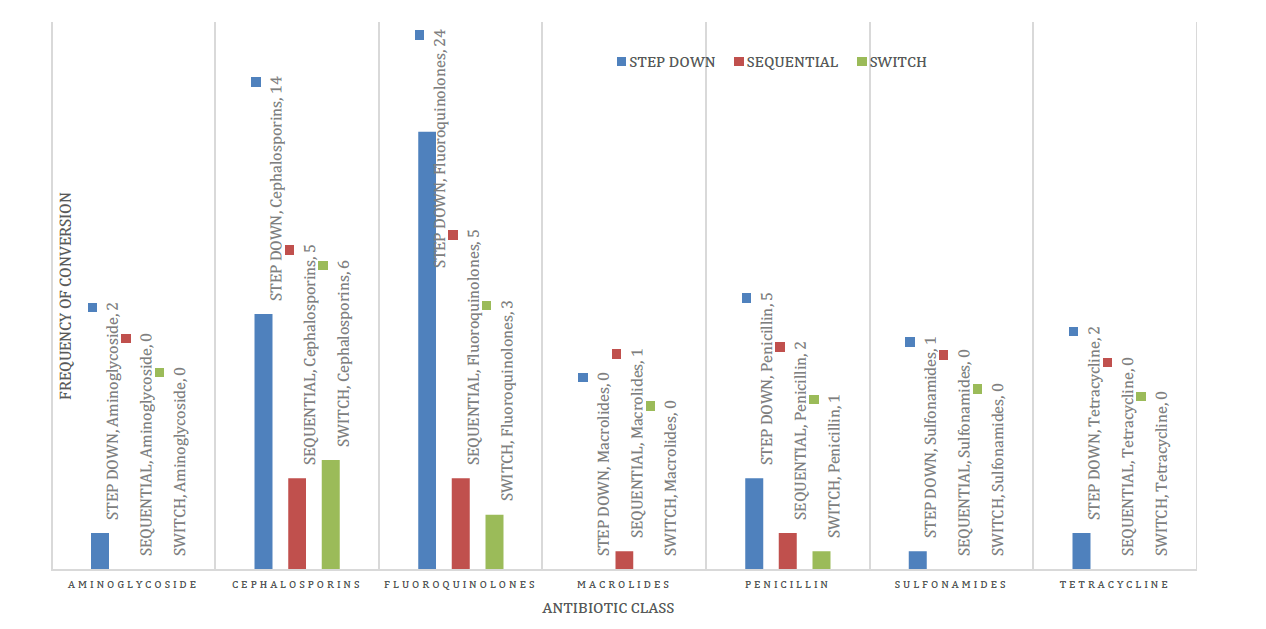
Figure 4: Frequency of conversion based on different type of conversion therapy among antibiotic classes
The most prevalent respiratory tract infection in the present study was acute exacerbation of COPD (33%) while URTI (5%) was the most common co-existing illness, which is understandable due to the similarity in the risk factors of both which was in resemblance to the study conducted by Shrayteh et al. [3] and Khan et al. [6].
The most frequently used type of conversion was Step down therapy (68%) which has highly significant difference with a P value <0.0001(Chi square test: X2=56.577) as when compared with sequential and switch therapy. This was contradictory to that of Shrayteh et al. [3] in which the most commonly used type of antibiotic switch, was sequential therapy (52.5%).
In the present study SIRS criterion was also taken into account in resemblance to the study of Cooke et al. [5]. The strength of present study was that it included patients with a wide variety of respiratory tract infections while majority of the other related studies focus on mainly one type of infection. The analysis of all classes of antibiotics used in conversion was an added advantage in having a better understanding about the effects and benefits of conversion therapy.
Future research could be done on the field of pharmacoeconomics to better understand and find out the most cost-effective combination of antibiotics that could be converted from IV to oral. Studies can also be done on the safety of these conversions as a wide range of information on this strategy will encourage physicians to adopt it.
CONCLUSION
The present study highlights that there is large array of medications are available for IV to PO conversion therapy and various types of IV to PO conversions are possible. From the different parameters compared and outlined in the present study, following conclusions could be drawn that among three types of conversion therapy, step down therapy is the most commonly used conversion method and the analysis shows that early conversion from IV to PO antibiotics will reduce the duration of hospitalization. Therefore, early conversion from IV to oral antibiotics not only reduces the financial burden of a patients, it minimizes the possible IV complications too and booster the faster recovery of a patients.
Ethical Approval
The study was approved by the Institutional Ethical Committee Ref: IEC/BLDE COP/2019/02.
REFERENCE
Chandrasekhar, D. et al. “Cost minimization analysis on IV to oral conversion of antimicrobial agent by the clinical pharmacist intervention.” Clinical Epidemiology and Global Health, vol. 7, no. 1, 2019, pp. 60-65.
Cyriac James, E. “Switch over from intravenous to oral therapy: a concise overview.” Journal of Pharmacology and Pharmacotherapeutics, vol. 5, no. 2, 2014, pp. 83-87.
Shrayteh, Z. et al. “Practice of switch from intravenous to oral antibiotics.” SpringerPlus, vol. 3, no. 1, 2014, pp. 717-725.
Kurtzhalts, K. et al. “Impact of antimicrobial stewardship on outcomes in hospitalized veterans with pneumonia.” Clinical Therapeutics, vol. 38, no. 7, 2016, pp. 1750-1758.
Cooke, J. et al. “Intravenous and oral antibiotics in respiratory tract infection: an international observational study of hospital practice.” Pharmaceutical World Science, vol. 24, no. 6, 2002, pp. 247-255.
Khan Ahmed, M. et al. “Assessment of prescribing trend of drugs at outpatient chest ward of government tertiary care hospital situated in Karachi.” Journal of Bioequivalence and Availability, vol. 10, no. 1, 2018, pp. 018-021.
Yannamani, Satya Tejaswini et al.“Practice of intravenous to oral conversion of antibiotics and its influence on length of stay at a tertiary care hospital: a prospective study.” Journal of Clinical and Diagnostic Research, vol. 12, no. 3, 2018, pp. FC01-FC04.
Mertz, D. et al. “Outcomes of early switching from intravenous to oral antibiotics on medical wards.” Journal of Antimicrobial Chemotherapy, vol. 64, no. 1, 2009, pp. 188-199.
Errabelly, P. et al. “Analysis of the prescribing pattern of antibiotics in respiratory tract infection at department of medicine at a tertiary care hospital.” International Journal of Pharmaceutical Sciences and Research, vol. 6, no. 7, 2015, pp. 2963-2967.
Oosterheert, J. et al. “Effectiveness of early switch from intravenous to oral antibiotic in severe community acquired pneumonia: multicentered randomized trial.” British Medical Journal, vol. 333, 2006, pp. 1193-1195.
Recommended Articles
Research Article
Leigh Syndrome Should Not Be Diagnosed Exclusively Upon Cerebral MRI
Finsterer J
Published: 15/07/2020
Download PDF
Research Article
Vision for a Brighter Kangra: Unmasking the Truth about Pink Eye – A Comprehensive Study on Types, Symptoms, and Proactive Prevention in Himachal Pradesh’s Kangra District
Deepti ,
...
Garima
Published: 11/11/2023
Download PDF
Research Article
It Remains Unproven That the Variant M.8231C>A Causes Coronary Atherosclerosis
Finsterer J
Published: 15/07/2020
Download PDF
Research Article
Bioactive ingredients screening and antibacterial activity of Citrus aurantifolia leaf extract against some enteric isolates
Abdallah M.S,
Kabiru Sama’ila
Published: 10/08/2020
Download PDF
PO Box 101, Nakuru
Kenya.
Email: office@iarconsortium.org
Editorial Office:
J.L Bhavan, Near Radison Blu Hotel,
Jalukbari, Guwahati-India
Biradar, S. M., kulkarni, C., Srikanth, K., Kanakappanavar, S. L., Jainuddin, B. S. K., Devarmani, S. S. & Badiger, S. (2021). Supervision of Antibiotics Switch from Intravenous to Per Oral and its Added Benefits for Better Patient Compliance. IAR Journal of Medical Sciences, 2(1), 1-5.
MLA
Biradar, S M., et al. "Supervision of Antibiotics Switch from Intravenous to Per Oral and its Added Benefits for Better Patient Compliance." IAR Journal of Medical Sciences 2.1 (2021): 1-5.
Chicago
Biradar, S M., Chaitanya kulkarni, Kanagala Srikanth, Sachin L. Kanakappanavar, B S. K. Jainuddin, S S. Devarmani and Sharan Badiger. "Supervision of Antibiotics Switch from Intravenous to Per Oral and its Added Benefits for Better Patient Compliance." IAR Journal of Medical Sciences 2, no. 1 (2021): 1-5.
Harvard
Biradar, S. M., kulkarni, C., Srikanth, K., Kanakappanavar, S. L., Jainuddin, B. S. K., Devarmani, S. S. and Badiger, S. (2021) 'Supervision of Antibiotics Switch from Intravenous to Per Oral and its Added Benefits for Better Patient Compliance' IAR Journal of Medical Sciences 2(1), pp. 1-5.
Vancouver
Biradar SM, kulkarni C, Srikanth K, Kanakappanavar SL, Jainuddin BSK, Devarmani SS, Badiger S. Supervision of Antibiotics Switch from Intravenous to Per Oral and its Added Benefits for Better Patient Compliance. IAR Journal of Medical Sciences. 2021 Jan;2(1):1-5.


 Download PDF
 Download XML