Supportive Function of the Clinical Supervision of Radiography Students
Osward Bwanga
1
,
Kelvin Chitamya
2
1
Diploma in Radiography, BSc Radiography, MSc Radiography, Evelyn Hone College of Applied Arts and Commerce, School of Applied and Health Sciences, Lusaka, Zambia
2
Diploma in Radiography, BSc Radiography, MSc Advanced Practice (Radiography), MSc Health Professions Education Midland Regional Hospital at Tullamore, Radiology Department, Co. Offaly, Ireland
Clinical supervisors are faced with daily challenges of managing and supporting radiography students from all levels of training and with varying degree of autonomy. However, there is a lack of literature and guidelines to support radiographers who provide practice-based learning to radiography students with learning difficulties and disabilities during clinical practice. The purpose of this article is to bring about awareness and provide information and guidance to clinical supervisors of radiography students on how to support learners with learning difficulties and disabilities. This information will also be useful to other healthcare professionals, such as nurses, pharmacists, physiotherapists, and medical doctors who facilitate practice-based learning for healthcare students in the clinical environments.
Keywords
Bullying
Disability
Harassment
Learning Difficulty
Radiographer
Radiography Student
Stress
Struggling Student
INTRODUCTION
Clinical practice is an essential component of radiography education which allows students to develop their competences under the supervision of radiographers who act as clinical supervisors ([1]. Clinical practice provides an opportunity for students to integrate theory with practice and attain the social and technical skills that are required to practice as radiographers. A clinical supervisor constitutes an important resource in this professional development. One of the roles of a clinical supervisor is to support students with learning difficulties [2-3]. There are two other terminologies used to describe learning difficulties: “disability”, and “disorder” [3-4]. For this article, “learning difficulties” refers to a struggle or impediment with the learning process [5]. It is the responsibility of the schools of radiography and clinical departments to support students with learning difficulties and disabilities [2,6].
The facilitation of practice-based learning is demanding and complex, as clinical supervisors also provide care to patients as their primary responsibility [1,7]. Students with learning difficulties and disabilities often pose an even greater challenge as they warrant closer clinical supervision. Clinical supervisors may also require specific clinical teaching skills to support these students [5,8. Unfortunately, global literature indicates that most radiographers who supervise radiography students during clinical practice are not trained in the facilitation of practice-based learning [9-10]. Literature also shows a lack of communication from schools of radiography to clinical departments on radiography students with learning difficulties [2]. This puts clinical departments in an awkward position and can negatively affect the experiences of both radiography students and their clinical supervisors.
To support students with learning difficulties effectively and efficiently, clinical supervisors should have appropriate training on issues of equality, inclusion and supportive measures for students with learning difficulties [2-3]. Furthermore, clinical supervisors should have access to educational and support resources, such as guidelines, journal articles and clinical education textbooks [3]. Globally, there is a lack of literature regarding supporting radiography students with learning difficulties and disabilities. Most of the literature on this subject is from the nursing and medical professions and is used in this review to supplement the radiography literature.
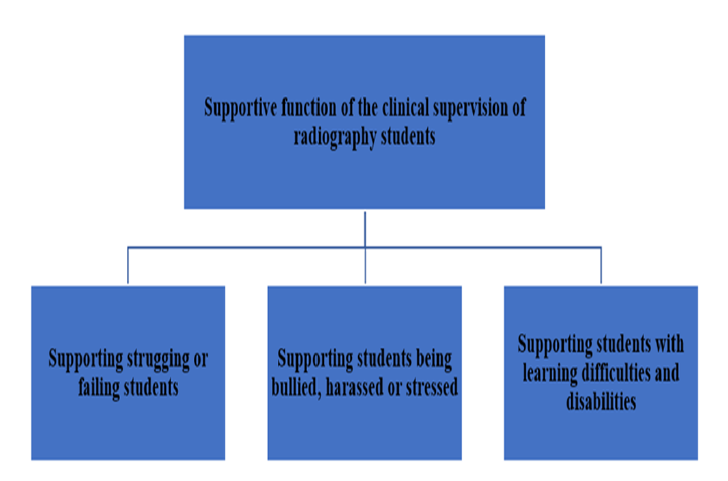
This article is, therefore, aimed at providing information and guidance on how to manage and support radiography students who are struggling with studies, those who are bullied, harassed, stressed and those with learning difficulties and disabilities (Figure 1).
Figure 1: Supportive Function of the Clinical Supervision of Radiography Students
Supporting Struggling Students During Clinical Practice
The clinical supervisor has a responsibility to manage struggling or failing students so that they may either enhance their performance and capabilities for safe and effective practice or be able to understand their failure and the implications of this for their future careers [4]. Steinert [11] defines a struggling student as a learner who does not meet the expectations of a training programme. These pose a challenge to clinical supervisors since these learners warrant closer supervision [8].As a result, these clinical supervisions have been associated with reactions from clinical supervisors ranging from helplessness to frustration and avoidance [12]. Clinical supervisors often perceive that they are ill equipped to supervise struggling students efficiently [8]. However, clinical supervisors should not be reluctant to protect members of the public as only competent radiographers should have the opportunity to register with a specific regulator, such as the Health Profession Council of Zambia (HPCZ).
Providing feedback is a vitally important aspect of supporting a struggling student [4]. Constructive feedback clarifies goals and expectations, reinforces good performance and provides a basis for correcting mistakes [4,7,13-14]. However, literature shows that feedback is rarely given to students due to workload and a lack of training amongst clinical supervisors [7,13]. Feedback is best delivered to a student when a clinical supervisor uses the principles of giving constructive feedback, such as balancing positive and negative comments, being clear and specific, giving it in private, inviting self-assessment of the student and basing the feedback on first-hand information [7,13,15]. Constructive feedback may resolve some of the challenges a struggling student may be experiencing during clinical practice.
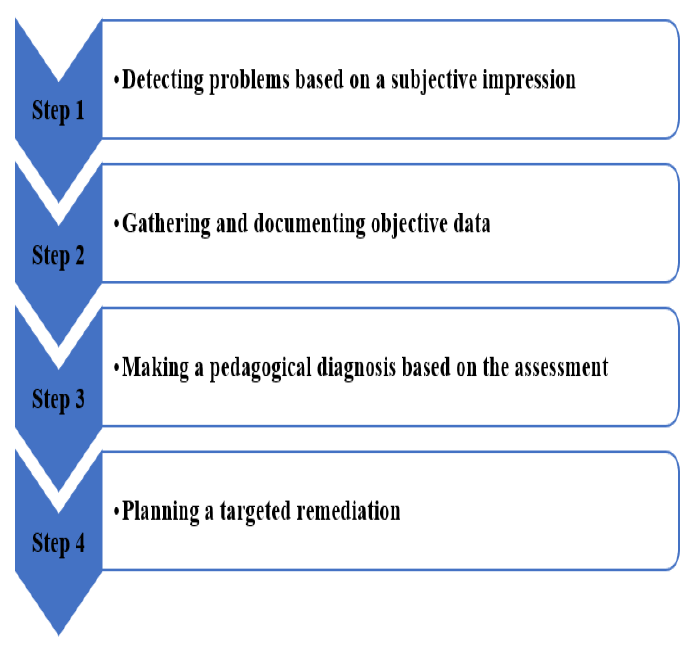
The SOAP model [16]is widely used by clinical supervisors to support struggling students during clinical practice. SOAP stands for subjective, objective, assessment, and plan. The model divides the tasks into four steps (Figure 2).
These steps can guide clinical supervisors in managing and supporting struggling students. The steps are now discussed in relation to radiography.
Figure 2: The Soap Model for Supporting Struggling Students
Step 1: Detecting Problems Based on a Subjective Impression
Literature from the medical profession shows that between 10% and 15% of medical student’s experience significant difficulties during training [17-18]. For this reason, various professional bodies, such as the Society of Radiographers of the UK [1],have emphasised the need to identify students who are either not progressing, or failing to meet the required standards, so that opportunities can be provided to improve their performance. However, identifying a student who may be struggling is a complex process. A student who is struggling has many different faces. Clinical supervisors are often best positioned to detect difficulties early, due to their privileged role of working directly with the students [4]. Table 1 shows the ten early warning signs of a struggling or failing student [12].
Clinical supervisors should always be aware and recognise these warning signs. However, literature suggests that early identification and intervention occur far less often than necessary. Walsh [4]reports that many students are made aware of concerns about their performance for the first time at the end of their placement, when they have no opportunity to improve. This is viewed as morally wrong on two accounts: the clinical supervisor did not identify the deficit and did not give sufficient time or guidance to the student. There is evidence described in the literature on missed opportunities to correct underperforming students at an early stage. Duffy [15]reports of students feeling let down when informed of their underperformance or indeed of their failure long after an issue had been identified. One of the recurring reasons as to why clinical supervisors do not quickly identify students whose clinical performance is below expectation is due to an increase in workload [7,13,15]. A lack of time and increase in workload can lead to increased pressure on clinical supervisors and results in them prioritising their primary duties of patient care. The clinical supervisors’ recognition of a student’s difficulties should prompt the next steps of documentation, assessment and remediation rapidly, since early identification is considered the gold standard to support a struggling student [8,12].
Table 1: Early Warning Signs of Struggling or Failing Students
No
Warning sign
1
Lack of interest and motivation in applying theory into clinical practice
2
Inconsistency in meeting required level of clinical competence
3
Inconsistent clinical performance
4
Lack of insight into own weaknesses regarding clinical performance
5
Not responding appropriately to constructive feedback given by a clinical supervisor
6
Limited practical, interpersonal and communication skills
7
Lack of theoretical knowledge
8
Absence of professional boundaries and behaviours
9
Experiencing poor health (depressed, angry, or tired)
10
Unreliable, regularly late, or absent from the clinical learning environment
Step 2: Gathering and Documenting Objective Data
The establishment of a diagnosis consists of identifying a discrepancy between the expected performance standard and the demonstrated performance [19]. Therefore, a clinical supervisor should consider the student’s level of training before concluding that the learner is underperforming. Data should be based on direct observation of a student to provide accurate and valuable information on which to base the support. Data can also be gathered from other clinical staff but it should be remembered that second-hand observation may lead to misunderstandings and mixed messages which can result in a defensive reaction from the student [13]. However, it is important to collect data on a student’s clinical performance from different clinical staff to be sure of the diagnosis. Where possible, the assigned clinical supervisor can also arrange for a feedback session with the student to gather more information or to try to resolve the problem.
Step 3: Making a Pedagogical Diagnosis Based on the Assessment
There are three causes of a student’s underperformance during clinical practice: cognitive, mental health, or attitude, amongst which cognitive difficulties are the most frequent [4,20]. These three causes are interrelated. In the radiography context, cognitive difficulties mean a lack of diagnostic imaging knowledge and clinical reasoning. Clinical supervisors should also bear in mind the possibility of other reasons for underperforming, such as undiagnosed or non-disclosed learning disability [4,12]. To have an accurate diagnosis on the mental health of a student, the school or hospital counselling department should be involved.
Step 4: Planning a Targeted Remediation
Remediation in relation to a struggling student means additional teaching above and beyond the standard curriculum, individualised to the student who, without the additional teaching, would not achieve the necessary skills for the profession [21]. The first step in planning a targeted and efficient remediation is to pinpoint the underlying issue as precisely as possible [8]. It is a waste of time to start the remediation process when the problem is not well established. The designated clinical supervisor should apply the principle of individualisation in the facilitation of practice-based learning to a struggling student. Individualisation is one of the basic educational principles which relates teaching and learning to the needs of the individual student. Harden and Laidlaw [14]report that individualised teaching improves the effectiveness and efficiency of learning and leads to better learning experiences for the students. For cognitive difficulties, a student may be supported through extra lessons in theory and clinical practice. When displaying attitude problems, a student can be supported with supplemental teachings on professionalism and supplied with a copy of the Code of Professional Conduct for Radiographers, such as the one issued by the Radiological Society of Zambia [22]. The code serves as a reference for professional ethics, morals and standards of behaviour for radiographers. For mental health issues, a student should be referred to the school’s counselling department or mental health facility.
Bullying, Harassment and Stress in the Clinical Learning Environment
Literature shows that radiography students experience bullying, harassment and stress in the radiology departments ([23-26]. These three issues are interrelated. According to the College of Radiographers [6], bullying and harassment undermine physical and mental health which results in stress.
Bullying and Harassment in the Clinical Learning Environment
A substantial proportion of students’ worldwide experience bullying during clinical practice [24,27]. In a survey conducted in the UK by the College of Radiographers [24],one third of radiography students reported being bullied during clinical practice. Blakey and others [27] define bullying as mistreatment, either intentional or unintentional, which occurs when behaviour shows disrespect for the dignity of others and unreasonably interferes with the student’s learning process. The College of Radiographers [6]stresses that students should be treated fairly and consistently, and with dignity and respect, wherever they undertake clinical practice.
Literature reports that radiography students are also harassed during clinical practice [24,27,28]. The College of Radiographers [6] defines harassment as an unwanted conduct affecting the dignity of men and women in the workplace. In the context of this article, the workplace is the radiology department. In its worst form, this is bullying and can range from physical violence to more subtle forms of psychological or sexual harassment [4]orkplace harassment may be related to age, sex, race, disability, religion, sexuality, nationality, or any other personal characteristic of the individual [6].
Literature suggests that any student can suffer bullying and harassment during clinical practice and at the hands of any clinical staff [6,27,28]. However, senior clinical staff are reportedly the more likely perpetrators and gender and racial discrimination are amongst the most common reported bullying and harassments acts [27-28]. A good clinical supervisor will be one the students feels they can approach if they suffer bullying and harassment [4]. A good clinical supervisor should also be able to identify a student being bullied or harassed. The changes in a student’s behaviour are those relating to stress [6]. It is good practice to orient students on how to deal with issues related to bullying and harassment during the induction process. Students can be further supported by issuing them with institutional and students’ guides. A good example is the guide issued by the College of Radiographers in the UK “Dealing with bullying and harassment- a guide for student radiographers” [6]. This guide can be replicated to other countries.
Stress in the Clinical Learning Environment
The radiology department is an important learning environment for radiography students. Students undertake training in a complex sociotechnical environment, often with critically ill patients and at risk from radiation. Students are put into a position of trust in foreign surroundings, not knowing the staff, patients, or the departmental routine [4]. Research on the experiences of radiography students have found the radiology department to be a source of stress during clinical practice [23-26]. Table 2 presents the main common causes of stress amongst radiography students reported in the literature related to the clinical learning environment.
Students might also suffer from stress due to other factors not related to the clinical learning environment, such as overload with classroom assignments, or family or personal problems [26-27].
Work-related stress is widely recognised as a significant problem in the clinical learning environment. According to the College of Radiographers [24]and Walsh [4] the signs that may be indicative of stress in students include anxiety, poor performance, social isolation, poor concentration, lack of motivation, headaches, tiredness, irritability, and depression. Thus, clinical supervisors need to be alert to these signs of stress and offer the student appropriate support [4]. To perform this role effectively and confidently, clinical supervisors should be familiar with the support systems available. The support may include contacting academic staff and hospital counselling departments. Radiography students have also suggested strategies that can be employed to ease stress, such as frequent constructive feedback, availability of the clinical supervisors and other clinical staff, and assurances that mistakes happen in the clinical environment [23-24].
Table 2: Main Common Causes of Stress Amongst Radiography Students in The Clinical Learning Environment
No
cause of stress
1
Bullying and harassment by clinical staff and patients
2
Fear of making a mistake or repeat during imaging
3
Feeling unprepared or inexperienced in clinical and imaging practice
4
Difficult and critical patients, such as trauma and intensive care (ICU) patients
5
Excessive clinical supervision by radiographers
6
Negative responses to questions or requests for help from clinical supervisors
Supporting Students with Learning Difficulties and Disabilities
Clinical supervisors have a moral obligation to support students with health problems, learning impairments and disabilities [4,29-30]. It is, therefore, important for clinical supervisors to be aware of the legislation that protects students with learning difficulties and disabilities. In Zambia, for example, the rights of students with learning disabilities are addressed through the Persons with Disabilities Act of 2012. Under this act, it is unlawful for a student to be treated less favourably because of his or her learning disability. The Persons with Disabilities Act of Zambia of 2012 defines the word “disability” as any restriction resulting from an impairment or inability to perform any activity in the manner or within the range considered normal for a human being. Walsh [4] and the Royal College of Nursing [30]highlights some of the more common impairments and disabilities that students may have which include: dyslexia, epilepsy, dyscalculia, hearing or visual impairment, mental health conditions and physical disability.
Generally, candidates for radiography training programmes declare their disability during the application process. Having been accepted on a training programme means that the learning disability is not a barrier to becoming a competent radiographer. It is the responsibility of the schools of radiography to communicate the information relating to a student with a learning difficulty or disability to a clinical department before a student arrives for first placement. However, sometimes the diagnosis of a student’s learning difficulty and disability may only become apparent during clinical practice [4]. Some students may also not see themselves as disabled or may not want to disclose a disability for fear of repercussions and stigma [30]. This means that the clinical supervisor may be the first person to recognise such a student. To support such a student, the clinical supervisor need to be non-judgemental, sensitive and maintain confidentiality [29]. The role of the clinical supervisor in this situation may involve contacting the academic staff for guidance and support [4].
The Royal College of Nursing [30] stresses that impairment does not mean incapacity. With appropriate support, radiography students with learning difficulties and disabilities can work well and add value to the delivery of imaging services. Therefore, clinical supervisors have a duty to undertake an assessment to determine whether reasonable adjustments can be put in place once a disability or learning difficulty of a student is known. The purpose of reasonable adjustments is to help the student overcome the learning difficulty [3]. Failure to make reasonable adjustments is discrimination [29]. However, the balance between providing reasonable adjustment for the student, whilst ensuring fitness to practice should be maintained [4,29]. Walsh [4] highlight factors to consider when deciding if an adjustment is reasonable (Table 3).
When a student with a learning difficulty or disability is on clinical practice, clinical supervisors have a duty to ensure adjustments are in place. To perform this duty effectively, clinical supervisors should understand common learning difficulties. The two most common reasons for needing additional learning support reported in the literature are dyslexia and dyscalculia [2,4,29-30]. These conditions and recommended reasonable adjustments are discussed in relation to radiography.
Table 3: Factors to Consider When Deciding if an Adjustment Is Reasonable
No
Factor
1
Need to maintain academic and practice competence standards
2
Financial cost of the adjustment and the resources available
3
Practicality of the adjustment
4
Effectiveness of the adjustment
5
Health and safety of the student, patients, fellow students, and other clinical staff
Dyslexia
The British Dyslexia Association [31] defines dyslexia as a specific learning difficulty that mainly affects the development of literacy and language skills. According to the Royal College of Nursing [29] the incidence of dyslexia is estimated to occur in approximately 10 per cent of the population. Although dyslexia is a permanent disability, with appropriate guidance and support students may largely overcome and deal with their learning difficulties. It is, therefore, important that clinical supervisors are aware of the difficulties a student who has dyslexia may present with during clinical practice. Walsh [4]and Royal College of Nursing [29] list the difficulties dyslexia students may face: erratic spelling, misreading, poor handwriting, poor memory retention, difficulty in organising work, poor time management, short concentration span and confusion between right and left on the radiographs.
There are several reasonable adjustments reported in the literature to support students with dyslexia. Kinnell and Hughes [29] and Royal College of Nursing [30] offer useful suggestions on how clinical supervisors can support students with dyslexia, such as going over instructions and explanations several times, allowing extra time to complete tasks, providing extra teaching and giving practical demonstrations to back up verbal explanations. According to the Royal College of Nursing [30] people with dyslexia are caring and compassionate in nature, they are likely to be creative and good at problem solving, and they are hardworking and determined to succeed due to the challenges they face daily. It is important that clinical supervisors help students with dyslexia overcome their difficulties rather than avoid them. They can equally be encouraged to access help through the university’s academic support department or other relevant hospital departments [4].
Dyscalculia
Walsh [4] defines dyscalculia as a condition that affects the ability of a person to acquire arithmetical skills. The individual may have difficulty understanding the concept of simple numbers, lack an intuitive grasp of numbers, and have problems learning number facts and procedures. These difficulties must be quantifiably below what is expected for an individual’s chronological age and must not be caused by poor educational or by intellectual impairments [31]. Dyscalculia often occurs in association with other conditions such as dyslexia, which makes it difficult to both diagnose and to estimate its prevalence, but research suggests that the condition affects about 5 per cent of the population [30-31].
This disability is a concern to clinical supervisors in radiography because it may lead to potential errors when undertaking calculations of exposure factors. This can potentially result in under or over exposure of a patient to ionising radiation.
The Royal College of Nursing [30] and British Dyslexia Association [31] highlight specific learning difficulties a student with dyscalculia can present with, such as difficulties when counting backwards, difficulties in remembering and dialling phone numbers, difficulties in interpreting results, problems in remembering appointment times, the need to use fingers to workout simple sums and much slower in working out mathematical answers. Although students with dyscalculia have difficulties in working with numbers and performing calculations, they excel in non-mathematical tasks, such as managing resources [30]. To support these students, clinical supervisors should encourage the use of calculators for calculations and give them extra time when performing mathematical clinical tasks.
CONCLUSION
There is a scarcity of literature in radiography on supporting students with learning difficulties and disabilities during their clinical practice. This article provides this information to radiographers who supervise radiography students in the clinical learning environment by borrowing the literature from the nursing and medical professions. Literature searches also revealed a lack of guidelines on this subject in radiography. There is a necessity to develop guidelines by the schools of radiography and professional bodies representing radiographers in each country, such as the Radiological Society of Zambia (RSZ) to support radiography students and their clinical supervisors. There is also a lack of research on this subject; radiographers and radiography students are encouraged to conduct research on this topic to have an understanding related to the radiography profession.
Acknowledgement
The authors would like to thank Joseph Mulenga and Chileka Chiyanika for their help in reviewing this article.
REFERENCE
College of Radiographers. “Quality standards for practice placements.” College of Radiographers, 2012.
Murphy, F. “On being dyslexic: Student radiographers’ perspectives.” Radiography, vol. 17, no. 2, 2011, pp. 132–138.
University College Dublin. “Supporting nursing and midwifery students with a disability in clinical practice: A resource guide for clinical and academic staff.” University College Dublin, 2011.
Walsh, D. “The nurse mentor’s handbook: Supporting students in clinical practice.” 2nd ed., Open University Press, 2014.
L’Ecuyer, K.M. “Clinical education of nursing students with learning difficulties: An integrative review (part 1).” Nurse Education in Practice, vol. 34, 2019, pp. 173–184.
College of Radiographers. “Dealing with bullying and harassment: A guide for student radiographers.” College of Radiographers, 2010a.
Kayembe, R.M. and Bwanga, O. “Knowledge, attitudes and practices of student radiographers regarding feedback on clinical performance in Zambia.” The South African Radiographer, vol. 58, no. 1, 2020, pp. 8–14.
Boileau, E.S. et al. “Is there a way for clinical teachers to assist struggling learners? A synthetic review of the literature.” Advances in Medical Education and Practice, vol. 8, 2017, pp. 89–97.
Lee, C.G. “Radiography clinical instructors’ perceptions of the transition from technologist to educator.” Dissertation, East Tennessee State University, 2015.
Du Plessis, J. “Stakeholders’ viewpoint on work-integrated learning practices in radiography training in South Africa: Towards improvement of practice.” Radiography, vol. 25, no. 1, 2019, pp. 16–23.
Steinert, Y. “The ‘problem’ junior: Whose problem is it?” British Medical Journal, vol. 336, no. 7636, 2008, pp. 150–153.
Houghton, T. “Assessment and accountability: Part 2 – managing failing students.” Nursing Standard, vol. 30, no. 41, 2016, pp. 41–49.
Krackov, S.K. “Giving feedback.” In A practical guide for medical teachers, edited by J.A. Dent and R.M. Harden, 3rd ed., Churchill Livingstone, 2009, pp. 357–367.
Harden, R.M. and Laidlaw, J.M. “Essential skills for a medical teacher: An introduction to teaching and learning in medicine.” 2nd ed., Elsevier, 2017.
Duffy, K. “Providing constructive feedback to students during mentoring.” Nursing Standard, vol. 27, no. 31, 2013, pp. 50–56.
Langlois, J.P. and Thach, S. “Managing the difficult learning situation.” Family Medicine, vol. 32, no. 5, 2000, pp. 307–309.
Faustinella, F. et al. “Remediation strategies and students’ clinical performance.” Medical Teacher, vol. 26, no. 7, 2004, pp. 664–665.
Yates, J. and James, D. “Predicting the ‘strugglers’: A case-control study of students at Nottingham University Medical School.” British Medical Journal, vol. 332, no. 7548, 2006, pp. 1009–1013.
Bearman, M. et al. “‘Is there a plan B?’: Clinical educators supporting underperforming students in practice settings.” Teaching in Higher Education, vol. 18, no. 5, 2013, pp. 531–544.
Smith, C.S. et al. “A general framework for approaching residents in difficulty.” Family Medicine, vol. 39, no. 5, 2007, pp. 331–336.
Guerrasio, J. et al. “Learner deficits and academic outcomes of medical students, residents, fellows, and attending physicians referred to a remediation program, 2006–2012.” Academic Medicine, vol. 89, no. 2, 2014, pp. 352–358.
Radiological Society of Zambia. “Code of conduct for radiographers.” Radiological Society of Zambia, 2018.
Mason, S.L. “Radiography student perceptions of clinical stressors.” Radiologic Technology, vol. 77, no. 6, 2006, pp. 437–450.
College of Radiographers. “Analysis of student clinical placement experience survey.” College of Radiographers, 2010b.
Turner, J. “An investigation of third year undergraduate diagnostic radiography students’ perceptions of stress and coping mechanisms whilst on clinical placement.” University of Hertfordshire, 2014.
Ndahepele, M.R. et al. “Factors contributing to stress among radiography and nursing students at University of Namibia.” The South African Radiographer, vol. 56, no. 1, 2018, pp. 20–25.
Blakey, A.G. et al. “Interventions addressing student bullying in the clinical workplace: A narrative review.” BMC Medical Education, vol. 220, 2019, pp. 1–13.
Budden, L.M. et al. “Australian nursing students’ experience of bullying and/or harassment during clinical placement.” Collegian, vol. 24, no. 2, 2017, pp. 125–133.
Kinnell, D. and Hughes, P. “Mentoring nursing and healthcare students.” SAGE Publications Ltd., 2010.
Royal College of Nursing. “RCN guidance for mentors of nursing and midwifery students.” Royal College of Nursing, 2017.
British Dyslexia Association. “Dyslexia and specific difficulties: Overview.” British Dyslexia Association, 2020.
Recommended Articles
Research Article
It Remains Unproven That the Variant M.8231C>A Causes Coronary Atherosclerosis
Finsterer J
Published: 15/07/2020
Download PDF
Research Article
Vision for a Brighter Kangra: Unmasking the Truth about Pink Eye – A Comprehensive Study on Types, Symptoms, and Proactive Prevention in Himachal Pradesh’s Kangra District
Deepti ,
...
Garima
Published: 11/11/2023
Download PDF
Research Article
Leigh Syndrome Should Not Be Diagnosed Exclusively Upon Cerebral MRI
Finsterer J
Published: 15/07/2020
Download PDF
Research Article
Bioactive ingredients screening and antibacterial activity of Citrus aurantifolia leaf extract against some enteric isolates
Abdallah M.S,
Kabiru Sama’ila
Published: 10/08/2020
Download PDF
PO Box 101, Nakuru
Kenya.
Email: office@iarconsortium.org
Editorial Office:
J.L Bhavan, Near Radison Blu Hotel,
Jalukbari, Guwahati-India
Bwanga, O. & Chitamya, K. (2020). Supportive Function of the Clinical Supervision of Radiography Students. IAR Journal of Medical Sciences, 1(1), 1-6.
MLA
Bwanga, Osward and Kelvin Chitamya. "Supportive Function of the Clinical Supervision of Radiography Students." IAR Journal of Medical Sciences 1.1 (2020): 1-6.
Chicago
Bwanga, Osward and Kelvin Chitamya. "Supportive Function of the Clinical Supervision of Radiography Students." IAR Journal of Medical Sciences 1, no. 1 (2020): 1-6.
Harvard
Bwanga, O. and Chitamya, K. (2020) 'Supportive Function of the Clinical Supervision of Radiography Students' IAR Journal of Medical Sciences 1(1), pp. 1-6.
Vancouver
Bwanga O, Chitamya K. Supportive Function of the Clinical Supervision of Radiography Students. IAR Journal of Medical Sciences. 2020 Jan;1(1):1-6.



 Download PDF
 Download XML