Contents
Download PDF
pdf Download XML
185 Views
11 Downloads
Share this article
Research Article | Volume 4 Issue 1 (Jan-June, 2023) | Pages 1 - 4
Prevelence of Diabetic Peripheral Neuropathy Using Michigan Neuropathy Screening Instrument in Semi-Urban Population of South India
 ,
 ,
 ,
1
Department of General Medicine, TOMCH and RC, The Oxford Medical College Hospital and Research Center, Bangalore, Karnataka, India
Under a Creative Commons license
Open Access
Received
Feb. 3, 2023
Revised
March 9, 2023
Accepted
April 19, 2023
Published
May 27, 2023
Abstract

Background: Diabetes represents a significant global public health burden. DPN is a microvascular complication of T2DM attributed to chronic hyperglycaemia, defined as the presence of peripheral nerve dysfunction in diabetics after exclusion of other causes. Screening for DPN in the clinical practice using a simple objective tool is essential. The Aim of the study was to determine the proportion of peripheral neuropathy in patients with Type 2 diabetes mellitus using Michigan Neuropathy Screening Instrument and comparison with other screening methods. Method: A cross sectional study is conducted among type 2 diabetes mellitus patients attending OPD and In-patients in a Tertiary Care Hospital. Study is conducted using detailed clinical examination and Michigan Neuropathy Screening Instrument (MNSI) which includes a pre-tested, pre-designed questionnaire and clinical examination, used to assess distal symmetrical polyneuropathy. Result: Among the 100 patients 54 are males and 46 are females. The mean duration of DM is 9.42±4.28 years. Based on clinical examination and MNSI Overall, 51% were found to have DPN. Based on the scoring of MNSI patient version, 39% patients have DPN. Whereas based on MNSI examination version 46% patients have DPN. Out of 100, patients who have HbA1c >6.5%, increasing age and diabetes duration of >5years are found to have higher proportion of DPN with a significant p value (<0.05).

Keywords
INTRODUCTION

Diabetes mellitus poses a substantial burden on society, mainly due to macrovascular and microvascular complications [1]. Diabetic Peripheral Neuropathy (DPN) is a microvascular complication of T2DM attributed to chronic hyperglycaemia, defined as the presence of peripheral nerve dysfunction in diabetics after exclusion of other causes [1]. 


The major problem with the development of DPN is that the changes are subtle people tend to ignore the signs of nerve damage leading to reduced quality of life, mainly attributable to the morbidity and mortality associated with DPN. Screening for DPN in the clinical practice using a simple objective tool is essential, as the detection of subtle signs of DPN at the earliest minimizes the damaging effects and in turn improve the quality of life by actively modulating the course of suboptimal glycemic control [2,3].


Aim

To determine the proportion of peripheral neuropathy in patients with Type 2 diabetes mellitus using Michigan Neuropathy Screening Instrument (MNSI).

MATERIALS AND METHODS
  • Setting: Department of General Medicine, Tertiary Care Hospital, Bangalore from March 2021 to September 2022.

  • Study Design: Cross sectional study

  • Sampling Method: Patients attending OPD and admitted in a Tertiary Care Hospital in Bangalore with known case of Type 2 Diabetes mellitus.


Inclusion Criteria


  • Patients with established diagnosis of type 2 diabetes mellitus with at least one year duration

  • Patients aged 30 years and above of either sex


Exclusion Criteria


  • Patients of Type 1/ other forms of Diabetes

  • Patients taking medications known to impair nerve function, such as phenytoin, cisplatin, vincristine, INH, Dapsone etc.

  • Patients with other illness causing neuropathies like autoimmune disorders, vitamin deficiencies, nerve root compression, CVA, Hypothyroidism, Leprosy, chronic alcoholism, CKD, Occupational toxins exposure:

  • Viral infections like herpes

  • Patients with acute/Critical illness

  • Those with disability including foot amputation


Methods of Collection of Data

Proportion of peripheral neuropathy in patients with T2DM is computed by using detailed clinical examination and screening tool Michigan Neuropathy Screening instrument (MNSI) which includes a pre-tested, pre-designed questionnaire and clinical examination, used to assess distal symmetrical polyneuropathy.


In the MNSI questionnaire form a Score of ≥7 and with a MNSI physical examination score ≥2.5 is taken as positive for DPN.

RESULTS

A total of 100 study participants with known case of T2DM were enrolled in the study, the mean age was 53.72±9.14. 54% of them were males, 46% females. The mean BMI of study population is 22.986±2.67 kg/m2. The mean duration of diabetes is 9.42±4.13 years. The mean HbA1c is 9.112±1.62. 


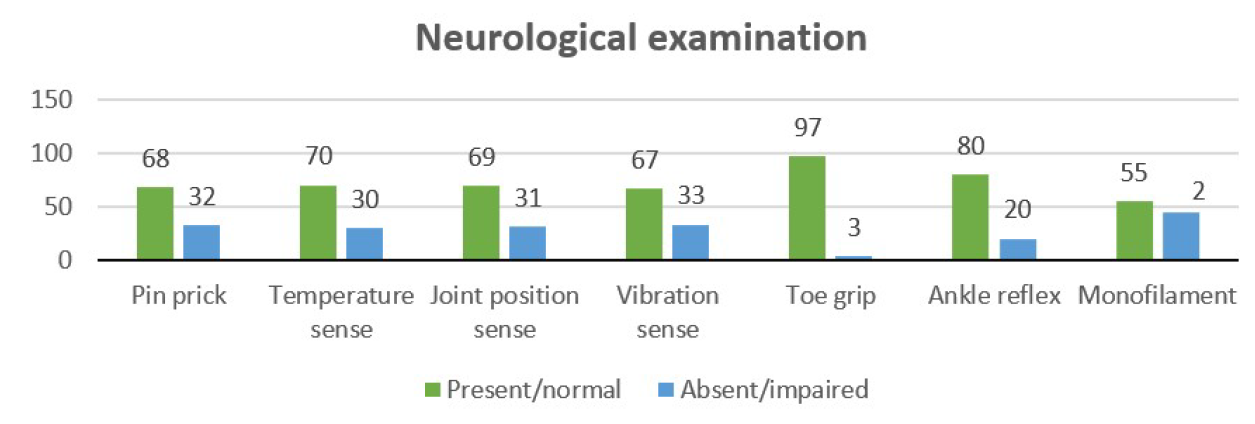
The proportion of DPN according to the MNSI patient history version is 39% and based on MNSI examination is 46%. Overall, the proportion of DPN in this study is 51%. In our study using the 10-g SWM, Monofilament test revealed absent perception in 35%, 10% had reduced finding and 55% had normal findings.


On comparing the clinical variables with proportion of Diabetic peripheral neuropathy it is shown that a significant association is found between longer duration of diabetes, increasing age of the patient, poor glycaemic control and Diabetic peripheral neuropathy (Table 1).


Table 1: Neuropathy Testing with Various Methods

Parameter

No. of DPN cases

Monofilament

45

Tuning Fork

32

MNSI: patient

39

MNSI: signs

46

Pin prick

28

Ankle reflex

11


The patients were detected with neuropathy with various methods with different values and those results are as shown. Among all the methods the patients diagnosed less were with the ankle reflex and the highest number diagnosed was with MNSI examination version (Figures 1 and 2).


Figure 1: Neurological Examination Findings in the Study Population


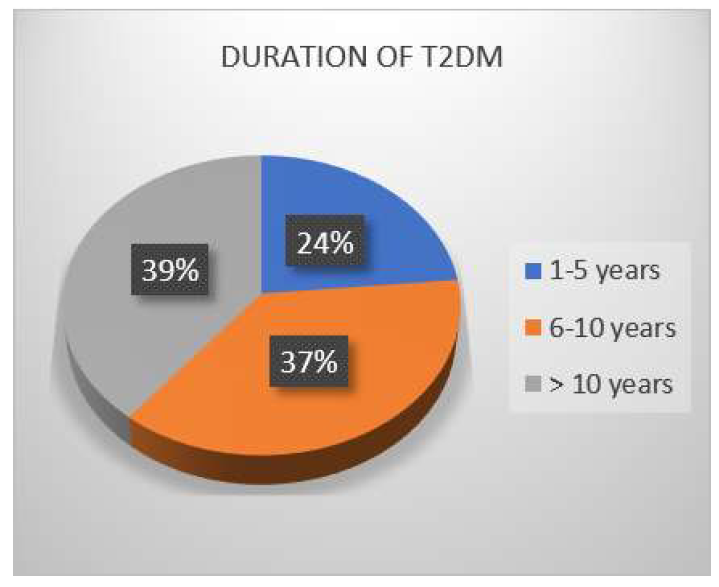
Figure 2: Duration of T2DM in the Study Participants with DPN

DISCUSSION

The present study was conducted to assess the proportion of DPN using Michigan neuropathy screening instrument in semi-urban population of south India and comparison with other screening methods. MNSI includes self-administered questionnaire and lower extremity neurological examination


In this study, a total of 100 participants are included. The mean age is 53.72±9.14. Among them 54% are males, 46% female. It is found that majority of the study population are between 41 and 70 years of age, which shows that T2DM is present more among this age group. In a similar study by Battula et al. [4] the mean age was 52.40±10.39. The mean duration of diabetes is 9.42±4.13 years. In a similar study by Jambulingam et al. [5] duration of diabetes was 9.37±4.76 years.


The mean BMI of study population is 22.986±2.67 kg/m2. Majority (80%) belonged to Normal category, 17% overweight, 3% underweight. But in the study done by Sangeetha Meena with 51.5% of the study population had their BMI in the obese range [7]. However, another study by Cabezas-Cerrato [8] mean BMI was 23±4.69. The difference in BMI among different studies could be due to variable demographic parameters.


The mean HbA1c is 9.11±1.62, 9% of study population with HbA1c less than 6.5 suggestive of good glycemic control and 91% with HbA1c more than or equal to 6.5 suggestive of poor glycemic control. In a study, Turkan Mete et al. [6] Mean HgbA1c value of the patients was 8.4±2.3. In another study by study by Moghtaderi et al. [9] the mean HbA1c was 8.9±1.6% with 40.3% had HbA1c below 7.5%.


In our study using MNSI Questionnaire part 1(patient version-score of 7 or more suggestive of diabetic peripheral neuropathy) 39% have diabetic peripheral neuropathy and from part 2 (Examination Based- score of 2.5 or more suggestive of diabetic peripheral neuropathy) 46% have diabetic peripheral neuropathy. Though 7% of patients had signs of DPN on examination but noticed no significant symptoms according to MNSI.


In a study conducted by Hussain et al. [10] MNSI symptoms showed peripheral neuropathy in 239 (65.5%) and MNSI examination showed peripheral neuropathy in 252 (69.0%) patients. By combining both, DPN was present in 290 (79.5%) of the study participants. Whereas in a study by Souza et al. [11] the prevalence of DPN according to the patient history version was found out to be 18.3% and based on MNSI examination which was 32.2%. 


The difference in prevalence rates using two methods clearly shows the limitations related to self-perception of symptoms of DPN by the patients. Furthermore, it brings out the importance of using screening techniques that involve examination of the patients in screening for DPN. In this study overall prevalence of DPN was 51%. Similar results were seen in a study conducted as per study by Sangeetha Meena, which revealed that 45% overall prevalence of diabetic peripheral neuropathy as assessed by MNSI [7].


The variations in the Prevalence of DPN across the studies can be due to the differences in study designs, type of study population included and different types of scales/instruments used to assess the magnitude of DPN in 

different study settings.


In our study using the10-g SWM, Monofilament test revealed absent perception in 35%, 10% had reduced finding and 55% had normal findings. Similar detection rate was found (31.4%) in a study by Al-Geffari [12].


On comparing the clinical variables with prevalence of Diabetic peripheral neuropathy, our study showed significant association between increasing age of the patient and diabetic peripheral neuropathy. Out of total DPN patients, 23.5% belong to 41 to 50 years age group, 29.4% belong to 51to 60 and 27.4% belong to 61 to 70 years age group. Similarly, in a study by Sangeetha et al age more than 50 years had a significant association with the prevalence of DPN [7].


In our study a significant association between duration of diabetes and Diabetic peripheral neuropathy (p value- 0.007) is seen. Of the patients having DPN, 23.5% had T2DM duration less than 5 years and 76.5% had duration more than 5 years. 


Out of 100 patients involved in our study, 9 patients who had good glycaemic control did not have DPN, whereas among 91 patients who had poor glycaemic control, 51 patients have DPN. There was a statistically significant association between glycaemic control and the prevalence of DPN (p value-0.001) which was also proved by many other studies [13,14].

CONCLUSION

Peripheral neuropathy is a common preventable micro-vascular complication of uncontrolled diabetes mellitus. From the results of this study, it is observed that a significant association is found between longer duration of diabetes, poor glycaemic control and Diabetic Peripheral Neuropathy. 


This study showed that a simple cost-effective tools like MNSI is sufficient to detect DPN in clinical practice in diabetic groups. Instruments such as the SWME, ankle-reflex and 128-Hz tuning-fork tests can be used as screening tools in combination to assess and contribute to the clinical diagnosis of DPN. Also improving the quality of life significantly.

REFERENCES
  1. Munjal, Y. API Textbook of Medicine. 10th Edn., Mumbai, 2015, pp. 457–460, 539–541.

  2. D’Souza, M. et al. “Diabetic Peripheral Neuropathy and Its Determinants among Patients Attending a Tertiary Health Care Centre in Mangalore, India.” Journal of Public Health Research, vol. 4, no. 2, 2015.

  3. Meena, S. and C.M. “Prevalence of Peripheral Neuropathy and Peripheral Artery Disease in Diabetic Patients Attending a Tertiary Care Hospital.” International Journal of Advances in Medicine, vol. 6, no. 5, 2019, pp. 1493.

  4. Battula, P. et al. “Prevalence of sensory peripheral neuropathy in diabetic patients at a diabetes care Centre: A cross-sectional study.” International Journal of Research in Medical Sciences, vol. 5, no. 9, 2017, pp. 4066.

  5. Vasanthkumar, Jambulingam et al. “Prevalence of diabetic peripheral neuropathy using Michigan Neuropathy Screening Instrument (MNSI) in an Urban Population in India.” Public Health Review: International Journal of Public Health Research, December 2021.

  6. Mete, T. et al. “Comparison of efficiencies of Michigan neuropathy screening instrument, Neurothesiometer and electromyography for diagnosis of diabetic neuropathy.” International Journal of Endocrinology, vol. 2013, 2013, pp. 1–7.

  7. Meena, S. and C.M.R. “Prevalence of peripheral neuropathy and peripheral artery disease in diabetic patients attending a Tertiary Care Hospital.” International Journal of Advances in Medicine, vol. 6, no. 5, 2019, pp. 1493.

  8. Cabezas-Cerrato, J. “The Prevalence of clinical diabetic polyneuropathy in Spain: A Study in Primary Care and Hospital Clinic Groups.” Diabetologia, vol. 41, no. 11, 1998, pp. 1263–1269.

  9. Moghtaderi, A. et al. “Validation of Michigan neuropathy screening instrument for diabetic peripheral neuropathy.” Clinical Neurology and Neurosurgery, vol. 108, no. 5, 2006, pp. 477–481.

  10. Hussain, A. et al. “Peripheral neuropathy among patients with type 2 diabetes using Michigan neuropathy screening instrument.” Journal of Postgraduate Medical Institute, vol. 35, no. 1, March 2021, pp. 7–11.

  11. D’Souza, M. et al. “Diabetic peripheral neuropathy and its determinants among patients attending a tertiary health care Centre in Mangalore, India.” Journal of Public Health Research, vol. 4, no. 2, 2015.

  12. Al-Geffari, M. “Comparison of different screening tests for diagnosis of diabetic peripheral neuropathy in primary health care setting.” International Journal of Health Sciences, vol. 6, no. 2, 2012, pp. 127–134.

  13. Nisar, M.U. et al. “Association of Diabetic Neuropathy with Duration of Type 2 Diabetes and Glycemic Control.” Cureus, 2015.

  14. Woldn, M.A et al. “Factors Associated with Poor Glycemic Control among Patients with Type 2 Diabetes Mellitus in Ambo Hospital, Ambo, Ethiopia.” Endocrinology & Metabolic Syndrome, vol. 3, no. 4, 2014, https://doi.org/10.4172/2161-1071.        

Recommended Articles
Research Article
Assessing the Association Forehead Sweating & Suck Rest Suck Cycle Infants with Congenital Heart Disease among Infants of Hilly Areas of Himachal Pradesh
Published: 31/08/2021
Download PDF
Research Article
Vision for a Brighter Kangra: Unmasking the Truth about Pink Eye – A Comprehensive Study on Types, Symptoms, and Proactive Prevention in Himachal Pradesh’s Kangra District
...
Published: 11/11/2023
Download PDF
Research Article
It Remains Unproven That the Variant M.8231C>A Causes Coronary Atherosclerosis
Published: 15/07/2020
Download PDF
Research Article
Leigh Syndrome Should Not Be Diagnosed Exclusively Upon Cerebral MRI
Published: 15/07/2020
Download PDF
Chat on WhatsApp
Flowbite Logo
PO Box 101, Nakuru
Kenya.
Email: office@iarconsortium.org

Editorial Office:
J.L Bhavan, Near Radison Blu Hotel,
Jalukbari, Guwahati-India
Useful Links
Order Hard Copy
Privacy policy
Terms and Conditions
Refund Policy
Shipping Policy
Others
About Us
Contact Us
Online Payments
Join as Editor
Join as Reviewer
Subscribe to our Newsletter
+91 60029-93949
Follow us
MOST SEARCHED KEYWORDS
Copyright © iARCON International LLP . All Rights Reserved.