Scrub typhus is an acute febrile illness in the “tsutsugamushi triangle”, caused by the parasite Orientia tsutsugamushi and is transmitted to humans by the bite of certain kinds of trombiculid mites, or chiggers. Scrub typhus is manifested clinically by high fever, intense generalized headache, diffuse myalgias, and, in many patients, rash and an eschar at the site of the chigger bite. Laboratory testing, including molecular and serological assays, is needed for confirming the diagnosis, especially in the absence of the pathognomonic eschar. In this review, factors that play a role in disease occurrence, clinical features, investigations, treatment, differential diagnosis, Preventive measures, prognosis etc are also enumerated and described.
Keywords
Scrub Typhus
Transmission
Clinical Features
Investigations
Treatment
Preventive Measures
INTRODUCTION
Orientia (previously Rickettsia) tsutsugamushi is the infecting agent that causes the acute, feverish sickness known as scrub typhus [1]. The sickness is also referred to as tsutsugamushi. The earliest description of scrub typhus came from Japan in 1899. In this zoonotic disease, humans serve as unintentional hosts. The vegetation (land between woodlands and clearings) that harbours the vector is known as scrub, however this description isn't totally accurate because certain endemic locations can also be sandy, semi-arid, or mountainous deserts. Scrub typhus, also known as bush typhus, jungle typhus, or mite typhus, is an acute infectious disease that affects people and is brought on by the parasite Orientia tsutsugamushi. It is spread to people by the biting of specific trombiculid mites, often known as chiggers [2-5].
Mode of Transmission
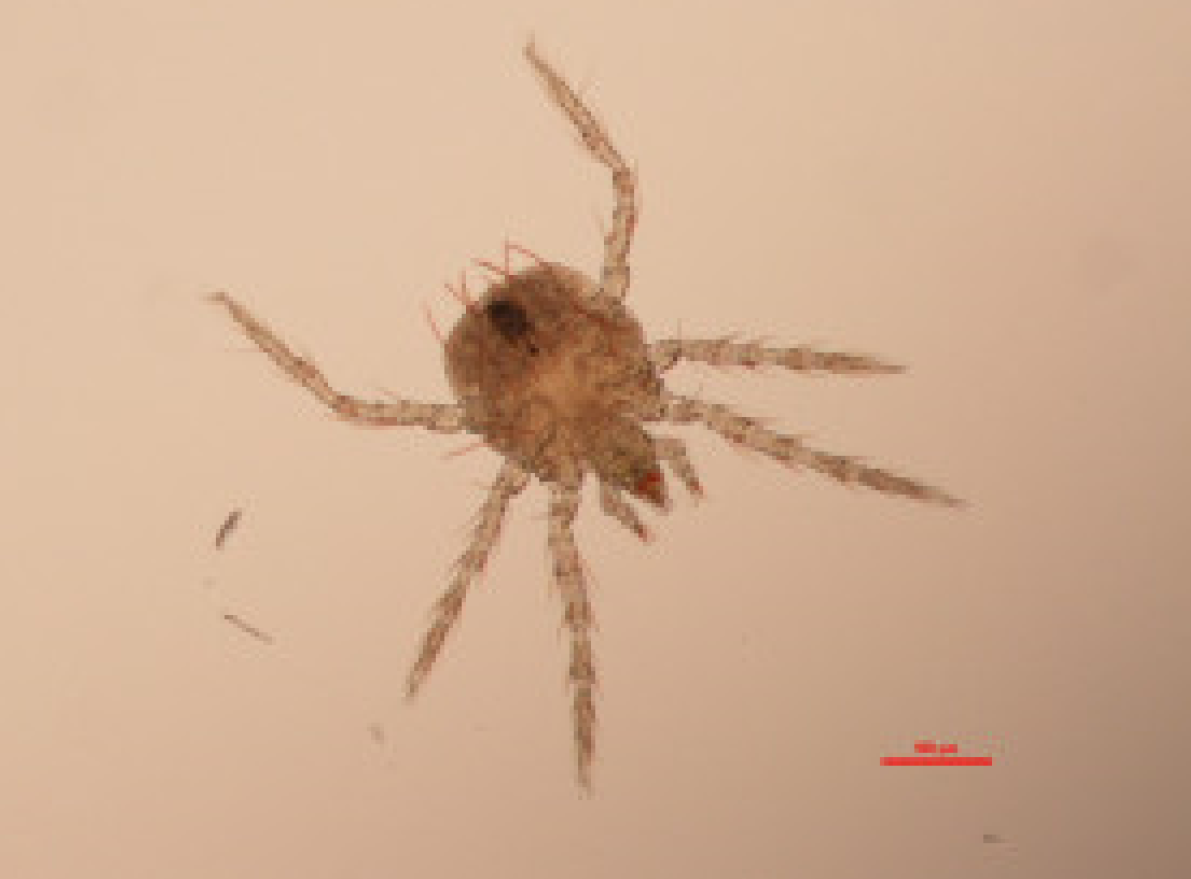
Scrub typhus is transmitted to humans and rodents by some species of trombiculid mites (“chiggers”, Leptotrombidium deliense and others). The mite is very small (0.2 – 0.4mm) and can only be seen through a microscope or magnifying glass [3,4].
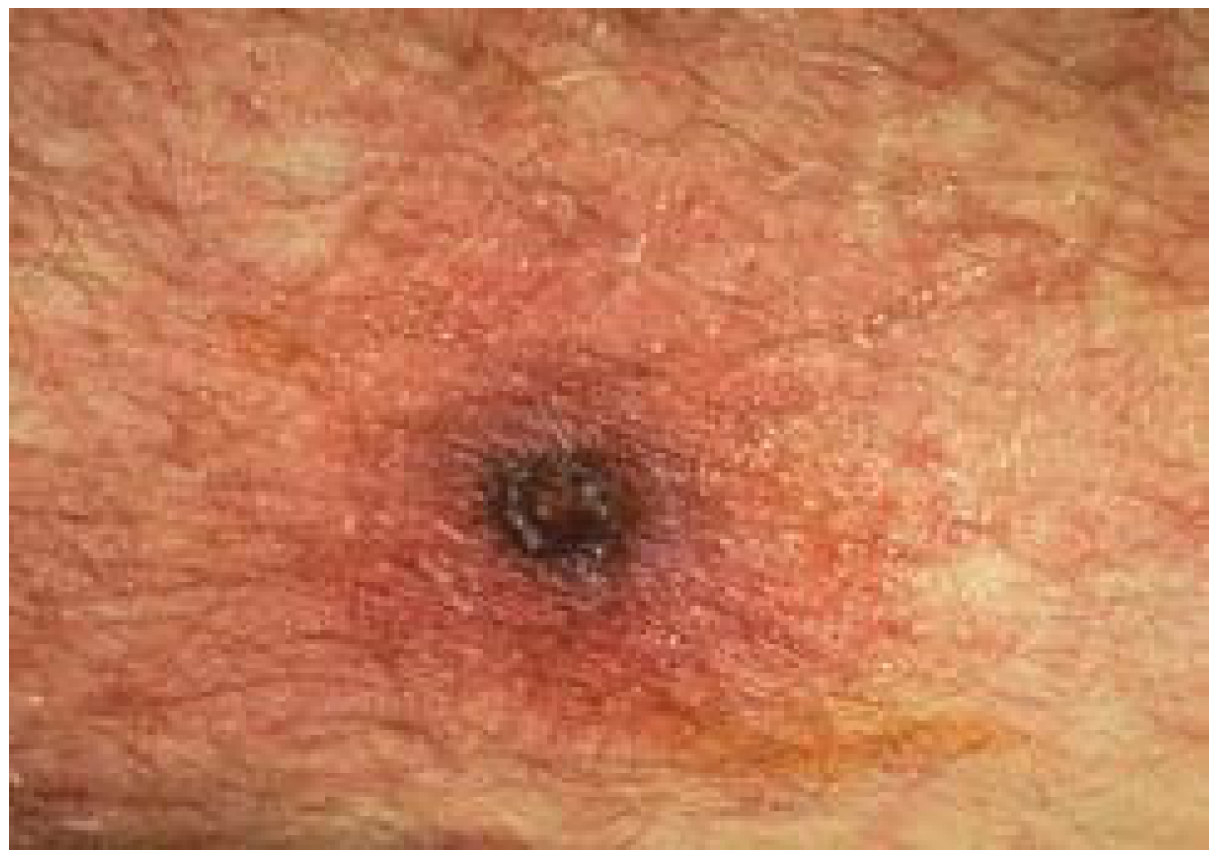
Humans acquire the disease from the bite of an infected chigger. The bite of the mite leaves a characteristic black eschar that is useful to the doctor for making the diagnosis.
The adult mites have a four-stage lifecycle: egg, larva, nymph and adult. The larva is the only stage (chigger) that can transmit the disease to the humans and other vertebrates, since the other life stages (nymph and adult) do not feed on vertebrate animals. Both the nymph and the adult are free-living in the soil [6].
Figure 1: Trombiculid mites
Seasonal Occurrence
The seasonal occurrence of scrub typhus varies with the climate in different countries. The period of epidemic is influenced by the activities of the infected mite. It occurs more frequently during the rainy season. However, outbreaks have been reported during the cooler season in southern India. Certain areas such as forest clearings, riverbanks, and grassy regions provide optimal conditions for the infected mites to thrive [7].
Incubation Period of Scrub Typhus
The incubation period of scrub typhus is about 5 to 20 days (mean, 10-12 days) after the initial bite.
Symptoms of Scrub Typhus
The symptoms of scrub typhus typically appear within ten days of a person being bitten.
The chigger bite is painless and may become noticed as a transient localized itch. Bites are often found on the groin, axillae, genetalia or neck.
An eschar is often seen in humans at the site of the chigger bite.
The illness begins rather suddenly with shaking chills, fever, severe headache, infection of the mucous membrane lining the eyes (the conjunctiva), and swelling of the lymph nodes.
A spotted rash on the trunk may be present.
Eschars are rare in patients in countries of South-East Asia and indigenous persons of typhus-endemic areas commonly have less severe illness, often without rash or eschar. Whether this is due to past exposure to the organism, or to other factors, is unknown.
Symptoms may include muscle and gastrointestinal pains.
More virulent strains of O. tsutsugamushi can cause haemorrhaging and intravascular coagulation.
Complications may include atypical pneumonia, overwhelming pneumonia with adult respiratory distress syndrome (ARDS)–like presentation, myocarditis, and disseminated intravascular coagulation (DIC).
Patients with scrub typhus often exhibit leucopenia.
Figure 2: Eschars
Diagnosis and Tests for Scrub Typhus
The diagnosis may be confirmed by a laboratory test such as serology. The cheapest and most easily available serological test is the Weil-Felix test, but this is notoriously unreliable. Fifty per cent of patients have a positive test result during the second week. This test is now being replaced by a complement-fixation test. It is a serological test to detect specific antibody or specific antigen in a patient’s serum. Each patient’s serum is systematically tested against five O. tsutsugamushi serotypes. An IgM titer > 1:32 and/or a four-fold increase of titers between two sera confirm a recent infection. However, due to cross-reactions among serotypes, it is difficult to identify accurately a specific serotype.
The gold standard is indirect immunofluorescence antibody (IFA). Indirect immunoperoxidase (IIP) is a modification of the standard IFA method that can be used with a light microscope, and the results of these tests are comparable to those from IFA. Serological methods are most reliable when a four-fold rise in antibody titre is looked for. Although many techniques have been used successfully for sero diagnosis, relatively few are used regularly by most laboratories.
Commercial rapid diagnostic kits provide reliable and well-accepted preliminary results within one hour, but the availability of these tests is severely limited by their cost. However, other serological tests must be used in order to obtain confirmationof O. tsutsugamushi infection. ELISA provides more sensitivity and equal specificity when compared to commercial test kits.
The organism can be grown in tissue culture or mice from the blood of patients with scrub typhus but results are not available in time to guide clinical management. Molecular detection using polymerase chain reaction (PCR) is possible from skin rash biopsies, lymph node biopsies or ethylenediaminetetraacetic acid (EDTA) blood. O. tsutsugamushi can be demonstrated by standard and by nested PCR. Real time PCR assays are as sensitive as standard PCR but are more rapid and can give quantitative results
Differential diagnosis for scrub typhus
The differential diagnosis for scrub typhus includes any infectious disease causing fever, myalgia, and headache, such as:
There is a lack of data for the management of O. tsutsugamushi infections, such as scrub typhus, based on randomised controlled trials. These treatment recommendations only address the most prevalent infections, including scrub typhus, murine typhus, and Indian Tick typhus; nevertheless, Q fever is treated similarly. When O. tsutsugamushi disease is suspected, antibiotic therapy should begin without waiting for laboratory confirmation of the O. tsutsugamushi infection.
At Primary level
The Health Care provider needs to do the following:
Recognition of disease severity - If the patients come with complications to primary health facility and treating physician considers it as O. tsutsugamushi infection, treatment with doxycycline should be initiated before referring the patient.
Referral to secondary or tertiary centre in case of complications like ARDS, acute renal failure, meningo-encephalitis, multi-organ dysfunction. In addition to recommended management of community acquired pneumonia, doxycycline is to be initiated when scrub typhus is considered likely.
In fever cases of duration of 5 days or more where malaria, dengue and typhoid have been ruled out; following drugs should be administered when scrub typhus is considered likely –
Adults
Doxycycline 200 mg/day in two divided doses for individuals above 45 kg for duration of 7 days. Patients should be advised to swallow capsules with plenty of fluid during meals while sitting or standing
Azithromycin 500 mg in a single oral dose for 5 days.
Children
Doxycycline in the dose of 4.5 mg/kg body weight/day in two divided doses for children below 45 kg
Azithromycin in the single dose of 10mg/kg body weight for 5 days.
Pregnant Women
Azithromycin 500 mg in a single dose for 5 days.
Azithromycin is the drug of choice in pregnant women, as doxycycline is contraindicated
At secondary and tertiary care:
The treatment as specified above in uncomplicated cases.
In complicated cases the following treatment is to be initiated –
Intravenous doxycycline (wherever available) 100mg twice daily in 100 ml normal saline to be administered as infusion over half an hour initially followed by oral therapy to complete 7-15 days of therapy. OR
Intravenous Azithromycin in the dose of 500mg IV in 250 ml normal saline over 1 hour once daily for 1-2 days followed by oral therapy to complete 5 days of therapy. OR
Intravenous chloramphenicol 50-100 mg/kg/d 6 hourly doses to be administered as infusion over 1 hour initially followed by oral therapy to complete 7-15 days of therapy.
Management of the individual complications should be done as per the existing practices. Doxycycline and/or Chloramphenicol resistant strains have been seen in South-East Asia. These strains are sensitive to Azithromycin.
Prevention of Infection
There is no vaccine available for the prevention of scrub typhus. Prevention of infection comes from taking precautions to avoid being bitten by mites. This includes:
Avoiding travel to areas where there is an outbreak of the disease.
Staying away from places with thick vegetation where the mites are usually found.
In endemic areas, precautions include wearing protective clothing.
Insect repellents containing dibutyl phthalate, benzyl benzoate, diethyl toluamide, and other substances can be applied to the skin and clothing to prevent chigger bites.
Do not sit or lie on bare ground or grass; use a suitable ground sheet or other ground cover.
Clearing of vegetation and chemical treatment of the soil may help to break up the cycle of transmission from chiggers to humans to other chiggers.
Outcome after Scrub Typhus
The mortality associated with scrub typhus may be as high as 60% in untreated cases. However, with appropriate and timely treatment, scrub typhus symptoms should start to improve within 48 hours and the patient should be completely recovered in 7–10 days.
Immunity seems to be short-lived and strain-specific, so previous infection with scrub typhus does not confer resistance to future infection.
REFERENCE
Centers for Disease Control and Prevention. “Scrub Typhus.” CDC, www.cdc.gov/typhus/scrub/index.html. Accessed June 2022.
MSD Manuals. “Scrub Typhus.” MSD Manuals Professional Edition, www.msdmanuals.com/en-in/professional/infectious-diseases/rickettsiae-and-related-organisms/scrub-typhus. Accessed June 2022.
UpToDate. “Scrub Typhus: Treatment and Prevention.” UpToDate, www.uptodate.com/contents/scrub-typhus-treatment-and-prevention. Accessed June 2022.
Encyclopaedia Britannica. “Scrub Typhus.” Britannica, www.britannica.com/science/scrub-typhus. Accessed June 2022.
Kauvery Hospital. “What Is Scrub Typhus?” Kauvery Hospital Blog, kauveryhospital.com/blog/infectious-diseases/what-is-scrub-typhus/. Accessed June 2022.
DovePress. “Scrub Typhus: Risks, Diagnostic Issues, and Management Challenges.” Research and Reports in Tropical Medicine, www.dovepress.com/scrub-typhus-risks-diagnostic-issues-and-management-challenges-peer-reviewed-fulltext-article-RRTM. Accessed June 2022.
DermNet NZ. “Scrub Typhus.” DermNet, dermnetnz.org/topics/scrub-typhus. Accessed June 2022.
Vikaspedia. “Scrub Typhus.” Vikaspedia, vikaspedia.in/health/diseases/vector-borne-diseases/scrub-typhus. Accessed June 2022.
Recommended Articles
Research Article
Pink Perspectives: Unveiling Conjunctivitis Awareness in Himachal Pradesh - A Comprehensive Study on Types, Symptoms, Prevention, and Treatment among the General Population
Sumit Kumar,
Prabhleen
Published: 14/12/2023
Download PDF
Research Article
A cross sectional study to evaluate the Correlation between Clinically Significant Macular Edema (CSME) with different Biochemical Parameters among Patients of Type 2 Diabetes Mellitus Present at Ophthalmology OPD of Tertiary Care Center
Punam ,
Vinod Kashyap
Published: 10/10/2022
Download PDF
Research Article
Silent Growths: Assessing Knowledge of Bone Tumors in Children among Hamirpur's General Public
Swati Chandel,
Vishal Dhatwalia
Published: 19/11/2024
Download PDF
Research Article
Implementation of Patient Safety Culture with Work Motivation of Indonesian Nurses in Homes In The Kuwait Region
Roganda Situmorang,
Andri Nurmansyah
Published: 22/12/2023
Download PDF
PO Box 101, Nakuru
Kenya.
Email: office@iarconsortium.org
Editorial Office:
J.L Bhavan, Near Radison Blu Hotel,
Jalukbari, Guwahati-India
Bhardwaj, V., Sirkeck, A. & Kalia, K. K. (2022). Scrub Typhus: Mode of Transmission, Clinical Features, Investigations, Treatment, Differential Diagnosis, Preventive Measures & Prognosis. IAR Journal of Health Care and Prevention, 2(2), 1-4.
MLA
Bhardwaj, Vineet, Assem Sirkeck and Kamal K. Kalia. "Scrub Typhus: Mode of Transmission, Clinical Features, Investigations, Treatment, Differential Diagnosis, Preventive Measures & Prognosis." IAR Journal of Health Care and Prevention 2.2 (2022): 1-4.
Chicago
Bhardwaj, Vineet, Assem Sirkeck and Kamal K. Kalia. "Scrub Typhus: Mode of Transmission, Clinical Features, Investigations, Treatment, Differential Diagnosis, Preventive Measures & Prognosis." IAR Journal of Health Care and Prevention 2, no. 2 (2022): 1-4.
Harvard
Bhardwaj, V., Sirkeck, A. and Kalia, K. K. (2022) 'Scrub Typhus: Mode of Transmission, Clinical Features, Investigations, Treatment, Differential Diagnosis, Preventive Measures & Prognosis' IAR Journal of Health Care and Prevention 2(2), pp. 1-4.
Vancouver
Bhardwaj V, Sirkeck A, Kalia KK. Scrub Typhus: Mode of Transmission, Clinical Features, Investigations, Treatment, Differential Diagnosis, Preventive Measures & Prognosis. IAR Journal of Health Care and Prevention. 2022 Jul;2(2):1-4.



 Download PDF
 Download XML