A Study To Understand Research Into The Formation of Educator Profiles for Use by Institutions Whose Primary Mission is The Preparation of Future Educators
Jin Xianzhao
1
,
Nidhi Agarwal
1
,
Aminul Islam
1
1
Lincoln university College, Petaling Jaya Malaysia
Over the course of the next ten years, the educational system is set to see significant upheaval. The majority of these departures will be due to retirement, which is a natural consequence of ageing, and the influx of new employees will be driven mostly by this demographic shift. As a response to the challenges posed by the information society, new professional standards are being developed, and as a result, there will be more stringent requirements and greater demands placed on educators. "The challenge is to avoid generational self-renewal," according to Mayer. "The challenge is to be unconstrained by old or re-worked notions of what it means to be an Australian teacher." Focusing on teachers in their first ten years of employment in public, Catholic, or independent schools, a study of the teaching workforce was commissioned by the MCEETYA Teacher Quality and Educational Leadership Taskforce (TQELT) in March 2003 in order to prepare for these changes and to help address the challenge.
Keywords
Qualitative Research
Inexperienced School Administrators
Administrative Issues
Educational Challenges
The Educational System
INTRODUCTION
Educational institutions provide a vitally essential function because they give students the opportunity to go from a state of ignorance to one of comprehension, which is a progression from the previous condition of ignorance. The fact that instructors comprise the majority of the staff at the institutions means that they play a substantial part in the transformation that is taking place. According to research that was conducted and published by the National Council for Teacher Education (NCTE) in the journal Quality Concerns in Secondary Teacher Education, the teacher is the single most significant component of the educational programme that is carried out in every particular school. The bulk of the duty for carrying out the process of education is placed firmly on the shoulders of the educator at each and every crossroads in the educational process. This underscores the need of investing resources into the education of teachers in order to guarantee a prosperous future for a country. It is difficult to overstate the relevance that teachers who are knowledgeable bring to the educational system of a country because of their role in that system. It is a requirement of the National Curriculum Framework that was passed in 2005 that both initial and ongoing education for teachers address the challenges and opportunities presented by the framework.
It is common knowledge that instructors exert a significant amount of influence on the students they instruct, both in terms of the students' propensity to learn and their degree of academic achievement. The National Council for Teacher Education defines "teacher education" as "a programme of education, research, and training of persons to teach at all levels, from pre-primary through higher." This definition can be found on their website. It is essential to provide educators with a formal education in order to provide them with the abilities necessary to fulfil the obligations of their profession and triumph over the obstacles they will inevitably confront during the course of their careers (Draxler, 2012).
BACKGROUND OF THE STUDY:
The educator preparation programmes that are now offered need to be more flexible so that they can meet the ever-evolving demands placed on teachers in the classroom. It is essential that educators have the knowledge and abilities needed to fulfil their dual responsibilities: "an encouraging, supportive, and humane facilitator in teaching learning situations who enables learners (students) to discover their talents, realise their physical and intellectual potentials to the fullest, and develop character and desirable social and human values to function as responsible citizens;" in addition to "an active member of the group of persons who consciously make effort to contribute towards the common good."
These assumptions imply that the educator is a component of a broader system, the dynamics of which, in addition to the challenges that they highlight, have an effect on the work that she does. That is to say, in order to achieve the goals of equality, parity, social justice, and quality, educators need to be alert and sensitive to the social settings of education, as well as the multiple differences in the backgrounds of learners, as well as the macronational and global contexts. Only then will they be able to realise the goals of equity, parity, social justice, and quality.
In order for TE to achieve these goals, prospective teachers need to be provided with the knowledge, skills, and mindsets necessary to: Care for children and take pleasure in spending time with them; Gain an understanding of children within the contexts of society, culture, and politics; Consider learning to be a process of constructing meaning from one's own life experiences; Gain an understanding of how learning occurs, the many ways that it is possible to create settings that are conducive to learning, and the variety of ways in which students learn in terms of the kind, speed, and style; Consider learning to be a process of constructing meaning from one's own life experiences; Consider learning to be a process of constructing meaning from one Imagine the process of acquiring new information as a kind of lifelong learning that is within the individual's direct control (Ebenstein, 2010).
PROBLEM STATEMENT:
“Teacher education and teacher educators faced enormous problems since the emphasis of the teacher's profession is no longer on mediating information but enabling skills necessary in 21st-century businesses. Without these competencies, planning for teacher preparation in the first half of the twenty-first century would be based on guesswork and paradigms less relevant to new and excellent teachers.”
Curriculum makers in Malaysia should take into consideration both the existing and future situation of education in the nation when establishing courses for prospective educators. Outstanding teachers are the primary reason why student achievement is on the rise, new and improved curriculum are being created, and kids are being prepared to thrive in a variety of local and global contexts. Certainly, every educational plan's promise should aim to strengthen these essential traits inside the classroom. What makes a great teacher, and how to cultivate such traits in the classroom, are the subjects of this investigation (Fredriksson, 2010).
RESEARCH OBJECTIVE:
To find out Organisation regulates quality in primary teacher education.
To evaluate the purpose of teaching teacher education in primary level.
To understand Organisation is responsible for teacher education.
To determine one of the following institutions provides in-service education for college teachers.
LITERATURE REVIEW:
Major changes have occurred in the structure, organisation, and content of teacher education in Australia during the last two to three decades, mirroring developments in education in other nations. These shifts have occurred at the same time. The profession of teaching has evolved into one that, with a few notable exceptions (most notably, today, career transition applicants with a background in a trade), normally requires at least four years of schooling at the university level. This is a long cry from the days, at least for primary and junior secondary school teachers, when preparation to teach was a type of craft apprenticeship topped with some somewhat theoretical knowledge and a light dressing of general or liberal education. This is a far cry from the days when preparation to teach was a form of craft apprenticeship topped with some moderately theoretical knowledge and a light dressing of general or liberal education (Grey, 2012).
Particularly, the introduction of the Bachelor of Education degree led to a major growth of the academic component of initial teacher education, changes in contacts with employers, and new patterns of practical experience. Other factors also contributed to these developments. The graduate trainee programme has undergone several adjustments, including the addition of 18-month and 2-year curricula that often include internships. The duties of registration bodies have resulted in new structures and decision-making processes, which create potential for successful collaborations (schools, universities, employers, and registration bodies). Registration bodies are responsible for creating these new structures and procedures.
There are certain aspects of these shifts that fall short of expectations. Many business owners and school heads have voiced concerns that the relationships between their organisations and educational institutions are becoming more tenuous rather than more robust. There are a significant number of people who were questioned who have the opinion that there should be a return to something like to an apprenticeship; yet they do not believe that the university should be severed from the learning process. There is a compelling argument in favour of re-evaluating the function of the teacher and adopting personnel policies that bring together a variety of knowledge and experience. This is preferable to the assumption that a single, highly qualified professional — "the teacher" — is capable of or ought to carry out all of the responsibilities. Such a shift would very probably have an effect on the education received by beginning teachers (Gautam, 2017).
METHODOLOGY:
Because the major objective of the study was not to test hypotheses but rather to acquire insight into the viewpoints of teachers, a qualitative research technique was used over the course of the investigation. One of the goals of qualitative research is to "understand the meaning individuals have formed," which refers to the manner in which individuals make sense of their experiences and the world around them. The objective of qualitative research is to provide explanations that are relevant for the phenomena that occur in social settings. Within the scope of this investigation, a content analysis approach was used to examine the textual data. The process of locating, evaluating, and reporting on recurrent patterns (themes) in data is simplified by the execution of content analysis. This makes it easier for the researcher to organise and interpret the data in a comprehensive manner. When doing a classical content analysis, the primary emphasis is on determining the frequency with which a certain word, phrase, or topic occurs in the text. Documents, such as article articles from newspapers or responses to inquiries with open-ended questions, are excellent candidates for this sort of research. Following the conclusion of the phase involved in the collection of data, content analysis and coding were carried out. For the purpose of the research, textual data was collected via the use of an open-ended question survey approach. On the inquiry form, there were two sections to fill out. An first series of questions was designed to elicit information on the demographic characteristics of the participants, including their age, seniority, and other relevant details. In the second section, you were presented with two questions that required a free-response. There are programmes available that may be used to aid in the analysis of the data that is gathered in qualitative research. When doing qualitative analysis of even the most extensive datasets, researchers have the option of using software such as Atlasti, Nvivo, Ethnography, and MaxQD in addition to the tried-and-true method of using pen and paper.
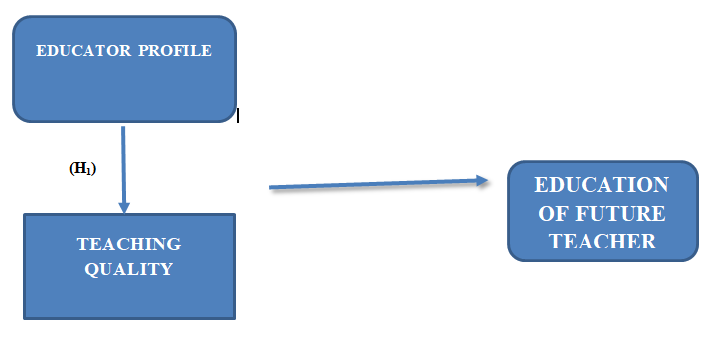
THEORETICAL FRAMEWORK:
RESULT:
At random, 76 educational institutions were chosen by the researchers. I next called the schools, briefed the teachers about the study's goals, and inquired as to whether or not their institutions met the requirements of the study. Out of a total of 76 teachers, 32 matched the study requirements, however 4 declined to participate due to a lack of time. That's why we had 28 teachers sign up to be part of the research. Researchers visited schools at researchers' and administrators' prearranged times. Researchers discussed the study's goals and methods at the first consultation. Next, the teachers were handed forms with open-ended questions and asked to provide as thorough a response as they could. teachers were politely asked to fill up the paperwork within a week's time. The researchers scheduled a time with the teacher to return and collect the questionnaires before leaving the school. The results indicated that the age range of the school teachers that participated in the survey was between 32 and 44. The average participant has been in the classroom for 11 years, and all have served as an administrator for at least three of those years.
A total of 195 unique solutions to the issues at hand were offered by the participants. It's obvious that issues with school buildings are the most prevalent source of stress for school administrators. The lack of adequate educational facilities is seen as a serious issue by 32% of respondents (n=62). The school community, which consists of students, teachers, parents, and the assistant teacher, is the second challenge faced by teachers. A total of 28% (n=54) of the participants' feedback came from members of the school's wider community. Lastly, issues with school policies ranked as the third most-reported difficulty. The proportion of responses linked to this issue was 22% (n=43). Although topics relating to finances received the fewest responses, those relating to administration received the most (12%, n=24). Twelve out of a hundred participants (6%) had nothing to say about this. Inexperienced administrators sometimes struggle the most with school amenities. Issues in this domain also have a chilling effect on teachers' ability to perform their administrative duties effectively.
CONCLUSION:
Due to the fact that China began its process of opening up to the international world in the late 1970s, the country's educational system has seen substantial modifications since that time. The effect of market-oriented economic reforms and a variety of other events may be credited with bringing about these changes. The process of integrating into the global economy has led to a greater focus on the relevance of education in the domestic economy. This is a product of the integration process. A further consequence of this integration is that it has resulted in an increase in the educational requirements and demands of the general population. It was owing to pragmatic reasons relating to budgetary stringency and the pursuit of economic growth that the Chinese government made the decision to decentralise its educational policy and promote marketization of educational services. A consequence of this is that the state has relinquished its monopoly position in the field of education, therefore making room for the participation of social institutions that are not affiliated with the state.
LIMITATIONS:
The cornerstone of quantitative techniques is the use of mathematical models, equations, and other mathematical expressions, all of which are dependent on assumptions. Because of this, they shouldn't consider them to be the ultimate truth. If you choose to disregard this warning, there might be disastrous consequences. The use of quantitative methods may need the assistance of professionals, which may result in an increase in costs. Due to the substantial expenses associated with implementation, even the most successful companies only apply quantitative techniques in a restricted number of situations. Rather than basing their decisions on objective data, managers often base their decisions on their own personal beliefs and experiences acquired in the past. Incomplete data, incorrect definitions, a poor selection of samples, inaccurate methodology, inappropriate comparisons, and a sloppy presentation are all potential issues that might arise when using quantitative approaches. It is not possible to employ quantitative methods to examine qualitative phenomena since these methods disregard human characteristics that are intangible and cannot be objectively measured. A manager's ability, attitude, and enthusiasm are examples of intangibles that are not taken into consideration by the techniques. In spite of this, it is feasible to execute the strategies in an indirect manner by assigning monetary values to hypothetical claims. According to one example, it is possible to ascertain the intelligence level of a manager by assigning that person a score that takes into consideration a variety of distinct factors.
REFERENCES:
Draxler, A. (2012). International PPPs in education: New potential or privatizing public goods?.
Ebenstein, A. (2010). The “missing girls” of China and the unintended consequences of the one child policy. The Journal of Human Resources, 45(1), 87-115.
Fredriksson, Anders (2010) Marknaden och lärarna. Hur organiseringen av skolan påverkar
Gautam, R.. (2017). Analysis of globalization/privatization of higher education in India. International Conference on Science, Technology and Management.
Grey, B. (2012). Using Human Rights Standards to Assess Privatisation of Education in Africa
Advertisement
Recommended Articles
Research Article
Pedagogic Competencies Provided To Student Teachers through Biology Teacher Education in Universities in Kenya In Light of Classroom Practice
Download PDF
Research Article
Outcome of COVID-19 in Patients with Myasthenia May Not Only Depend on the Immunologic Disease
Josef Finsterer,
...
Ana C Fiorini
Published: 31/10/2020
Download PDF
Research Article
The Effect of a Picture Book on the Pre-Primary School Children's Literacy Skills Development: Implication on the Teacher Education and Child Language Development
Dominion ,
Joanna Ngozi
Published: 15/07/2020
Download PDF
Research Article
Ovarian Pathologies in Paediatric Age Group - Our Experience and Review of Literature
Jyotsna Kulkarni,
...
Rajendra Chaudhari
Published: 20/05/2021
Download PDF
PO Box 101, Nakuru
Kenya.
Email: office@iarconsortium.org
Editorial Office:
J.L Bhavan, Near Radison Blu Hotel,
Jalukbari, Guwahati-India
Xianzhao, J., Agarwal, N. & Islam, A. (2024). A Study To Understand Research Into The Formation of Educator Profiles for Use by Institutions Whose Primary Mission is The Preparation of Future Educators. International Academic Journal of Education & Literature, 5(2), 1-4.
MLA
Xianzhao, Jin, Nidhi Agarwal and Aminul Islam. "A Study To Understand Research Into The Formation of Educator Profiles for Use by Institutions Whose Primary Mission is The Preparation of Future Educators." International Academic Journal of Education & Literature 5.2 (2024): 1-4.
Chicago
Xianzhao, Jin, Nidhi Agarwal and Aminul Islam. "A Study To Understand Research Into The Formation of Educator Profiles for Use by Institutions Whose Primary Mission is The Preparation of Future Educators." International Academic Journal of Education & Literature 5, no. 2 (2024): 1-4.
Harvard
Xianzhao, J., Agarwal, N. and Islam, A. (2024) 'A Study To Understand Research Into The Formation of Educator Profiles for Use by Institutions Whose Primary Mission is The Preparation of Future Educators' International Academic Journal of Education & Literature 5(2), pp. 1-4.
Vancouver
Xianzhao J, Agarwal N, Islam A. A Study To Understand Research Into The Formation of Educator Profiles for Use by Institutions Whose Primary Mission is The Preparation of Future Educators. International Academic Journal of Education & Literature. 2024 Apr;5(2):1-4.


 Download PDF
 Download XML