The study sought to find out students perception of Mathematics teachers characteristics and their attitude. It also examines teachers in respect of their knowledge of Mathematics content, various attitude to work, attitude to the teaching of Mathematics, use of appropriate teaching strategies, classroom leadership skills, teachers care and concern for the students’ problems and welfare and teachers’ motivation and students’ attitude towards Mathematics. The population of the study comprised all the second year students in public senior secondary schools in Ekiti State Southwest, Nigeria. The study sample consisted of 1500 students selected through cluster and simple random sampling techniques. Two instruments – Students’ Perception of Teacher Characteristics Questionnaire (SPTCQ) and Students’ Attitude towards Mathematics Questionnaire (SATMQ) were developed and administered on the respondents. A trial test of 100 students using split-half reliability method as carried out which yielded reliability coefficients of 0.67 and 0.82 for SPTCQ and SATMQ respectively. Pearson's Product Moment Correlation Analysis and t-statistics were used to answer the research questions and test the hypotheses respectively. Findings show that the way students’ perceive their teachers’ in terms of knowledge of Mathematics contents, various attitude to work and teaching methods and has a significant relationship with students’ attitude towards Mathematics Based on the findings of the study. Some recommendations were made; teachers of Mathematics should periodically be given opportunities to update their knowledge through in-service training and re-training courses to increase their knowledge base in their subject area and more than one teaching method should be appropriately adopted in a single lesson presentation by a teacher so as to carry every student along, create variety, minimize boredom and enhance interest in what is being be taught and learnt and teachers of Mathematics should periodically be given opportunities to update their knowledge through in-service training and re-training courses to increase their knowledge base in their subject area.
Keywords
Knowledge of Subject Content
Attitude
Teaching
Strategies
Leadership Skills
Care and Concern
Students’ Problems and Welfare and Motivation
INTRODUCTION
The role of Mathematics teacher characteristics in realizing educational goals and objectives in any educational system cannot be over emphasized. Teacher characteristics are the instructional behaviors exhibited by the teacher towards goal attainment. These characteristics are the combination of peculiar qualities, traits, mental or moral nature/strength and status that make one person or group different from another. Successful teachers’ characteristics are those that have been found by empirical researches to be related to improved achievement by students in the cognitive, affective or psychomotor outcomes of education [1]. The bedrock of educational system lies on a core of devoted, knowledgeable, competent and well-trained teachers. Growa [2] rightly pointed out that if a person is to be successful in his chosen career, that individual also needs a set of ethical beliefs or standards for guidance or direction in the appropriate use of competences. A competent teacher seeks to know his learners’ behavior in teaching, must perceive the individual learner as a whole since he has affective, cognitive and psychomotor talents [3]. Also, students’ participation in the instructional process is critical and their perception presents methodological challenges. The knowledge of the way the students think and perceive can aid the teacher to reflect upon and adjust his teaching strategies to enhance students’ understanding and achievement. Albert et al [4] described perception as the way people judge others with whom they are in contact. A persons’ attitude to an idea or object determines what the person thinks, feels and how the person would like to behave towards that idea or objects. Schema [5] defined attitude as internal beliefs that influence personal actions which is learned through one’s experience. This has to do with a disposition to act or react in a particular way as the individual responds to a situation [6]. Thus, the students’ perception of the teachers’ characteristics could influence their attitude toward Mathematics or any other school subject. Students more often than not judge their teachers in some areas such as teachers’ knowledge of the subject matter, various attitude to work and the choice of appropriate teaching method. A teacher who is rated high on these indices in the perception of the students is likely to enjoy the confidence, respect and admiration of his/her students.
Knowledge of Subject Matter
According to Fele and Franke [3] agreed that teacher’s knowledge of the subject matter is an indicator of teachers’ teaching effectiveness. A teacher who has a deep understanding of the concept to be taught is more likely to use unambiguous language; his/her presentation is likely to be more coherent and he/she would offer clearer explanation than those with a weaker background. Helen et al [7] in their finding on importance of Mathematics teachers’ knowledge of subject contents, affirm that effective teaching that can lead to better achievement by the students and provide a positive attitude depends on teachers’ confidence and in-depth knowledge of the subject matter.
Communication Ability
No subject matter can be learnt properly without communication, the use of its appropriate terms facilitates the understanding of whatever is being learnt. Communication may be used to mean the transfer, transmission or exchange of ideas, knowledge, beliefs, attitudes or emotion from one person or group of persons to another [8]. Agun and Ehindero, [9] opined that if there is any act germane to effective teaching it is that of communicating. Teachers should strive to make their presentation as unambiguous, coherent and logical as possible. Egg and Kauchak [10] underlined the basic aspects of effective communication to include precise terminology, connected discourse, transition signals and emphasis. Afaria [11] reported that the purpose of communication in the teaching-learning process is to effect change, to produce a desired response; or to influence action contributing to the welfare of the school system. Afaria [11] further highlighted four dimensional objectives of communication as: to inform, to stimulate, to persuade and to remind. Uya asserted that the effectiveness of any educational system depends to a large extent on the effectiveness of the communication system being adopted. And that the teacher has the capability to change the attitude of another person if there is trustworthiness, belief and validity of what he says. To a large extent the effectiveness of any classroom interaction is determined by the competency of the teacher to initiate and sustain communication between and among his/her students [12].
Teaching Method
The use of appropriate teaching method incorporates an ordered way of accomplishing an end or performing a task Adediwura et al [13], described methods as patterns to be followed in teaching/learning process to drive home a point. Whether in formal or informal education, teaching method effectiveness makes for retention of learnt concepts. The extent to which an instructional procedure is potent depends greatly upon its effective use by the instructor and the impression it leaves on the learner, which is usually evident in their attitude as well as performance [14]. Umon [15] in a research on methods of teaching suggested that the ability of the teacher to impart knowledge so depends greatly on the method he applies during the teaching learning process. Where the method is defective, the students stand to lose as they hardly benefit from lessons. According to Uya, for teacher to be able to ensure order and enhance classroom learning, they have to possess necessary pedagogical skills which have to be systematic and methodical. They have to explore and make good use of their knowledge of instructional skills/strategies, whether the method adopted falls within the spectrum of mass or individualized instructional methods [16]. Ewu [8] opined that teaching, by its nature requires a variety of methods to facilitate teaching/learning in the class and to develop the child’s knowledge and understanding to the maximum.
Classroom Management Skills
Classroom management is the process of leading, directing, ordering or restraining of students in a class in a way that will lead to effective learning. Bayo, Hattie, and Frazer [17] observed that students will perform best in a controlled atmosphere that is conducive to academic and social needs of the students. The atmosphere in the classroom needs to be relaxed, free from threats and anxiety, non-competitive and thought provoking to allow students participate and enjoy the lesson. Under such atmosphere the students’ interest in and attitude towards the subject taught could be enhanced Teacher’s characteristics in instructional delivery are therefore a measure of the teacher’s ability to apply his professional skills in a teaching/learning situation.
Statement of the Problem
Students’ impression is that Mathematics is difficult by its very nature, and that Mathematics is highly structured and so abstract that it requires special knowledge talents. Thus, students see the subject as something esoteric that is to be feared [18]. The consequences of students’ negative attitude towards Mathematics could be the persistent poor performance in Mathematics in the West African Examination Council (WAEC) examinations, the National Examination Council (NECO) examinations and the General Certificate in Education (GCE) examinations in recent years in Nigeria and students reluctance in studying Mathematics related courses.
The negative attitude and poor performance produced has continued to subject teachers to criticisms of poor characteristics and lack of necessary professional qualification. This study sought to investigate the perception of students with respect to their teachers’ characteristics- knowledge of Mathematics contents, communication ability, use of appropriate teaching methods and classroom management’s skills- as they influence students’ attitude towards Mathematics.
Research Questions
The study sought to answer the following questions:
What is the relationship between how students perceive their teachers with respect to teachers’ knowledge of Mathematics contents and their attitude towards Mathematics
How does students’ perception of their teachers’ communication ability relate with students’ attitude towards Mathematics
What is the relationship between how students’ perceive their teachers’ ability to use appropriate instructional method and their attitude towards Mathematics
What is the relationship between students’ perception of their teachers’ classroom management skills and attitude towards Mathematics
Hypotheses
The following hypotheses were postulated to guide the study:
How students perceive their mathematics teachers’ knowledge of Mathematics contents does not relate significantly with their attitude towards Mathematics
Students perception of their Mathematics teachers’ communication ability does not relate significantly with their attitude towards Mathematics
Students perception of their Mathematics teachers’ ability to use appropriate instructional method does not
relate significantly with their attitude towards Mathematics
How students perceive their Mathematics teachers’ classroom management skills does not significantly relate with their attitude towards Mathematics
MATERIALS AND METHODS
The expost facto correlational design was adopted for the study. The population consisted of all the 1500 public Senior Secondary School Two (SSS2) students in the 15 public secondary schools in Ekiti State Southwest, Nigeria. The cluster and simple random sampling techniques were adopted in drawing the sample of the study which stood at 1500.
Two research instruments were developed and used for the study. These were Students’ Perception of Teacher’s.
Characteristics Questionnaire (SPTCQ) and Students’ Attitude towards Mathematics Questionnaire (SATMQ).
The SPTCQ consisted of 36 items on teachers’ characteristics and the SATMQ contained 30 items on students’ attitudes.
The copies of the questionnaire were critiqued for face validity by asking experts in curriculum studies and educational evaluation departments to review the items. This led to the correction of some grammatical expressions, re-structuring of some items and outright cancellations of others. Thirty (30) students were drawn outside the sampled area, and a split-half reliability test used to determine the reliability coefficient of the instruments SPTQ and SATMQ. The scores from the two sets were correlated using Pearson Product Moment Correlation Analysis and corrected with Spearman – Brown Prophecy formula. This gave the reliability coefficients of 0.67 and 0.82 for SPTCQ and SATMQ respectively, indicating that the instruments were good enough for the study.
The questionnaire was the main instrument used for data collection. These instruments were administered personally by the researchers in each of the sampled schools with the help of some teachers as assigned by the school authority after permission was granted. The respondents were advised to be honest in their response as information obtained would be treated with all amount of confidentiality and used only as data for the research work. The items in the questionnaire were sorted out according to the variables they were designed to measure.
Positive items were rated from strongly agree (4), agree (3), disagree (2), and strongly disagree (1), while negative items were scored in the reverse order of strongly disagree (4), disagree (3), agree (2) and strongly agree (1). Data collected were analysed using Pearson Product Moment Correlation Coefficient (r) for the research questions and (r) subjected to t-statistics for the hypotheses to determine the level of influence of teacher characteristics on students’ attitudes.
RESULTS
This presents the results and the analysis of data collected for the study. The results were analyzed and discussed based on the research questions and research hypotheses that guided the study.
Research Question 1
What is the students’ view of their Mathematics teachers’ knowledge of the subject matter which can affect their learning outcomes in Mathematics?
The results in Table 1 showed that 78% on the average agreed with all the items on Mathematics teachers’ knowledge of the subject matter.
The overall mean of all the items was x ̅ = 3.13. This means that all the students agreed with all the items measuring their Mathematics teachers’ knowledge of the subject matter can their learning outcomes in mathematics. Top of this was (90.5%) with greater than 90% and the mean of 2.52 that my teachers use unambiguous language when teaching. None of the item was less than 2.5 mean on Mathematics teacher’s knowledge of the subject matter.
The results in Table 1 showed that, out of 12 items, are use agreed that mastery of the subject matter affect their learning outcomes in Mathematics.
Table 1: Analysis in Percentages of Mathematics Teachers’ Knowledge of the Subject Matter Which Can Affect Their Learning Outcomes in Mathematics
S/N
Mathematics teachers’ variables
N
Sa
A
N
D
Sd
Mean
Remarks
PART A: Mathematics teachers’ knowledge of the subject matter
-
-
-
-
-
-
-
-
1.
My Mathematics teacher knows how to explain mathematical problems to students.
759
20.8
29.8
741
28.5
20.9
3.41
A
2.
My Mathematics teacher like students to ask questions at every step of discussion.
1241
41.8
40.9
260
12.6
4.7
3.35
A
3.
My teachers use unambiguous language when teaching.
1358
53.5
37
143
6.5
3
2.52
D
4.
My teachers create connection between what he/she teaches us and with everyday experiences.
1313
51.4
36.1
188
8.6
3.9
3.20
A
5.
My teachers give room for student critical thinking.
1133
38.3
37
368
17.2
7.5
3.06
A
6.
My teachers explain what he/she teaches with real objects.
1239
41.7
40.9
261
12.4
5
3.20
A
7.
My teachers permit us to point out corrections for him/her.
1293
49.2
37
207
9
4.8
3.31
A
8.
My teachers agree to his/her mistakes when we perceive it.
1278
47.4
37.8
222
9.4
5.4
3.28
A
9.
My teachers respond to questions or usually disagree with stated answers in the textbook.
1073
34.3
37.2
428
20.5
8
2.98
D
10.
My teachers constantly consulting the answer key at the back of the teacher’s guide.
887
28.3
30.8
614
24.4
16.5
2.71
D
11.
My teachers explain and show us how to obtain or derive formulae from fundamental principle; (e.g. formulae for solving mathematical problem).
1340
56.6
32.7
161
5.9
4.8
3.41
A
12.
My teachers calculate Mathematics without copying from his/her lesson notes.
1151
46.9
29.8
350
10.6
12.7
3.11
A
Total
14065
937.4
3943
262.6
37.54
Total Mean ()
1172
78%
329
22%
3.13
N.B: Using SPSS to run the questionnaire, it will gives us decimal point is equal to 100%
Table 2: Analysis in Percentages of Mathematics Teachers’ Various Attitude to Work Which Can Influence Their Learning Outcomes in Mathematics
S/No
Mathematics teachers’ variables
N
Sa
A
N
D
Sd
Mean
Remarks
PART B: Mathematics teachers’ various attitude to work
-
-
-
-
-
-
-
-
1.
My teachers come to class punctually.
1395
61.3
31.7
105
4.6
2.4
3.52
S.A
2.
My teachers come to class regularly.
1374
58.2
33.4
126
5.8
2.6
3.48
A
3.
My teacher dresses properly when teaching Mathematics.
1391
60.6
32.1
110
4.6
2.7
3.51
S.A
4.
My teacher communicate using student friendly language so that students have understanding of mathematical proficiency.
1353
53.4
36.8
147
5.9
3.9
3.40
A
5.
My teacher works examples with the students in the class.
1380
60.4
31.6
120
5.2
2.8
3.50
S.A
6.
My teacher marks assignment regularly.
1214
45.9
35
287
12.5
6.6
3.21
A
7.
My Mathematics teachers shows interest in the students’.
1011
30.1
37.3
489
20.9
11.7
2.86
D
S
My teacher bother about our noise in the class.
1151
41.2
35.5
348
12.5
10.8
3.08
A
9.
My teacher give room for rapport in the class.
960
30.9
33.1
540
23.5
12.5
2.83
D
10.
I enjoy my Mathematics class atmosphere.
1293
50.5
35.7
254
7.6
6.2
3.34
A
11.
My teacher makes his/her class a place where students like to be.
1247
51.4
31.7
254
10.9
6
3.29
A
Total
13769
917.8
2733
182.1
36.02
Total Mean ()
1252
83%
248
17%
3.27
Table 3: Analysis in Percentages of Mathematics Teachers’ Attitude to the Teaching of Mathematics and on Their Learning Outcomes in Mathematics
S/No
Mathematics teachers’ variables
N
Sa
A
N
D
Sd
Mean
Remarks
PART C: Mathematics teachers’ attitude to the teaching of Mathematics
-
-
-
-
-
-
-
-
1.
My Mathematics teacher influenced my attitudes to Mathematics.
1268
43.1
41.4
233
9.9
5.6
3.22
A
2.
My Mathematics teacher does not seem to enjoy teaching Mathematics.
633
20.3
21.9
867
26.5
31.3
2.31
D
3.
My Mathematics teacher makes Mathematics interesting.
1254
50.5
31.3
246
10.6
7.6
3.29
A
4.
My teachers provides opportunities for students to be actively engaged in Mathematics activities.
1256
51.5
32.2
245
11.1
5.2
3.30
A
5.
My teacher’s attitude contribute toward our attention in classrooms.
1307
46.8
40.3
194
9.6
3.3
3.35
A
6.
My teachers interact with us during Mathematics lesson.
1158
42.7
34.5
342
14.9
7.9
3.12
A
7.
My teachers always frown his/her face in the class.
701
24.9
21.8
800
24.7
28.6
2.43
D
8.
My teachers’ examples correlate with the assignments given out.
1137
39.8
36
363
15.2
9
3.07
A
9.
My teachers talk about the importance of Mathematics.
1137
51.5
36.3
183
8.3
3.9
3.36
A
10.
My teachers talk about providing directions to the assignments given out.
1223
36.9
44.6
278
12.1
6.4
3.12
A
Total
9283
750.1
3751
249.9
30.57
Total Mean ()
928
75%
375
25%
3.06
However they they disagreement that, my teachers use unambiguous language when teaching, respond to questions or usually disagree with stated answers in the textbook and constantly consulting the answer key at the back of the teacher’s guide can affect their learning outcomes Mathematics.
It followed by items which states that, teachers explain and show us how to obtain or derive formulae from fundamental principle; (e.g. formulae for solving Mathematics problem), teachers create connection between what he/she teaches us and with everyday experiences, teachers permit us to point out corrections for him/her teachers agree to his/her mistakes when we perceive it and teachers explain what he/she teaches with real objects respectively. All above 80% agreement while the least was item 1 with 50.6% that teacher knows how to explain mathematical problems to student.
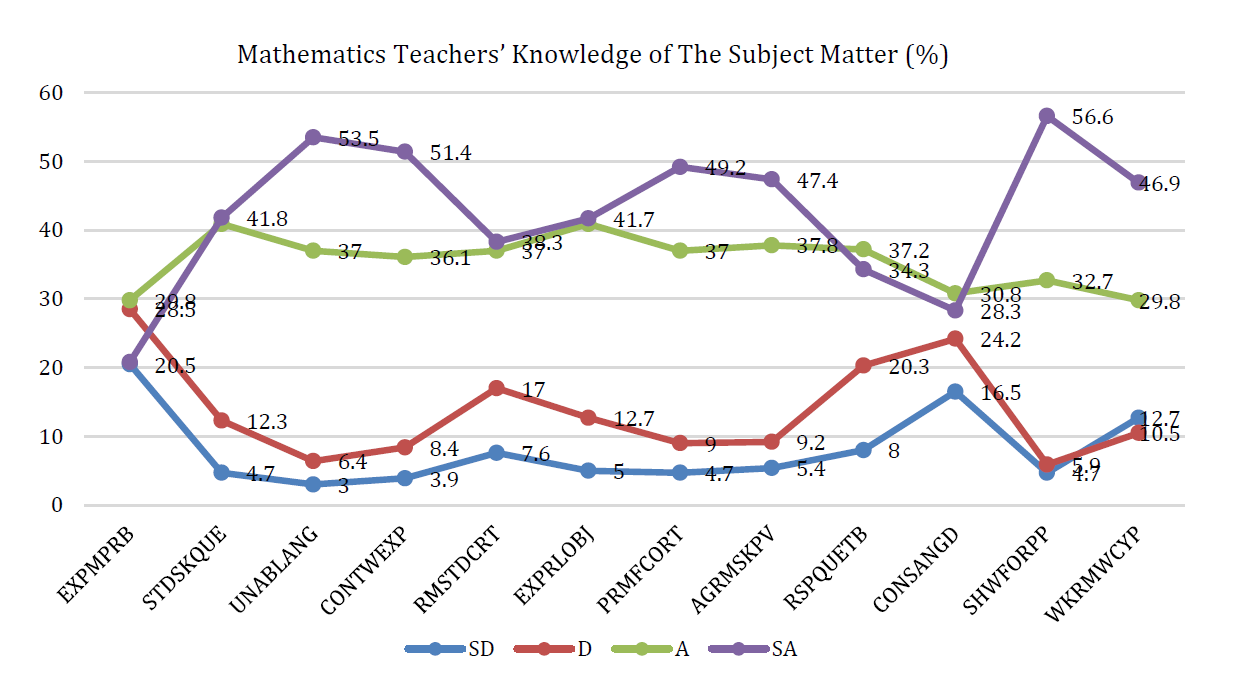
Figure 1: Mathematics Teachers’ Knowledge of the Subject Matter (%)
Note: Acronyms and chart are not explained N.B: See Appendix III on page 126 on the Project
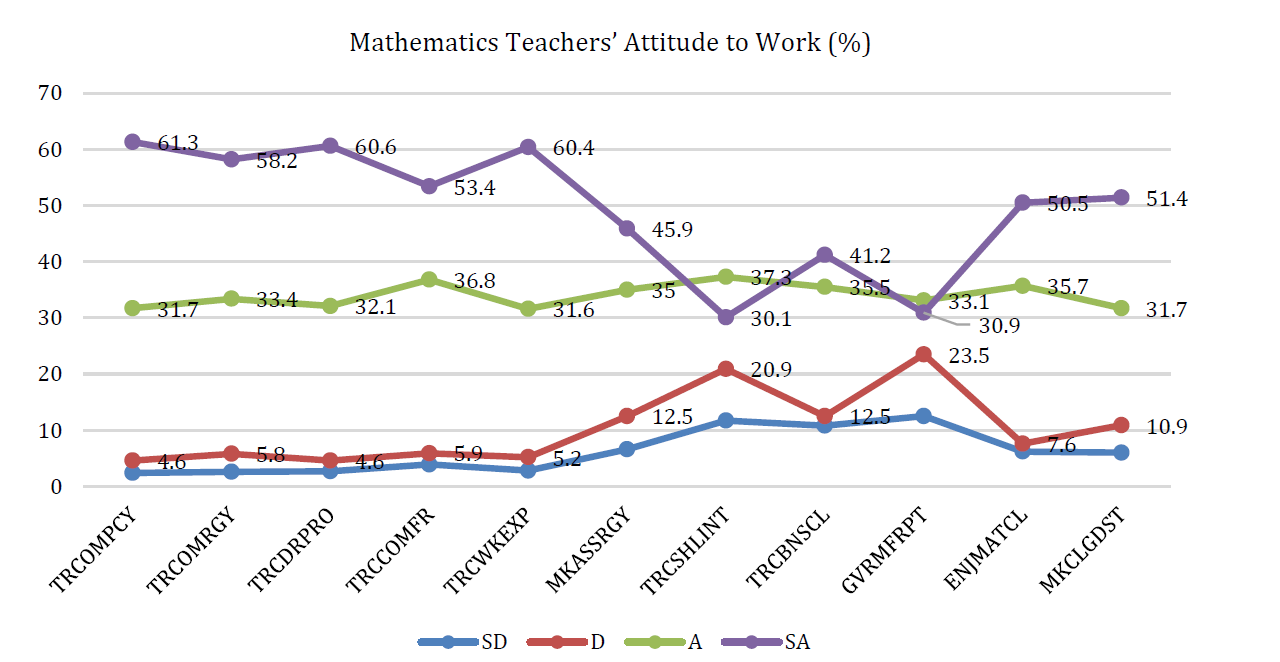
Figure 2: Mathematics Teachers’ Various Attitude to Work (%)
From the Figure 1 explained the students’ perception of responded in Mathematics teachers’ knowledge of the subject matter. The above annotated line graph indicated (%) of both Agree (A), Strong Agree (SA) and Disagree (D) and Strong Agree (SD) which was added together to mean Agree (A) and Disagree (D) respectively.
In terms on Mathematics teachers’ knowledge of the subject matter, where on item 3 which states that, teachers use unambiguous language when teaching added together to mean agree of 90.5%. It followed by items which states that, teachers explain and show us how to obtain or derive formulae from fundamental principle; (e.g. formulae for solving Mathematics problem), teachers create connection between what he/she teaches us and with everyday experiences, teachers permit us to point out corrections for him/her teachers agree to his/her mistakes when we perceive it and teachers explain what he/she teaches with real objects respectively.
Research Question 2
What is the students’ view of their Mathematics teachers’ various attitude to work which can influence on their learning outcomes in Mathematics?
The results as presented in Table 2 revealed that 83% on the average agreed with all the items on Mathematics teachers’ various attitude to work which can influence their learning outcomes in Mathematics.
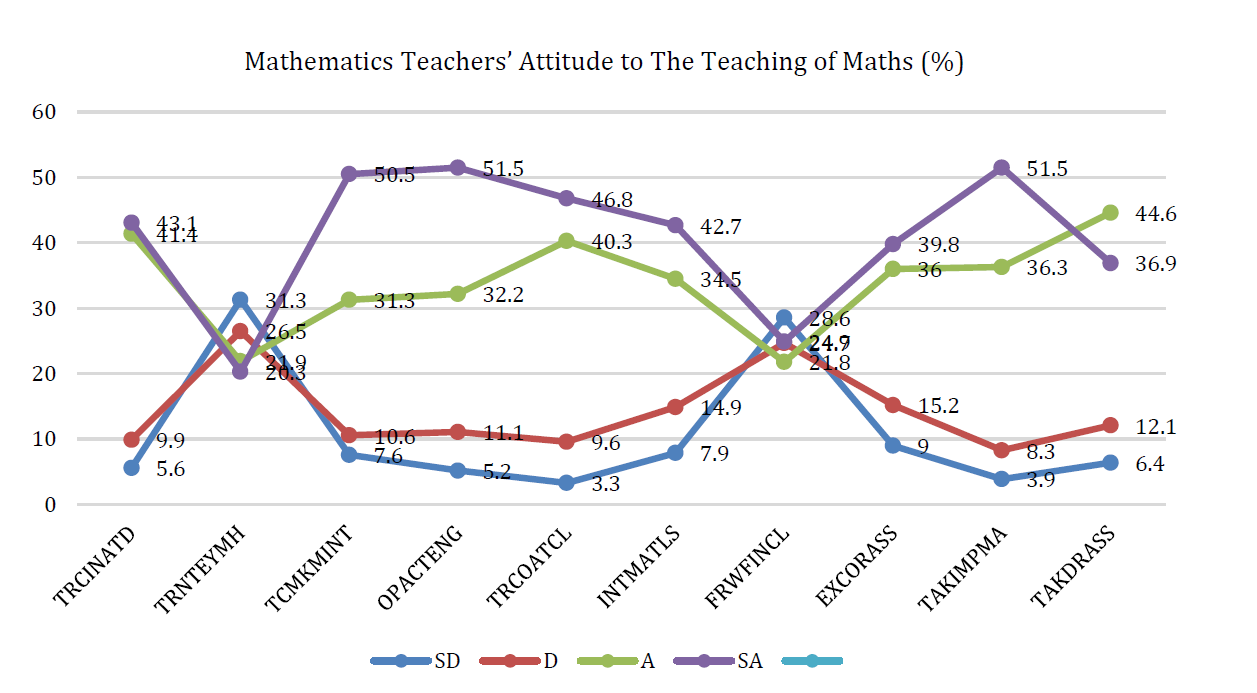
Figure 3: Mathematics Teachers’ Attitude to the Teaching of Mathematics (%)
All above 80% agreement while the least was item 9 with 64.0% that teacher give room for rapport in the class.
From the Figure 2 explained the students’ perception of responded in Mathematics teachers’ various attitude to work. The above annotated line graph indicated (%) of both Agree (A), Strong Agree (SA) and Disagree (D) and Strong Agree (SD) which was added together to mean Agree (A) and Disagree (D) respectively.
In terms on Mathematics teachers’ various attitude to work, where on item 1 which states that, teachers come to class punctually added together to mean agree of 93.0%. It followed by items which states, teachers dress properly when teaching Mathematics, work examples with the students in the class, come to class regularly, students enjoy class atmosphere, teacher makes his/her class a place where students like to be and marks assignments regularly.
Research Question 3
What is the students’ view of their Mathematics teachers’ attitude to the teaching of Mathematics on their learning outcomes in Mathematics?
The results of Table 3 showed that 75% on the average agreed with all the items on Mathematics teachers’ attitude to the teaching of Mathematics.
The overall mean of all the items was x ̅ = 3.06. This means that the students agreed with all the items measuring of their Mathematics teachers’ attitude to the teaching of Mathematics. Top of these are greater than 80% and the mean of greater than 3.61 that teacher talk about importance of Mathematics, attitude contribute toward our attention in classrooms, influence our attitude to Mathematics, provides opportunities for students to be actively engage in Mathematics activities, makes Mathematics interesting, and talk about providing directions to the assignment given out. None of the items are less than that 2.3 mean on Mathematics teachers’ attitude to the teaching of Mathematics. All agreed that mastery of the Mathematics teachers attitude to the teaching of mathematics on their learning outcomes in Mathematics. However, they disagreement that teacher does not seem to enjoy teaching Mathematics and always from his/her face in the class.
It followed by items which states that teacher’s examples correlate with the assignments given out and interact with us during Mathematics lesson. All above 80% agreement while the least was item 2 with 42.2% that teacher does not seem to enjoying teaching Mathematics.
From the Figure 3 explained the students’ perception of responded of Mathematics teachers’ attitude to the teaching of Mathematics. The above annotated line graph indicated (%) of both Agree (A), Strong Agree (SA) and Disagree (D) and Strong Agree (SD) which was added together to mean Agree (A) and Disagree (D) respectively.
In terms on Mathematics teachers’ attitude to the teaching of Mathematics, where on item 9 which states that, teachers about the importance of Mathematics added together to mean agree of 87.8%. It followed by items which states, teachers’ attitude contribute toward our attention in classrooms, influenced our attitudes to Mathematics, provides opportunities for students to be actively engaged in Mathematics activities, makes Mathematics interesting and talk about providing directions to the assignments given out respectively.
CONCLUSION
The result of this study indicates that teachers characteristics – knowledge of the contents to be taught, communication ability, ability to employ appropriate instructional strategies and competence in classroom management, relate significantly with students’ attitude towards Mathematics. Teachers’ characteristics are positively correlated with students’ attitude towards Mathematics. When students’ perception of their teachers’ characteristics is low, it could result in their negative attitude towards Mathematics and vice versa. Mathematics teachers should therefore strive to exhibit sound and effective pedagogical traits to earn their students’ high perception. This will then engender students’ positive attitude towards Mathematics. As students’ attitude improves, so will their commitment to the subject and their achievement will be enhanced.
Recommendations
On the basis of the findings of the study; it is recommended that:
Teachers of mathematics should periodically be given opportunities to update their knowledge through in-service training and retraining courses to increase their knowledge base in their subject area
Teachers should adopt good communication techniques through verbal and non-verbal means that would attract students’ attention and enhance effective communication during lesson
More than one teaching method should be appropriately adopted in a single lesson presentation by a teacher so as to carry every student along, create variety, minimize boredom and enhance interest in what is being taught and learnt
Teachers should create good classroom management strategies, to ensure democratic, disciplined and conducive atmosphere before and during every lesson
REFERENCE
Ofosu, G.C. Curriculum Implementation and Instruction. Uniworld Educational Publishers, 2014.
Growa, R.A. School Administration and Supervision Leadership: Challenges and Opportunities. Brown Publishers, 2013. www.alibris.com/search/books/isbn/9 780697062468.
Fele, E. and M.L. Franke. “Teachers’ knowledge and its impact.” Handbook of Research on Mathematics Teaching and Learning, edited by D.A. Grouws, Macmillan, 2012, pp. 147-164.
Albert, G.W. Pattern and Growth in Personality. William Clowes and Sons, 2018. International Education Studies, vol. 6, no. 2, 2013, pp. 204.
Abraham, S.A. and M.A. Rahman. “Secondary school students’ attitudes to learning mathematics in the world of information technology: Implications for mathematics teachers and teacher preparation.” Proceedings of the 42nd Annual Conference of the Science Teachers Association of Nigeria, Heinemann, vol. –, no. –, 2014, pp. 178-182.
Helen, P., T. Rowland and A. Thwaites. “Primary teachers’ mathematics content knowledge: What does it look like in the classroom.” www.scribd.com/doc/22550939/journal. Accessed 16 January 2011.
Ewu, A.E.O. “Teaching of social studies in primary school.” Fundamental of Elementary Education, edited by A.E.O. Esu and E.P. Nkutidem, Helino Associates, 2014.
Agun, Y.A. and O.J. Ehindero. “What our students say about how we teach.” Ife Journal of Education Studies, vol. 7, no. 1, 2010, pp. 1-9.
Egg, P. and D. Kauchak. Strategies for Teachers: Teaching Content and Thinking Skills. 4th ed., A.A., 2012.
Afara, M.E. “Communication in teaching learning process.” A Handbook in Teaching Profession in Nigeria, edited by D.U. Umoren and C.M. Ogbodo, Guidepost Publishers, 2011, pp. 144-156.
Ahmed, F. “Students’ perception of the teachers’ teaching of literature: Communicating and understanding through the eyes of the audience.” European Journal of Social Sciences, vol. 7, no. 3, 2019, pp. 3-15.
Adediwura, A.A. and B. Tayo. “Perception of teachers’ knowledge, attitude and teaching skills as predictor of academic performance in Nigerian secondary school.” Academic Journal on Educational Research and Review, vol. 2, no. 7, 2017, pp. 165-171.
Oban, P.A.I. General Methods of Teaching. Macmillan Publishers, 2014.
Umor, D.N. “The concept of education: Meaning and aims.” A Handbook on Teaching Profession in Nigeria, edited by D.N. Umoren and C.M. Ogbodo, Guidepost Publishers, 2011, pp. 9-14.
Umo, M.U. “Implementing social curriculum through Pavlovian and Skinnerian learning strategies.” Nigeria Journal for Curriculum Studies, vol. 12, no. 2, 2015, pp. 32-36.
Bayo, D.B. et al. “Students’ perceptions of preferred classroom learning environment.” Journal of Educational Research, vol. 80, no. 1, 2011, pp. 10-16.
Nwosu, B.G. “Developing, enhancing and sustaining interest in the teaching and learning of mathematics in primary schools.” The Nigerian Primary Education System: Trends, Issues and Strategies for Improvement, edited by B.G. Nworgu and B.C. Ememgo, Etukokwu, 2010, pp. 131-139.
Advertisement
Recommended Articles
Research Article
Pedagogic Competencies Provided To Student Teachers through Biology Teacher Education in Universities in Kenya In Light of Classroom Practice
Download PDF
Research Article
Outcome of COVID-19 in Patients with Myasthenia May Not Only Depend on the Immunologic Disease
Josef Finsterer,
...
Ana C Fiorini
Published: 31/10/2020
Download PDF
Research Article
A Study To Understand Research Into The Formation of Educator Profiles for Use by Institutions Whose Primary Mission is The Preparation of Future Educators
Jin Xianzhao,
...
Aminul Islam
Published: 29/07/2024
Download PDF
Research Article
The Effect of a Picture Book on the Pre-Primary School Children's Literacy Skills Development: Implication on the Teacher Education and Child Language Development
Dominion ,
Joanna Ngozi
Published: 15/07/2020
Download PDF
PO Box 101, Nakuru
Kenya.
Email: office@iarconsortium.org
Editorial Office:
J.L Bhavan, Near Radison Blu Hotel,
Jalukbari, Guwahati-India
I.O., O., Adegoke Ezekiel, F. & T. Adejoke, O. (2020). Students’ Perception of Mathematics Teachers’ Characteristics and their Attitude towards Mathematics in Ekiti State Southwest, Nigeria. International Academic Journal of Education & Literature, 1(2), 1-7.
MLA
I.O., Oginni, Fadiji Adegoke Ezekiel and Oginni T. Adejoke. "Students’ Perception of Mathematics Teachers’ Characteristics and their Attitude towards Mathematics in Ekiti State Southwest, Nigeria." International Academic Journal of Education & Literature 1.2 (2020): 1-7.
Chicago
I.O., Oginni, Fadiji Adegoke Ezekiel and Oginni T. Adejoke. "Students’ Perception of Mathematics Teachers’ Characteristics and their Attitude towards Mathematics in Ekiti State Southwest, Nigeria." International Academic Journal of Education & Literature 1, no. 2 (2020): 1-7.
Harvard
I.O., O., Adegoke Ezekiel, F. and T. Adejoke, O. (2020) 'Students’ Perception of Mathematics Teachers’ Characteristics and their Attitude towards Mathematics in Ekiti State Southwest, Nigeria' International Academic Journal of Education & Literature 1(2), pp. 1-7.
Vancouver
I.O. O, Adegoke Ezekiel F, T. Adejoke O. Students’ Perception of Mathematics Teachers’ Characteristics and their Attitude towards Mathematics in Ekiti State Southwest, Nigeria. International Academic Journal of Education & Literature. 2020 Jul;1(2):1-7.


 Download PDF
 Download XML




 )