The article concentrates on the importance of biotechnology in solving the problem of plastic waste by utilizing microorganisms and enzymes to break down plastics into simpler, non-toxic polymers. The world's production of plastics has grown rapidly and, due to the little ability of nature to decompose plastics, microbial degradation has become a viable environmental route in sustainable waste management. The article outlines the importance of biotechnology, particularly genetic engineering, enzyme technology and microbial technology, to increase the efficiency of biodegradation by increasing the amount and stability of the enzymes used for degradation, such as PETase, MHETase and ketonease and by broadening the capacity of these enzymes to degrade a wider range of plastics, particularly PET. The article describes the process of microbial degradation as the first step of surface colonization followed by the initial degradation and depolymerization by extracellular enzymes and the assimilation and mineralization of the products to CO₂, H₂O or CH₄. The article also brings to light the differences between the role of bacteria (Bacillus and Pseudomonas) and fungi (Aspergillus and Penicillium) with respect to their adhesion and penetration ability and the nature of the oxidative and degrading enzymes they excrete. The present article will examine a field application-bioremediation-where conditions are created to encourage the activity of microorganisms in soil, water and landfills. It also discusses genomics, proteomics and metabolomics technologies that can be used to create improved strains. It also discusses the need for the environment to reduce the accumulation of plastic and microplastics, reduce harmful by-products and make plastic waste more useful and valuable as a resource in a circular bioeconomy. It also addresses problems of slow decomposition, some polymers that are not readily decomposable, requirement for precise operating conditions, high costs and biosafety concerns related to genetically modified organisms.
Keywords
Biotechnology
Microbial Degradation of Plastics
Bioremediation
Polymer Degrading Enzymes
Omics Technologies
Genetic Engineering
INTRODUCTION
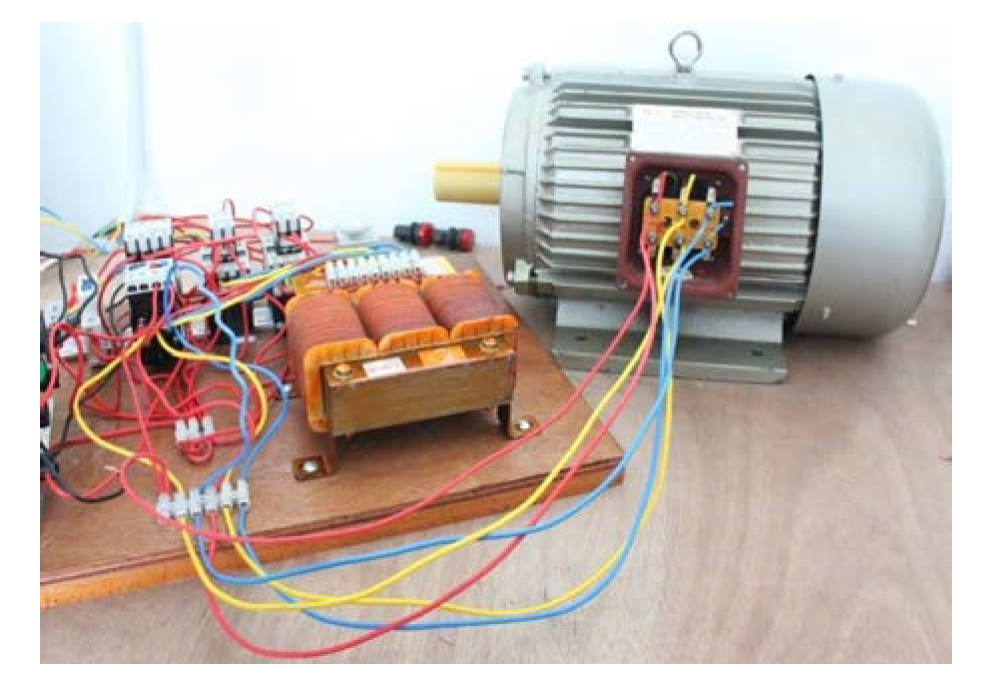
In recent decades, the world has witnessed a significant increase in the production and use of plastics due to their unique physical properties and low cost [1], exacerbating the global plastic waste problem. Because plastics resist natural decomposition, they have become a major source of environmental pollution, accumulating in soil and water bodies and causing serious damage to ecosystems and human health [2]. Given the limited effectiveness of traditional methods for disposing of this waste, biotechnology has emerged as a promising scientific approach that utilizes microorganisms and enzymes to break down plastics and convert them into less harmful compounds. This research aims to review the role of biotechnology in the microbial degradation of plastics, highlighting its most important applications and the challenges associated with it [3]. Figure 1 illustrates the role of biotechnology in the enzyme-mediated degradation of plastics.
Figure 1: Is a Graphical Summary of the Enzyme Breakdown of Plastics [13]
The Concept of Biotechnology
Biotechnology is using living organisms or parts of them (e.g. enzymes) and modern technologies to produce or modify substances that are useful to humans and the environment. It has the following areas of application:
Genetic Engineering
One of the most important uses of biotechnology for improving the plastics degradation by microorganisms is the use of genetic engineering. It includes the modification of the genetic material of the microorganisms in order to enhance their capacity to produce enzymes capable of degrading plastic polymers. This is done by either introducing genes which code for specific enzymes or by increasing the gene's expression by gene cloning and/or modern gene editing systems like CRISPR [4]. All of the above methods have led to higher degradation efficiency by means of higher production rates, enhanced thermal stability and broader activity ranges of enzymes, including Polyethylene Terephthalate (PET). Genetic engineering has also led to the development of genetically engineered microbial strains that can perform the desired function in a wide range of environments, which has increased the potential for developing large-scale microbial industrial processes. Microbial Technology [5].
Enzyme Technology
Enzyme technology plays a key role in the utilization of plastic wastes in biotechnology. Uses enzymes which have been specially developed as biocatalysts to degrade complex polymer chains into simpler units. These enzymes are capable of working under moderate temperature and pressure conditions and hence are an environmentally friendly alternative to the conventional chemical process [6]. Enzymes like PETase, MHETase and cutase, which have shown to be highly effective at breaking down specific plastics, Particularly Polyethylene Terephthalate (PET), are currently the focus of research.Enzymes such as PETase, MHETase and cutase, which have proven to be very efficient at the degradation of certain plastics, mainly Polyethylene Terephthalate (PET), are the focus of recent research. Modern technologies improve the functioning of these enzymes through change of the molecular structure and augmentation of stability. Moreover, the enzymatic immobilization techniques have been used to enhance reusability and operational efficiency. Enzyme technology is therefore a promising method for selective and efficient plastic degradation and could be applied in the industry, under the sustainable bioeconomy concept. Bioremediation [7].
Microbial Technology and Bioremediation
One important area of biotechnology application to plastic waste management is microbial technology. It utilises the natural enzymes made by microorganisms like bacteria and fungi that degrade the chemical bond of plastic polymers. Several studies have shown that some species of microorganisms can break down plastic as a carbon and energy source, thereby helping to lower environmental levels of plastic. Bioremediation is the use of microorganisms or metabolic products of microorganisms to detoxify pollutants in the natural environment or in a controlled treatment system [8]. With regard to plastic wastes, bioremediation can be used in soil, water, or bioreactors in which the organisms that decompose plastics are encouraged to work more efficiently by providing the appropriate environment [9].
Microbial Degradation of Plastics
Microbial degradation of plastics refers to a complicated biological process by which microorganisms (bacteria and fungi) decompose plastics into simpler compounds via a series of biochemical reactions which are facilitated by different enzymes. This is one of the most significant natural environmental routes for the removal of plastic pollutants, but is not as fast as chemical routes [10].
The Mechanism of Microbial Degradation
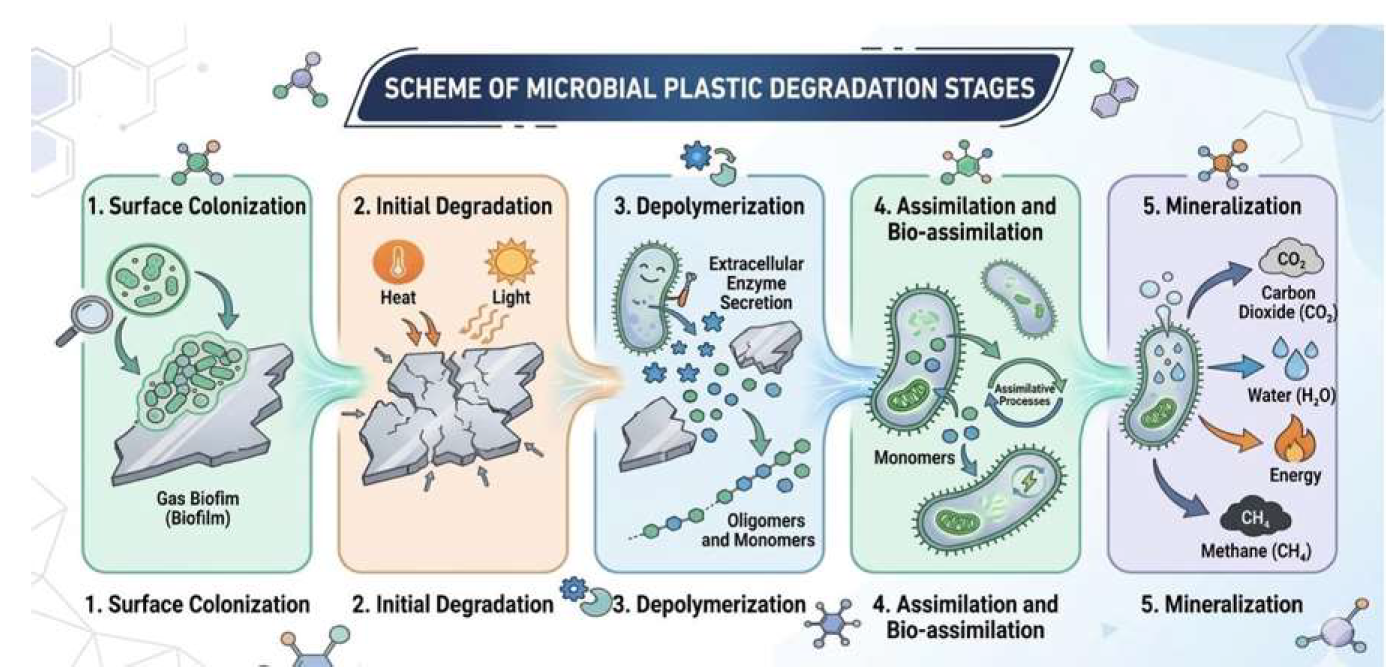
The degradation of plastics by microbes is a multi-stage process as illustrated in the Figure 2 and can be summarised as follows:
Figure 2: Stages of the Microbial Degradation Process of Plastics
Surface Colonization
The biofilm development of microorganisms on the plastic surface, which promotes the adhesion of cells and enzyme secretion from the microorganisms to the plastic surface, is the first step in the process [11].
Biodeterioration
Changes in the physical and chemical properties of the plastic occur due to the influence of environmental factors (such as light and heat) along with microbial activity, leading to an increased susceptibility to degradation [12].
Depolymerization
Extracellular enzymes break down long polymer chains into smaller molecules such as oligomers and monomers through reactions such as hydrolysis or oxidation [13,14].
Assimilation
The resulting molecules are absorbed into microbial cells and used as a source of carbon and energy in metabolic processes. 5. Mineralization: Organic compounds are eventually converted into simpler end products such as Carbon Dioxide (CO₂) and water (H₂O) under aerobic conditions, or methane (CH₄) under anaerobic conditions [15].
Types of Plastic Biodegradation
Bacterial Biodegradation: Bacteria-mediated degradation of plastic can be divided into two interconnected steps: degradation and depolymerization steps. It starts with surface adhesion and biofilm formation, the first step of which is the attachment of bacterial cells at the surface of the plastic, followed by the organization of the microbial community that increases the stability of the bacteria on the target surface and the efficiency of the interaction between the bacteria and the polymer. This also provides an appropriate condition for the activity of enzymes [16]. This is succeeded by the extracellular enzymatic secretion phase, during which bacteria excrete a variety of enzymes that catalyze oxidation and hydrolysis reactions that degrade long polymer chains to smaller molecular units. These are slowly converted to simpler products like organic acids, alcohols. The decomposition process is then finished by the metabolic pathways of the cells, finally leading to the production of carbon dioxide and water [17].
Biodegradation by Fungi
Unique shape and enzymes make fungi, such as Aspergillus and Penicillium, very good at breaking down plastics. Mechanical penetration is the first step, in which fungal cells invade the surface structure of the plastic by growing and penetrating. This means that fungus and plastic come in contact with each other more, resulting in a change of the polymer structure that makes it more vulnerable to degradation [18]. Thereafter, the fungi produce a significant amount of enzymes such as laccase, peroxidase and cutinase. These enzymes accelerate complex oxidation reactions in which chemical bonds in polymers are broken down to simpler compounds which can be utilised. The process makes stable end products, such as water and carbon dioxide.
Bioremediation of Plastic Wastes
Bioremediation can be used directly in contaminated sites, without the transportation of waste products and industrial processing and is thus, environmentally and economically sustainable. Its applications include:
In Soil
The microorganisms are either local or enhanced to promote the decomposition of accumulated plastic waste in agricultural lands or contaminated sites and environmental conditions are improved to enhance the activity of microorganisms through supplying humidity and aeration [19].
In Aquatic Environments
Used in fresh and marine waters to decrease the buildup of plastic particles, including micro plastics, by fostering growth of microorganisms that bind and degrade polymer surfaces [20].
In Landfills
It is used as a support for natural processes in landfill sites and accelerates the processes of microbial degradation of plastics, thereby reducing the total amount of waste and reducing long-term environmental impacts [21].
Sustainable Bioremediation Strategies for Plastics
Bioremediation of plastics is a potential method in waste management that can be part of sustainable waste management strategies as shown in Figure 3. It is based on the use of microorganisms and their enzymes to break down the synthetic polymers and convert them into simpler, less polluting compounds. An advantage of this approach is that it can be used directly at the pollution site, which may be in soil, aquatic environment or landfill, without requiring complicated transportation and thermal and chemical treatment processes, thereby improving environmental and economic benefits. But several key factors are closely tied with the effectiveness of bioremediation, the most important being the type of plastic polymer. Few materials are more biodegradable than more resistant polymers like PE and PP, such as PET.
Figure 3: Sustainable Waste Management Strategies
In addition, factors in the ambient environment (such as temperature, moisture, pH and oxygen levels) are important to stimulating microbial metabolism and optimizing decomposition efficiency.
Omics Technologies
Omics technologies are cutting-edge molecular biology tools that have made major contributions to the understanding of the biological mechanisms that contribute to degrading plastics. These strategies involve the detailed characterization of intracellular molecular components, such as genomics, transcriptomics, proteomics and metabolism, to describe the regulatory and enzymatic pathways for biodegradation processes [22] these technologies help in the achievement of:
Gene Analysis of Degradation Enzymes
By identifying the genes responsible for encoding enzymes capable of breaking down plastic polymers and understanding their regulation and expression mechanisms under different environmental conditions [23].
A study on protein and metabolic pathways.
By characterizing the structure and function of degrading enzymes, analyzing their catalytic efficiency and revealing the protein interactions and metabolic pathways involved in the metabolism of degradation products [24].
Improving Microbial Efficiency
To create more degradable microbial strains via natural selection or genetic engineering methods, to accelerate and improve biological processes in environmental applications [25]. Therefore, omex technologies are a key component in the shift from a descriptive to a precise molecular understanding of biodegradation and provide enormous opportunities for novel and sustainable solutions to the plastic pollution problem. Microbial degradation of plastics is a critical issue because plastic wastes pose a serious environmental risk and economic burden.
Microbial degradation of plastics is an essential part of the current strategies to solve the environmental pollution problem by plastic wastes that are increasing. It is because its natural biological processes break down complex polymers into simpler ones, thereby helping to minimize long-term environmental and health effects. The importance of this process is evident in several key aspects [26], most notably.
Reducing Environmental Pollution
The carbon cycle process of microbial decomposition helps reduce plastic waste in land and water, thereby reducing the negative effects on the living [27].
Reducing Microplastic Accumulation
Microplastics break down larger molecules of plastics before they become microplastics that are difficult to control, reducing the plastics in the food chain and related environmental and health hazards [26].
Producing Less Toxic Byproducts
Plastics are broken down by biodegradation into simpler components, including carbon dioxide, water and certain organic acids. The byproducts formed are less detrimental than the plastic components or the byproducts from uncontrolled chemical breakdown [28].
Thus, improving the understanding of the mechanisms of microbial decomposition and the development of their applications is an important step towards achieving sustainable management of plastic waste and long-term environmental development goals and the potential to transform waste into useful products (energy or chemicals) as some bacteria are able to break down plastic into organic compounds or useful energy sources.
The microbial degradation of plastics faces several challenges and obstacles. Several challenges and obstacles exist for the microbial degradation of plastics.
Despite significant progress in the field of microbial degradation of plastics, a number of challenges still hinder its widespread application, both environmentally and industrially. The barriers are linked to biological, technical and socio-economic issues, which can be summarized to be as follows:
Slow Rate of Biodegradation
The microbial processes are relatively slow compared to chemical and thermal processes and can take longer to break down the polymer structure, making them less efficient in large-scale applications [29].
Resistance of some Plastics to Biodegradation
Some polymers are more resistant to biodegradation because they are not susceptible to enzymatic degradation, such as Polyethylene (PE) and Polypropylene (PP), which are polymers with stable structures that lack functional groups that are susceptible to enzymatic attack [30].
A system may consist of any number of components that collectively form a cohesive whole. A system may be made up of several parts that function together as a whole.
Microbiological degradation requires an optimum temperature, humidity and pH, which may not occur or be controlled in natural environments or field applications [31]. The high cost is a drawback in industrial applications.
Bioremediation has to be implemented on a large scale which necessitates considerable financial investment, such as microbial strain development, optimizing operating conditions and monitoring of biological processes. This might diminish its economic viability over traditional alternatives [32].
Biosafety Concerns
Some microorganisms, especially genetically modified microorganisms, introduce concerns regarding ecological and health effects; therefore, it is needed to implement strict surveillance on their usage to ensure safe application [33].
CONCLUSION
Bacteria and fungi have special enzymes that can digest plastic polymers into simpler compounds that can be metabolized. Advances in modern OMEX technologies have led to a greater understanding of the molecular mechanisms underlying these processes and to the optimization of microorganisms used. The efficiency of biodegradation will differ in relation to the type of plastic and environmental conditions around it. Polymers like Polyethylene (PE) and Polypropylene (PP) have yet to be considered highly biodegradable. Although these technologies have great potential for practical use, there are several practical problems such as the slow decomposition rate and high operating costs. Biotechnology and scientific research are critical to finding more effective and sustainable solutions. In conclusion, microbial biodegradation plays an important role in sustainable plastic waste management by providing an eco-friendly solution to conventional waste treatment methods.
REFERENCES
Al-Maadeed, M.A.A. et al. “Polymers to Improve the World and Lifestyle: Physical, Mechanical and Chemical Needs.” Polymer Science and Innovative Applications, Elsevier, 2020, pp. 1-19.
Moharir, S.R. et al.“Hazardous Effects of Plastic Waste on the Ecosystem, Human Beings and Animal Health.” Plastic Waste Valorization, Elsevier, 2026, pp. 147-171.
of Science Research and Reviews, vol. 3, no. 1, 2026, pp. 13-29.
Sokra, I. “Microbial Degradation of Biodegradable Plastics: Enzymes, Pathways and Applications.” Journal of Agriculture and Technology, vol. 2, no. 2, 2026, pp. 12-22.
Srivastava, A.K. et al. “Harnessing Genetic Engineering for Petrochemical Waste Detoxification: Mechanisms and Recent Breakthroughs.” Journal of Basic Microbiology, vol. 66, no. 2, 2026, e70140.
Chudasama, K. et al. “Microbial Approaches to Plastic Waste Management: Enzymes, Genetics and Biotechnological Advances.”
Dey, S. et al. “Advancing Plastic Waste Remediation: Microbial Enzyme-Based Degradation of Micro- and Nanoplastics (MNPs) for Environmental Sustainability.” Biocatalysis and Biotransformation, vol. 43, no. 6, 2025, pp. 535-568.
Parveen, N. et al. “Microbial Biotechnology: A Catalyst for Sustainable Development and Circular Economies.” Role of Science and Technology for Sustainable Future: Volume 2-Applied Sciences and Technologies, Springer Nature Singapore, 2025, pp. 397-427.
Ali, H.A and M.B. Farhan, “Bioremediation techniques for water and soil pollution.” Natural and Engineering Sciences, vol. 10, no. 1, 2025, pp. 89-109.
Akash, K. et al. “Exploring the role of microbes in the biodegradation of plastic waste: Mechanisms, interactions and implications for sustainable waste management-a review.” Water, Air and Soil Pollution, vol. 236, no. 12, 2025, pp. 786.
Guo, W. et al. “Microbial colonization on four types of microplastics to form biofilm differentially affecting organic contaminant biodegradation.” Chemical Engineering Journal, vol. 503, 2025, 158060.
Khoshtinat, S. “State-of-the-Art Review of Aliphatic Polyesters and Polyolefins biodeterioration by microorganisms: From mechanism to characterization.” Corrosion and Materials Degradation, vol. 4, no. 4, 2023, pp. 542-572.
Dhali, S.L. et al.“Recent trends in microbial and enzymatic plastic degradation: A solution for plastic pollution predicaments.” Biotechnology for Sustainable Materials, vol. 1, no. 1, 2024, pp. 11.
Pustak, A. and A. Maršavelski, “Enzymatic degradation of biopolymers in amorphous and molten states: Mechanisms and applications.” FEBS Open Bio, vol. 16, no. 4, 2026, pp. 670-685.
Chen, S. et al. “Engineering approaches for sustainable protein production in microalgae: A comprehensive review.” Comprehensive Reviews in Food Science and Food Safety, vol. 24, no. 6, 2025, e70308.
Debroy, A. et al. “Role of biofilms in the degradation of microplastics in aquatic environments.” Journal of Chemical Technology and Biotechnology, vol. 97, no. 12, 2022, pp. 3271-3282.
Dey, S. et al. “Plastisphere community assemblage of aquatic environment: Plastic-microbe interaction, role in degradation and characterization technologies.” Environmental Microbiome, vol. 17, no. 1, 2022, p. 32.
Cai, Z. et al. “Biological degradation of plastics and microplastics: A recent perspective on associated mechanisms and influencing factors.” Microorganisms, vol. 11, no. 7, 2023, pp. 1661.
Chia, R.W. et al. “Bioremediation of soil microplastics: categories and mechanisms.” Bioremediation: Removing Microplastics from Soil, American Chemical Society, 2023, pp. 19-32.
Viel, T. et al. “Biodegradation of plastics induced by marine organisms: Future perspectives for bioremediation approaches.” Polymers, vol. 15, no. 12, 2023, p. 2673.
Udekwu, C.C. et al.“A review of plastic pollution; conventional and recent bioremediation technologies.” Journal of Digital Food, Energy & Water Systems, vol. 5, no. 1, 2024.
Labib, M.M. “Overview of plastic and bioremediation: present investigations and future outlook.” Bioremediation and Nanotechnology for Climate Change Mitigation, Springer Nature Singapore, 2025, pp. 293–332.
Pérez-García, P. et al. “Microbial plastic degradation: Enzymes, pathways, challenges and perspectives.” Microbiology and Molecular Biology Reviews, vol. 89, no. 4, 2025, e00087-24.
Zhang, S. et al. “Synergistic multi-enzyme system of Sphingobacterium sp. for enhanced penicillin G degradation: Pathways, proteomics and binding dynamics analysis.” International Journal of Biological Macromolecules, vol. 320, 2025, 145730.
Li, L. et al. “Enhanced carbon use efficiency and warming resistance of soil microorganisms under organic amendment.” Environment International, vol. 192, 2024, 109043.
Benavides Fernández, C.D. et al. “Microbial degradation of polyethylene terephthalate: A systematic review.” SN Applied Sciences, vol. 4, no. 10, 2022, pp. 263. Kaka, K.G. et al. “Advanced Environmental Biotechnology for Pollution Control and Sustainable Development: A Review.” Journal
Skariyachan, S. et al. “Recent advances in plastic degradation-from microbial consortia-based methods to data sciences and computational biology driven approaches.” Journal of Hazardous Materials, vol. 426, 2022, 128086.
Jain, R. et al. “Microplastic pollution: Understanding microbial degradation and strategies for pollutant reduction.” Science of the Total Environment, vol. 905, 2023, 167098.
Roy, A. and S. Chakraborty, “A comprehensive review on sustainable approach for microbial degradation of plastic and its challenges.” Sustainable Chemistry for the Environment, vol. 7, 2024, 100153.
Bertocchini, F. and C.F. Arias, “Why have we not yet solved the challenge of plastic degradation by biological means.” PLoS Biology, vol. 21, no. 3, 2023, e3001979.
Gu, J.D. “Biodegradability of plastics: The issues, recent advances and future perspectives.” Environmental Science and Pollution Research, vol. 28, no. 2, 2021, pp. 1278-1282.
Megha, M. et al. “Biodegradable polymers-research and applications.” Physical Sciences Reviews, vol. 9, no. 2, 2024, pp. 949-972.
Yu, Y. et al. “Biosafety chemistry and biosafety materials: A New perspective to solve biosafety problems.” Biosafety and Health, vol. 4, no. 1, 2022, pp. 15-22.
Recommended Articles
Research Article
The Reality of E-Extension in Nineveh Governorate (Article Review)
Luma Mother Idress,
...
Ahmed Ibrahim
Published: 20/09/2026
Download PDF
Research Article
Efficacy of Different Maturity Stages of Indian almond Tree Leaves as Anaesthetics in African Catfish (Clarias gariepinus) Fingerlings
O.A. Akinrotimi,
...
J.B. Anyanwu
Published: 30/11/2021
Download PDF
Research Article
Haematological Responses in Sarotherodon melanotheron Exposed to Linear Akylbenzene Sulfonate in the Laboratory
Okenwa U,
...
Otene B.
Published: 30/11/2021
Download PDF
Research Article
Appraisal of Challenges and Solutions for a Sustainable and Resilient Agriculture Sector in a Continuously Changing Climate
Stephen Chitengi Sakapaji
Published: 31/01/2022
Download PDF
PO Box 101, Nakuru
Kenya.
Email: office@iarconsortium.org
Editorial Office:
J.L Bhavan, Near Radison Blu Hotel,
Jalukbari, Guwahati-India
Sheet, S. A., Yahya, R. H., Saadoon, H. A. & Hatem, A. S. (2026). Biotechnology and Its Impact on the Microbial Decomposition of Plastics and Achieving Environmental Sustainability: A Review. IAR Journal of Agricultural Science and Food Research, 6(1), 1-6.
MLA
Sheet, Sahar Adnan, et al. "Biotechnology and Its Impact on the Microbial Decomposition of Plastics and Achieving Environmental Sustainability: A Review." IAR Journal of Agricultural Science and Food Research 6.1 (2026): 1-6.
Chicago
Sheet, Sahar Adnan, Raghad Hashim Yahya, Hala Abulelah Saadoon and Anas Saad Hatem. "Biotechnology and Its Impact on the Microbial Decomposition of Plastics and Achieving Environmental Sustainability: A Review." IAR Journal of Agricultural Science and Food Research 6, no. 1 (2026): 1-6.
Harvard
Sheet, S. A., Yahya, R. H., Saadoon, H. A. and Hatem, A. S. (2026) 'Biotechnology and Its Impact on the Microbial Decomposition of Plastics and Achieving Environmental Sustainability: A Review' IAR Journal of Agricultural Science and Food Research 6(1), pp. 1-6.
Vancouver
Sheet SA, Yahya RH, Saadoon HA, Hatem AS. Biotechnology and Its Impact on the Microbial Decomposition of Plastics and Achieving Environmental Sustainability: A Review. IAR Journal of Agricultural Science and Food Research. 2026 Jul;6(1):1-6.


 Download PDF
 Download XML