Contents
Download PDF
pdf Download XML
362 Views
106 Downloads
Share this article
Research Article | Volume 6 Issue 2 (July-December, 2025) | Pages 1 - 6
Analyzing Social and Demographic Influences for Behavioral Buying: A Case Study in Iraqi General Company for Foodstuff Trading
 ,
1
Department of Business Administration, Faculty of Administration and Economics, Mustansiriyah University, Baghdad, Iraq
Under a Creative Commons license
Open Access
Received
Aug. 11, 2025
Revised
Sept. 22, 2025
Accepted
Oct. 19, 2025
Published
Nov. 18, 2025
Abstract

Research aims to boost company's sales by leveraging its influence on its customers. Therefore, social and demographic influences on behavioral buying were studied. Iraqi General Company for Foodstuff Trading was chosen as research site and (85) individuals from company's managers and customers were interviewed to complete a questionnaire. It concluded that social influences play a significant role in consumers' behavioral buying and cannot be ignored. Research recommends that companies pay attention to demographic influences because they influence consumer behavioral buying. Company can achieve this through market analysis techniques and customer databases, which will maximize company's sales and profitability.


Keywords
INTRODUCTION

Understanding consumer behavioral buying is a key element in marketing a company's products. Therefore, before implementing its marketing strategy, a company must conduct analytical processes to fully understand needs and expectations of consumers it wants to influence, attract them and encourage them to purchase its products [1]. Studying consumer behavioral buying influences is vital for companies to create effective marketing strategies that meet needs and desires of their target audience. These influences play a clear role in understanding and interpreting purchasing behavior, enabling companies to understand or predict which products consumers buy, when and how often they buy them, why they buy them and where they buy them from [2]. Companies analyze how consumers make their purchasing decisions, how they interact with a brand or product, how they use products to satisfy their needs and how their expectations and perceptions are shaped before and after purchase. Behavioral buying is largely determined by consumer's belief, which results from influence he is influenced by in marketing mix of companies that meet his demands [3]. This mix consists of a group of elements that depend on type of product itself. If it is a goods, elements are product planning, pricing, distribution and promotion. If it is a service, elements are product planning, pricing, distribution, promotion, physical display, operational processes and participation.


Based on case study approach, we can identify reality of applying social and demographic influences for behavioral buying in a single company and then generalize this to entire industry. To guide companies seeking to analysis social and demographic influences for behavioral buying, Iraqi General Company for Foodstuff Trading was selected. This company was established in 1959 in Iraq to import and market various food products, in addition to practicing limited export activity for some local products. It is affiliated with the Iraqi Ministry of Trade and has been tasked with implementing ration card system in terms of financing, contracting and distribution, based on financial allocations secured from Iraqi state budget. Company aims to secure ration card items, such as sugar, liquid cooking oil and baby formula, for a full year for all Iraqi cities, as well as a three-month reserve stock, should the financial allocation become available. It is working with the relevant authorities in Iraqi Ministry of Trade to secure a six-month strategic stock of sugar and liquid cooking oil by allocating a sum of money separate from ration card allocations, in anticipation of unexpected disasters and crises and in line with the state's general policies. Company seeks to obtain exclusive agencies for food items from local and foreign companies and to capitalize on the company's extensive local agent network. Iraqi General Company for Foodstuff Trading also seeks to develop and modernize infrastructure of shipping and transportation department, it has a virtual website at http://iraqsfsc.gov.iq.


Theoretical Literatures

Behavioral Purchasing: Behavioral buying varies among several types, including habitual buying behavior, variety seeking behavior, dissonance-reducing buying behavior and complex buying behavior [4]. Identifying influences of consumers' behavioralbuying is challenging and understanding them is a fundamental and essential factor in meeting consumers' needs wherever they are in all parts of market [5]. Consumer buying is defined as set of actions resulting from activities that secure consumer's acquisition of a specific product under internal and external influences and stimuli and according to a set of criteria that vary from person to person. Behavioral buying consists of a set of processes and procedures undertaken by buyer according to a specific and somewhat unchangeable logical sequence, represented by identifying need, gathering information, an evaluation index, a purchase decision and finally, a post-purchase evaluation [6]. Consumers attempt to gather a great deal of information about the characteristics of each product available in market before purchasing and they also take time and think carefully before making the decision to purchase a particular product [7].


Increased interest in studying behavioral purchasing influences has led to the emergence of a number of theories that attempt to study and explain these influences, most prominent of which are: First, theory of economic consumer behavior, which explains purchasing behavior in terms of utility factor achieved from each item, price factor and customer's budget level. This theory is based on idea that individuals purchase products to maximize the benefits derived from a specific level of spending [8]. One of most prominent criticisms of this theory is its neglect of social and psychological variables and its exclusive focus on economic variables. Second, black box theory of buyer behavior, which is more advanced and comprehensive, states that consumers are interested in determining how their internal needs and ideas interact with environmental factors to determine their purchasing behavior [9]. There are a number of environmental and external factors that influence consumers, who process information in light of the personal factors in their lives, ultimately leading to the decision to purchase a particular product. This theory includes a large number of variables but it is not always most accurate in all cases, because influences on purchasing behavior may not be of equal importance in all cases and purchasing process may not always go through same stages [10]. Behavioral buying falls into several categories: First, habitual behavioral buying, which refers to a purchase without significant involvement [11]. As consumers buy with low awareness and without much thought about product types, this type applies to products that consumers purchase regularly. Second, variety-seeking behavioral buying, which refers to consumers seeking to try new products with minimal noticeable differences [12]. This behavioral buying does so not because they are dissatisfied with previous products but because they seek variety first and foremost. Third, dissonance-reducing behavioral buying, which refers to consumers being highly involved in purchase process but unable to identify differences between brands, fearing regret and making decision [13]. Fourth, sophisticated behavioral buying, which refers to consumers deciding to purchase an expensive, rarely purchased product, involves themselves extensively in purchase process before investing in purchasing and owning product. Companies resort to certain methods of collecting data on behavioral purchasing, such as surveys, where companies create a survey asking consumers to share their opinions and feedback on purchasing decisions [14]. Transactional data is collected at point of sale and includes transaction dates, times, locations, products purchased, purchase history and payment methods. Web tracking is used to understand how consumers interact with website and determine their needs. Plans are then developed to improve website, content and purchasing methods to better attract consumers [15]. Social media is a means of interaction between companies and their customers, such as LinkedIn, Facebook, Twitter and Instagram, which can provide analytical tools to help understand consumer interests and sentiment [16]. Marketing analytics is used to collect consumer data through marketing campaigns. When a campaign is launched, a specific channel is used and data is analyzed on profiles of consumers who clicked on advertising and number of times they repeated it [17]. This method provides information on profiles of consumers who were already interested in the company's products and marketing campaigns [18]. Most marketing researchers agree that behavioral purchasing influences fall into main groups: Social influences and demographic influences [19].


Social Influences

These are influences imposed by conditions of society in which an individual lives, affecting their behavioral purchasing, they also refer to influence of social phenomena on the behavioral purchasing of consumers in a given market [20]. Most prominent social influences can be identified by several sub-influences: First, social class influences, this refers to the classification or division of society into several classes, each of which includes a group of individuals with similar social characteristics [19]. Criteria by which individuals are classified into social classes may vary from one society to another, such as occupation, education and ethnicity [21]. Social class influences individuals' spending and saving tendencies and influences their tendency to demand certain products that one class may need but not another. Second, reference group influences, influential groups include individuals with distinct values ​​and preferences and their behavioral purchasing is compared and emulated by other individuals [22]. Consumer does not need to be a member of this group to be influenced by it. They may admire a particular group but not be able to belong to it, such as sports teams or artists [23]. These consumers are reference groups that influence on behavioral purchasing of a large segment of consumers in market. Third, family influences, a group of individuals united by blood or marriage. Family has a significant influence on behavioral purchasing of its members. behavior of consumer differs from that of a family member. consumers responsible for a family, especially those with children, tend to purchase certain products out of concern for their children's health [24]. Fourth, dominant cultural influences, dominant culture is defined as a set of values ​​and beliefs that are apparent and prevalent in a given society [25]. Culture is a distinguishing feature of a given society and may significantly dominate a given society, becoming its defining characteristic.


Demographic Influences 

These are factors and influences related to individual, such as education, gender and income [26]. These influences are measurable and have a significant impact on consumer behavioral purchasing, as they are linked to lifestyle, which is a guiding and influencing factor in consumers' daily behavior and activities and shapes their feelings, attitudes and opinions about things [27]. Researchers agree on a set of demographic influences on behavioral purchasing: First, age influences, consumers change goods and services they purchase throughout their lives, such as clothing, food and furniture, depending on their age. Thus, age is most important factor in various events that consumers experience and experience from moment of birth to present [28]. Age is a factor that encompasses a set of other consumer factors, as each person's life stage gives them characteristics and behavioral habits that differ from those of other stages [29]. Behavioral purchasing for adolescent consumers differs from that of older consumers, as young adults and adolescents are among most potential customers in most markets [14]. Second, gender influences, males and females have different needs and use different products. This explains necessity of studying gender as an influence on consumer behavioral buying to provide products suitable for both men and women [30]. Increasing number of working women has led to increased men's participation in household responsibilities, with most men now handling home shopping. Third, income influences, consumer income and economic status are factors influencing product selection [31]. Most consumers are price-sensitive, so they are concerned with issues of income, spending and savings, which determine their purchasing power and the extent to which they align with product prices [32]. This has prompted researchers to study the impact of income on consumer behavioral buying in terms of its strength or weakness compared to other factors that motivate consumers to purchase certain products, even if their income is relatively low [33]. Fourth, education influences, most societies are composed of groups with varying educational levels, including uneducated, those with primary, intermediate and university education and those with higher degrees [2]. Differences in educational levels may create increased demand for certain products among a certain segment of population but academic degree itself is not determining factor, rather, what consumer has acquired or learned while obtaining degree is foundation [6].

METHODOLOGY

Research aims to diagnose weaknesses suffered by company under study, represented by Iraqi General Company for Foodstuff Trading, by designing a checklist for social and demographic influences for behavioral buying in company, which is presented to a group of expert arbitrators in scientific specialization and then diagnosing gaps in application after knowing actual percentage of presence of each social and demographic influences in company. Results are also presented using illustrative charts, Pi model, Pareto model and percentages, until attention of company's managers is drawn to weaknesses that should be addressed and facilitate company's achievement of its goals and objectives. Most prominent objectives of research can be summarized in answer following questions:


  • Is there a reason why consumers care about certain influences in their behavioral purchasing more than others

  • What are social and demographic influences for behavioral buying

  • How do company's executive managers view social and demographic influences 

  • What are obstacles to providing social and demographic influences in company

  • Is there parallelism in focusing company on social and demographic influences

  • Does company have sufficient capabilities to manage social and demographic influences


In order to answer these questions, research adopts case study approach and sets following two hypotheses that are (social and demographic influences for behavioral buying are available in Iraqi General Company for Foodstuff Trading) and (Company is balanceing focus on social and demographic influences for behavioral buying equally).


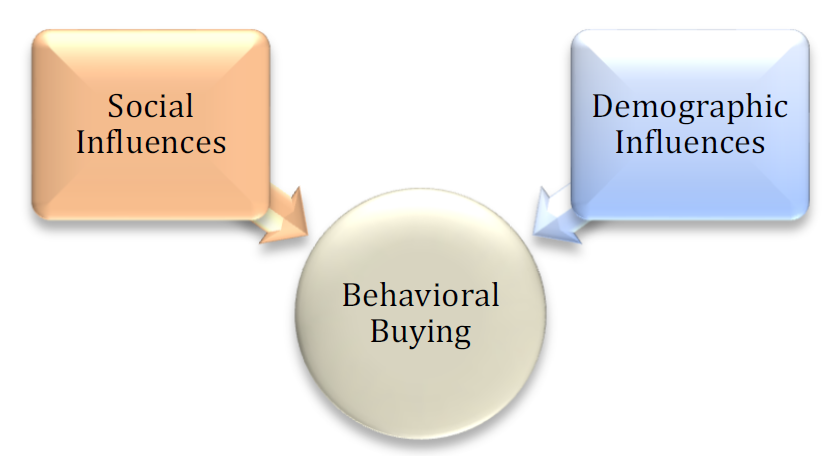
Research adopts views of researchers in field of management regarding influences for behavioral buying and they agree that there are two: social influences and demographic influences. Company was chosen to case study of availability of these influences and existing gaps for purpose of improving company's performance and facilitating its achievement of its goals. social and demographic influences for behavioral buying that will be analyzed in Iraqi General Company for Foodstuff Trading. It can be explained in research framework shown in Figure 1.


Figure 1: Procedural Chart of a Research

DATA AND RESULTS

Research is being applied in Iraqi General Company for Foodstuff Trading affiliated as a deliberate sample for case study. After field experience and direct meetings with company's managers and some of costomers. Sample size reached (83) managers and costomers who were interviewed and their opinions were surveyed regarding paragraphs included in checklist for influences for behavioral buying, which are social influences and demographic influences. Data and results shown in Table 1.


Table 1: Checklists of Influences for Behavioral Buying in Iraqi General Company for Foodstuff Trading (N = 83)

Influences for Behavioral Buying

Social Influences

Checkout

  1.  

Consumers are certainly influenced by their families.

  1.  

Consumers tend to purchase products that their families are satisfied with.

  1.  

Consumers seek products with a positive reputation in community.

  1.  

Consumers have a desire to purchase products from local companies.

×

  1.  

Consumers believe that by purchasing products from local companies, they contribute to their success.

×

  1.  

A consumer's friends influence their purchasing behavior.

  1.  

Coworkers influence consumers' product purchases.

  1.  

Consumers are influenced by sports stars, artists and celebrities when making purchase decisions.

  1.  

Consumers consider a company's reputation when purchasing its products.

  1.  

Consumers seek to satisfy their needs based on their personal financial capabilities.

Percentage of actual application for social influences

80%

Demographic Influences

Checkout

  1.  

Consumers gain purchasing experience over time.

  1.  

Younger consumers are more likely to rush into purchasing products.

  1.  

Older consumers are more likely to receive company attention.

×

  1.  

High-income consumers aspire to purchase high-quality products regardless of price.

  1.  

Highly educated consumers demand that companies explain product features.

  1.  

Female consumers tend to prefer sustainable products.

×

  1.  

Male consumers tend to prefer more economical products.

  1.  

Consumers consider their geographic location to be influential in determining availability of a company's products.

×

  1.  

Consumers tend to own a home close to market.

  1.  

Consumers seek diverse furnishing sources to ensure multiple purchasing options.

×

Percentage of actual application for demographic influences

60%


DISCUSSION AND ANALYSIS

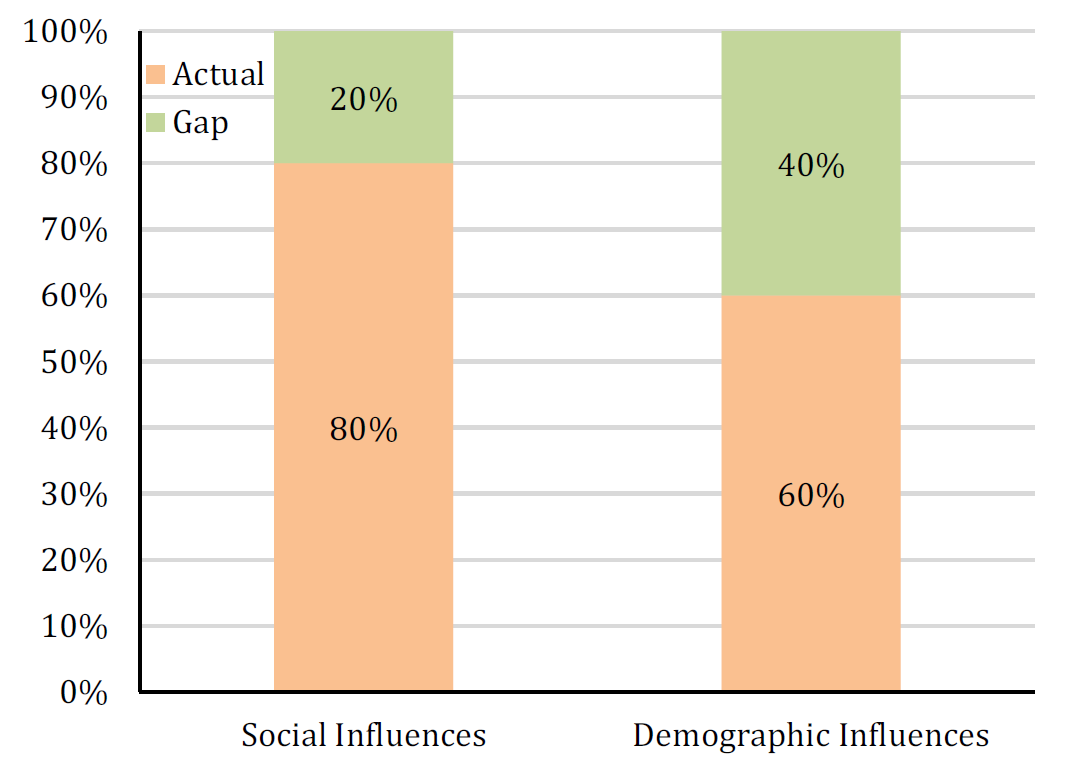
Results reached can be explained by method of tables and using Pareto chart that shows application and gap for each of cumulative advertising factors as in Figure 2.


Figure 2: Actual application and gaps of influences for behavioral buying in Iraqi General Company for Foodstuff Trading


By an analytical look at data provided by Figure 2, following can be concluded:


Application of social influences for behavioral buying in Iraqi General Company for Foodstuff Trading reached (80%) and gap in it reached (20%). Reason for high level of influence of social factors lies in consumer's belonging to a specific social class, which imposes certain formalities and appearances associated with that class, such as a specific style of clothing, consumption of certain products and certain colors. Consumer seeks to imitate his societal heroes, such as celebrities, artists, athletes, leaders, doctors, creatives and others whom consumer is personally influenced by. Therefore, he tends to purchase products they buy in his constant quest to emulate them. Consumer who lives in a large family, whether one of parents, one of children or perhaps grandparents, likes to align with tastes of other family members and does not differ from them in trusting them. Because he loves them and considers them very close to him, they influence his behavioral purchasing. Local consumer has an authentic culture that stems from his ethnicity but it is not primary influence on his behavioral purchasing. Rather, it is prevailing culture of society in which he lives. Therefore, he adopts prevailing values ​​and aligns with his social environment regarding their preferences for certain products from certain companies


  • Application of demographic influences for behavioral buying in Iraqi General Company for Foodstuff Trading reached reached (60%) and gap in it reached (40%). Demographic influences appear to be less applicable than social influences. This may be due to several reasons, including that older and mature consumers are less affected by behavioral purchasing because they have become accustomed to a certain type of product over many years. Younger consumers, on other hand, are influenced by demographics and are trying to adapt to evolving circumstances of aging from childhood to adolescence and adulthood. Therefore, they are often more proactive in their behavioral purchasing. Product purchases depend on consumer's gender, females prefer colorful, environmentally friendly products that do not offend users, while males tend to purchase products that are less expensive, more durable and have a longer service life. Consumers often form their purchasing intentions based on their purchasing power, except in certain cases where consumers are excessively ambitious. Consumers' financial capabilities directly drive behavioral purchasing, unlike their purchasing intentions, which are more indirectly influenced. When a consumer has a university education, he becomes an expert in purchasing the goods and services he needs, unlike someone with a lower education level. Thus, educational influences often constitute the most prominent demographic influences on behavioral purchasing


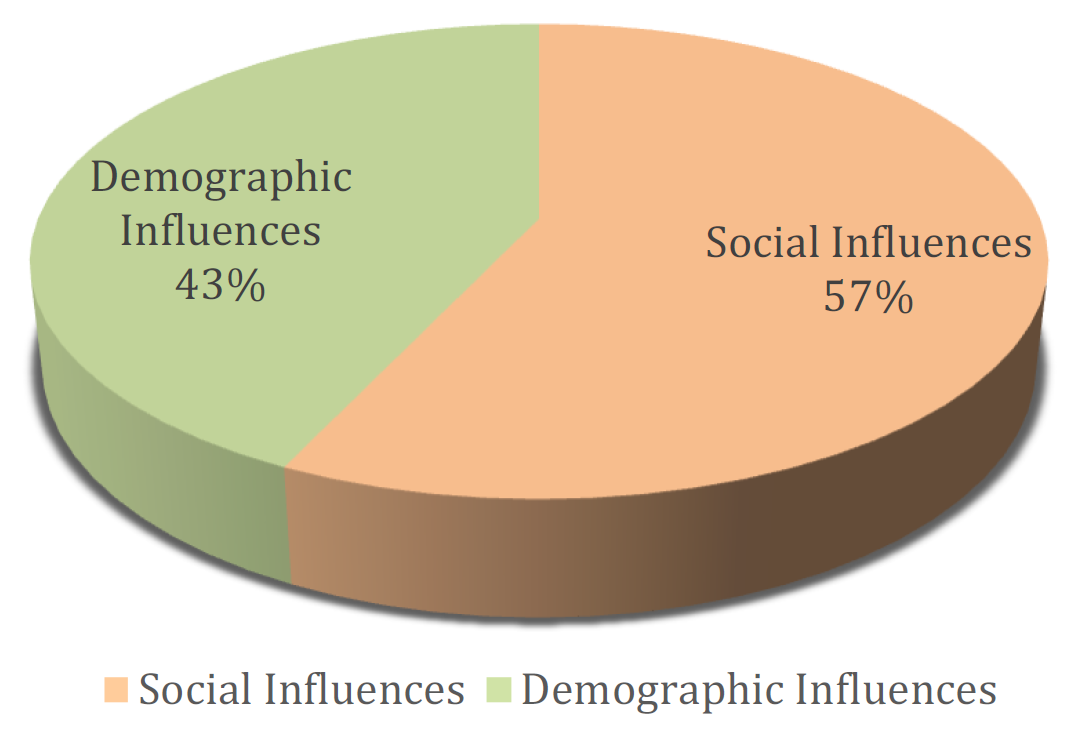
It is noted that Iraqi General Company for Foodstuff Trading did not pay attention to disparity in its emphasis on influences for behavioral buying, as each of two (social influences and demographic influences). It received varying application and occupies different relative importance as shown in Table 2.


Table 2: Relative Importance and Sequences of Influences for Behavioral Buying in Iraqi General Company for Foodstuff Trading

Influences for Behavioral Buying

Actual Applications

Gaps

Relative Importance of Application

Relative Importance of Gaps

Social Influences

80%

20%

57%

33%

Demographic Influences

60%

40%

43%

67%


Company under study faces a situation of inconsistent application of two influences for behavioral buying due to company not paying attention to social influences and demographic influences in a balanced manner as shown in Figure 3.


Figure 3: Relative Importance of Application Actual of Influences for Behavioral Buying in Iraqi General Company for Foodstuff Trading


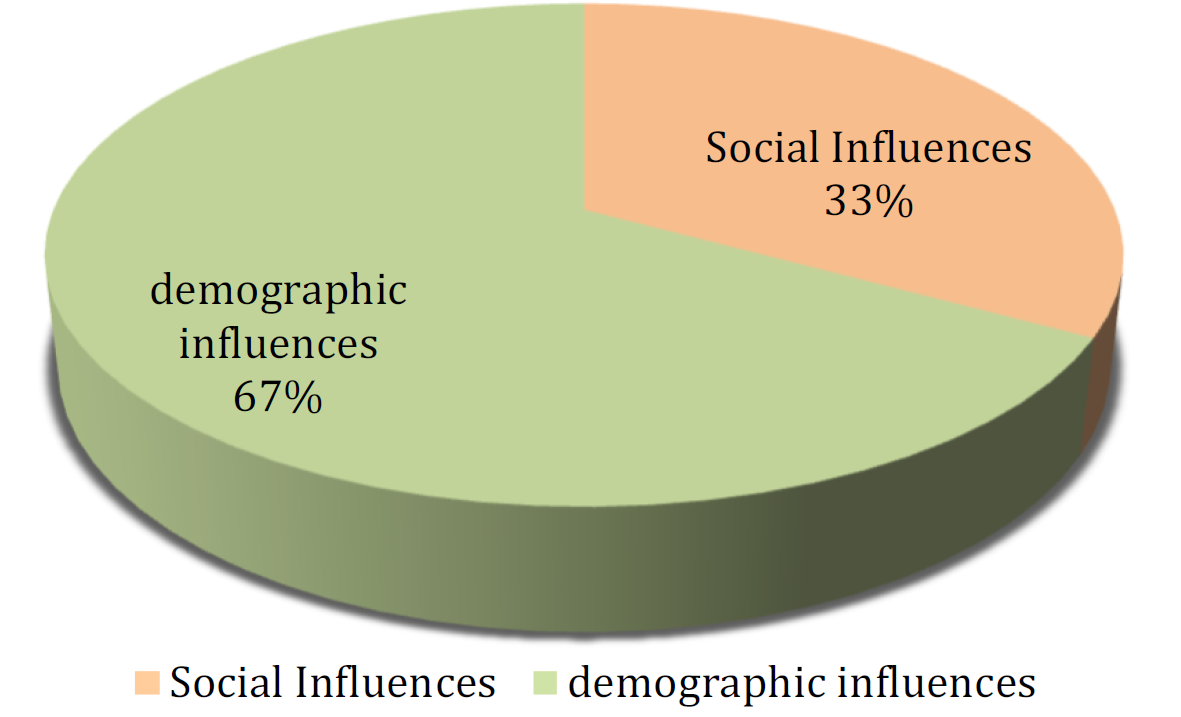
As a result of varying reality of applying influences for behavioral buying in company, this has caused a variation in gaps in application of it. Iraqi General Company for Foodstuff Trading suffers from first place gap in demographic influences, which reached a relative importance of (67%). Second place gap in Social Influences, which reached a relative importance of (33%). As shown in Figure 4.


Figure 4: Relative importance of application gap of influences for behavioral buying in Iraqi General Company for Foodstuff Trading


Research, through its practical aspect and results that appeared, reached stability of first hypothesis, which states (social and demographic influences for behavioral buying are available in Iraqi General Company for Foodstuff Trading) and negation of second hypothesis, which states (company is balanceing focus on social and demographic influences for behavioral buying equally). Case study approach is useful in generalizing recommendations to companies operating in same industrial sector. Therefore, what research has reached after applying it to Iraqi General Company for Foodstuff Trading applies to companies operating in food trade industry.

CONCLUSION

Consumer behavioral buying is influenced by both society and demographics. Therefore, companies should conduct a serious study and detailed analysis of these primary influences and their sub-influences. Social influences rank highest in influencing consumer behavioral buying and consist of four sub-influences: First, social class influence, which obliges consumers to purchase certain products that align with their social status resulting from their profession or work. Second, reference group influence, which prompts consumers to emulate their favorite athletes, artists, celebrities and other socially recognized figures. Third, family influence, which entices consumers to purchase products approved by their family members and avoid products they reject. Fourth, cultural influence, which represents prevailing values ​​and beliefs in society and agreed upon by consumers, prompting them to maximize the purchase of products consistent with dominant culture and discourage the purchase of other products.


Demographic influences rank lowest in terms of their impact on consumer behavioral buying. They consist of four sub-factors: First, age influence, which gives consumers more experience over time and with repeated purchases. Second, gender influence, as female consumers have different preferences than male consumers and thus behavioral buying differs between the two. Third, income influence, which limits a consumer's buying power, even determining their desires and purchasing intentions. Fourth, education influence, as higher consumer's level of education, greater their awareness and understanding of product characteristics and nature of their uses and their behavioral purchasing behavior changes accordingly.


Therefore, in order for a company to maximize its sales, it must provide products that align with social and demographic influences, ensuring that they stimulate consumer purchasing behavior toward its products in market. This will also enable it to outperform its competitors in industry.

REFERENCE
  1. Kotler, P. et al. Principles of Marketing. 19th Ed., Pearson, 2024.

  2. Jassim, S.H. and N.A. Rasin. “The Psychological Factors Affecting Behavior of Individual Buyers: A Case Study in General Company for Central Markets of Iraq.” World Economics & Finance Bulletin, vol. 40, no. 1, 2024, pp. 38-48.

  3. Jassim, S.H. and H.Q. Oleiwi. “Organizational Learning Requirements in Industrial Company: A Case Study in Al-Furat General Company for Chemical Industries.” International Journal of Studies in Business Management, Economics and Strategies, vol. 4, no. 1, January 2025, pp. 57-69.

  4. Kotler, P. et al. Marketing 6.0: The Future Is Immersive. Wiley, 2024.

  5. Ibrahim, B. et al. “Do Social Media Marketing Activities Enhance Consumer Perception of Brands? A Meta-Analytic Examination.” Journal of Promotion Management, vol. 26, no. 4, 2020, pp. 544-568.

  6. Lamb, C.W. et al. Principles of Marketing. 14th Ed., Cengage, 2025.

  7. Rocha, A. et al. Marketing and Smart Technologies. 1st Ed., Springer Nature Ltd., 2020.

  8. Arora, A.S. et al. Sustainable Innovation: Trends in Marketing and Management. 9th ed., Springer Nature Switzerland, 2020.

  9. Kokemuller, N. “The Purpose and Benefits of a Product Demonstration.” Small Business Review, April 2020.

  10. Ashe-Edmunds, S. “Good Marketing and Promotion Techniques.” Small Business Review, April 2020.

  11. Kumar, R. “The Role of Personalization in Online Marketing and Its Effect on Consumer Buying Behavior in India.” Indian Journal of Business Administration, vol. 21, no. 3, 2023, pp. 144-162.

  12. Fripp, G. “Main Types of Sales Promotions.” Marketing Study Guide Review, January 2020.

  13. Jassim, S.H. and B.J.M. Ridha. “Role of Entrepreneurial Marketing at a Customer’s Voice: A Case Study in Iraqi State Company of Land Transportation.” International Journal of Research in Management Studies, vol. 12, no. 2, 2022, pp. 1-14.

  14. Jassim, S.H. “Effect of Content Marketing on Industrial Segmentation: An Applied Study in Iraqi Telecommunication and Public Company.” Journal of Production and Industrial Engineering, vol. 4, no. 1, 2023, pp. 13-23.

  15. Santini, F.D. et al. “The Effects of Sales Promotions on Mobile Banking: A Cross-Cultural Study.” Journal of Promotion Management, vol. 26, no. 3, 2020, pp. 350-371.

  16. Kerin, R.A. and S.W. Hartley. Marketing: The Core. 8th ed., McGraw-Hill Education, 2020.

  17. Massaro, G. “21 Ways to Promote Your Sweepstakes and Grow Your Business.” Ecommerce Marketing Magazine, February 2020.

  18. Kimmo, S. et al. “Customer-Oriented Approach in Cadastral Procedures: Case Study from Finland.” Journal of Aalto University, vol. 90, no. 1, 2020, pp. 1-9.

  19. Jassim, S.H. and B.J.M. Ridha. “Marketing Analysis for Consumer Promotion Techniques: A Case Study at General Company for Iraqi Food Products.” American Journal of Economics and Business Management, vol. 5, no. 7, 2022, pp. 87-103.

  20. Thomas, F. “Sales Promotion Strategies.” Small Business Review, April 2020.

  21. Palmatier, R.W. et al. Marketing Channel Strategy. 9th ed., Taylor and Francis Group, 2020.

  22. Rajagopal, R. Transgenerational Marketing: Evolution, Expansion and Experience. 1st Ed., Springer Nature Switzerland, 2020.

  23. Chaabane, A.M. and V. Pez. “The Reward Gap in Hierarchical Loyalty Programs: How To Enhance Bottom-Tier Customers’ Loyalty Without Alienating Top-Tier Customers.” Journal of Marketing Management, vol. 36, no. 1, 2020, pp. 51-71.

  24. Jassim, S.H. “Relationship of Social Marketing with Product Positioning: A Field Study in Iraqi State Company of Fertilizers Industry.” Galaxy International Interdisciplinary Research Journal, vol. 11, no. 3, 2023, pp. 342-356.

  25. Ejikeme, J. “Help Your Agency or Company Become More Aggressive: Cultivate a Marketing Orientation So You Can Clearly Serve Your Customers.” Business Consulting and Career Management: Discover How to Cultivate a Marketing Orientation, January 2020.

  26. Jassim, S.H. “Role of Product Sales at Industrial Promotion: An Applied Study in Iraqi State Company for Marketing Drug and Medical Appliances.” World Bulletin of Management and Law, vol. 19, 2023, pp. 86-200.

  27. Nicasio, F. “7 Types of Sales Promotions in Retail (and How to Implement Them).” Retail Resource Library Issue, September 2020.

  28. Shaddy, F. and L. Lee. “Price Promotions Cause Impatience.” Journal of Marketing Research, vol. 57, no. 1, 2020, pp. 118-133.

  29. Malik, S. “The Role of Content Marketing in Customer Attraction in Pakistani Online Retail Industry.” Journal of Marketing Practices in South Asia, vol. 12, no. 2, 2024, pp. 99-117.

  30. Habel, J. et al. “When Do Customers Perceive Customer Centricity? The Role of a Firm’s and Salespeople’s Customer Orientation.” Journal of Personal Selling and Sales Management, vol. 40, no. 1, 2020, pp. 25-42.

  31. Tracey, S. “How to Change from the Promotional Industry to the Consumer Industry.” Small Business Review, April 2020.

  32. Katole, H. “Effects of Sales Promotion Campaign Adopted By Retailers In India.” Journal of Critical Reviews, vol. 7, no. 2, 2020, pp. 583-586.

  33. Roschk, H. and M. Hosseinpour. “Pleasant Ambient Scents: A Meta-Analysis of Customer Responses and Situational Contingencies.” Journal of Marketing, vol. 84, no. 1, 2020, pp. 125-145.

Recommended Articles
Research Article
Analysis of the Influence of Leadership Style, Compensation Commitment and Work Stress on Performance (Case: Almarhamah Foundation Employee Padang Pariaman Regency)
Download PDF
Research Article
Marketing Agility: A Multi Layer Perspektif SME opportunities in Indonesia
Download PDF
Research Article
The Effect of Local Tax and Retribution on Direct Expenditure with Special Autonomy Fund as a Moderation In Districts / Cities of Aceh Province, Indonesia
Download PDF
Research Article
Consumer Behavior and the Effect of Covid-19 on Markets: An Empirical Study
Download PDF
Chat on WhatsApp
Flowbite Logo
PO Box 101, Nakuru
Kenya.
Email: office@iarconsortium.org

Editorial Office:
J.L Bhavan, Near Radison Blu Hotel,
Jalukbari, Guwahati-India
Useful Links
Order Hard Copy
Privacy policy
Terms and Conditions
Refund Policy
Shipping Policy
Others
About Us
Team Members
Contact Us
Online Payments
Join as Editor
Join as Reviewer
Subscribe to our Newsletter
+91 60029-93949
Follow us
MOST SEARCHED KEYWORDS
Copyright © iARCON International LLP . All Rights Reserved.