This research examined the “Effectiveness of Employee Training and Development Programmes” between 2010 and 2015 at the Province education department in the Zambézia province in particular at the district of Quelimane. The research study will reveal to the employee community and the society in general in Quelimane the importance of employee training progrmmes to the employee a and the employers. The study will involve the writer to meet the target population in that case the Qualitative Research Methodology because the target population for the study gives their answers to questions based on their experiences, beliefs and general knowledge they have on the current situation of the training and development courses in so doing the suitable data collection instruments for the research study were the interviews guided by questionnaires. The theoretical, conceptual and conceptual frameworks, these experiences have been applied and the idea was to guide the researcher of this thesis to find an effective and valid rout as a means of obtaining a true and valid result about the ‘examination of the effectiveness of employee training and development programmes at province education department in Quelimane -Zambezia’. The Human Resource Management is the main part of the research study and the detailed areas were the Roles of the human resource department, the importance of employee training and development programme from the employee and employer`s point of view, on where, when, who and how to attend a training course. These were some of the ideas presented in this thesis in HRD. Different types of trainings, how to design and asses a training this were also not left aside in the thesis. The triangulation process where different expressions were applied like the ‘Trustworthiness’, ‘Applicability’, ‘Reliability’ and ‘Validity’, in brief, these expressions have been applied to enhance the value of the results obtained. In other words, the expressions applied are to add trustworthiness, credibility of the research results.
Background to the Problem
‘Why taking this article to the world’. Before explaining the reasons the writer would like to explain to the readers that based on the writer’s experience in the Ministry of education it has been an usual life a teacher to remain at one level of his or her profession without having chances of upgrading professionally. The workers in the town centres used to have a bit of chances to upgrade their levels in relation to those in the rural areas like the districts of Pebane, Ile, Namarroi and others.
The question that remains in the researcher`s mind is ` Do these workers know the advantage of `Employee training and development programmes – ETDP - available in the ministry and in particular in the province? There are many questions related to this issue and the last one is to find out from the employers of this ministry if they themselves know the importance of the ETDP and that do they make the programme be known and understood to the workers.
The researcher`s main aim at carrying this study is to find out the availability, if any, and the effectiveness of the programme in the province and in the ministry as a hole. It is also the wish of the writer to explain to the world the impediments of the programme might have in case it does not have any evolution. If the programme s not introduced yet in the Province it will be the time to find ways of introducing the importance of the programme to the employees of the ministry of education where the researcher has been working for the last thirty five years.
Having realised that the topic is a part of the Human Resource Management, whereby the human force is used and if the employers and the educational institutions need to compete the world’s improvement in business, the employees need to have their rights given by the International Labour Organisation–ILO. It is also going to be in this part of this article whereby the researcher is going to compare the employee training and development programme in terms of how it is perceived, internationally, locally and in particular in the African countries colonised by Portuguese speaking colonisers.
In addition to the topic in study being dealing with the workers, in this case, the writer decided it being important to refer to some papers from the International Labours Organization, which will emphasise the the ideas of the workers to follow the international labour regulations whereby the employees and the employer need to sort out their defferences peacefully.
Location and Agriculture in Mozambique
Geographically, Mozambique is one of the African countries situated on the East coast of Africa, based on the census of 2007, has got a population of 22,948,858,00 is bordered by Tanzania in the North, Zambia and Zimbabwe in the west and South Africa in the South. According to the history of Mozambique, as well as some countries in Africa, Mozambique has been colonised by Portuguese, therefore Portuguese is its official language and with many local Bantu languages. In addition to Portuguese, spoken in the eleven provinces in the country. The most spoken local languages, according to ‘Atlas Geográfico’ Volume 1, 2a Edição, ’ are Makua, which, is mostly spoken in the Northern provinces, Elomwe and Cisena in the centre, Xitswa in the Centro and South East, and finally Xitsonga (which is sometimes called (Xichangana) is spoken in the South West part of Mozambique. In terms of agriculture, based on the census of 2007, at least all provinces produce maize, rice and groundnuts which are used for commercial and food purposes. Tea is grown in the central part of the country in Gurue district, while as cassava is produced in the Northern provinces and is commonly used as a staple food in the area. In addition to that, cassava is now used to make beer. Cotton has been a precious product since years ago and this product is mostly produced in the North Eastern provinces where the cotton transformation industries are located.
In addition to agricultural benefits, Mozambique, because of its geographical location, has got three main ports which many landlocked countries, for example, Malawi, Zimbabwe, Zambia and many others get benefit from them in their trade. These ports are situated in different parts of Mozambique, for example, Nacala port situated in Nampula, Beira in Sofala province and Maputo port in Maputo province. To sum up, Mozambique, from the researcher`s point of view, is in a better condition in terms of water transports while as in situation of agriculture, regardless of unavailability of advanced new technology in agriculture that could enhance the productivity there are many areas still not touched in terms of farming. There is still enough, not well trained human resource in the country available to keep up the agricultural activities in the country whereby in some provinces there are foreign people leading the activity.
The main objective of this information given behind, for example, the type of languages spoken in Mozambique, agriculture being carried out in the country, and the geographical location advantages, the main objective is to clarify to the readers of this article that wherever there is an activity or a need of a piece of work to be carried out, regardless of the new technology to be applied, there should always be a need of human being involved who has to carry out and lead the process.
Purpose of the Study
The purpose of the study is to evaluate “THE EFFECTIVENESS OF EMPLOYEE TRAINING AND DEVELOPMENT PROGRAMS” at the provincial education department in Quelimane town in the period during–2010 – 2015. Based on this, the writer had planned to achieve the following goals:
To examine the internal and external factors influencing employee training and development program within the Provincial Education Department in Zambezia province–Quelimane in the period between the years 2010 to 2015
To analyse the efficiency of the criterion used to identify the workforce for employee training and development programme
To investigate if the Provincial Education Department in Zambezia province–Quelimane, evaluates its workers after receiving trainings from employee training and seminars
Delimitation of the Study
Due to the wide range of the study, the researcher has narrowed the research process and that only few people were used as an experimental population. Based on this feeling the study focused on the Provincial Education Department in Quelimane, where the Provincial directors of Education, the Human resource Development and Pedagogic were interviewed. For confirmation and effectiveness and the liability of data collected, the researcher in addition to the parents of some sttudents at Carlos Lwanga Primary and Secondary school also involved the District Education staff of Quelimane, Mocuba, Morrumbala and Alto- Molocua, where the district education directors, of Education, the Human resource, the Pedagogical and administrators were interviewed.
Human Resource Management
Based on this general idea about the literature review, the researcher having discovered that the topic of this research study the basic factor of the topic is the Human Resource. This means that ‘nothing can happen to the employee’ without the influence and flexibility of that vital department that deals with employees in any organization or a company. It is believed worldwide that the roles of the HRM, in addition to Planning, Integrating, Staffing, Motivating, Designing, Evaluating and Managing relationship, based on the ideas of Guest there are other four key dimensions to HRM as postulated by include:
Commitment: It is expected of employees to identify the interests and goals of the organizations, and be aligned and committed in achieving these goals
Flexibility: Employees are expected to adapt willingly to change within the organizational structure, without any strife or prejudice
Quality: High level performance attainment of an organization depends on the qualityof members of staff and management of such organization
Integration: ‘It involves the matching of human resources strategies to the needs of the business strategy
To sum up, it should be clear to the readers that, based on the reading from various scholars, that all organisations, including institutes needs to have HRM if it needs to have an improved products and productivity. Based on this knowledge, it is not wrong if the ministry of education to set up this organisation at the National level if it is not yet set. In addition to the HRM, there is Human Resource Development.
Training and Development Programme
Before discussing the issue concerning the above indicated subheading, the researcher would like to explain to the readers that, as it has also been explained in the previous paragraphs that this research has been carried out with some pre-planned objectives concerned with the effectiveness of employee training and development programmes in Zambezia province. In other words, the planning of data collection instruments were all aimed at giving the feedback answers to the objectives proposed. For example the objective of the research study, one of them was ‘to examine the internal and external factors influencing employee training and development programme within the province education department in Zambezia province in the period 2010–2015.
Training and development programmes are one of the areas that the Human Resource Department has, as it has been stated in the past paragraph. In this paragraph the researcher is going to examine this programme on the point of view of the employees and the employer, in this case is the ministry of education in Mozambique and in particular represented by the province educational department situated in Zambezia province and in Quelimane town. The following are the subheadings that will be discussed in this part of the thesis:
The objectives of training programmes
The relevance of training programmes in the region
Advantage of Training and Development programmes to Employees and Employer’s
It is believed that most organizations worldwide, including educational institutions in Mozambique offer training and development programmes for the specific job purpose. Utilizing a systematic and organized procedure by which non-managerial personnel learn technical knowledge and skill for a definite purpose. Based on Obisi knowledge, training refers only to instruction in technical and mechanical operations and it is designed for non- managers Training courses are typically designed for a short term, stated purpose, such as the operation of any piece of machinery while as development involves managerial personnel that involves a broader education for long-term purpose [1]. The Development also brings about growth of personality and is for general purpose. Based on this knowledge presented by various writers, it has widely convinced the writer that ‘training programmes’ are vital in every country, whether rich or poor. In that case training programmes are welcome in Quelimane district and the question remains in the researcher is to find out the objectives of these programs in the ministry of education and how relevant are these in relation to the people of Zambezia and the country of Mozambique as a whole.
Objectives of Training
There is a proverb in the researcher`s language that says “nothing is done for nothing”, that comments on the fact that every, if not all, organization or institution worldwide, including the Ministry of education in Mozambique, represented by the Province education department in Quelimane district-Zambezia province, train their workforce with objectives to be achieved in line with its organizational perspective in the country. In other words, the organizations in all continents do understand that training the workforce brings:
Increased job satisfaction and morale
Increased motivation
Increased efficiencies in processes, resulting in financial gain
Increased capacity to adopt new technologies and methods
Reduced employee turnover
It reduces supervision
Internal Mobility: Training becomes necessary when an employee moves from one Job another due to promotion and transfer
Organization viability
In order to survive and grow an organization must continually adapt itself to the changing environment. Every training and development program adds value to human resource in institutions. Taking into consideration to Mozambique, where the research study is being conducted, it is presumed that all ministries train their employees to improve the qualities of the trainee, formulation of objectives for different needs and ways of achieving it. In so doing, all new entrants into the company or educational organizations have various skills, though not all are relevant to organizational needs. Thus training and development programmes are required for staff to enable them work towards taking the organization to its expected destination.
It should also be clear to the readers of this paper that the effectiveness and success of any organization or a company, lies in the people who form and work within the organization. It follows, therefore, the employees in an organization can be able to perform their duties and make meaningful contributions to the success of the organizational goals thus they need to acquire the relevant skills and knowledge. In appreciation of this fact, educational institutions including the province education department, district education department, universities, colleges and polytechnics conduct final training and development programmes for the different levels of their manpower [2]. Man is dynamic in nature, the need to be current and relevant in all spheres of human endeavour’s make staff development by the department a necessity, to keep track with current events and methods. It is an avenue to acquire more and new knowledge and develop further the skills and techniques to function effectively. Ministry of education administration knows and recognizes the fact that training is obviously indispensable not only in the development of the individuals, but also facilitate the productive capacity of the workers. Employee training brings incumbents to that level of performance which needs the performance for the job; enhance the implementation of new policies and regulations; prepares people for achievement, improves manpower development and ensures the survival and growth of the enterprise). In other words, from the researcher’s point of view, the objectives of any training could be enhanced by internal environment, for example, for improvement of teaching process so as to obtain a better passing rate at the end of an academic year. Based on the literatures read, despite the internal factors, the companies, organizations or education institutions can be enhanced by external or international factors, that oblige them to train their staff and this could be due to several factors which could include:
Globalization
Need for leadership
Increased value placed on knowledge
Attracting and winning talent
Quality emphasis
Changing demographics and diversity of the work force
New technology
High-performance model of work systems
To sum, training and development programmes are of great importance to the nation because they increase the quality of the product and thus the competitive advantage is always observed.
Relevance of Training
What does “relevance of training” mean in this research? In short, the research has confirmed that Mozambique or in, particular Zambezia province, Quelimane district as a place where many people, educated or not, would like to see the improvement of their living places improving in terms of education, work conditions and others. Based on this knowledge, it is the researcher’s idea that any company or organization that intends to bring to Mozambique, province or to the district of Quelimane is supposed to check the environmental needs before the real project starts. Thus the relevance of training is a very important issue that the department on behalf of the ministry of education that mostly deal with teaching and learning, and it should look critically at the process if it really wants to improve the effectiveness and profitability of its employees and general residence of the district who are the promoters of the education and a better life in the country and in particular in the district of Quelimane. In this sense the researcher wish to say to the province education department in Quelimane, on behalf of the Ministry of education, which does not only have teachers, but all different types of workers like drivers, computer workers, mechanics, and so on, therefore a training should be designed to solve problems and to fill gaps in employee performance of those mentioned groups of workers, others who are not mentioned and the future workers as well. Training should make things happen and bring about changes that would enhance the institution`s effectiveness. It is not proper for an institution to embark on any training program which is not relevant to it and its staff. For any training program to be relevant to an institution, it must satisfy identified and appropriate needs.
To sum up, I wish to thank to the ministry of education which is at the last moment following and fulfilling the environmental needs, for example, there are faculties being built in the relevant regions in Mozambique, for instance there is the mineral faculty in use in Tete province where there are mines of coal. The process is also taking place in various provinces in the country, good allocation of faculties taking place or being built in provinces where people are in need for the specialization of a particular product produced in the area or region.
Advantages of Training and Development Programmes
From the writer’s point of view, based on the knowledge acquired from the literatures, it is evident that most organizations in and outside of Mozambique send their employees to attend the training and development programs, to solve manpower problems which militate against optimum productivity. In brief, the training and development programs benefit not only, the employees, but also the employer and the community in general where the company or organization is situated. There are many positive ideas, for example.
Employee’s Benefits
The individual employee has got positive benefits of being trained. For example a trained worker becomes competent in his or her career. Employee development programs will help employees survive in the future and develop their abilities to cope with new technologies. In addition to Career competence, the employee acquires Employee Satisfaction, which means that, The companies which provide the training and development programs for their employees are achieving a high level of employee satisfaction and low employee turnover. Training increase organization’s reliability for the reason that employees recognize their organization is spending in their future career. Loyalty to the organization cannot be calculated, but it is substantial to intrinsic reward that employee feel. The employee feels comfortable and wants to stay with their organization, when they feel they are putting their efforts and skills in the bottom line for their organization. Employees who are satisfied with their jobs, believe that their work has a purpose and important for their organization. Usually the best performers do not leave a job for the purpose of financial benefits. Therefore, nourishing these requirements facilitates in figure up confidence, self-esteem and job gratification in employees.
To sum up, what has been narrated in this part of the thesis concerning the benefits of the Training and Development programmes are just a few of them and that comes next is the benefit of the Training and Development programmes to the point of view of the employers.
Trained Staff socially identifies with the institution
Training plays an integral role in the socialization process for many employees. Employees enter the employment relationship with many expectations and desires. When these expectations and desires are fulfilled, then the employee is able to better identify with the institution.
Training that attempts to increase identification with the organization is greatly enhanced when used within a strategic approach to building commitment. Social support for training is a major factor in ensuring its successful integration. Support from upper management, middle managers, and colleagues can significantly impact the level of investment an employee will make. Cues from these people and from company policies can send a message to employees regarding the importance of training. The more positive the cues, the more likely training will enhance an employee’s identification with the company. As a result, employee commitment is enhanced due to the perceived support that one receives from colleagues and managers. Institutions that foster an environment where participation in training programs are encouraged and linked to an overall human resource strategy can have a significant impact on an employee’s level of commitment. In these institutions, commitment is likely to be higher, as employees are better able to identify with the organization.
Training can be utilized as a tool that serves to entrench the employee deeper into a particular social identity. Doing so will make it more difficult for the employee to be more committed overall. Staff training can also shape institutional culture, which can in turn help employees have more positive perceptions of the organization’s ethical than those working for institutions without such training.
Employer`s Benefits
It should be clear to the readers that, the employees training and development programmes bring advantages to both employees and employers in a very different form. For example the Market Growth is one of the advantages that the employers get from the Training and development programmes that could be carried out in the province or the district of Quelimane conducted by the ministry of education, possibly on behalf of the Province education department. Employee training and development programs are important for any organization to stay solvent and competitive in the market. Though it is expensive for the organization to spend the money on their employees, but this investment is positive for the organizations hold the place in the market.
The next benefit that the researcher thinks that the employers could get through the employee training and development programmes is the Organizational Performance.
Evaluation of Trained Employees
Institutions evaluate their training processes. The evaluation stage is arguably the most problematic part of the training process. Thus, even though the bottom line for most training and development programmes is an improvement in overall organizational performance, organizations often devote little attention to evaluating training effectiveness. Some scholars suggested the acronym CIRO which stands for Context, Input, Reaction and Outcome. Where training effectiveness is evaluated, the outcomes of training are usually assessed hierarchically. The widely used Kirkpatrick model, for example, proposes four levels of training outcomes:
Trainees’ reactions to the programme content and training process
Knowledge or skill acquisition at the end of the programme
Behaviour change in the job
Improvements intangible individual or organizational outcomes such as turnover
The context evaluation focuses on factors such as the correct identification of training needs and the setting of objectives in relation to organizational culture and climate. Input evaluation is concerned with the design and delivery of the training activity. Reaction evaluation looks at gaining and using information about the quality of trainees’ experiences.
Outcome evaluation focuses on the achievements gained from the activity and is assessed at three levels. Immediate evaluation attempts to measure changes in knowledge, skills or attitude before a trainee returns to the job. Intermediate evaluation refers to the impact of training on job performance and how learning is transferred back into the workplace. Finally, ultimate evaluation attempts to assess the impact of training in departmental or organizational performance in terms of overall results. Typically, the evaluation process is organized in a sequential, linear manner. Thus, higher level outcomes can only be understood if an evaluation has taken place at all lower levels. The impact of training is linked by a cause - and - effect chain, whereby training leads to reactions, which leads to learning, which leads to changes in job behaviour, which leads to changes in the organization, which leads to changes in the achievement of the ultimate goals.
Process evaluations focus on what actually happens during a training activity and how the participants experience it. Finally, outcome evaluation is concerned with establishing the outputs or outcomes of employee training and development. The focus may be individuals and changes in their knowledge, skills, attitudes and behaviour, individual and/or organization performance or on shifts in organizational culture and climate.
Performance
For institutions, performance evaluation is a very important process to any institution. Evaluation at this stage looks at the impact of a learning experience on individual/team performance at the work place. The key to this level of evaluation is the need to have agreed clear learning objectives prior to the learning experience so that when evaluation takes place there are measures to use. Did the learning transfer to the job? How has the training improved individual performance, for example specialist knowledge or professional approach? Bring solidarity, unity, obedience and dependency between the employee and the employer, taking into account that the efficiency and the correct work process can run properly if these two people – employee and employer - work and sort out their differences Organizational Impact
At this level evaluation assesses the impact of learning on institutional effectiveness, and whether or not it is cost effective in organizational terms. How has this development activity affected the organization, faculty, central department or unit in terms of improved performance for example, better results, enhanced quality or standards, financial stability, fewer complaints, increased morale, professional and image?
Relevant Research Methodology
Based on Longman Dictionary of contemporary–English–New edition pp1205, one of the meanings of “Research” is “to study a subject in detail, especially in order to discover new facts or test new ideas”, and on, pp 898 “Methodology” is “the set of methods and principles that are used when studying a particular subject or doing a particular kind of work”. Based on the knowledge of these writers, the researchers conclude that the main aim of this research study is to find out the truth which is hidden and which has not been discovered as yet, even though each research study has its own specific purpose. In other words, the research method is a strategy of enquiry, which moves from the underlying assumptions to research design, and data collection. Although there are other distinctions in the research modes, the most common classification of research methods is into qualitative and quantitative.
Therefore, the main issue in this part of the thesis is to examine about the “Effectiveness of employee training and development programmes” in the period of 2010–2015 in the ministry of education, in particular at the Province education department, in Quelimane district–Zambezia province, as the focal point of the ministry of education workforces.
Before going into detail about how or what is the researcher`s task in this coming passage, would like to clarify to the readers about the theme of the study research topic.
From the researcher’s point of view, it is believed that the programme is presumably to be available in the district of Quelimane, in other words the employee training programmes, based on the result of the research, is hopped to be known and is blindly followed in Mozambique and in particular in the province of Zambezia – Qulimane, and the researcher`s main aim , according to the topic is to find out the effectiveness of the programme carried out and how good is the programme to the working society in the ministry of education in Mozambique and in particular in the district, on behalf of the working population in general. In so doing, from the researcher`s point of view, it will be the community of Quelimane, who should tell about the programme. The selected society for the research will have to express their feelings, knowledge and general experiences about the research study topic. In brief, the effectiveness of the employee training and development programme information will be obtained and collected from a selected group of the working community, which include the education officials or some local papers, if available. Having this idea from the researcher, and having reminded of the Interpretive approach and its terminologies, as it has explained in the previous pages, also taking into consideration the necessities of meeting the different samples of population to be the respondents to the questionnaires, in other words a face-to-face meeting the population, in so doing, the researcher is convinced to choose a Qualitative research methodology. Qualitative researcher believes that the researcher`s ability to interpret and make of what he or she is critical for an understanding of any social phenomenon. From this understanding the researcher will sum up that the Qualitative research will be followed as a means of recording, analysing and tempting to uncover the deeper meaning and significance of human behaviour and experience, including contradictory beliefs, behaviours and emotions. In other words, Qualitative research methods were developed in the social sciences to enable researchers to study social and cultural phenomena. The researcher ends up by expressing contradictory beliefs because, based on the research study, it seems to the researcher that the country working laws are hopped to be clear and available in the ministry of education and in the province education department and what mostly surprises the researcher is the applicability of the laws to the workers that seems to be very low and most of the workers seem not to get the law facilities as it is regarded by the government. In qualitative research, different knowledge claims, inquiry strategies, and data collection methods and analysis are employed. In other words, the writer will include, whatever necessary like observation and participant observation (fieldwork), interviews and questionnaires, documents and texts, and the researcher's impressions and reactions. Data is derived from direct observation of behaviours, from interviews, from written opinions, or from public documents. Written descriptions of people, events, opinions, attitudes and environments, or combinations of these can also be sources of data. In brief, qualitative research is a systematic inquiry into the nature or qualities of complex social group behaviours by employing interpretive and naturalistic approaches.
Tools of Research
Every worker needs tools. The carpenter needs a hammer and saw, the surgeon, a scalpel and forceps, the tailor, pins and scissors, and the researcher, an array of means by which data can be collected and made meaningful. Based on this idea the researcher in this part of the article is going to present to the readers some of the relevant and efficient tools that are going to be applied in this research study which will facilitate the collection of various data needed for the study. Furthermore, the functions of the proposed tools, from the researcher’s point of view, will vary according to the group of proposed people to be used, in terms of personal background to the study topic. In brief, some of the proposed ‘tools’ in this written task will be the questionnaire, interview, primary and secondary data collection procedures.
Questionnaire
The questionnaire method was selected as a research method for this article as it makes and brings the relevant information to the researcher. The reason for using a questionnaire is that the opinions of respondents can be obtained in a structured manner. According to Van questionnaires are the most common method applied to diagnose the functioning of the targeted organization–the province education department. A questionnaire is more than simply a list of questions or forms to be completed.
A major advantage of the questionnaire is that data can be obtained in large numbers of participants quickly and relatively inexpensively. A questionnaire is one of data collection instruments consisting of a series of questions and other prompts for the purpose of gathering information from respondents–Oxford–Advanced Learner’s Dictionary – p 955. This instrument has been vital in many research studies conducted by many writers worldwide and the researcher has proposed to apply in this research study. In addition to that, a questionnaire is believed to be a good tool for the protection of the privacy of the participants and it can measure both qualitative and quantitative data, but it is believed by many writers to be more appropriate for quantitative data collection. The validity of data and information depends on the honesty of the respondent. It is also believed that, based on various literatures, although the questionnaire can measure both qualitative and quantitative data, but at this moment in this research study it has been proposed to be appropriate for qualitative data collection.
In brief, the questions in this research study are sorted out in a way that the first part the questions are mainly based on the background of the interviewee while as the second and the last are related to the interviewee’s knowledge based on their understanding on the study topic. The questionnaires are attached in the Appendix of this thesis.
Interview Method
It is the most widely used primary data collection methods wherein the interviewer asks questions either personally, or through mail or telephone from the respondents to obtain the insights of the problem under study. The researcher may either visit the respondent in person at his home or meet him at the central location as mutually decided by them. And in case of a large group of respondents is to be contacted then the mail and telephone survey can be used. In the mail survey, the questionnaires are sent to the respondent who is expected to give answers to the questions via mail. In the case of a telephone survey, the interviewees are called and asked questions (closed-ended) specific to the research problem.
The Interview is the one of the data collection instruments that the researcher has proposed to use in this study research work. The interview, from the researcher’s belief, had to be used as a complementary of the questionnaire and the idea is to collect relevant information from the participants about the study matter. The process of data collection through interview consisted of speaking or explaining to the respondents about the main idea of the question. This process was planned to be conducted in different moments, which firstly was planned to be at the moment of pre-testing the questions and then in the real interview process. In general, the researcher, during the process has proposed to conduct four types of interview as follows:
Structured interview
Semi-structured interview
In-depth interview, and
Focused group discussion
In structured interviews the questions as well as their order are already scheduled. The researcher will provide with additional intervention consists of giving more explanation to clarify the question and the probable answers are very short like yes or no from the respondents. While as in semi-structured and in-depth interviews include a number of planned questions, but the interviewer has more freedom to modify the wording and order of questions. The interviewee has also a freedom to give additional information based on his or knowledge to the study topic. It is an open-ended question, for example the questionnaires to the education staff section II and III and the questionnaires to the parents section II, most of them are open ended questions. In-depth interview is less formal and the least structured, in which the wording and questions are not predetermined. In brief, the interview is believed to be advantageous to the researchers because:
The researcher could collect complete information with greater understanding
It is more personal, and allows the researcher to have higher response rates
It allows for more control over the order and flow of questions
Focus Group Interview
Based on the reading of various scholars, the researcher thought it would be wise to apply the ‘Focus group interview’ whereby a group of provincial directors are to be interviewed and the main idea will be to collect the general ideas before going to the target group. As it was already proposed, the elements to be interviewed or to be in the focus group will be the provincial director and the heads of the departments like the Human resource, the Formation department and the Plan department. Other relevant heads of departments, which are not mentioned here, will also be invited at the moment. In this interview each head of the department, would be required to provide his or her insights on the issue concerned and reach to a unanimous decision. In this interview, the researcher has to moderate and regulated the discussion among the group members Interview.
Pilot Study
From the researcher`s understanding, a pilot study is a research study conducted before the intended study. Pilot studies are usually carried out as planned for the intended study, but on a smaller scale. It should also be clear to the readers of this thesis that, based on the experiences acquired through the process, the researcher has realised that by doing a pilot study does not mean that all future problems of the real study would be get rid off but some problems could be reduced.
Going back to the pilot study of this research study, the researcher, after designing the questionnaires that were to be tried in the focal group where the education directors made themselves present. The data collection instruments were applied to the group and the main aim was to find out the efficiency and efficacy of the instruments. The trial of the data collection instruments was also carried out to Carlos Lwanga, where the parents of the students were involved. To sum up, the pilot study of the research study carried out, involved the staff of the ministry of education and the parents, although the number of the presence was not significant, the main researchers` objective was to find out, and reduce the possible problems that might interfere with the main research study.
Reasons to Employ a Pilot Study
Based on the research study which has been carried out, the researcher has concluded that there are many reasons to employ a pilot study before implementing the main study. Here are a few good reasons:
To test the research process and/or protocol. These are often referred to as feasibility studies because the pilot study tests how possible the design is in reality. For example, are the study resources adequate, including time, finances, and materials? Are there any other logistical problems that need to be addressed?
To identify variables of interest and decide how to operationalize each one. For instance, what are the indicators of composite variables? How will variables be measured and/or computed
To test an intervention strategy and identify the components that is most important to the facilitation of the intervention
To test methodological changes to the implementation or administration of an instrument and/or train personnel in the administration of instruments
To develop or test the efficacy of research instruments and protocols. Are there confusing or misleading questions? Is it possible to maintain maximum objectivity and reduce observer drift
Data Triangulation
The main purpose of this process is to enhance the value of data collected from various sources – Cohen & Manion, 1997. Vos 1998, about the subject of study as a way to enhance the value of the study research result. During the interview process the researcher used structured and unstructured interview. In brief, different types of questionnaires have been applied depending on the interviewee if he or she is illiterate, literate or whether he she just understands or not the study topic. In addition to structured and unstructured questionnaires, the researcher also considered the gender issues; the researcher involved women and men so that the researcher hopped to collect different feelings, beliefs or concepts concerning the study topic in the study.
To sum up, the main idea of the researcher in using different types of questionnaires to different interviewees regarding to sex, social groups or people of different understanding background involved as an experimental population, so that the data collected could be better compared, analysed and then correct trusted results could be obtained as a final product.
Trustworthiness
One of the areas that the researcher decided to apply as a means of evaluating the research results to be obtained was by meeting some heads of educational departments, like Mr Muhamed, the head of Provincial Pedagogical department and Mrs Mariano from District Human Resource department. The peer briefing, according to Brink, the main idea behind this meeting before the real interview was conducted was to enhance the credibility of the pre-planned findings.
The other process that the researcher decided to apply as a way to give a credible true value of the results of the study was to cross check the results collected, and this was done by using the data collected from the province education staff versus the district education staff and this carried out by involving different groups of people like parents, women, men, literate and illiterate respondents were considered in the study. In short, what the researcher wanted was to have different background information, about their experiences, beliefs or concepts of the subject matter before the data is discussed and then analysed.
Applicability
According to Brink generalisability of the research results enhance external validity of the research results. In other words, the questions used in the interview, from the researcher’s point of view, were planned and prepared to be applicable to every respondent regardless of sex, age or profession or background experiences. As, it has already been stated in the previous paragraphs, the main issue in this part of the research study was to find out how the different data instrument could be applied so as to collect various and different information. In brief, the use of different data collected from different respondents enhances the value of the research study – Brink. As a real fact, this research study applied different types of questionnaires accompanied by different types of interviews which have proposed by the researcher before it started.
Reliability
The main issue with using this subheading – Reliability –is to clarify tothe readers of this research study work that the questions which were applied in the study, research were pre-tested before they were used in the planned interview. The main idea behind of following this experience was to test how reliable or effective were the questions formed. In other words, the main idea of pre-testing the questions was to find out the suitability or the relevancy of the questions that could lead the researcher to the proposed destination. Reliability is the degree of consistency or dependability with which a research instrument measures the attributes it is designed to measure. During the research process the pre-testing was carried to Mr. Momed, the Province head of Pedagogic department and Ms Lurdes, the district head of Human resource department and the researcher yield the similar findings when compared with the main study.
The other factor that the researcher used as a means of valuing the research study result was by using different sub-groups of the society as the respondents in the interview and the results from the two sub-groups revealed similar findings. The sub-groups of the society here mentioned are the education staff of the district education department and the parents from Carlos Lwanga Secondary, whereby, in addition to value the validity of the results obtained, it was a process to cross check the data collected.
Validity
As one of the triangulation procedures, validity was observed by Polit and Hungler is concerned with the accuracy and truthfulness of the scientific findings. A valid study, according to Brink should demonstrate what actually exists and a valid instrument should measure what is supposed to measure. Based on this knowledge, to enhance the validity of this research study, the following steps were carried out by the researcher.
The respondents of this research study were chosen from three different social and professional groups that are the province education workers, the district education workers and the parents of students from Carlos Lwanga. The data collected from these different social groups, regardless of few biases are similar. In addition to the groups being socially and professionally different, the groups is also different in terms of sex, age and life experience, the main idea in this part of the research study was to collect different feelings and background knowledge related to the study topic.
To sum up, based on the knowledge of the researcher has used questionnaires and interviews of different types considered to relevant, reliable in the research study process and would probably bring in valid results.
Data Presentation Procedures
From the researcher`s experience, and based on information obtained from various readings concerning the research plans, it has motivated the researcher to explain to the audience that there is no one way, methods or procedures of presenting the data collected during the research task. What is really important is to remember that the beneficiary of the data collected or the result of any research carried out is the audience who is available in various groups such as employees, students or just simple citizens in a residential village. Based on this view where dealing with data presentation, the researcher has come up with three main ways of revealing the results of the research study that taken place:
The mass media.
The mouth word.
The local library
The `Mouth Word
The second proposed group where the researcher will have to present the data, apart from the mass media, is the `mouth word`, where the researcher will use words in discussion and explain the importance of the HRM and its roles for the benefit of the employee and the employer. The group will involve seminars, according to Longman Dictionary of Contemporary English, pp 1295, `a class in which a small group of students meet to study or talk about a particular subject` and workshop, `meeting at which people try to improve their skills by discussing their experiences and doing practical exercises.`. In addition to seminars and workshops, the researcher will also apply simple meetings with the educational staff and some parents where during the presentation of the meeting agenda will involve the introduction and discussion of the some important roles of the HRM that every employee and employer, regardless of political and social issues, have to be aware of. The researcher believes the mouth word process be motivating and the most interesting process in data presentation because of being the area that directly touches the workers experience and background knowledge.
The Local Library
The data presentation could also be carried out through the local library. In other words the written information which the researcher managed to collect using all those technical processes in research, could be left in the library in a way that anyone interested in learning and understanding the employee training and development programme in the ministry of education in Mozambique can be informed. The data will be well protected and in hardware’s. Unfortunately, there are very few readers in the province, but regardless of that, the data collected will be presented to more readers in the district of Quelimane in representative to the education official in the ministry of education.
To sum up, there are many ways of how to pass the information collected through the research about certain issues. For example, this study research is concerning the employee training and development programmes in Zambezia province, the idea is to understand the knowledge of the working population, in particular the workers at the Province Education Department in Quelimane. In other words, the researcher understands that the programme has been introduced to the employees of this ministry and at this moment the researcher only wishes to know the effectiveness of the programme in the province as the representative of the ministry of education in the country. In brief, the researcher would like to be well informed about how the HRM roles are applicable in the ministry of education, in particular in Zambezia province.
Data Presentation, Analysis and Discussion
After having discussed the areas concerning the Research Methodology the data collection instruments that have been used in collecting the relevant information from the target population,
In order to test all that has been planned for the research study, the researcher planned to hold a pilot study that has produced various advantages to the research study, for example, the efficacy, effectiveness and suitability of the instruments to useful in the research. The main use of triangulation was to enhance the value of the research study results.
Data presentation and analysis form an integral part of all academic studies, commercial, and industrial as well as professional practices. It is necessary to make use of collected data which is considered to be raw data which must be processed to put for any application. Data analyses, as it is believed by more scholars worldwide, helps in the interpretation of data and take a decision or answer the research question. Data analysis, in this research, starts with the collection of data from different groups of selected and from different environment of working areas followed by data processingand sorting. Processed data helps in obtaining information from it as the raw data is non-comprehensive in nature. As it believed by various writers that presenting the data includes many different ways like by using graphs, charts, maps and other methods, while as in this research study the presentation process will apply the descriptive narration, whereby some charts will also going to be applied as a way to clarify the result of information collected. In addition to the process of how the data presentation will be carried out the researcher will also inform the audience the proposed data presentation areas that the researcher thought could be the best areas where the data could be presented and then be disseminated to the interested working population [3].
Before going into detail about the data presented, the researcher would like to remind the readers of this research paper that the main aims of the study and the objective of this study as the study topic is The effectiveness of employee training and development programmes in Zambezia Province in the period – 2010 – 2015’. As it has already been explained in the previous pages that in order to carry the research task, there will be some objectives to follow as the guideline. In so doing, the objectives are as follows [4].
To examine the internal and external factors influencing employee training and development programme within the Province Education Department in Zambezia province Quelimane in the period between the 2010 -2015
To analyse the efficiency of the criterion used to identify the workforce for employee training and development programme
To investigate if the Provincial Education Department in Zambezia province–Quelimane, evaluates its workers after receiving trainings from the trainings and seminars
To explain the importance of retired and experienced workers who are really important to be re-integrated in their work posts
Based on the objectives of the research study, it should be concluded by the researcher that all questions directed to the study, research area will have the content of the objectives of the study. In other words, the questionnaire produced for the target population will aim at solving the problem that the researcher faced, which is the misunderstanding or incorrect application of the employee training and development programmes in accordance to the Human Resource Management (HRM) and the International Labour Organisatio (ILO) laws [5].
Why Does the Researcher Say, ‘Misunderstanding’ of the Laws of the Employee
Based on the experiences in the field of teaching in Mozambique some years ago, it was difficult or impossible for any teacher or a simple worker to get promoted without presenting a complaint about it. On the opposite side, it is believed in the ministry of education to there be an employee training and development programmes but, due to unknown reasons it was and till now, not easy for the employees to get the chance of going to the training where, according to the HRM laws, and the ILO laws, the worker can acquire better work skills. On the other hand, some of those who are or were fortunately chosen to participate such developmental courses were or are believed to be unable to share or transfer their acquired experiences or knowledge for the others who did not. For example, based on the researcher’s experience, in 1999 there was a need for at least all teachers of English in the northern region of Mozambique to participate seminars in Nampula province, so that the participants could then explain or train others who did not have the chance due to various reasons to participate the seminar. The process was to be carried out in the period of three years. Fortunately, the choice process of the participants from the ministry of education was at the first moment guided by the British Council, and then when it became in the hands of the Ministry of the education the process became falty. Many teachers of English from the remote areas like Morrumbala, Ile, Pebane and other districts located far away from the Province Education Department could finally participate with difficulties. As a result of the irregularities noted by the teachers, brought up many questions which were not unanswerble. Some of the questions, for example, were, `Who is the person in the province responsible for the employee training course? Why are there no equal rights for every worker? These sorts of questions remained unanswered till this research study is started so as to find the truth about the legality of employee rights in the ministry of education represented by the Zambezia province education department [6].
Responses to Research Objectives
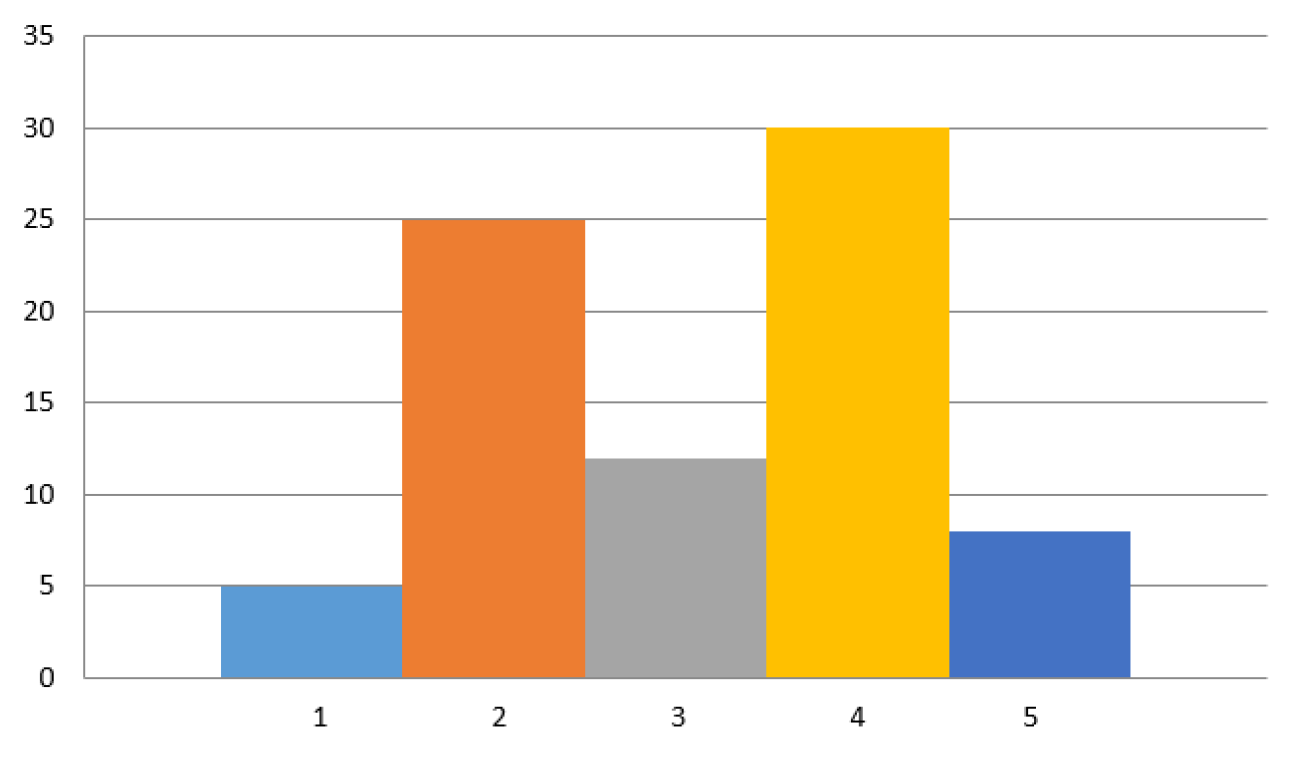
Having remembered of the 4 objectives of this research study, as it has been stated previously, one by one the responses from the audience located for this research study wll guide to the objective and in order to validate the answers from the target group are followed by the chart that contains the type of the group of people involved, followed by a number of the questionnaires and ended by the proposals of the group which is graded from 1,2,3,4,5 as the responses. A bar graph will follow, and the main aim of this graph is to enhance the information acquired from the chart and then there will a brief information from the researcher, as a summary about the response obtained from the questions listed. It should also be clear to the readers that there might be an overlapping of the theme of some objectives of the research, when that happens there might be a choice of various questionnaires that have similar or almost the same interpretation to answer the objectives in case. In brief, it is true the fact that different problems could be solved by using different methods, but sometimes, due to the context of any problems, many problems can be solved using the same solutions [7].
Responses to Research Objective I
‘To examine the internal and external factors influencing employee training and development programme within the Province Education Department in Zambezia province Quelimane in the period between the 2010 -2015’ (Table 1, Figure 1).

Figure 1: Conclusion of Research Results - Objective I
Table 1: Results to Research objective I
| Group of respondents | Section | Question No. | Question | 1 | 2 | 3 | 4 | 5 |
| Education Staff | II | 5 | You are given ample flexibility to perform your job | 3 | 1 | 3 | 3 | |
| 6 | They reward or recognizes such employee behaviour | 4 | 1 | 4 | 1 | |||
| 8 | Your organization has created a professional, attractive workarea that is functional and promotes productivity. | 2 | 2 | 5 | 1 | |||
| 9 | The department provides you with a safe work environment | 2 | 2 | 3 | 1 | 2 | ||
| 12 | You are offered economically feasible employee benefit programs tailored to individual needs | 2 | 4 | 2 | 2 | |||
| 14 | Performance measurements are used as criteria for promotion | 1 | 2 | 1 | 5 | 1 | ||
| 15 | A variety of training & development programs are offered to improve skills | 4 | 2 | 4 | ||||
| III | 7 | Do the supervisors practice positive attitudes with employees? | Y4 | N6 | ||||
| 5 | 25 | 12 | 30 | 8 |
Source: Author 2019
To analyse the efficiency of the criterion used to identify the workforce for employee training and development programme (Table 2).
Table 2: Results to Research objective II
| Group of respondents | Section | Question No. | Question | 1 | 2 | 3 | 4 | 5 |
| Education Staff | 4 | You are performing a job that matches your skill. | 1 | 2 | 6 | 1 | ||
| 6 | They reward or recognizes such employee behaviour | 4 | 1 | 4 | 1 | |||
| 8 | Your organization has created a professional, attractive work area that is functional and promotes productivity | 2 | 2 | 5 | 1 | |||
| 11 | Your salary is fair, equitable and competitive | 1 | 6 | 1 | 2 | |||
| 14 | Performance measurements are used as criteria for promotion | 1 | 2 | 1 | 5 | 1 | ||
| III | 7 | Do the supervisors practice positive attitudes with employees? | Y4 | N6 | ||||
| 2 | 19 | 7 | 28 | 4 |
Source: The author – 2019
As the way it was done to answer the objective one of the research objectives, there is a list of questions made up to lead the main aim of the objective two of this research study. The questions are listed below in the chart and in the third column there are the proposed answers, following the scale system.
Figure 2 is showing the possible answers of the respondents taking into consideration that the main aim is to analyse the efficiency of the criterion used by the Ministry of education.
There have been different views between the education staff and the parents, thus the contradiction in ideas between the two group might have come about due to various reasons that might be revealed at the end of this passage.
‘To investigate if the Provincial Education Department in Quelimane, evaluates its workers after receiving trainings from the employee trainings and seminars.’
It is believed worldwide to be a very important issue, according to the procedures of the Human Resource Management, and accepted by the company owners, to send their employees to participate to a training course or to any seminars or workshop, because, as it is recommended by the HRM and the International Labour Organization, it is in those employee meeting places where the workers share their experience and different work knowledge as a means of improving their work techniques and experience. The participation at these events do not only benefit the individual employee, but also the employee family and the employer because he or she improves his or her techniques which, as a result, the company does not only increase the quality of the product but also attracts more customers for his or her business.
Table3: Results to Research objective III
| Group of respondents | Section | Question No. | Question | 1 | 2 | 3 | 4 | 5 |
| Education Staff | 6 | They reward or recognizes such employee behaviour | 4 | 1 | 4 | 1 | ||
| 14 | Performance measurements are used as criteria for promotion | 5 | 2 | 1 | 1 | 1 | ||
| 15 | A variety of training & development programs are offered to improve skills | 8 | 2 | |||||
| 17 | You have the opportunity to grow and prosper with the organization | 1 | 2 | 3 | 4 | |||
| III | 5 | You are given ample flexibility to perform your job | Y3 | N7 | ||||
| 7 | Do the supervisors practice positive attitudes with employees? | Y4 | N6 | |||||
| 5 | 22 | 6 | 21 | 6 |
Source: Author – 2019
In so doing, the human resource management in any developed company or organization where the human force is available, recommend to have not only an efficient criterion of choosing the employees to participate in any training and development events, but also, from the researcher`s point of view, in accordance to the regulation, of the Human Resource development, to install an evaluation system that should follow the employees attitudes after their participation to the training or seminars. The idea behind this process is to evaluate their improvement in terms of efficacy, efficiency and loyalty to the post of work. In consideration to this idea, the researcher is interested in knowing if the Ministry of education represented by the province education officials in Zambezia province makes any evaluation to the employees after their participation to any trainings, seminars or workshops during their working period.
With an idea of collecting the individual views, beliefs and experiences from the groups selected to answer the questions on this issue there are some questions made and applied to the two groups in use for this research study. Chart, together with the Graph 3 all of them will present and clarify the information collected. The responses are in scales as the system applied.
The research study topic for this thesis is The Effectiveness of Employee Training & Development programme in Quelimane in the period between 2010 to 2015, having decided to carry out the research, it has been decided to break the topic in objectives this is just to simplify the researching process. In so doing, one of the objectives in the research process is to find out if, after observing the inefficiency and misunderstanding of employee training factors, the Ministry of education in Mozambique, represented by the Province education staff, as representatives, evaluates the trained workers after their training participation. Based on this idea, as shown chart, there were six questions made and to be answered by the group and the answers are dedicated to the objective of the study.
As it has been decided by the writer to simplify the understanding of the readers of this article, and to facilitate the understanding in Interpretation and discussion, there were eight questions sorted out to lead the ideas to achieve the first objective of this research study. The interpretation and discussion process is going to be carried out directly after each question. The objective the case is as follows:
To examine the internal and external factors influencing employee training and development programme within the Province Education Department in Zambezia province Quelimane in the period between the 2010 -2015’.
The first question directed to the province and the district education staff was Question 5 ‘Are you given ample flexibility to perform your job’ and Question 6 ‘They reward or recognize such employee behaviour’. The main idea behind these 2 questions was to find out if the workers in the ministry of education represented by the district and province education staff in Zambezia province, have the chance to apply their learned knowledge obtained in the related training and as a result if the ministry recognise them in the their salaries. Based on the replies from the respondents selected, they accepted on question 5 where they accept having a flexibility of applying their knowledge at work but not much rewarded for that. Question 8 ‘Your organization has created a professional, attractive work area that is functional and provides productivity’, Question 9, ‘The department provides you with a safe work environment’. From the researcher’s point of view, the question 8 which resulted in 0-2-2-5-1 which means that the employer understands the function of the workers as the productive area and the Q 9 which scored 2-2-3-1-2 which clarifies the researcher based on this response that the workers have safer work environment. In other words, the employees accept to have the protection at their working places. Question 12 wish to find out from the audience if the employees are offered economic benefits according to the individual needs. The responses are 0-2-4-2-2 that qualifies agreeing to the idea even some workers are in neutral. The next question – 14 – is asking if there is a performance measurements are used as criteria for promotion. The answers positively – 1-2-1-5-1 and Q 15 was to find out if the workers used to be offered, especially in the period 2010-2015, variety of training and development programmes as a way to improve their work skills. The group was in consensus in the answer – 0-0-4-2-4.
Having observed the responses to the questions applied in the first objective of the research, based on the general results as presented above, it happened that the group of interviewees there were in total, based on the measurement scale applied in this thesis, 30 to 25 positive answers. Figure 1 shows that is to say, according to the objective of the study, from the researcher`s point of view, the main aim was to examine if there were external and internal factors that could influence the employee training and development programmes in the province. The Chart and the Graph they reveal that there are factors that influence negatively the process in the province, the question that the researcher has and still not answered is to know what are the problems that negatively influence the correct application of the programme in the region.
As a final comparison to what is the experience of various employees, represented by the respondents, it seemed to the researcher that the interviewees might have got hidden reasons that might influence negatively the application of the programme and that they are unwilling to expose to the researcher. In so doing, it is the wish of the researcher to accept other researchers to proceed with the research in Mozambique or outside in order to find out what really negatively influence the employee training and development programmes in the province and as well as the country of Mozambique.
Furthermore, taking into account the expression in the research objective that is being considered in this part of the research ‘factors influencing employees’ it has also been commented by various writers, like for example - https.www. achievers – the reading materials concerning the Human Resource Management - How to motivate workers –that one of the issues that influence or motivate the employees, is in the manager’s responsibility. Based on the paper, there are various characteristics of a good manager and a couple of them are:
Be a respectful, honest, and supportive manager
Offer employee rewards
Give them room to grow
Based on this paper, the writer supports the fact that ‘a bad management is one of the top reasons employees run for the hills’ by this the researcher wish to explain that most of the employees drop their employments due to the attitude of the managers in relation to the employee. In consideration to this idea the writer, I support to the fact that most of the employees in the ministry of education in Mozambique, based on the research seems not to be well managed. The paper has also commented on the point of ‘Rewards’ If people know they’ll be rewarded for a job well done, they’ll be
More likely to, well, do a good job, and
Stay to see things through
To sum up, the researcher, based on the papers from other scholars and the study previously carried out in comparing the functioning of the Human Resource in UK and the USA, as well as other African countries like Angola and Mozambique, it was through that study whereby the researcher got probable ideas that the political influence the HRM and leads this important organization in the company to function differently in relation to other countries.
In this part of the thesis the writer is going to interpret and discuss and then explain the readers the probable reasons that might impede the dissemination of training and development issue to the workers. As a way to bring in the information from the audience, there were some directed questions to the group in use for this research. The main is to come to the main objective of the study in case as follows. ‘To analyse the efficiency of the criterion used to identify the workforce for employee training and development programme’. The Question 4 ‘are you performing a job that matches with your skill’. The results to this question 0-1-2-6-1 which means to the researcher that most of the workers are located to their jobs that they are trained for, but according to Q 11 which would like to hear from the respondents if the workers of the ministry of education in Mozambique earn a fair, equitable and competitive salary. Based on the results collected the answer was negative – 1-6-1-2-0. In other words, the respondents did not agree to the motion. The respondents went on by saying that the salary they earn, taking into account the living cost, the salary is not fair.
Based on the results shown by the Chart and the Graph presented above they in general – 2-19-7-28-4, it clarifies to the researcher that the education staff employees, even though are leading all training process, according to Questions 4,6,8,11 and 14 for the education staff in the Province of Quelimane, the Ministry of education represented by the education staff in the province, do not know much about how the training and development programme process is being carried out in the district, province and the country in general, taking into consideration that the employees living and working near the cities are always well informed in relation to the ones working and living out of the towns. To make the matter a bit ununderstamble, the training process is sorted out in the Ministry of education in the capital city – Maputo – and the trainees are collected in the province of Zambezia and the doubt remaining in the researcher’s mind is how is the selection process conducted: In other words, is the process conducted by faithfull and trusted people by the ministry: these questions are still remaining unanswered [8].
In order to better discuss this issue the writer has decided to present to the readers some papers written by different schollors, papers which are dealing with Human Resource Management – https.www. achievers. Why some managers in the ministries are not efficient at their work position; The manager has roles of motivating the employees in a company. Based on the read, here are some of the manager’s tasks are, as listed below.
Share positive feedback
Be transparent
Recognize their achievements
Based on the knowledge of the article – https www.achievers which deals with the worker motivation, it is true the fact that, based on the researcher’s experience, a feedback could be a motivation or demotivation factor, it depends on the way it has been offered.
The manager’s attitude in giving a constructive or positive feedback there is also necessary for the tutor or manager to be transparent in his or her orders. By this the researcher wishes to say that the manager should have an imparcial attitude of the employees and leading the workers to achieve the objectives or the goals of the company.‘If people feel that their efforts are appreciated, they will feel compelled to continue working hard. …... But if they feel like their long hours and personal sacrifices were for naught, it’s unlikely that they will go out of their way for the company again.’
It should be clear to the readers that the government laws are positive to the workers and there are legal procedures to be carried out in all companies in terms of the companies or organizations to follow the HRM and ILO needs. Taking into account this idea, the criterion in use would or will be efficient if the leading body – the managers - of different levels meet and discuss the issue with the human force in the company, regardless of the local interference with the legislation of the region.
As it has been explained at the beginning that in order to come to the conclusion based on the subject matter in research, which is ` to investigate if the provincial Education Department in the Province used to evaluate its workers after receiving training from the employee training seminars`. There were questions made in order to collect the ideas, beliefs and experiences from the respondents.
The collected information was, based on the scale of the questionnaires = 0-4-1-4-1. By these results informs the readers that more respondents were almost in favour of the motion that is the ministry of education reward the workers. The following question -Question 14 - that asked if the performance measurement is used as a criteria for promotion, the participants have declined the question – the result was 5-2-1-1-1 which shows the readers that during the period of 2010 to 2015, it could be till now, the performance measurements is less considered in terms for promotion of the employee. While as the question 15 for the education staff, which read as `A variety of training and development programmes are offered to improve skills`. Based on the results collected from the participants, which is -0-8-2-0-0, as well as the previous number, all respondents disagreed on the availability of various training and development programmes carried in the province. In face-to-face discussion with the interviewees the group accepts there to be available some programmes, but they were not for the choice of the employee. In other words, the training and development programmes carried out in the period were less or of no choices for the employees. Additional question (Q 17) `You have the opportunity to grow and prosper with the organization`, the result was -0-1-2-3-4, which indicated that the group was in favour of the motion, that is to mean that the employees grow and prosper with the Ministry of education. The final question, was from section III, still in the Education Staff ` You are given ample flexibility to perform your job`. The results, which was based on Yes/No question was -3 to 7 in favour of negative answers.
It should be clear to the readers of this paper that most companies worldwide, because of the world’s evolution where the improved service is necessary, more companies do need to improve or to update their workers technically. In so doing trainings developing courses, because of their importance - have been considered recently in Mozambique. The researcher, supported by the paper from HTTPS.www.bing.com–emphasize on the fact that Training and development programs, as it has been noted in the first passages of this thesis, provide a host of benefits. In brief, the programmes enhance employee performance, boost employee productivity, reduce employee turnover, and improve company culture. The people in-charge-of working forces, - the human being–must not only concider the training courses but also to put into concideration the importance of the follow-up technology that should track the efficiency of the recently trained employees and the efficacy of the training course adoped.
How to Improve the Employee Training and Development Programmes in Mozambique
The issue that the researcher considers to be the most important is the national legislation that in most African countries does interfere with the HRM and the ILO regulations. From the researcher`s point of views, based on the ILO regulation, it clarifies that the employees worldwide needs a `decent employment` and a `social dialogue` to solve their conflicts at work. From what the researcher understands, the social dialogue should be composed by the employees themselves, the employer and the government and it will not make any sense if the country`s legislation is not in favour of the workers` rights in that sense, whereby the employer and the employee could be oriented to solve their work problems peacefully and aiming at giving benefits not only to the workers but also to the employers.
The other issue that the researcher would propose as a measure of improving the employee training and development programmes in Mozambique and in all African countries as a whole is by enforcing the ILO to implement the visual or inspection organization that should not only inspect the implementation of the employee training and development programmes in the region but also to motivate the organizations or the ministries to follow the application of the programme. The ILO, the monitor as its proposed function, together with the HRM in Mozambique should have the possibility or the right to talk to any country`s ministry, organization or company in the country, or in any country in the region, in case of incorrect application of the programmes internally. Iin addition to that, there should be international programmes on mass media like, TV, radios and newspapers disseminating the ILO and HRM regulations that are to be known and by the employees and employers. Furthermore, the ILO should not be passive, there should be international employee training and development programmes that should motivate countries worldwide to send their employees to those sessions of workshops or seminars.
To sum up, it is the wish of the researcher that all workers in all countries, regardless of being a poor or a rich country, should aim at guiding their workers to know and have what is related to their work. For example, the employees have to know about their laws, for instance, what protect them at work and all benefits they have to have.
Acknowledgment
The candidate would like to thank all those who directly or indirectly have given their help in different ways during the period of writing this article for example, the Language Coordinator Dr. Mariano, Dr. Rude Matinada, Dr A. Hospital and all friends and the Director of the Faculty of Social Science and the Staff. in general, of Catholic University in Quelimane for their encouragement. Wife, children, and grandchildren of the candidate are also thanked for their encouragement not only during the period of writing this article but also during the study time as whole. Finally, everybody who had his or her goodwill in the candidate’s study also deserves my thanks.
Cambell, J. “Personal training and development.” Annual Review of Psychology, 1971.
Adeniyi, O.I. Staff Training and Development. In Ejiogu, A., Achumba, I., and Asika, 1995.
Nigavekar, A. Training and Development of Academic Administrator in Higher Education. University Grants Commission, New Delhi, 2005.
Ejiogu, A. Human Resource Management towards Greater Productivity. Generation Press Ltd., Lagos, 2000.
Flouri, E., and A. Buchanan. “Early fathers’ and mothers’ involvement and children’s later educational outcomes.” British Journal of Educational Psychology, vol. 74, 2004, pp. 141–153.
Imenda, S. “Is There a conceptual difference between conceptual and theoretical frameworks?” Journal of Social Science, vol. 38, no. 2, 2014, pp. 185–195.
Paul, I.S. Training and Development. Human Resource Management, 2008.
Noe, R.A. Employee Training and Development. McGraw-Hill, 2002.