This paper focuses on investigating the potential relationship between acne vulgaris (a common skin condition) and smoking specifically in men. This study has been conducted at the Department of Dermatology at Salah Al-Deen General Hospital & Private Clinic. The study was conducted from October 1, 2020, to April 30, 2021. The study included patients diagnosed with acne vulgaris who were at least 14 years old. The participants were divided into two groups: smokers and non-smokers. The study followed a case-control design, comparing two groups: 50 cases of acne vulgaris who were smokers and 50 cases of acne vulgaris who were non-smokers. A majority of the smokers in the study were categorized as moderate smokers, with 48% of them smoking 11-19 cigarettes per day. The next highest category was heavy smokers, with 30% of smokers consuming 20 or more cigarettes per day. Light smokers, who smoked 10 or fewer cigarettes per day, accounted for 22% of the smokers in the study. The study found that the prevalence of severe forms of acne was significantly higher in the group of smokers, with 36% of smokers experiencing severe acne. In contrast, the non-smoker group had a lower prevalence, with only 16% of non-smokers having severe acne. According to the results of the multivariate logistic regression analysis, several variables were examined to predict the occurrence of severe acne. The analysis revealed the following associations: Smoking Habit: The study found that the smoking habit was significantly associated with an increased risk of severe acne occurrence. Smokers had 8.3 times the risk of developing severe acne compared to non-smokers. The confidence interval (CI) for this association was 1.8-37.8. Residence (Living in Urban Areas): The analysis showed that living in urban areas was associated with a 2.5 times increased risk of severe acne occurrence. However, the confidence interval (CI) for this association was 0.5-12.4, indicating a wide range of uncertainty in the estimate. Family History: A positive family history of acne was found to be associated with a 1.8 times increased risk of severe acne occurrence. The confidence interval (CI) for this association was 0.4-8.4. Age (21-30 years): The analysis indicated that individuals in the age range of 21-30 years had a 1.8 times increased risk of severe acne occurrence. The confidence interval (CI) for this association was 0.3-10.1. It is important to note that while smoking habit showed a significant correlation with severe acne, the correlations regarding residence, age, and family history were not found to be statistically significant.
Keywords
Relationship between Smoking and Acne Vulgaris
Smoking and Acne Vulgaris
INTRODUCTION
Acne vulgaris (AV) is a prevalent skin condition that affects individuals of various ethnicities and races. It is particularly common during adolescence, with approximately 80% of teenagers being diagnosed with acne. The age at which acne typically starts has shifted in recent years due to the earlier onset of puberty reported in current times. Acne vulgaris often follows a prolonged course, characterized by either an acute or gradual onset and recurring episodes over time[1]. In teenagers and young adults, smoking has a modest impact on the prevalence and severity of acne. However, mature women who continue to smoke are more susceptible to a specific type of non-inflammatory acne, which is characterized by the presence of numerous comedones and macrocomedones [2]. Intensive smoking might have a potential protective effect against inflammatory acne, potentially attributed to the influence of nicotine[3]. It has been found that maternal cigarette smoking is linked to an earlier onset of acne in sons, but not necessarily an earlier onset of puberty[4]. Cigarette smoking can elevate the levels of adrenal hormones, such as androgens and cortisol. Elevated cortisol levels can disrupt blood sugar stability, leading to increased insulin and blood glucose levels. This, in turn, can stimulate the production of androgens[5]. Given the lack of clarity regarding the relationship between tobacco smoking and acne, the objective of this study is to investigate the association between acne vulgaris and smoking specifically in men.
MATERIALS AND METHODS
Patients and Method
The study was conducted over a duration of six months, spanning from October 2020 to April 2021. Data for the study was gathered from both the outpatient department of dermatology and venereology at Salah Al-Deen General Hospital and selected cases from a private clinic. The target population for this study comprised male patients with varying degrees of acne vulgaris severity. These patients met the following criteria: being above 14 years of age, having acne, and being categorized into either the case group (consisting of smokers, including light, moderate, and heavy smokers) or the control group (consisting of non-smokers) for the purpose of comparison. A sample of 100 patients was selected for this study using simple random sampling. The sample consisted of 50 patients who were smokers with acne vulgaris, including individuals who were categorized as light, moderate, or heavy smokers, and had varying degrees of acne severity (mild, moderate, severe). Additionally, 50 non-smoker patients with acne vulgaris were also included in the sample. The researcher utilized a structured questionnaire as the primary tool for data collection, which was then reviewed by the supervisor. The questionnaire covered demographic information, including name, age, gender, place of residence, and occupation.
The structured questionnaire encompassed various aspects related to the study, including the grading of acne severity, duration of the disease, family history of acne, affected areas (such as the face, neck, back, chest, and upper arms), smoking habits, details of topical and systemic treatments, and the impact of the disease on the patient (such as disfigurement or occupational disability).
RESULTS
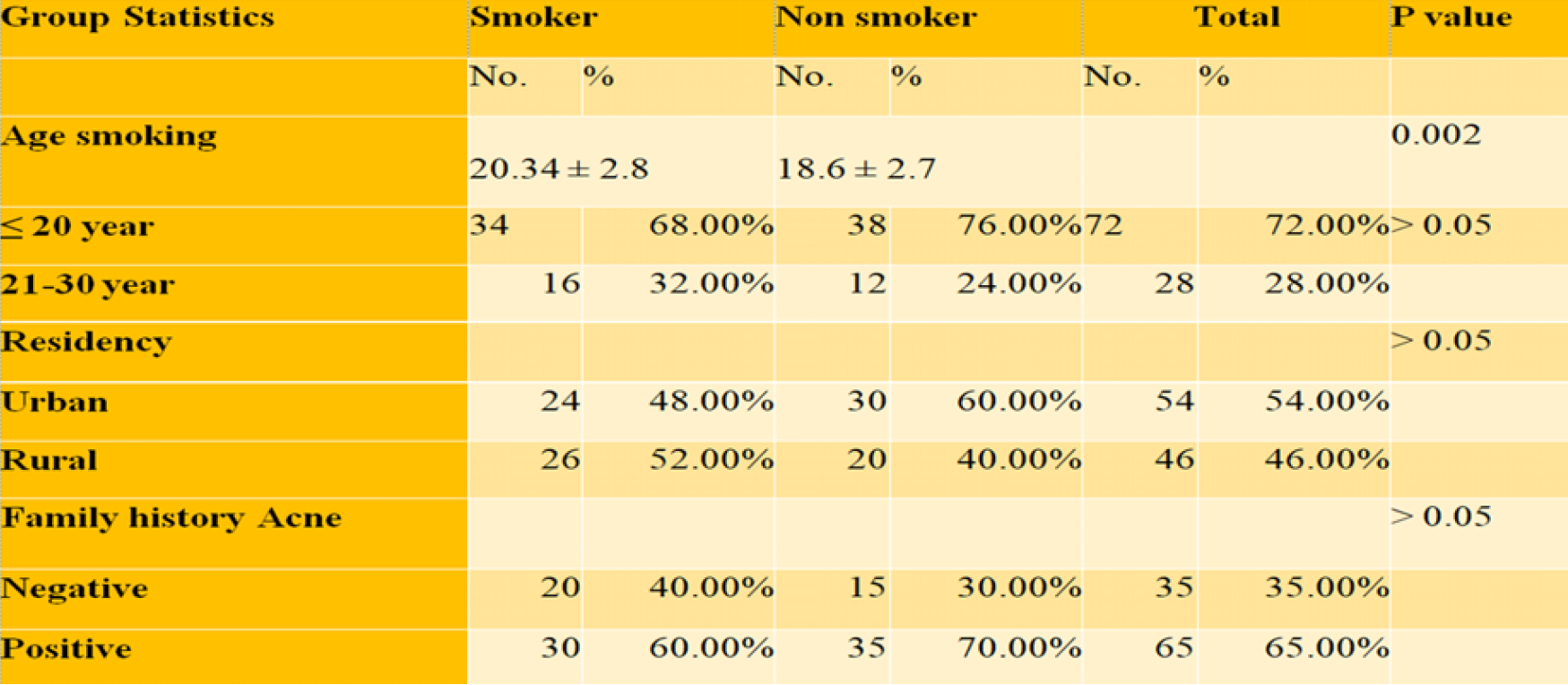
The average age of acne patients who were smokers was found to be 20.34±2.8, which was significantly higher compared to the average age of non-smoker acne patients, which was 18.6±2.7. This difference in age was statistically significant, as indicated by a t-test p-value of less than 0.05. A majority of acne patients who were smokers resided in rural areas, accounting for 52% of the group. In contrast, the majority of non-smoker patients lived in urban areas, comprising 60% of the group. However, this relationship between smoking and residence was not statistically significant, as indicated in Table 1. Regarding family history, a significant number of smoker acne patients, 60% of them, had a positive family history of acne. Similarly, a high percentage of non-smoker patients, 70% of them, also had a positive family history of acne. However, this relationship between smoking and family history was not statistically significant, as shown in Table 1. The majority of acne patients, including both smokers and non-smokers, were aged 20 years or younger, accounting for 72% of the total patient population. Those aged between 21 and 30 years constituted 28% of the patients, as outlined in Table 1. In terms of residency, 54% of the acne patients, regardless of smoking status, resided in urban areas, while 46% lived in rural areas. This distribution is depicted in Table 1. Regarding family history, 65% of the acne patients, both smokers and non-smokers, had a positive family history of acne. On the other hand, 35% of patients had a negative family history. These proportions are detailed in Table 1.
Table 1: Presents the Overall Characteristics of the Study Groups
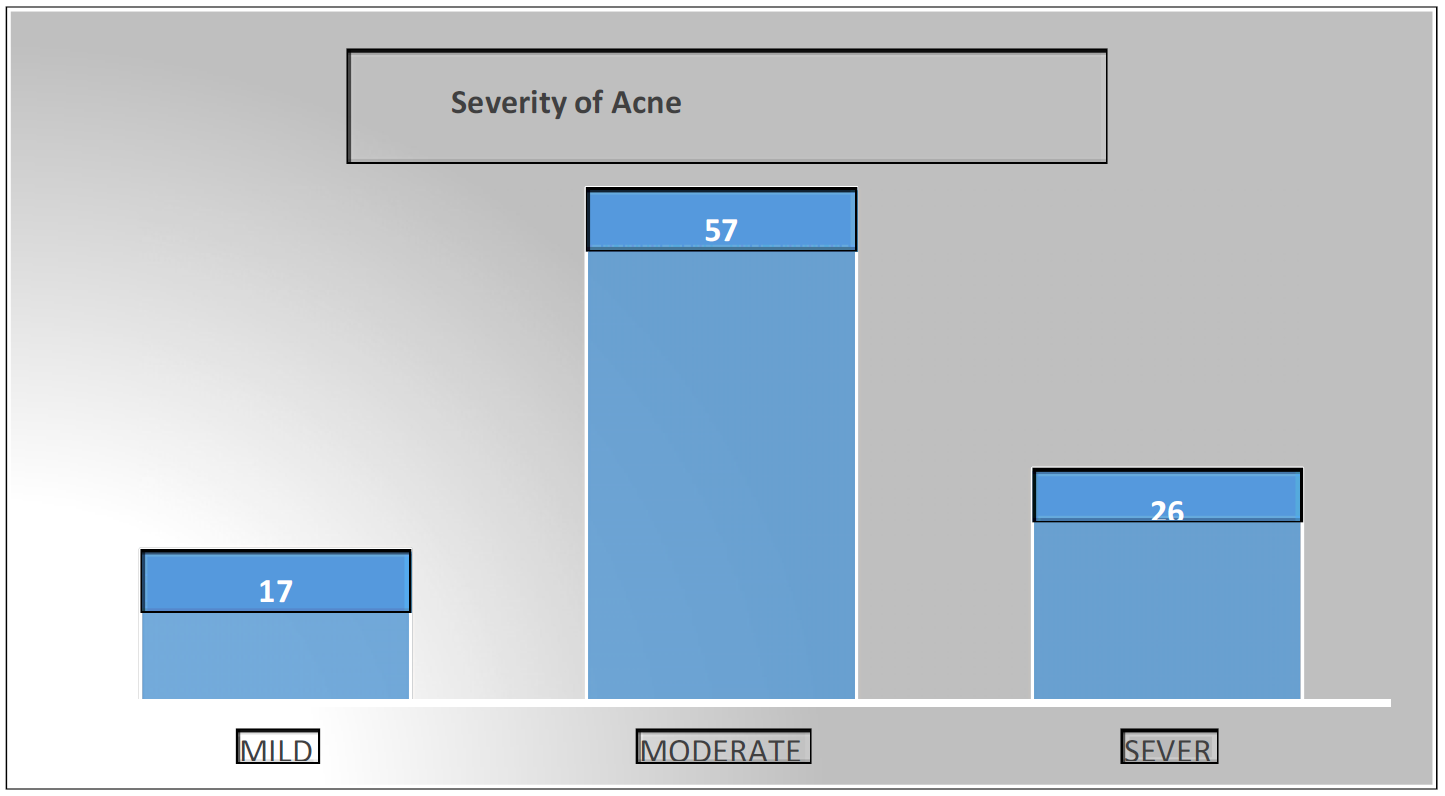
Figure 1 illustrates the distribution of acne patients, both smokers and non-smokers, according to the severity of their acne. The majority of patients, accounting for 57% of the total, had moderate acne. The next most common category was severe acne, observed in 26% of patients. Mild acne was present in 17% of the patient population.
Figure 1: Distribution of Acne Patient
Figure 2 displays the distribution of smokers within the acne patient population based on their smoking intensity. The majority of smokers were classified as moderate smokers, consuming 11-19 cigarettes per day, accounting for 48% of the group. Heavy smokers, who smoked 20 or more cigarettes per day, comprised 30% of the smokers. Light smokers, consuming 10 or fewer cigarettes per day, represented 22% of the smokers.
Figure 2: Represents The Severity of Smoking Within the Smoker Group
The average number of comedones was found to be higher among non-smokers compared to smokers, with values of 77.4±11.2 and 61.4±15.6, respectively. Similarly, the mean number of papules/pustules was higher in non-smokers (82.3±10.5) compared to smokers (55.8±12.1). Conversely, the mean number of nodules/cysts was higher among smokers (77.8±9.5) compared to non-smokers (25.8±13.7). Additionally, the mean number of scarring lesions was higher in smokers (27.8±9.5) compared to non-smokers (12.4±6.4). These differences were statistically significant, as indicated in Table 2.
Table 2: Presents the Average Number of Lesions Among Both Smokers and Non-Smokers
Parameters
Smoker Mean ± SD
Nonsmoker Mean ± SD
p value
Comedones
61.4±15.6
77.4±11.2
<0.001
papule/ pustules
55.8±12.1
82.3±10.5
<0.001
nodules/ cyst
77.8±9.5
25.8±13.7
<0.001
Scaring lesion
27.8±9.5
12.4±6.4
<0.001
Table 3 demonstrates that the prevalence of severe acne was higher in the smoker group, with 36% of smokers exhibiting severe acne compared to 16% of non-smokers. Conversely, mild acne was observed in 8% of smokers and 26% of non-smokers. The moderate form of acne was found in 56% of smokers and 58% of non-smokers. These differences in acne severity between the two groups were statistically significant, as indicated in
Table 3: Presents The Relationship Between Smoking Habit and the Severity of Acne
Parameters
Smoker
Non smoker
Total
Severity of Acne
No.
Percentage
No.
Percentage
No.
Percentage
Mild
4
8.0%
13
26.0%
17
17.0%
Moderate
28
56.0%
29
58.0%
57
57.0%
Sever
18
36.0%
8
16.0%
26
26.0%
Total
50
100%
50
100%
100
100%
X2 = 8.63, df = 2, p value < 0.05
Table 4 illustrates the relationship between smoking heaviness and the severity of acne. Among heavy smokers, 73.3% of patients had severe acne, whereas 20.8% of moderate smokers and 18.2% of light smokers exhibited severe acne. Moderate acne was found in 63.6% of light smokers, 75% of moderate smokers, and 20% of heavy smokers. Mild acne was observed in 18.2% of light smokers, 4.17% of moderate smokers, and 6.7% of heavy smokers. These associations between smoking heaviness and acne severity were statistically significant, as indicated in Table 4.
Table 4: Presents the Relationship Between the Severity of Acne and the Severity of Smoking Habit
Severity of acne
Light Smoker (≤10 cigarette /day)
moderate smoker (11-20 cigarette /day)
Heavy smoker (≥ 20 cigarette /day)
Mild
No.
Percentage
No.
Percentage
No.
Percentage
2
18.2 %
1
4.17 %
1
6.7 %
Moderate
7
63.6 %
18
75 %
3
20 %
Sever
2
18.2 %
5
20.8 %
11
73.3%
Total
11
100.0 %
24
100%
15
100 %
X2 = 15.3, DF = 4, p VALUE<0.05 significant
The multivariate logistic regression analysis was conducted to predict the occurrence of severe acne based on various variables. The results showed that smoking habit was associated with an 8.3 times higher risk of severe acne (OR = 8.3, CI: 1.8-37.8, p < 0.05), indicating a statistically significant relationship, as presented in Table 3.5. Living in urban areas was found to be associated with a 2.5 times higher risk of severe acne occurrence (OR = 2.5, CI: 0.5-12.4, p>0.05), but this relationship was not statistically significant, as shown in Table 5. Similarly, having a positive family history of acne was associated with a 1.8 times higher risk of severe acne occurrence (OR = 1.8, CI: 0.4-8.4, p>0.05), but this relationship was not statistically significant, as indicated in Table 5. Furthermore, being in the age range of 21-30 years was associated with a 1.8 times higher risk of severe acne occurrence (OR = 1.8, CI: 0.3-10.1, p>0.05), but this relationship was not statistically significant, as shown in Table 5.
Table 5: Presents The Results of the Multivariate Logistic Regression Analysis Conducted to Predict the Occurrence of Severe Acne Vulgaris
Parameters
Sig.
Adjusted OR
95% C.I.
Lower
Upper
Smoking
0.006
8.3
1.8
37.8
Urban compared to rural
0.262
2.5
0.5
12.4
Positive Family history
0.467
1.8
0.4
8.4
Age (21-30 year) compared to ≤ 20 years
0.481
1.8
0.3
10.1
OR: Odds Ratio, CI: Confidence Interval, p < 0.05 is Significant
DISCUSSION
The relationship between smoking heaviness and acne severity reveals that 73.3% of heavy smoker patients had severe acne, and the odds ratio (OR) for predicting severe acne in smokers was 8.3. It is worth noting that there are limited studies available on the association between acne and smoking, and these studies vary in methodology as they often compare acne patients with healthy controls without specifically focusing on smoking but rather considering it as part of dietary and behavioral factors. Smoking can have detrimental effects on the skin due to its impact on skin microcirculation, keratinocytes, and the synthesis of collagen and elastin”.
The impact of smoking on acne severity is a topic of debate, with inconsistent findings across different studies. Some studies have suggested that smoking can alter sebum composition by reducing antioxidants, potentially exacerbating acne. However, the relationship between smoking and acne severity remains controversial[6]. For instance, Alshammrie et al. [7] conducted a study and reported a significant association (p-value = 0.003) between smoking and the appearance of acne. On the other hand, Lajevardi et al. [8] in Iran found no significant relationship between smoking heaviness and acne severity. In another study by Al Hussein et al. [9], smoking was identified as a risk factor for acne, with a significant relation found between smoking and acne occurrence (OR = 2.89). They also reported that smoking was associated with an increased risk of severe and moderate acne, with an odds ratio of 1.2 for prediction. Similarly, Monib et al. conducted a study [10] in Egypt and found that 40% of acne patients were smokers. They observed a significant positive relationship between smoking and acne development, with an odds ratio of 2.9. Overall, the relationship between smoking and acne severity is complex, with varying results reported in different studies. Further research is needed to fully understand the impact of smoking on acne and its underlying mechanisms.
Karadağ et al. [11] discovered a significant association between smoking and the severity of acne, with severe acne being more prevalent among smokers. They also found that adult acne was more commonly observed in smokers. Another study investigated the relationship between smoking habits, such as duration and number of cigarettes smoked, and acne severity. This study revealed a dose-dependent correlation between the number of cigarettes smoked per day[12]and the severity of acne. However, some studies, such as the one conducted by Di Landro et al. [13]and Karciauskiene et al. [14], did not identify a relationship between smoking and acne.
Contrary to the findings suggesting a positive association between smoking and acne severity, there are studies that have reported a potential protective effect of smoking against acne. For example, a survey study conducted in France in 2015 found that individuals who smoked more than 10 cigarettes per day had a reduced probability of self-reported acne (odds ratio 0.44, 95% CI 0.30 to 0.66)[15]. Similarly, Duquia et al. reported an insignificant protective effect of smoking on acne occurrence with an odds ratio of 0.9[16]. These studies suggest that smoking may have a contradictory effect on acne development, and further research is necessary to fully understand the relationship between smoking and acne. Also “Wolkenstein, et al. [17] found that the smoking was protective from acne (OR=0.75) this result may be related to the type of sample and culture difference because the researcher sample in both groups there was smokers and the smokers I non acne group was heavier smoker than non-acne group, and gathered information on self-reported acne, rather than acne diagnosed by a physician. Say YH, Heng AH 2021 found [18] and Suppiah TSS et al. [19] found higher risk for moderate-severe acne was observed in individuals without paternal, parental or household smokers compared to the individuals with those having a maternal smoker was associated with a reduced risk of grade 3/4 acne scarring and found that personal smoking status and passive smoking had no significant association with acne severity and scarring. The complex way in which smoking influences the pathogenesis of acne including inflammation, wound healing and immune responses[20], may contribute, in part, to these inconclusive evidences”.
CONCLUSION
Among the smokers, the majority were moderate smokers (48%), followed by heavy smokers (30%). The prevalence of severe acne was higher among the smoker group (36%) compared to the non-smoker group (16%). The variable that significantly predicted the occurrence of severe acne was smoking habit, with smokers having an 8.3 times higher risk of developing severe acne. On the other hand, the variables of living in urban areas (OR = 2.5, CI: 0.5-12.4) and positive family history (OR = 1.8, CI: 0.4-8.4) did not show a significant association with severe acne occurrence.
REFERENCE
Demina, O.M. et al.“Role of cytokines in the pathogenesis of acne.” International Journal of Biomedicine, vol. 7, no. 1, 2017, pp. 37–40.
Sharma, R.K. et al.“Epidemiological patterns of acne vulgaris among adolescents in north India: A cross-sectional study and brief review of literature.” Indian Journal of Paediatric Dermatology, vol. 18, no. 3, July 2017, pp. 196.
Dréno, B. et al. “The influence of exposome on acne.” Journal of the European Academy of Dermatology and Venereology, vol. 32, no. 5, May 2018, pp. 812–819.
Håkonsen, L.B. et al.“Maternal cigarette smoking during pregnancy and pubertal development in sons: A follow-up study of a birth cohort.” Andrology, vol. 1, no. 2, March 2013, pp. 348–355.
Jandíková, H. et al. “The influence of smoking and cessation on the human reproductive hormonal balance.” Physiological Research, vol. 66, 2017, pp. S323–S331.
Heng, A.H. and F.T. Chew. “Systematic review of the epidemiology of acne vulgaris.” Scientific Reports, vol. 10, no. 1, April 2020, pp. 1–29.
Alshammrie, F.F. et al.“Epidemiology of acne vulgaris and its association with lifestyle among adolescents and young adults in hail, kingdom of Saudi Arabia: A community-based study.” Cureus, vol. 12, no. 7, July 2020.
Lajevardi, V. et al. “The relationship between body mass index and the severity of acne.” Iranian Journal of Dermatology, vol. 17, no. 1, 2014, pp. 13–17.
Al Hussein, S.M. et al.“Diet, Smoking and Family History as Potential Risk Factors in Acne Vulgaris: A community-based study.” Acta Medica Marisiensis, vol. 62, no. 2, 2016, pp. 173–181.
Monib, K.M. et al. “Risk factors for acne vulgaris development.” Benha Journal of Applied Sciences, vol. 5, no. 5, August 2020, pp. 1–5.
Karadağ, A.S. et al.“The effect of personal, familial, and environmental characteristics on acne vulgaris: A prospective, multicenter, case-controlled study.” Giornale Italiano di Dermatologia e Venereologia, vol. 154, no. 2, 2019, pp. 177–185.
Schafer, T. et al. “Epidemiology of acne in the general population: the risk of smoking.” British Journal of Dermatology, vol. 145, no. 1, 2001, pp. 100–104.
Di Landro, A. et al.“Family history, body mass index, selected dietary factors, menstrual history, and risk of moderate to severe acne in adolescents and young adults.” Journal of the American Academy of Dermatology, vol. 67, 2012, pp. 1129–1135.
Karciauskiene, J. et al. “The prevalence and risk factors of adolescent acne among schoolchildren in lithuania: A cross-sectional study.” Journal of the European Academy of Dermatology and Venereology, vol. 28, no. 6, June 2014, pp. 733–740.
Wolkenstein, P. et al. “Smoking and dietary factors associated with moderate-to-severe acne in french adolescents and young adults.” Dermatology, vol. 230, 2015, pp. 34–39.
Duquia, R.P. et al.“Epidemiology of acne vulgaris in 18-year-old male army conscripts in a South Brazilian city.” Dermatology, vol. 233, no. 2–3, 2017, pp. 145–154.
Wolkenstein, P. et al. “Acne prevalence and associations with lifestyle: A cross-sectional online survey of adolescents and young adults in 7 European Countries.” Journal of the European Academy of Dermatology and Venereology, vol. 32, no. 2, February 2018, pp. 298–306.
Say, Y.H. et al. “Modifiable and non-modifiable epidemiological risk factors for acne, acne severity and acne scarring among Malaysian Chinese: A cross-sectional study.” BMC Public Health, vol. 21, no. 1, 2021, pp. 1–12.
Suppiah, T.S.S. et al.“Acne vulgaris and its association with dietary intake: A malaysian perspective.” Asia Pacific Journal of Clinical Nutrition, vol. 27, no. 5, 2018, pp. 1141–1145.
Rombouts, S. et al. “Cigarette smoking and acne in adolescents: results from a cross-sectional study.” Journal of the European Academy of Dermatology and Venereology, vol. 21, no. 3, 2007, pp. 326–333.
Recommended Articles
Research Article
Histopathological Spectrum of Endometrial Biopsies in Abnormal Uterine Bleeding in Mosul City Iraq
Farah Talal Abdulraheem
Published: 30/06/2026
Download PDF
Research Article
A Study on the Levels for mRNA Gene Expression of NF-κB and miR-34a Genes in Human Patients with Breast Cancer: An Indication for Resistance to Chemotherapy
Najlaa O.H. Aljubury,
Salim Hussein Jari
Published: 15/12/2023
Download PDF
Research Article
Molecular Study to Detect Some Virulence Factors in Methicillin – Resistance Staphlococcus Aureus Isolated from Eye Infections in Wasit Province
Nofel Hossin Amhi Alshammari,
Haider Kareem Jassem
Published: 15/12/2023
Download PDF
Research Article
Occurrence of Multi-Drug Resistance of E. coli Isolated from Urinary Tract Infection in Najaf City
Alaa Hamza Jaber Al-Jelehawy,
...
Haneen Ali Kadham
Published: 05/10/2025
Download PDF
PO Box 101, Nakuru
Kenya.
Email: office@iarconsortium.org
Editorial Office:
J.L Bhavan, Near Radison Blu Hotel,
Jalukbari, Guwahati-India
Sharqi, F. F., Nayaf, M. S. & Hussain, A. B. (2023). The Relationship between Smoking and Acne Vulgaris. Scientific Research Journal of Medical Sciences, 3(2), 1-5.
MLA
Sharqi, Fattah F., Mohammad S. Nayaf and Abdulmuneem B. Hussain. "The Relationship between Smoking and Acne Vulgaris." Scientific Research Journal of Medical Sciences 3.2 (2023): 1-5.
Chicago
Sharqi, Fattah F., Mohammad S. Nayaf and Abdulmuneem B. Hussain. "The Relationship between Smoking and Acne Vulgaris." Scientific Research Journal of Medical Sciences 3, no. 2 (2023): 1-5.
Harvard
Sharqi, F. F., Nayaf, M. S. and Hussain, A. B. (2023) 'The Relationship between Smoking and Acne Vulgaris' Scientific Research Journal of Medical Sciences 3(2), pp. 1-5.
Vancouver
Sharqi FF, Nayaf MS, Hussain AB. The Relationship between Smoking and Acne Vulgaris. Scientific Research Journal of Medical Sciences. 2023 Jul;3(2):1-5.


 Download PDF
 Download XML