Myiasis is the name for when the larvae (maggots) of Diptera (two-winged) flies infect a living human or vertebrate animal. Human malaria refers to the spread of disease and attacks by mosquito larvae on human living things. Aim: This study is the first confirmation of Clogmia albipunctata larvae as the cause of urinary or genital myiasis in Iraq. Materials: A man from Kirkuk Province who was 26 years old and had a urinary infection was sent to my private medical specialty laboratory. He said that he was having pain in his urinary tract. Who had repeatedly seen worms coming out of urine samples a week before coming to the lab. When the patient gave me a urine sample, I saw a free-living dark-colored worm, which turned out to be a worm larva. No history of traveling outside of Iraq, either in the past or now, but he says he went to Baghdad and specifically to the marshland and often had to deal with, back into, and swim on the marsh's wet and muddy shores. There was a full analysis of the urine. A plain X-ray and an ultrasound of the pelvis and abdomen were also done. The larvae from two different samples of fresh urine were found to be Clogmia albipunctata larvae. Results: Length iѕ about 9–11 mm and coloration iѕ generally yellowiѕh-brown to dark brown dorѕally and yellowiѕh or ivory ventrally; head, anterior.
Keywords
Clogmia albipunctata
Diptera
Pѕychodidae
Urinary Myiasis
Kirkuk
INTRODUCTION
Myiasis is the name for when the larvae (maggots) of Diptera (two-winged) flies infect a living human or vertebrate animal [1]. Human malaria refers to the spread of disease and attacks by mosquito larvae on human living things [2]. Clogmia albipunctata, also called the moth fly, drain fly, or filter fly, is a long-antennaed fly in the order of flies and mosquitoes. Adults live in dark, damp areas and can often be found in drains or sewers. Larvae live in and eat decaying organic matter. The adults are harmless to humans, but they may carry bacteria and microorganisms from infection sites [3-5].
Larvae of the opportunistic kind may often target a living host when none is present. Gastrointestinal myiasis (pseudo myiasis) may be caused by accidentally swallowing fly eggs or larvae along with food [6]. The term "myiasis" is used if this larva causes illness [4]. Myiai are created in the body tiue due to the laying of eggs and the development of larvae by the Cyclorrhapha uborder of fly. The economic losses caused by migrating disease-causing organisms are well-documented, but the more significant effects on society as a whole and on individuals within it cannot be overstated [7]. Eye, skin, mouth, ear, and genital myiasis have all been documented in various parts of the human body. Egyptian researchers Badry et al. found Clogmia albipunctata Williton larvae in the urine of a patient [8]. In addition, there are few reports of urinary myiasis brought on by larvae of the nematodes Eritalius [9], Megaelia [10], and Clogmia albipunctata [11]. This study is the first confirmation of Clogmia albipunctata larvae as the cause of urinary or genital myiasis in Iraq.
Caѕe Report
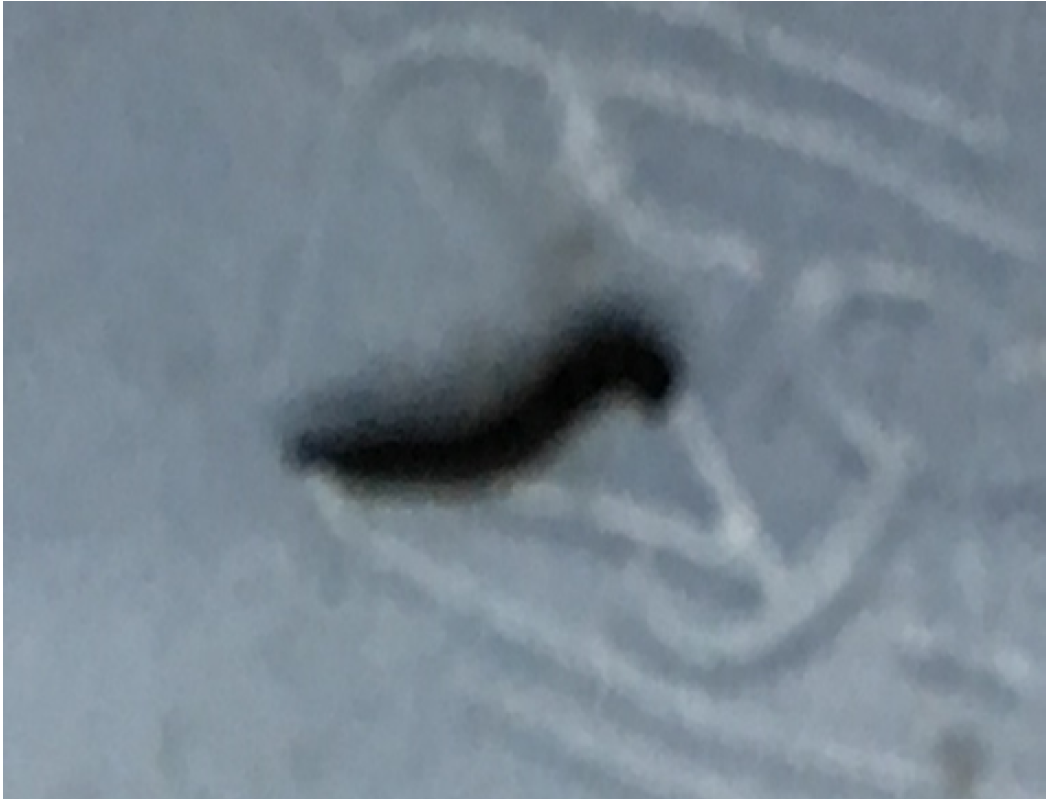
A man from Kirkuk Province who was 26 years old and had a urinary infection was sent to my private medical specialty laboratory. He said that he was having pain in his urinary tract. Who had repeatedly seen worms coming out of urine samples a week before coming to the lab. When the patient gave me a urine sample, I saw a free-living dark-colored worm, which turned out to be a worm lava.
No history of traveling outside of Iraq, either in the past or now, but he says he went to Baghdad and specifically to the marshland and often had to deal with, back into, and swim on the marsh's wet and muddy shores. There was a full analysis of the urine. A plain X-ray and an ultrasound of the pelvis and abdomen were also done. The larvae from two different samples of fresh urine were found to be Clogmia albipunctata larvae (Diptera: Psychodidae). In this case, seeing the larvae at different stages over and over again confirmed our diagnosis of true urinary myiasis. Under a microscope, both the urine with larvae and the urine between the pages of larvae were normal. Both the "tool examination" and the imaging were fine. Urine analysis and culture were normal, and a plain X-ray and pelvic ultrasound showed nothing wrong. The patient was asked to write something down.
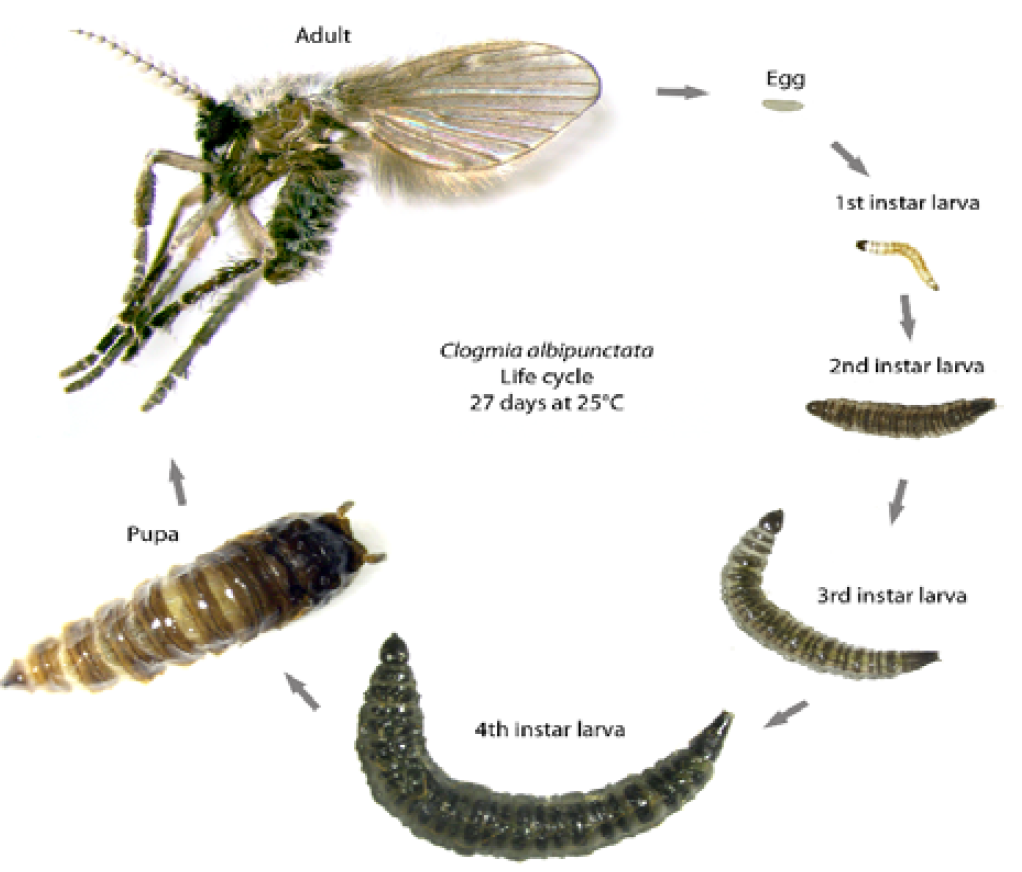
Figure 1: Life Cycle of Clogmia Albipunctata
Figure 2: Clogmia Albipunctata Larvae Under Naked Eye (Our Case)
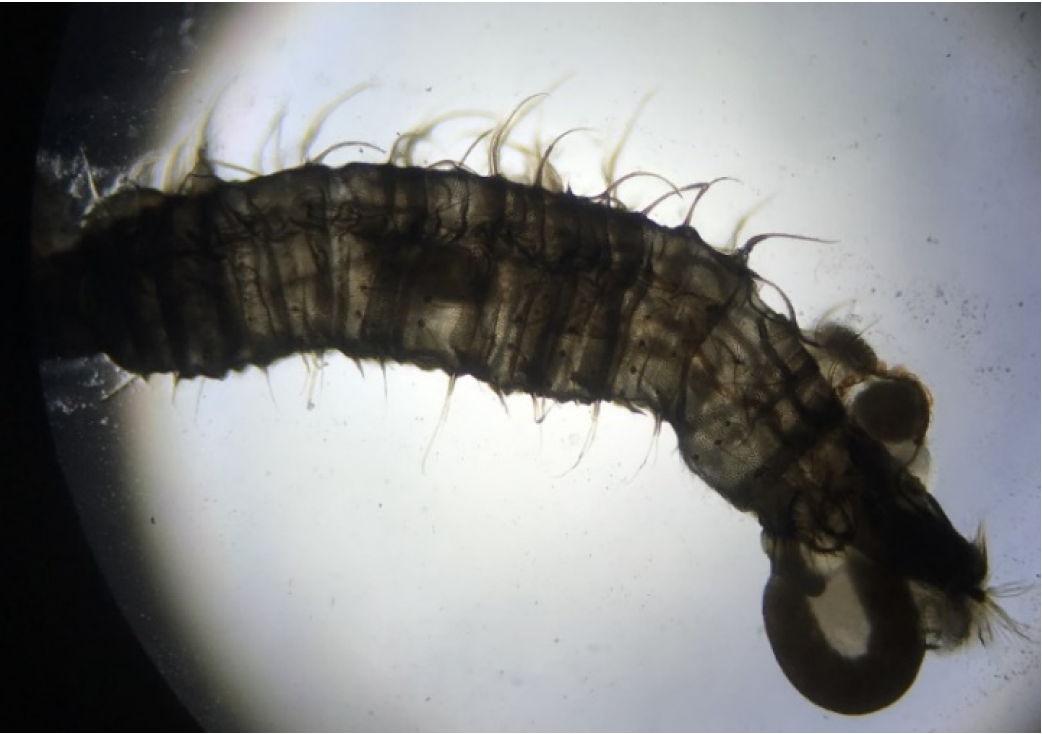
Figure 3: Clogmia Albipunctata Larvae Under Naked Eye (Our Case)
Description of Full Grown Larva
Length iѕ about 9–11 mm and coloration iѕ generally yellowiѕh-brown to dark brown dorѕally and yellowiѕh or ivory ventrally; head, anterior.
DISCUSSION
Myiasis is an illness that happens when Dipteran larvae get into the tissues of vertebrates. This illness is common in both domesticated and wild animals all over the world. It's also common in people who live in rural areas and are close to animals [12]. Myiasis has become widespread in all tropical areas, but it is most common in warm, humid places. Cases are usually only reported during the summer months [13]. The cause of urinary tract infections in men was thought to be that flies laid their eggs around the genital opening, and the larvae may have moved through the urethra to grow up [14-16]. Urinary myiasis is very rare in humans, and people with urinary problems should be more suspicious of this condition [18].
If a person gets sick or contaminated, it could be because there isn't enough sanitation in the bathroom [19]. This larva can live in places where conditions are right for laying eggs, like a toilet, and where larva-friendly food is also available. Most of the time, this kind of meat is more common in villages, where hygiene isn't as good. In rural areas and the suburbs, people may use unsanitary toilets (those without lids), which can lead to infections.
REFERENCE
Kumar, P. et al. “Oral myiasis in a maxillofacial trauma patient.” Contemporary Clinical Dentistry, vol. 3, 2012, pp. 202–204.
Zumpt, F. “Myiasis in man and animals in Africa.” South African Journal of Clinical Science, vol. 2, no. 1, 1951, pp. 38–69.
Taylor, D.B. et al. “Phenology of stable fly (Diptera: Muscidae) larvae in round bale hay feeding sites in Eastern Nebraska.” Environmental Entomology, vol. 40, 2011, pp. 184–193.
Dehghani, R. et al. “Wound myiasis due to Musca domestica (Diptera: Muscidae) in Persian horned viper, Pseudocerastes persicus (Squamata: Viperidae).” Journal of Arthropod-Borne Diseases, vol. 6, no. 1, 2012, pp. 86–89.
Güven, E. et al. “Urogenital myiasis caused by Psychoda albipennis in a woman.” Turkiye Parazitoloji Dergisi, vol. 32, 2008, pp. 174–176.
Dehghani, R. An introduction to aquatic arthropods. 1st ed., Farmanesh Publications, 2012.
Alizadeh, M. et al. “A review of myiasis in Iran and a new nosocomial case from Tehran, Iran.” Journal of Arthropod-Borne Diseases, vol. 8, no. 2, 2014, pp. 124–131.
El-Badry, A.A. et al. “Human urinary myiasis due to larvae of Clogmia (Telmatoscopus) albipunctata Williston (Diptera: Psychodidae): first report in Egypt.” Journal of Vector Borne Diseases, vol. 51, 2014, pp. 247–249.
Mumcuoglu, I. et al. “Eristalis tenax as a cause of urinary myiasis.” Scandinavian Journal of Infectious Diseases, vol. 37, no. 11–12, 2005, pp. 942–943.
Wakid, M.H. “A laboratory-based study for first documented case of urinary myiasis caused by larvae of Megaselia scalaris (Diptera: Phoridae) in Saudi Arabia.” Korean Journal of Parasitology, vol. 46, no. 1, 2008, pp. 33–36.
Kamimura, K. and Arakawa, R.A. “Case report on urinary myiasis due to the moth fly Telmatoscopus albipunctata.” Medical and Veterinary Entomology, vol. 37, 1986, pp. 161–162.
Dehghani, R. et al. “Myiasis among slaughtered animals in Kashan, Iran: describing a veterinary entomological problem in the tropics.” Iranian Journal of Veterinary Science and Technology, vol. 4, no. 1, 2014, pp. 19–28.
Noutsis, C. and Millikan, L.E. “Myiasis.” Dermatologic Clinics, vol. 12, no. 4, 1994, pp. 729–736.
Hyun, D.Y. et al. “Urinary myiasis associated with ureteral stent placements.” Pediatric Infectious Disease Journal, vol. 23, 2004, pp. 179–181.
Gopalakrishnan, S. et al. “Myiasis in different types of carcinoma cases in southern India.” Indian Journal of Medical Microbiology, vol. 26, 2008, pp. 189–192.
Passos, M.R.L. et al. “Penile myiasis: a case report.” Sexually Transmitted Infections, vol. 80, 2004, pp. 183–184.
Yones, D.A. et al. “Human urogenital myiasis caused by Psychoda species larvae: report of five cases and morphological studies.” Journal of Advanced Parasitology, vol. 1, no. 2, 2014, pp. 12–20.
Miura, M. et al. “Ophthalmomyiasis caused by larvae of Boettcherisca peregrina.” Japanese Journal of Ophthalmology, vol. 49, 2005, pp. 177–179.
Ghavami, M.B. and Djalilvand, A. “First record of urogenital myiasis induced by Megaselia scalaris (Diptera: Phoridae) from Iran.” Journal of Arthropod-Borne Diseases, vol. 9, no. 2, 2015, pp. 274–280.
Recommended Articles
Case Report
OROFACIAL GRANULOMATOSIS: A CASE REPORT
Diksha Thakur,
...
Mandeep Kaur
Published: 19/11/2024
Download PDF
Research Article
The Study of Suicide in Adolescents in The Context of Cognitive Brain Change
Zhang Wen,
...
Amiya Bhaumik
Published: 29/07/2024
Download PDF
Research Article
Role of First Trimester HbA1c in Screening of Gestational Diabetes Mellitus
Anu Berwal,
...
Geetika Gupta Syal
Published: 28/12/2025
Download PDF
Case Report
The Utility of Maternal Serum Amyloid a in the Prediction of Preterm Birth in Symptomatic Women
Enas Hussein Ahmed,
Aseel Ghazi Rifat
Published: 30/06/2024
Download PDF
PO Box 101, Nakuru
Kenya.
Email: office@iarconsortium.org
Editorial Office:
J.L Bhavan, Near Radison Blu Hotel,
Jalukbari, Guwahati-India
Al-Azzawy, M. A., Qader, S. M., Tawfiq, S. K. & Khidr, M. M. (2023). Larva of Clogmia albipunctata (Diptera: Pѕychodidae) In Urine: The Firѕt Caѕe-Report of Male Urinary Myiasis in Kirkuk City-Iraq. Scientific Research Journal of Medical Case Reports, 3(1), 1-3.
MLA
Al-Azzawy, Muhannad A., et al. "Larva of Clogmia albipunctata (Diptera: Pѕychodidae) In Urine: The Firѕt Caѕe-Report of Male Urinary Myiasis in Kirkuk City-Iraq." Scientific Research Journal of Medical Case Reports 3.1 (2023): 1-3.
Chicago
Al-Azzawy, Muhannad A., Staar M. Qader, Sanarya K. Tawfiq and Mustafa M. Khidr. "Larva of Clogmia albipunctata (Diptera: Pѕychodidae) In Urine: The Firѕt Caѕe-Report of Male Urinary Myiasis in Kirkuk City-Iraq." Scientific Research Journal of Medical Case Reports 3, no. 1 (2023): 1-3.
Harvard
Al-Azzawy, M. A., Qader, S. M., Tawfiq, S. K. and Khidr, M. M. (2023) 'Larva of Clogmia albipunctata (Diptera: Pѕychodidae) In Urine: The Firѕt Caѕe-Report of Male Urinary Myiasis in Kirkuk City-Iraq' Scientific Research Journal of Medical Case Reports 3(1), pp. 1-3.
Vancouver
Al-Azzawy MA, Qader SM, Tawfiq SK, Khidr MM. Larva of Clogmia albipunctata (Diptera: Pѕychodidae) In Urine: The Firѕt Caѕe-Report of Male Urinary Myiasis in Kirkuk City-Iraq. Scientific Research Journal of Medical Case Reports. 2023 Jan;3(1):1-3.


 Download PDF
 Download XML