Burners play pivotal role in firing ceramic wares. They are often typified by their powering agents, instanced in oil, diesel, gas and kerosene, which are commonly used in pottery/ceramics. Though, there are pockets of studies on burner constructions and usages in Nigeria, they are not without inadequacies. A gap, this study attempts filling, through pressurized kerosene steam burner, locally produced from scrapes sourced from Agodi Gate scrap metal market in Ibadan, Nigeria. The exercise involves prototype construction of burner using acetylene cutter and gas welding; which was consequently put to bisque firing test. This test firing was carried out at Dapo Art Studio in Oyo town, firing selected green wares to bisque in a down draught kiln. Results revealed prototype effective and optimal functionality, firing green wares to bisque maturation at 960°C in less than 5 hours. It prospect in Nigerian schools particularly, post-primary will ultimately be a game changer in catching artistic minds young, which is in tandem with Millennium Development Goals (MDGs).
Keywords
Burners
Pressurized Kerosene Steam Burner
Bisque
Firing
Schools
INTRODUCTION
The signification of burners in the processing and finishing of clay body to cannot be overemphasized; being a mean to an end, which is pottery/ceramics [1-5]. This practice, particularly the usage of wood burner is traceable to around 30,000 years ago, when man suddenly realized the mystery behind malleability, shaping and shape retention of a certain kind of “mud”, precisely clay [6-9]. Twigs, dung from cow, sheep or deer dung and wood, ranked among the foremost burners used in firing pottery by Paleolithic man on bear ground. Such practices however, is still evident in rural and suburban settings of China, Native Americas and Middle East, where mound of pots were covered with earth to give insulation for firing, so as to attain required heat [6]. African villages also had her fear share of engagement in pit or open firing [3,8,9]. The tradition is gradually becoming unfashionable particularly among urban potters in recent time [10].
The changes in firing methods from open firing to pit firing were as a result of a more sedimentary lifestyle [11-14]. This, in turn, led to a permanently covered kiln with a stoke hole at the bottom for loading the fire, a perforated fired clay floor or pillars on which to place the ware and a channel for smoke escape, this circular kiln was developed in Mesopotamia around 8,000 years ago [2]. Variations of this updraft kiln were widely used throughout the ancient world and are still used in many parts of the world today. Kilns and firing methods have since evolve both in history and in practice, mainly in term of temperatures, fuel economy, time and skill [3,12]. However, efficient use of firing burners has become a major concern in the design of kilns [15,1-9); because fuel and kiln designs often makes the difference, in the firing of green wares to bisques and glazing [6,16,17].
Increase in temperature is ultimately dependent on input capacity of the burners; this brings to mind the general principle of kiln, which acknowledged reserve power of burners as cure to satisfactory temperature elevation [18]. The latter is perhaps responsible for further findings on burner usage, function and construction. Some of which includes burner fabrication both in the remotest and immediate times, particularly in Nigerian ceramic industries, research institutions and tertiary institutions. For instance, the Visual Arts Departments of Emmanuel Alayande College of Education Oyo, The Polytechnic Ibadan and Ladoke Akintola University of Technology, Ogbomoso have separately conducted researches in different types of burners [19-21]; precisely in wood, coal, element, engine oil (new or recycled), diesel, electric powered diesel, gas, kerosene and steam burners (Figure 1-2).
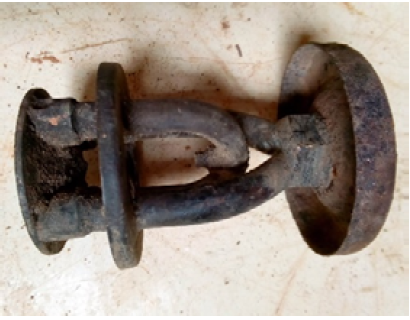
Figure 1: Kerosene Stove Burner Adapted for Ceramic Firing
Photograph Generated from the Research
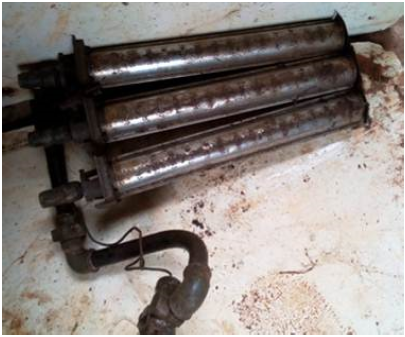
Figure 2: Triad Gas Burner
Photograph Generated from the Research
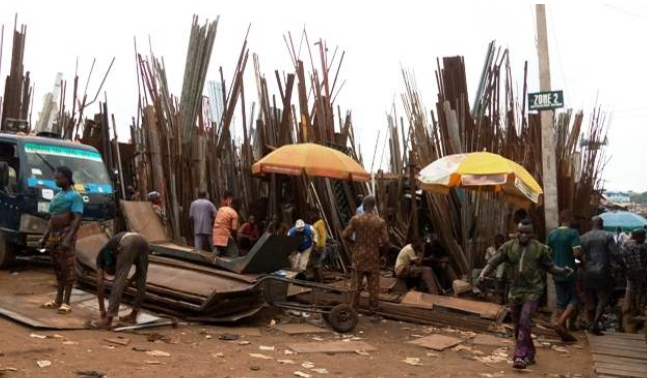
Figure 3: Divers Display of Scrap Metals at the Scrap Market, Zone 2, Agodi Gate, Ibadan
Photograph by Eyinade Dapo
However, there is apparent deficit of knowledge on fabrication and usage of pressurized kerosene steam burner, particularly among ceramic stakeholders in Oyo state and Nigeria at large [1]. Though, other burners including kerosene cooking burner and fabricated spiral kerosene burners have been unraveled, scholastically dearth on pressurized kerosene steam burner is very obviously. In view of the latter, this study considers fabricating pressurized steam kerosene burner with the goal of firing green wares to bisque. Its methodology embraced direct field survey and participatory investigation; hinging it on constructionist theory, which recognizes existential or operational strengths and weaknesses between things [22]; instanced in pressurized kerosene steam burner as a means to an end, which is firing wares to maturation. Consequently, its process and functional efficacy is advocated for in schools both at secondary and tertiary levels, particularly in Nigeria and related climes.
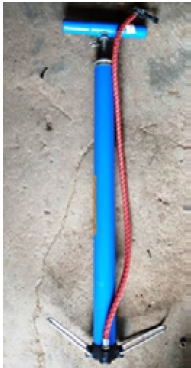
Figure 4: Manual Pressure Pump
Photograph Generated from the Research
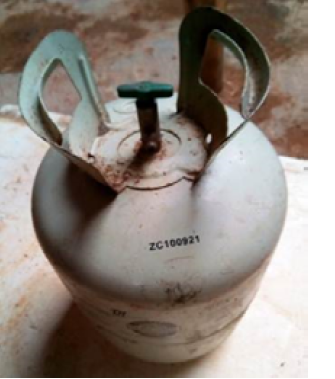
Figure 5: Scrap-Nido Gas Cylinder Bottle
Photograph Generated from the Research
Study Area, Sampling and Collection
Ibadan and Oyo Township are the study area, being the major metropolises of Oyo State with over 5 million people. Ibadan is precisely 1.4 m people, situated in coordinate 7o.24’7.0632’N latitude and 3o.55’2.3268’E, doubling as the capital city of the State. Oyo Township other hand is about 736,072 people, with coordinate 7o.51’9.25’N latitude and 3o.55’52.50’E [23,24]. The choice of the duo, significantly Ibadan was its industrial and commercial advantage, being the melting pot for marketing and sales of mechanical materials.Agodi Gate market, Ibadan was purposively patronized for its scraps availability and variety (Figure 3). Different materials categorized into three of tools, materials and equipment were sourced (Figure 4-7 and Table 1-3) for the fabrication of pressurized kerosene steam burner with heat range of about 1200°C.
Table 1: Required Materials for Fabrication Pressurized Kerosene Steam Burner
S/N
Item
Quantity
Dimension
1.
Galvanized plate
1/8 length
5×41×71 cm
2.
Galvanized pipe
1/4 length
0.4×15.2×25.4 cm
3.
Galvanized pipe
1/4 length
0.4×10×28 cm
4.
Break oil fluid pipe
1 length
0.1×0.7×76.2 cm
5.
Gas cylinder (Nido brand) or RY2
2 pieces
24×24×38.5 cm
6.
Pressure pump
1
10×20×50 cm
7.
Tire valve
3 pieces
0.7×0.9×6 cm
8.
Welding/binding iron rod
1/4 roll
0.4×100 cm
9.
Tiner
2 liters
8.5×9×10 cm
10.
Glossy paint
2 liters
17.5×18.5×20 cm
11.
Brass rod/wire
6
0.4×84 cm
12.
Caliper/compass
1
2.5×18 cm
Table 2: Required Tools for Fabrication Pressurized Kerosene Steam Burner
S/N
Item
Quantity
1.
Hacksaw
1 piece
2.
Set of flat spanner
1 piece
3.
Measuring tape
1 piece
4.
Pipe threading wrench
1 dual function
5.
Strong vice
1 piece
6.
Adjustable screwdriver
1peice
7.
Pliers
2 piece
8.
Electrode
10 gauge
9.
Angular grinder
1
10.
Brittle brush
1 size 3
Table 3: Required Equipment and Accessories for Fabrication of Kerosene Steam Burner
S/N
Item
Quantity
1.
Welding machine
1
2.
Plate bending machine
1
3.
Oxygen gas cylinder/bottle
1
4.
Acetylene gas cylinder/bottle
1
5.
Carbide cylinder/bottle
1
6.
Gauge
3
7.
Bolt and nut
24
8.
Clip
10 pieces
9.
Red hose
1roll
10.
Blue hose
1roll
11.
Flexible cable
1 roll
12.
Nipple
1
13.
Nozzle
1
14.
Torch lamp
1
15.
Tong
1
16.
Extension wire
1
Fabrication of Pressurized Kerosene Steam Burner
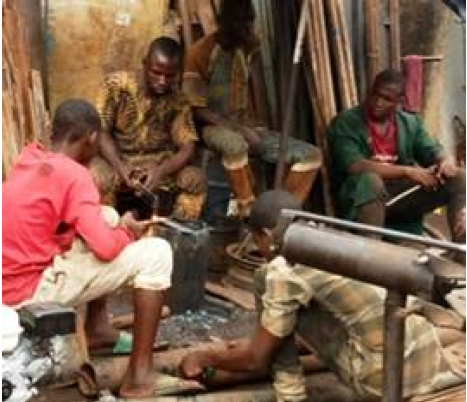
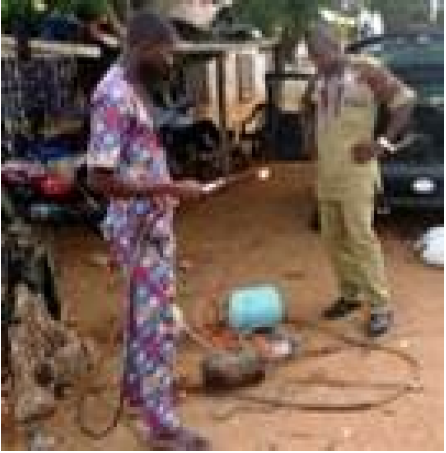
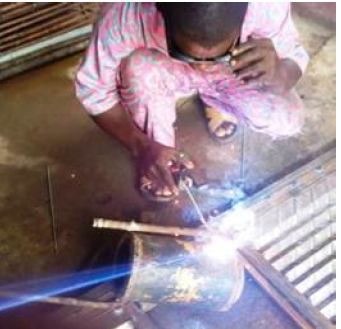
This fabrication is fundamentally categorized into four major construction stages of water pressure tank, fuel tank, steam flame jacket (comprising of flame tube and water jacket) and casing. Fabrication of pressurized kerosene steam burner requires high level of technical and visual articulation. Two approaches of arc and gas welding were employed; adopted as a result of the varying thickness of the metals required and executed in Ibadan and Oyo Township. The arc welders were contacted for the cutting and welding exercises (Figure 8-9). Details of major parts of the kerosene steam burner are discussed.
Water Pressure Tank and Kerosene Fuel Tank
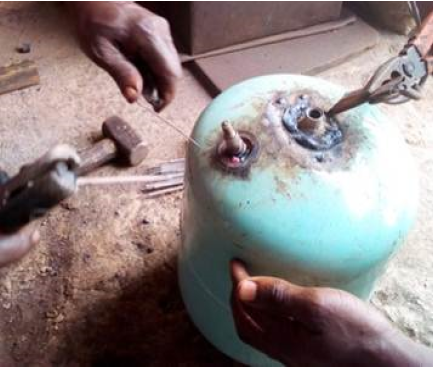
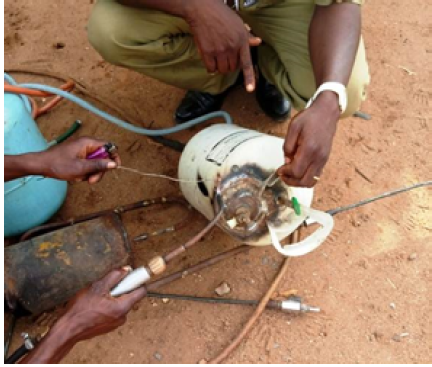
Constructions involves used/scrap-nido gas (RY2) cylinders, adopted for its strong tensile strength, weld-ability and corrosion resistance with 1.4 Maximum Pressures (MP) features. For water tank (Figure 10), an outlet projectile was created by welding a small copper pipe of 1 cm diameter and 45 cm long on the control knob that was cut out leaving a space of 0.5 cm inside the RY2 cylinder bottle. Consequently, valve inlet and knob inlet with cover were welded onto the RY2, filling the two vacuums of the initial openings. While the Kerosene fuel tank (Figure 11) had 1cm diameter by 10cm long pipe welded at the top of RY2 cylinder to serve as fuel inlet pipe and 1 cm by 10 cm pipe welded to the bottom for outlet pipe. The welding was firstly primed with iron rod and later sealed with copper rod so as to align the character of the inlet and outlet pipes which were copper to the RY2 surface. Both constructions were similar, though with slight difference in the openings on the tanks.
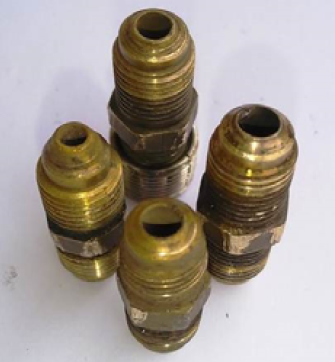
Figure 6: Connecting Screw Socket
Photograph Generated from the Research
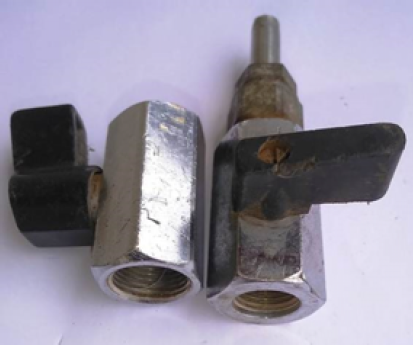
Figure 7: Octagonal Stainless Tap
Photograph Generated from the Research
Figure 8: Shift Cutting and Welding Workshop, Agodi Gate
Photograph Generated from the Research
Steam Flame Jacket
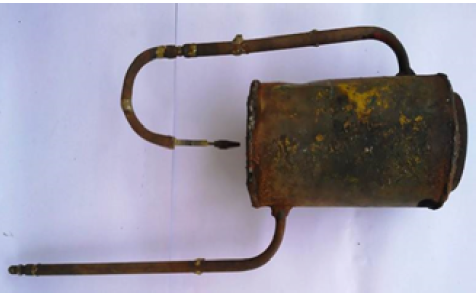
Is the engine house of pressurized kerosene steam burner because, it consisted the flame tube and water jacket, which generates steam and flame for combustion. It was fabricated through the process of cutting and welding. The materials for the fabrication of steam flame jacket were ¼ thick galvanized cylindrical steel pipes of 10 cm and 15 cm diameters, 1/16 pipe of 1.5 cm diameter and ¼ thick galvanized steel plate. Cutting was executed immediately after the measurement has been made and verified in tandem with the desired scale. About 25.5 cm was marked on 15 cm diameter ¼ thick galvanized cylindrical steel pipes and while 28 cm was also marked on 10 cm diameter ¼ thick galvanized cylindrical steel pipes as compartments for water jacket and flame tube, respectively.
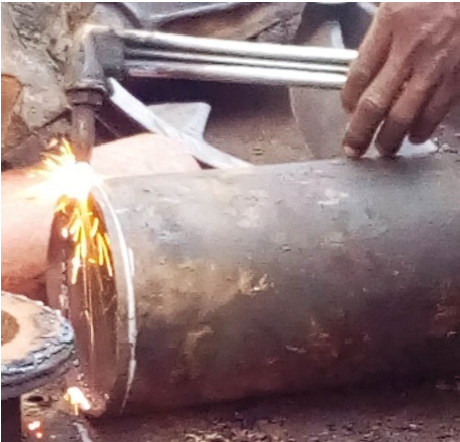
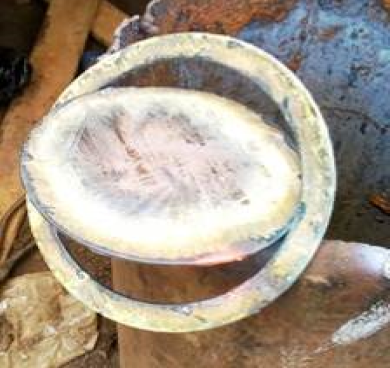
Thereafter, acetylene and oxygen gases were released into the torch lamp and its fire intensifies, regulated and appropriated to gauge 10 for 12 gauge thick pipes. Both 15 cm and 10 cm diameters pipes were consequently cut to 25.5 cm and 28 cm long, respectively from their mass chunks (Figure 12-13). For the steam flame jacket, its first stage involved the welding of the outer pipe of 15 cm×25.5 cm and inner pipe of 10 cm×28 cm with two ring plates (2.5 cm diameter×47.1 cm in circumference) at both ends of 15 cm×25.5 cm pipe leaving a 2.5 cm projectile on 10 cm×28 cm pipe. Cavity in between the sealed pipes is therefore a water jacket while the unsealed 10 cm×28 cm pipe with its projectile creates flame tube.
The second stage was construction of two openings at the front bottom and rear top of the steam flame jacket, serving as inlet and outlet points for pressured water and fuel respectively. In the third stage, 45 cm was cut from 1.5 cm diameter pipe, then bent to J shape and welded to the opening at the bottom of the jacket. A nut was welded to the other end of the inlet pipe primarily to allow joining of extension pipes from water tank and to evacuate rusting materials form the jacket. Extension pipe of 50 cm was also designed from 0.75 diameter pipe with an octagonal stainless tap at one end for controlling inflow and stoppage of water into the jacket and a nut was also welded at the other end for joining the pipe and connecting hose from water tank.
The latter is followed by the construction of outlet pipe of the steam flame jacket. The outlet was segmented into three parts that were constructed separately. In the first segment, 1.5 cm×35 cm was bent into J shape and welded on the opening created at the rear top of steam flame jacket while a nut was welded to the other end of the outlet pipe for joining the second segment and to empty rusting particles from the jacket. A hole was further drilled on the pipe with a drilling machine at a distance of about 24 cm from the jacket and 0.75 cm×1.5 cm was inserted into the drilled hole and welded onto outlet pipe. The 0.75 cm pipe was inserted into the outlet pipe primarily to allow proper setting of fuel pipe that supply fuel to the orifice, warm the fuel and allow free movement of steam into the other segments. On completion of each segment, they were screwed together with connecting screw sockets (Figure 14 and 15).
Figure 9: Gas Welding Workshop, NTC, Oyo
Photograph Generated from the Research
Figure 10: Welding of Valve and Knob on the RY2 Cylinder
Photograph Generated from the Research
Figure 11: Re-Welding the Fuel Tank with Brass Rode
Photograph Generated from the Research
Figure 12: Cutting of Circular Plates
Photograph Generated from the Research
Figure 13: 15 cm/10 cm Outer and Inner Diameters Ring Cutout
Photograph Generated from the Research
Steam Flame Jacket Casing
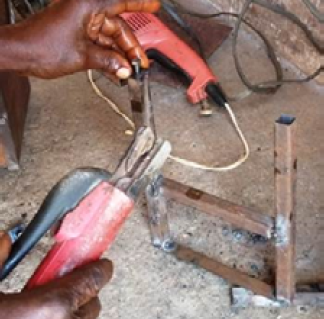
Is a rectangular box constructed in a way that it could be screwed and unscrewed for easy operation and proper functionality as against complete welded enclosure. In achieving this, half length of plate (120 cm×120 cm), bolt and nut, square pipe, tape rule, hammer, chisel, steel rule, lather machine, angle bar were employed. The metal sheet was measured and cut into various sizes of 102×60 cm, 64×24 cx, 50 cm×24 cm and 50 cm×24 cm. For stability of the steam flame jacket, a hanger was fabricated and fixed inside the casing. 1’ square pipe was cut into 24 cm, 24 cm and 20 cm and then welded together to form “H” shape. A flat bar of 22 cm long was also joined to the base of the “H” shape hanger and bolts were welded to the base of the casement for screwing the hanger (Figure 16). The fabrication exercises was consequently finished in monochromatic hue, giving a sense of unison, balance, beauty and finesse (Figure 17), see illustration in Figure 18.
Figure 14: Welding of Steam Outlet on the Jacket
Photograph Generated from the Research
Figure 15: Inlet and Outlet Pipes Combine Flame Tube Water Jacket
Photograph Generated from the Research
Figure 16: Welding of the Hanger with Electrode
Photograph generated from the research
Figure 17: Painted Fabrication
Photograph Generated from the Research
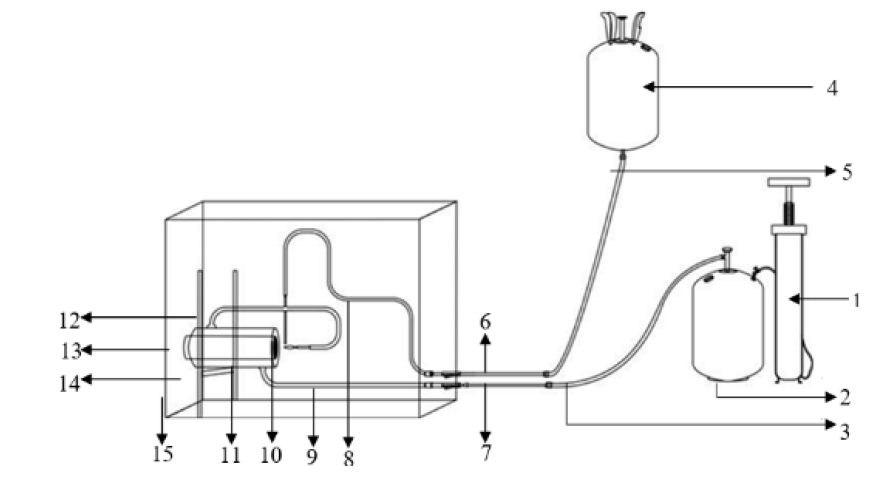
Figure 18: Simulated Illustration of the Pressurized Kerosene Steam Burner
1: Manual pressure pump, 2: Water tank, 3: Water hose, 4: Fuel tank, 5: Fuel hose, 6: Extension fuel connecting pipe with tap, 7: Extension water connecting pipe with tap, 8: Suspended fuel pipe extension for orifice, 9: Water inlet pipe extension into water jacket, 10: Orifice for blowing steam, 11: Water Jacket, 12: Steam outlet pipe from flame tube with orifice, 13: Flame tube, 14: Steam flame jacket hanger, 15. Steam flame jacket casing, Photograph Generated from the Research
Figure 19: Fixing the Cover of the Casing
Photograph Generated from the Research
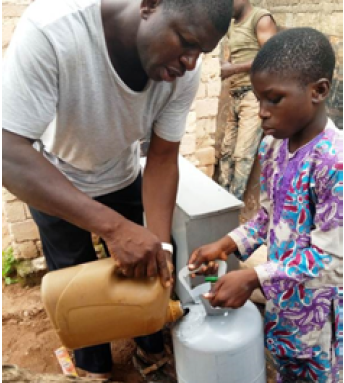
Figure 20: Pouring Kerosene into the Fuel Tank
Photograph Generated from the Research
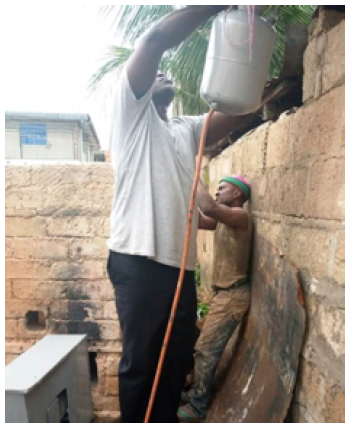
Figure 21: Suspension of the Fuel Tank on the Wall
Photograph Generated from the Research
Firing Test of the Pressurized Kerosene Steam Burner
For this exercise, various components of the pressurized kerosene steam burner prototype from rectangular housing box, combine flame tube cum water jacket, water pressure tank, kerosene fuel tank to manual pressure pump were assemble for smooth and functional operation, in a 36×36×48 cm down draught kiln. The steam outlet pipe is segmented into two to allow for adjustability of the adjoining pipe that holds the orifice. Steam flame jacket was first assembled as one piece. Then, the extension pipes connecting hoses from the inlet pressured water tank and inlet fuel tank to the steam flame jacket were screwed and clipped together. Thereafter, steam flame jacket was placed and screwed to the hanger in the casing box. All the covers of the box were later screwed and bolted at the sides and the top, ensuring that all openings aligned with their hosts (Figure 19).
Visually, the kerosene tank was designed to host a fuel inlet channel at the top edge of the tank and an outlet channel at the bottom of the tank. In testing the fuel tank, 8 litres of kerosene was bought from the filling station at the rate of N250:00 per litter. The fuel was carefully poured inside the tank through its inlet opening (Figure 20). The tank inlet knob was tentatively locked, while the transporting hose was attached to the tank outlet pipe projectile. The kerosene tank was then suspended on a wall of about 4 metres high, making its fluid content flow seamlessly and functioning optimally (Figure 21).
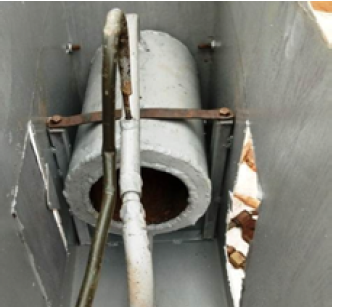
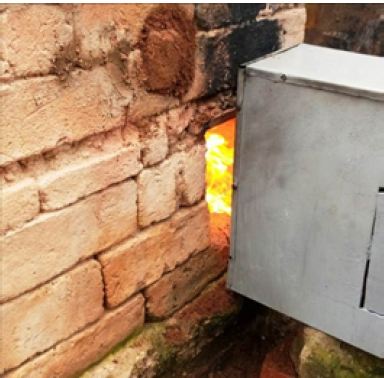
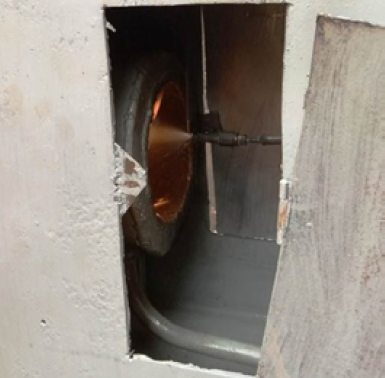
Water tank was filled almost to its brim with water through its left flank channel. The water was consequently pressurized by pumping air persistently into the tank, saturating its water content. After setting up the prototype burner, firing test commenced subsequently, first by washing the kiln with admixture of water, kaolin, sodium silicate and flint to seal openings. Thereafter, improvised props of fired bricks were set in the kiln on which the bat hosting the stalked green wares was suspended. The kiln’s door was then covered leaving two holes; one for attaching thermocouple thermometer and the other for observing the kiln chamber. The burner is ignited using sawdust to build up combustion and later aligned to the kiln’s fire box (Figure 22-23). A digitally operated thermocouple was inserted into the kiln, while its thermometer was place on the roof of the kiln for temperature monitoring (Figure 24).
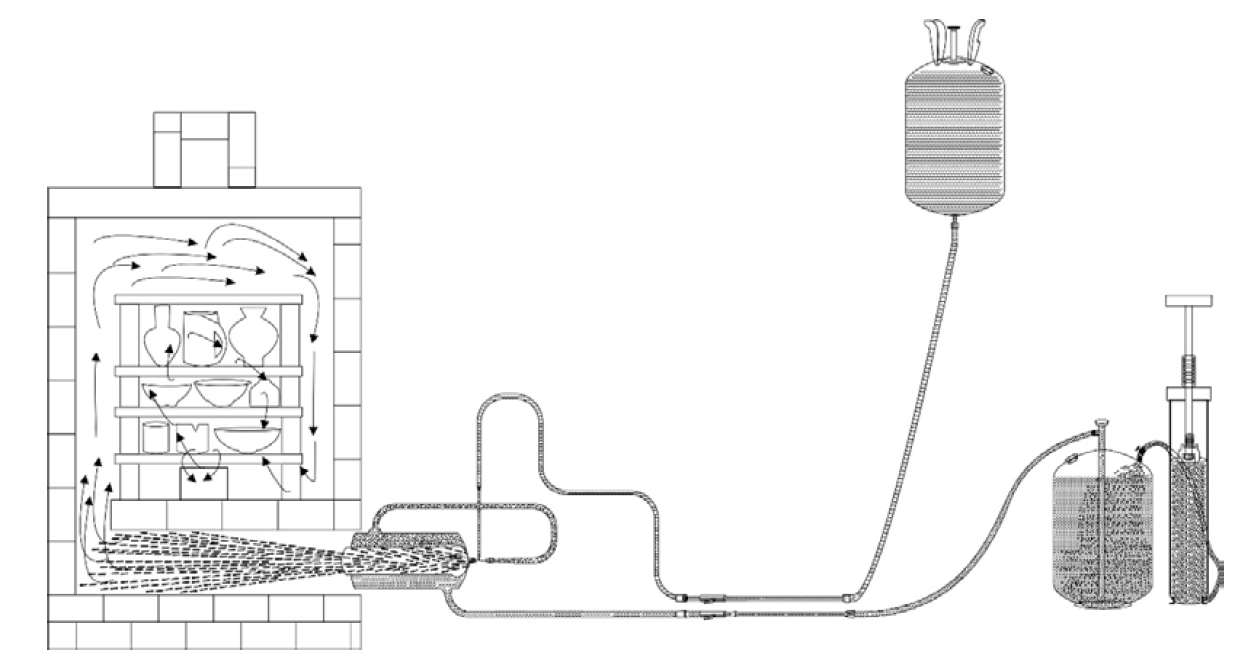
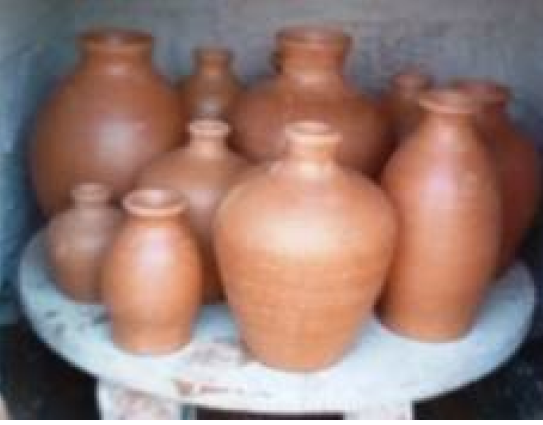
The kiln was preheated for 30 minutes at reduced firing intensity to allow gradual and proper evaporation of water from the kiln walls and wares. Then the burner was intensified by pressuring water tank from time to time (Figure 25) and controlling of inflow of water and fuel till firing to bisque maturation was observed at 963°C. All together, the bisque firing took 4 hours and 47 minutes after which the kiln was allowed to cool for 18 hours before offloading the wares (Figure 26).
Interestingly, the fabricated prototype burner only use 8 litres of kerosene at N250.00 per litre; bring the total cost of fuel used in the bisque firing to N2,000: 00, maturating in less than 5 hours at 960°C. Its combustion is effective with efficient fuel management, seamless heat flow, low carbon emission and cost friendly, in comparison with other studies on bisque firing [16,21,25,26].
Figure 22: Aligning the Steam Burner to the Fire Box
Photograph Generated from the Research
Figure 23: Regulating burner’s fire
Photograph Generated from the Research
Figure 24: Digital Thermometer Showing Kiln Temperature
Photograph Generated from the Research
Figure 25: Cross-Sectional Operation of the Installed Kerosene Steam Burner in the Kiln
Illustration Generated from the Research
Figure 26: Close up Bisque Wares in the Kiln
Photograph Generated from the Research
CONCLUSION AND RECOMMENDATION
Pressurized kerosene steam burner circumnavigates design, fabrication and bisque firing with possible operational domiciliation in Nigerian schools [27]. It prototype was fabricated using locally sourced materials from scraps market in Ibadan, Nigeria. The study, apart from contributing to sourcing and usage of locally available scrap materials in burner construction; it has significantly, showcased an instance for reducing and possibly eliminate, by adoption, problems associated with wood or gas consumption in ceramics. It findings however, is an addition to the body of knowledge, on steam burner firing in Nigerian ceramics both in academics and industries. Its significance will further be felt in tertiary and secondary institutions in particular with almost twenty-seven (27 m) million enrollments as at 1999 [27].
Base on the starling qualities of this prototype, the study recommends its adoption is post-primary schools; banking on the Nigerian governments both federal and states to mandates their educational administrators [28] on the needs to implement its use for bisque firing in schools. Going by the students’ enrollment figures in secondary schools, prospecting pressurized steam burner in schools across Nigeria will not only be a welcome idea but good thinking; a game changer in charting new course of action, particularly in catching young artistic minds early [27]. This advocacy, when fully implemented will go a long way in promoting both the millennium development goals and sustainable development goals in the country particularly, in the area of poverty eradication and brain drain, which can be adopted by other climes as hers.
REFERENCE
Agberia, J.T. “Ceramic Industry in Nigeria: Problems and Prospects.” USO: Nigeria Journal of Art, vol. 2, no. 1-2, 1998, pp. 31-42.
Akintonde, M.A. et al. “Clay, Clay Bodies and Strength: The Example of South Western Nigeria.” ARInt: Academic Research International, vol. 5, no. 3, Part II, 2014, pp. 280-291.
Akinde, T.E. “Individual Fired Brick Production in Nigeria.” JVAD: Journal of Visual Art and Design, vol. 9, no. 1, 2017, pp. 49-63.
Akinde, T.E. “Cobclay Test Viability and Introduction as Clay Body.” IJPSAT: International Journal of Progressive Sciences and Technology, vol. 30, no. 1, 2021, pp. 587-602.
Abiodun, S.O. and M.A. Akintonde. “Physico-chemical Analyses of Selected Clays in Southwestern Nigeria and Their Suitability for Ceramic Production.” IJPSAT: International Journal of Progressive Sciences and Technology, vol. 30, no. 1, 2021, pp. 636-647.
Peterson, S. Working with Clay: An Introduction. London: Laurence King Publishing, 2002.
Eyinade, A.S. “Functions of Clay Work: The Nigerian Experience.” JES: Journal of Environmental Studies, vol. 4, no. 11, 2020, pp. 94-101.
Speight, C. Images in Clay Sculpture: Historical and Contemporary Technique. New York: Harper and Row Publishers, 1983.
Abiodun, S.O. et al. “Small Scale Ceramic Industry in Oyo State: Challenges and Prospects.” Journal of Economics and Sustainable Development, vol. 4, no. 11, 2013, pp. 103-111.
Finch, J. Kiln Construction: A Brick by Brick Approach. London: A & C Black Publishing Limited, 2006, pp. 9-10.
Ibigbami, R.L. “Yoruba Pottery Firing.” Ceramic Review: The Magazine of the Craftsmen Potters Association of Great Britain, no. 61, 1980, pp. 5-7.
Gregory, I. Kiln Building. London: A & C Black Publishing Limited, 2001, pp. 1-19.
Akinde, T.E. “Wares Firing in September: Defying Odds.” Eyo: Journal of the Arts and Humanities, vol. 3, no. 1, 2017, pp. 237-247.
Akinde, T.E. “Adeta Alamoyo Algorithmic Wares Firing from Wastes.” IJPSAT: International Journal of Progressive Sciences and Technology, vol. 30, no. 1, 2021, pp. 587-602.
Cardew, M. Pioneer Pottery. London: Longman Green and Co. Ltd., 1969.
Akinde, T.E. et al. “Glazed Tiles as Floor Finish in Nigeria.” JAH: Journal of Arts and Humanities, vol. 2, no. 8, 2013, pp. 52-63.
Kaliu, R.O.R. and T.E. Akinde. “Elemental Comparison of Bones of Red Sokoto (Capra Hiracus) and West African Dwarf (Capra Aeagurus) Goats for Production of Glazes.” LAUJOUCES: LAUTECH Journal of Civil and Environmental Studies, vol. 8, no. 2, 2022, pp. 58-69.
Rhodes, D. Kiln: Design, Construction and Operation. Australia: Pitman House, 1977.
David, M.K.O. “The Design and Construction of a Portable Kerosene Pressure Cooking Burner.” Africa Research Review: An International Magazine of Ceramic Arts and Craft, issue 2010, p. 54.
Abiodun, S.O. and T.E. Akinde. “Transfer as Alternative to Direct Drawing in Yoruba Hand Built Pottery.” IJACI: International Journal of African Culture and Ideas, vol. 14, no. 5, 2014, pp. 169-186.
Kalilu, R.O.R. et al. “Ceramics: Arts and Technology in the 21st Century, South Western Nigeria.” Agege, Nigeria: Pemilter Publishers, 2006, pp. 8-45.
Wikipedia. “Constructionalism: Learning Theory.” Wikipedia: The Free Encyclopedia, 2021. Retrieved November 2021 from http://en.wikipedia.org/wiki/ constructionalism(learning-theory).
Wikipedia. “Oyo State Population.” Wikipedia, 2020. Retrieved March 2020 from https://en.wikipedia.org.
Wikipedia. “Oyo State Latitude and Longitude.” Wikipedia, 2020. Retrieved March 2020 from https://en.wikipedia.org.
Akintonde, M.A. et al. “Outdoor Pottery Sculpture in Ife Art School.” Academic Journal of Interdisciplinary Studies, vol. 4, no. 3, 2015, pp. 219-232.
Ajadi, M.O. and T.E. Akinde. “Ceramic Art Training in Art Schools of Oyo State.” Artist Journal, vol. 3, no. 2, 2019, pp. 13-27.
DPC. Nigeria Development Report: 2001. Development Policy Centre, 2002, pp. 47-70.
Salami, K.A. “Educational Administration.” Educational Management, edited by K.A. Salami et al., Odumatt Press and Publisher, 2009, pp. 1-2.
Recommended Articles
Research Article
University Students' Understanding in Scientific and Humanities Disciplines of the Principles of Sustainable Development: A Comparative Study
Amer Abdulkareem Salim Alkkhi
Published: 18/03/2026
Download PDF
Research Article
Astute Thinking and its Relation with Social Adaptation of Students in College of Education (University of Maysan)
Fadia Aboud Ramadan Jalaawi
Published: 18/03/2026
Download PDF
Research Article
Symbols of Life and Death in Lol Soyinka's Drama: A Thematic and Literary Analysis
Zaid Fouad Hashim
Published: 18/01/2026
Download PDF
Research Article
Character style in a novel throwing sparks
Maison jasim Abdullah Hussein
Download PDF
PO Box 101, Nakuru
Kenya.
Email: office@iarconsortium.org
Editorial Office:
J.L Bhavan, Near Radison Blu Hotel,
Jalukbari, Guwahati-India
Sunday, E. A., Akintunde, A. M., Emmanue, A. T. & Oladapo, A. S. (2022). Prospecting Pressurized Kerosene Steam Burner for Bisque Firing in Nigerian Schools. Scientific Research Journal of Education and Literature, 2(1), 1-8.
MLA
Sunday, Eyinade A., et al. "Prospecting Pressurized Kerosene Steam Burner for Bisque Firing in Nigerian Schools." Scientific Research Journal of Education and Literature 2.1 (2022): 1-8.
Chicago
Sunday, Eyinade A., Akintonde M. Akintunde, Akinde T. Emmanue and Abiodun S. Oladapo. "Prospecting Pressurized Kerosene Steam Burner for Bisque Firing in Nigerian Schools." Scientific Research Journal of Education and Literature 2, no. 1 (2022): 1-8.
Harvard
Sunday, E. A., Akintunde, A. M., Emmanue, A. T. and Oladapo, A. S. (2022) 'Prospecting Pressurized Kerosene Steam Burner for Bisque Firing in Nigerian Schools' Scientific Research Journal of Education and Literature 2(1), pp. 1-8.
Vancouver
Sunday EA, Akintunde AM, Emmanue AT, Oladapo AS. Prospecting Pressurized Kerosene Steam Burner for Bisque Firing in Nigerian Schools. Scientific Research Journal of Education and Literature. 2022 Jan;2(1):1-8.



 Download PDF
 Download XML