The objective of the speech compression process is to reduce the storage space required and eliminate the time required to send data while maintaining the quality of the recovered speech with agreeable human hearing perception. In this work, the enhanced speech compression scheme is effectively introduced. Enhancement filter of type Normalized Least Mean Square (NLMS) is used to enhance the noisy input speech signal, Zero Cross Rate (ZCR) is used to detect the silent sections in speech file while Discrete Wavelet Transform (DWT) is used to map speech signal to other representation (frequency domain) through the lossless encoding process, Huffman is adopted as lossless encoding operation in this scheme to obtain the compressed form of speech signal. To assess the implementation of the work Compression Factor (C.F) and Peak Signal to Noise Ratio (PSNR) are used.
Keywords
ZCR
NLMS
Lossy Compression
INTRODUCTION
Due to the large use of speech data in various fields and the rapid development of multimedia-based web applications, data compression has become a critical issue of importance for overcoming the storage and bandwidth problem used in data transmission.
Speech is considered a fundamental approach for human communication the purpose of speech compression technique is to convert the speech of human to a coded form and decrease the redundancy between neighboring samples and between the adjacent frames so it can be restored as the original signal [1]. The uncompressed form of multimedia material requires a considerable amount of capacity space and transmission bandwidth to transfer. The common goal for different compression algorithms is to reduce the required space for representation [2,3]. One of the most difficult problems facing the process of compression is how to represent the data in the smallest size and at the same time maintain the quality of the returned speech signal and for this purpose there are many algorithms that emerged in different ways but most of these algorithms relied on using transform coding, source coding or sub-band coding.
Fast Fourier transform and discrete cosine transform are examples of mathematical transformation used in transform coding. In term of source coding, Linear Predictive Coding (LPC) is a form of this type. LPC used in many algorithms of compression and a good gain in terms of compression is acquired but the recovered sound quality can be affected by this method. Splitting the input signal into number of sub-bands using the pass-band filter is sub-band coding method such as wavelet transform [4]. The idea of the wavelet transform mechanism is that the coefficients of the referred transform can reduce the cross-correlation of the input signal resulting in more efficient in term of compression gain [5].
As a survey distinct types of works have been introduced. Abduljabbar and Khaled [6] introduced a method to compress the enhanced speech signal using source coding (LPC), DCT was used as a post processing to improve the recovered speech signal, a good result was achieved from their system. Ahmed [7] used a 9/7 biorthogonal filter as a filter bank of discrete wavelet transformation followed by loosy quantization operation then using the run length encoding and shift coder as a lossless encoding technique, generally there are improvement in C.R. and PSNR which used to evaluate her work.
There are many previous works that have compared and demonstrated the effectiveness of sub-band coding on transform coding. Patil et al. [8] presented a simple scheme for audio compression based on DWT and DCT. Overall, experimental results showed that there was improvement with a DWT-based technique. Drweesh and George [9] introduced a scheme for audio coding using the Biorthogonal tab 9/7 filter of wavelet transform, quantization of type progressive hierarchal, modified RLE and at the last high order shift coding. The results showed clearly that the DWT-based method is better than the DCT-based method.
Compression System for Enhanced Speech Signal
There are many noise associated with the speech signal (additive, convolution or multiplication) and to reduce the noise associated with the signal is used optimization filters. In term of enhancement filter, NLMS is used for this purpose. A compression can be done by discarding some piece of data that not necessary to reconstruct the speech file. Actually, speech file contained many silent sections are distributed in the speech file; Identification of these sections contributes to the enhancement of the compression process and to obtain good results. Many approaches contribute to extract the silent area; Zero Crossing Rate (ZCR) is used in this work to determine these areas after isolating the silent sections. Discrete Wavelet Transform (DWT) is used as a tool for converting the samples of speech file to frequency domain. Significant reduction in the compressed file size when mixing the transformation with quantization operation and entropy coding [10], thus in this work a quantization of type uniform is used to eliminate the number of fraction right to the point and Huffman Encoding is used as a type of entropy coding to produce the compressed speech file.
Adaptive Filter
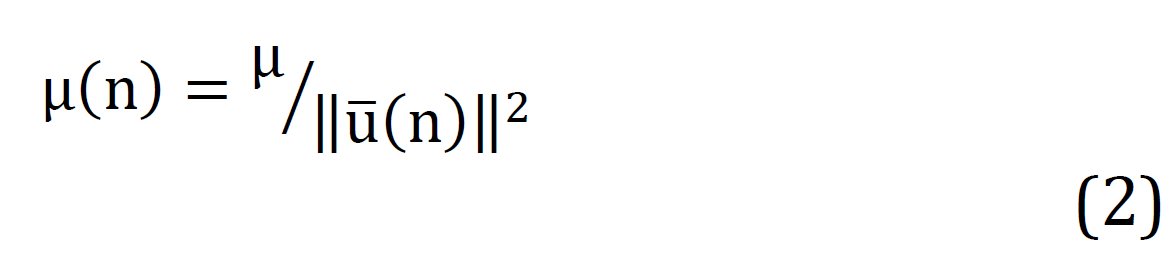
In term of adaptive filter NLMS is used, this filter is improved from standard LMS algorithm in Prejna and Subrayal [11], where the coefficients of the filter are adjusted as described in equation [12,13]:
Where:
This equation explains that the difference between the standard LMS algorithm and NLMS algorithm lies in time-varying step size µ(n) of NLMS algorithm led to benefit to enhance the convergence speed of an adaptive filter.
Zero Cross Rate
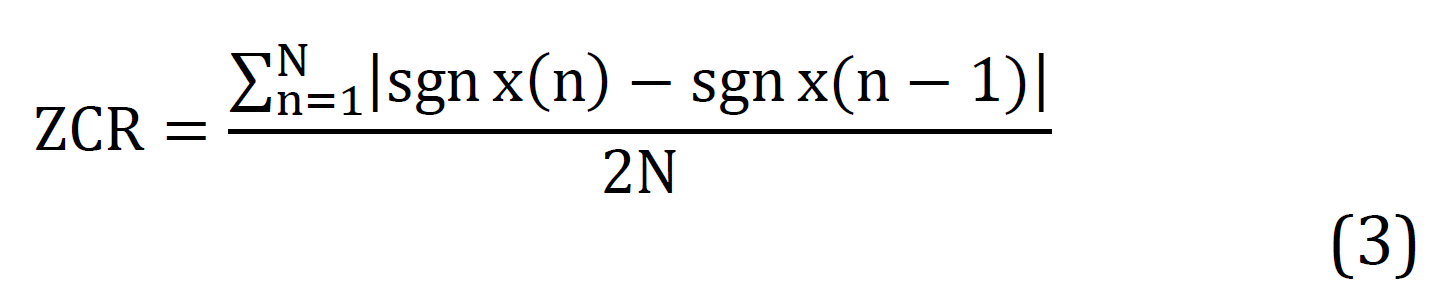
The number of amplitude of the speech signal passes through a value of zero in the frame is referred ZCR. A zero crossing appears when consecutive samples have different algebraic signs. ZCR is defined in the equation [4,14]:
where, sgn is the signum function and N is the number of samples in the frame.
In fact, the speech signal file contains unvoiced regions and the speaker wasted some time nearly the first 200 msec in the beginning of the recording speech [5], this feature can be exploited for analyzing the input signal to isolate the voiced area and threshold value must determine to indicate the voiced frame.
Discrete Wavelet Transform
The DWT is a powerful technique for decomposition the input signal into approximation and detail wave forms. Decomposition the input signal contributes to increase the efficiency of compression process by identifies pieces of components have zeros or smalls values and throwing away them [15,16]. Haar wavelet is used in this scheme.
Quantization Operation
It’s a lossy operation, by this process all coefficients are mapping to integer representation and by this way reducing the number of bits required to represent the coefficients. Quantization with specific factor is the major operation which decides the quality-compression ratio trade-off in all lossy compression systems [17], thus determining the required factor is very critical issue.
Entropy Coding
The result of the previous operation is a runs of zeros number so there is a necessity to use one of the lossless technique. The operation of changing the elements of data with coded representations is called entropy encoding, which is a type of lossless coding [10]. Huffman coding is used in this paper for coding technique. It's a variable-length encoding technique. The basic concept is to specify a code with a different length of input depending on the frequency of those inputs [18].
The Work Flow of Presented System
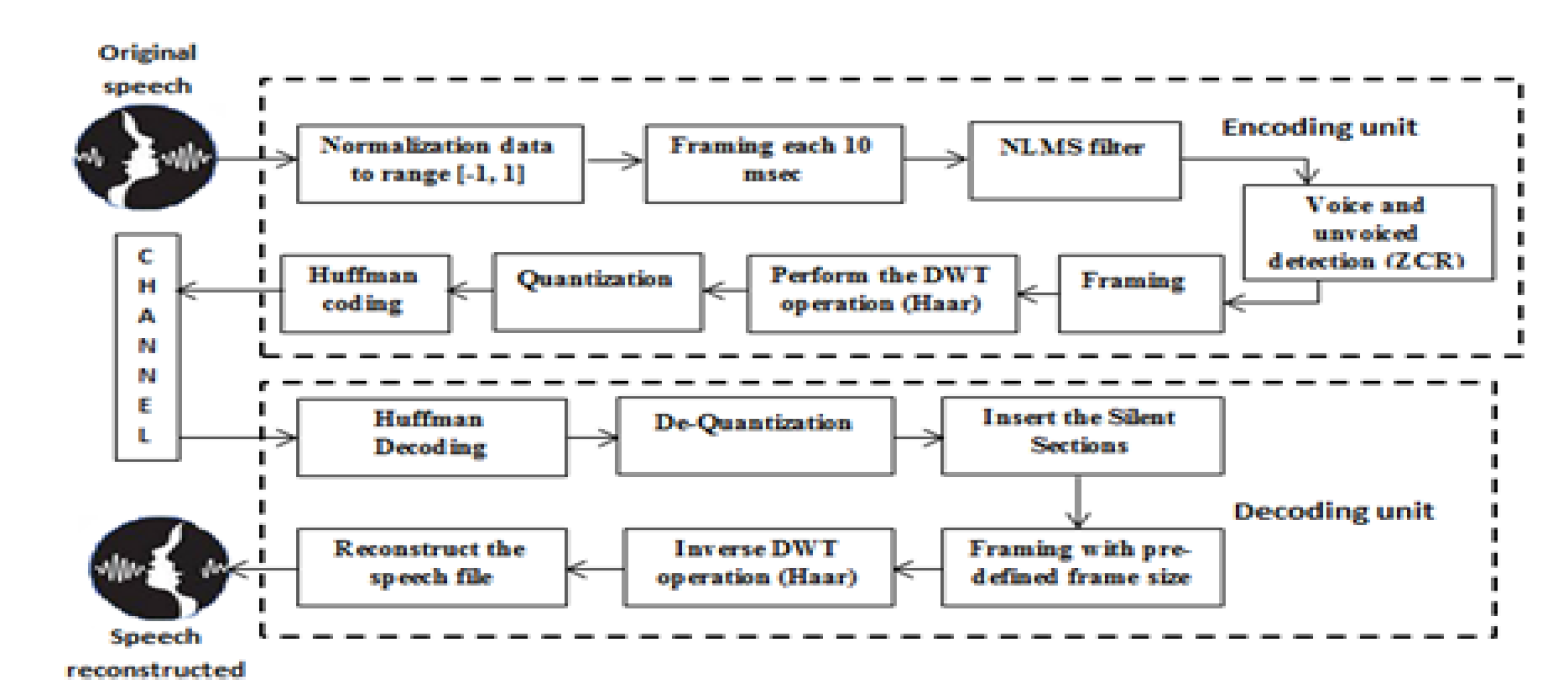
Encoding and decoding units are the constituent units of the proposed speech compression system; Figure 1 characterizes the general structure of the proposed system.
Encoding Unit
Pre-processing and phases operations involved in encoding unit, each phase is clearly described.
Pre-Processing Stage Consists of the Following Steps
The process of reading the speech file in which the data part is isolated in the vector V and extracting the specification information implicitly in the header of the file.
Figure 1: Encoding and Decoding Units in Presented System
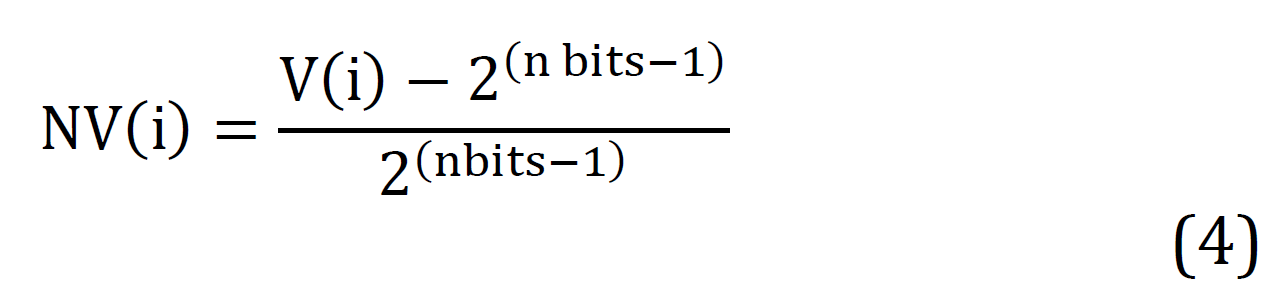
Each sample in V is normalized to the range [-1, 1] depending on the following equation:
Where:
NV(i) : The ith sample of speech file after normalization process
V(i) : The ith sample of speech file before normalization process
nbits : Number of bits per samples
Each 10 ms is isolated as a frame, this process of framing considered as a preparing step for isolation the voiced area in speech file. When the input is an additive noisy signal an enhanced operation is applied using adaptive filter of type NLMS as demonstrate in previously. Indicate the voiced frame by specifying a threshold value; in this work the threshold equals to 0.19. For each 10ms the ZCR is calculated and the frame is determined voiced when the number of sign exchanges is less than threshold value. The importance of this step is to recognize the voiced frames only for use in the next processing. A vector called VF is used to save all the voiced frames in it.
Processing Stage
This stage involves performing operations on the audio part of the human hearing system as describe:
To obtain the frequency representation for the voiced vector, the DWT is applied using Haar filter. The frame size used to perform the DWT operation is 256
Convert the DWT coefficients into integer representation by limit the number of digits in the coefficients right of decimal point is a very important operation and this contributes to reducing the space required for storage. Rounding operation with specific factor is adopted; the factor is determined using try and error method
The process that is executed previously increases the number of zeros; Huffman coding is used as entropy coding to reduce the long runs of zeros. The output is saved as a compressed file
Decoding Unit
As shown in “Figure 1”, the first step in this unit is Huffman decoding to return values which are encoding in encoding unit after that De-quantization with a the same quantization factor used in encoding unit, then insert the silent areas which are isolated in encoding unit using ZCR; to apply the IDWT operation framing operation must applied firstly with the same frame size used in encoding unit, finally reconstruct the speech file to produce the decompressed form of the compressed speech file.
RESULTS AND DISCUSSION
This part concentrates on presenting and studying the results of tests to evaluate the performance of introduced compression scheme. Compression Factor and Fidelity Criteria (PSNR) are used to evaluate the performance of the suggested speech lossy compression system:
Where:
nb : bits per sample
s1n : The original speech signal
s2n : The reconstructed speech signal
N : The total number of samples
Table 1 shows the characteristics of the speech files which were adopted in the proposed system.
From Table 2 and 3 we can observe the effect of ZCR on the test results of speech samples. Results show that C.F increases when ZCR is used where the size of data sent from the encoder to the decoder is smaller in this case and at the same time an enhancement in the quality where the PSNR values increase.
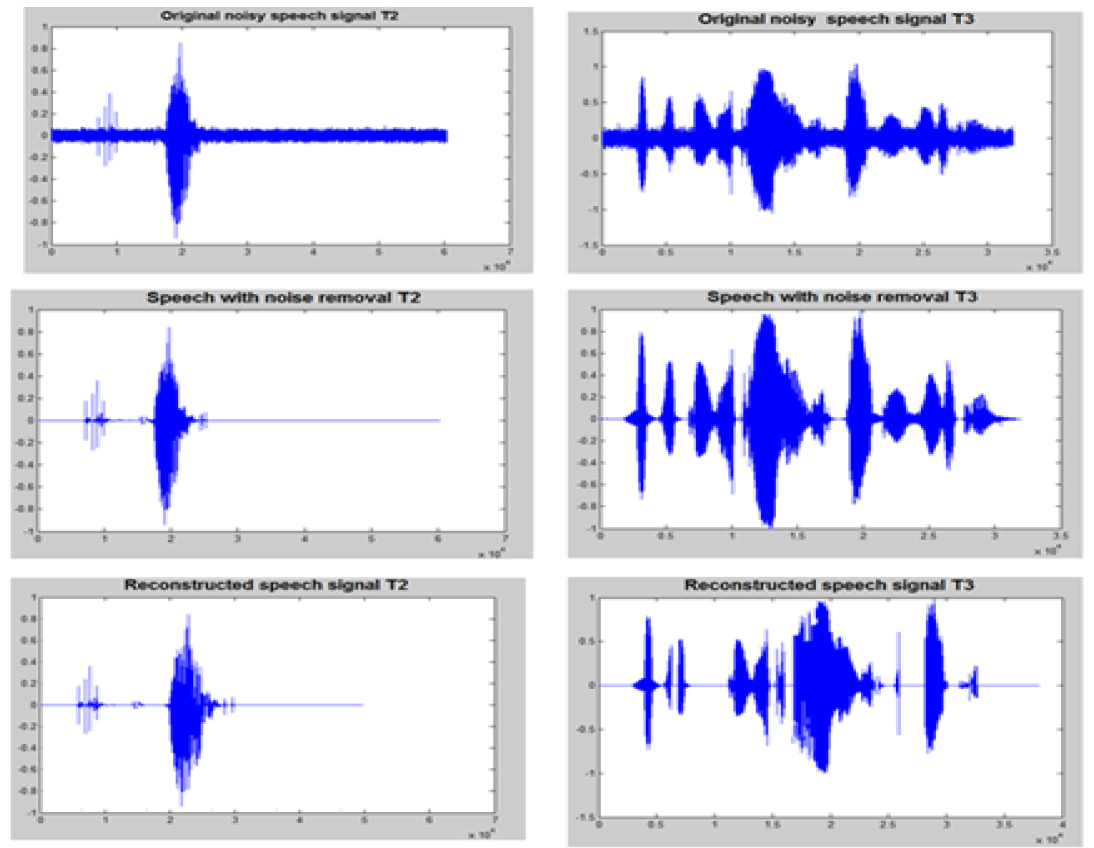
As shown in Figure 1 the input signal is a noisy signal and the NLMS filter is used to enhance the additive noisy speech signal and the effects of filter is very obvious as described in Figure 2, then the enhanced signal is compressed by the introduced scheme. This method gives promising results when the speech signal contains more silent areas.
Figure 2: Speech Samples Used in Presented System
Table 1: Characteristics of Speech Files
Speech File
Characteristic
Sampling Rate (Hz)
Sample Resolution (bps)
Size (KB)
Speech Type
T2.wav
20000
16
39
One word
T3.wav
16000
16
74.4
Conversation
Table 2: Use The ZCR in Encoding Unit
Speech File
C.F
PSNR
T2.wav
7.44
36.6
T3.wav
4.62
35.1
Table 3: Without Using The ZCR in Encoding Unit
Speech File
C.F
PSNR
T2.wav
5.32
35.5
T3.wav
4.02
34.8
CONCLUSION
In this paper, compression method based on ZCR had been presented and the NLMS filter is used to enhance the additive noisy speech signal, two speech files was used with different characteristics, the same algorithm implemented with and without ZCR where the CF increase when ZCR was used with the increase in PSNR values. As long as the efficiency of this algorithm depends on the presence of silent parts in the speech signal, the results depend on the file being compressed in terms of whether or not it contains silent parts.
Acknowledgment
The author’s thanks the "Department of Computer Science", "Collage of Science", "Mustansiriyah University", for supporting this work.
REFERENCE
Chelali, F.Z. et al. “Wavelet Transform for Speech Compression and Denoising.” Proceedings of the 6th International Conference on Multimedia Computing and Systems (ICMCS), 2018, pp. 1-7.
Tsegaye, A. and G. Tariku. “Audio Compression Using DWT and RLE Techniques.” American Journal of Electrical and Electronic Engineering, vol. 7, no. 1, 2019, pp. 14-17.
Abd-Elhafiez, W.M. et al. “An Efficient Color Image Compression Technique.” TELKOMNIKA Telecommunication, Computing, Electronics and Control, vol. 18, no. 4, 2020, pp. 2371-2377.
Lokhande, N.N. et al. “Voice Activity Detection Algorithm for Speech Recognition Applications.” IJCA Proceedings on International Conference in Computational Intelligence (ICCIA 2012), 2011.
Saha, G. et al. “A New Silence Removal and Endpoint Detection Algorithm for Speech and Speaker Recognition Applications.” Proceedings of the 11th National Conference on Communications, January 2005, pp. 291-295.
Abduljabbar, Z.S. and N. Khaled. “Speech Enhancement Based Compression Method.” Network and Complex Systems, vol. 8, 2018, pp. 10-16.
Ahmed, W.S. “Audio Compression Using Biorthogonal Wavelet Transform.” International Journal of Scientific & Engineering Research, vol. 4, December 2013, pp. 426-430.
Patil, M.V. et al. “Audio and Speech Compression Using DCT and DWT Techniques.” International Journal of Innovative Research in Science, Engineering and Technology, vol. 2, May 2013, pp. 1712-1719.
Drweesh, Z.T. and L.E. George. “Audio Compression Using Biorthogonal Wavelet, Modified Run Length, High Shift Encoding.” International Journal of Advanced Research in Computer Science and Software Engineering, vol. 4, August 2014, pp. 63-73.
Ezhilarasan, M. et al. “A New Entropy Encoding Technique for Multimedia Data Compression.” Proceedings of the IEEE International Conference on Computational Intelligence and Multimedia Applications, vol. 4, 2007, pp. 157-161.
Prejna, K. and R. Subrayal. Metaheuristic Applications to Speech Enhancement. SpringerBriefs in Speech Technology, 2016.
Mousa, A. et al. “Speech Signal Enhancement Using Adaptive Noise Cancellation Techniques.” Canadian Journal on Electrical and Electronics Engineering, vol. 3, 2012, pp. 375-383.
Chhikara, J. and J. Singh. “Noise Cancellation Using Adaptive Algorithms.” International Journal of Modern Engineering Research, vol. 2, 2012, pp. 792-795.
Khan, A.U. et al. “Hindi Speaking Person Identification Using Zero Crossing Rate.” International Journal of Soft Computing and Engineering, vol. 2, July 2012, pp. 101-104.
Li, Z.N. et al.Fundamentals of Multimedia. 2nd Ed., Springer, 2014.
Petkar, H. “Speech Compression Using Wavelet Transform.” IOSR Journal of Computer Engineering, vol. 19, May-June 2017, pp. 33-41.
Bocharova, I. Compression for Multimedia. Cambridge University Press, June 2012.
Uthayakumar, J. et al. “A Survey on Data Compression Techniques: From the Perspective of Data Quality, Coding Schemes, Data Type and Applications.” Journal of King Saud University - Computer and Information Sciences, in press.
Recommended Articles
Research Article
Some Properties of Fuzzy g-Regular Spaces
Hassan Abid Al-Hadi Ahmed,
Noor Al-Huda A. Haider
Published: 10/12/2025
Download PDF
Research Article
Predictive Security Analytics for Large-Scale Multi-Tenant Linux Shared Hosting Environments: An Empirical Study
Ayad A. Yass
Published: 25/02/2026
Download PDF
Research Article
Harnessing Nanotechnology to Conserve Energy in Buildings
Nada S. Abdulmajeed
Published: 30/10/2022
Download PDF
Research Article
Sentence Representation using LSTM for Question Retrieval
Khanh-Linh Dinh,
...
Thi Hang Dao
Published: 30/12/2022
Download PDF
PO Box 101, Nakuru
Kenya.
Email: office@iarconsortium.org
Editorial Office:
J.L Bhavan, Near Radison Blu Hotel,
Jalukbari, Guwahati-India
Abduljabbar, Z. S. (2023). The Effect of ZCR on Enhanced Speech Compression Method. Scientific Research Journal of Engineering and Computer Sciences, 3(2), 1-5.
MLA
Abduljabbar, Zinah S.. "The Effect of ZCR on Enhanced Speech Compression Method." Scientific Research Journal of Engineering and Computer Sciences 3.2 (2023): 1-5.
Chicago
Abduljabbar, Zinah S.. "The Effect of ZCR on Enhanced Speech Compression Method." Scientific Research Journal of Engineering and Computer Sciences 3, no. 2 (2023): 1-5.
Harvard
Abduljabbar, Z. S. (2023) 'The Effect of ZCR on Enhanced Speech Compression Method' Scientific Research Journal of Engineering and Computer Sciences 3(2), pp. 1-5.
Vancouver
Abduljabbar ZS. The Effect of ZCR on Enhanced Speech Compression Method. Scientific Research Journal of Engineering and Computer Sciences. 2023 Jul;3(2):1-5.



 Download PDF
 Download XML