Challenges faced by primary school teachers in rural villages of Barishal division in Bangladesh during Covid-19 Pandemic: Online classes perspective
Hazrat Ali
1
,
Eliash Kanson
1
,
Karimul Alam
1
1
Lecturer, Department of Business Administration, School of Business and Economics, University of Global Village, 874/322 C and B Road, Barishal, Bangladesh
The whole world is now buffering for the COVID 19 pandemic. Bangladesh is not beyond that. The COVID 19 pandemic began in November 2019 in Wuhan, Hubei, China (COVID-19 pandemic-Wikipedia, 2022). In Bangladesh, this COVID 19 virus was identified in the human body on 8th March 2020 (IEDCR, 2020). To arrest the mass outbreak of this virus along with observing this pandemic situation, The Government of Bangladesh had decided to shut down all educational institutions from 18 March until 13th September in 2021. As a consequence, Bangladesh's public education system, like that of most other countries throughout the world, has been severely impacted by the covid-19 pandemic. To mitigate the loss of the students and keep going on education, the government of Bangladesh decided to implement an online education system without physical attendance in classes. This pandemic has a huge impact on every aspect of human life from day-to-day life to the economy of the whole world. As a result, the way of the education system of Bangladesh has been changed dramatically like any other country in the world. The whole world is now moving towards an online education system. This online education system has some positive and negative aspects. The objective of this study is to explore the challenges faced by teachers, especially primary school teachers in rural areas of Bangladesh while conducting online classes. This study is conducted in the Barishal division of Bangladesh during COVID 19 pandemic from the year 2020 to 2021. This study identifies and explains the challenges faced by the primary school teacher in the Barishal division of Bangladesh while conducting online classes. This is a qualitative study and exploratory in nature. The purposive sampling procedure was used to select the 30 respondents of the study. The respondents were primary school teachers of rural villages from different primary schools of the Barishal division of Bangladesh. The semi-structured in-depth interview method was used to collect Primary data extending from 30 to 45 minutes. The collected data were analyzed using the thematic analysis method and six themes were developed. (Familial Support as a Determinant of Women Career Development: A Qualitative Study, 2020).
Keywords
Covid 19
Pandemic
Challenge
The primary school teacher
Online education
Rural Village
Barishal Division
Bangladesh
INTRODUCTION
The world is embracing such an outbreak of COVID 19 which has overtaken all the previous records of history. This disruptive pandemic has changed various aspects of human life. COVID 19 is a serious infection caused by the SARS COV-2 coronavirus, which began in the Chinese city of Wuhan and since then has spread to each and every continent on the planet [1,2]. The COVID-19 pandemic has impacted the global world, including health, academia, commerce, and tourist industry (When Education Faces the COVID-19 Pandemic, 2020) and has been proclaimed a major outbreak by the World Health Organization (WHO). Nothing about this pandemic is predictable.
Yesterday's preconceptions and embrace of the ordinary are still no longer true today. We can't think about it anymore. We were pushed into a circumstance for which we were unprepared and determined. While most areas of the economy have taken a massive hit, education has held up pretty well. We owe a lot of success to the virtual learning approach, which has allowed crucial players to stay connected and keep the process continuing.
This online method of education has a huge impact on the people and activities around the world [3]. This study focused on Its significance in the vital domain of education and challenges faced by the stakeholder, especially in primary level education. Due to the lung infection posed by the COVID-19 pandemic, most governments banned any in-person interactions, including in schooling [4]. Many countries have decided to discontinue schools, colleges, and universities owing to the increasing transmission of the COVID-19 outbreak and increased morbidity and mortality worldwide.
The Institute of Epidemiology Disease Control and Research (IEDCR), Bangladesh's epidemiology institute, confirmed the first three cases of Covid-19 on March 8, 2020, and the first death occurred on March 18, 2021 [5]. The number of reported cases has increased over time from the very first diagnosis of Covid-19 patients. To combat the virus's mass spread, the Government of Bangladesh (GoB) has declared a lockdown that will begin on March 26, 2020. The Ministry of Primary and Mass Education (MoPME) decided to close primary and secondary schools from March 18 to March 31, 2020, a decision that was then prolonged until September 11, 2021.
Students' studying was disrupted by the shutdown of educational establishments, particularly in countries where internet connections are inadequate or teachers and students lack crucial resources such as computers (When Education Faces the COVID-19 Pandemic, 2020). Many states have adopted the web-based learning approach in their educational establishments during the COVID-19 epidemic that has ravaged the planet. Some Bangladeshi educational establishments chose digital learning systems, while others were unable to launch their online teaching process. From the very beginning of this pandemic, particularly in remote areas of Bangladesh, especially in Primary and secondary level education. Those students in urban areas could continue their academic activities. Those living in tiny villages in rural areas, on the other hand, could not afford this web-based learning method due to a shortage of gadgets and proper internet access [6]. As a result, the teachers living and teaching in schools in remote areas faced difficulty in engaging all the students in academic activities. Educators were forced to create an innovative teaching approach that necessitated more Technological and pedagogical instruction [7,8]. For many teachers who have been focusing on traditional teaching and learning, this is a big issue [9]. Teachers who are used to interactive technology, on the other hand, may be able to easily adjust to online instruction, according to studies [10]. Furthermore, teachers' perceptions and understandings of interactive learning theories and practices influence their perspectives on how to implement various learning activities in the classroom [11]. The pandemic has demanded online education, which has been forced upon many people who are not only unfamiliar with it but also dislike it. Conventional methods of teaching were replaced with increasingly technology-intensive and sophisticated online platforms as social isolation and lockdown became popular public policies to combat the development of this infamous disease. National education suspensions imposed in the backdrop of COVID-19 impacted 1 7.6 billion pupils globally, as shown in a UNESCO report. Instructors and learners had to change their methods of instruction quickly in response to the pandemic, irrespective of whether or not they were comfortable with digital education [12]. The only option to overcome the pedagogical disaster that is spreading around the world as a consequence of the epidemic is to use the online teaching-learning process [13]. Meanwhile, other students were exposed to the new online style of education for the very first time, while others who had previously worked in this sector were confronted with complete online tests and lectures for the first time [3].
Online Education During the COVID-19
Online education is the term that is most familiar nowadays. The whole world was dependent on online education to the fullest during COVID 19 pandemic. In the study of Urban and Weggen, we found that Web-based teaching, e-learning; distance learning, net-based learning, web-based instruction, cyber learning, virtual learning, and internet-based learning are all examples of online education [14]. Computer-based learning, web-based learning, virtual classrooms, and digital collaborations are only some of the technology applications and learning processes used in online education [14]. Another study propounds that the direct application of technology in education, work, and relaxation has far outpaced educational experts' theories and suggestions. The use of communication and information technology in education has advanced since the development of the Internet in the 1990s. The availability of technological tools and communications devices, as well as Internet connectivity and reliability, as well as the aspirations of generations raised on technology from infancy, are likely to have a significant impact on new educational pathways. Virtualization of education has launched a new chapter, and it is becoming a component of education, job, and pleasure [15]. Besides the ongoing online education system, there was a lot of research and study conducted to enrich the system of online education. As a result, a new avenue has been opened to this system of online education which is termed blended education/blended courses. A blended education system that combines live, Web-based, and interactive classroom learning sessions are available [16]. When compared to face-to-face courses, blended learning appears to play a significant influence in improving student achievement and satisfaction as well as improving student sense of community [17]. One of the benefits of blended learning is that it reaches out to suburban and rural areas that would otherwise be excluded from learning innovation. Blended learning is also popular since it eliminates the need for students to spend years away from home, making it more affordable for many aspiring students. Because it integrates face-to-face and online teaching methods based on the learning objective, it has a lot of resources [3].
METHODOLOGY
The aim of the study is to explore and explain the challenge faced by primary school teachers in Bangladesh, especially in the Barishal division. A qualitative approach was used in this study to understand the context deeply.
The study was exploratory in nature and was conducted during the COVID 19 pandemic from 2020 to 2021. Barishal, a city that resided in the southern part of Bangladesh was selected as the study area [18]. The article's 30 respondents were selected through purposeful sampling [19].
An in-depth interview technique was used to collect primary data for this study. A semi-structured way was followed in this study’s in-depth interview. The most common form of data collecting in qualitative research is semi-structured interviews, was used in this study so that the study is able to explore participants’ perceptions regarding the challenges they face in conducting online classes in this COVID 19 pandemic [20]. Respondents in semi-structured interviews are allowed to voice their thoughts on pre-determined topics; as a result, it is possible to increase the richness and diversity of responses [21].
The duration of the interviews was 30 to 45 minutes. Each and every interview was recorded through an audio recording device and the interviews were fully transcribed in the next step. Translating data is widely recognized as an important aspect of qualitative analysis since it provides deep meaning and understanding into the obtained data [22]. Following that, the data from interviews conducted was evaluated using the thematic content analysis approach. Under thematic analysis, the transcript was studied repeatedly and different patterns were identified. The interviewees' individual impressions and interpretations were then categorized into a variety of themes and sub-themes, providing for a more in-depth examination of their experiences and perceptions and interpretations [20].
At the very beginning of the interview procedure, each and every respondent was asked for their opinion and all of them participated voluntarily in this research activity. They were assured that their identity will be kept confidential and their responses will only be used for the sole purpose of academic research. Pseudonyms were used to keep the identity of the respondents confidential, and the numbering system was used as Respondent 1, 2, 3, 4, 5… 30 all through the duration of the research [20].
Data Analysis and Findings
In conducting online classes Most of the teachers of the primary school faced a lot of challenges according to the response of respondents. There are six themes identified through this study. These themes are analyzed in the female tick thematic analysis method in the next steps. These themes are technical Skills, digital study material, internet connection, inadequate monitoring of discipline, students engagement problem, problems of tracking students’ progress (Table 1).
Technical Knowledge
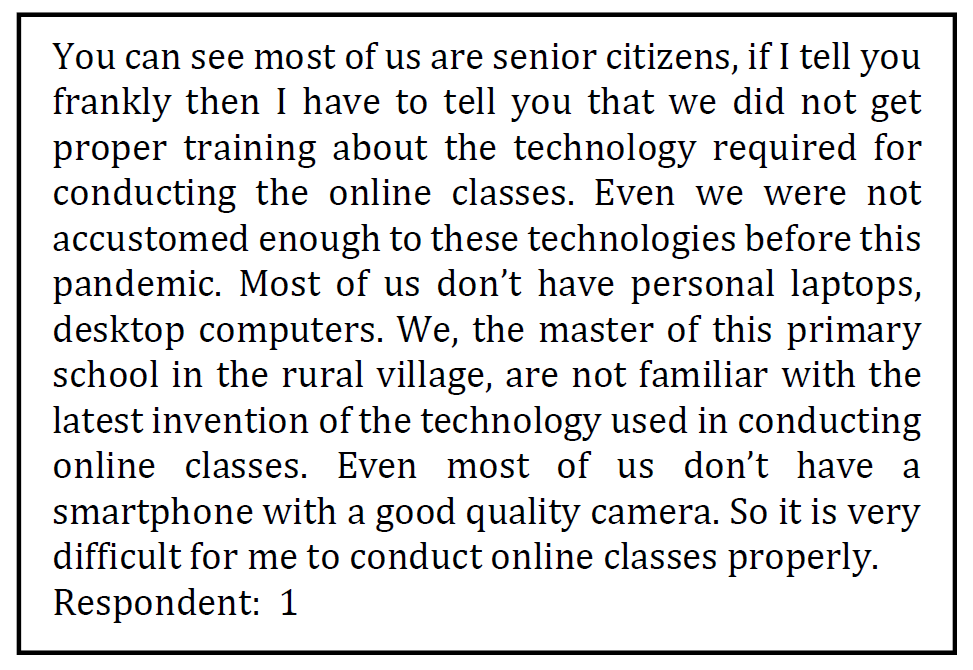
Most of the respondents mentioned that technical skills are a major factor in conducting online education. Technical knowledge is the most important factor which has become a significant challenge for them. Most of the teachers in the rural areas of Bangladesh are not accustomed to the technologies used in conducting online classes basically in the Barishal division, they are not aware of these technologies even though they do have enough training about these technologies. Teachers, especially primary school teachers in rural areas of the Barishal division in Bangladesh faced considerable difficulty to cope with the technologies used in conducting online classes as they have a little bit of knowledge about information technology. Conducting virtual classes is totally different from physical classes because to make a meaningful virtual class a lot of knowledge is required in respective fields of technologies. Besides, most of the teachers in primary school are senior citizens; even they don't have proper basic knowledge of using computers. This aspect of technology is a big challenge faced by the primary school teachers in rural areas of Barishal that represent similar pictures of the primary school teacher in rural areas of the whole country to some extent.
Few respondents possess very limited knowledge and skills in computers and other information technology.
Digital Study Materials
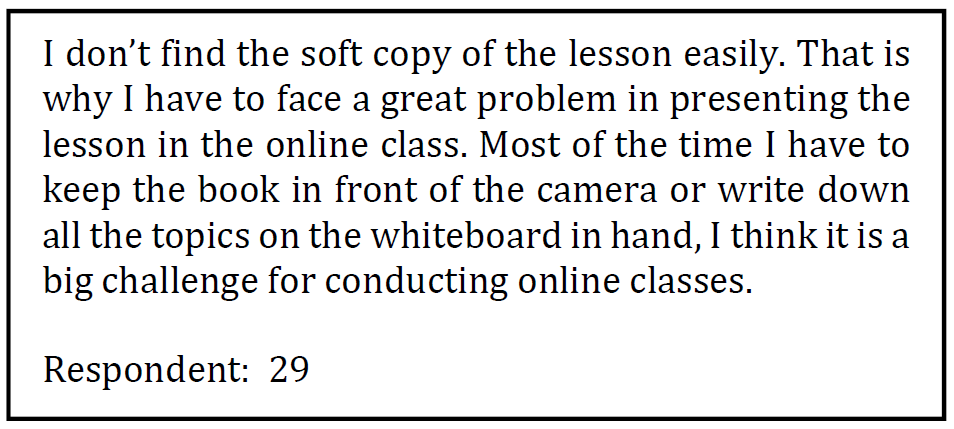
For effective implementation of the online education system, digital study material is very necessary for the teachers irrespective of any educational institutions. Due to inadequate technological knowledge and training deficiencies, most primary school teachers cannot get access to relevant digital course material. They don’t have internet literacy well enough to access and use digital study material from different websites and learning portals. They faced considerable difficulties in making the digital format of course material, course sub lessons using software like PPT, Excel sheet, PowerPoint, etc. Most of them don't know about using the E-library.
Internet Connection
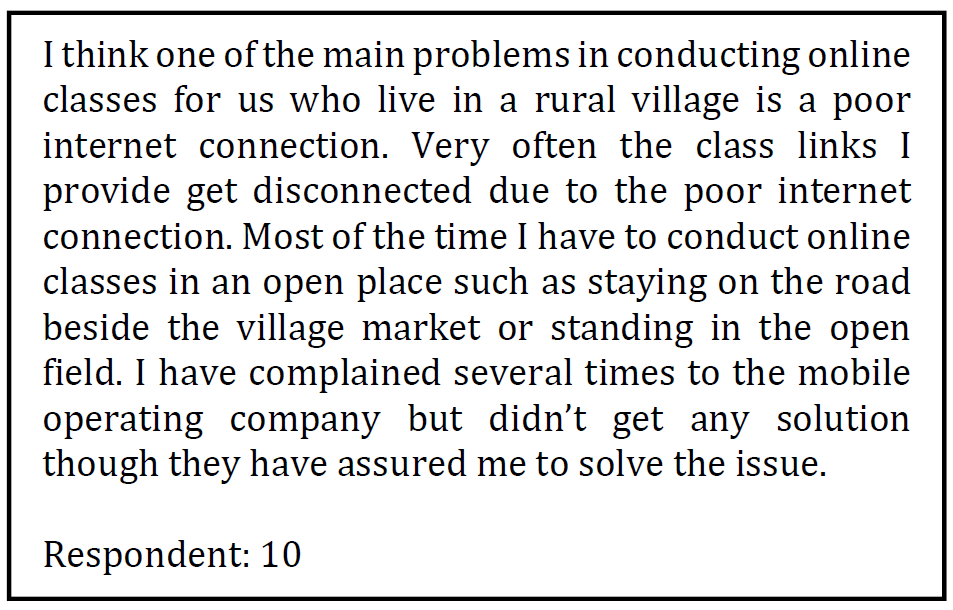
Internet connection is mandatory in running a smooth online education system. For this purpose teachers as well as students have to use broadband connections or mobile data. Since the broadband connection is not available in all rural areas, teachers have to depend on mobile data for the purpose of taking online classes and doing other academic activities. However, cellphone data is frequently unreliable. Due to poor network coverage, it is so difficult for the teachers in rural areas of Barishal in Bangladesh as well as to attend the class for the students. It is a big challenge for the primary school teachers in the Barishal division of Bangladesh. Most of the respondents claimed that they don’t get access to the connection due to the limitation of internet service providers in the rural areas of the Barishal Division. Very Few internet service providers are operating in the rural areas of Barishal Division in fact they charge very high rates for this service even though the speed of the bandwidth is very slow. As a result, they can get access to the software through which they have to conduct classes such as Zoom, Google Meet, and other platforms. In the meantime buffering on the net connection causes the teacher communication to be so unstable that the link of the class given to the students gets disconnected. Most of the time the students can't join on the class link as well. That's why it is difficult for the teacher to make all the students understand the same topic at the same time. This hinders the progress of the study. The teachers in the rural areas have run over here and there to manage good net connections through mobile data. The charge of the internet service provided by the mobile operator is very high which is very challenging for the teacher to afford through their limited income.
Large parts of the respondents are disappointed about the quality of the internet connection. They insisted that poor internet connection and low bandwidth is a tremendous problem in conducting online classes in rural village resident primary school teachers of Barisha division of Bangladesh.
Monitoring
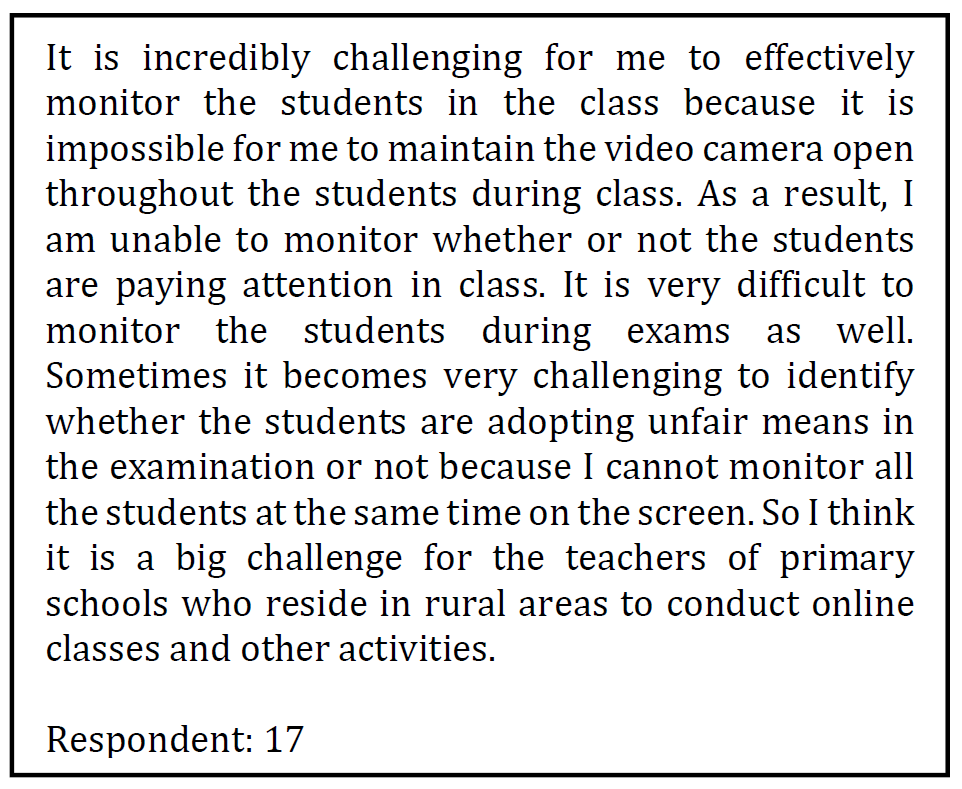
Discipline is the precondition to the effective learning process, especially while conducting online classes. The teacher's major purpose is to make the learning system more efficient.to make it easily understandable to the students in the class for that reason two-way communication in the classroom is a must. In online education methods, it is difficult to maintain proper discipline in the virtual classroom as the teacher and students cannot maintain proper eye contact with each other whereas physically teaching in the classroom is better for maintaining discipline and implementing common rules. At the same time, it is difficult for the teacher to monitor whether the students are present in the class mentally or not because it is not possible to keep an eye on the students while conducting online classes. Most of the time students just join the class for attendance but remain absent mentally as they could not be monitored properly.
It is found that the majority percent of the respondents are concerned about the monitoring system of online education. A large part of the respondent claimed that monitoring class discipline cannot be done properly through the online education system.
Students Engagement
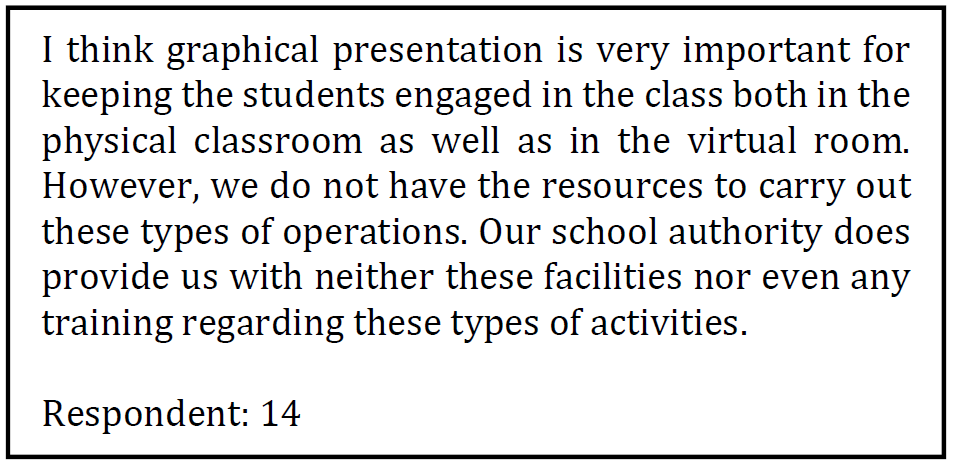
The study finds that it is very challenging for the teachers to make the class interesting enough through online methods and make the students truly engaged in the class. Multimedia presentation and use of graphical presentation are required for the engagement of the students in the class. Most of the primary schools are not properly equipped with these facilities and primary school teachers are not properly trained with these facilities. At the same time, the teachers are not properly trained up for making the students engaged in the online class yet.
The majority of the participants claimed that they didn’t get any training on multimedia presentation and classroom engagement which would help them to keep the students entertained and engaged in the lesson in the virtual class.
Student Progress Tracking:
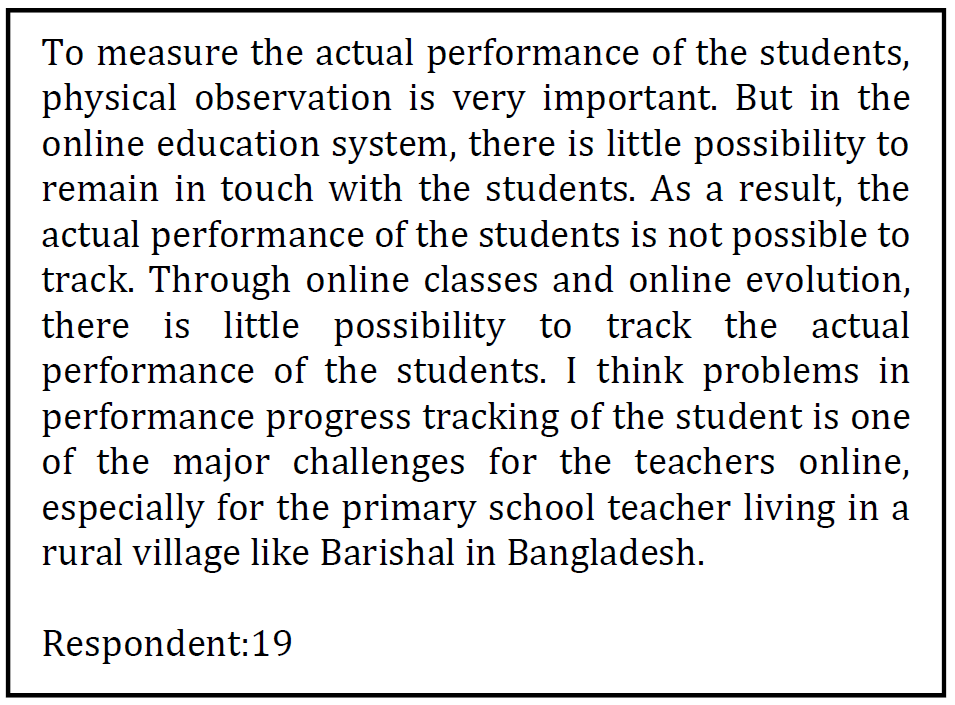
Most of the participants stated that it is very difficult for the teachers to track the progress of the students remotely because of finding the students attending in an online class, face to face communication is not possible which is very effective in the learning process and it is possible to maintain in physical class only. Teachers can recognize pupils who are falling behind, losing interest in class, or deficient in subjective knowledge in a traditional classroom setting, but it is impossible to do so in an online classroom. While teachers use a number of evaluations to determine the standards attained by students through online learning, there are situations when there is a good reason to believe that the student in question did not write the test in question. In fact, there are a variety of techniques to skip online lessons while providing the teacher the impression that everyone is there. Because teachers must devote a significant amount of time to developing their lectures and study materials, there is little opportunity for them to interact with students outside of class time and provide appropriate feedback. Teachers are frequently concerned about the validity of the techniques used to track their pupils' progress. (Challenges of Online Education For Teachers And Students, 2022).
A huge number of the participants considerably insisted on the problems of tracking the progress of the students through online class and performance. In their opinion, the online evaluation method of the students is very prone to be questionable regarding its effectiveness. Especially the progress of the primary level students is very challenging to be measured and tracked.
DISCUSSION
No country in the world could get rid of the notorious impact of the COVID 19 pandemic. This pandemic has impacted each and every sector of the country in the world such as the economy, health, education, business, etc. All the sectors of Bangladesh have been affected badly. Including the labor market to educate, the COVID 19 pandemic has left its mark on all aspects of the daily life of Bangladeshi people. Moreover, the education sector of Bangladesh has been affected seriously. From the very beginning of the COVID 19 pandemic. The government of Bangladesh has taken a lot of steps to prevent the nefarious impact of this contagious disease.
The Institute of Epidemiology Disease Control and Research (IEDCR), Bangladesh's epidemiology institute, diagnosed the first three cases of Covid-19 on March 8, 2020, and the first death happened on March 18, 2021 [5]. The number of reported cases has ranged over time from the first diagnosis of Covid-19 patients. Bangladesh's government has issued a proclamation that will last through March 26, 2020, in order to prevent the virus from spreading further. Bangladesh's Ministry of Primary and Mass Education chose to discontinue primary and secondary schools from March 18 to March 31, 2020, which would then be stretched until September 11, 2021.
As a consequence, an irrecoverable loss occurred in the education sector of Bangladesh. To mitigate these consequences, the government of Bangladesh is taking steps towards an online education system to continue education. During the first wave of the epidemic, however, there were numerous issues with conducting online classes, particularly for elementary school instructors in various rural sections of the country.
This research was carried out in the remote regions of Bangladesh's Barishal division, which is located in the southern portion of the country, to investigate the obstacles that primary school teachers will encounter in conducting online classes in the years 2020-2021.
This study identified several challenges faced by the primary school teacher of Barishal while conducting online classes such as deficiency in technical skills, poor internet connection, problems of keeping students engaged in the class, digital study materials shortage, monitoring problems, problems of student’s progress tracking.
The Government of Bangladesh can take some steps to improve the systems of online education, especially for primary school teachers as; (a) arrange proper training sessions to make them skilled in technology, (b) Equipped all the primary schools with proper facilities required for online education, (c) Make quality internet connection available and affordable for all, (d) Train the entire teacher on virtual class management, (e) Bring all the primary schools under the centralized MIS, (f) Arrange seminars on updated technology used in online education and their usage and (g) Take proper steps to introduce virtual classrooms in all the primary schools.
CONCLUSION
The purpose of this study is to learn more about the obstacles that primary school teachers in Bangladesh's Barishal division confront when conducting online classes.
There are six themes are identified in this study for analysis to get a clear picture of the real situation and analyzed through a thematic approach. It is evident in this study that primary school teachers in the Barishal division of Bangladesh faced a lot of challenges in conducting online classes and they are going ahead by their own effort to overcome these challenges despite the notorious impact of the COVID 19 pandemic. They need to ensure training of all the primary school teachers and accessibility of technologies and technical resources, as well as the creation of a collaborative educational community [3].
Acknowledgment
The authors are expressing their gratitude towards all the participants of the study who granted their valuable time for the purpose of the research despite their hectic schedule. The authors are also thankful to all of the colleagues, friends, seniors, and well-wishers for providing guidelines throughout the research work.
Conflict of Interest
The study's authors declared that the authorship, as well as publication of this original research article, are independent and impartial.
Funding
For the research, authoring, and publication of this paper, the author got no financial sponsorship.
REFERENCE
Guragai, M. “Nepalese Medical Students in the COVID-19 Pandemic: Ways Forward.” Journal of Nepal Medical Association, vol. 58, no. 225, 2020.
Remuzzi, A., and G. Remuzzi. “COVID-19 and Italy: What Next?” The Lancet, vol. 395, no. 10231, 2020, pp. 1225-1228. https://doi.org/10.1016/S0140-6736(20)30627-9
Pandit, D. and S. Agrawal. “Exploring Challenges of Online Education in COVID Times.” FIIB Business Review, 2021. https://doi.org/10.1177/231971452098625
Hoque, M.N. et al. “Anxiety and Its Determinants among Undergraduate Students during E-Learning in Bangladesh amid COVID-19.” Journal of Affective Disorders Reports, vol. 6, 2021. https://doi.org/10.1016/j.jadr.2021.100241
Rahman, A.M. “COVID-19, Health and Higher Education: Experiences from Bangladesh.” Eastern Journal of Healthcare, vol. 2, no. 1, 2022, pp. 3-4.
Salik, S.A. and M.R. Chowdhury. “Impact of COVID on Online Teaching Platform.” American International Journal of Business and Management Studies, 2020.
Tsegay, S.M. et al. “Online Teaching during COVID-19 Pandemic.” Sustainability, vol. 14, no. 1, 2022. https://doi. org/10.3390/su14010568
Li, S. et al. “Towards a New Approach to Managing Teacher Online Learning.” The Social Science Journal, vol. 58, no. 3, 2020, pp. 383-395.
Flores, M. “Editorial.” Revista EDUCARE, vol. 18, no. 1, 2015, pp. 1-3.
Benbunan-Fitch, R. Review of Blended Learning in Higher Education: Framework, Principles, and Guidelines, by Garrison, D. Randy and Norman D. Vaughan. Academy of Management Learning & Education, vol. 7, no. 1, 2008, pp. 135-137.
Ertmer, P. “Teacher Pedagogical Beliefs: The Final Frontier in Our Quest for Technology Integration?” Educational Technology Research and Development, vol. 53, no. 4, 2005, pp. 25-39.
Wu, S.Y. “How Teachers Conduct Online Teaching during the COVID-19 Pandemic.” Frontiers in Education, vol. 6, 2021. https://doi.org/10.3389/feduc.2021.675414
Basilaia, G. “Replacing the Classic Learning Form at Universities as an Immediate Response to the COVID-19 Virus Infection in Georgia.” International Journal of Research in Applied Science & Engineering Technology, vol. 8, no. 3, 2020, pp. 101-108.
Urdan, T.A. and C.C. Weggen. Corporate E-Learning: Exploring a New Frontier. WR Hambrecht+Co., 2000.
Mikulajová, M. “Bluma V. Zeigarnik - život ako zrkadlo dejín psychológie 20. storočia.” Československá Psychologie, vol. 65, no. 6, 2021, pp. 638-640.
Kanuka, H. and D. Garrison. “Cognitive Presence in Online Learning.” Journal of Computing in Higher Education, vol. 15, no. 2, 2004, pp. 21-39.
Rovai, A. and H. Jordan. “Blended Learning and Sense of Community.” The International Review of Research in Open and Distributed Learning, vol. 5, no. 2, 2004.
Islam, M.J. “Factors Influencing Family Size: A Critical Study on Khulna District of Bangladesh.” British Journal of Arts and Humanities, vol. 2, no. 4, 2020, pp. 73-81.
Oliver, P. The Student’s Guide to Research Ethics. 2nd ed., Open University Press, 2010.
Yasmin, T. and C.A. Husna. “Familial Support as a Determinant of Women Career Development.” Asian Journal of Social Sciences and Legal Studies, vol. 2, no. 4, 2020, pp. 76-87.
Creswell, J.W. and J.D. Creswell. Research Design: Qualitative, Quantitative, and Mixed Methods Approaches. Sage Publications, 2017.
Shalin, H.J. Enhancing Qualitative and Mixed Methods Research with Technology. IGI Global, 2014.
Recommended Articles
Research Article
The Effect of Employer Attractiveness and Compensation on Job Persuit Intention to Fmcg Companies in Indonesia: Coporate Reputation as an Intervening Variable
Download PDF
Research Article
Country of Origin and Foreign Branding on Perceived Quality of Local Products in Indonesia: The Moderating Role of Consumer Ethnocentrism
Download PDF
Research Article
The Effect of Self-Efficacy and Working Environment on Work Achievement with Organizational Commitment as Mediation
Sri Wahyuni,
...
Veithzal Rivai Zainal
Download PDF
Research Article
The Effect of Beauty Vlogger on Purchase Decision for Local Skincare Products in Indonesia: Brand Image as a Mediating Variable
Download PDF
PO Box 101, Nakuru
Kenya.
Email: office@iarconsortium.org
Editorial Office:
J.L Bhavan, Near Radison Blu Hotel,
Jalukbari, Guwahati-India
Ali, H., Kanson, E. & Alam, K. (2022). Challenges faced by primary school teachers in rural villages of Barishal division in Bangladesh during Covid-19 Pandemic: Online classes perspective. Scientific Research Journal of Economics and Business Management, 2(1), 1-6.
MLA
Ali, Hazrat, Eliash Kanson and Karimul Alam. "Challenges faced by primary school teachers in rural villages of Barishal division in Bangladesh during Covid-19 Pandemic: Online classes perspective." Scientific Research Journal of Economics and Business Management 2.1 (2022): 1-6.
Chicago
Ali, Hazrat, Eliash Kanson and Karimul Alam. "Challenges faced by primary school teachers in rural villages of Barishal division in Bangladesh during Covid-19 Pandemic: Online classes perspective." Scientific Research Journal of Economics and Business Management 2, no. 1 (2022): 1-6.
Harvard
Ali, H., Kanson, E. and Alam, K. (2022) 'Challenges faced by primary school teachers in rural villages of Barishal division in Bangladesh during Covid-19 Pandemic: Online classes perspective' Scientific Research Journal of Economics and Business Management 2(1), pp. 1-6.
Vancouver
Ali H, Kanson E, Alam K. Challenges faced by primary school teachers in rural villages of Barishal division in Bangladesh during Covid-19 Pandemic: Online classes perspective. Scientific Research Journal of Economics and Business Management. 2022 Jan;2(1):1-6.


 Download PDF
 Download XML