Self-Marketing and Its Role in Building Leadership Personality a Survey Study of the Opinions of a Sample of University Leaders at the University of Mosul
Mohammad Mahmood AL-Mulla Hasan
1
,
Marwa Mohammad Qasim Al-Zaidy
2
,
Ali Saad Aldeen Majied Hafoed
3
1
Depatmemt of Marketing Management, College of Administration and Economics, University of Mosul, Mosul, Iraq
This research aims to examine the role of self-marketing in building leadership personality, through a survey of the opinions of a sample of university leaders at the University of Mosul. The importance of the study lies in its highlighting of self-marketing as one of the modern variables influencing the development of leadership traits within the university environment. The study relied on a descriptive-analytical approach, using a questionnaire designed to measure the research variables. The questionnaire was distributed to a sample of university leaders at the University of Mosul. The results showed a statistically significant positive correlation and influence between self-marketing and building leadership personality, indicating that individuals' possession of self-marketing skills contributes to enhancing their leadership capabilities and supporting their professional presence both within and outside the institution. The results also demonstrated that self-marketing is no longer merely an individual skill, but rather a strategic requirement for leadership empowerment, developing self-confidence and building credibility within the academic community. In light of the findings, the study recommended the adoption of systematic training programs to develop self-marketing skills, integrating this topic into academic leadership preparation programs and encouraging university leaders to utilize digital and media platforms to highlight their achievements and ideas. It also recommended fostering an institutional culture that supports self-marketing as a tool for leadership personality development.
Keywords
Self-Marketing
Leadership Personality
University Leadership
University of Mosul
INTRODUCTION
In light of the rapid transformations taking place in the contemporary world at various levels, it has become imperative for individuals, especially those in leadership positions, to possess skills that go beyond traditional technical and administrative aspects, to more complex skills related to self-management, building professional identity and influencing others. Among these prominent skills in the modern era, the concept of "self-marketing" has emerged as one of the fundamental pillars in shaping a positive image for oneself, contributing to maximizing one's professional and social presence and strengthening one's leadership capabilities.
Amid the rapid developments witnessed by higher education institutions globally and the increasing importance of effective leadership in achieving their strategic goals and enhancing their competitive position, the concept of "self-marketing" emerges as a dynamic tool that can play a pivotal role in refining and shaping leadership personality. In the context of the University of Mosul, which has faced significant challenges and rebuilt its structures after a period of turmoil, understanding the complex relationship between self-marketing and leadership personality development becomes even more urgent and important.
MATERIALS AND METHODS
The Research Problem: Self-marketing is a modern concept in the field of management and leadership. It relates to an individual's ability to present themselves effectively and positively highlight their abilities, skills and personality in professional and social settings. At a time when educational institutions-particularly universities-are experiencing rapid transformations that require more flexible and influential leadership models, the need to investigate the factors that contribute to the formation of these models has emerged. One of the most prominent of these is self-marketing as a strategic skill. Although many studies have addressed leadership from various perspectives, such as management skills, emotional intelligence, or charisma, self-marketing as an effective tool in building leadership personality has not received sufficient research attention, especially in local academic contexts such as the University of Mosul. Hence, the research problem stems from the need to understand the relationship between the extent to which university leaders practice self-marketing skills and the extent to which these practices impact their leadership personalities, in terms of influencing others, decision-making, self-confidence and building a positive image within and outside the institution. In light of what has been reviewed above, the current research problem can be formulated with the following question: Is there a correlation and influence between self-marketing and leadership personality in the organization under study?
Importance Research
This research is of great importance from both theoretical and applied perspectives, as it seeks to address knowledge gaps in the current literature and provide new contributions to understanding the relationship between self-marketing and leadership personality. The importance of the research is evident in the following points:
Theoretical Importance
It highlights the concept of self-marketing as a modern concept in the fields of management and leadership, which has not received sufficient attention in the Arab academic context in general and Iraq in particular. This makes it a scientific contribution to enriching the literature on this topic. It also clarifies the relationship between self-marketing and leadership personality development, a relationship that has not been studied in sufficient depth in most previous studies, particularly in the university environment. This gives this research added theoretical value by linking overlapping and complementary concepts.
Practical Importance
The research targets university leaders, a pivotal group in developing institutional performance, decision-making and formulating educational policies. Therefore, their understanding of the importance of self-marketing may contribute to enhancing their leadership competence. The research also provides field data from the University of Mosul, which helps diagnose the current reality of university leaders in terms of their practice of self-marketing skills. This can guide university administrations in the field of training and professional development. The research results may contribute to developing training programs or workshops aimed at empowering academic leaders with self-marketing skills, building personal branding and enhancing leadership visibility within and outside the university environment. Finally, the research provides a tool that can be adopted to evaluate non-traditional aspects of leadership personality, thus enhancing the integration of selection and development criteria for leaders in educational institutions.
Societal Significance
In the context of the challenges facing Iraqi universities in general and the University of Mosul in particular, this study contributes to efforts to restore the university's academic and leadership standing by focusing on the human element as a tool for change and development. Developing self-marketing skills among university leaders can also contribute to enhancing the university's image locally and regionally and improving communication channels between the university and the community.
Research Objectives
Focus on the relationship between self-marketing and leadership personality development, highlighting the theoretical and applied dimensions of this relationship in the context of university leadership at the University of Mosul. The primary goal is to understand how adopting different self-marketing strategies affects the development of diverse leadership characteristics among these leaders, which go beyond mere routine job performance, such as the ability to influence, inspire and build trust.
The research also aims to build a comprehensive theoretical framework that links the concept of self-marketing and its various dimensions with the of leadership personality and its various patterns in the academic environment. This helps provide a deeper and integrated understanding of this relationship and identify the mechanisms through which it operates. Finally, the research seeks to provide practical recommendations that university institutions, particularly within the context of the University of Mosul, which has faced specific challenges, can implement to enhance leadership awareness of the importance of self-marketing and develop their skills in this area. This aims to build more effective and influential leaders who contribute to the university's success, achieve its strategic goals and enhance its ability to overcome future challenges. In this way, the research objectives focus on bridging theoretical gaps in understanding the role of self-marketing in academic leadership and providing practical solutions that contribute to the development of scientific knowledge and the achievement of tangible benefits in the field of management and leadership development in higher education institutions.
The Hypothetical Research Model
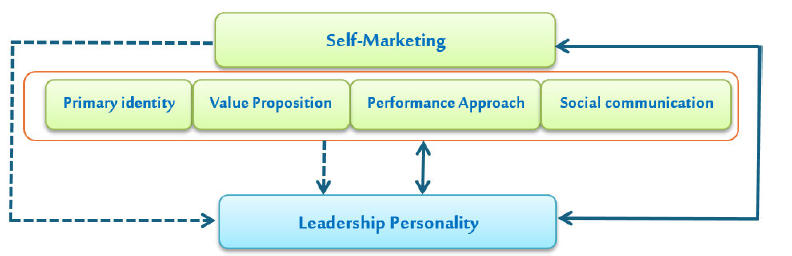
Based on the research problem and its importance to achieving its objectives, we adopted a model that expresses the hypothetical relationship between the research variables, self-marketing and leadership personality, as a hypothetical model that can be adopted to verify the research hypotheses as follows (Figure 1).
Figure 1: Default Search Scheme
Research Hypotheses
Hypotheses are assumptions and conjectures that require verification of their validity. They are formulated based on a hypothetical research model. Therefore, the research adopted the following hypotheses:
Hypothesis 1: There is no correlation between self-marketing and leadership personality
Hypothesis 2: There is no significant relationship between self-marketing and leadership personality
Research Methodology
In their current research, the researchers adopted a descriptive and analytical approach to achieve the research objectives, answer its questions and test its hypotheses through the two research axes: Theoretical construction and fieldwork, enabling compatibility between these two components through research and analysis.
Research Limits: The primary limits of the research revolved around the following:
Cognitive Limits: Our research addressed both self-marketing and leadership personality
Spatial Limits: The research was conducted at the University of Mosul
Human Limits: In our research, we relied on a survey of a sample of university leaders at the University of Mosul, numbering (70)
Methods of Collecting Data and Information
We relied on several methods to collect data and information, both primary and secondary, to complete the current research, both theoretical and field-based. Secondary data, drawn from sources related to the research variables, were the primary basis for establishing the theoretical frameworks of the research, including books, periodicals, theses and dissertations, in addition to scientifically validated sources on the Internet. The field aspect of the research focused on the primary data collected through the questionnaire, in addition to the interviews conducted by the researchers with the researched individuals to whom the questionnaire was distributed. The sources of the questionnaire items were represented by the demographic variables of the researched individuals, as well as by self-marketing items, which were measured by (20) items, represented by (X1-X20). The leadership personality was the third part of the questionnaire, as it was measured by (15) items, also represented by (Y1-Y15) and the five-point Likert scale was used to set limits for the answers of the researched individuals to the questions raised in the questionnaire form, which were represented by (strongly disagree, disagree, neutral, agree, strongly disagree) and with weights (5,4,3,2,1) respectively and with a hypothetical arithmetic mean of power (3).
Theoretical Review
Self-Marketing: Self-marketing is one of the modern topics in marketing literature, which refers to how an individual can market himself in a specific field to achieve success and fame [1]. These processes are considered complex matters due to their connection to the individual’s psychology. Therefore, specific means and strategies must be used so that this individual becomes a self-marketer [2] and has a position in the environment in which he works or the target customers and has the ability to move the feelings of others, influence them and attract their attention to him [3]. Therefore, they will prefer this individual over others. Self-marketing represents an impetus and an incentive to take the right path and a step to determine the path [4]. It must take a method that distinguishes the individual and increases the ability to compete by displaying the skills necessary for marketing, highlighting important qualities that excite the other and motivate him to be convinced, such as highlighting personal skills, positive qualities, traits, experience or knowledge [5] and here it must be noted that knowledge of competitive tools, techniques and activities is an important and inevitable matter that must be used, such as communication methods and modern innovations for promotion [6]. Self-marketing is all the actions and activities that an individual undertakes with the aim of marketing himself, his ideas, his traits and his characteristics with the aim of achieving his current and future goals and ambitions [7]. Self-marketing is represented by the individual’s ability to excel skillfully in his field of work and not be satisfied with that, but rather strive to develop these skills and abilities and present them in a unique and different way from others [8]. From the point of view of [1], it is the means by which an individual communicates his abilities to a wide range of the business network within which he works and makes his name at the forefront of those working in that job.
The accelerating pace of the business world, organizations and job market, the multiplicity of fields available to the workforce and at the same time the increasing competitiveness in them, especially in the pursuit of available jobs in the labor market, has created a need to invest everything available to the individual to increase the chance of reaching the job or place he seeks. This need has become evident in what is now known as self-marketing [9]. Others have begun to call it self-marketing due to the need for creativity that this matter requires to achieve success in it and achieve the goal behind it [6], especially since its importance increases day after day with the increase in competition for available jobs in the labor market and with the increase in the number of job seekers [10]. In the same vein, Gladkova and Gordeev [11] believe the importance of self-marketing emerges through encouraging individuals to improve or develop essential and important skills-better communication skills, information and communication technology skills, etc.-to make them more attractive in the job market. Politicians and analysts who predict the disappearance of lifelong jobs and the rise of professional conservatism similarly call for self-renewal and refinement to meet changing market conditions. They suggest continuous personal renewal to remain competitive in a contemporary, ever-increasingly competitive world.
Mostafa et al. [12] stated that the importance of self-marketing lies in how individuals activate it to advance their careers, whether at the beginning of their careers, in competitive job situations, or during potential career changes. Shabrina [13] believes that the importance of self-marketing is crystallized in the following aspects:
It is an effective weapon on the path to professional success and a shortcut to many unnecessary career steps
It provides an important description of what an individual offers by clarifying the exceptional aspects of their otherwise ambiguous professional personality
It is considered a tool for personal differentiation from other competitors
It represents an interactive tool for communication between the individual and their community, distinguishing them from the rest of society
Self-marketing skills can be viewed through five skills:
Ability to Develop Oneself
This refers to an individual's ability to learn quickly and gain experience to achieve the desired real development [14]. Continuous learning improves personality, skills and behavior and provides a clear vision for the future that helps in setting goals and ambitions and working towards achieving them [2]. This is achieved by building multiple skills, such as strengthening memory, enhancing creativity, making sound decisions and building self-confidence [15]. Learning from mistakes and overcoming challenges through training and guidance enhances control over surrounding circumstances. This continuous development generates a greater sense of confidence and enthusiasm, increases productivity and satisfaction with performance and facilitates achieving goals.
The Ability to Persuade
This is a skill that influences the beliefs and behaviors of others through messages, emotions, or logic. It requires understanding their perspectives and negotiating with them to find common ground and build trust [12]. Persuasion is enhanced by the use of techniques such as speaking quickly, presenting contrasting viewpoints and effective, intelligent communication. Interaction patterns also differ between the sexes; men tend to compete during dialogue, while women focus on building relationships, which calls for diversifying persuasion methods. Body language is an essential factor that complements words in influencing and persuading others [16].
Resilience and Adaptability
This refers to an individual's ability to confidently face changes and unexpected circumstances and make sound decisions. This is an essential skill, especially in leadership positions and the modern labor market [17]. Adaptable individuals view failure as part of the learning process, always seek new experiences and take positive risks and possess skills such as critical thinking, teamwork, perseverance and attention to detail [18]. Their personality traits also include positive resilience, stress management, enthusiasm and motivation, as well as resourcefulness and the ability to find innovative solutions when facing complex challenges. These traits make them positive and able to motivate their teams and continue working despite difficulties [13].
Self-Confidence
This is an individual's belief in their abilities, qualities and judgment, enabling them to face the challenges of daily life and make sound decisions [4]. Self-confident individuals are characterized by optimism, the ability to focus, take initiative and solve problems. They are also less affected by criticism and external factors [19]. This confidence gives them the ability to take on responsibilities, assume leadership positions and manage multiple tasks efficiently. It is also a source of inner strength that helps them persevere in the face of challenges, build positive relationships and achieve success in various fields [10].
The Ability to Present Themselves
This reflects an individual's belief in their self-worth, self-respect and abilities. It encompasses their feelings, behavior and satisfaction with their external appearance [20]. This ability manifests in self-confidence, identifying strengths and weaknesses, adapting to experiences and expressing personal needs. It also represents an integral part of personal identity, enabling the individual to present themselves to others in a positive manner that enables them to build a social status and achieve their goals.
Self-marketers need to build good relationships with colleagues, community organizations and customers, establish mutual trust with them and develop means of communication with others. Building good relationships with others [2] is the first step in the field of communication, dialogue and cooperation in solving problems, while at the same time being aware of available opportunities and the most important developments in the field of work. Here, [15] emphasizes that self-marketing requires considering the technology of the self, which means more than simply adopting traditional marketing principles, but rather focusing on reflecting on the self what is expected to be implemented or performed in a given role. It is a technology that does not entail transformations that require the individual to create a professional projection to enter a new field or advance in it. Self-marketing is a form of social and symbolic exchange that requires compatibility with society in order for self-marketing to succeed. Therefore, the dimensions of self-marketing are:
Primary Identity
This refers to the set of ideas and beliefs that the individual believes in and defends and which appear in his positions and fateful decisions or in confronting opposing ideologies [8]. Primary identity is the core of self-marketing, representing a cultural reference and personal possession of the individual. It encompasses self-formation and the building of social and professional relationships [5]. It is the compass that guides one's strategies and methods in dealing with others [19]. Identity is no longer a static concept, but rather a dynamic process that is constantly reproduced according to circumstances and experiences. Primary identity consists of several interconnected elements, most notably individual skills that grant a person independence and the ability to achieve [2], personality, which reflects the psychological characteristics that influence how they think and interact with their environment, in addition to awareness and learning that help them perceive situations and develop new knowledge [9]. Personal values also represent a fundamental reference that guides behavior and determines what is acceptable and unacceptable, while the experiences gained from practices and experiments contribute to shaping one's perception of oneself and one's surroundings. Thus, the core identity becomes a comprehensive framework that defines the individual's way of marketing themselves to others and establishing their standing among them [5].
Value Proposition
Manai and Holmlund [1] indicate that the value proposition represents the cornerstone of effective self-marketing activities. It combines competitive vision, self-assessment and an understanding of target customers. It provides a detailed statement of an individual's value and a path to achieving it based on their expertise and experience [3]. The value proposition is a fundamental entry point for understanding customer needs in the context of professional self-marketing, which requires defining the value proposition within a clear timeframe, categorizing target customers and identifying common characteristics among them. In the same context, [10] explains that the value proposition in self-marketing is what others perceive about an individual, which influences their decisions regarding interacting with them [7]. Value is formed based on available information about a person, their experiences and their way of interacting. It is also linked to financial or professional rewards and opportunities, as society seeks to attract and invest in individuals with clear value. Jenei et al. [8] argue that a value proposition includes a set of promises made by an individual to target customers, the success of which depends on the extent to which they match actual results. In this context, [1] explain that a value proposition achieves several benefits, including functional benefits associated with achievement and advancement, emotional benefits that foster a positive work environment, expressive benefits that support innovative problem-solving and relationship benefits based on commitment and building long-term relationships.
Performance Approach
Given the importance of individual performance, the performance approach is a modern concept in self-marketing. It represents one of the personal characteristics in the theory of self-goal orientation [17]. It reflects the relationship between individuals and their target audience through interactive self-marketing practices. Cullum et al. [3] argues that the performance approach is a set of behavioral orientations expressed by individuals in response to surrounding circumstances, through which they seek to demonstrate their competence and obtain positive evaluations from others, which contributes to enhancing the goals of both the individual and the organization. Gomis Chorro et al. [2] also confirms that individuals with a performance orientation continuously strive to improve their performance, especially in the presence of managers or colleagues, as they are keen to be viewed as highly competent individuals [5]. These individuals use self-marketing techniques as a means of enhancing their chances of promotion and rewards. With the increase in competition in recent decades, enhancing performance has become a fundamental requirement for organizational survival, which has increased interest in managing individual performance at the unit, department and employee levels [15].
Social Communication
Teamwork and social communication represent an important foundation for self-marketing, as they help individuals communicate their experiences and skills to their target audiences in a broader and more effective manner [9]. Gause [19] asserts that social communication enables individuals to build a network of relationships within and outside the work environment, giving them broader opportunities to influence and expand their awareness and skills through the exchange of experiences and ideas with others, as well as openness to diverse cultures. Söldner [9] indicated that social relationships are determined by factors such as time, interaction, exchanged information, physical proximity and mutual knowledge, all of which reflect the extent of an individual's integration into their surroundings. Zakor-Broda et al. [10] adds: Social communication is considered one of the most important self-marketing skills because it reveals an individual's professional and personal identity within an interactive social framework, whether through traditional networks or digital media. In the same vein, [8] argues that social communication is a set of social practices without which an individual cannot market themselves, as they represent a space for interaction and identity display. From the perspective of [17], social communication constitutes a measure of cooperation and interaction with individuals in close and distant circles and is an essential element in the cohesion of society with the individual. Therefore, social media provides ample space for self-marketing and highlighting personal and professional identity more clearly.
Leadership Personality
Leadership Personality is one of the most interesting personalities for psychologists, as it combines a set of traits and characteristics that qualify an individual to direct others, make decisions and assume responsibility [21]. To understand this personality in depth, the leadership personality is a strong, highly influential personality that unites the efforts of followers to cooperate to achieve a common goal [22]. A leader possesses a special type of leadership charisma that allows them to influence those around them to believe in them and thus believe in their goal and strive to achieve it with satisfaction and optimism. This also includes the ability to lead others to places they cannot reach on their own [23]. It also includes the ability to listen effectively, think strategically and make decisions with confidence. Therefore, the essence of leadership personality is summarized in the leader's ability to persuade, which allows them to influence a group of followers to achieve a noble goal that serves society [24]. Leadership traits represent the stable and purposeful part of an individual's personality and they refer to their habitual behavioral pattern in influencing others to achieve set goals [25]. A successful leader is characterized by a balanced and honest personality, serving their organization before considering personal gain. They are a teacher and mentor who continually monitors progress and learns from others [22]. They also possess high academic and technical qualifications, excel at engaging with the community using innovative communication methods and plan effectively, ensuring that the success of planning is reflected in all activities. They demonstrate organization and respect for time in their interactions with their subordinates, make courageous and creative decisions while assuming responsibility, reward outstanding performance and hold accountable those who fail [26]. Furthermore, they rely effectively on their subordinates, delegate some authority to develop their organization and set a good example in their behavior and actions [24]. Among the qualities required of a leader to succeed in their performance are their ability to persuade and a firm belief in the policy and objectives of the organization they work for. We can also summarize the characteristics of a leader as follows [27]:
Social intelligence, possessing the ability to persuade and drive to accomplish desired goals
Characterized by self-control, emotional balance and the ability to make decisions. They are characterized by clarity and transparency, being loyal to the group, its principles and goals that contribute to achieving the group's objectives and the ability to shape achievable outcomes
The ability to innovate and create by developing diverse plans and programs, being open-minded, accepting of new ideas, dealing with changing circumstances and adapting to unusual situations.
Making subordinates feel and view them as working with them, working for them and making them feel their importance and value in accomplishing the work. They are free from selfishness and personal interests, always placing the public interest above their own
Expectation and belief in the message and mission he carries. A leader must believe in the cause he is working for and he must share his enthusiasm and loyalty with others, as he has a responsibility for the cause that must be accomplished. On the one hand, the leader must teach his men the goal that motivates him
Insight and Acumen: Their role must be characterized by good preparation and a keen eye for the future, which brings emptiness and irreversible events. Therefore, they must think carefully, because success or failure depends on their insight and vision for the future. They must be foresighted about their capabilities and their outcomes, the difficulties and obstacles they may encounter and the procession they will face amidst various hypotheses and expectations
The Art of Reprimand and Reprimand: A leader must be able to provide timely feedback without delay. If they fear providing necessary reprimands and remarks to avoid problems, they will create an atmosphere of disorder and various forms of indifference. On the other hand, if they delay providing feedback to their subordinates, they will believe they have done the right thing and that an influential person has supported them and stood by them, thus negating the idea of providing feedback and reprimands
Leadership Personality skills play a pivotal role in the success of both individuals and organizations. They reflect a person's ability to influence others and achieve set goals efficiently [28]. These skills are associated with a set of traits and behaviors that enable a leader to interact effectively with their team, manage resources, make sound decisions and plan strategically [29]. They also include the ability to communicate positively, motivate and assume responsibility, making the leader a role model in the workplace. The following are the most important leadership personality traits and personal skills that distinguish a successful leader [24].
Personal leadership skills are one of the fundamental pillars that determine a leader's effectiveness and efficiency in achieving organizational goals and ensuring outstanding performance for the individuals they supervise [30]. Leadership is not simply assuming a position or managing a team; rather, it is an integrated capability that includes technical mastery of tasks, a deep understanding of individual behavior and the ability to direct human and material resources strategically to achieve desired results [31]. From this perspective, technical skill is a vital element, as a leader must be familiar with their job and the tasks of their subordinates and be able to provide guidance and direction based on accurate, long-term knowledge of job requirements and daily operations. This ensures quality performance and enhances trust between the leader and the team [32]. Furthermore, organizational skills are a pivotal aspect of a leader's personality. They must possess the ability to view the organization as an integrated system, understand its goals and strategic vision and accurately define policies and plans. They must also utilize the authority and powers granted to them to organize work and distribute tasks and responsibilities effectively [33]. Organizational skills also enable the leader to efficiently manage available resources and ensure the smooth running of operations. This strengthens their leadership role and enables them to achieve a balance between individual and group performance [24]. No less important are intellectual skills, which enable the leader to analyze, study, draw conclusions and compare different situations. They also require mental flexibility and a willingness to accept others' ideas and integrate them into the organization's development in line with the requirements of a changing environment [26]. These intellectual skills enable leaders to make sound strategic decisions and develop work methods in line with new challenges, reflecting a high level of professionalism in leadership and future planning [30].
Human skills, on the other hand, constitute the human and ethical aspect of leadership. They enable leaders to understand the motivations and behaviors of their subordinates and interact with them with full awareness, achieving their satisfaction and motivating them to perform well [24]. A deep understanding of employees' human needs-which include physiological needs, safety, belonging and love and the need for appreciation, as Maslow pointed out-enables leaders to build a supportive and motivating work environment that fosters loyalty and commitment and drives the team toward excellence [23]. These human skills also contribute to building relationships based on trust and mutual respect, enhancing the leader's ability to face challenges and achieve a balance between the demands of work and individuals [24].
Based on the above, personal leadership personality skills represent an integrated blend of technical, organizational, intellectual and human competencies. They enable the leader to direct the team, improve individual and collective performance and enhance their leadership position within the organization [31]. These skills also constitute an essential tool for self-marketing, as they enable the leader to demonstrate their professional identity and value in the workplace, enabling them to achieve promotion, positive influence and sustainable success at both the individual and organizational levels [22].
The concept of leadership personality influence transcends the prevailing traditional understanding based on the power of position or authority, especially after the development of modern management schools that have focused on leadership as a tool for building loyalty and belonging. Maxwell explained that leadership can be understood within five levels that reflect the extent of the leader's influence on their followers and this influence reflects different aspects of the relationship between the leader and the team. At the first level, a leader's influence relies on the formal authority of the position, with individuals following the leader to uphold their rights and comply with their duties, regardless of their character or personal values [25]. The second level is based on the team's acceptance of the leader's personality. The leader gains influence from their relationships with their followers and individuals voluntarily follow them out of respect and a desire to identify with this personality [24].
The third level reflects leadership's focus on achieving results and gains for the organization. The leader gains influence from their success in achieving goals. Individuals follow the leader because they share in this success and see in them the ability to achieve [23]. The fourth level focuses on developing individuals' capabilities and enhancing their skills. The leader influences followers through the positive change they bring about in their professional and personal lives, which enhances their commitment and enthusiasm to follow. Finally, the fifth level focuses on the leader's moral, humane and charismatic values. Their influence stems from their identity, credibility and values. Individuals follow the leader out of respect and admiration for their integrity, principles and moderation [22]. Thus, it becomes clear that the influence of a leader's personality is not limited to formal authority, but rather includes the ability to build trust, develop skills, achieve results and enforce ethical values. This makes leadership a comprehensive process that transcends the administrative structure to encompass the real relationship between the leader and their followers, reflecting the depth of their influence and effectiveness in the workplace and corporate community [23].
Third Axis: Describing the Research Variables, Diagnosing them and testing its Hypotheses
This axis will include three paragraphs:
Description of the Individuals Studied
Based on the data in Table 1, it can be said that the sampled individuals are mature. This is because the sample, including males who numbered (46), is considered to be in the prime of their lives, as most of them fall within the middle age group, between (31-40 years), with some exceptions that reached (8.5%) for those above these ages. On the other hand, the overwhelming percentage regarding the educational level of the sampled individuals was among those with higher degrees, as their percentage constituted (57.2%). Finally, the percentage of the position was distributed between the Dean at a rate of (27.2%), the Assistant Dean at a rate of (386%) and the Head of Department at a rate of (34.2%).
Table 1: Description of the Sampled Individuals
Sex
Male
Female
%
Number
%
Number
34.3
24
65.7
46
Certificate (scientific qualification)
Higher degree
Bachelor's
Preparatory school and below
%
Number
%
Number
%
Number
-
-
57.2
40
40
28
2.8
2
-
-
Age
50 and more
41-50
31-40
20-30
%
Number
%
Number
%
Number
%
Number
8.5
6
51.5
36
37.2
26
2.8
2
Position
Head of Department
Assistant Dean
Dean
%
Number
%
Number
%
Number
-
-
34.2
24
38.6
27
27.2
19
-
-
Source: Prepared by the Researchers
Second: Description and Diagnosis of the research Variables
Description and Diagnosis of the Self-Marketing Variable: The data in Table 2 show that there is agreement between the opinions of the researched individuals regarding the paragraphs of the self-marketing variable, as the general consistency rate of the researched individuals’ answers reached (strongly agree, agree) (73%).
This indicates that there is a degree of consistency in the researched individuals’ answers regarding the paragraphs of this variable, meaning that the researched individuals’ opinions tend towards the positive based on the five-point Likert scale and this was reinforced by the arithmetic mean (3.62), which is higher than the hypothetical arithmetic mean, whose value is (3) and a standard deviation (1.14). This means that the researched individuals agree to a clear degree regarding these variables according to their personal point of view. Activity X17 had the highest agreement rate (82.8%), with an arithmetic mean of (4.05) and a standard deviation of (1.23), indicating homogeneity among the respondents' answers. Activity X15 had the lowest agreement rate of (62.9%), with an arithmetic mean of (3.60) and a standard deviation of (1.11).
Table 2: Shows the Description and Diagnosis of the Self-Marketing Variable
Paragraph
Variables
I strongly disagree
I do not agree
Neutral
I agree
Strongly agree
Mean
S.D
N
%
N
%
N
%
N
%
N
%
X1
6
8.6
8
11.4
8
11.4
34
48.6
14
20
3.60
1.19
X2
8
11.4
4
5.7
8
11.4
30
42.9
20
28.6
3.71
1.27
X3
4
5.7
6
8.6
8
11.4
34
48.6
18
25.7
3.80
1.10
X4
2
2.9
6
8.6
10
14.3
38
54.3
14
20
3.80
0.96
X5
6
8.6
2
2.9
8
11.4
36
51.4
18
25.7
3.82
1.12
X6
6
8.6
0
0
10
14.3
36
51.4
18
25.7
3.85
1.08
X7
4
5.7
6
8.6
6
8.6
44
62.9
10
14.3
3.71
1.01
X8
4
5.7
2
2.9
16
22.9
36
51.4
12
17.1
3.71
0.98
X9
4
5.7
4
5.7
10
14.3
38
54.3
14
20
3.77
1.03
X10
6
8.6
2
2.9
8
11.4
40
57.1
14
20
0.73
1.08
X11
4
5.7
6
8.6
6
8.6
36
51.4
18
25.7
3.82
1.09
X12
6
8.6
6
8.6
12
17.1
30
42.9
16
22.9
3.62
1.19
X13
8
11.4
6
8.6
6
8.6
32
45.7
18
25.7
3.65
1.28
X14
6
8.6
6
8.6
6
8.6
24
34.3
28
40
3.88
1.27
X15
4
5.7
8
11.4
14
20
30
42.9
14
20
3.60
1.11
X16
4
5.7
4
5.7
16
22.9
26
37.1
20
28.6
3.77
1.11
X17
6
8.6
4
5.7
2
2.9
26
37.1
32
45.7
4.05
1.23
X18
6
8.6
6
8.6
6
8.6
30
42.9
22
31.4
3.80
1.23
X19
6
8.6
6
8.6
8
11.4
20
28.6
30
42.9
3.88
1.30
X20
8
11.4
4
5.7
6
8.6
20
28.6
32
45.7
3.91
1.35
General Average
7.72
6.87
12.43
45.72
27.28
3.62
1.14
Source: Prepared by the researchers based on the outputs generated by the SPSS program
Describe and Diagnose the Leadership Personality Variable
The data in Table 3 show that there is agreement between the opinions of the researched individuals regarding the paragraphs of the leadership personality variable, as the general harmony rate of the researched individuals' answers in agreement (strongly agree, agree) reached (70.66%). This indicates that there is a degree of harmony in the researched individuals' answers to the paragraphs of this variable, i.e. the researched individuals' opinions tend towards the positive based on the five-point Likert scale and this was reinforced by the arithmetic mean (3.76), which is higher than the hypothetical arithmetic mean, whose value is (3) and a standard deviation of (1.09). As for the percentage of neutral answers, it is (16.01%), which is a lower percentage than the percentage of the researched individuals who agree. This means that the researched individuals agree to a clear degree on these variables according to their personal point of view. Activity X21 had the highest agreement rate (82.8%), with an arithmetic mean of (4.05) and a standard deviation of (1.05), indicating homogeneity among the respondents' responses. Activity X23 had the lowest response rate of (62.8%), with an arithmetic mean of (3.62) and a standard deviation of (1.00).
Table 3: Shows the Description and Diagnosis of the Leadership Personality Variable
Paragraph
Variables
I strongly disagree
I do not agree
Neutral
I agree
Strongly agree
Mean
S. D
N
%
N
%
N
%
N
%
N
%
X21
4
5.7
2
2.9
6
8.6
32
45.7
26
37.1
4.05
1.05
X22
6
8.6
2
2.9
14
20
26
37.1
22
31.4
3.80
1.18
X23
2
2.9
8
11.4
16
22.9
32
45.7
12
17.1
3.62
1.00
X24
2
2.9
4
5.7
14
20
36
51.4
14
20
3.80
0.93
X25
2
2.9
6
8.6
6
8.6
30
42.9
26
37.1
4.02
1.04
X26
2
2.9
10
14.3
8
11.4
34
48.6
16
22.9
3.74
1.06
X27
6
8.6
2
2.9
16
22.9
24
34.3
22
31.4
3.77
1.19
X28
2
2.9
12
17.1
10
14.3
30
42.9
16
22.9
3.65
1.10
X29
4
5.7
4
5.7
14
20
34
48.6
14
20
3.71
1.04
X30
6
8.6
6
8.6
8
11.4
36
51.4
14
20
3.65
1.16
X31
6
8.6
2
2.9
6
8.6
38
54.3
18
25.7
3.85
1.11
X32
6
8.6
6
8.6
8
11.4
30
42.9
20
28.6
3.74
1.22
X33
8
11.4
2
2.9
16
22.9
32
45.7
12
17.1
3.54
1.17
X34
2
2.9
8
11.4
16
22.9
24
34.3
20
28.6
3.74
1.09
X35
4
5.7
4
5.7
10
14.3
38
54.3
14
20
3.77
1.03
General Average
5.92
7.44
16.01
45.34
25.32
3.76
1.09
Source: Prepared by the researchers based on the outputs generated by the SPSS program
Testing the Research Hypotheses
Analyzing the Correlation between Self-Marketing and Leadership Personality: Based on Table 4, the first main hypothesis was validated and thus accepted. This hypothesis states that there is a statistically significant correlation between self-marketing and leadership personality. We note that there is a significant correlation between the two research variables, as indicated by the correlation coefficient value, which reached (0.811) and a probability value (p-value) of (0.000), which is much less than (0.05).
Table 4: Numerical Values of the Correlation between Self-Marketing and Leadership Personality
Correlations
Self-Marketing
Leadership Personality
Pearson Correlation
0.811**
p-Value
0.000
N
70
Source: Prepared by the researchers based on the outputs generated by the SPSS program
Analysis of the Impact Relationship between Self-Marketing and Leadership Personality
This hypothesis states that "there is a significant impact of self-marketing on leadership personality." This impact was determined as follows:d
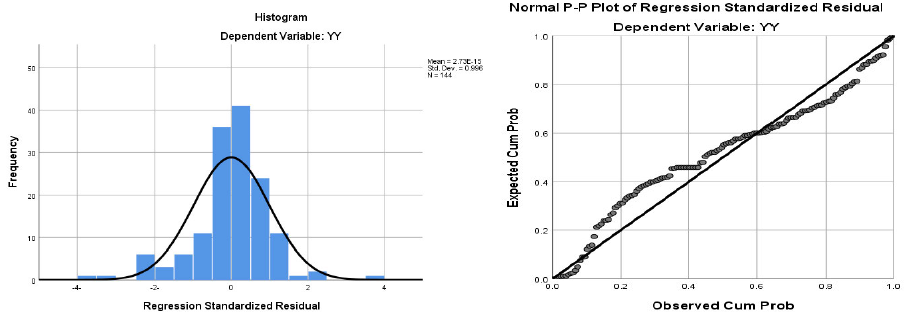
Table 5, which presents the results of the regression analysis, shows a significant effect of self-marketing as an independent variable on leadership personality, considering it a dependent variable. The calculated F value reached (63.202), which is greater than its tabular value of (3.84) at two degrees of freedom (1.33) and a significance level of (0.05). The coefficient of determination (R2) value reached (65.7%). This means that the explained differences in leadership personality are due to the effect of self-marketing, while the remainder is due to random variables that cannot be controlled or are not included in the regression model at all. By following the value of the coefficient β1, which is (0.726) and testing it (T), it became clear that the calculated value of (T) was (7.95), which is a significant value and greater than its tabular value, which is (1.645), at a significance level of (0.05) and two degrees of freedom (1.33). Figure 2 indicates that the data is distributed normally.
Table 5: Analysis of the Impact Relationship between Self-Marketing and Leadership Personality
p-value
F
R2
Confidence Interval 95%
Std. Error
Estimate
Dependent variable
Direction of the relationship
Independent variable
0.000
63.202
65.7
1.331
0.422
0.394
0.726
Leadership personality
→
Self-Marketing
0.857
0.590
0.101
0.805
Source: Prepared by the researchers based on the outputs generated by the SPSS program
Figure 2: Normal Distribution of Data Relative to Self-Marketing in Leadership Personality
Source: Prepared by the researchers based on the outputs generated by the SPSS program
CONCLUSION
The study results showed a statistically significant positive correlation and influence between self-marketing and leadership personality development among university leaders at the University of Mosul. This indicates that individuals who possess effective self-marketing skills tend to possess prominent leadership traits.
It was found that self-marketing elements directly contribute to enhancing individuals' leadership capabilities, making them strategic tools in developing leadership personality.
The opinions of the study sample confirmed that self-marketing is no longer merely a personal skill, but rather a professional requirement that contributes to improving an individual's image within the university environment and supports their opportunities for influence, decision-making and effective leadership.
The results reflect a growing awareness among university leaders of the importance of self-marketing in enhancing their leadership presence both within and outside the institution. This indicates a shift in university leadership culture toward adopting self-marketing strategies as part of leadership personality development.
The results indicate that developing self-marketing skills can be an effective input into university leadership preparation and development programs, given their impact on building leadership personality capabilities capable of adapting and influencing complex work environments.
The study results demonstrate that self-marketing is not limited to improving an individual's external image, but extends to enhancing self-confidence and self-awareness, two essential elements in leadership personality development.
Self-marketing skills are among the factors that contribute to distinguishing university leaders from others, helping them highlight their leadership competencies and qualifications in a strategic and thoughtful manner.
The positive interaction between the study variables reflects university leaders' desire to enhance their presence and influence through self-marketing tools, highlighting the need to provide a supportive organizational environment for such initiatives.
The results demonstrate that self-marketing can be used as a means of building professional credibility within the academic community, especially when supported by real-life achievements and effective leadership behaviors.
Self-marketing contributes to accelerating the leadership empowerment process for academic staff by enabling them to clearly and attractively express their visions and plans, qualifying them for leadership.
Recommendation
Adopt systematic training programs to develop self-marketing skills among university leaders, focusing on impression management, reputation building and effective communication, thus contributing to strengthening their leadership presence both inside and outside the institution
Integrate the topic of "self-marketing" into academic leadership preparation programs, whether in workshops or leadership courses, as it is an influential factor in building effective leadership personality
Encourage university leaders to use digital and media platforms to market their ideas, initiatives and achievements in a professional manner that enhances their image and highlights their leadership role
Building an institutional culture that encourages the development of individual leadership identity through positive self-marketing practices, avoiding affectation or exaggeration, while preserving academic values
Developing incentive policies within universities that enable leaders to highlight their excellence and leadership skills, linking this to opportunities for career advancement or assuming senior leadership positions
Conducting subsequent studies on larger samples from different universities to compare the results of self-marketing and its impact on leadership personality, which will contribute to generalizing the results and exploring new influential factors
Proposing the establishment of a unit or center within the university dedicated to developing leadership skills, incorporating self-marketing aspects into its programs, thus supporting the professional empowerment of academic leaders
Acknowledgement
The author is very grateful to the University of Mosul and University of Telafer, College of Administration and Economics, for their provided facilities, which helped to improve the quality of this work
REFERENCES
Manai, A. and Holmlund, M. “Self-marketing brand skills for business students.” Marketing and Intelligence Planning Journal, vol. 33, no. 5, 2015.
Gomis Chorro, E. et al. “Happiness and values in the formation of personal identity in students of the fifth and sixth grade at primary school.” Universal Journal of Educational Research, vol. 5, no. 5, 2017.
Cullum, R.J. et al. “Identity in lockdown: supporting primary care professional identity development in the COVID-19 generation.” Post Graduate Medical Education Centre, Pilgrim Hospital, Sibsey Road, Boston, UK, 2020.
Payne, A. and Frow, P. “Developing superior value propositions: a strategic marketing imperative.” Journal of Service Management, vol. 25, no. 2, pp. 213–227, 2014.
Wang, W. et al. “Research on high-quality employment of college students from the perspective of self-marketing: a case study of local institutions in Guangdong.” Modern Economy, vol. 15, pp. 1000–1025, 2024.
Kuzmanović, V. “Psychological marketing: self-marketing techniques, integral, non-therapeutic and autonomous psychology, spiritual marketing and business culture.” In Handbook of Research on Promoting an Inclusive Organizational Culture for Entrepreneurial Sustainability, pp. 264–282, IGI Global, 2023.
McKenna, N. “Digital self-marketing strategies of Australian-based academics.” Doctoral dissertation, RMIT University, 2024.
Jenei, S. et al. “Self-marketing – empirical research from the users’ perspective.” Journal of Infrastructure Policy and Development, vol. 8, no. 16, 2024.
Söldner, J.H. “In-between self-marketing and collaboration: researcher identity formation in the usage of academic social network sites.” Strategic Change, vol. 32, no. 6, pp. 209–221, 2023.
Zakor-Broda, R. and Fedor, A.R. “The role of self-marketing in creating opportunities for Roma employment.” The Annals of the University of Oradea, vol. 33, no. 1st, p. 661, 2024.
Gladkova, L.A. and Gordeev, I.V. “The role of time management in the self-organisation of the individual within an effective self-marketing model.” Вестник Университета, no. 9, pp. 5–13, 2022.
Mostafa, M.G. et al. “Intern nurse students’ perception of self-marketing skills and its relation to their self-esteem.” International Egyptian Journal of Nursing Sciences and Research, vol. 4, no. 1, pp. 150–165, 2023.
Shabrina, N. “Analisis personal branding viral Aldi Taher sebagai bagian dari self-marketing.” Jurnal Ilmiah Manajemen, Ekonomi, & Akuntansi (MEA), vol. 7, no. 3, pp. 727–739, 2023.
Rahman, S.K. “The impact of self-marketing to find a job: the case study of undergraduate students in northern Iraq.” International Journal of Science and Business, vol. 4, no. 7, pp. 100–117, 2020.
Nur, L.I. “Self-marketing of elderly-preneurs through symbolic interactionism in Lumajang.” Airlangga Journal of Innovation Management, vol. 3, no. 1, pp. 101–113, 2022.
Jeenwal, A. et al. “The OTSM model of TRIZ contradiction for students’ self-marketing management.” Zeszyty Naukowe Politechniki Poznańskiej. Organizacja i Zarządzanie., 2021.
Anwar, Y.A. “Self-marketing and its role in building the personal brand of graduates of the library and information department on LinkedIn: an exploratory study.” International Journal of Library and Information Sciences, vol. 11, no. 3, pp. 251–282, 2024.
Khalil, L.J. “The role of self-marketing in enhanced customer satisfaction: study of the views of a sample of students of the sixth scientific in the city of Mosul.” Al-Anbar University Journal of Economic and Administration Sciences, vol. 12, no. 30, 2020.
Gause, A. “The angelic ladder of self-marketing: caring for the creative core is the key.” In Presenting Without Pandering – Self-Marketing for Creatives: A Psychological Guide, pp. 85–95, Springer, Berlin Heidelberg, 2022.
Semenova, E. “Marketing me: How to sell yourself in digital age? A case study at the example of self-marketing fitness trainers and the promotion of individual micro-business of private cafes in EU countries.” Bachelor’s thesis, 2020.
Wu, D. “Leader personality, abusive supervision and employee outcomes: an integrative model.” Michigan State University, 2020.
Yan, Q. et al. “A model of household shared parking decisions incorporating equity-seeking household dynamics and leadership personality traits.” Transportation Research Part A: Policy and Practice, vol. 169, p. 103585, 2023.
Higgs, M. and Dulewicz, V. “Developments in leadership thinking.” In Leading with Emotional Intelligence: Effective Change Implementation in Today’s Complex Context, pp. 81–109, Springer International Publishing, 2024.
Pangestu, D.A. et al. “Transformational leadership and proactive personality on innovative behavior among high school teachers in Cirebon City.” Journal Research of Social Science, Economics and Management, vol. 3, no. 9, 2024.
Abid, G. et al. “Positive personality traits and self-leadership in sustainable organizations: mediating influence of thriving and moderating role of proactive personality.” Sustainable Production and Consumption, vol. 25, pp. 299–311, 2021.
Ghias, W.B. and Kazmi, S.Z.A. “In the eyes of the beholder: leaders’ personality and courageous followership.” Changing Societies and Personalities, vol. 6, no. 3, pp. 547–563, 2022.
Harari, M.B. et al. “Self-leadership: A meta-analysis of over two decades of research.” Journal of Occupational and Organizational Psychology, vol. 94, no. 4, pp. 890–923, 2021.
Solihatun, S. et al. “Increasing organizational commitment through learning organization, serving leadership, personality and job satisfaction.” Journal of Social Research, vol. 2, no. 10, pp. 3511–3533, 2023.
Newcomer, L.C.J.M. and Connelly, L.C.D.A. “Personality and leadership.” Air & Space Power Journal, p. 37, 2020.
Braiteh, D.K. “Leader's personality, adaptability and attitude towards change: a study in the Middle East.” Proceedings of FEB Zagreb International Odyssey Conference on Economics and Business, vol. 4, no. 1, pp. 825–838, 2022.
Chatzipanagiotou, P. and Katsarou, E. “Crisis management, school leadership in disruptive times and the recovery of schools in the post COVID-19 era: A systematic literature review.” Education Sciences, vol. 13, no. 2, p. 118, 2023.
Ichsan, R.N. et al. “The influence of leadership styles, organizational changes on employee performance with an environment work as an intervening variable at PT Bank Sumut Binjai Branch.” Journal of Contemporary Issues in Business and Government, vol. 27, no. 2, p. 259, 2021.
Dewi, N.N. and Wibowo, R. “The effect of leadership style, organizational culture and motivation on employee performance.” Management Science Letters, vol. 10, no. 9, pp. 2037–2044, 2020.
Recommended Articles
Research Article
Country of Origin and Foreign Branding on Perceived Quality of Local Products in Indonesia: The Moderating Role of Consumer Ethnocentrism
Download PDF
Research Article
The Effect of Beauty Vlogger on Purchase Decision for Local Skincare Products in Indonesia: Brand Image as a Mediating Variable
Download PDF
Research Article
The Effect of Employer Attractiveness and Compensation on Job Persuit Intention to Fmcg Companies in Indonesia: Coporate Reputation as an Intervening Variable
Download PDF
Research Article
The Effect of Self-Efficacy and Working Environment on Work Achievement with Organizational Commitment as Mediation
Sri Wahyuni,
...
Veithzal Rivai Zainal
Download PDF
PO Box 101, Nakuru
Kenya.
Email: office@iarconsortium.org
Editorial Office:
J.L Bhavan, Near Radison Blu Hotel,
Jalukbari, Guwahati-India
AL-Mulla Hasan, M. M., Qasim Al-Zaidy, M. M. & Majied Hafoed, A. S. A. (2025). Self-Marketing and Its Role in Building Leadership Personality a Survey Study of the Opinions of a Sample of University Leaders at the University of Mosul. Scientific Research Journal of Economics and Business Management, 5(2), 1-12.
MLA
AL-Mulla Hasan, Mohammad Mahmood, Marwa Mohammad Qasim Al-Zaidy and Ali Saad Aldeen Majied Hafoed. "Self-Marketing and Its Role in Building Leadership Personality a Survey Study of the Opinions of a Sample of University Leaders at the University of Mosul." Scientific Research Journal of Economics and Business Management 5.2 (2025): 1-12.
Chicago
AL-Mulla Hasan, Mohammad Mahmood, Marwa Mohammad Qasim Al-Zaidy and Ali Saad Aldeen Majied Hafoed. "Self-Marketing and Its Role in Building Leadership Personality a Survey Study of the Opinions of a Sample of University Leaders at the University of Mosul." Scientific Research Journal of Economics and Business Management 5, no. 2 (2025): 1-12.
Harvard
AL-Mulla Hasan, M. M., Qasim Al-Zaidy, M. M. and Majied Hafoed, A. S. A. (2025) 'Self-Marketing and Its Role in Building Leadership Personality a Survey Study of the Opinions of a Sample of University Leaders at the University of Mosul' Scientific Research Journal of Economics and Business Management 5(2), pp. 1-12.
Vancouver
AL-Mulla Hasan MM, Qasim Al-Zaidy MM, Majied Hafoed ASA. Self-Marketing and Its Role in Building Leadership Personality a Survey Study of the Opinions of a Sample of University Leaders at the University of Mosul. Scientific Research Journal of Economics and Business Management. 2025 Jul;5(2):1-12.


 Download PDF
 Download XML