Background: In the digital age, the pervasive presence of screens in our lives has raised concerns about excessive screen time and its impact on physical and mental well-being. This phenomenon is not exclusive to urban areas but also extends to serene landscapes like District Shimla, Himachal Pradesh, nestled amidst the Himalayan mountains. Understanding screen time habits and awareness levels among its residents is vital to address potential health risks. Materials and Methods: A cross-sectional survey was conducted in District Shimla, Himachal Pradesh, between April and June 2023. The study targeted adults aged 18 and above, with a sample size of 400 participants. A structured questionnaire assessed socio-demographic information and knowledge regarding screen time habits. Data were collected using online platforms and analyzed using Epi Info V7 Software. Results: The study revealed varying levels of awareness and knowledge among participants. While many were aware of recommended screen time limits and potential health risks, gaps existed in understanding mental health impacts and specific screen-related concepts. Approximately 22.5% displayed very good knowledge, 34.25% had good knowledge, 23% had fair knowledge and 20.25% exhibited poor knowledge regarding screen time habits. Conclusion: This study underscores the importance of promoting awareness and knowledge about screen time habits among the general population of District Shimla, Himachal Pradesh. Tailored public awareness campaigns and educational initiatives can empower individuals to make informed decisions, reduce health risks and enhance overall quality of life in this region.
In the digital age, screens have become ubiquitous in our lives, transforming the way we work, communicate and entertain ourselves. While technology has brought tremendous benefits, it has also introduced new challenges, including the potential for excessive screen time. The state of Himachal Pradesh, nestled amidst the serene landscapes of the Himalayan mountains, is no exception to this global phenomenon. Understanding screen time habits and their impact is of paramount importance for the residents of District Shimla, as it can significantly influence their physical and mental well-being [1-4].
Screen time refers to the amount of time individuals spend using screens, including those on smartphones, tablets, computers, televisions and other electronic devices. Excessive screen time has been associated with a range of adverse effects, such as sedentary behavior, sleep disturbances, eye strain and a decline in physical activity. Moreover, prolonged screen time, particularly among children and adolescents, has raised concerns about its impact on cognitive development and social interactions [5-9].
In the picturesque District Shimla of Himachal Pradesh, where natural beauty harmonizes with a diverse population, understanding screen time habits is essential. However, awareness levels about the potential risks associated with excessive screen time may vary significantly among the population and the need for informed and balanced screen time practices is evident.
This study aims to assess the levels of awareness and knowledge about screen time habits among the general population of District Shimla, Himachal Pradesh. By examining current screen time practices, identifying factors contributing to excessive screen time and recognizing potential health implications, this research seeks to provide insights that can inform public awareness campaigns, healthcare policies and educational initiatives tailored to the unique needs of this region.
Screen time habits encompass various activities, from work-related computer use to leisurely scrolling through social media. Additionally, cultural factors, socioeconomic conditions and access to technology can influence screen time behaviors. Therefore, gaining a comprehensive understanding of the current screen time landscape is crucial for designing effective interventions.
The objective of this study is to equip the residents of District Shimla with the knowledge necessary to make informed decisions about their screen time habits. By doing so, we aim to promote healthy screen time practices, reduce potential health risks and enhance the overall quality of life in this region.
Objectives of the Study
The objective of this study is to gauge the levels of awareness and knowledge about Screen Time Habits among the general population of District Shimla Himachal Pradesh.

Research Approach: Descriptive
Research Design: Cross-sectional survey design
Study Area: District Shimla, Himachal Pradesh
Study Duration: Between April 2023 to June 2023
Study Population: The study's target population encompassed all adults aged 18 and above who had been residents of District Shimla for a minimum of 12 months
Sample Size: A robust sample size of 400 adults was determined using a 95% confidence level, an estimated knowledge level of 50% regarding Screen Time Habits, a precise 5% absolute error margin and a conservative 5% non-response rate
Study Tool: A google form questionnaire consisting of questions regarding socio-demography and knowledge regarding Screen Time Habits was created. The questionnaire was initially pre-tested on a small number of participants to identify any difficulty in understanding by the respondents
Description of Tool
Demographic Data Survey Instrument: The demographic form elicited information on participants’ background: age, marital status, religion, employment, education and many more.
Questionnaire: The questionnaire contains 20 structured knowledge related questions regarding Screen Time Habits. One mark was given for each correct answer and zero for incorrect answer. The maximum score was 20 and minimum score was zero. Scoring was done on the basis of marks as >80% (16-20) = very good, 60-79% (12-15) = Good, 41-59% (8-11) = Fair, <40% (<8) = poor
Validity of Tool: By the experts in this field
Data Collection: Data was collected under the guidance of supervisors. The google form questionnaire was circulated among the residents of District Shimla, Himachal Pradesh for responses using online modes like e-mail and social media platforms like Whatsapp groups, Facebook, Instagram and Linkedin till the 400 responses were collected
Data Analysis: Data was collected and entered in Microsoft excel spread sheet, cleaned for errors and analyzed with Epi Info V7 Software with appropriate statistical test in terms of frequencies and percentage.
Ethical Considerations: Participants confidentiality and anonymity was maintained
The primary objective of this study was to gauge the understanding of Screen Time Habits among the general population of Shimla. A total of 400 participants took part in the study, with 279 (69.75%) residing in urban areas and 121 (30.25%) in rural areas (Table 1).
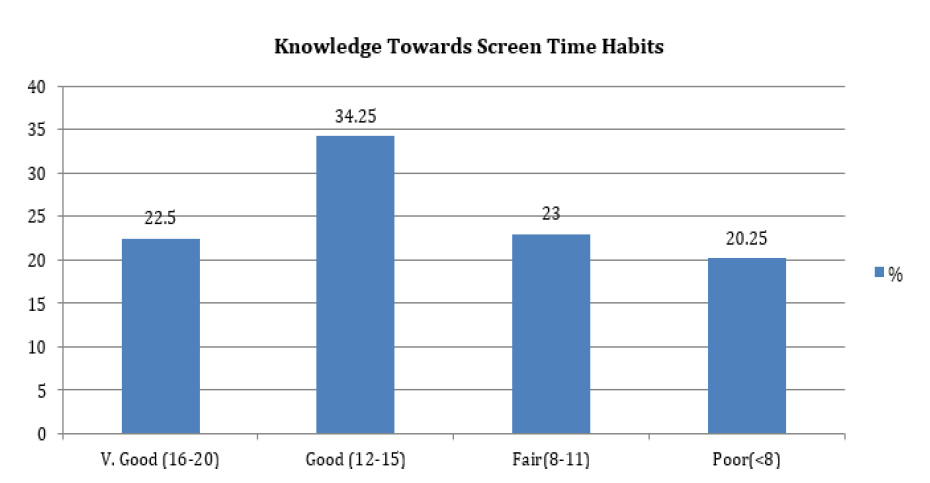
In the present study 22.5% (90) participants had very good knowledge (16-20 marks) towards Screen Time Habits, 34.25% (137) had good knowledge (12-15 marks), 23% (92) had fair knowledge (8-11 marks) and 20.25% (81) having poor knowledge (<8 marks) (Figure 1).
Table 1: Knowledge Regarding Screen Time Habits among Study Participants
| Statements | Frequency of Correct Responses | % |
How many hours, on average, do you should spend on screens (smartphones, computers, TVs) per day? | 271 | 67.75 |
Are you aware of the potential health risks associated with excessive screen time? | 264 | 66 |
Can you name at least three physical health effects linked to prolonged screen use? | 258 | 64.5 |
Do you know about the impact of excessive screen time on mental health? | 187 | 46.75 |
Are you familiar with the concept of "blue light" emitted by screens and its potential effects on sleep patterns? | 99 | 24.75 |
Can you identify strategies to reduce screen time and mitigate its negative effects on health? | 104 | 26 |
Have you heard about the 20-20-20 rule for reducing eye strain during screen use? | 73 | 18.25 |
Are you aware of the recommended screen time limits for children and adolescents according to health guidelines? | 136 | 34 |
Can you name common activities that can replace screen time for leisure or relaxation? | 254 | 63.5 |
Do you know the potential impact of excessive screen use on children's cognitive development and learning abilities? | 128 | 32 |
Are you familiar with parental control tools and settings that can help manage screen time for children? | 139 | 34.75 |
Can you identify signs of screen addiction or dependency in yourself or others? | 172 | 43 |
Have you heard about the association between excessive screen time and sedentary behavior? | 235 | 58.75 |
Are you aware of the role of screen time in promoting a more sedentary lifestyle and its impact on physical health? | 231 | 57.75 |
Can you name at least three strategies to balance screen time with physical activity? | 224 | 56 |
Do you know about the potential social consequences of excessive screen use? | 189 | 47.25 |
Are you familiar with "screen-free zones" or times in the home and their benefits? | 146 | 36.5 |
Can you identify signs of disrupted sleep patterns due to excessive screen use? | 149 | 37.25 |
Do you know the importance of setting screen time boundaries, especially before bedtime? | 151 | 37.75 |
Can you name resources or organizations that provide guidance on managing and reducing screen time for a healthier lifestyle? | 93 | 23.25 |

Figure 1: Knowledge Scores towards Screen Time Habits among Study Participants
In an era dominated by digital screens, understanding screen time habits is essential, especially considering the potential implications for physical and mental health. This study aimed to assess the levels of awareness and knowledge about screen time habits among the general population of District Shimla, Himachal Pradesh. The findings shed light on the current state of awareness and the need for informed screen time practices.
Approximately 67.75% of respondents were aware of the recommended daily screen time limits. This awareness is crucial, as exceeding these limits can lead to various health issues, including sedentary behavior, sleep disturbances and eye strain. A notable 66% of participants were cognizant of the potential health risks associated with excessive screen time. This awareness is promising, as it suggests that a significant portion of the population recognizes the importance of balancing screen use with other activities.
Around 64.5% of respondents could name at least three physical health effects linked to prolonged screen use. This knowledge is vital, as it underscores the need for individuals to understand the impact of screens on their physical well-being. While 46.75% were aware of the impact of excessive screen time on mental health, there is room for improvement in this area. Given the increasing prevalence of mental health concerns associated with screen addiction and overuse, raising awareness is critical.
Approximately 24.75% of participants were aware of the concept of "blue light" emitted by screens and its potential effects on sleep patterns. This awareness can serve as a basis for adopting healthier bedtime screen habits. A positive finding was that 26% of respondents could identify strategies to reduce screen time and mitigate its negative effects on health. Educating individuals about practical methods for reducing screen time is essential.
About 34% of participants were aware of the recommended screen time limits for children and adolescents according to health guidelines. This knowledge is significant for parents and caregivers as they navigate screen time management for their children. While 32% were aware of the potential impact of excessive screen use on children's cognitive development and learning abilities, further education in this area is essential. Understanding the long-term consequences can influence screen time decisions for young ones.
A noteworthy 43% of respondents could identify signs of screen addiction or dependency. Recognizing these signs is a crucial step toward addressing addictive screen behaviors and seeking support. Approximately 47.25% were aware of the potential social consequences of excessive screen use. This awareness can encourage individuals to balance screen time with face-to-face interactions and real-world activities. A substantial 57.75% were aware of the role of screen time in promoting a more sedentary lifestyle and its impact on physical health. This understanding is essential in combating the rising concerns of sedentary behavior.
About 56% of respondents could name at least three strategies to balance screen time with physical activity. This knowledge supports the promotion of a healthier lifestyle that includes both screen-based and physical activities. A notable 37.25% of participants could identify signs of disrupted sleep patterns due to excessive screen use. Recognizing the impact of screens on sleep hygiene is essential for maintaining overall well-being. Around 37.75% were aware of the importance of setting screen time boundaries, especially before bedtime. This knowledge can lead to improved sleep quality and overall health. Approximately 23.25% of respondents could name resources or organizations that provide guidance on managing and reducing screen time for a healthier lifestyle. Awareness of such resources can empower individuals to seek support and information.
Comparing these findings with studies conducted in other regions highlights the variability in awareness and knowledge about screen time habits [7-11]. Factors such as education, culture and access to technology play a significant role in shaping individuals' understanding of the impact of screens on health and well-being. Tailoring interventions to the specific needs and context of Shimla District is essential for promoting healthy screen time practices and mitigating potential health risks.
In conclusion, this study provides valuable insights into the awareness and knowledge levels regarding screen time habits among the residents of District Shimla, Himachal Pradesh. While there is commendable awareness in some areas, there are significant gaps in knowledge, particularly related to mental health effects and specific screen-related concepts. These findings serve as a foundation for designing evidence-based public awareness campaigns, educational programs and interventions that empower individuals to make informed decisions about their screen time habits. By fostering awareness and providing guidance, we aim to promote healthy screen time practices, reduce potential health risks and enhance the overall quality of life in this region.
American Academy of Pediatrics. “Media and young minds.” Pediatrics, vol. 138, no. 5, 2016, e20162591.
Radesky, J.S. et al. “Mobile device use during mealtimes in fast food restaurants in the USA.” Acta Paediatrica, vol. 105, no. 9, 2016, pp. e381–e388.
Twenge, J.M. and W.K. Campbell. “Associations between screen time and lower psychological well-being among children and adolescents: Evidence from a population-based study.” Preventive Medicine Reports, vol. 12, 2018, pp. 271–283.
Sundar, S.S. et al. “Screen time and psychological well-being among children and adolescents: insights from the growing up with media study.” Journal of Communication, vol. 70, no. 1, 2020, pp. 21–51.
Saunders, T.J. et al. “Combinations of physical activity, sedentary behaviour and sleep: Relationships with health indicators in school-aged children and youth.” Applied Physiology, Nutrition and Metabolism, vol. 45, no. 10, 2020, pp. S57–S64.
Robinson, T.N. et al. “Screen media exposure and obesity in children and adolescents.” Pediatrics, vol. 140, suppl. 2, 2017, pp. S97–S101.
Twenge, J.M. et al. “Decreases in psychological well-being among american adolescents after 2012 and links to screen time during the rise of smartphone technology.” Emotion, vol. 18, no. 6, 2018, pp. 765–780.
Primack, B.A. et al. “Social media use and perceived social isolation among young adults in the US.” PLOS ONE, vol. 12, no. 8, 2017, e0182146.
Kross, E. et al. “Facebook use predicts declines in subjective well-being in young adults.” PLOS ONE, vol. 8, no. 8, 2013, e69841.
Hale, L. and S. Guan. “Screen time and sleep among school-aged children and adolescents: A systematic literature review.” Sleep Medicine Reviews, vol. 21, 2015, pp. 50–58.
Primack, B.A. et al. “Role of video games in improving health-related outcomes: A systematic review.” American Journal of Preventive Medicine, vol. 44, no. 3, 2013, pp. 226–234.