Background: One of the most common acute surgical disorders of the abdomen is appendicitis. We describe the socioeconomic characteristics of appendicitis over the study period. Materials and Methods: Two hundred patients who were admitted between the 1st of January and the 31 of December 2021 were included. Investigated were the demographic traits and environmental elements. We contrasted the effects of the environment with those seen in other nations. Results: Our finding refers to the higher percentage 33.5% of them were in the age groups 21 and 30 years old; followed by 24.5% in the groups 11 and 20 years old. Male cases 66% were more than female cases 34%. 28.5% of them had primary education. The higher percentage 26.9% of cases occurred during winter season, there was no statistically significant difference between males (25.5±14.9 years) and females (25.3±15.1 years) (p = 0.29). Conclusion: In every instance, pain predominated over other symptoms, which included anorexia, nausea/vomiting, burning urination and bowel problems like diarrhea and constipation. Tenderness was the clinical symptom that was noted the most frequently, followed by guarding, rebound tenderness, the rovsing sign and the psoas test. There was a statistically significant correlation between the mean age and the length of the hospital stay at a p-value less than 0.05.
Appendicitis remains a common indication for urgent surgical intervention in pediatric age group and early appendectomy has long been advocated to mitigate the risk of appendicular perforation [1-2]. The frequency of appendicitis may show variation by population, age, sex, socioeconomic status and race [3-4]. Although eating habits and hygienic practices have been suggested to also have a role, such a relation is not widely accepted at present [5]. Acute Appendicitis (AA) is the most frequently suspected disorder in patients presenting with acute abdominal pain and is the most common indication for urgent abdominal surgery [6-7]. Acute appendicitis has the highest incidence during the second decade of life and represents a frequent indication for abdominal surgery in pediatrics [8-9]. It is more common in males than in females (ratio 1.4:1) [10]. While up to 33% of affected children may present with distinct abdominal pain with consecutive pain localization in the right lower quadrant, nausea and vomiting, young children could show atypical or delayed symptoms presentation [11-12]. When the diagnosis is performed, perforation could be already present in 30%-75% of children, with young children being at higher risk [13]. Appendicitis has shown different incidence rates over the past decades in different countries [14]. In the late 19th century, the incidence rate of this condition was high in Western countries which decreased in the mid part of the 20th century. On the other hand, the incidence rate of appendicitis was very low in developing countries in the 20th century; however, it increased dramatically at the beginning of the 21st century [15]. Information from epidemiological studies is used to plan new health services and evaluate the overall health status of the population. Recently, several researchers have found some relation between the development of appendicitis and some environmental factors such as season, [16] humidity, [17] and viruses [18-19]. However, the data are relatively scarce and the issue is still controversial, necessitating further studies. The aim of the present study is to study the epidemiology and socioeconomic features of appendicitis during the study period.
A prospective study of 200 patients who were suspected enough to warrant surgery for acute appendicitis admitted in Al-Naman General Hospital under various surgical units was conducted for a period of 1 year which is started from the 1st of January up to end of December 2021.
Inclusion Criteria
Patients with a clinical diagnosis of acute appendicitis at the General Surgery Units and Pediatric Surgery Unit of Al-Naman General Hospital during the study period were included.
Exclusion Criteria
Patients presenting with any form of non- right iliac fossa pain such as right upper quadrant pain etc
Patients who had undergone other emergency laparotomy where appendectomy was also performed as a part of procedure
Patients with appendicular lump
Patients undergoing elective appendectomies after appendicular lump
Pregnant females
Diagnostic Criteria for Acute appendicitis
History of right lower quadrant pain or peri-umbilical pain migrating to right lower quadrant with nausea and/or vomiting
Fever of more than 38 ˚C
Right lower quadrant guarding and tenderness on physical examination
Base line investigations (full blood count, urine routine examination, USG abdomen and peripheral smear for shift to left) are done. Diagnosis of acute appendicitis is confirmed by operative findings and histo-pathological assessment of the appendectomy specimen. The Appendix specimen is sent for histopathology report and the report is noted. Histo-pathological diagnosis is considered as final. Subjects were briefed about the study’s objectives, risks, benefits, freedom to participate in the survey and confidentiality. Informed consent was obtained accordingly.
Statistical Testing
Statistical testing was conducted with the statistical package for the social science system version SPSS 17.0. Continuous variables are presented as mean ± SD and categorical variables are presented as absolute numbers and percentage. The comparison of normally distributed continuous variables between the groups was performed using Student’s t test. Nominal categorical data between the groups were compared using Chi-squared test or Fisher’s exact test as appropriate. For all statistical tests, a p-value less than 0.05 was taken to indicate a significant difference.
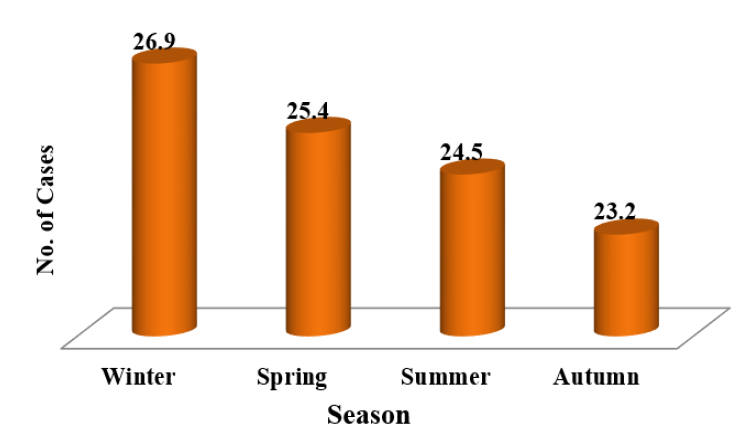
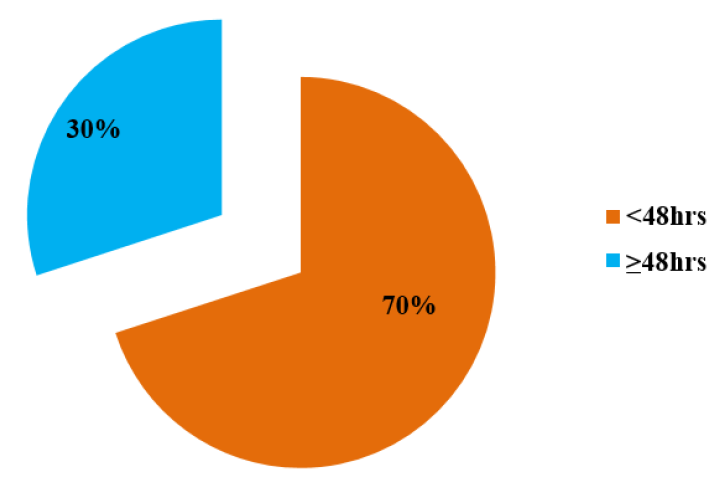
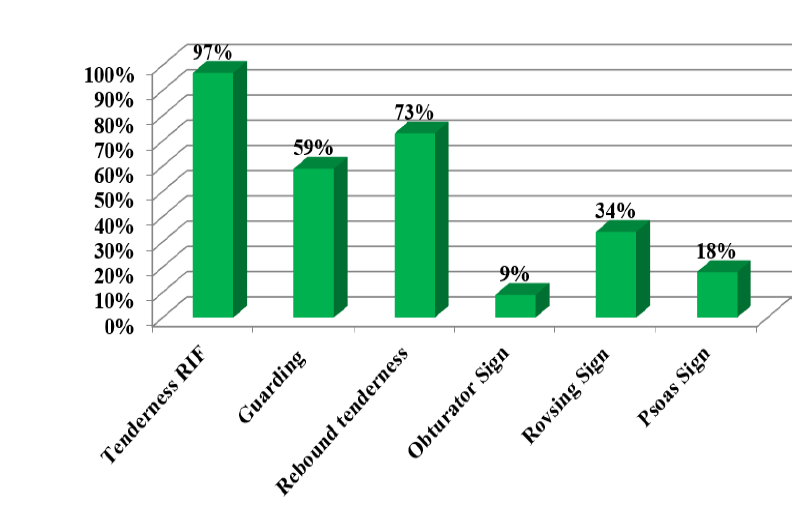
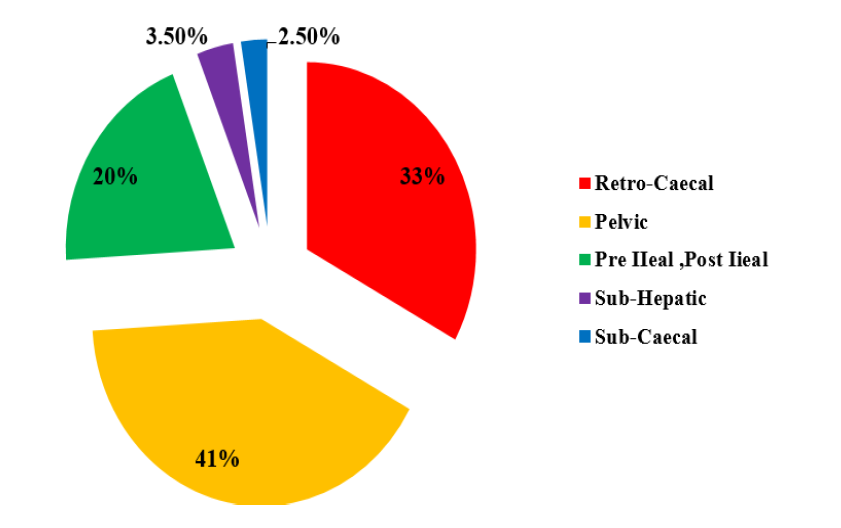
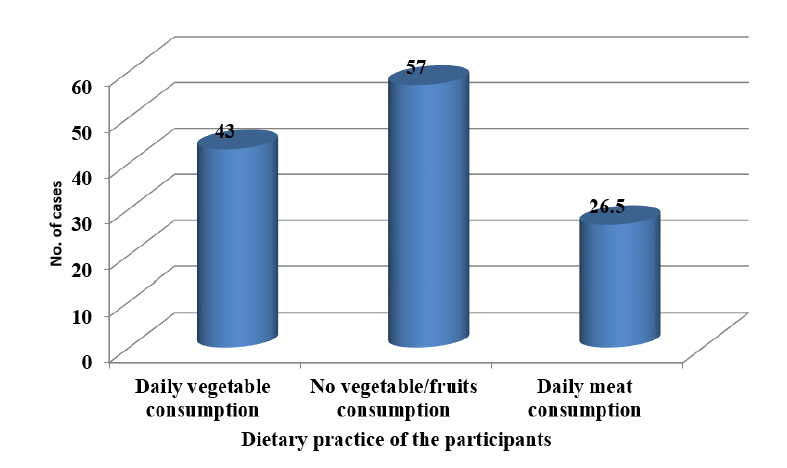
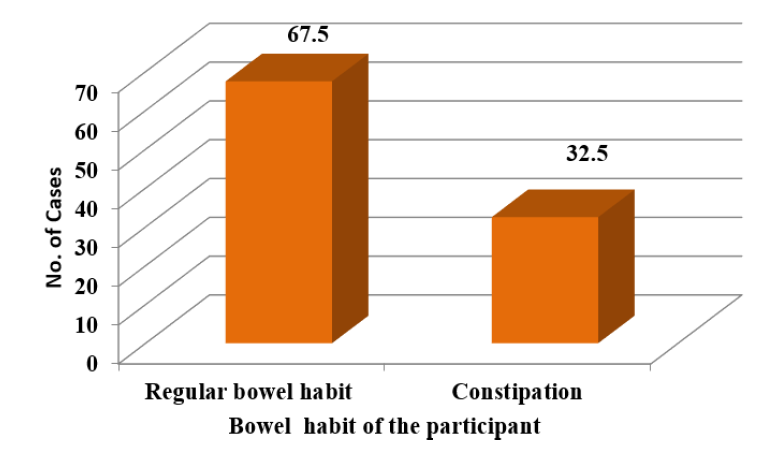
Out of 200 cases of Appendicitis, there were 33.5% of them in the age groups 21 to 30 years old; followed by 24.5% in the groups 11 to 20 years old and the least frequency 8% in the age less than 10 years old. The male cases 66% were more than female cases 34%. 28.5% of them had primary education and 22.5 had secondary certificate (Table 1). The results of seasonal variation based on number of cases are illustrated in Figure 1. The higher percentage 26.9% of cases occurred during winter season, followed by 25.4% during spring and 24.5 during summer season. With respect to the mean age, there was no statistically significant difference between males (25.5±14.9 years) and females (25.3±15.1 years) (p = 0.29). In addition, the mean age of urban living patients (24.4±14.2 years) was significantly lower than those living in rural and suburban areas (29.5±18.0 years, p<0.001). Regarding to the hospital stay, the mean age of those who stayed in the hospital for less than 5 days (24.37±14.69) was statistically significant than those who living for more than 5 days (30.41±21.43; p<0.00) (Table 2). In Table 3 shows the right iliac fossa pain was the most consistent symptom present in 50% of the patients. Migration of pain was observed in 18% patients. Anorexia was present in 43.5% patients. Nausea and vomiting were present in 38% patients; Fever was seen in 21% patients. In Figure 2 show the most of the patients (70%) had pain of duration for <48hrs. RIF’s tenderness was the most consistent sign present in 97% of the patients. Guarding was observed in 59% patients. Rebound tenderness was present in 73% patients. Obturator sign in 9%, Rovsing Sign in 34% and, Psoas sign were present in 18% patients (Figure 3). Retrocaecal and Pelvic are the two most common position of appendix observed (Figure 4). The majority 57% of the research respondents habituate fruits consumption (Figure 5). Only 43% of them took vegetables daily in their dietary practice. The proportion of daily meat consumption was observed in 26.5%. Regular bowel habit was found in 67.5%. Constipation was observed in 32.5% as shown in Figure 6.
Table 1: Socio-Demography of the Research Participants
| Age groups | Frequency (n = 200) | % |
| <10 years | 16 | 8.0 |
| 11-20 | 49 | 24.5 |
| 21-30 | 67 | 33.5 |
| 31-40 | 47 | 23.5 |
| 41-50 | 21 | 10.5 |
| Gender | ||
| Male | 132 | 66 |
| Female | 68 | 34 |
| Education | ||
| Illiterate | 41 | 20.5 |
| Primary | 57 | 28.5 |
| Secondary | 45 | 22.5 |
| Diploma and Bachelors’ | 38 | 19.0 |
| Master and PhD | 19 | 9.5 |
Table 2: Comparison of the Mean Age of Patients Regarding Gender, Residence and Hospital Stay
| Category | Mean±Sd | p-value |
| Gender | ||
| Male | 25.5±14.9 | 0.29 |
| Female | 25.3±15.1 | - |
| Residence | ||
| Urban | 24.4±14.2 | <0.001 |
| Rural | 29.5±18.0 | |
| Hospital stay | ||
| 1-5days | 24.37±14.69 | 0.00 |
| >5 days | 30.41±21.43 | - |
Table 3: Frequency of Symptoms of Appendicitis
| Symptoms | Frequency * | % |
| Pain in right iliac fossa | 100 | 50 |
| RIF migratory pain | 36 | 18 |
| Anorexia | 87 | 43.5 |
| Nausea & vomiting | 76 | 38 |
| Fever | 42 | 21 |
| Constipation | 20 | 10 |
| Diarrhea | 15 | 0.6 |
| Burning micturition | 21 | 10.5 |
*Each case had one or more symptoms

Figure 1: Distribution of Appendicitis According to Seasons

Figure 2: Duration of Pain Among Appendicitis Cases

Figure 3: Graphical Representation of Frequency of Signs

Figure 4: Graphical Representation of Position of Appendix

Figure 5: Graphical Representation of Dietary Practice of the Participants

Figure 6: Graphical Representation of Bowel Habit of the Participants
In this study a total of 200 patients were included. There were 33.5% of them in the age groups 21 to 30 years old; followed by 24.5% in the groups 11 to 20 years old and the least frequency 8% in the age less than 10 years old. A study conducted by Zenon et al., they reported the positive correlation between the rate of perforation and the age of patients was found [20]. In Turkey [2], the authors reported the mean age was 20.90±13.90 y (range: 1-80 y) for males 20.87±14.11y, for females 20.94±13.66y. Some researchers found that the mean age of the patients (92 males, 100 female) was 25.1 ± 12.7 years. The reason of slightly higher mean age in our study was that we have not included patients with age over 50 years. In other studies, appendicitis is most frequently seen in patients in their second through fourth decades of life, with a mean age of 31.3 years and a median age of 22 years [21-23]. The male cases 66% were more than female cases 34%. With respect to the mean age, there was no statistically significant difference between males (25.5±14.9 years) and females (25.3±15.1 years) (p = 0.29). A study conducted in Turkey [2], the authors found 1001 were males (53.5%) and 870 were females (46.5%), with a male to female ratio of 1.07:1.00 (154.7 per 100,000 males/year and 144.6 per 100,000 females/year). 28.5% of them had primary education and 22.5 had secondary certificate in Bangladesh [24], the researcher found 132 (66.0%) patients were male and 68 (34.0%) were female. The male: female ratio was 1.94:1. The maximum numbers of patients’ education status were below secondary school certificate (45; 22.5%) and higher-secondary school certificate (32; 16.0%). The maximum numbers of illiterate patients (27%) were from rural areas.
In this study, found the higher percentage 26.9% of cases occurred during winter season, followed by 25.4% during spring and 24.5 during summer season and compared to another study done it in Turkey, the authors found appendicitis was most frequent during winter while perforation had the lowest frequency during that season (18.2%, n: 35) (p<0.05) [2]. In addition, the mean age of urban living patients (24.4±14.2 years) was significantly lower than those living in rural and suburban areas (29. 5±18.0 years; p<0.001). a study conducted in Bangladesh by Iqbal [24], found the patient’s mean age was 23.37± 11.54 years and 25.69±11.34 years in the urban and rural groups. In the current study, the mean age of those who stayed in the hospital for less than 5 days (24.37±14.69) was statistically significant than those who staying for more than 5 days (30.41±21.43; p<0.00). Median duration of stay in our patients without appendicular perforation was 3 (Range 1-10) and with perforation it was 4 (range2-10). Statistical analysis showed that patients with perforation have increased duration of hospital stay (p-value 0.004). In study by Chong FC et al. [25], the mean duration of hospital stay was 4.3±2.0 (range 1–18) days. Another study found the mean hospital stay was 4.37±1.69 days in urban and 8.41±2.44 days in rural patients [24]. Moreover, we observed that the mean duration or presentation was delayed as it is almost doubled in rural patients compared to the urban group. This indicates poor access to healthcare in rural areas. The delay in hospitalization augments the worsening of the disease and development of complications and ultimately poor outcomes. In this study, the results show that the right iliac fossa pain was the most consistent symptom and it was present it in 50% of the patients, followed by migration of pain 18%, anorexia 43.5%, nausea and vomiting 38% patients and Fever 21%. A study conducted in India [1], they reported the 63% (68) of patients presented with fever, 93.5% (101) of patients presented with pain abdomen. 56.5% (61) of patients presented with vomiting, 58.3% (63) of patients presented with anorexia and 56.5% (61) of patients presented with nausea and 48.1% (52) of patients presented with diarrhea.
In the current study, the result show that the RIF tenderness was the most consistent sign present in 97% of the patients, followed by guarding 59%, rebound tenderness 73%, obturator sign 9%, rovsing sign in 34% and, psoas signs in 18% patients. Compared with another study done it in India [1], the researchers found the 84.3% (91) 0f patients presented with localized right iliac fossa tenderness, 87% (94) of patients had rebound tenderness, 52.8% (57) of patients had diffuse tenderness, 51.9% (56) of patients presented with voluntary guarding. In a study by Shrivastava et al. [26], tenderness in right iliac fossa was found in 170 (91.8%) cases, rebound tenderness in 149 (80.54%) cases, elevated temperature in 156 (84.32%) cases and Rovsing’s sign in 103 (55.67%) cases. In the present study TLC was increased in 62 % of cases with shift to left noted in 74% of cases. Both of these variables are statistically significant.
Retrocaecal and pelvic were two most common positions seen in our study in 33% and 41 % cases respectively. In a study by Chong CF [27], relative incidence of positions is as Retrocolic and Retrocaecal – 74 %, Pelvic –21 %, Subcaecal–1.5 %, Pre Ileal–1 %, Post Ileal –0.5 %. In another study by Fitz RH [28], pelvic position was the predominant position (in 33.3%) followed by retrocaecal in 32.4%, preileal in 18.8% and subcaecal in 12.8% respectively. So there is considerable variation in different studies.
In the current study, the results show that the majority 57% of them had taken the fruits consumption and only 43% of them took vegetables daily in their dietary practice. The proportion of daily meat consumption was observed in 26.5%. Regular bowel habit was found in 67.5%. Constipation was observed in 32.5%. A prospective analytical study done it by Iqbal [24], the authors mentioned the majority (52%) of the research respondents of rural areas habituates daily vegetable consumption and 34% of urban patients took vegetables daily in their dietary practice. The proportion of daily meat consumption was observed in 29% urban patients and 24% rural patients. Regular bowel habit was found in 49% of urban and 86% of rural patients, respectively. Constipation was observed in 51% of urban and 14% of rural patients, respectively. The result is significant at p<0.05.
There are more cases of male appendicitis than female cases. The most common age range for appendicitis cases was 21 to 30. Pain was consistently the most prevalent symptom, followed in every case by anorexia, nausea/vomiting, burning micturition, bowel disturbances including diarrhea, constipation and pain. The most frequent clinically observed symptom was tenderness, which was followed by guarding, rebound tenderness, rovsing sign and the psoas test. In our analysis, the two most typical locations were retrocaecal and pelvic.
Recommendation
The following suggestions should be taken into account in addition to early and correct disease diagnosis, evaluation of the condition and creation of a plan for suitable management: To reduce morbidity and mortality in individuals with suspected appendicitis, early diagnosis and fast treatment are essential. Patients with difficult appendicitis should be closely followed and managed appropriately in the postoperative phase to avoid complications.
Ethical Approval
The study was approved by Iraqi Ministry of Health.
Chandrashekar, S. et al. “Prevalence of perforated appendicitis and its determinants in pediatric appendicitis patients admitted in tertiary care centre, South India: A cross sectional study.” International Surgery Journal, vol. 5, 2018, pp. 3926–3929.
Sulu, B. et al. “Epidemiological and demographic features of appendicitis and influences of several environmental factors.” Turkish Journal of Trauma and Emergency Surgery, vol. 16, no. 1, 2010, pp. 38–42.
Augustin, T. et al. “Characteristics of perforated appendicitis: Effect of delay is confounded by age and gender.” Journal of Gastrointestinal Surgery, vol. 15, no. 7, 2011, pp. 1223.
Albahadili, A.M. “Study of the effect of age, gender and seasonal variation on appendicitis in Azizyah-Iraq.” Al-Kufa University Journal for Biology, vol. 8, no. 2, 2016.
Bagus, B.I. et al. “The role of personal hygiene on non-complicated pediatric appendicitis patients.” International Surgery Journal, vol. 5, no. 5, 2018, pp. 1614–1616.
Peksöz, R. et al. “Significance of laboratory parameters in diagnosing acute appendicitis during pregnancy.” ANZ Journal of Surgery, vol. 92, nos. 1–2, 2022, pp. 121–127.
Su, D. et al. “Prediction of acute appendicitis among patients with undifferentiated abdominal pain at emergency department.” BMC Medical Research Methodology, vol. 22, no. 1, 2022, pp. 1–14.
Abdulmomen, A.A. et al. “Acute perforated appendicitis associated with appendiceal diverticulitis in a young man: A case report with literature review.” The American Journal of Case Reports, vol. 23, 2022, pp. e934838-1–e934838-6.
Schildberg, C.W. et al. “Diagnostic, therapy and complications in acute appendicitis of 19,749 cases based on routine data: A retrospective multicenter observational study.” Journal of Clinical Medicine, vol. 11, no. 15, 2022, pp. 4495.
Meklin, J. et al. “Gender-specific performance of a diagnostic score in acute appendicitis.” In Vivo, vol. 34, no. 6, 2020, pp. 3687–3703.
Hasbahçeci, M. et al. “Effect of surgeon’s judgement on the diagnosis of acute appendicitis.” Turkish Journal of Surgery, vol. 30, no. 1, 2014, pp. 22.
Irish, M.S. et al. “The approach to common abdominal diagnosis in infants and children.” Pediatric Clinics of North America, vol. 45, 1998, pp. 729–772.
Ohmann, C. et al. “Status report on epidemiology of acute appendicitis.” Der Chirurg, vol. 73, 2002, pp. 769–776.
Ferris, M. et al. “The global incidence of appendicitis: A systematic review of population-based studies.” Annals of Surgery, vol. 266, no. 2, 2017, pp. 237–241.
Al-Omran, M. et al. “Epidemiologic features of acute appendicitis in Ontario, Canada.” Canadian Journal of Surgery, vol. 46, 2003, pp. 263–268.
Oguntola, A.S. et al. “Appendicitis: Trends in incidence, age, sex and seasonal variations in South-Western Nigeria.” Annals of African Medicine, vol. 9, 2010, pp. 213–217.
Yaseen, T. et al. “Impact of family history on acute appendicitis—An Iraqi study at Baghdad Teaching Hospital.” International Journal of Medical Students, vol. 6, no. 2, 2018, pp. 47–51.
Obsa, M.S. et al. “Prevalence of acute appendicitis among patient admitted for acute abdomen in Ethiopia: A systematic review and meta-analysis.” International Journal of Surgery Open, vol. 26, 2020, pp. 154–160.
Sarla, G.S. “Epidemiology of acute appendicitis.” Journal of Clinical Medical Research, 2019.
Pogorelić, Z. et al. “Acute appendicitis in children younger than five years of age: Diagnostic challenge for pediatric surgeons.” Surgical Infections, April 2020, pp. 239–245.
Kalem, M. et al. “Evaluation of modified Alvarado score in diagnosis of acute appendicitis: A prospective study.” Annals of the Royal College of Surgeons of England, vol. 76, 1994, pp. 418–419.
Denizbasi, A. and E.E. Unlever. “The role of emergency medicine resident using the Alvarado score in the diagnosis of acute appendicitis compared with general surgery resident.” European Journal of Emergency Medicine, vol. 10, no. 4, December 2003, pp. 296–301.
Al-Hashemy, A.M. and M.I. Saleem. “Appraisal of the modified Alvarado score for acute appendicitis in adults.” Saudi Medical Journal, vol. 25, no. 9, 2004, pp. 1229–1231.
Iqbal, T. et al. “An analysis of the consequences of acute appendicitis between urban and rural patients in Bangladesh.” Journal of Applied Pharmaceutical Science, vol. 11, no. 8, 2021, pp. 154–166.
Chong, C.F. et al. “Development of the RIPASA score: A new appendicitis scoring system for the diagnosis of acute appendicitis.” Singapore Medical Journal, vol. 51, 2010, pp. 220–225.
Shrivastava, U.K. et al. “Evaluation of Alvarado score in diagnosis of acute appendicitis.” Tropical Gastroenterology, vol. 25, no. 4, October 2004, pp. 184–186.
Chong, C.F. et al. “Comparison of RIPASA and Alvarado scores for the diagnosis of acute appendicitis.” Singapore Medical Journal, vol. 52, no. 5, 2011, pp. 340–345.
Fitz, R.H. “Perforating inflammation of the vermiform appendix: With special reference to its early diagnosis and treatment.” Transactions of the Association of American Physicians, vol. 1, 1886, pp. 107–143.