REIntroduction: REBOA or resuscitative endovascular balloon occlusion of the artery is a procedure for temporarily controlling arterial bleeding in trauma patients that improves hemodynamic stability and preserves cerebral and coronary perfusion.Debulking has been a frequently used procedure for surgical removal of lymph node cancer for nearly a century. Intraoperative bleeding can be up to 3000cc and varies according to surgical technique and among surgeons. In this case, we reported a case of debulking surgery in a patient with nasopharyngeal carcinoma. Case presentation: A 45-year-old woman with NPC UCC T3N2M0 (stage III), after complete chemoradiation and bleeding, was consulted by the ENT department for debulking with REBOA. A bilateral nasopharyngeal mass obliterated the Rosenmuller fossa, bilateral torus tubarius, and extended to the right parapharyngeal space, left maxillary sinus, and right mastoid. There were multiple neck lymphadenopathies, submandibular, and bilateral parotitis. The right lymph node size was 16x8x7 cm, and the surface was uneven and brittle, tender, hyperemic, hard, and fixed. Soft tissue metastases in the right colli region compressing the right jugular vein. We planned to use the REBOA approach in debulking patients with nasopharyngeal carcinoma with the aim of reducing bleeding. After REBOA was installed, nasopharyngeal carcinoma debulking was performed with a total bleeding of 700 cc. On the third postoperative follow-up, the patient complained of pain in the surgical area, the wound was covered with a bandage, and no bleeding was found. Conclusion: REBOA is an effective technique for reducing intraoperative bleeding in debulking surgery of nasopharyngeal carcinoma. This modality can be used as a regular choice for debulking intervention of nasopharyngeal carcinoma.
Keywords
REBOA
Nasopharyngeal Carcinoma
Neck Dissection
INTRODUCTION
Nasopharyngeal Carcinoma (NPC), formerly known as lymphoepithelioma, is a tumor that develops from the nasopharyngeal epithelium [1-3]. In most regions of the globe, NPC is an uncommon malignancy, with an age-standardized incidence rate of less than one per 100.000 people. However, much higher levels have long been observed in the Cantonese population of southern China, and intermediate levels were found in indigenous population in Southeast Asia, Antarctica, North Africa, and the Middle East. In Southeast Asia, nasopharyngeal cancer ranks 9th in cancer incidence and 8th in cancer deaths [4]. In Indonesia, NPC ranks 5th in cancer incidence and 5th in cancer deaths [5].
REBOA or resuscitative endovascular balloon occlusion of the artery is a procedure for temporarily controlling arterial bleeding in trauma patients that improves hemodynamic stability and preserves cerebral and coronary perfusion [1]. In the Korean War, Lieutenant Colonel Hughes utilized an intra-aortic balloon to treat two patients with bleeding, and this was the first time intravascular occlusion was used to control bleeding. This original idea for the treatment of uncontrolled bleeding still remains true today, even after decades [6].
The initial purpose of this method was to treat non-compressible thoracic hemorrhages. Due to REBOA’s potential to cause aortic occlusion in numerous regions or "zones," its indications have increased to address a wide spectrum of morbidity [6].
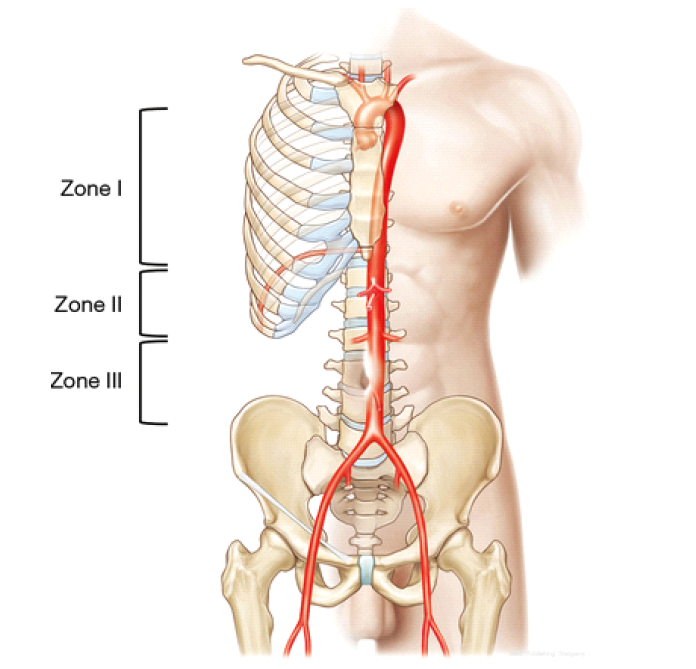
REBOA successfully inhibits blood flow to the lower body at three aortic zones: 1) Zone I, the descending thoracic aorta, which runs from the origin of the left subclavian
Figure 1: Aortic Zone Diagram Related With Aortic Occlusion: Zone I Located Above The Supraceliac Artery And Below The Left Subclavian Artery; Zone II Located Above The Lowest Renal Artery And Below The Celiac Artery; Zone III Located Above The Aortic Bifurcation And Below The Lowest Renal Artery [7] artery to the upper section of the celiac artery, 2) Zone II, the abdominal aorta, which runs from the celiac artery to the lowest renal artery, and 3) Zone III, the infrarenal abdominal aorta (Figure 1). REBOA in Zone I is beneficial for abdominopelvic hemorrhage, whereas REBOA in Zone III is effective for decreasing pelvic bleeding in the extremities. Due to the possibility of organ ischemia, zone II occlusion should be avoided [7].
Debulking surgery, also known as cytoreductive surgery, is the resection of as much of the tumor as possible, and incomplete resection for malignant tumors that cannot be resected [8]. Intraoperative bleeding can be up to 3000cc and varies according to surgical technique and among surgeons [2].In this case, we report a case of debulking surgery in a patient with nasopharyngeal carcinoma.
Case Presentation
A 45-year-old woman with NPC UCC T3N2M0 (stage III), after complete chemoradiation and bleeding, was consulted by ENT department for debulking with REBOA. A bilateral nasopharyngeal mass obliterated the Rosenmuller fossa, bilateral torus tubarius, and extended to the right parapharyngeal space, left maxillary sinus, and right mastoid. There were multiple lymphadenopathies of the neck, submandibular, and bilateral parotitis. The right lymph node size was 16x8x7 cm, and the surface was uneven and brittle, tender, hyperemic, hard, and fixed. Soft tissue metastases in the right colli region compressing the right jugular vein. We planned to use the REBOA approach in debulking surgery to reduce bleeding. The patient entered the cardiac catheterization room. Initially, we did a 6-lead ECG. The manual blood pressure measurement was 175/101 mmHg, and the pulse rate was 118x/min.
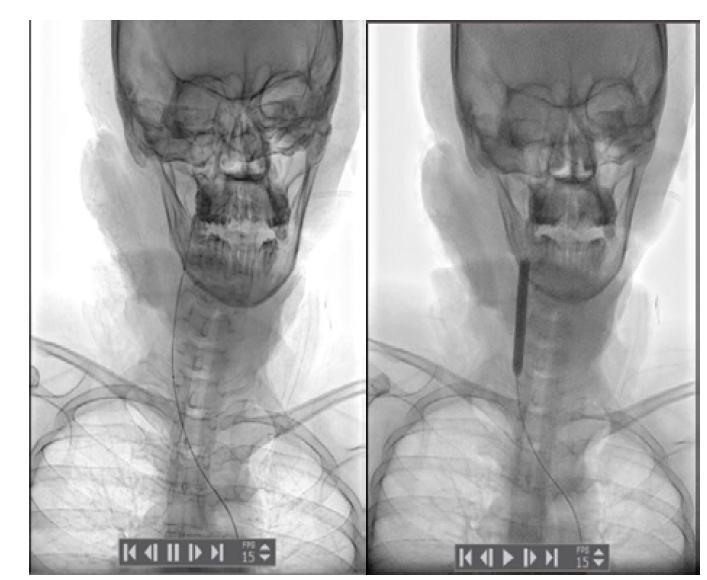
Figure 2: During REBOA Installation
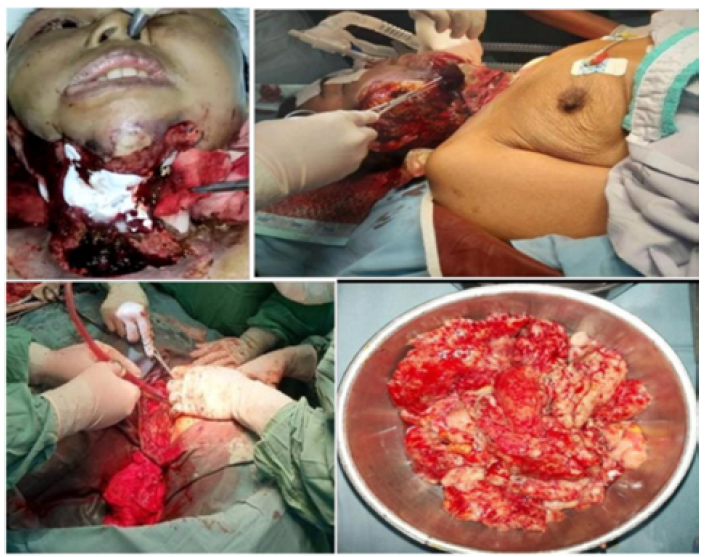
Figure 3: During Debulking Surgery of Nasopharyngeal Carcinoma
The surgical area was prepared with liquid Betadine and alcohol, then the patient was anesthetized with 2% Lidocaine in the left femoral area, and an incision was made in the puncture area with mess number 11. Then a puncture was performed on the right femoral artery. The right common carotid artery was accessed using a JR 3.5/6 Fr guiding catheter. After that, a wire measuring 0,035 x 260 mm was placed into the right common carotid artery. The guiding catheter was removed, and an OCEANUS 9.0 x 60mm balloon was inserted. Sheath fixation using Silkam 2.0 thread and an OCEANUS 9.0 x 60 mm balloon was placed in the right common carotid artery. It was found that the feeding artery in the right neck tumor originated from the external and internal common arteries. After REBOA was installed, a debulking surgery was performed with a total bleeding of 700 cc (bleeding was 200 cc when inflated and 500 cc after released). On the third postoperative follow-up, the patient complained about pain in the surgical area, the wound was covered with a bandage, and no bleeding was found (Figure 2,3).
DISCUSSION
Nasopharyngeal Carcinoma (NPC), formerly known as lymphoepithelioma, is a tumor that develops from the nasopharyngeal epithelium. This condition is caused by a complicated interplay between genetics and Epstein-Barr virus infection [3]. The main management for NPC is radiotherapy of local or regional lesions because non-keratinized types are highly radiosensitive. The patient will usually undergo a biopsy or debulking surgery followed by radiation therapy and chemotherapy. Commonly used chemotherapy regimens include cisplatin, 5-fluorouracil, and folinic acid [9].
The procedure for REBOA is inserting a flexible catheter into the femoral artery, guiding it into the aorta, and inflating the balloon at the tip. It prevents distal blood flow to the balloon and significantly reduces non-compressible intrathoracic/intra-abdominal bleeding [10]. Initially, this technique was used for the management of non-compressible trunk bleeding. Due to REBOA’s potential to cause aortic occlusion in numerous regions or "zones," its indications have increased to address a wide spectrum of morbidity [6]. REBOA in Zone I is beneficial for abdominopelvic hemorrhage, whereas REBOA in Zone III is effective for decreasing pelvic bleeding in the extremities. Due to the possibility of organ ischemia, zone II occlusion should be avoided [7].
In this case, we placed a balloon on the right common carotid artery, aiming to reduce intraoperative bleeding complications. This placement is rarely done, considering that REBOA is often used to control abdominopelvic and lower extremity bleeding. The total intraoperative bleeding was 1300cc, and there were no postoperative bleeding complications. In NPC surgery, intraoperative bleeding can reach up to 3000cc [2]. Therefore, the REBOA approach proved to be effective in reducing bleeding and increasing operator comfort in surgery to obtain maximum results.
CONCLUSION
REBOA is an effective technique for reducing intraoperative bleeding in debulking surgery of nasopharyngeal carcinoma. This modality can be used as a regular choice for debulking intervention of nasopharyngeal carcinoma.
REFERENCE
Yamamoto, R. et al. “Resuscitative endovascular balloon occlusion of the aorta (REBOA) is associated with improved survival in severely injured patients: a propensity score matching analysis.” American Journal of Surgery, vol. 218, no. 6, December 2019, pp. 1162–1168, pubmed.ncbi.nlm.nih.gov/31540683/.
Fee, W. E. Jr. et al. “Nasopharyngectomy for recurrent nasopharyngeal cancer.” Archives of Otolaryngology–Head and Neck Surgery, vol. 128, no. 3, 2002, p. 280.
Ansah, J. P. et al. “The effectiveness of public health interventions against COVID-19: Lessons from the singapore experience.” PLOS One, vol. 16, no. 3, March 2021, e0248742, journals.plos.org/plosone/article?id=10.1371/journal.pone.0248742.
Chang, E. T. et al. “The evolving epidemiology of nasopharyngeal Carcinoma.” Cancer Epidemiology, Biomarkers & Prevention, vol. 30, no. 6, June 2021, pp. 1035–1047, aacrjournals.org/cebp/article/30/6/1035/.
Sung, H. et al. “Global Cancer Statistics 2020: GLOBOCAN Estimates of Incidence and Mortality Worldwide for 36 Cancers in 185 Countries.” CA: A Cancer Journal for Clinicians, vol. 71, no. 3, May 2021, pp. 209–249, pubmed.ncbi.nlm.nih.gov/33538338/.
Thrailkill, M. A. et al. “Resuscitative endovascular balloon occlusion of the aorta (REBOA): Update and insights into current practices and future directions for research and implementation.” Scandinavian Journal of Trauma, Resuscitation and Emergency Medicine, vol. 29, no. 1, December 2021, pp. 1–15, sjtrem.biomedcentral.com/articles/10.1186/s13049-020-00807-9.
Kim, D. H. et al. “The utilization of resuscitative endovascular balloon occlusion of the aorta: preparation, technique, and the implementation of a novel approach to stabilizing hemorrhage.” Journal of Thoracic Disease, vol. 10, no. 9, September 2018, pp. 5550–5559, jtd.amegroups.com/article/view/23888/html.
Hishida, T. et al. “Debulking surgery for malignant tumors: The current status, evidence and future perspectives.” Japanese Journal of Clinical Oncology, vol. 51, no. 9, August 2021, pp. 1349–1362, academic.oup.com/jjco/article/51/9/1349/.
Zada, G. et al. “Nasopharyngeal carcinoma and squamous cell carcinoma of the paranasal sinuses.” Atlas of Sellar and Parasellar Lesions, 2016, pp. 359–365, link.springer.com/chapter/10.1007/978-3-319-22855-6_44.
Ribeiro Júnior, M. A. F. et al. “Resuscitative endovascular balloon occlusion of the aorta (REBOA): An updated review.” Revista do Colégio Brasileiro de Cirurgiões, vol. 45, no. 1, March 2018, www.scielo.br/j/rcbc/a/7kdjx6Y5BCtyCnd6g7fjyvN/.
Recommended Articles
Research Article
Advantages of Two Clips Laparoscopic Cholecystectomy (TCLC) and Conventional Laparoscopic Cholecystectomy (CLC): A Comparative Study
Anshu Attri,
...
Kartik Syal
Published: 10/01/2022
Download PDF
Research Article
Bladder Brilliance: Unveiling the Tapestry of Knowledge on Bladder Cancer in District Kangra, Himachal Pradesh
Vandana Thakur,
...
Ankita Pandey
Published: 08/12/2023
Download PDF
Research Article
Shouldering the Pain: Public Knowledge Assessment of Rotator Cuff Injuries in Himachal Pradesh
Sidhant Korla,
...
Praveen Kumar Thakur
Published: 30/07/2024
Download PDF
Research Article
Awareness regarding Symptoms and Treatment Options for Benign hypertrophy of prostate among the male patients attending outpatient department of Civil hospital , Nurpur, Himachal Pradesh
Aarti Chaudhary,
Brish Bhanu Bhardwaj
Published: 26/05/2023
Download PDF
PO Box 101, Nakuru
Kenya.
Email: office@iarconsortium.org
Editorial Office:
J.L Bhavan, Near Radison Blu Hotel,
Jalukbari, Guwahati-India
Amijaya, D. T. & Ismail, D. (2022). Application of Resucitative Endovascular Balloon Occlusion of the Artery (REBOA) in Common Carotid Artery : Debulking Case of Nasopharyngeal Carcinoma. International Academic Research Journal of Surgery, 2(2), 1-3.
MLA
Amijaya, Dody T. and Darmawan Ismail. "Application of Resucitative Endovascular Balloon Occlusion of the Artery (REBOA) in Common Carotid Artery : Debulking Case of Nasopharyngeal Carcinoma." International Academic Research Journal of Surgery 2.2 (2022): 1-3.
Chicago
Amijaya, Dody T. and Darmawan Ismail. "Application of Resucitative Endovascular Balloon Occlusion of the Artery (REBOA) in Common Carotid Artery : Debulking Case of Nasopharyngeal Carcinoma." International Academic Research Journal of Surgery 2, no. 2 (2022): 1-3.
Harvard
Amijaya, D. T. and Ismail, D. (2022) 'Application of Resucitative Endovascular Balloon Occlusion of the Artery (REBOA) in Common Carotid Artery : Debulking Case of Nasopharyngeal Carcinoma' International Academic Research Journal of Surgery 2(2), pp. 1-3.
Vancouver
Amijaya DT, Ismail D. Application of Resucitative Endovascular Balloon Occlusion of the Artery (REBOA) in Common Carotid Artery : Debulking Case of Nasopharyngeal Carcinoma. International Academic Research Journal of Surgery. 2022 Jul;2(2):1-3.


 Download PDF
 Download XML