Comparison of Satisfaction Level Using Likert Scale among Patients of Chronic Pelvic Pain in Pulsed Radiofrequency Ablation versus Thermal Radiofrequency Ablation of Ganglion Impar
Madhav Verma
1
,
Gian Chauhan
2
,
Kartik Syal
3
,
Rajesh Kumar Verma
3
,
Manoj Maitan
4
,
Akshu Bhardwaj
1
1
Junior Resident, Department of Anaesthesiology, I.G.M.C. Shimla, Himachal Pradesh, India
2
Professor, Department of Anaesthesiology, I.G.M.C. Shimla, Himachal Pradesh, India
3
Associate Professor, Department of Anaesthesiology, I.G.M.C. Shimla, Himachal Pradesh, India
4
Senior Resident, Department of Anaesthesiology, I.G.M.C. Shimla, Himachal Pradesh, India
Background: The present study was done to compare the Satisfaction level using Likert Scale among patients of chronic pelvic pain in pulsed radiofrequency ablation versus thermal radiofrequency ablation of Ganglion Impar. Material and Methods: The present study was prospective, randomized, single blinded study and was based on series of 30 patients presenting with chronic pelvic pain, having already failed conservative medical management, presenting in Pain clinic if IGMC Shimla. The patients were divided into 2 groups of 15 patients. Patients in Group A (n = 15) were given thermal radiofrequency ablation whereas patients in Group B were given pulsed radiofrequency ablation.Results: Mean age (in years) in group A and B was found to be 47.60± 6.833 and 42.67±7.807 years respectively. The p value was calculated to be 0.76 which was found to be statistically non-significant. According to Post 24 Hours Likert scale, in Group A, 2(13.3%) patients were satisfied and 13(86.7%) were very satisfied while in Group B, 1(6.7%) patient was neutral, 10(66.7%) were satisfied and 4(26.7%) patients were very satisfied (p = 0.004). According to Post 1 week Likert scale, in Group A, 2(13.3%) patients were satisfied and 13(86.7%) were very satisfied while in Group B, 1(6.7%) patient was neutral , 9(60.0%) were satisfied and 5(33.3%) patients were very satisfied (p = 0.011) Similarly 100% of the patients of group A were satisfied with the procedure as compared to patients of group B 3 weeks after the procedure (p = 0.011). Conclusion: Present study showed that mean Post Procedural satisfaction level using Likert Scale (24 Hours, 1,2 and 3 week) was significantly more in group A as compared to group B. we can conclude that thermal radiofrequency ablation of ganglion impar for chronic pelvic pain produces better satisfaction level in the patients as compared to patients who were treated with pulsed radio frequency ablation.
Keywords
Comparison
Satisfaction level using Likert Scale
Pulsed and Thermal Radiofrequency Ablation
Ganglion Impar
Chronic Pelvic Pain
INTRODUCTION
American College of Obstetricians and Gynaecologists (ACOG) define chronic pelvic pain as: noncyclical pain of at least six months' duration, involving the pelvis, anterior abdominal wall, lower back, and/or buttocks and serious enough to cause disability or to necessitate medical care [1].Radiofrequency ablation is a minimally invasive method for destroying nerve fibres that convey pain signals to the brain. Ganglion Impar radiofrequency ablation (RFA) is a well-established, drug-free treatment that has been clinically demonstrated to give safe, effective, and long-lasting pain relief. Radiofrequency current has two significant advantages over low frequency AC or DC pulses in that it does not directly activate nerves or heart muscle, allowing it to be employed without general anaesthetic in many cases. Under the stimulating needle, both TRF (thermal radiofrequency ablation) and PRF (pulsed radiofrequency ablation) treatments cause distance-dependent tissue damage. Even in normothermia settings, the acute effects of PRF are more reversible and less neurodestructive than those of TRF, hence PRF is preferable to TRF. PRF produces a transient inhibition of evoked synaptic activity and classic thermal RF (TRF) produces a lasting inhibition [2,3].
The purpose of this study is to present that patients with chronic pelvic pain that did not improve with medications but could be controlled after giving Ganglion Impar block using radiofrequency ablation. While viewing medical literature the studies of ganglion impar block were done using steroids, local anaesthestic, neurolytics and radiofrequency ablation , but we could find very few studies which compared the Satisfaction level using Likert Scale amomg Thermal versus Pulsed radiofrequency ablation in Ganglion Impar block for treatment of chronic pelvic pain in female patients hence we decided to pursue this study of comparison of pulsed versus thermal radiofrequency ablation in patients of chronic pelvic pain.
Aims and Objectives
To compare the Satisfaction level using Likert Scale among patients of chronic pelvic pain in pulsed radiofrequency ablation versus thermal radiofrequency ablation of Ganglion Impar.
MATERIALS AND METHODS
After obtaining approval from the Institutional ethics committee, CTRI registration number CRTI/2020/10/028306 and written informed consent of the patients, the proposed study was carried out in adult female patients of age groups 18-60 years, visiting the pain clinic for chronic pelvic pain, who had already taken medications for 2 weeks but inadequate benefit was reported by medications and physiotherapy trial.
Source of Data
This study was conducted on patients with chronic pelvic pain at IGMC and associated hospital KNSH for M and Ch Shimla with the approval of research and Ethics Committee.
Study Design
This study was randomized, single blinded prospective and controlled study.
Inclusion Criteria
Patient giving consent to participate in the study
Female patients with chronic pelvic pain after ruling out any obstetrics and gyanecological cause through specialist opinion and USG or negative diagnostic laproscopy
Patients above the age of 18 years and below 60 years
Patients who have had atleast two weeks trial of medications without significant effect
Patient with normal anatomy for ganglion impar block
Exclusion Criteria
Patient refusal
Patients with uncontrolled systemic diseases
Patients with infection or injury at the injection site
Patients with coccygectomy
Allergy to iodine contrast medium
Hypersensitivity
Patient with bleeding disorders and the patients on anticoagulants
A total of 30 patients from pain clinic who were suffering from chronic pelvic pain were included after obtaining written consent.
Sample Size Calculation
The sample size was calculated to be of 15 subjects for each group; this was calculated on the basis of a similar study in chronic pelvic pain patients where the minimum number of patients required were found to be 31, with a power of at least 80% and α of 0.05. Anticipating loss of subjects during the study, we enrolled 30 patients in our study, 10 in each group.
The patients were divided into 2 groups of 15 patients each using computer generated random numbers.
Group A (Group –Thermal RFA) patients were treated with thermal radiofrequency ablation
Group B (Group – Pulsed RFA) patients were treated with pulsed radiofrequency ablation
The study was randomized, single blinded prospective and controlled study with follow up done weekly for three weeks either by routine checkup in the pain clinic or through a phone call. They underwent radiofrequency ablation of Ganglion Impar by trans-sacro-coccygeal technique using C-arm guidance.
The ganglion impar block was administered in all these patients under all aseptic precautions using C-arm guidance to mark and identify bony landmarks.
Methodology
All patients underwent a routine preanaesthetic checkup. During this, thorough history, general examination, routine investigations of the patients i.e. FBS/RBS, bleeding time (BT), clotting time (CT) of the patient was carried out.
Pre-procedural assessment of satisfaction was done using likert scale. After confirmation of inclusion criteria of the patient by the anesthesiologist the procedure was undertaken. Written informed consent was taken from the patient prior to the procedure explaining the various risks and benefits of the procedure. A 20-gauge venous access was secured and basic monitors such as noninvasive blood pressure, and saturation (SpO2) probe will be connected.
The procedure was carried out with the patient in prone position with pillow under the abdomen to allow flexion of the lumbosacral spine and the lower extrimities rotated internally.
The procedure was performed using C-arm to identify and mark the essential bony landmarks. Under strict aseptic precautions the saccrococcygeal and gluteal regions were cleaned with savlon and painted with povidone iodine 10%. The area was drapped with sterile towels, and the access region was left open. A skin wheal was raised with 1% lidocaine using 25-gauge needle after the identification of the disc in lateral projection. A true lateral image was obtained by superimposing the two greater sciatic notches.
22G, 5 cm long with 5mm active tip radiofrequency needle was then introduced from the marked site to pierce the saccrococcygeal joint and position was confirmed after injecting non-ionic dye and needle placement was confirmed by induction of reverse comma sign/ “crescent” sign in lateral fluroscopic views. A diagnostic block was performed using 1% lidocaine 10ml.
After 5 min, patient was ressessed and if the patient considers pain relief of atleast 2-point reduction in VAS scores, the patients were considered candidates for radiofrequency ablation of Ganglion Impar.
Before radiofrequency ablation was performed, tissue impedence check and motor and sensory tests were done. These comprised tissue impedence <600 Ohm, sensory response <50 Hz and motor response < 2 Hz at stimulation intensity between 0.4 – 0.8 volts. Patients with no significant decrease in VAS score were excluded from this study.
Thereafter radiofrequency ablation was done depending upon the group:
Group A: Thermal radiofrequency ablation, was done using radiofrequency thermocouple electrode (Cosman Medical Co Inc.) connected to Cosman radiofrequency generator using following parameters: tissue impedance <600 Ohm, sensory response <50 Hz, and a motor response <2 Hz at a stimulation intensity between 0.4–0.8 volts (V) with 3 cycles each 90 seconds apart and temperature ranging from 60 -80°C
Group B: Pulsed radiofrequency ablation, was done using radiofrequency thermocouple electrode using the following parameters: voltage output 45 V, 2 Hz frequency, 20 ms pulses in a one-second cycle, 120 second duration per cycle, impedance range between 150 and 500 Ohms with 3 cycles and a 42°C plateau temperature Inj bupivacaine 5ml and inj dexamethasone 2 mg was injected the end of procedure to overcome ablation induced pain and neuritis. Follow up was done after the procedure
Patients were kept in the recovery room for 2 hours and then sent home with the attendents on the day of the procedure with routine single dose antibiotic prophylaxis, NSAIDS in the form of Tablet Diclofenac 100mg SR for 3 days. Patients were advised to abstain from heavy workload after the procedure. Follow-up after 24 hours,1 week, 2 weeks and 3 weeks was done either in OPD or telephonically. Patient satisfaction was be assessed using by likert 5-point scale.
Failure cases: Patients who did not achieve a successful block, that is patients in whom there is no decrease in VAS by 2 points after 24 hours of block were dropped from further study; but the number was noted as failure cases and other form of treatment was given.
Likert 5-Point Scale
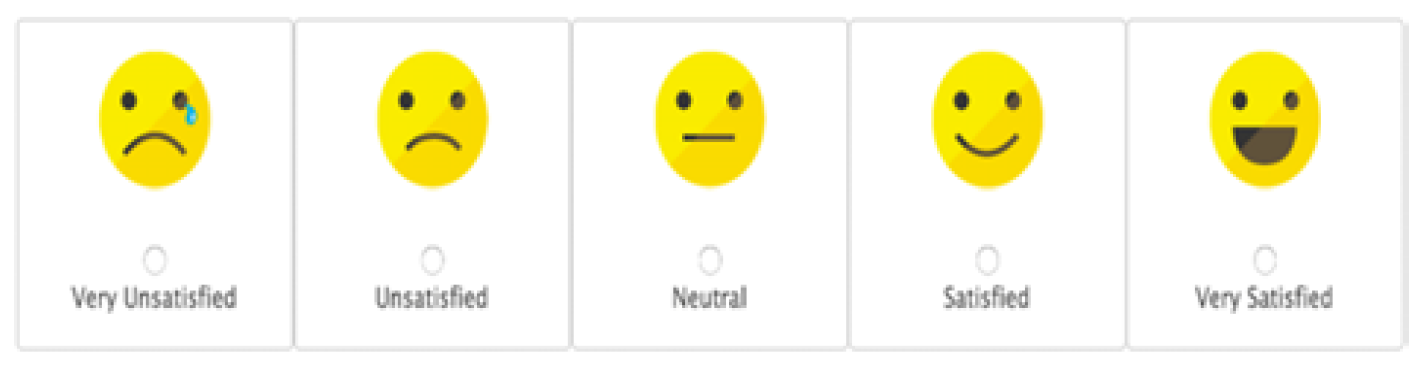
Patient satisfaction will be assessed by likert 5-point scale (Figure 1).
Figure 1: Very Unsatisfied (1), Unsatisfied (2), No Comment (3), Satisfied (4), Very Satisfied (5)
Data Analysis
All the data collected from the patient’s records was transferred into MS Excel sheet for further processing and analysis. Data was further analyzed using standard statistical software. In order to compare results between two study groups, appropriate parametric or non-parametric test of statistical significance was used. Probability value (p-value) less than 0.05 was considered statistically significant.
RESULTS
The present study was conducted in prospective, single blind, randomized controlled manner in the Pain Clinic in the Department o Anesthesiology at Indira Gandhi Medical College and Hospita. It comprised of total 30 female patients between age group 30- 60 years. Patients were randomly divided into two groups. Patients in Group A (n = 15) were given thermal radiofrequency ablation whereas patients in Group B were given pulsed radiofrequency ablation. No patients experienced any interventional failure (inability to obtain proper fluoroscopic view of dye). So, in each group 15 patients were studied.
Demographic Analysis
According to age distribution, in group A , 3(20%) were≤ 40 years, 6(40%) were between 41-50 years and 6(40%) were between 51-60 years of age while in group B , 8(53.3%) were≤ 40 years, 4(26.7%) were between 41-50 years and 3(20%) were between 51-60 years of age .The p value was calculated to be 0.159 which was found to statistically non-significant (Table 1).
Table 1: Age Wise Distribution of the Patients
Parameters
Group
Total
p value
A
B
Age group
≤ 40
No. of Patients
3
8
11
0.159
%
20.0%
53.3%
36.7%
41-50
No. of Patients
6
4
10
%
40.0%
26.7%
33.3%
51-60
No. of Patients
6
3
9
%
40.0%
20.0%
30.0%
Total
No. of Patients
15
15
30
%
100.0%
100.0%
100.0%
Mean age (years)
47.60±6.833
42.67±7.807
45.13±7.633
0.76
Mean age (in years) in group A and B was found to be 47.60± 6.833 and 42.67±7.807 years respectively. The p value was calculated to be 0.76 which was found to be statistically non-significant.
Likert Scale
Pre -procedural Likert Scale: According to Pre-procedural Likert scale, in Group A, 12(80%) patients were unsatisfied and 3(20%) were very unsatisfied while in Group B, 14(93.3%) patients were unsatisfied and 1(6.7%) was very unsatisfied. The p value was 0.223 which was statistically non-significant (Table 2).
Table 2: Comparison of Pre Procedural Likert Score
Parameters
Group
Total
p value
A
B
Pre-procedural Likert Score
Unsatisfied
No. of Patients
12
14
26
0.223
%
80.0%
93.3%
86.7%
Very Unsatisfied
No. of Patients
3
1
4
%
20.0%
6.7%
13.3%
Total
No. of Patients
15
15
30
%
100.0%
100.0%
100.0%
Post 24 Hours Likert Scale
According to Post 24 Hours Likert scale, in Group A, 2(13.3%) patients were satisfied and 13(86.7%) were very satisfied while in Group B, 1(6.7%) patient was neutral, 10(66.7%) were satisfied and 4(26.7%) patients were very satisfied. The p value was 0.004 which was statistically significant (Table 3).
Table 3: Comparison of Post 24 Hours Likert Score
Parameters
Group
Total
p value
A
B
Post 24 Hours Likert Score
Neutral
No. of Patients
0
1
1
0.004
%
0.0%
6.7%
3.3%
Satisfied
No. of Patients
2
10
12
%
13.3%
66.7%
40.0%
Very Satisfied
No. of Patients
13
4
17
%
86.7%
26.7%
56.7%
Total
No. of Patients
15
15
30
%
100.0%
100.0%
100.0%
Post 1 week Likert Scale
According to Post 1 week Likert scale, in Group A, 2(13.3%) patients were satisfied and 13(86.7%) were very satisfied while in Group B, 1(6.7%) patient was neutral, 9(60.0%) were satisfied and 5(33.3%) patients were very satisfied. The p value was 0.011 which was statistically significant (Table 4).
Table 4: Comparison of Post 1 week Likert Score
Parameters
Group
Total
p value
A
B
Post 1 week Likert Score
Neutral
No. of Patients
0
1
1
0.011
%
0.0%
6.7%
3.3%
Satisfied
No. of Patients
2
9
11
%
13.3%
60.0%
36.7%
Very Satisfied
No. of Patients
13
5
18
%
86.7%
33.3%
60.0%
Total
No. of Patients
15
15
30
%
100.0%
100.0%
100.0%
Post 2 weeks Likert Scale
According to Post 2 weeks Likert scale, in Group A, 3(20%) patients were satisfied and 12(80.0%) were very satisfied while in Group B, 1(6.7%) patient was neutral, 9(60.0%) were satisfied and 5(33.3%) patients were very satisfied. The P value was 0.032 which was statistically significant (Table 5).
Table 5: Comparison of Post 2 weeks Likert Score
Parameters
Group
Total
p value
A
B
Post 2 weeks Likert Score
Neutral
No. of Patients
0
1
1
0.032
%
0.0%
6.7%
3.3%
Satisfied
No. of Patients
3
9
12
%
20.0%
60.0%
40.0%
Very Satisfied
No. of Patients
12
5
17
%
80.0%
33.3%
56.7%
Total
No. of Patients
15
15
30
%
100.0%
100.0%
100.0%
Post 3 weeks Likert Scale
According to Post 3 weeks Likert scale, in Group A, 3(20%) patients were satisfied and 12(80.0%) were very satisfied while in Group B, 2(13.3%) patients were neutral, 9(60.0%) were satisfied and 4(26.7%) patients were very satisfied. The P value was 0.011 which was statistically significant (Table 6).
Table 6: Comparison of Post 3 weeks Likert Score
Parameters
Group
Total
p value
A
B
Post 3 weeks Likert Score
Neutral
No. of Patients
0
2
2
0.011
%
0.0%
13.3%
6.7%
Satisfied
No. of Patients
3
9
12
%
20.0%
60.0%
40.0%
Very Satisfied
No. of Patients
12
4
16
%
80.0%
26.7%
53.3%
Total
No. of Patients
15
15
30
%
100.0%
100.0%
100.0%
DISCUSSION
Chronic pelvic pain (CPP) is an idiopathic multifactorial disorder which results due to intricate interaction between neurological and musculoskeletal systems which is mediated by sympathetic nerves. The reason for CPP is due to origin from fused termination of bilateral paravertebral sympathetic chains. This is a retroperitoneal structure usually behind rectum in midline or paramedian and is responsible for nociceptive and sympathetic innervations to pelvic organs.
Ganglion Impar block have been described in the literature and used for the first time by Plancarte et al.[4] mainly for management of intractable coccydynia, chronic pelvic pain/ prostatic and pain of malignant etiologies. This block can be given to diagnose and locate the ganglionic fibres and has also been used for therapeautic purposes. Neuromodulation which includes pulsed and thermal radiofrequency ablation have become more popular these days. In this study we have compared neurolysis with neuromodulation where we compared thermal versus pulsed radiofrequency ablation.
We conducted a prospective single blinded randomized control study with a calculated sample size of 30 with history of pelvic pain where we compared thermal radiofrequency ablation versus pulsed radiofrequency ablation. No literature is available with similar study design using the above-mentioned techniques.
In a study conducted by Usmani et al. [5], they evaluated patients satisfaction using excellent good and poor varable in his questionnaire pertaining to pain relief in sitting and standing and analgesic requirement. They futher observed that patient satisfaction was more on later weeks i.e. 6th and 12th week as compared to 1st and 2nd week. In our study we used Likert scale to assess patient satisfication levels as very unsatisfied, unsatisfied, no comments, satisfied and very satisfied. Satisfaction level in thermal RFA group was found to be better than pulsed RFA and was clinically significant (p value <0.05). Blockade of the ganglion impar is an effectual pain-relieving procedure for management of chronic pelvic pain. In a study conducted by Sir and Eksert[6], they compared block and pulsed radiofrequency ablation of ganglion impar in chronic coccygodynia patients. They assessed likert scale at 6th month, that was found statistically significant (p valve<0.001). The long-lasting effect of radiofrequency ablation provides better pain relief.
Limitations
Our study was limited by the limited amount of research that has been conducted in this field. Very few studies have been conducted which described Ganglion Impar using radiofrequency ablation for chronic pelvic pain. We found no study which compared thermal radiofrequency versus pulsed radiofrequency ablation of Ganglion Impar in patients with chronic pelvic pain. The sample size was low in our study due to the Covid pandemic which affected many patients. Above all our study was dependent on referral of patients from other departments who did not respond to conservative management. Lack of general awareness of pain clinic and procedures and under treatment of the symptoms also contributes to poor patient compliance.
CONCLUSION
Present study showed that mean Post Procedural satisfaction level using Likert Scale (24 Hours, 1,2 and 3 week) was significantly more in group A as compared to group B. we can conclude that thermal radiofrequency ablation of ganglion impar for chronic pelvic pain produces better satisfaction level in the patients as compared to patients who were treated with pulsed radio frequency ablation.
REFERENCE
Maigne, J.Y. et al. “Comparison of three manual coccydynia treatments: A pilot study.” Spine, vol. 26, no. 20, October 2001, pp. E479–E483.
Usta, B. et al. “Fluoroscopically guided ganglion impar block by pulsed radiofrequency for relieving coccydynia.” Pain Practice, vol. 39, 2010, pp. E1–E2.
Bonica, J.J. “The management of pain of cancer.” Journal of the Michigan State Medical Society, vol. 52, no. 3, March 1953, pp. 284–290.
Plancarte, R. et al. “Presacral blockade of the ganglion of walther (ganglion impar).” Anesthesiology, vol. 73, 1990, pp. 751.
Usmani, H. et al. “Conventional radiofrequency thermocoagulation versus local anesthetic and steroid injection for ganglion impar block in chronic perineal pain of non-oncological origin.” Journal of Anesthesia and Clinical Care, vol. 1, 2014, pp. 005.
Sir, E. and S. Eksert. “Comparison of block and pulsed radiofrequency of the ganglion impar in coccygodynia.” Turkish Journal of Medical Sciences, vol. 49, no. 5, 2019, pp. 1555–1559.
Recommended Articles
Research Article
Advantages of Two Clips Laparoscopic Cholecystectomy (TCLC) and Conventional Laparoscopic Cholecystectomy (CLC): A Comparative Study
Anshu Attri,
...
Kartik Syal
Published: 10/01/2022
Download PDF
Research Article
Bladder Brilliance: Unveiling the Tapestry of Knowledge on Bladder Cancer in District Kangra, Himachal Pradesh
Vandana Thakur,
...
Ankita Pandey
Published: 08/12/2023
Download PDF
Research Article
Shouldering the Pain: Public Knowledge Assessment of Rotator Cuff Injuries in Himachal Pradesh
Sidhant Korla,
...
Praveen Kumar Thakur
Published: 30/07/2024
Download PDF
Research Article
Awareness regarding Symptoms and Treatment Options for Benign hypertrophy of prostate among the male patients attending outpatient department of Civil hospital , Nurpur, Himachal Pradesh
Aarti Chaudhary,
Brish Bhanu Bhardwaj
Published: 26/05/2023
Download PDF
PO Box 101, Nakuru
Kenya.
Email: office@iarconsortium.org
Editorial Office:
J.L Bhavan, Near Radison Blu Hotel,
Jalukbari, Guwahati-India
Verma, M., Chauhan, G., Syal, K., Kumar Verma, R., Maitan, M. & Bhardwaj, A. (2022). Comparison of Satisfaction Level Using Likert Scale among Patients of Chronic Pelvic Pain in Pulsed Radiofrequency Ablation versus Thermal Radiofrequency Ablation of Ganglion Impar. International Academic Research Journal of Surgery, 2(1), 1-6.
MLA
Verma, Madhav, et al. "Comparison of Satisfaction Level Using Likert Scale among Patients of Chronic Pelvic Pain in Pulsed Radiofrequency Ablation versus Thermal Radiofrequency Ablation of Ganglion Impar." International Academic Research Journal of Surgery 2.1 (2022): 1-6.
Chicago
Verma, Madhav, Gian Chauhan, Kartik Syal, Rajesh Kumar Verma, Manoj Maitan and Akshu Bhardwaj. "Comparison of Satisfaction Level Using Likert Scale among Patients of Chronic Pelvic Pain in Pulsed Radiofrequency Ablation versus Thermal Radiofrequency Ablation of Ganglion Impar." International Academic Research Journal of Surgery 2, no. 1 (2022): 1-6.
Harvard
Verma, M., Chauhan, G., Syal, K., Kumar Verma, R., Maitan, M. and Bhardwaj, A. (2022) 'Comparison of Satisfaction Level Using Likert Scale among Patients of Chronic Pelvic Pain in Pulsed Radiofrequency Ablation versus Thermal Radiofrequency Ablation of Ganglion Impar' International Academic Research Journal of Surgery 2(1), pp. 1-6.
Vancouver
Verma M, Chauhan G, Syal K, Kumar Verma R, Maitan M, Bhardwaj A. Comparison of Satisfaction Level Using Likert Scale among Patients of Chronic Pelvic Pain in Pulsed Radiofrequency Ablation versus Thermal Radiofrequency Ablation of Ganglion Impar. International Academic Research Journal of Surgery. 2022 Jan;2(1):1-6.



 Download PDF
 Download XML