To assess whether auto sterilization of raw honey is possible. Methods and Materials: This study was conducted at Amit Jain’s Centre of Apitherapy at Amit Jain’s Institute of Diabetic Foot and Wound Care, Brindhavvan Areion Hospital, Bengaluru. 5 ml of raw honey was sent to microbiology lab before storing and 4 weeks after storing of the honey. Results: Honey grew Aspergillus niger and Diphtheroids before and after auto sterilization. Conclusion: Honey does not auto sterilize itself and other methods of sterilization like gamma irradiation is needed to render it medical grade honey.
Honey is a natural substance that is derived from nectar which is gathered and modified by honey bees [1,2]. It has been used since ancient times both as food and as medicine [3,4]. Honey is known to have antimicrobial activity and has been used for thousands of years [5]. The high prevalence of multidrug resistant microbes on wounds has resulted in re-emergence of its use in clinical practice [6]. Honey is believed to have significant inhibitory effects against aerobic and anaerobic bacteria apart from fungi [3]. It is seen that the antibacterial activity of honey varies and can be up to hundred-fold [7]. The antibacterial activity of honey is due to high sugar’s, low PH and water content and due to generation of hydrogen peroxide [5,7,8,9].
In spite of excellent antimicrobial activity of honey, there is often presence of microorganisms in raw honeys and it happens during process of extraction [5,9]. Hence, for honey to be used as wound care agent, it has to be sterilized. The best and recommended method for honey sterilization has been gamma irradiation for it to be used on wounds [10,11]. Owing to its property of antimicrobial activity, we hypothesized that honey could sterilize itself from microbes, that contaminates honey during extraction process; by storing it for few weeks and hence we conducted this study.
We used a freshly obtained raw honey from Amit Jain’s Centre of Apitherapy at Amit Jain’s Institute of Diabetic Foot and Wound Care, Brindhavvan Areion Hospital, Bengaluru, India. The center currently uses 2 types of Indian Honey, one from Apis Dorsata species, which is an Indian rock bee and another from Apis Florea. The Amit Jain’s Centre of Apitherapy is one of the eponymous wings within Amit Jain’s Institute of Diabetic Foot and Wound Care and it deals with acquisition, sterilization, storage and use of different types of honey on wounds and this centre aims at doing research work on honey.
50 ml of raw honey from Apis Dorsata was obtained in sterile container. 5 ml of this honey was sent to Department of Microbiology of RRMCH for determining aerobic, anaerobic and fungal growth in culture. The honey samples were inoculated onto chocolate agar, 5% sheep blood agar and McConkey agar to look for bacterial aerobic growth at 37O C, thioglycolate media for anaerobic bacterial growth and sabourauds dextrose agar for fungal growth at 37o C and 25oC for 2 and 7 days respectively. The honey in sterile container was then stored in a dark cupboard for 4 weeks. After 4 weeks, another 5 ml of this honey was sent for aerobic, anaerobic and fungal culture.

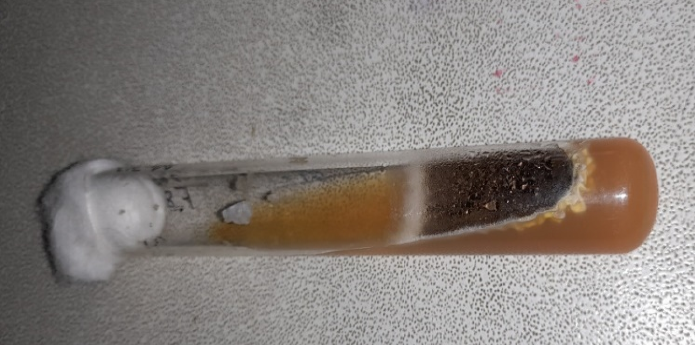
Figure 1: Showing Aspergillus Niger Growth
The honey had initially yielded Aspergillus niger and Diphtheroids in culture. After 4 weeks of storage, the honey sample still grew Aspergillus niger (Figure 1) and Diphtheroids in culture.
In spite of honey being known to have antimicrobial action against Staphylococcus aureus, Candida albicans, Pseudomonas, Salmonella, Escherichia coli, etc, it is well known to have microorganisms within it [12,13].
These microbes come from nectar, pollen, bees’ intestine, humans, equipments, dust, wind, etc. [13,14]. Some of the known microorganisms found in honey are Proteus, Klebsiella, Bacillus, Clostridium, etc. [14,15]. In spite of presence of different microbes within honey, it is seen that they cannot replicate in honey due to its antimicrobial activity that inhibits growth of many microbes [14]. However, few spore forming microbes have known to survive in honey and for honey to be used on wounds, it has to be rendered as medical grade honey by sterilization [12,14].
There are distinct method of sterilization and some of the common methods include heating, pasteurization, freezing, gamma irradiation, etc [1,16]. Gamma Irradiation is the most accepted method of sterilizing honey that is to be used on wounds as it does not destroy properties of honey [17]. However, gamma irradiation is not easily available in many cities and it is also expensive apart from time consuming.
Owing to its antimicrobial action, the author hypothesized that honey could itself sterilize from microbes that contaminated it and performed this study.
Honey is a potent antimicrobial agent that can be used on wounds. It however has many microorganisms that mandates honey to be sterilized to render it as medical grade honey. Auto sterilization of honey doesn’t happen as observed in this study and one needs to resort to other effective method of sterilization like gamma Irradiation.
Acknowledgment
The author would like to thank the team of Department of Microbiology of RRMCH for helping us in culturing the honey samples.
Hussain, S.Z. et al. “Does gamma irradiation affect physicochemical properties of honey.” Clinica Terapeutica, vol. 165, no. 2, 2014, pp. e125–e133.
Yaghoobi, R. et al. “Evidence for clinical use of honey in wound healing as an antibacterial, anti-inflammatory, antioxidant and antiviral agent: A review.” Jundishapur Journal of Natural Pharmaceutical Products, vol. 8, no. 3, 2013, pp. 100–104.
Eyarefe, O.D. et al. “Wound healing potential of natural honey in diabetic and non-diabetic wistar rats.” African Journal of Biomedical Research, vol. 17, 2014, pp. 15–21.
Song, J.J. and R. Salcido. “Use of honey in wound care.” Advances in Skin & Wound Care, vol. 24, no. 1, 2011, pp. 40–44.
Cooper, R.A. and L. Jenkins. “A comparison between medical grade honey and table honey in relation to antibacterial activity.” Wounds, vol. 21, no. 2, 2009, pp. 29–36.
Deshpande, S.D. and K.S. Kulkarni. “In vitro effect of some indian honey on staphylococcus aureus from wounds.” Indian Journal of Experimental Biology, vol. 48, 2010, pp. 931–935.
Molan, P.C. and J.A. Betts. “Clinical usage of honey as a wound dressing: An update.” Journal of Wound Care, vol. 13, no. 9, 2004, pp. 353–356.
Cooper, R. “The use of honey in diabetic foot ulcers.” The Diabetic Foot Journal, vol. 25, no. 3, 2017, pp. 154–159.
Jain, A.K.C. et al. “Antibacterial activity of medical grade Indian honey.” International Journal of Medical Science and Clinical Research, vol. 3, no. 2, 2021, pp. 21–23.
Jain, A.K.C. “Bee…my honey, you are now my first love: A whimsical review.” Medicine Science, vol. 10, no. 1, 2021, pp. 268–270.
Jain, A.K.C. “Long-term maintenance of sterility of Indian honey.” SRJ Clinical & Medical Sciences, vol. 1, no. 1, 2021, pp. 14–15.
Haynes, J.S. and R. Callaghan. “Properties of honey: Its mode of action and clinical outcomes.” Wounds UK, vol. 7, no. 1, 2011, pp. 50–57.
Olaitan, P.B. et al. “Honey: A reservoir for microorganisms and an inhibiting agent for microbes.” African Health Sciences, vol. 7, no. 3, 2007, pp. 159–165.
Al-Waili, N. et al. “Antibiotics, pesticide and microbial contaminants of honey: Human health hazards.” The Scientific World Journal, 2012, Article ID 930849.
Pajor, M. et al. “The antimicrobial potential of bacteria isolated from honey samples produced in apiaries located in the pomeranian voivodeship in Northern Poland.” International Journal of Environmental Research and Public Health, vol. 15, 2018, p. 2002.
Jalali, F.S.S. et al. “In vitro assessment of efficacy of gamma irradiation on the antimicrobial activity of Iranian honey.” Journal of Animal and Veterinary Advances, vol. 6, no. 8, 2007, pp. 996–999.
Jain, A.K.C. et al. “Sterilization of Indian honey with cobalt 60 gamma irradiation.” Journal of Apitherapy and Nature, vol. 3, no. 2, 2020, pp. 99–103.