The chelating activity was studied by developing a UV Spectrophotometric method for calcium disodium versenate with the salts of the selected heavy metals such as mercury, lead, zinc and copper. The method was applied for the methanolic extract of Carica papaya leaves. Water was used to prepare the stock solution and the diluent used was 0.1 M HCl. The measurement wavelength of 205 nm was selected. The linearity of calcium disodium versenate was found in the range of 40 to 240 mcg/mL with a correlation coefficient of 0.999. The maceration period was 36 hours for the methanolic extract of Carica papaya leaves. The method developed is economical, simple, selective and sensitive for the analysis of the heavy metals complex formed with calcium disodium versenate. The method suggests that the Carica papaya leaves extract can be applied for the treatment of toxicity of lead and copper.
Heavy metal toxicity is a major threat and can cause several health risks associated with it. The metal toxicity depends upon the absorbed dose, route of exposure and duration of exposure the heavy metals are generally referred to those metals with specific density of more than 5 gm per cm3 which in very low concentration can have significant toxic effect for humans and environment [1].
Calcium Disodium Versenate (edetate calcium disodium injection, USP) is a sterile, injectable, chelating agent in concentrated solution for intravenous infusion or intramuscular injection. Each 2.5 mL ampul contains 500 mg of edetate calcium disodium (equivalent to 200 mg/mL) in water for injection. Chemically, this product is called ((N, N'-1,2-ethanediyl-bis (N-(carboxymethyl) glycinato)) (4-)-N,N',O,O',ON,ON']-, disodium, hydrate, (OC-6-21)-Calciate (2-). With molecular formula of C10H12CaN2Na2O8•xH2O and molecular weight 374.27 (anhydrous) [2].
Mercury exist in multiple oxidative states, as inorganic salts an as organic complexes the mercury ions reduce toxic effects by protein precipitation, enzyme inhibition with non - specific signs and symptoms [3]. Lead is a naturally occurring metal in the environment and also has wide application in industrial agricultural and domestic areas the exposure of lead mainly occurs through inhalation of lead contaminated dust particles [4]. The zinc influences apoptosis by acting on several molecular regulators of programed cell death, neuronal development and immunity [5].
Following acute ingestion of copper salts such as copper sulphate in amounts that exceeds approximately 1 gm systemic effect are generally observed. The effects include GI mucosal ulceration and bleeding acute hemolysis and hemoglobinuria, hepatic necrosis with jaundice, nephropathy with azotemia and oliguria cardiotoxicity with hypotension tachyardia and tachypnea and central nervous system manifestation including dizziness headache convulsions lethargy, stupor and coma [6].
Carica papaya is one of the most cultivated plants in tropical countries and the most popular and economically important species among the Caricaceae family [7]. The preliminary phytochemical and physicochemical analysis of Carica papaya leaves has been carried out and further evaluation of the pharmacological activity have been demonstrated by the in-vitro and in-vivo studies for the anti-dengue, anti-plasmodial, anti-cancer, antibacterial, hepatoprotection, anti-inflammatory and antioxidant activity [8-10].
Jasco V-630 spectrophotometer are the instrument used for the analysis of the sample. Shimadzu BL-2204 is used for weighing the samples. The Organic Solvent Methanol and Hydrochloric acid was procured from SD Fine Chem. Limited, Mumbai. The Carica papaya leaves were collected from the agricultural land in Salem District, Tamilnadu, India and authenticated by the ABS Herbal Gardens, Nagalur road, Yercarud, Tamilnadu, India.
Experimental Section
Chelating activity of Calcium Disodium Versenate with Heavy Metals by UV Spectroscopy Initial Experimental Conditions
Selection of Solvent
The chelating agent calcium disodium versenate was found to be soluble in water and acidic medium.The salts of heavy metals such as mercury,lead,zinc and copper were also completely soluble in water.Hence water was selected to prepare the stock solution and further dilution were carried out with 0.1MHCl.
Selection of Wavelength
The suitable wavelength for the UV analysis was determined by recording the spectrum of calcium disodium versenate in the range of 200-400 nm. The wavelength at which the absorbance was found to be maximum was chosen for the study. The wavelength of 205 nm was selected for the measurements of the absorbance from the spectrum recorded for the solution chelating agent and heavy metals.
Preparation of Stock Solution of Calcium Disodium Versenate
The stock solution of 1mg/mL of calcium disodium versenate was prepared in distilled water.
Preparation of Solution for Linearity Graph
The 1000μg/mL of Calcium Disodium Versenate was diluted using 0.1 MHCl. The volume of 0.4,0.8,1.2,1.6,2.0 and 2.4mL were diluted into 10mL volumetric flask and the volume made up with 0.1M HCl to give a concentration of 40μg/mL, 80μg/mL, 120μg/mL, 160μg/mL, 200μg/mL, 240μg/mL.
Preparation of Heavy Metal Solution
An exact quantity of 10mg of each individual heavy metal was weighed in a 10 mL volumetric flask. To this sufficient quantity of distilled water was added and dissolved. The volume was made up with distilled water and shaken thoroughly to obtain a 1000μg/mL concentration of each solution.
Preparation of Standard Solution
The 1000μg/mL of stock solution of each metal was further diluted with 0.1 M HCl to give a concentration of 3μg/mL.
Preparation of Carica Papaya Leaf Extract Solution
Selection Procedure
The plant selected was Carica papaya belonging to Caricaceae -family
The collected whole plant was identified and certified
Preparation of the Carica Papaya Leaf Powder Sample
Preparation of Crude Sample: The Carica papaya leaf was collected from an authenticated source. Physical examination of the leaves was carried to identify any type of contamination or growth of microorganisms. The healthy leaves free from contamination and microorganism were selected and isolated. The selected leaves were dried in shade at room temperature by spreading on a adsorbent and protected from rodents. After a period of two weeks the leaves were collected and stored in an air tight polyurethane bags in a cool dry place.
Preparation of Sample Powder
A quantity of about 500 grams of the powder were broken into small pieces using a blender and finely grinded into a powder in a angle grinder. The powdered sample was passed through a mesh size of 22 to remove the larger size particles. The powder sample prepared were stored in an air tight glass containers and stored in a cool dry place until the use.
Extraction Procedure
The extraction procedure was carried out for 36 hours for the efficient maceration of the constituents. The extracts were sonicated and filtered. The clear filtrate was stored in an airtight container at controlled temperature.
Preparation of Mixture of Calcium Disodium Versenate with Heavy Metals
A volume of 0.8mL of calcium disodium versenate was taken from the stock concentration of 1000μg/mL and added to 0.3mL of mercuric chloride/ lead nitrate/zinc sulphate/ copper sulphate solution in a 10 ml volumetric flask individually and finally made up with 0.1 M HCl.
Preparation of Mixture Solution of Methanolic Carica Papaya Leaf Extract with Heavy Metals
The stock solution of methanolic Caricapapaya extract was diluted sufficiently and to this the solution of 3mL of 10μg/mL of mercuric chloride/lead nitrate/zinc sulphate/copper sulphate was added the volume was made with 0.1M HCl and mixed vigorously. The absorbance of resulting individual solution was measured at 205 nm.
Linearity of Calcium Disodium Versenate
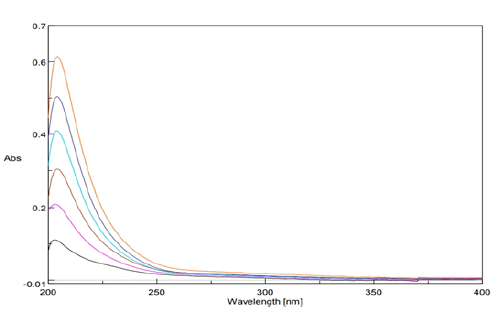
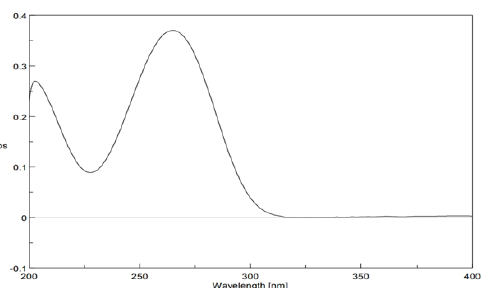
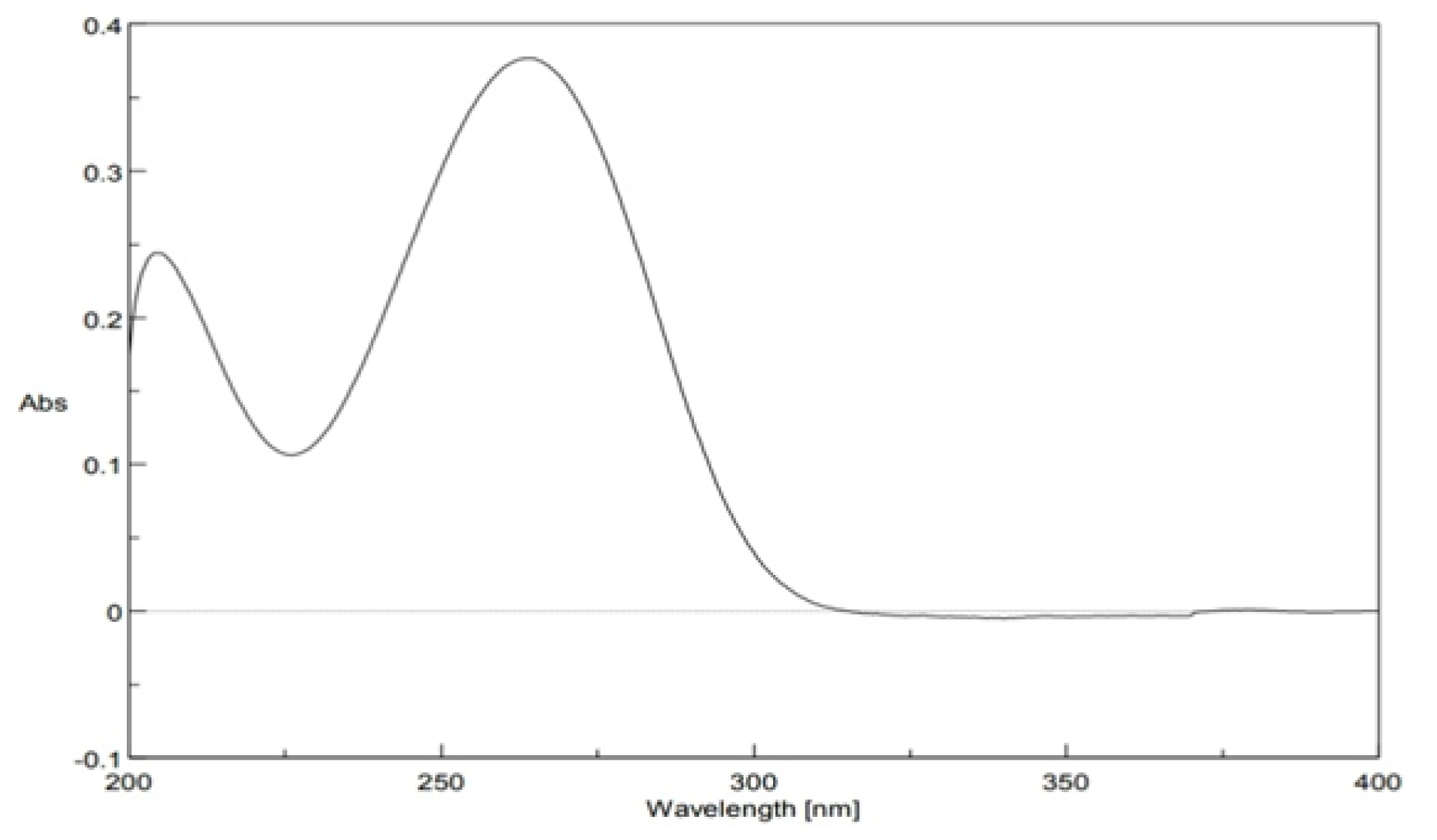
The solution of 40μg/mL, 80μg/mL, 120μg/mL, 160μg/mL, 200μg/mL, 240μg/mL was scanned between 200–400nm. The wavelength of maximum absorption was noted and values are given in Table I. The overlay spectra are shown in Figure 1. The slope of the curve of regression analysis was evaluated. The correlation coefficient was found to be 0.999.
UV Spectrum of Heavy Metals
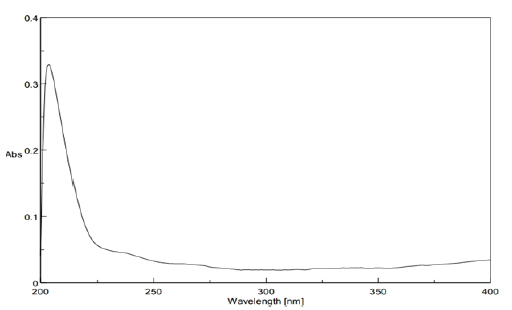
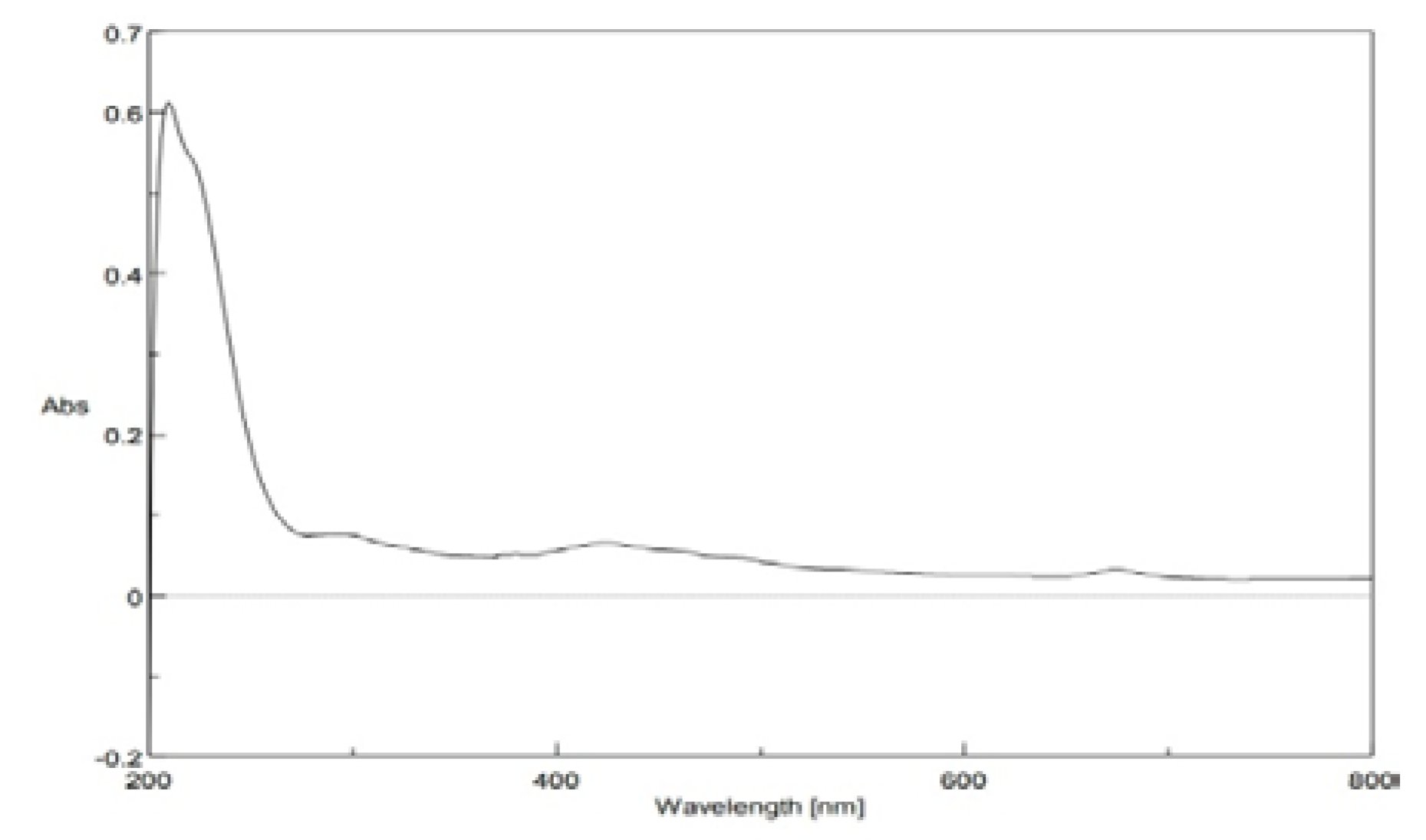
The Methanolic extract of CaricapapayaLeaves was filtered through whatmann filter paper to obtain a clear solution. The solution was diluted by pipetting 1mL and made up to 10mL. The dilution was further repeated twice and the solution was scanned between 200–400nm. The absorbance of the respective solution are tabulated in Table 2.

Figure 1: Overlay Spectrum of Calcium Disodium Versenate

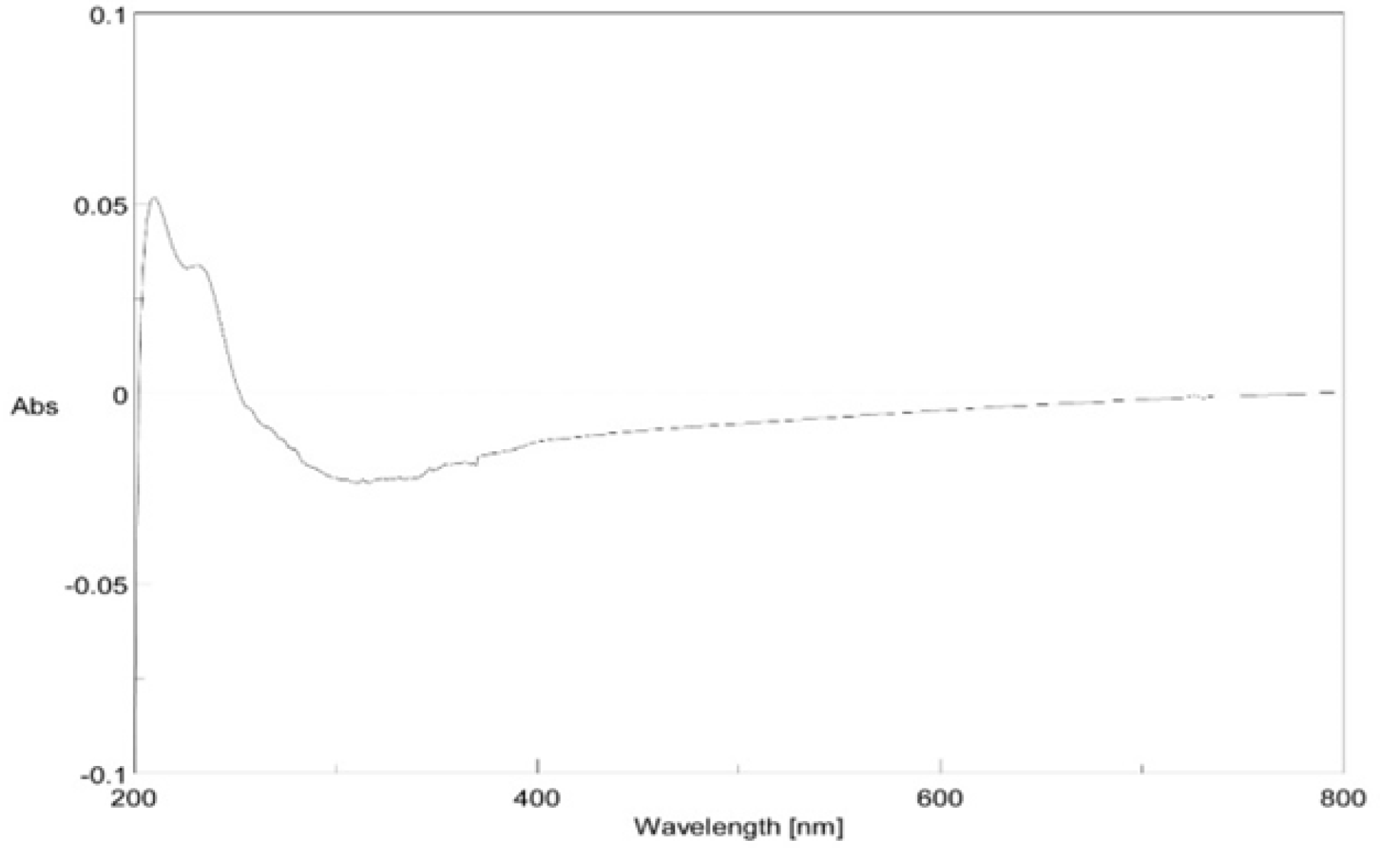
Figure 2: UV Spectrum of Methanolic
Extract of Carica papaya leaves
Table 1: Calibration Data of Calcium Disodium Versenate
| S.No | Concentration (μg/mL) | Absorbance |
| 1. | 40 | 0.1053 |
| 2. | 80 | 0.2037 |
| 3. | 120 | 0.3015 |
| 4. | 160 | 0.4047 |
| 5. | 200 | 0.4999 |
| 6. | 240 | 0.6099 |
UV Spectrum of Methanolic Extract of Caricapapaya Leaf
The diluted solution of Carica papaya Leaf was scanned between 200 – 400nm. The spectra recorded are given in Figure 2. The Absorbance was found to be 0.3175.
Extract of Carica Papaya Leaves
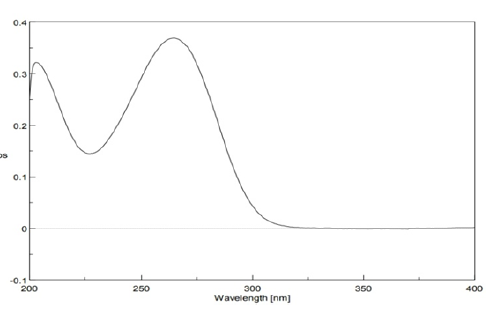
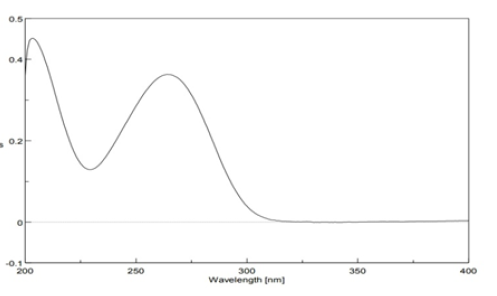
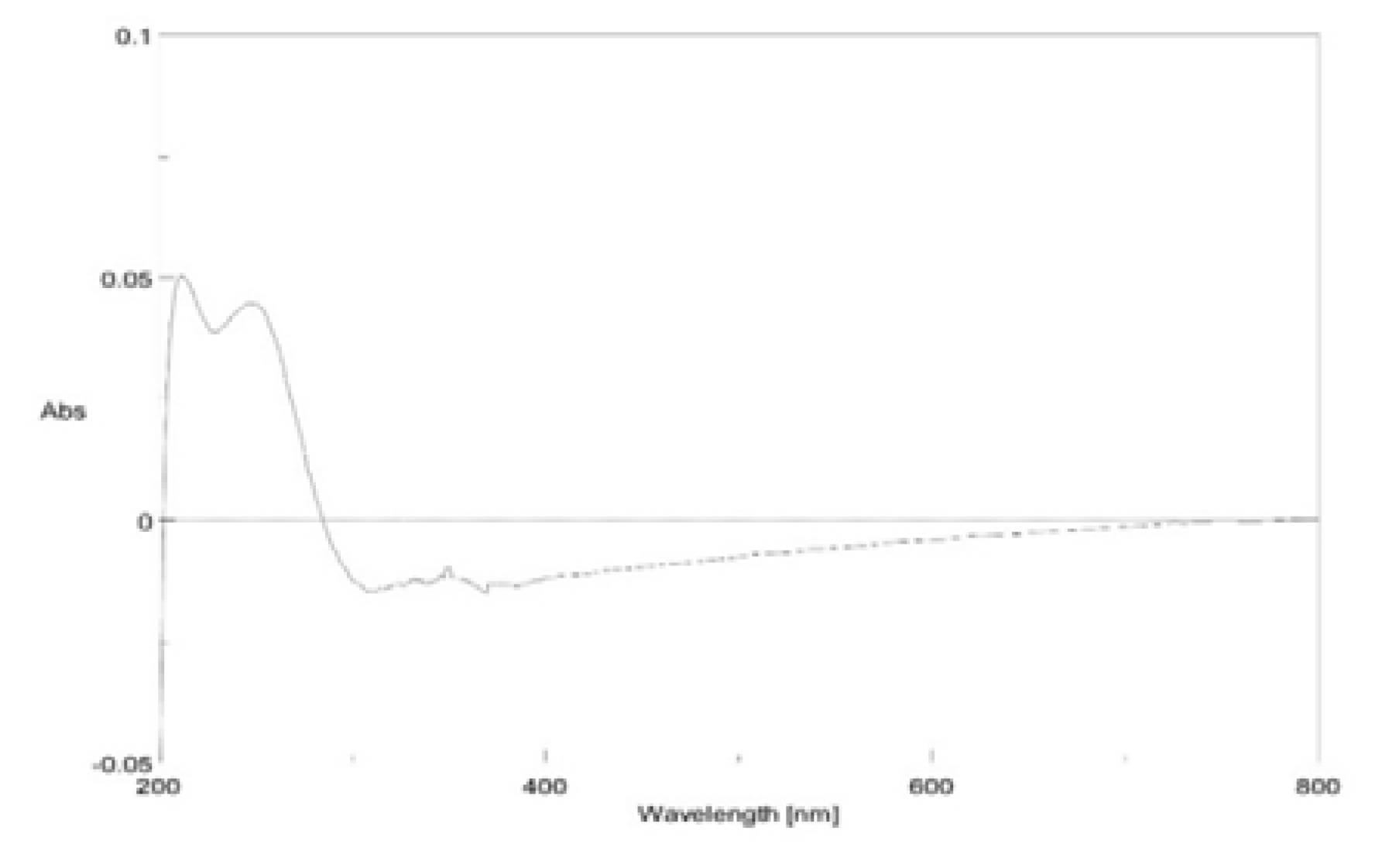
UV Spectrum of Mixture of Calcium Disodium Versenate with Heavy Metals: The mixture containing 80μg/mL of Calcium Disodium Versenate and 3μg/mL of metal was scanned in the UV region and the Absorbance at 205 nm was noted. The Figure 3-6 included is Calcium Disodium Versenate with Mercuric chloride, Calcium Disodium Versenatewith Lead nitrate, Calcium Disodium Versenate with Zinc sulphate, Calcium Disodium Versenate with Copper sulphate. The Absorbance values are given in Table 3.

Figure 3: UV Spectrum of Calcium Disodium Versenate and Mercuric Chloride

Figure 4: UV Spectrum of Calcium Disodium Versenate and Lead Nitrate
Table 2: Absorbance of Heavy Metals
| S.No | Heavy Metals (3μg/mL) | Absorbance |
| 1. | Mercuric chloride | 0.0369 |
| 2. | Lead nitrate | 0.2138 |
| 3. | Zinc sulphate | 0.0315 |
| 4. | Copper sulphate | 0.02503 |
Table 3: Absorbance Mixture of Calcium Disodium Versenate with Heavy Metals
| Calcium disodium versenate with heavy metals | Absorbance |
| Calcium disodium versenate with Mercuric chloride | 0.3165 |
| Calcium disodium versenate with Lead nitrate | 0.4448 |
| Calcium disodium versenate with Zinc sulphate | 0.2614 |
| Calcium disodium versenate with Copper sulphate | 0.2436 |

Figure 5: UV Spectrum of Calcium Disodium Versenate and Zinc Sulphate

Figure 6: UV Spectrum of Calcium Disodium Versenate and Copper Sulphate

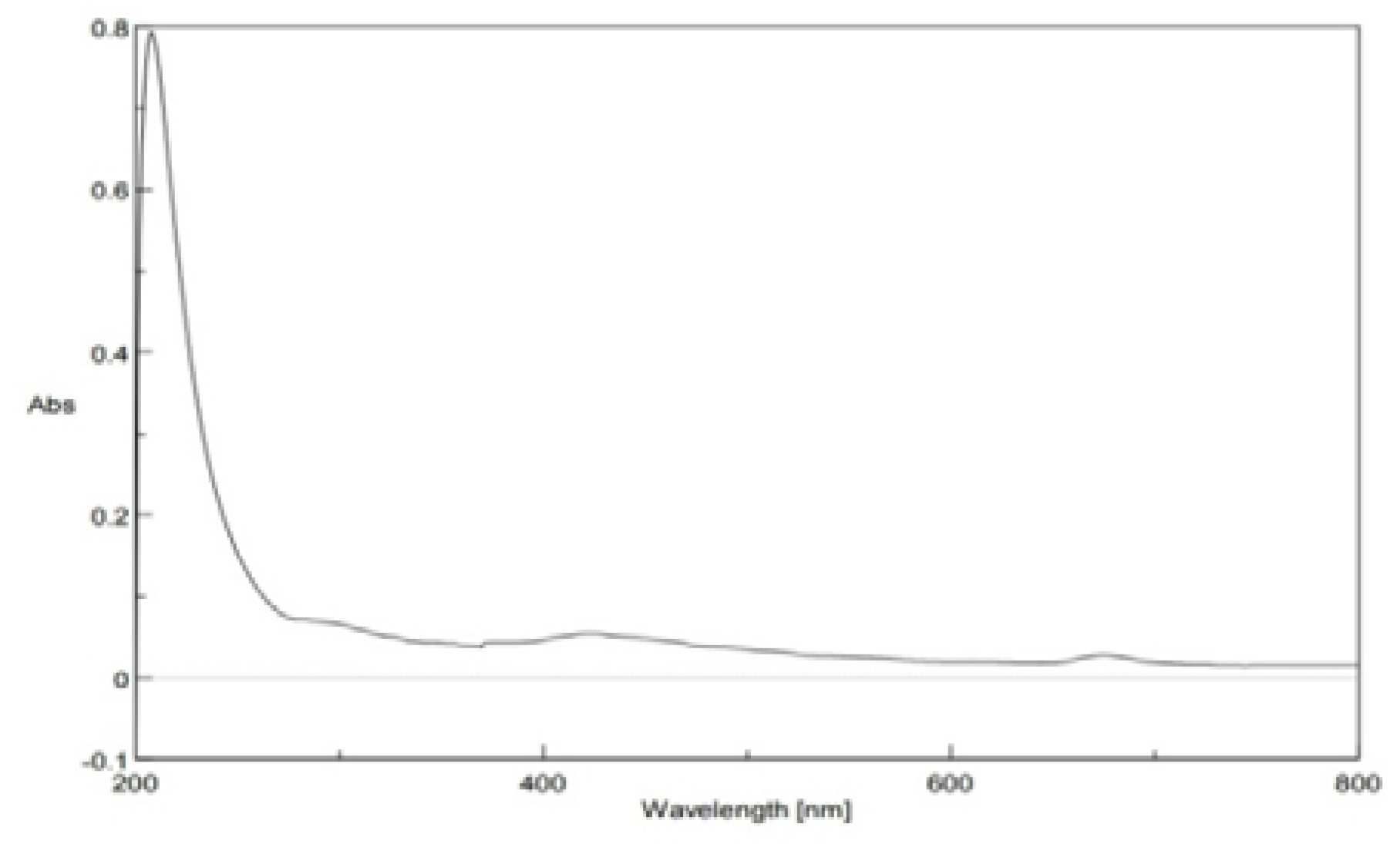
Figure 7: UV Spectrum of Methanolic Extract of Carica Papaya Leaves with Mercuric Chloride

Figure 8: UV Spectrum of Methanolic Extract of Carica Papaya leaves with Lead nitrate

Figure 9: UV Spectrum of Methanolic Extract Carica Papaya Leaves with Zinc Sulphate

Figure 10: UV Spectrum of Methanolic Extract of Carica Papaya Leaves with Copper Sulphate
Table 4: Absorbance of Caricapapaya Leaves Extract with Heavy Metals
| S.No | Extract with Heavy metals | Absorbance |
| 1. | Extract with Mercuric chloride | 0.1577 |
| 2. | Extract with Lead nitrate | 0.7535 |
| 3. | Extract with Zinc sulphate | 0.0993 |
| 4. | Extract with Copper sulphate | 0.5305 |
UV Spectrum of Methanolic Caricapapaya leaf extract with Heavy Metals
The mixture solution of Carica papaya leaves Extract with the individual metals of concentration was scanned between 200–400 nm and absorbance at 205nm was noted in Table 4 and spectra of individual Mixture in given
from Figure 7-10 and Table 4.
The chelating agent calcium disodium edetate is available in the injection formulation form used in the treatment of heavy metal poisoning in the dosage of 1000 mg/5 mL. The drug was found soluble in water. So the aqueous stock solution was prepared with water. The scanning of solution in the UV region showed maximum absorbance at 205 nm. So the wavelength of 205 nm was selected for the study.
The linearity obeying Beer Lambert’s law was found in the range of 40 to 240 mcg/mL with the solution concentration of 40.80,120,160,200 and 240 mcg/mL. The regression analysis of the graph calculated was found to show correlation coefficient of 0.999 with intercept of 0.0025.
The salts of the selected heavy metals, mercury chloride, lead nitrate, zinc sulphate and copper sulphate were soluble in water. The stock solution of all the individual heavy metal were prepared in water. The UV spectrum of the solution of 3 mcg/mL of the heavy metals was found to have appreciable absorbance at the selected wavelength of 205 nm.
The methanolic extract of Caricapapaya leaves after a maceration period for 36 hours was filtered with whatmann filter paper to get a clear solution which was dilution of 1 mL to 10 mL three times successively and used to record the spectrum. After dilution the papaya leaves extract had absorbance of 0.3127 at the selected wavelength.
After the absorbance of the individual solution of chelating agent, selected heavy metals and methanolic extract of Caricapapaya leaves were acceptable, the absorbance of the mixture of chelating agent in the concentration of 80 mcg/mL and each heavy metal of 3 mcg/mL was scanned in the UV region.
The methanolic extract of Caricapapaya leaves with the individual metal of mercury, lead, zinc and copper of 3 mcg/mL were prepared. The solution were scanned between 200-400 nm and the changes in the absorbance were noted.
The chelating agent calcium disodium versenate was found to show notable increase in the detector response when present as mixture with the individual heavy metals when compared with the absorbance of the calcium disodium versenate standard drug. Hence it was concluded that the increase in the absorbance indicates a chelation activity of calcium disodium versenate with all the four heavy metals by complex formation.
The methanolic extract of Caricapapaya leaves indicated an increase in the absorbance value for lead and copper representating a complexation between constituents present in the methanolic extract. Whereas there was no profound change in the absorbance in the mixture of mercury and zinc. Hence the conclusion for the papaya leaf extract observed was having a chelation with lead and copper in the selected concentration.
The work carried out is an insight in the chelation property of calcium disodium versenate and Caricapapaya leaf extract with heavy metals. The literature survey had very few reported methods based on the chelation property of calcium disodium versenate and Caricapapaya leaf extract. Hence the method can be applied for the analysis of the complex formed by the chelating activity.
Acknowledgement
The authors are grateful to The SNR Sons Charitable Trust, Coimbatore for providing the necessary facilities to carry out the research work.
PubMed Central, U.S. National Library of Medicine,
https://www.ncbi.nlm.nih.gov/pmc/articles/PMC4144270/.
United States Food and Drug Administration. Drug Label Information for Product 008922,
https://www.accessdata.fda.gov/drugsatfda_docs/label/2009/008922s016lbl.pdf.
PubMed Central, U.S. National Library of Medicine,
https://www.ncbi.nlm.nih.gov/pmc/articles/PMC5962769/.
PubMed Central, U.S. National Library of Medicine,
https://www.ncbi.nlm.nih.gov/pmc/articles/PMC3059460/.
https://doi.org/10.1023/A:1012993017026.
“Carica Papaya.” NCBI Bookshelf, U.S. National Library of Medicine,
https://www.ncbi.nlm.nih.gov/books/NBK548090/.
“Carica Papaya.” ScienceDirect,
https://www.sciencedirect.com/topics/agricultural-and-biological-sciences/Carica-papaya.
Khare, C.P. Indian Medicinal Plants: An Illustrated Dictionary. Springer Science+Business Media, 2007, pp. 122–123.
Kapoor, D. CRC Handbook of Ayurvedic Medicinal Plants, CRC Press, pp. 99–100.
Handa, S.S. and V.K.Kapoor. Textbook of Pharmacognosy, pp. 51–56.