Contents
Download PDF
pdf Download XML
248 Views
407 Downloads
Share this article
Research Article | Volume 3 Issue 1 (Jan-June, 2022) | Pages 1 - 9
Sexual Life Importance in Patients with Reproductive Cancers: a Questionnaire-Based Study
 ,
 ,
 ,
 ,
1
Department of Scienze e Tecnologie Ambientali, Biologiche e Farmaceutiche, University of Campania "Luigi Vanvitelli," via Vivaldi 43, Caserta, 81100, Italy
2
Department of Hematology, "Tor Vergata" University, Viale Oxford 81, 00133 Rome, Italy
3
Italian National Institute of Statistics, Viale Liegi 13 Rome Italy
Under a Creative Commons license
Open Access
Received
Jan. 11, 2022
Revised
Jan. 22, 2022
Accepted
Feb. 19, 2022
Published
March 31, 2022
Abstract

Introduction: Although several studies point out that cancer therapy can contribute to problems in sexual function, more research is needed to better understand the concerns and information of cancer patients about the sexual life. This study aimed to identify the sexual life importance and the quality of communication with oncologists on this topic in patients with reproductive cancers. Methodology: A total of 251 cancer patients from the oncological department completed a self-reported questionnaire along with two oncological consultations (T0 and T12 after 12 months). Chi-square analysis and T-test methods were used to compare the sexual life importance and quality communication of these patients according to gender, age and education. Results: The data of our study showed that male patients considered more important their sex life than female patients at the first consultation (T0). At the second consultation, (T12), a general increase of sexual life importance resulted for both sexes, along with a slight decrease of the difference between male and female patients. Regarding communication about sexual life, we observed at T0 that the female patients were more embarrassed to talk about their sexual life with their oncologist in respect to male patients. After one year (T12), there was a general increase of quality communication, accompanied by a moderate reduction of the difference between sexes. Conclusions. The importance of sexual life and the related quality of communication with the oncologists/ healthcare professionals (HCPs)/oncological nurses (ONs) tend to significantly increase during the treatment. Implications for Practice: This study is limited in that specific sexual life concerns were determined with self-report measures. All health professionals did not always recognize emotional cues than those related to physiological complaints. It follows that the issue of sexuality must be incorporate in interventions offered in the context of care for these women and men.

Keywords
INTRODUCTION

Sexuality plays a crucial role in the life of every person since it encompasses the physical, psychological, social and cultural dimensions of the individuals. Different studies recognized how a cancer diagnosis and its treatment can impact the self-image and physical changes of the patients [1-3]. In this regard, many cancer patients reported many sexual problems that can also persist after the treatment [4-9]. For example, one study reported that among 40% and 100% of cancer patients experienced sexual disorders for both women [10] and men [11]. Specifically, among men, the prostate cancer patients have erectile dysfunction after prostatectomy, radiation or hormone therapy [11]. Furthermore, these cancer patients try to face major challenges in sorting through new remedies to impotence [12-13] and in finding new sexual terrain with their partners [14]. Furthermore, women after breast or gynecology cancers, reported different sexual dysfunctions such as decreased libido, and vaginal dryness [15]. Other studies observed that both male and female patients received less information about the potential sexual risks of the therapy in oncology care settings [16-21]. In particular, Reese et al. [22] observed that a sexual consultation was offered only to 22% of men and 17% of women during cancer treatment. Although practice guidelines include discussion of sexual life for cancer patients, most of them do not have discussions on these topics with oncologists/healthcare professionals (HCPs)/oncological nurses (ONs) [23-26]. In a study [27], the 76% of breast cancer patients reported that it was important to discuss treatment-related sexual problems with their oncologists, yet only 33% received such information. Moreover, many patients are reluctant to communicate their sexuality to oncologists/HCPs/ONs because they very often feel a strong embarrassment to talk about these topics [28].


In another study, Reese et al. [29] observed that approximately 1/3 (22/67 patients) of women with breast cancer had sexual problems, and only the 45% (10/22 patients) of them was able to have sexual health communication. Furthermore, the authors reported that the discussion on sexual health occurred only with 27 patients (40%) and generally, the oncologists started the discussion in 72% of cases. The authors concluded that communication about sexual health was uncommon even for women reporting sexual problems [29]. Furthermore, the quality of life (QoF) is a critical aspect related to different kinds of cancer. In this regard, the cancer can produce negative consequences in several areas of cancer patients' life [30-33]. In this scenario, effective communication between cancer patient and oncologist/HCP can help to identify the sexual problems of patients after a diagnosis of cancer [34-38]. There are many gaps persisting in knowledge about patient oncologists/HCPs/ONs communication on sexual health in reproductive cancers. Few studies have examined the importance of these discussions and their relationship with the health status (both physical and mental) of cancer patients. The primary aim of this study was to better understand, through a simple questionnaire (1), the sexual life importance in patients with reproductive cancers and (2) the quality of communication about these topics with the oncologists/HCPs/ONs.

MATERIALS AND METHODS

Sample

The study sample consisted of participants from 18 years on, with a diagnosis of different kinds of cancer (such as breast, cervix or prostate and testicle), who were attending an oncology outpatientThe study was conducted in a sample of 251 cancer patients and approved by the Ethics Committee of the Medical Faculty of the University of Campania “Luigi Vanvitelli”. Informed consent was obtained from all individual participants included in this study before the initial oncological consultation.


Recruitment and Data Collection

The recruitment period was from 2017 and 2019 in a sample of 251 cancer patients (144 females and 107 males with a mean age of 47 years). Of these, 253 respondents completed the written informed consent form, resulting in a 98.6% response rate. After excluding two subjects who did not answer or fill in a blank, 251 subjects were finally included in the analysis. One of the researchers (MGC) trained research staff to seek participants’ consent and collect data for this study. Research staff explained the purpose and procedure of this study to the subjects who then agreed to participate. The questionnaire was then distributed to the subjects in a separate room at the outpatient department. The time required to complete the questionnaire was approximately 20 min. There was no incentive to participate in this study.


Instrument

A brief questionnaire was given to the participants, which consisted of two parts: the first, asking general information about the age, sex, education level, and marital status, and job. The second, consisting of the analysis of (1) sexual life importance and (2) quality of communication with oncologists/HCPs/ONs on sexual issues. Sexual life importance and quality of communication were measured with 2 items using the EORTC SHQ-C22 questionnaire at first oncological consultation (T0) and another oncological consultation after 12 months (T12). All items were assessed with a five-point Likert scale ranging as follows: 


  • Not at all

  • A little

  • Moderate amount

  • Much

  • Very much


Details of cancer site, cancer stage, time and treatment were obtained from patients’ medical records.


Moreover, some participants’ written comments in response to Open-Ended Question (What do you think about sex life after diagnosis and during the therapy?) were reported during the two oncological consultations (in Italian language and translated in English). In these comments, the cancer patients tried freely to figure their emotions, their fears, their concerns and their plans for the future. The transcripts of answers to the open-ended question were analyzed by all investigators in according to the themes that emerged and were reported in the supplementary data.


Statistical Analysis

All statistical analyses were performed using the Statistical Package for Social Sciences (version 23, SPSS Statistics, IBM Corp, Chicago IL, USA, 2016). The socio-demographic characteristics and disease characteristics of the cancer patients were analysed by using descriptive statistics. The importance of sex life and quality of communication with oncologists/HCPs/ONs according to gender, age and education were analysed by Chi-square and T-test methods. To secure more reliable statistical results as for other variables like type and stage of cancer there are too few data ― the analysis was concentrated on three macro variables: gender, age and education.

RESULTS

Socio-Demographic Characteristics

At the time of the first visit, all patients filled out a brief socio-demographic questionnaire. Among our patients (pts = 251), the mean age was 47 years (S.D. 10.44) and there were more females (57.37% = 144) than males (42.62% n = 107). respectively (Table 1). The 60.55% of participants were employed. while 29.44% were not employed. Furthermore. 40.23% of patients had low education. while 59.76% had a high education (Table 1). The most common cancer type was breast cancer (32.5%) among the female patients. followed by cervix cancer (19.92%). Of the 107 male patients. 24.5% (n = 59) had prostate cancer. while 19.12% (n = 48) had a testicular gem-cell cancer. Most patients had in situ (54.98%). in situ and local (27.49%) in situ and distant (17.2%) cancers and they had received surgical. surgical/chemotherapy or surgical/radiological (72.49%) treatment (Table 1).


Sexual Life Importance of Cancer Patients in Two Different Consultations

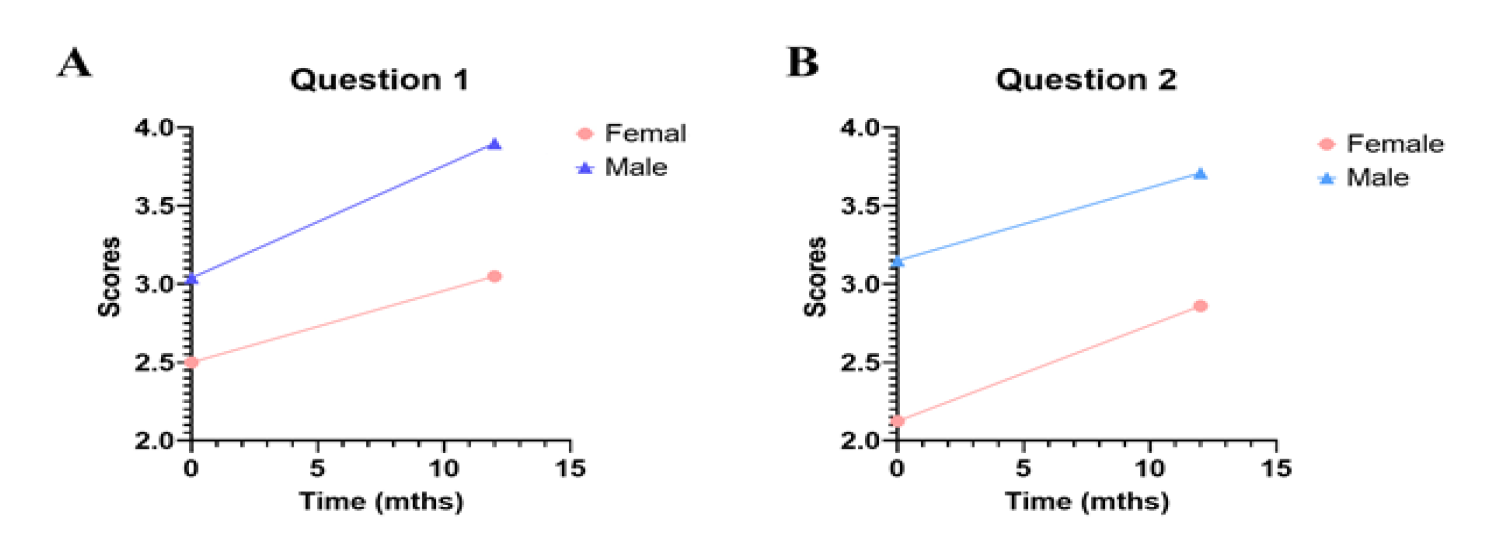
 In our study, all considered patients answered the questionnaire during two different consultations (T0 and T12). The sample at T0 consisted of 251 patients. The total average score for the first question on sexual life importance at the time T0 was 2.98. Considering sex. age and education variables. the only significant difference was observed for sex. with the average score for female and male of 2.5 and 3.5 respectively (Figure 1A). Among female patients. 59% and 46.35% indicated that the sexual life was little important (score 2) or moderately important (score 3). respectively. Among male patients. 42% and 51% reported that their sexual life was moderately important (score 3) or much important (score 4). respectively. Significant differences were observed in the global scores of sexual life importance suggesting that male patients believed that the sex life was more important when compared with female patients (χ2= 9.1 <0.01 t=11.8 <0.01) (Figure 1 A) (Table 2).


At the second consultation (T12) the sample was reduced as 41 female patients 38 male patients died. respectively and hence the total sample was composed of 172 patients. The importance attributed to sex life (question 1) increased for both male and female patients by reaching the total average of 3.4. whereas the average score for females was 3.04 and for males 3.9 (Figure 1A). The 81% of female patients believed that the sexual life was moderately (score 3) or much important (score 4). while 95% of male patients believed that the sexual life was much (score 4) or very much important (score 5). 


The difference between male and female patients about the importance of sexual life significantly reduced over the considered time (χ2 = 3.9 <0.01 t = 12.8 <0.01) (Figure 1 A) (Table 3). In both T0 and T12 consultations the individual scores behaved in a “normal ways” with the higher frequencies about the average. We did not find the significant difference on sexual life importance of the patients considering the age or the education (data not shown) in both consultations.


Quality on Communication of Cancer Patients in two Different Consultations      

Participants were asked if they have had communication with their oncologists/HCPs/ONs about their sexual life (question 2). The total average score for the second question at the time T0 was 2.5. Specifically. the average score for female was 2.1 and for male 3.1 (Figure 1B). The majority of the female patients (91%) answered that they had little (2) or moderate amount (3) of communication on this topic. while majority of the male patients (90%) answered that they had communication in moderate amount (3) on after first consultation (T0). 


At the second consultation (T12). the quality of communication on sex life with their oncologists increased for both male and female patients by reaching a total average of 3.2. whereas the average score for females was 2.8 and for males 3.7 respectively (Figure 1B). The female patients (74%) answered that they had communication in moderate amount (3) on their sexual life. while the 14% and 75% of male patients answered that they had a communication in moderate amount (3) or much important (4) on their sex life. respectively. The difference between male and female patients about the communication on their sexual life with their oncologists was highly significant (χ2 = 11 <0.01 t = 12.5<0.01) (Figure 1B) (Table 3) at the first consultation (T0). After one year (T12). we observed a decreased difference between female and male patients (χ2 = 4. 4<0. 05 t = 12. 2<0. 01) (Table 3). 


We did not find the significant difference on quality of communication about sexual life of the patients considering as variables the age or the education (data not shown) in both consultations.


Table 1: Characteristics of Participating Patients (n. 251) Abbreviations: SD standard deviation; SEER, Surveillance Epidemiology and End Results. (1th consultation T0)

Characteristic No.%

Age/years

Mean

S.D.

<60

>60

Age/years

47.82

10.44, Range=30-81

223

28

88.84

11.15

Sex

Female

Male

144

107

57.37

42.62

Marital Status

Unmarried

Married

Divorced

88

147

16 

35.05

56.56

6.37

Education

Less than high school

High school and above

101

150

40.23

59.76

Employment

Yes

No

152

99

60.55

29.44

Cancer type

Breast 

Cervix 

Prostate

Testicular germ-cells (TGCs)

94

50

59

48

37.45

19.92

23.50

19.12

SEER stage

In situ

In situ and local 

In situ and distant

138

69

44

54.98

27.49

17.52

Treatment received

Surgery 

Chemotherapy 

Radiotherapy

Surgery+Chemoterapy

Surgery+ Radiotherapy

Chemoth.+ Radioth.

13

69

0

135

34

0

5.17

27.49 

53.78

13.54

0


Figure 1: The Sexual Life Importance (A) and Quality of Communication (B) by Gender during Two Different Consultations (T0 and T12)


Table 2: Comparison of the Sexual Life Importance and Quality of Communication between Women and Men Cancer Patients at the First Consultation (T0). *The Whole Sample

ItemsDimensionsWomen (n = 144) Mean±SD Men χ2 (n = 107) (p) T (p)
Sexual life Global score2.9 ± 0.82 (n = 251)+   
1. How much do you think it is important your sex life during the disease?

Not at all 1 

A little 2  

A Moderate amount 3 

Much 4 

Very much 5  

2.5 ± 0.65 3.5 ± 0.66 9.1 <0.01 11.8 < 0.01
  2.5±0.85 (n = 251) +  

2. Have pyou had communication with your oncologists about your sex life?


Not at all 1

A litte 2 

A Moderate amount 3

Much 4

Very much 5

2.1 ± 0.793.1 ± 0.51 11 <0.01 12.5 < 0.01


Table 3: Comparison Of The Sexual Life Importance And Quality Of Communication Between Women And Men Cancer Patients At The Second Consultation After 12 Months (T12). *The Whole Sample

ItemsDimensionsWomen (n = 103) Mean±SD 

Men χ2

(n = 69) 


(p) T (p) 
Sexual life Global score

3.4±0.70 

(n = 172)* 

  
1. How much do you think it is important your sex life during the disease?

Not at all 1

A little 2  

A Moderate amount 3

Much 4

Very much 5  

3.04±0.643.9±0.34 3.9 <0.05 12.2 < 0.01
  

3.2±0.70 

(n = 172)* 


2. Have you had communication with 

your oncologists about your sex life?

Not at all 1

A little 2  

A Moderate amount 3

Much 4

Very much 5

 2.86±0.593.71±0.54 4.4 <0.05 12.2 < 0.01
DISCUSSION

Different studies have pointed out that cancer may negatively impact on the sexual function and sexual activity of cancer patients [39-41]. Generally. sexual health is correlated with physical. emotional. mental. and social wellbeing World Health Organization (WHO) [42]. This is a major issue for cancer patients who can often suffer from both sexual dysfunctions (such as erectile dysfunction or vaginal dryness) or psychological distress (such as body image and the formation relationships) [43-45]. Hence. these problems can be addressed through an effective and emotional communication between oncologists/HCPs/ONs and patients [46-49].


Our study examined the sexual life importance and the quality of communication for reproductive cancers outpatients through a brief questionnaire in two different consultations at T0 and T12. At the beginning (T0). we observed that the sexual life importance of male patients was higher than those of female patients who (most of them) believed that their sexual life was not so important after a cancer diagnosis. We supposed that the female patients might be very embarrassed to talk about their sex life after a cancer diagnosis (T0). Therefore. oncologists/HCPs/ONs should support in particular female patients for coping with their sexual problems and their reluctancy to ask for professional help. This result is in accordance with two previous studies showing that female patients talked less with oncologists/HCPs/ONs regarding sexual life than male patients [50-51]. The first study [50]reported that only 4.8% of female patients talked with oncologists/HCPs/ONs about your sex life. whereas 21% of male patients did. In the second study. [51] observed that approximately only 43% of female patients had communication with an oncologist/HCPs/ONs compared to 68% of male patients After one year. we noted that sex life importance become moderately or very important in most female patients (81%). This can happen because emotional impact of cancer diagnoses. isolation and loss of self-esteem can be reduced to face more easily their fear on sexual life after a year (T12). Furthermore. we reported the same result on the quality of communication on these topics:


  • The majority of the female patients (91%) had a little communication with their oncologists/HCPs/ONs at T0

  • The quality of communication increased for both sexes after a year


In this context. we could suppose that the behaviour of these patients can be linked both to an increased confidence with their oncologist/HCPs/ONs. and to a strong awareness of their sexual problems after treatment [52-55]. as evidenced by the short interviews given by some patients (Supplementary Data). Our results also suggest substantial room for improvement in clinical communication about sexual life for reproductive cancer patients [22.29.55]. In other words. it is necessary to support the emotional stability of all patients by providing a good information and communication during the cancer patient counseling. In this regard. the modifications that occur in the sexuality of cancer patients can be so profound and mutilating that the whole affective and sexual patients’ life can be impaired. Also. cancer could predispose to psychological and social isolation. based on negative feelings that permeate interpersonal relations. In this regard. both oncologists and other HCPs/ONs have to be aware of changes to sexuality and intimacy after cancer. Thus. they should be trained in communication skills to recognize the needs of patients [56]. On the other hand. oncologists/HCPs/ONs need more time to better understand what patients verbalize during oncological consultations [38.50-51]. In conclusion. oncologists/HCPs/ONs should not ignore the importance of sexuality for the physical and psychological well-being of the person with cancer. In the future. all oncological health professionals (oncologists/HCPs/ONs) should ask themselves: is this person in need of factual knowledge or is she/he more in need of emotional support? This is indeed a major challenge for future health care.

CONCLUSION

Discussion about sexual health for cancer patients is important for choosing the appropriate treatment pathways and improving the patient-oncologist/HCP/ON relationship. In this context. it will be possible to better address a range of sexual problems that patients with reproductive cancers experience during their treatment. In this way. clinical discussions of sexual health will lead to the implementation of effective solutions and better outcomes for patients.


Acknowledgements 

The research team wishes to thank all the people with cancer that participated in the study. All research staff who helped them completethe questionnaire after the oncological consultations the team also wishes to thank Vittoria De Santis for her help and methodological support.


Declaration of Conflicting Interests

The author(s) declared no potential conflicts of interest with respect to the research. authorship. and/or publication of this article.


Ethical Approval

The Authors declare that all the research meets the ethical guidelines.


Funding

The author(s) received no financial support for the research.


Authors’ Contributions

MGC and SP conceived and planned the project. GM. CDS and SP participated in study design in development of methods for data collection and analysis. AH has developed methodology. software. formal analysis and data curation all authors contributed to the refinement of the study protocol and approved the final manuscript.

REFERENCE
  1. Gilbert. E. et al. “Accounts of disruptions to sexuality following cancer: The perspective of informal carers who are partners of a person with cancer.” Health. vol. 13. no. 5, 2009, pp. 523–541. https://doi:10.1177/136345930 8336795.

  2. Hawkins. Y. et al. “Changes in sexuality and intimacy after the diagnosis and treatment of cancer: The experience of partners in a sexual relationship with a person with cancer.” Cancer Nursing. vol. 32. no. 4, 2009, pp. 271–280. doi:10.1097/NCC.0b013e31819b5a93.

  3. Oldertrøen Solli. K. et al. “Male partners’ experiences of caregiving for women with cervical cancer—a qualitative study.” Journal of Clinical Nursing. vol. 28. nos. 5–6. 2019. pp. 987–996.

  4. Ben Charif. A. et al. “Sexual health problems in French cancer survivors 2 years after diagnosis—the national VICAN survey.” Journal of Cancer Survivorship. vol. 10, no. 3, 2016, pp. 600–609. https://doi:10.1007/s11764-015-0506-3.

  5. Ben Charif. A. et al. “Patient discussion about sexual health with health care providers after cancer—a national survey.” The Journal of Sexual Medicine. vol. 13. no. 11, 2016, pp. 1686–1694. doi:10.1016/j.jsxm.2016.09.005.

  6. Bober. S.L. and V.S. Varela. “Sexuality in adult cancer survivors: Challenges and intervention.” Journal of Clinical Oncology. vol. 30, no. 30, 2012. pp. 3712–3719. doi:10.1200/JCO.2012.41.7915,

  7. Dizon. D.S. et al. “Sexual health as a survivorship issue for female cancer survivors.” The Oncologist. vol. 19. no. 2, 2014, pp. 202–210. https://doi:10.1634/theoncologi st.2013-0302.

  8. Heyne. S. et al. “Frequency of sexual problems and related psychosocial characteristics in cancer patients—findings from an epidemiological multicenter study in Germany.” Frontiers in Psychology. vol. 12. 2021. article 679870. doi:10.3389/fpsyg.2021.679870.

  9. Ussher. J.M. et al. “Perceived causes and consequences of sexual changes after cancer for women and men: A mixed method study.” BMC Cancer. vol. 15. no. 1, 2015, pp. 1–18. https://doi:10.1186/s12885-015-1243-8.

  10. Carter. J. et al. “Interventions to address sexual problems in people with cancer: American Society of Clinical Oncology clinical practice guideline adaptation of Cancer Care Ontario guideline.” Journal of Clinical Oncology. vol. 36, no. 5, 2018, pp. 492–511. https://doi:10.12 00/JCO.2017.75.8995.

  11. Siegel. R. et al. “Cancer treatment and survivorship statistics. 2012.” CA: A Cancer Journal for Clinicians. vol. 62, no. 4, 2012, pp. 220–241. https://doi:10.33 22/caac.21149.

  12. Akhavan. O. et al. “Dose-dependent effects of nanoscale graphene oxide on reproduction capability of mammals.” Carbon. vol. 95, 2015, pp. 309–317. https://doi:10.101 6/j.carbon.201 5.08.017.

  13. Yang. Y. et al. “An all-carbon counter electrode for highly efficient hole-conductor-free organo-metal perovskite solar cells.” RSC Advances. vol. 4, no. 95, 2014, pp. 52825–52830. https://doi:10.1039/C4RA09519G.

  14. Chambers. S.K. et al. “Erectile dysfunction. masculinity. and psychosocial outcomes: A review of the experiences of men after prostate cancer treatment.” Translational Andrology and Urology. vol. 6, no. 1, 2017, pp. 60–68. https://doi:10.21037/tau.2016.08.12.

  15. Melisko. M. et al. “Amelioration of sexual adverse effects in the early breast cancer patient.” Journal of Cancer Survivorship. vol. 4, 2010, pp. 247–255. https://doi:10.1007/s11764-010-0130-1.

  16. Hautamaki. K. et al. “Opening communication with cancer patients about sexuality-related issues.” Cancer Nursing. vol. 30, 2007, pp. 399–404.

  17. Park. E.R. et al. “Sexual health communication during cancer care: Barriers and recommendations.” Cancer Journal. vol. 15, 2009, pp. 74–77.

  18. Reese. J.B. et al. “Sexual concerns in cancer patients: A comparison of GI and breast cancer patients.” Supportive Care in Cancer. vol. 18, 2010, pp. 1179–1189.

  19. Ligibel. J.A. and C.S. Denlinger. “New NCCN guidelines® for survivorship care.” Journal of the National Comprehensive Cancer Network. vol. 11. 2013, pp. 640–644.

  20. Rasmusson. E.M. et al. “Did they think I would understand all that on my own? A questionnaire study about sexuality with Swedish cancer patients.” European Journal of Cancer Care. vol. 22, 2013, pp. 361.

  21. Lindau. S. et al. “Communication about sexuality and intimacy in couples affected by lung cancer and their clinical care providers.” Psycho-Oncology. vol. 20, no. 2, 2011, pp. 179–185. https://doi:10.1002/pon.1787.

  22. Reese. J.B. et al. “Effective patient-provider communication about sexual concerns in breast cancer: A qualitative study.” Supportive Care in Cancer. vol. 25, no. 10, 2017, pp. 3199–3207. https://doi:10.1007/s00520-017-3729-1.

  23. Runowicz. C.D. et al. “American Cancer Society/American Society of Clinical Oncology breast cancer survivorship care guideline.” CA: A Cancer Journal for Clinicians. vol. 66. 2016, pp. 43–73.

  24. NCCN Clinical Practice Guidelines in Oncology. Survivorship. Version 3. 2018.

  25. Hordern. A.J. and A.F. Street. “Communicating about patient sexuality and intimacy after cancer: Mismatched expectations and unmet needs.” Medical Journal of Australia. vol. 186, 2007, pp. 224–227.

  26. Lynch. O. et al. “Addressing treatment-related sexual side effects among cancer patients: Sub-optimal practice in radiation therapy.” European Journal of Cancer Care. 2019. article e13006.

  27. Flynn. K.E. et al. “Patient experiences with communication about sex during and after treatment for cancer.” Psycho-Oncology. vol. 2, no. 6, 2012, pp. 594–601.

  28. Harris. M.G. “Sexuality and menopause: Unique issues in gynecologic cancer.” Seminars in Oncology Nursing. vol. 35. 2019, pp. 211–216.

  29. Reese. J.B. et al. “Patient-clinician communication about sexual health in breast cancer: A mixed-methods analysis of clinic dialogue.” Patient Education and Counseling. vol. 102, no. 3, 2019. pp. 436–442. doi:10.1016/j.pec. 2018.10.003.

  30. Chang. W. The relationship between psychological treatment and quality of life of breast cancer patients. Teachers College. Columbia University. 1993.

  31. Ohsumi. S. et al. “Quality of life of breast cancer patients and types of surgery for breast cancer—current status and unresolved issues.” Breast Cancer. vol. 14, no. 1, 2007, pp. 66–73. https://doi:10.2325/jbcs.14.66.

  32. Davies. N.J. et al. “Information satisfaction in breast and prostate cancer patients: Implications for quality of life.” Psycho-Oncology. vol. 17, no. 10, 2008. pp. 1048–1052.

  33. Zhang. J. et al. “Consensus genetic linkage map construction and QTL mapping for plant height-related traits in linseed flax.” BMC Plant Biology. vol. 18, no. 1, 2018, pp. 1–12.

  34. Harden. J. et al. “The influence of developmental life stage on quality of life in survivors of prostate cancer and their partners.” Journal of Cancer Survivorship. vol. 2, no. 2, 2008, pp. 84–94.

  35. Fortune-Greeley. A.K. et al. “Using cognitive interviews to evaluate items for measuring sexual functioning across cancer populations.” Quality of Life Research. vol. 18, no. 8, 2009, pp. 1085–1093.

  36. Hill. E.K. et al. “Assessing gynecologic and breast cancer survivors’ sexual health care needs.” Cancer. vol. 117, no. 12, 2011, pp. 2643–2651.

  37. Lindau. S.T. et al. “Physical examination of the female cancer patient with sexual concerns.” CA: A Cancer Journal for Clinicians. vol. 66. no. 3. 2016. pp. 241–263.

  38. Criscuolo. M.G. et al. “Analysis of oncologists and patients communication during different consultations.” Journal of Community Medicine & Health Education. vol. 8. 2018. article 626. https://doi:10.4172/2161-0711.1000626.

  39. Carter. J. et al. “The physical consequences of gynecologic cancer surgery and their impact on sexual. emotional. and quality of life issues.” The Journal of Sexual Medicine. vol. 10. 2013. pp. 21–34.

  40. Huffman. L.B. et al. “Maintaining sexual health throughout gynecologic cancer survivorship: A comprehensive review and clinical guide.” Gynecologic Oncology. vol. 140, no. 2, 2016, pp. 359–368.

  41. Avis. N.E. et al. “Sexual functioning among early post-treatment breast cancer survivors.” Supportive Care in Cancer. vol. 26. no. 8, 2018, pp. 2605–2613.

  42. World Health Organization. Defining sexual health. 2006.

  43. Fobair. P. and D. Spiegel. “Concerns about sexuality after breast cancer.” Cancer Journal. vol. 15, 2009, pp. 19–26.

  44. Burwell. S.R. et al. “Sexual problems in younger women after breast cancer surgery.” Journal of Clinical Oncology. vol. 24, no. 18, 2006, pp. 2815–2821.

  45. Safarinejad. M.R. et al. “Quality of life and sexual functioning in young women with early-stage breast cancer 1 year after lumpectomy.” Psycho-Oncology. vol. 22. no. 6, 2013, pp. 1242–1248.

  46. Frumovitz. M. et al. “Quality of life and sexual functioning in cervical cancer survivors.” Journal of Clinical Oncology. vol. 23, no. 30, 2005, pp. 7428–7436.

  47. Jensen. P.T. et al. “Longitudinal study of sexual function and vaginal changes after radiotherapy for cervical cancer.” International Journal of Radiation Oncology Biology Physics. vol. 56, no. 4, 2003, pp. 937–949. https://doi:10.1016/S0360-3016(03)00362-6.

  48. Golbasi. Z. and A.S. Erenel. “The quality of sexual life in women with gynaecological cancers.” Archives of Gynecology and Obstetrics. vol. 285, no. 6, 2012, pp. 1713–1717. https://doi:10.1007/s00404-011-2210-5.

  49. Brotto. L.A. et al. “A psychoeducational intervention for sexual dysfunction in women with gynecologic cancer.” Archives of Sexual Behavior. vol. 37, no. 2, 2008, pp. 317–329.

  50. Kim. J.H. and H.K. Kim. “Sexual behavior and sexual satisfaction according to gender in Korean patients with cancer.” Korean Journal of Women Health Nursing. vol. 20. no. 2, 2014, pp. 137–147.

  51. Gilbert. E. et al. “Talking about sex with health professionals: The experience of people with cancer and their partners.” European Journal of Cancer Care. vol. 25. no. 2. 2016. pp. 280–293. https://doi:10.1111/ecc.12216.

  52. Shin. N. and J. Kim. “Experience of chemotherapy in ovarian cancer patients.” Asian Oncology Nursing. vol. 17. 2017, pp. 158–169.

  53. Broeckel. J.A. et al. “Sexual functioning in long-term breast cancer survivors treated with adjuvant chemotherapy.” Breast Cancer Research and Treatment. vol. 75. no. 3. 2002. pp. 241–248.

  54. Kim. H.W. et al.Gender differences in sexual information needs and relating factors in cancer patients.” International Journal of Environmental Research and Public Health. vol. 18, no. 7, 2021, article 3752. https://doi:10.3390/ijerph18073752.

  55. Taylor. S. et al. “Detecting and discussing sexual problems during chemotherapy for breast cancer.” Breast Journal. vol. 19, no. 5, 2013, pp. 566–567.

  56. Otani. M.A.P. and N.F. Barros. “Comunicação entre profissionais de saúde e pessoas em tratamento de câncer.” Brasília Médica. vol. 49, no. 4, 2012, pp. 258–266.

  57. Epstein. R.M. et al. “Could this be something serious?” Journal of General Internal Medicine. vol. 22. no. 12. 2007. pp. 1731–1739.

Supplementary Data

Here we reported some written comments (the cancer patients preferred to write) of both genders that shed light on the need to comprehensively address sexual health concerns in oncologic patients:


What do you think about sex life after diagnosis and during the therapy?


UPN3 Breast (Age 45) 

T0: At first. I thought that it is important to cure my cancer. for this reason. I didn’t really believe care about feeling beautiful. Furthermore. my sex life it is not important because I was still overcoming my fear of cancer and of dying. During the first stage of treatment. I wanted to to live in normal way because I could more easily cope my fear and focus on my healing. On a psychological level. my fear was so huge to feel myself physically ill. feeling weak. Furthermore. I believed that I was not able to cope my treatment. Another huge feeling was leaving my children alone. My husband. my all family were very close to me and I received a lot of love also from my friends: all these things have helped me to overcome all my fears.


T12

During this time. my oncologist was very approachable. empathetic and I trusted completely him. Fortunately. my oncologist was not cold and distant: my friends told me that their oncologists read test results without empathy. This is terrible when you have a cancer because during the disease. everybody of us needs of the understanding of doctors. Now it’s very important for me to surround myself with loving family and friends. I want to laugh a lot every day and to live in the present moment with my sons. I want to think about my future without fear and I want to wake up every day and be thankful for everything. It is important to enjoy everything that life gives us above all the love my sons and my husband.


UPN20 Breast (Age 44) 

T0: After my cancer diagnosis and my surgery. I felt myself discomfort and I couldn't look in the mirror after the mastectomy. I thought that I was alive. but my life was different. I saw my disfigured body and I did not let my husband see my naked body.


T12

After six months. I had breast reconstruction. but I had no nipple sensation. also when my husband touched me: I lost a sensation that I loved. I am alive but this cancer has taken away from me my previous life with many emotions and feelings. The sex is still deeply important to me but sometimes. I didn’t have an orgasm. but I needed to get close to my husband. My husband and I prefer not to talk about my sexual changes. You are alive after cancer treatment- the friends tell me. However. I think very often about my sex life and I do not like these changes. I am not able to share my fears with my husband and our silence is becoming deafening and unbearable.


UPN81 Breast (Age 33) 

T0: I am afraid the pathology of the tumor that was removed in surgery. it could turn out to be rather aggressive. My oncologist has advised me to do chemo. My brain went to fuzz immediately. For this reason I panicked and I started I am panicked and I start to talk with myself: Why is the chemo necessary? However. I am sure that the cure could not worse than the cancer. Anyway. I am paralyzed by my fear that increases day after day. Then. I started thinking about my boyfriend and I asked myself: Will be able to support me? I am too young….I am afraid for my life.


T12

After six months. I am here. I am alive but alone because my boyfriend left me when he knew that I had breast cancer. After my mastectomy. I felt broken. and I fear that it could be very difficult to meet another man that he can love me. All dreams of mine to have a big family has been destroyed by this cancer. I don’t feel very attractive and I believe that no other guys could look me. It will be difficult to have a new relationship with new guys them when I start to tell my story. However. I hope to have a normal relationship with a man after experiencing all this grief. I would like to meet a man who gives all of his love to me without any hesitation and accepts me with my vulnerability and my fears. 


UPN101 Cervix (Age 42) 

T0: I learned stories of cancer through the movies and now I am living this horror movie. When my husband drove me home from the breast care center. I live in my mind the chemo scenes and. when we got home. I cried. After a while. my husband comes into bedroom and he hugs me so tightly that he takes my breath away. Then I kept crying more and more because I am afraid for my 9-year-old daughter. I cried because I believe that I am not so strong to cope all this with my family. I cried because I am afraid of chemo and its side effects. I cried because in breast cancer unit some people have told me that some chemo treatments can be very dangerous and can increase the risk of new cancer later. I cried because I do not know if I can go to work without problem during chemo. I cried because I am afraid that my cancer can destroy my life plans made with my family. I hope until the end that I wouldn't have a chemo I cried until I fell asleep.


T12

After these months. I am still afraid. but my husband and my son support me in incredibly. My husband explained every detail to my son. while I am not able to talk to her about it. I turned to my church. where I met with a support group. It seems trivial almost when my life is on the line to ask the oncologist about my sex life. I think. 'Thank God I'm here and I'm alive and I do not believe that it is really important to have sex again. I happen to think about my sex life and then I feel guilty and I tell you (God) if I am alive everything else does not matter.


UPN106 Cervix (Age 45) 

T0: I am afraid to lose my ability to have children. Because of this. I feel like I have lost a large part of my identity as a female. In addition. I am not able to live my sexual life in pleasant way. I do not feel guilty for my thoughts because am young and I want to live my life fully.


T12

Today. I am sure about my complete recovery from my cancer and I have more motivations which makes possible to reach my goals easier. I have more both physical and mental energy and I am sure to make it through my days…even the really hard ones. I try to feel happier and more satisfied with the quality and depth of my life to overcome this terrible time.


UPN119 Cervix (Age 43) 

T: Sex was the last thing on my mind when I found out I had cancer. The life is important. 


T12

I believe that God draws good from the evil. It is important that people do not give in to death. Jesus give us a lot of strength" I am alive thank you God.


UPN 155 Prostate (Age 41) 

T0: No one is ever prepared for the diagnosis of cancer. The diagnosis of this cancer is terrible because I feel inside different emotions such as extreme sadness. fear and grief. Sexuality is very complicated for me because my self-esteem and identity are reflected in it. What would happen for my future life if I became impotent? I need the supporting of my partner. I hope that she can understand my feelings of grief. loss. fear and apprehension.


T12

During this time. I am not able to speak with my partner about my sexual problem and I do not know to face this problem with her. Silence is a powerful enemy. I am not able to share my feelings. fears and emotions with her and she prefers not to ask Why for me o for her? I do not know. It is very difficult. I am alive but I feel like a broken game.


UPN 165 Prostate (Age 53) 

T0: I am not able to face all this but a part of me realized there is a deep problem. but I cannot admit it to myself or my partner. It wasn’t that I didn’t feel attracted to her or my libido was waning. It was just impossible for me to maintain an erection. Sexuality is creative energy for me. Unexpressed feelings can contribute to quiet impotence to face this dramatic time for both. It is very difficult to face the fear. depression. anxiety. fatigue. pain. loss of sensation and self-esteem issues. above all a fear of not being able to have a sexual life or that my partner does not find me attractive.


T12

I think that my image has really changed. I just feel totally unattractive and my sex life is in shambles. Sometimes. I look at others and think they are very lucky. while I feel old. It is very hard to deal with. This disease looks like a broken dam that has overwhelmed somewhere my body. My body just doesn’t work in the right way… and that’s really depressing and frustrating. I get angry. My partner told me that sex life is not so important in this time. but it is important to continue to live but I am so angry. Our relationship got stronger during this time but it has been very hard for me because I feel like I had undergone a mutilation in my body and in my soul.


UPN 201 Prostate (Age 43) 

T0: After a diagnosis of advanced prostate cancer. I fear to close myself off from other people. I am not able to share my thoughts. since they are too dark and negative. After the treatment. I feel "hopeless. betrayed by my bodies. even angry. I am thinking how I can face all this: I am alone and young


T12

Every day I try to tell myself: I’m just so thankful that I’m alive and able to do things. It is not important the sexual life. It is important to live But I am not sure and I feel very angry. frightened. frustrated and resentful The thought of death haunts me as a monster in my mind. I cannot escape from it. I am afraid to die. but I don’t want to live. My pain is too much strong. for this reason. I desperately believe it is impossible to live in this way. But deep down inside of me. I always wish to see another day. We hope well.


UPN227 TGC (age 38)

T0: I never thought that cancer could hit me. Also my wife is very worried for my cancer and for my mental health. We decided together about what to tell our children. I didn’t want to upset them because they are so young. For this reason. we said that I I just had a simple surgery: We preferred not to say about my cancer until they’re older. 


T12

My wife was my main support throughout this ordeal. She accompanied me on all the appointments and was there for me emotionally. helping me relax and cope with my fear. We have always been close. The worst time is spent and now we are able to have a full and regular sexual relationship again. I couldn’t be happier. However. I am afraid that cancer cells are hiding. waiting to create a new mass again. I hope no but I am afraid.


UPN237 TGC (Age 37)

T0: When I was diagnosed with cancer. I reacted with fear and anger. A huge explosion went off in my mind and I wished escaping from hospital. I could not think that I have the cancer because I have always had a healthy lifestyle. exercised regularly. and ate well. I found myself asking. ‘Why me?’ Despite that. I want to live and for this reason I will fight. 


T12

This cancer has made me more of a man because it has been obliged to me to think about my life and about my relationship. I feel stronger and more mature. During the first months. I cannot make love to my girlfriend since my energy levels are too low and I am not able to hold an erection. Furthermore. I feel so tired to do anything about it. Most of the time I am not even in the mood. Now I can face everything. and I am stronger than before. After the radio. our sex life is back to normal.” However. I want to walk out the door of the hospital and never came back.


UPN248 TGC (Age 30)

T0: At the beginning. I noticed a swelling in my testicle. but I was too embarrassed to tell with anyone. Then I decided to tell with my good female friend because I felt more comfortable with her than any of my male friends. I was afraid they would make fun of me. At the end. she encouraged me to see a doctor.


T12

When you live with cancer. you can better understand how valuable people are in your life. I’m lucky because my family and my friend have supported me during this dramatic time It is very difficult for me to cope with my situation. try to live each day to the fullest. by spending more time with family and friends After one year. I have realized the real value of life. Now I have slowed my days down and spend more time with my wife and sons I’m really tired of thinking to my cancer. Furthermore. it seems that everyone has cancer or has had cancer or has dead or dying relatives and friends. I am not willing to talk about it. I know also that it can be stupid to pretend but now I need to live in normal way.


These comments highlighted the interplay between negative beliefs about cancer treatments and the sexual life in both genders. Generally. oncologists have a heavy medical agenda and frequently difficult clinical decisions have to be made. On the other hand. we believe that oncologists need more time to better understand what patients verbalize during oncological consultations
Recommended Articles
Research Article
Imaging Evaluation of Ultrasonography Versus Magnetic Resonance, Imaging in Diagnosis of Carpal Tunnel Syndrome among Female Patients with Positive Nerve Conduction Study
Download PDF
Research Article
An evaluation of Profile of Medico-legal autopsies conducted at Dr. Radhakrishnan Govt. Medical College, Hamirpur, Himachal Pradesh
Download PDF
Research Article
The Efficacy of 5- Fluorouracil Cream and 25% Podophyllin Solution in Treatment of Plantar Warts in Alternative Day Regimen ; An Open Therapeutic Trial.
Download PDF
Research Article
Silent Threats: Evaluating Knowledge of Pelvic Inflammatory Disease Among Reproductive-Age Women in District Kangra
Published: 27/11/2024
Download PDF
Chat on WhatsApp
Flowbite Logo
PO Box 101, Nakuru
Kenya.
Email: office@iarconsortium.org

Editorial Office:
J.L Bhavan, Near Radison Blu Hotel,
Jalukbari, Guwahati-India
Useful Links
Order Hard Copy
Privacy policy
Terms and Conditions
Refund Policy
Shipping Policy
Others
About Us
Team Members
Contact Us
Online Payments
Join as Editor
Join as Reviewer
Subscribe to our Newsletter
+91 60029-93949
Follow us
MOST SEARCHED KEYWORDS
Copyright © iARCON International LLP . All Rights Reserved.