Delirium is considered to be a serious problem in the intensive care unit setting that can have adverse consequences for patients, their families, and the health care system. Currently, there is a lack of delirium assessment and prevention protocols for use among intensive care unit patients at Sultan Qaboos University Hospital, so the implementation of evidence-based guidelines in this setting in collaboration with multidisciplinary team members to improve patient care and outcomes is necessary.
Keywords
Awakening
Breathing
Choice of sedative
Delirium
Early Mobility
Early mobility
Family Engagement
Prevention
ICU
INTRODUCTION
Delirium has had a major economic impact on the health care system. The total health care expenditures associated with delirium range from US$38 to US$152 billion each year in the United States of America, including costs associated with readmission, falls, and long-term care [1] and ranging from AU$5.3 to AU$12.1 billion in Australia [2]. Delirium is an acute disturbance in attention or awareness accompanied by a change in baseline cognition [3]. It is characterized by a reduced ability to direct, focus, sustain, and shift attention in combination with disorientation to the environment or oneself [3]. Delirium can be classified into the following three motoric subtypes: hyperactive, hypoactive, and mixed (where the patient fluctuates between the former two types) [4]. Patients with hyperactive-type delirium experience agitation along with hallucinations and delusions [5], while those with the hypoactive type of delirium show hypoactive motor activity and appear calm, confused, and sedated [6]. In particular, it is difficult to diagnose the hypoactive subtype despite the widespread dissemination of delirium guidelines because the unique features of this type contribute to the underreporting of delirium or it being missed in everyday clinical practice [6], so taking preventive measures is a necessity. Based on a literature search, delirium is associated with several factors that can be stratified into patient factors (e.g., old age, cognitive status, and alcohol abuse), disease-associated factors (e.g., surgery, mechanical ventilation, sepsis, and comorbidities), and iatrogenic or environmental factors (e.g., immobilization, social isolation, sensory deprivation, and sleep deprivation)[7].
There is a high incidence of delirium up to 46.3% among patients admitted to the ICU [8] and it is significantly associated with negative outcomes among these patients. In a published systematic review and meta-analysis of 42 prospective observational studies, the mean ICU length of stay was longer among patients with delirium than among those without delirium [1].
The review also showed that delirious patients were at higher risk of in-hospital death or death after ICU discharge and experienced significantly longer durations of mechanical ventilation use relative to those without delirium [1]. The negative outcomes of delirium may extend to hospital discharge. Another published meta-analysis of seven prospective cohort studies showed that delirious patients experienced significantly worse functional independence and cognition status following ICU discharge [9]. Besides these outcomes, delirium has also been linked with increased health care costs. In the United States, Vasilevskis et al. [10] conducted a prospective cohort study to investigate the association between the daily occurrence of delirium in the ICU and ICU care costs and reported that the care costs of one patient with delirium increased their total care cost by about $600 per day and $18,000 over 30 days due to an increase in service use, including bed-related expenses, laboratory and diagnostic radiology costs, and pharmacy costs [10].
Given the importance of understanding delirium in the health care setting, health care providers must make efforts to understand potentially modifiable factors associated with delirium to reduce the incidence of delirium through developing preventive measures to enhance the clinical outcomes of ICU patients and reduce the economic burden associated with delirium. Preventive interventions can be categorized as pharmacological or nonpharmacological [11]. Non-pharmacological interventions are preferred for delirium prevention because they facilitate faster recovery and avoid the side effects of pharmacological agents that may pose higher risks for adverse outcomes, particularly among severely ill patients and elderly [12]. Non-pharmacological interventions include any interventions that target modifiable risk factors associated with delirium in the ICU like immobilization, sensory deprivation, sleep deprivation, and social isolation [13]. According to the literature, many non-pharmacologic interventions exist and have been proven to reduce the occurrence of delirium among ICU patients and have a direct influence on patient outcomes by promoting sleep (e.g., lighting and noise management) [14] and patient reorientation(e.g., family involvement) [15]. A recent systematic review demonstrated a significant impact of sleep disturbance in the ICU setting on the development of delirium [16]. According to the literature, noise and light were the most common factors that disturb the sleep of critically ill patients [17], so efforts should be made to enhance sleep hygiene among ICU patients. Elsewhere, a systematic review and meta-analysis of nine studies published between 2009 and 2015 showed that improving patients’ physical environments through the use of earplugs was effective in improving sleep patterns among ICU patients and reducing the incidence of delirium and the risk for delirium [18]. Involving family members in patient reorientation is another way to help to prevent delirium [15]. A recent systematic review showed that family participation in critically ill patient care was very effective in reducing the incidence of delirium [19] and reducing the length of hospital stay among patients with delirium [20].
Due to the multifactorial cause of delirium [21], designing interventions that target multiple risk factors is considered to be the most effective strategy in delirium assessment, prevention, and management as compared with introducing a single intervention only [22]. Based on the literature, multicomponent strategies are considered optimal and more effective in improving patient outcomes in terms of preventing delirium [19], reducing the incidence of delirium [11], delirium duration [11], in-hospital mortality [11], and shortening the ICU length of stay [11].
Problem Statement
In Oman, the incidence of delirium was reported to be 33.3% [23]. Based on mu experience as a staff nurse working in the ICU and reports of other ICU nurses and consultants, a significant number of patients develop delirium during their stay in the ICU. However, no tool has been validated to use in diagnosing patients with delirium. Instead, patients may be diagnosed based on clinical experience, which may lead to the under-recognition of delirium and possible misdiagnosis. In particular, there is a lack of knowledge and confidence in assessing ICU patients for delirium among bedside nurses in the ICUs of Sultan Qaboos University Hospital (SQUH). Further, there is a lack of knowledge regarding preventive nursing interventions and there are no available protocols on delirium prevention in the hospital.
Delirium affects approximately 53.8% of patients treated in the ICU [24] and increases health care costs by 20%, which may have a significant disruptive burden on the health care system [10]. Delirium has significant impacts on patient safety and is a strong independent predictor for an increased risk of falling [25]. Patients with delirium are more vulnerable to removing invasive catheters, endotracheal tubes, and urinary catheters than their non-delirious patients [26]. Delirium is associated with prolonged mechanical ventilation use, extended hospitalization, and increased morbidity and mortality rates [1]. Moreover, it not causes acute adverse consequences but also long-term negative impacts on the quality of life of the patient [27] and long-term cognitive impairment among ICU survivors [28]. Patients with delirium require supplemental care averaging 60 minutes of additional time spent per patient, leading to increased nurse workload in the ICU [29].
Despite the high incidence of delirium in the ICU and its negative consequences and severe economic burden, there remains a gap between the scientific evidence and its implementation in clinical practice. Thus, it is essential to promote the implementation of scientific evidence based on preventive interventions aiming to prevent and monitor delirium to improve the care of critically ill patients. Hence, developing and adopting delirium preventive protocols and testing their effectiveness is crucial because prevention is an essential part of medical management and may decrease the risk of delirium-related complications, reduce health care costs, and improve patients’ quality of life.
Delirium Prevention Bundle
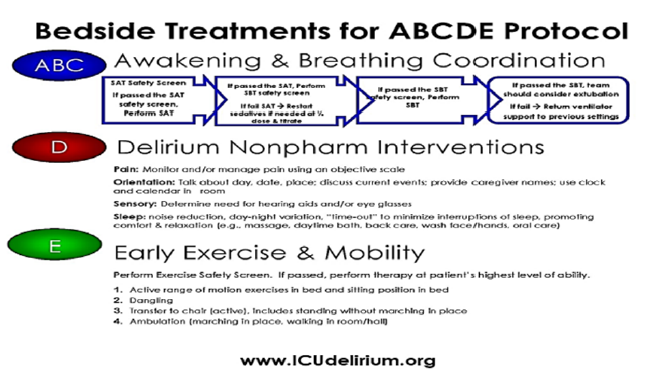
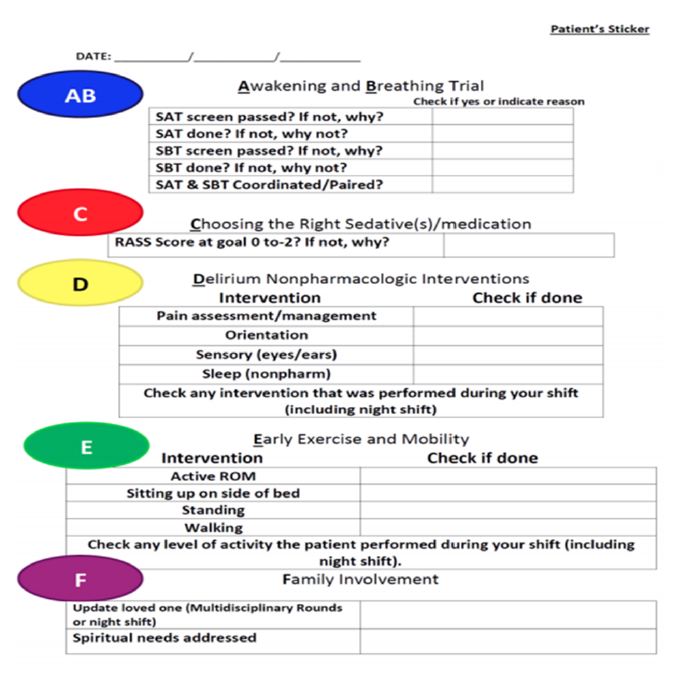
The Society of Critical Care Medicine has published clinical practice guidelines, known as the pain, agitation, and delirium guidelines, which focus on the assessment and management of pain, agitation, and delirium [30]. Implementation of effective strategies to manage pain, decrease sedative exposure, and prevent delirium was associated with better clinical outcomes in terms of decreased ICU and hospital lengths of stay and shorter durations of mechanical ventilator use [31]. The elements of the pain, agitation, and delirium guidelines have been adopted by an initiative designed to optimize ICU patient recovery and outcomes, known as the ABCDEF bundle that targets multiple modifiable risk factors of delirium in the ICU like immobility, sedation use, mechanical ventilator use, and social isolation [32]. The ABCDEF bundle encompasses the following elements: (1) assess, prevent, and manage pain; (2) perform both spontaneous awakening trials and spontaneous breathing trials to promote earlier extubation through the cessation of sedatives and narcotics(either narcotics or sedatives may be restarted at half the previous dose with titration as needed); (3) consider the choice of analgesia or sedation with daily use of the Richmond Agitation–Sedation Scale and the Riker Sedation–Agitation Scale (the right sedative medication must be chosen to avoid over- or under-sedation); (4) assess, prevent, and manage delirium using tools such as a screening checklist for delirium in the ICU; (5) pursue early mobility and exercise; and (6) promote family engagement and empowerment. In brief, the ABCDEF bundle is an evidence-based, multicomponent ICU intervention and team-based approach that aims to keep ICU patients cognitively engaged and physically active [32](Figure 1).
Figure 1: ABCDEF Bundle
Implementation of the ABCDEF bundle protocol had shown effectiveness in different studies. A meta-analysis of 21 studies reported a significant reduction in mortality rate and ICU length of stay after implementing the bundle, with improvements in delirium screening adherence of up to 82% and enhancements of the knowledge of health care professionals concerning delirium [33]. A multicenter cohort study also showed that the implementation of the bundle was associated with an increased likelihood of discharge from the ICU (p<0.0001) and hospital (p<0.002) and a lower risk of ICU readmission by 46% and discharge to a facility rather than to home by 36% [34]. A recent meta-analysis of the effectiveness of the bundle reported that implementation of the bundle had significant effects on reducing the incidence of delirium to 22% and significantly decreased the in-hospital mortality rate by 17% and 28-day mortality rate by 22% [35]. Elsewhere, adherence to the bundle significantly reduced the length of stay of delirious patients in the ICU by 17% and the time spent on a ventilator by eight days [36]. As such, a reduction in total hospitalization costs for each patient can be achieved. In addition, adoption of the bundle into daily use facilitated major improvements in the clinical practice like a reduction in sedation use; earlier patient mobilization; and better interdisciplinary teamwork, collaboration, and communication [36]. Staged implementation of the bundle by focusing on individual components is also very effective, allowing for a step-wise evaluation of components and enabling practice adjustments to be made before moving to the next step. A recent prospective cohort study conducted showed that full implementation of the bundle was associated with reductions in mechanical ventilator use duration and ICU and hospital lengths of stay (all p<0.005) as compared with partial implementation of the bundle, leading to reductions in total ICU cost by 24.2% and hospital costs by 30.2% [37].
Purpose of the Project
The purpose of this quality improvement project is staged implementation of ABCDEF Delirium Prevention Protocol in adult intensive care units of Sultan Qaboos University.
Project Objectives
The project objectives are as follows:
To improve ICU nurses’ knowledge of delirium assessment protocols and preventive measures of delirium
To implement delirium protocols in the unit as a first stage
To implement wakeup and breathing protocols as a second stage
To implement an early exercise and mobility bundle and a family involvement bundle as a third stage
To promote health care professionals’ knowledge about how to use the ABCDEF bundle in the unit
To evaluate the practice change
MATERIALS AND METHODS
Methods Used for Implementation
To accomplish this project, the following stages will be followed.
Situation Assessment
Based on my observation of the ICU unit at SQUH, there are no valid tools currently used to diagnose patients with delirium. Instead, doctors often diagnose patients based on their clinical judgments, which may lead to the misdiagnosis or under-diagnosis of some conditions and improper management protocols as a result. Despite the high incidence of delirium in the unit based on doctor reports and statistics, there are no specific measures taken in the unit to reduce delirium occurrence rates.
Reviewing SQUH Protocol for Delirium Prevention
There are no delirium assessment and prevention protocols currently at SQUH that can guide health care professionals.
Planning and Engaging Phases
In this phase, relevant stakeholders will be involved, including members of the hospital directorate, nursing directorate, head of ICU department, ICU physicians and consultants, ICU head nurse, ICU nurses, ICU physiotherapists, respiratory therapists, pharmacists, ICU patients, and representatives from the quality improvement department. Several meetings will be held involving these individuals, where presentations about the current state of practice, the impact on patient outcomes, the proposed bundle, educational strategies, evaluation strategies, methods of outcomes assessment, and communication strategies will be made. Suggestions from each stakeholder will be taken into consideration. Interdisciplinary ABCDE bundle implementation leaders will be appointed, including a nursing manager, ICU physiotherapist, respiratory therapist, pharmacist, and ICU physicians trained in various specialties. Existing hospital policies related to sedation/analgesia, ventilator management, and mobility will be discussed. Evidence supporting the quality of the bundle implementation, advantages and disadvantages of the proposed changes, and associated barriers and costs will be discussed in the meetings. The leaders will then be directed to look for staff willing to serve as ABCDE bundle champions. Finally, the process of distributing ABCDE bundle resource manuals will start.
Executing Phase
Implementation of this project will take place in three phases. In the first phase, delirium protocols will be initiated, follow by the introduction of awakening and breathing protocols. Finally, the early exercise and mobility and family involvement bundles will be implemented in the third phase. Before implementing any component of the bundle, a pilot study will be conducted for one month; then, a survey will be administered to health care providers to assess their satisfaction with each protocol and their perceptions about teamwork, collaboration, and availability of the resources as their satisfaction is very important to motivate them to adhere to the proposed bundle. After the success of each pilot study to confirmed, mini-protocols for each stage of implementation will be prepared.
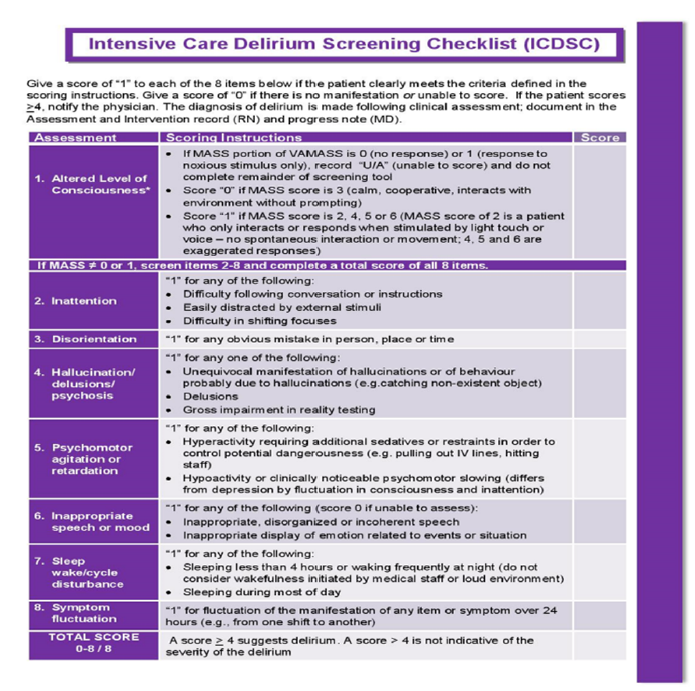
In the first stage, teaching and training sessions covering a delirium assessment tool (Intensive Care Delirium Screening Checklist) will be given to the nurses by video (Figure 2).
Figure 2: Intensive Care Delirium Screening Checklist (Icdsc)
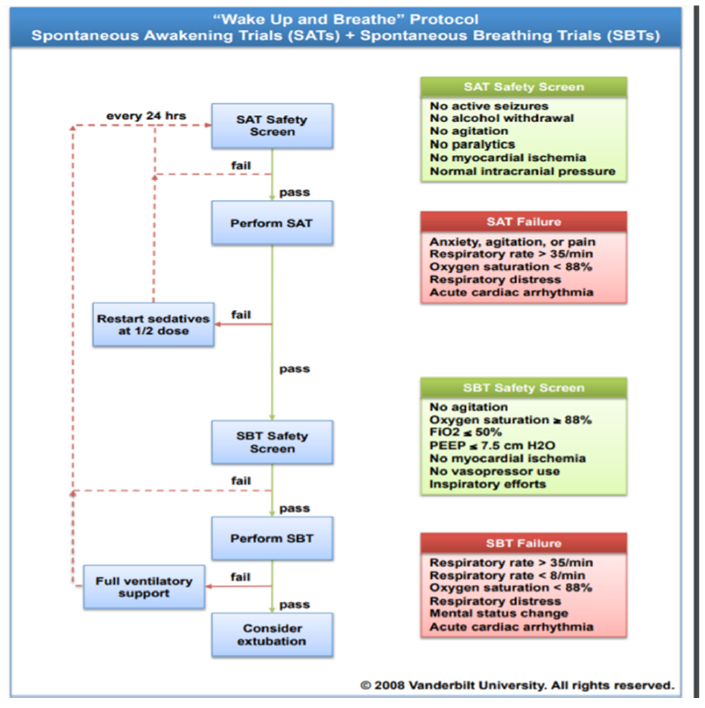
In addition, some nursing interventions to prevent delirium will be taught. Following completion of this training, delirium protocols will be implemented in the unit for six months. Next, before starting the second phase of the project, training on performing spontaneous awakening/spontaneous breathing trials (Figure 3) will be offered for two weeks to all interdisciplinary team members; then, the protocol will be initiated in the unit for the next six months.
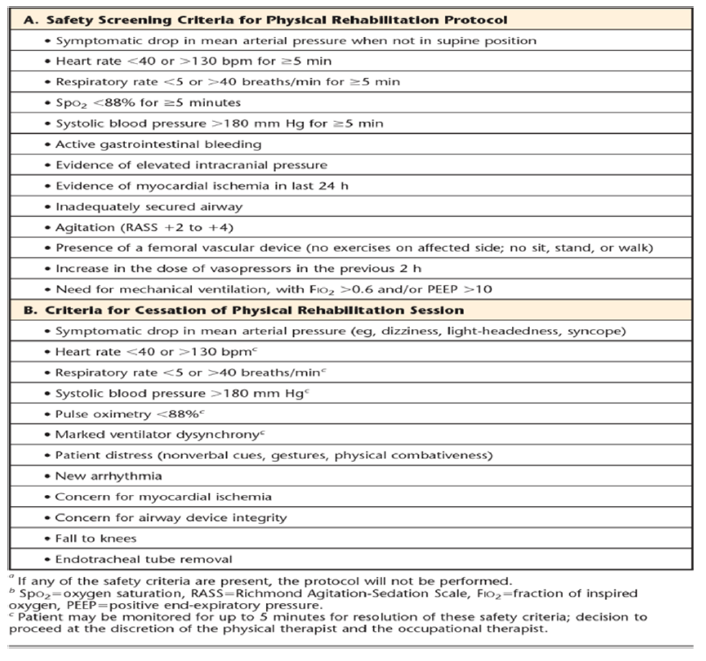
In the last stage, the early exercise and mobility and family involvement bundles will be implemented in the unit. Training on early mobility safety screening (Figure 4) will be conducted. During the period of project implementation, data regarding positive cases of delirium, mechanical ventilator use duration, costs, and ICU and hospital lengths of stay for each patient admitted to the unit will be collected.
Figure 4: Early Mobility Safety Screening
Project Evaluations Plan
A formative evaluation will be conducted after the pilot study for each phase. I will analyze health care providers’ perceptions about facilitators and barriers associated with the implementation of each protocol. Their feedback will be considered for ensuring the success of protocol implementation in the unit. An impact evaluation will be conducted after 18 months of bundle implementation in the unit by analyzing the data collected to date about positive cases of delirium, mechanical ventilation duration, costs, and ICU and hospital lengths of stay for each patient admitted to the unit after implementing the bundle and compared to data collected from before the bundle was introduced. The project results will be shared with the stakeholders, who may plan to implement the bundle elsewhere in the hospital; that is, it may trigger the stakeholders to review and revise the existing protocols in other units of the hospital. There will also be opportunities to disseminate the project results to other hospitals for their consideration. Further, the results of the study will be shared at international conferences and published in peer-reviewed scientific journals. Broad dissemination of the results will enhance the potential for further studies to assess the effectiveness of the bundle and the effectiveness of the educational interventions used in this project at other facilities as a means to improve ICU patient care on a global scale.
Proposed Timelines
The project will begin in January 2021 and last through June 2022. There will be four follow-up assessments performed at one month, six months, 12 months, and 18 months. Finally, a final evaluation of the entire project at the end of June 2022 will be completed.
Resources Needed
To enable the changes to be implemented, the following resources need to be available:
Support from the hospital directorate and nursing directorate to address the described issue and facilitate the adoption of the proposed changes
Collaboration between the stakeholders to ensure their work is performed efficiently so as to achieve an effective intervention and high quality of patient care
Support from the training department to conduct quality education and training sessions
Information technology support for the documentation of bundle implementation
Printing of ABCDEF bundle materials like the delirium assessment tool, sedation awakening/spontaneous breathing trial bedside algorithm, early mobility safety screening, and bedside checklist for the ABCDEF protocol (Figure 5)
Figure 5: Bedside Checklist for ABCDEF Protocol
Contribution of the Work
ABCDEF bundle implementation in the ICU setting is crucial to reduce the incidence of delirium through pursuing preventive measures like reducing sedation and mechanical ventilator use, performing regular assessments of delirium, and promoting early mobility and daily family participation in patient care. Overuse of sedative medications leads to prolonged use of mechanical ventilation, which may precipitate delirium development and increase the patient’s ICU and/or hospital length of stay. Conducting regular assessments for delirium is a means to enhance the early identification and proper management of delirium to avoid negative outcomes. The patient’s family can play a critical role in patient care through promoting patient orientation, providing psychological support, reassuring the patient that the best care is being given, and facilitating patient compliance with mobility and other aspects of care. An analysis of the collected data during the project implementation period will demonstrate the effectiveness of the bundle on reducing health care costs, incidence rates of delirium, days of mechanical ventilation, and ICU and hospital lengths of stay. This proposed project will foster change in the current ICU culture toward a different culture that views delirium as a dangerous syndrome associated with poor clinical outcomes; therefore, efforts will be taken to establish a quiet ICU environment to promote patient comfort, sleep, and safety and improve the quality of life of ICU patients. This project will also enhance effective communication and interdisciplinary collaboration.
Innovation and Change Resulting From the Work
Success is the ultimate goal for any proposed project. A review of the current evidence on the effects of the ABCDEF bundle was conducted before the planning and implementation phases. A meeting was held with ICU consultants and ICU department heads to discuss the current practices in the unit with regard to individual components of the bundle, such as sedation management, ventilator weaning, delirium assessment, physiotherapy management, and the involvement of family members in patient care. Stakeholder involvement at all stages of the project is essential for project success. In particular, involving them early on in the planning phase is a crucial strategy to facilitate changes by getting them to perceive the need for change, promote understanding of the research process, avoid misunderstandings, enhance satisfaction, and facilitate access to the study population and study setting [38]. Early involvement can lead to building trust and mutual learning between stakeholders and researchers and create time to refine project objectives, outcomes, and interventions using the knowledge base of the stakeholders as well as promote the exchange of ideas and creative solutions and improve nurse satisfaction, therefore enhancing the quality of the project [39]. Moreover, earlier involvement can increase their participation in analyzing and disseminating the results [38].
Several meetings were also conducted with stakeholders as part of this initiative to discuss the proposed guidelines. Performing daily inter-professional team rounds is an essential strategy to support the daily use of the bundle for every patient, facilitate teamwork and care coordination, and promote effective communication within and between teams [40]. An inter-professional team with diverse expertise can address all aspects of ICU patient needs and can promote patient-centered care [41] and better staff engagement and satisfaction with rounds [40]. A bedside checklist measuring adherence to the ABCDEF protocol will be completed every day under the responsibility of ICU in charge. Education on the bundle with be delivered through video demonstrations as an effective means to acquire new skills due to the simplification of the visual information through highlighting the key elements of the task and matching the performance of the task to that of the model [42]. An asynchronous, online learning module offering information on the new guideline will be created with handouts printed to promote accessibility to the information. To reinforce the training delivered during education sessions, delirium champions consisting of two nurses and one physician will be chosen. Their roles will be to act as role models for other nurses, to be a unit-based resource for delirium assessment and delirium preventive protocols for other nursing staff and physicians, and to offer support and solutions for any problems that arise and to collect feedback about the initiative. According to the available literature, champions are effective in leading and promoting innovation in projects [43] and acting as models for best practices and training and mentoring peers [44]. Guidelines on the ABCDEF bundle need to be created, updated, and made available for all health care providers to access so as to sustain the change long-term. Documentation of all components of the bundle in electronic patient records is necessary to facilitate access and compare the clinical data between before and after implementation of the bundle. To enhance compliance, regular audits and feedback are crucial.
CONCLUSION
In conclusion, delirium is a serious problem in the ICU, resulting in negative consequences. Therefore, it is important to consider preventive measures to reduce the occurrence of delirium and associated outcomes. Non-pharmacological interventions addressing the contributing factors are preferred over pharmacological interventions, which can have adverse health effects. The implementation of multicomponent strategies targeting multiple modifiable risk factors of delirium constitutes a more optimal approach and its effectiveness can be observed through improved patient outcomes. Further studies are recommended to evaluate the long –term effects of the bundle. Advance practice nurses are excellent interdisciplinary collaborators and can serve as change agents to advance nursing practice through conducting research and translating the research findings into clinical nursing practice. Advance practice nurses are also able to design and implement innovative solutions in clinical settings to address clinical issues and can assist in educating staff, patients, families, and physicians about new initiatives such as the delirium prevention bundle.
REFERENCE
Salluh, J.I. et al. “Outcome of delirium in critically ill patients: Systematic review and meta-analysis.” BMJ, vol. 350, 2015.
Pezzullo, L. et al. “Economic impact of delirium in Australia: A cost of illness study.” BMJ Open, vol. 9, no. 9, 2019, pp. e027514.
American Psychiatric Association. Depressive disorders: DSM-5® selections. American Psychiatric Publishing, 2013.
Hayhurst, C.J. and P.P. Pandharipande. “Intensive care unit delirium: A review of diagnosis, prevention, and treatment.” Anesthesiology, vol. 125, no. 6, 2016, pp. 1229–1241.
Krewulak, K.D. et al. “Incidence and prevalence of delirium subtypes in an adult ICU: A systematic review and meta-analysis.” Critical Care Medicine, vol. 46, no. 12, 2018, pp. 2029–2035.
Peritogiannis, V. et al. “Recent insights on prevalence and correlations of hypoactive delirium.” Behavioural Neurology, vol. 2015, 2015.
Reznik, M.E. and A.J. Slooter. “Delirium management in the ICU.” Current Treatment Options in Neurology, vol. 21, no. 11, 2019, pp. 59.
Mori, S. et al. “Incidence and factors related to delirium in an intensive care unit.” Revista da Escola de Enfermagem da USP, vol. 50, 2016, pp. 587–593.
Patel, M.B. et al. “Delirium monitoring in neurocritically ill patients: A systematic review.” Critical Care Medicine, vol. 46, no. 11, 2018, pp. 1832–1839.
Vasilevskis, E.E. et al. “The cost of ICU delirium and coma in the intensive care unit patient.” Medical Care, vol. 56, no. 10, 2018, pp. 890–897.
Liang, S. et al. “Effects of nonpharmacological delirium-prevention interventions on critically ill patients’ clinical, psychological, and family outcomes: A systematic review and meta-analysis.” Australian Critical Care, vol. 33, no. 1, 2020, pp. 9–17.
Devlin, J.W. et al. “Clinical practice guidelines for the prevention and management of pain, agitation/sedation, delirium, immobility, and sleep disruption in adult patients in the ICU.” Critical Care Medicine, vol. 46, no. 9, 2018, pp. e825–e873.
Burry, L.D. et al. “Comparison of pharmacological and non-pharmacological interventions to prevent delirium in critically ill patients.” Systematic Reviews, vol. 5, no. 1, 2016, pp. 1–8.
Potharajaroen, S. et al. “Bright light and oxygen therapies decrease delirium risk in critically ill surgical patients.” Psychiatry Research, vol. 261, 2018, pp. 21–27.
Munro, C.L. et al. “Delirium prevention in critically ill adults through an automated reorientation intervention.” Heart & Lung, vol. 46, no. 4, 2017, pp. 234–238.
Fadayomi, A.B. et al. “Impact of sleep disturbance on postoperative delirium: A systematic review and meta-analysis.” Critical Care Medicine, vol. 46, no. 12, 2018, pp. e1204–e1212.
Honarmand, K. et al. “Risk factors for sleep disruption in critically ill adults.” Critical Care Medicine, vol. 48, no. 7, 2020, pp. 1066–1074.
Litton, E. et al. “Efficacy of earplugs as a sleep hygiene strategy for reducing delirium in the ICU.” Critical Care Medicine, vol. 44, no. 5, 2016, pp. 992–999.
Deng, L.X. et al. “Non-pharmacological interventions to reduce the incidence and duration of delirium in critically ill patients.” Journal of Critical Care, vol. 60, 2020, pp. 241–248.
McKenzie, J. and A. Joy. “Family intervention improves outcomes for patients with delirium.” Australasian Journal on Ageing, vol. 39, no. 1, 2020, pp. 21–30.
Ali, M. and M. Cascella. ICU delirium. StatPearls Publishing, 2020.
Kang, J. et al. “Effect of nonpharmacological interventions for the prevention of delirium in the intensive care unit.” Journal of Critical Care, vol. 48, 2018, pp. 372–384.
Al Hoodar, R. et al. “Incidence, associated factors and outcome of delirium among patients admitted to ICUs in selected hospitals in Oman.” Unpublished raw data, 2020.
Mehta, S. et al. “Prevalence, risk factors, and outcomes of delirium in mechanically ventilated adults.” Critical Care Medicine, vol. 43, no. 3, 2015, pp. 557–566.
Mazur, K. et al. “Geriatric falls in the context of a hospital fall prevention program.” Clinical Interventions in Aging, vol. 11, 2016, pp. 1253–1261.
Tilouche, N. et al. “Delirium in the intensive care unit: Incidence, risk factors, and impact on outcome.” Indian Journal of Critical Care Medicine, vol. 22, no. 3, 2018, pp. 144–149.
Wang, S. et al. “Post-intensive care unit psychiatric comorbidity and quality of life.” Journal of Hospital Medicine, vol. 12, no. 10, 2017, pp. 831–835.
Wolters, A.E. et al. “Long-term self-reported cognitive problems after delirium in the ICU.” Journal of the American Geriatrics Society, vol. 65, no. 4, 2017, pp. 786–791.
Öztürk Birge, A. and T. Bedük. “Relationship of delirium and nursing workload in cardiology ICU patients.” Journal of Clinical Nursing, vol. 27, no. 9–10, 2018, pp. 2109–2119.
Barr, J. et al. “Clinical practice guidelines for the management of pain, agitation, and delirium in adult ICU patients.” Critical Care Medicine, vol. 41, no. 1, 2013, pp. 263–306.
Deffland, M. et al. “Effects of pain, sedation and delirium monitoring on clinical and economic outcome.” PLoS One, vol. 15, no. 9, 2020, pp. e0234801.
Marra, A. et al. “The ABCDEF implementation bundle.” Korean Journal of Critical Care Medicine, vol. 31, no. 3, 2016, pp. 181–193.
Trogrlić, Z. et al. “Implementation strategies for ICU delirium management.” Critical Care, vol. 19, no. 1, 2015, pp. 157.
Pun, B.T. et al. “Caring for critically ill patients with the ABCDEF bundle.” Critical Care Medicine, vol. 47, no. 1, 2019, pp. 3–14.
Zhang, S. et al. “Effectiveness of bundle interventions on ICU delirium: a meta-analysis.” SSRN Electronic Journal, 2020, https://doi.org/10.2139/ssrn.3564385.
Balas, M.C. et al. “Effectiveness and safety of the ABCDE bundle.” Critical Care Medicine, vol. 42, no. 5, 2014, pp. 1024–1036.
Hsieh, S.J. et al. “Staged implementation of ABCDE bundle improves outcomes.” Critical Care Medicine, vol. 47, no. 7, 2019, pp. 885–893.
Concannon, T.W. et al. “Stakeholder engagement in comparative effectiveness research.” Journal of General Internal Medicine, vol. 29, no. 12, 2014, pp. 1692–1701.
Forsythe, L.P. et al. “Patient and stakeholder engagement in PCORI pilot projects.” Journal of General Internal Medicine, vol. 31, no. 1, 2016, pp. 13–21.
Stollings, J.L. et al. “Best practices for interprofessional ICU rounds.” Critical Care Medicine, vol. 48, no. 4, 2020, pp. 562–570.
Donovan, A.L. et al. “Interprofessional care and teamwork in the ICU.” Critical Care Medicine, vol. 46, no. 6, 2018, pp. 980–990.
Vrbik, I. and A. Vrbik. “Video demonstration as a teaching method.” Croatian Journal of Education, vol. 19, special issue 2, 2017, pp. 201–213.
Sergeeva, N. and C. Zanello. “Championing and promoting innovation in UK megaprojects.” International Journal of Project Management, vol. 36, no. 8, 2018, pp. 1068–1081.
Silliman, B. et al. “Evaluation champions and organizational learning.” Journal of Human Sciences and Extension, vol. 4, no. 3, 2016.
Recommended Articles
Research Article
Imaging Evaluation of Ultrasonography Versus Magnetic Resonance,
Imaging in Diagnosis of Carpal Tunnel Syndrome among Female Patients with Positive Nerve Conduction Study
Download PDF
Research Article
The Efficacy of 5- Fluorouracil Cream and 25% Podophyllin Solution in Treatment of Plantar Warts in Alternative Day Regimen ; An Open Therapeutic Trial.
Download PDF
Research Article
An evaluation of Profile of Medico-legal autopsies conducted at Dr. Radhakrishnan Govt. Medical College, Hamirpur, Himachal Pradesh
Download PDF
Research Article
Failure to thrive and Congenital Heart Disease among Infants of Hilly Regions
Abhinav Gautam,
Deepak Kumar Sharma
Published: 10/07/2021
Download PDF
PO Box 101, Nakuru
Kenya.
Email: office@iarconsortium.org
Editorial Office:
J.L Bhavan, Near Radison Blu Hotel,
Jalukbari, Guwahati-India
Al-Hoodar, R. K., Lazarus, E. R., Omari, O. A. & Omari, K. A. (2021). Implementation of Delirium Prevention ABCEDF Bundle in Intensive Care Unit of Sultan Qaboos University Hospital. International Academic Research Journal of Internal Medicine & Public Health, 2(2), 1-7.
MLA
Al-Hoodar, Rasha K., et al. "Implementation of Delirium Prevention ABCEDF Bundle in Intensive Care Unit of Sultan Qaboos University Hospital." International Academic Research Journal of Internal Medicine & Public Health 2.2 (2021): 1-7.
Chicago
Al-Hoodar, Rasha K., Eilean R. Lazarus, Omar A. Omari and Khaled A. Omari. "Implementation of Delirium Prevention ABCEDF Bundle in Intensive Care Unit of Sultan Qaboos University Hospital." International Academic Research Journal of Internal Medicine & Public Health 2, no. 2 (2021): 1-7.
Harvard
Al-Hoodar, R. K., Lazarus, E. R., Omari, O. A. and Omari, K. A. (2021) 'Implementation of Delirium Prevention ABCEDF Bundle in Intensive Care Unit of Sultan Qaboos University Hospital' International Academic Research Journal of Internal Medicine & Public Health 2(2), pp. 1-7.
Vancouver
Al-Hoodar RK, Lazarus ER, Omari OA, Omari KA. Implementation of Delirium Prevention ABCEDF Bundle in Intensive Care Unit of Sultan Qaboos University Hospital. International Academic Research Journal of Internal Medicine & Public Health. 2021 Jul;2(2):1-7.


 Download PDF
 Download XML