Context: Painful medical procedures in childhood may have long-term adverse effects on the development and future tolerance of pain. Evidence suggests that a significant number of children receive less than optimal management of procedure-related pain. Objective: The present study investigates the efficacy of three interventions methods (Buzzy, distracting cards and magic glove) in managing pain and fear in children during the operative procedure. Design: A prospective clinical study. Setting: Private hospital and Private dental clinic. Subjects: The purposive sample composed of (n = 180) participants aged six to14 years and their parents. The study's participants were randomly assigned to two groups. The Intervention Group included (n = 90). Among them established pain distraction (Buzzy more Distraction cards group (n = 45) and distraction cards group (n = 45) by the researchers. On the other hand, the control group was included in the same number (n = 90) and no strategy was used. Tools: The pain levels were evaluated with the Wong-Baker Faces Pain Rating Scale. Statistical Analysis: The obtained data were compared and statistically analyzed using SPSS version 22. The following descriptive analysis, like Student's t-test and ANOVA (Univariate Analysis of Variance), was applied to determine the significant difference between them. Results: Pain and fear were similar in the two groups in which a pain management strategy was applied. Pain and fear were more incredible when no strategy was adopted. Conclusion: The study results suggest that the Buzzy More Distraction cards method effectively decreased children's pain levels than the control group, according to observer-report and parent-report.
Keywords
Buzzy Device
Distraction Card
Children
Fear
Pain Management
Parents' Satisfaction
INTRODUCTION
Pain is an unpleasant emotional, sensorial feeling that arises from any part of the body, progresses with possible tissue damage and overlays all past experiences of individuals [1].
Pain can be felt after surgical operations and during Intramuscular (I.M.) injections [2]. These medical procedures also induce anxiety, fear and behavioural distress in children and their families, further intensifying their pain and interfering with the procedure [3].
Intravenous cannulation is one of the most common invasive procedures carried out in hospital settings. Intravenous cannulation is mandatory for children requiring intravenous drugs/fluids to be administered or emergency venous access [4].
Adequate local anaesthesia is the most critical pillar upon which modern dentistry stands [5].
Injections of local anaesthesia are one of the effective methods to reduce pain. Nevertheless, injection of local anaesthetic itself is an excellent source of patient fear [6].
The reduction of pain, fear and anxiety become the responsibility of health care professionals to an extent as possible while maintaining patient safety by using various pharmacological and nonpharmacological interventions [7]. Pharmacologic and non-pharmacologic methods are used for pain management in children. Non-pharmacologic methods are non-invasive and inexpensive methods [7].
When selecting the non-pharmacologic methods, it is required to consider a child’s age, cognitive competence, culture, behavioural factors, coping skills, personal differences and pain type [7].
Buzzy® and ShotBlocker® have been reported to be two effective devices in reducing pain [8].
Buzzy, which is composed of a bee-shaped gadget producing vibrations and cooling through freezable wings. The effect of Buzzy is based on the gate-control theory discovered by Melzack & Wall in 1965 [8], which suggests that barriers can control the flow of pain information employing the activation of nociceptive fibers.
In this case, the purpose of the cold and the vibrations is to block the transmission of pain signals [9].
Distraction methods evidence to work as the best on a mild degree of pain, mainly a chronic pain to the child. Patient children are well distracted when practising standard methods such as helping children talk, reading books, looking at pictures, video gameplay and cold device (buzzy). The distraction methods may also contain other methods as sounding music, enumeration things in the specific room, talking which are non-medical, games and dolls and blebs [9].
A behavioural scale, which assesses pain intensity by the medical personals through observing the patients, is usually considered more reliable.
Some of the behavioural measures of pain intensity have been widely used; Numeric Rating Scale (NRS), Face Pain Scale (FPS) and the Face, Legs, Activity, Cry and Consolability (FLACC) scale [10].
In the present study, the pain levels were evaluated using Wong-Baker Faces Pain Rating Scales [11]. This pain scale was initially developed for children age three and above. It is helpful for children because they may not understand rating their pain on a scale of 0-10.
Several studies have described promising non-pharmacologic acute pain control in children, whether the present technique works for every child and there is a paucity of data in the literature for such a pain-relieving technique that we have used in the study. Considering these aspects, we felt the need to conduct this study.
Aims
Evaluate the Buzzy System's efficacy in reducing pain during an operative procedure in children compared to routine technique (magic gloves) used in the ambulatory where the study took place.
Study Objectives
Primary Objective: To study nonpharmacological measures' effectiveness (buzzy device and distraction card) to reduce pain and anxiety in children between 6 and 14 years old.
Specific Objectives
To describe the socio-demographic characteristics of the study population
Evaluate the parent/caregiver's satisfaction concerning the Buzzy System's distractive techniques and their willingness to use them again for future procedures
MATERIALS AND METHODS
Research Hypotheses
It was hypothesized that, the buzzy device with distraction cards will have a positive effect on reducing pain and increasing parent's satisfaction during venipuncture and dental operative procedure in the respondent.
Research Design
This study was a randomized, cross- over, single-blinded design.
Trial Design and Study Setting and Study Period
The present study was conducted at two different settings, a private hospital and a private dental clinic. The study period was from Dec 2020 to Jan 2021.
Research Methodology
This study protocol was developed per the Standard Protocol Items: Recommendations for Interventional Trials recommendations [12].
Subjects
The purposive sample composed of (n = 180) participants and their parents. The study’s participants were randomly assigned to two groups. The Intervention Group included 90 participants. The researchers established pain distraction (Buzzy more Distraction cards group) 45 participants and distraction cards group 45 participants. On the other hand, the control group was included in the same number (n = 90).
Inclusion Criteria
Children aged between 6 years old and 14 years old [11]
Children required a venipuncture procedure
Children required infiltration L.A. for the dental treatment procedure. At least one caregiver/parent distracted the child with the distraction cards (in the Intervention Group)
Exclusion Criteria
A break or abrasion on the skin or nerve damage or limited sensation where the needle-related procedure will be performed
Absence of a caregiver/parent during the procedure
Children unable to quantify or express their pain (e.g., severe cognitive deficit)
Lack of parental consent
Participants use an analgesic within the last 6 hours.
Participants with known behavioural management problems, previous experience with Buzzy®, anaesthetic or similar creams, sedated, hemodynamically unstable, developmental delay, or pathologies
Sample Size Determination
Based on the previous studies [13] and using pain as the primary outcome variable, an alpha level of 5% for a power of 90% and a type I error of 0.05, it was necessary to compare 21 children per group. Anticipating that some children would probably drop out of the study increased the sample size by 25%. Therefore, the total number of children enrolled was 45 patients per group using the following formula:
n = (Zα + Zβ)2 x σ2
d2
Where,
Z: A constant
Zα: Set by convention according to the accepted α error and whether it is a one-sided or two-sided effect
Zβ: Set by convention according to the power of the study
σ2: Standard deviation (estimated)
d2: The difference in the effect of two interventions which is required (estimated effect size)
Tools of Data Collection
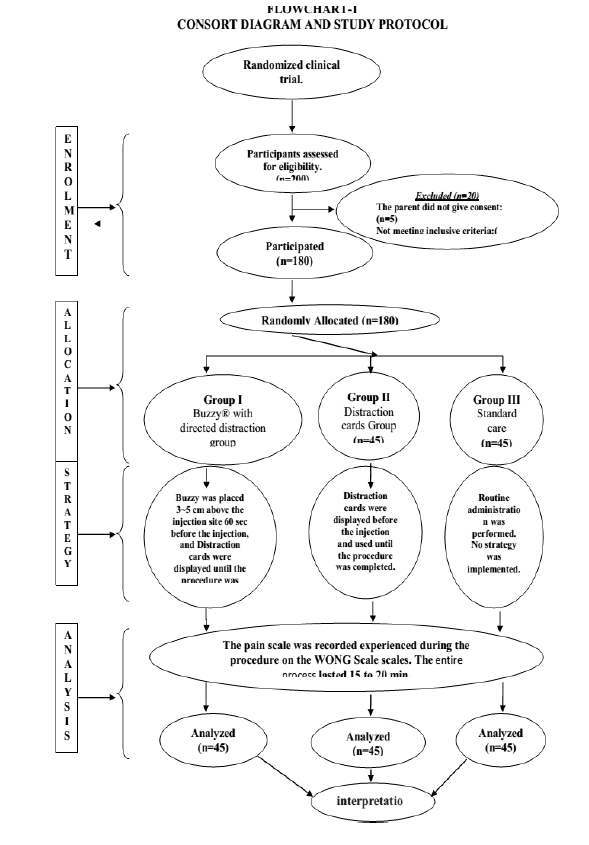
Three tools were developed for collecting data (Figure 1).
Tool I
Structured Interview Schedule: It was developed by the research team after reviewing the related literature and collecting data related to the parents and children.
This Tool Included Two Parts
Part A: Social-demographic Variables of Respondents such as Age (years), Gender, Birth order and Operative procedures (Table 1)
Part B: Social-demographic Variables of Parents of Studied groups of buzzy intervention Respondents such as age (years), Caregiver attending the procedure, Parents' educational level and Residence (Table 1)
Tool II
Criterion Measured:The criterion measures used in the study was the level of pain measured by Wong-Baker Faces Pain Rating Scale [14,15] (for Experimental Group and control group) (Table 5, Figure 1).
Figure 1: Schematic Representation and Protocol
It is a pain scale that was developed by Donna Wong and Connie Baker. There are six faces in the Wong-Baker Pain Scale. The scale shows a series of faces ranging from a happy face at 0 or "no hurt" to a crying face at 10, which represents "hurts like the worst pain imaginable". Based on the faces and written descriptions, the patient chooses the face that best describes their pain level:
The first face represents a pain score of 0 and indicates "no hurt"
The second face represents a pain score of 2 and indicates "hurts a little bit"
The third face represents a pain score of 4 and indicates "hurts a little more"
The fourth face represents a pain score of 6 and indicates "hurts even more"
The fifth face represents a pain score of 8 and indicates "hurts a whole lot"
The sixth face represents a pain score of 10 and indicates "hurts worst."
This pain scale was initially developed for children age three and above. It is helpful for children because they may not understand rating their pain on a scale of 0-10, but can understand the cartoon faces and the emotions they represent and point to the one that "best matches their level of pain".
This pain scale is also appropriate for patients who do not know how to count and those who may have impaired brain function.
Tool III
Parents` satisfaction (Likert-scale Rating): Adapted from Friedel et al., [15], it was used to assess parents’ satisfaction regarding the cold device (Buzzy System), this scale formed of 4 variables (Table 3).
1: My child was comforted using the buzzy system during the procedure
2: It was a positive experience
3: I think the buzzy system is easy to use
4: I would like to use the buzzy system in the future for tests carried out on my son/daughter
The Likert scale consists of 4 statements and was based on five points 1:no, 2: probably not, 3: do not know, 4: yes, 5: definitely.
Study Instrument (Buzzy System)
Used in this study, associates three different components and modulations of pain (Figure 2).
Cryotherapy Effect: By a changeable cold liquid device that the bee-shaped device
Vibration: A mechanical effect formed by applying a bee-shaped device a few centimeters from the needle entry point
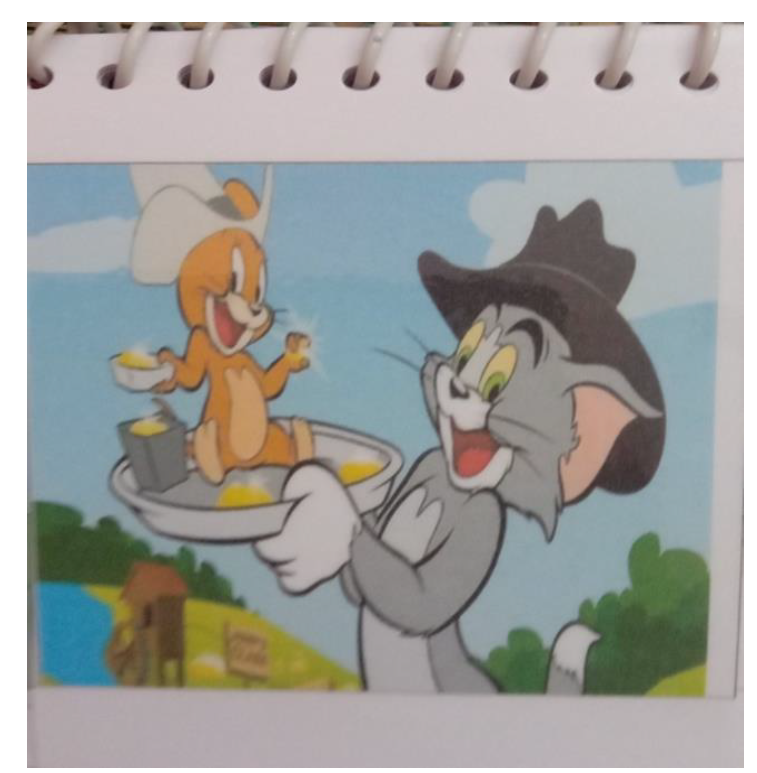
Distraction: Reasoning method: Distracting the child with (distraction cards) (Figure 3)
Figure 2: Wong–Baker Faces Pain Rating Scale
Figure 3: Distracting the child with Distraction Cards
Validity and Reliability of Study Tools
Content validity was ascertained by a group of experts, three Dental and Medical Specialties, respectively. Their opinions were elicited regarding the tools format layout, consistency, scoring system. Modifications for the tools were done according to the experts' judgment on the clarity of sentences, appropriateness of the content and items' sequence. The experts were agreed on the intervention but recommended minor language skills changes that would make the information clearer. Reliability of all items of the tools was done. The reliability test was established by using the Cronbach alpha to assess internal consistency construct validity. Cronbach alpha r = 0.86.
Ethical Considerations
All children and their parents were informed about the study's aim, its benefits to obtain their acceptance to participate. The researchers informed them that the study's participation is voluntary; they have the right to withdraw from the study at any time, without giving any reason and their responses would be held confidentially. The secrecy and privacy of all the data will be assured. Written or verbal consent were obtained from those who welcome to participate in the study.
A Pilot Study
Power analysis was approved on 10% of the total sample (n = 180) children and their parent to test the study tools' clearness and applicability as well as an approximation of the time needed to complete each study tool. Those who contributed to the pilot study were later excluded in the study as there were no modifications to the tools.
Procedure
After obtaining the consent, the study's aim was explained to children and their parents under study [16,17].
The researchers started to collect data from the children and their parent in the selected setting.
Each child was interviewed individually to determine his level of pain during the treatment procedure.
The age group's choice was based on scientific literature, which asserts that children in this age range were incredibly responsive to distraction technique [11].
The procedure was explained for the children in both groups. In one of the Intervention Group, a combination of a Buzzy® with Directed Distraction (BDG) method of reducing pain opted during the Invasive procedure.
In the other, the Intervention Group, children were involved in distraction cards (D.G.) techniques during the Invasive procedure.
The Buzzy® is a device in the shape of a bee whose body vibrates with cold gel wings (cooled in a freezer).
The researcher placed the buzzy with the frozen wings on children’s skin by attaching it to the arm or manually holding it in place, as close as possible above the needle insertion site (about 5-10 cm above the insertion site).
Children were requested to focus on the sensations of the-Buzzy rather than look at the needle insertion procedure. A 30 to 60 s rest was selected between the fixing of the device before the procedure. The buzzy device remained on till the end of the procedure. Finally, the researchers assessed pain using the appropriate pain and anxiety assessment tool, which took 3 to 5 minutes.
The parents were asked to interact with their children using distraction cards, a small number of cartoon images.
The parents' evaluated was the level of satisfaction with the distraction device method of pain control in the child and their desire to use it again in the future, with the appropriate parent's satisfaction assessment tool.
The buzzy component contains 20 g of ice and can be removed and kept in the freezer between procedures. Each pair of wings can stay frozen for about 10 min at room temperature and could be used up to 10 times.
Distraction Cards
The distraction cards consisted of 5 x8 cm graphic cards with various pictures and shapes. The children were allowed to examine the cards and then the researcher asked the children what they could see on the cards. Distraction with the cards began immediately before the invasive procedure and continued until the procedure had been completed [12].
Standard Care (Control Group)
In the control group in the study setting, no type of distraction or device (C.G.) were implemented. The-magic glove technique is traditionally used. The children in the control group were permitted to keep their family nearby. The Invasive routine procedure was applied and the level of pain in each child was evaluated using appropriate pain and anxiety assessment tools [12].
Before starting the procedure, the researcher gently rubbed the area where the needle was positioned to free it from the pain. The child, imagining that the researcher is placing the glove and feeling the massage's influence on his site and his body, would feel certain numbness in the same area where the sensitivity is lowered.
Statistical Design
Analysis of data was done per the objectives. Statistical analysis was performed using SPSS version 20.0 software.
Descriptive statistics were performed for sample characteristics calculating (percentage, mean and standard deviation).
The inferential statistics calculating (analysis of variance ANOVA (F) and independent t-test) was performed to compare groups in categorical variables.
When the p-value was less than 0.05, it was considered significant and less than 0.001 was considered highly significant.
RESULTS
Demographics and Clinical Characteristics
A total of 200 children were enrolled between December 2020 and January 2021, Of the 200 children enrolled, 180 children and their caregivers were approached during the study period.
Among them Parent did not give consent: (n = 5), Not meeting inclusive criteria (n = 12).
Protocol violation (n = 3) were excluded as they displayed a significantly altered emotional state when the operative procedures could compromise a valid expression of the actual perceived pain.
Enrolled children were subdivided into two groups of 90 children in the Intervention Group and 90 in the control group.
Procedural pain scores among study groups were presented in Table 1-5. The pain level was evaluated based on observer report and parent report and. The pain levels of children showed statistically significant.
Table 1 illustrated that the age of children ranged from 6 years to 14 years, the major ranged from 4 < 8 were 36% (n = 33) of the experimental group and 51.1% (n = 46) control group.
Table 1: Social-Demographic Variables of Respondents
Individual scenario
Treatment group
ANOVA
Frequency
n = 180 (100%)
Mean±SD Comparisons
Z-score Comparisons
Inferential
Statistics
Intervention Group N = 90 (50%)
Control Group
n = 90 (50%)
BDG n = 45 (25%)
DG N = 45 (25%)
Total no of respondents
180 (100%)
Age (years)
6-8 yrs
16 (35.5%)
17 (37.7%)
46 (51.1%)
79 (43.8%)
20±10.12
15.81
p<0.0001 HS*
9-11 yrs
14 (31.1%)
16 (35.5%)
28 (31.1%)
58 (32.2%)
12-14 yrs
15 (33.3%)
12 (26.6%)
16 (17.7%)
43 (23.8%)
Gender
Male
26 (57.7%)
23 (51.1%)
39 (43.3%)
88 (48.8%)
30±11.34
13.22
p< 0.0001 HS*
Female
19 (42.2%)
22 (48.8%)
51 (56.6%)
92 (51%)
Birth order
First
18 (40%)
19 (42.2%)
43 (47.7%)
80 (44.4%)
30±11.16
13.20
p< 0.0001 HS*
Second
27 (60%)
26 (57.7%)
47(52.2%)
100 (55.5%)
Operative procedures
Venipuncture
19 (42.2%)
20 (44.4%)
44 (48.8%)
83 (46.1%)
30±10.90
13.76
p<0.0001 HS*
Dental procedure
26 (57.7%)
25 (55.5%)
46 (51.1%)
97 (53.8%)
Citation: Volkan Susam, Marie Friedel, Patrizia Basile, Paola Ferri, Loris Bonetti. Efficacy of the Buzzy System for pain relief during venipuncture in children: a randomized controlled trial. Acta Biomed for Health Professions 2018;89(S.6):6-16.
Significance level p<0.0001, *Significant, HS: Highly Significant, BDG: Buzzy more Distraction Cards Group, DG: Distraction cards Group, CG: Control Group
Table 2: Social-Demographic Variables of Parents of Studied Groups of Buzzy Intervention Respondents
Individual scenario
Treatment group
ANOVA
Frequency
n = 180
(100%)
Mean±SD Comparisons
Z-score Comparisons
Inferential
Statistics
Intervention Group
n=90 (50%)
Control Group
N = 90 (50%)
BDG n = 45 (25%)
DG n = 45 (25%)
Total no of respondents
180 (100%)
Age (years)
20-30 yrs
14 (31.1%)
13 (28.8%)
28 (31.1%)
55 (30.5%)
20±8.35
19.16
p<0.0001 HS*
30-40 yrs
21 (46.6%)
20(44.4%)
37 (41.1%)
78 (43.3%)
40-50 yrs
10 (22.2%)
12 (26.6%)
25 (27.7%)
47 (26.1%)
Caregiver attending the procedure.
Mother
23 (51.1%)
18 (40%)
42 (46.6%)
83 (46.1%)
20±9.87
16.21
p<0.0001 HS*
Father
8 (17.7%)
11 (24.4%)
18 (20%)
37 (20.5%)
Grandparents
14 (31.1%)
16 (35.5%)
30 (33.3%)
60 (33.3%)
Parents' educational level.
Illiterate
4 (8.8%)
5 (11.1%)
19 (21.1%)
28 (15.5%)
15±7.86
20.99
p<0.0001 HS*
Primary
10 (22.2%)
8 (17.7%)
16 (17.7%)
34 (18.8%)
Secondary
20 (44.4%)
21 (46.6%)
31 (34.4%)
72 (40%)
University
11 (24.4%)
11 (24.4%)
24 (26.6%)
46 (25.5%)
Residence
Urban
24 (53.3%)
22 (48.8%)
38 (42.2%)
84 (46.6%)
30±11.38
13.18
p<0.0001 HS*
Rural
21 (46.6%)
23 (51.1%)
52 (57.7%)
96 (53.3%)
Citation: Sahar Sedky Faheem. Efficacy of Buzzy with Distraction Cards Versus the Traditional Method for Reducing Pain and Parent's Satisfaction during Venipuncture in healthy Children. IOSR Journal of Nursing and Health Science. 2019;8(03):78-89. Significance level p<0.0001, *Significant, HS: Highly significant, BDG: Buzzy more Distraction Cards Group, DG: Distraction Cards Group, CG: Control Group.
As regards gender, for both the experimental and control groups, it was found that 45% (n = 41) and 56.6% (n = 51) were females, compared to 54.4% (n = 49) and 43.3% (n = 39) being males, respectively.
Less than half, 47.7% (n = 43), 52.2% (n = 47) of children were second order for both the experimental and control groups, respectively.
Regarding the reason for venipuncture 46.1% (n = 83) and 53.8% (n = 97) of children for Dental procedure.
Table 2, illustrated that parents' mean age was 34.1±8.45 years in the experimental group compared to 37.3±8.82 years in the control group.
Concerning Caregiver attending the procedure, for both groups, it was found that 45% (n = 41) and 46.6% (n = 42) were mothers with a non-significance difference (p>0.05) between the two groups.
Regarding parents' educational level 45.5% (n = 41) and 34.4% (n = 31) of parents in experimental and control groups had secondary education respectively. More than half, 53% (n = 96) of parents live in a rural area while (n = 84) 46.6% of parents live in an urban area with a significant difference (p<0.0001) between the two groups regions.
Table 3, illustrated the Caregivers' Satisfaction Questionnaire for the Buzzy System. 20% (n = 18) of parents said they would reuse the Buzzy System in the future for tests done. 1% (n = 1) negative opinions were expressed for any of the questions regarding the Buzzy System.
Wong-Baker Faces Pain Rating Scale
Table 4 illustrated the study population's distribution according to projective scales (FAPS and MFAS) during the invasive procedure.
With FAPS, the distribution was uniform for “fearful” and “not fearful” in both phases were Statistics significant. (Wilcoxon signed ranks test, Z = 7.83, p<0.0001 (HS).
However, with MFAS, the percentage of children with "anxiety scales" during the procedure phase was statistically significant. {Wilcoxon signed ranks test, Z = 10.65, p<0.0001 (HS)}.
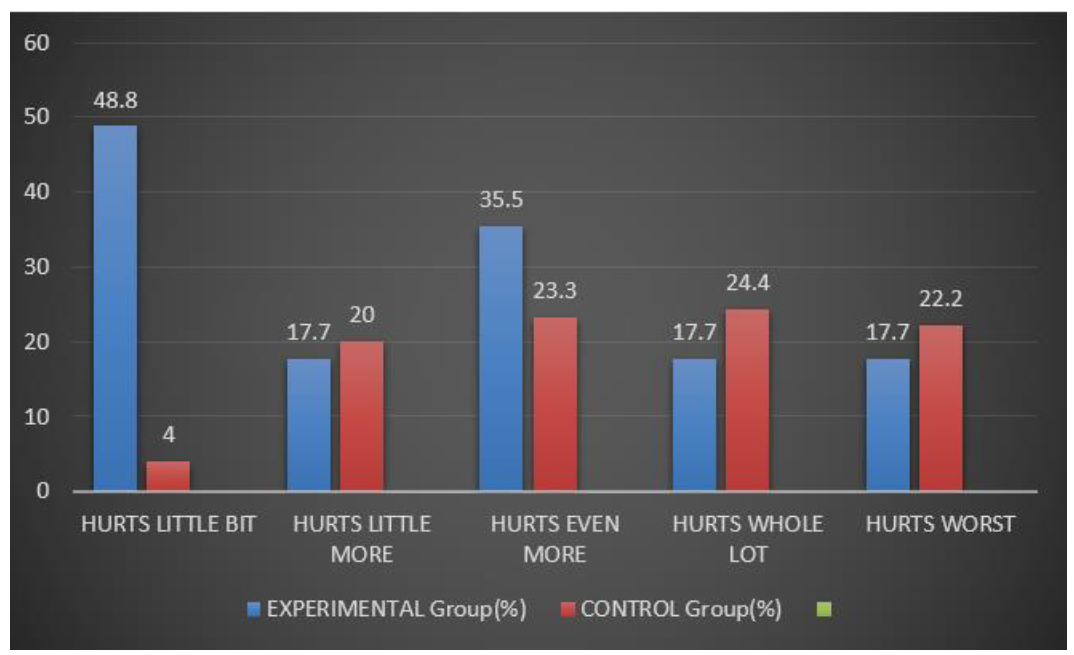
Table 5, illustrated the Wong-Baker Faces Pain Rating Scale. In the intervention group, most children, 15.5 % (n = 28), described the pain score '0', which refers to 'no pain'. Only 4.4% (n = 8) of children expressed a pain score of '10', which refers to 'very much pain'.
Table 3: Description of the Results of Caregivers’ Satisfaction Questionnaire for the Buzzy System
Variables
Frequency- Scores n (%)
Parents’ satisfaction
No
n (%)
Probably not
n (%)
Do not know
n (%)
Yes
n (%)
Definitely
n (%)
Total no of respondents
90 (100%)
My child was comforted using the Buzzy System during the procedure.
0
2
5 (5.5%)
7 (7.7%)
6 (6.6%)
It was a positive experience.
1 (1.1%)
2 (2.2%)
4 (4.4%)
8 (8.8%)
9 (10%)
I think the Buzzy System is easy.
0
0
3 (3.3%)
5 (5.5%)
9 (10%)
I want to use the Buzzy System for tests done on my son/daughter's future
0
0
5 (5.5%)
6 (6.6%)
18 (20%)
Individual scenario, Total no of respondent = 90 (100%), ANOVA Mean ± SD Comparisons: 4.5±4.33, z-score Comparisons: 19.74, Inferential Statistics: p<0.0001 HS*, Citation: Friedel M, Whitman J, Magnani L. Boosting pain awareness through Buzzy Bee. Poster presentation at the 2nd European Congress on Pediatric Palliative Care, Fondazione Maruzza, Rome, 19-21st November 2014. Hanan Mohamed Mohamed Tork. Comparison of the Effectiveness of Buzzy, Distracting Cards and Balloon Inflating on Mitigating Pain and Anxiety During Venipuncture in a Pediatric Emergency Department. American Journal of Nursing Science. 2017;6(1):26-32. Significance level p<0.0001, *Significant, HS: Highly Significant
Table 4: Distribution of Study Population According to Frankl’s Behaviour Rating Scale Versus Projective Scales (FAPS and MFAS)-Wong-Baker Faces Pain Rating Scale
Frankl’s behaviour rating scale
MFAS n = 180 (100%)
FAPS n = 180 (100%)
No anxiety
Some anxiety
Very high anxiety
Fearful
Not fearful
Definitely positive (+ +) n = 33
33 (18.3%)
0
0
0
33
Positive (+) n = 52
10 (5.5%)
39 (21.6%)
3 (1.6%)
45 (25%)
7 (3.8%)
Negative (−) n = 67
8 (4.4%)
39 (21.6%)
20 (11.1%)
15 (8.3%)
52 (28.8%)
Definitely negative (− −) n = 28
0
3 (1.6%)
25 (13.8%)
28 (15.5%)
0
ANOVA
Mean ± SD Comparisons
15±15.48
22.5±20.09
z-score Comparisons
10.65
7.83
Inferential Statistics
p<0.0001 HS*
p<0.0001 HS*
Individual scenario, Total no of respondents = 180 (100%), Citation: Tiwari, Nishidha Tiwari, Shilpi Thakur, Ruchi Agrawal, Nikita Shashikiran, N D Singla, Shilpy. Evaluation of treatment-related fear using a newly developed fear scale for children: “Fear assessment picture scale” and its association with physiological response. Contemp Clin Dent 2015;6(3):327-31. FAPS: Fear Assessment Picture Scale, MFAS: Modified Facial Affective Scale, Significance level p<0.0001, *Significant, HS: Highly Significant
Table 5: Wong–Baker Faces Pain Rating Scale
ANOVA
(Inference)
Variables
Frequency- Scores n (%)
Mean ± SD Comparisons
Student’s
t-test
Inferential
Statistics
0 No Hurt
2 Hurts
Little bit
4 Hurts little more
6 Hurts
even more
8 Hurts
whole lot
10 Hurts
worst
BDG n = 45 (25%)
18 (40%)
8 (17.7%)
3 (6.6%)
5 (11.1%)
6 (13.3%)
5(11.1%)
5.4 .81
t = 2.75
df = 88
p = 0.0071
SS*
DG n = 45 (25%)
10 (22.2%)
14 (31.1%)
5 (11.1%)
11 (24.4%)
2 (4.4%)
3 (6.6%)
7±5.24
CG n = 90 (50%)
5 (5.5%)
4 (4.4%)
18 (20%)
21 (23.3%)
22 (24.4%)
20 (22.2%)
17±7.41
BDG +DG+ CG
12.4 ± 6.38
t = 4.46
df = 178
p< 0.0001 HS*
scenario, Total no of respondents: 180 (100%), Citation: Wong, D. L. and Baker, C. M. Pain in children: Comparison of assessment scales. Pediatric Nursing 1988;4(1):9–17. Drendel, AL; Kelly, BT; Ali, S. Pain assessment for children: overcoming challenges and optimizing care”. Pediatric Emergency Care. 2011;27(8):773–81. Significance level p< 0.0001, *Significant, SS: Statistically Significant, HS: Highly Significant, BDG: Buzzy more Distraction Cards Group, DG: Distraction Cards Group, CG: Control Group
There were only 2.7 (n = 5) children (small group) who described pain score '0', which refers to 'no pain' in the control group. The second majority of the group, 11.1% (n = 20), responded pain score of '10', which refers to 'very much pain'.
As shown in Table 5, there were significantly lower pain scores in the intervention group than in the control group. Table 5 showed that there was an enormously significant (p<0.0001 HS).
DISCUSSION
The present study results show that pain decreases both with directed distraction and with the combination of directed distraction with the Buzzy®.
A study done by Ferreira-Valente MA et al., had tried to find the validity of four different pain scales using hand immersed in the cold-pressor apparatus, which showed that slight variations in water temperature result in significant differences in pain intensity ratings, with numerical rating scale being the most responsive, followed by visual analogue scale, verbal rating scale and faces pain scale revised [18].
A present study's findings revealed that the intravenous International Journal of Medical and Health Research 129 cannulation and cough trick method group and Conventional care lead to a moderate level of pain expressed by WONG BAKER FACES pain scale scores among children. There was a significant difference in the cough trick method group's pain level compared to the conventional care group. Thus, the cough trick method was effective compared to Conventional care concerning the reduction of pain during intravenous cannulation which was in corelation with the present study.
Mutlu [19], study depicts less pain perception during intravenous cannulation among children using the cough trick method than those receiving Conventional or routine care. This finding supported the present study.
Wong
Needle-related procedures are considered the primary sources of pain and distress in children in different settings.
Wong-Baker FACES Pain Rating Scale as it was convenient to record the pain scores in the less literate patient population and eliminate any investigator's bias.
In the present study, the mean pain scores using the device method were lower than those using the conventional method, indicating that children experienced less pain when using the device method.
In the present study, most children showed mild discomfort during anaesthesia administration using the device method, whereas most children experienced moderate pain during anaesthesia administration using the conventional method.
The present study showed that more females presented for the invasive procedure compared with males. This may explain the higher proportion of females presenting with pain.
Bartley EJ presented an extreme gender difference in the female to male ratio of 3:1 for orofacial pain, which was attributed to the lower pain threshold and better health motivation of females, resulting in a higher prevalence of females who 'actively' seek treatment for health complaints generally [20].
Our results show that pain decreases both with directed distraction and with the combination of directed distraction with the Buzzy®.
Only two published studies have investigated the Buzzy method's application in pediatric populations during venipuncture [21,22].
Our results demonstrated the efficacy of the Buzzy System combined with distraction cards to reduce the perception of pain during invasive procedures compared to other distractive techniques.
The American Academy of Pediatrics and American Pain Society recommend minimization and relief of the stress and pain during minor administrations, such as I.M. injections and vascular access [21].
Previous studies also revealed that children in both the experimental and control groups experienced anxiety before the interventions.
In a study conducted by Şahin in adult patients who received I.M. injections, it was determined that Buzzy® was an efficient method for reducing the injection pain and increasing post-injection satisfaction [22].
In a study conducted by Hasanpour et al., in children aged 5~12 years, the authors performed a local cold application on the injection site for 30 seconds for reducing the pain induced by I.M. injections and reported that the method was effective [23].
Impact of Distraction
Vetri Buratti C et al., studies have shown that distraction can diminish the perception of procedural pain in children and adolescents, which was like the present study [24].
Sahiner NC et al., stated that distraction cards were found particularly powerful in reducing pain and anxiety levels during venipunctures than other distraction techniques such as listening to music or balloon inflation [25].
Triggering children's interactivity during distraction techniques is different from distracting children passively with a doll or a puppet [26].
Impact of Combined Cryotherapy, Vibration and Distraction
Nasehi et al., compared the pain level between the conventional method and the DentalVibe-assisted method in 99 patients. A total of 256 injections, which consisted of infraorbital nerve blocks, inferior alveolar nerve blocks, palatal injections and buccal injections, were conducted. The authors demonstrated a significant reduction in pain level using DentalVibe, which in relation with the present study using buzzy [27].
Shilpa et al., studied the effectiveness of DentalVibe on 30 patients between the ages of 6- and 12-years using Frankel’s behaviour scale. The study showed a significant reduction in pain level using Dental Vibe, which contrasted with the present study using buzzy [28].
The Role Given to Caregivers/Parents During Painful Procedures
Acceptability of the Buzzy System by parents was largely confirmed. Five had a negative experience during its use. Five parents would reuse the system in the future. In this aspect, our results confirmed those of Friedel et al., [15].
Nasehi et al., [27], stated that allowing parents to have an active role using distraction cards might empower parents to comfort their child's pain and anxiety instead of feeling helpless and anxious. For children having their parents secured might lower their anxiety. Nevertheless, the Buzzy System's impact may be less efficacious among children who experienced a high level of pain in the past and developed needle phobia, which was not on par with the present study [29].
Limitations
A single researcher stayed with the children during the intramuscular injections and later assessed the self-reported pain in children after the procedure. Having one person administer the intervention and evaluate the results may have induced bias in the children's answers
Comparison with Buzzy System with pharmacological intervention, such as anaesthetic not conducted
More extensive studies with larger sample sizes should be conducted to obtain more statistically significant results and make them commercially available [30]
The parent's questionnaire results with children's pain scores were not compared because questionnaires were strictly anonymous [31,32]
CONCLUSION
The present studies depicts that the Buzzy System with distraction cards has proved efficacious in reducing pain even compared to other distractive techniques, which underlines all three components' relevance (vibration, cryotherapy and distraction).
Family-centred care and partnership with parents are the core elements of quality care provided to children.
Clinical Implication
Health care professionals should be aware of the harmful effects of procedural pain and anxiety in children
One of the most common painful procedures in paediatrics
The WHO and several Pediatric Societies advocates improving the approach to pain and anxiety in children in a medical environment
Use distraction methods and know different nonpharmacological methods that may reduce their impact
Conflict of Interest & Source of Funding
The author declares no exceptional financial support for this research work from the funding agency and there is no conflict of interest nor bias among the authors.
Ethical Disclosures
Protection of Human and Animal Subjects: The authors declare that no experiments were performed on humans or animals for this study
Confidentiality of Data: The authors declare that no patient data appear in this article
Right to Privacy and Informed Consent: The authors have obtained the written informed consent of the patients or subjects mentioned in the article. The corresponding author owns this document
Acknowledgement
All the authors express sincere gratitude to all respondents whose honest attention, help, support and study participants lead the Research project to a worthful outcome.
REFERENCES
Sivri Bilgen, B. and S. Balcı. “The effect on pain of buzzy® and ShotBlocker® during the administration of intramuscular injections to children: A randomized controlled trial.” Journal of Korean Academy of Nursing, vol. 49, no. 4, 2019, pp. 486–494.
Kara, D. “The methods for reducing pain due to intramuscular injection.” Gümüşhane University Journal of Health Sciences, vol. 2, no. 2, 2013, pp. 275–289.
Kaur, R. et al. “A study to assess the effectiveness of cough trick method in reducing pain among (6–12 Years) old children undergoing intravenous cannulation.” International Journal of Medical and Health Research, vol. 5, no. 11, 2019, pp. 127–129.
McGrath, P.J. and A.M. Unruh. “Measurement and assessment of paediatric pain.” Textbook of Pain, edited by P.D. Wall and R. Melzack, 4th ed., Churchill Livingstone, 1999, pp. 371–384.
Davis, M.J. and L.D. Vogel. “Local anaesthetic safety in pediatric patients.” New York State Dental Journal, vol. 62, no. 2, 1996, pp. 32–35.
Feck, A.S. and J.H. Goodchild. “The use of anxiolytic medications to supplement local anaesthesia in an anxious patient.” Compendium of Continuing Education in Dentistry, vol. 26, no. 3, 2005, pp. 183–186.
Çelik, N. Investigation of the Effect of ShotBlocker on Reducing Pain and Anxiety Associated with Intramuscular Injection. Ege University Institute of Health Sciences, 2012.
Melzack, R. and P.D. Wall. “Pain mechanisms: A new theory.” Science, vol. 150, 1965, pp. 971–979.
Abdelkader, R. et al. “Socio-demographic correlates of parents’ participation in care of a hospitalized child: A perspective from a developing country.” Journal of Child Health Care, vol. 20, no. 3, 2016, pp. 374–383.
Moon, Y. et al. “Validity of the Korean version of the face, legs, activity, cry and consolability scale for assessment of pain in dementia patients.” Journal of Korean Medical Science, vol. 32, no. 11, 2017, pp. 1852–1856.
Wong, D.L. and C.M. Baker. “Pain in children: Comparison of assessment scales.” Pediatric Nursing, vol. 14, no. 1, 1988, pp. 9–17.
Piaggio, G. et al. “Reporting of noninferiority and equivalence randomized trials: Extension of the consort 2010 statement.” JAMA, vol. 308, no. 24, 2012, pp. 2594–2604.
Kearl, Y.L. et al. “Does combined use of the j-tip® and buzzy® device decrease the pain of venipuncture in a pediatric population?” Journal of Pediatric Nursing, vol. 30, no. 6, 2015, pp. 829–833.
Drendel, A.L. et al. “Pain assessment for children: overcoming challenges and optimizing care.” Pediatric Emergency Care, vol. 27, no. 8, 2011, pp. 773–781.
Friedel, M. et al. “Boosting pain awareness through buzzy bee.” Poster Presentation, 2nd European Congress on Pediatric Palliative Care, Fondazione Maruzza, 2014.
Tork, H.M.M. “Comparison of the effectiveness of buzzy, distracting cards and balloon inflating on mitigating pain and anxiety during venipuncture in a pediatric emergency department.” American Journal of Nursing Science, vol. 6, no. 1, 2017, pp. 26–32.
Phyu, W.H. et al. “Effect of cold application combined with distraction on venipuncture pain among children.” International Journal of Research in Paediatric Nursing, vol. 2, no. 2, 2020, pp. 1–5.
Ferreira-Valente, M.A. et al. “Validity of four pain intensity rating scales.” Pain, vol. 152, no. 10, 2011, pp. 2399–2404.
Mutlu, B. Effects of Balloon Inflation and Cough Trick Method on Easing Pain in Children during Drawing Venous Blood Sample: A Randomized Controlled Trial. Istanbul University Florence Nightingale Nursing Faculty, 2015.
Bartley, E.J. and R.B. Fillingim. “Sex differences in pain: A brief review of clinical and experimental findings.” British Journal of Anaesthesia, vol. 111, no. 1, 2013, pp. 52–58.
American Academy of Pediatrics. “The assessment and management of acute pain in infants, children and adolescents.” Pediatrics, vol. 108, no. 3, 2001, pp. 793–797.
Şahin, M. Effect of Buzzy® Application on Pain and Injection Satisfaction in Adult Patients Who Received Intramuscular Injection. İzmir: Ege University Institute of Health Sciences, 2013, pp. 1–73.
Hasanpour, M. et al. “The effects of two non-pharmacologic pain management methods for intramuscular injection pain in children.” Acute Pain, vol. 8, no. 1, 2006, pp. 7–12.
Buratti, C.V. et al. “Distraction to control pain in pediatric patients during venipuncture: A narrative review of the literature.” Prof Inferm, vol. 68, 2015, pp. 52–62.
Sahiner, N.C. and M.D. Bal. “The effects of three different distraction methods on pain and anxiety in children.” Journal of Child Health Care, vol. 20, no. 3, 2016, pp. 277–285.
Ebrahimpour, F. et al. “Effect of playing interactive computer game on distress of insulin injection among type 1 diabetic children.” Iranian Journal of Pediatrics, vol. 25, no. 3, 2015, e427.
Nasehi, A. et al. “Clinical pain evaluation with intraoral vibration device during local anesthetic injections.” Journal of Clinical and Experimental Dentistry, vol. 17, 2015, pp. e23–e27.
Shilpapriya, M. et al. “Effectiveness of new vibration delivery system on pain associated with injection of local anesthesia in children.” Journal of Indian Society of Pedodontics and Preventive Dentistry, vol. 33, no. 3, 2015, pp. 173–176.
Bijttebier, P. and H. Vertommen. “The impact of previous experience on children's reactions to venepunctures.” Journal of Health Psychology, vol. 3, no. 1, 1998, pp. 39–46.
Birnie, K.A. et al. “Systematic review and meta-analysis of distraction and hypnosis for needle-related pain and distress in children and adolescents.” Journal of Pediatric Psychology, vol. 39, no. 8, 2014, pp. 783–808.
Hegde, K.M. et al. “Effect of vibration during local anesthesia administration on pain, anxiety and behavior of pediatric patients aged 6–11 years: A crossover split-mouth study.” Journal of Dental Anesthesia and Pain Medicine, vol. 19, no. 3, 2019, pp. 143–149.
Redfern, R.E. et al. “Effects of thermomechanical stimulation during vaccination on anxiety, pain and satisfaction in pediatric patients: A randomized controlled trial.” Vaccine,vol. 38, 2018, pp. 1–7.
Recommended Articles
Research Article
Imaging Evaluation of Ultrasonography Versus Magnetic Resonance,
Imaging in Diagnosis of Carpal Tunnel Syndrome among Female Patients with Positive Nerve Conduction Study
Download PDF
Research Article
The Efficacy of 5- Fluorouracil Cream and 25% Podophyllin Solution in Treatment of Plantar Warts in Alternative Day Regimen ; An Open Therapeutic Trial.
Download PDF
Research Article
An evaluation of Profile of Medico-legal autopsies conducted at Dr. Radhakrishnan Govt. Medical College, Hamirpur, Himachal Pradesh
Download PDF
Research Article
Failure to thrive and Congenital Heart Disease among Infants of Hilly Regions
Abhinav Gautam,
Deepak Kumar Sharma
Published: 10/07/2021
Download PDF
PO Box 101, Nakuru
Kenya.
Email: office@iarconsortium.org
Editorial Office:
J.L Bhavan, Near Radison Blu Hotel,
Jalukbari, Guwahati-India
Srinivasan, K. (2021). Feeling Good Rather Than Feeling Better Matters More To Pain in Children Considering Intervention Worthwhile. -A Randomized Clinical Trial. International Academic Research Journal of Internal Medicine & Public Health, 2(1), 1-9.
MLA
Srinivasan, K.. "Feeling Good Rather Than Feeling Better Matters More To Pain in Children Considering Intervention Worthwhile. -A Randomized Clinical Trial." International Academic Research Journal of Internal Medicine & Public Health 2.1 (2021): 1-9.
Chicago
Srinivasan, K.. "Feeling Good Rather Than Feeling Better Matters More To Pain in Children Considering Intervention Worthwhile. -A Randomized Clinical Trial." International Academic Research Journal of Internal Medicine & Public Health 2, no. 1 (2021): 1-9.
Harvard
Srinivasan, K. (2021) 'Feeling Good Rather Than Feeling Better Matters More To Pain in Children Considering Intervention Worthwhile. -A Randomized Clinical Trial' International Academic Research Journal of Internal Medicine & Public Health 2(1), pp. 1-9.
Vancouver
Srinivasan K. Feeling Good Rather Than Feeling Better Matters More To Pain in Children Considering Intervention Worthwhile. -A Randomized Clinical Trial. International Academic Research Journal of Internal Medicine & Public Health. 2021 Jan;2(1):1-9.


 Download PDF
 Download XML