Contents
Download PDF
pdf Download XML
931 Views
198 Downloads
Share this article
Research Article | Volume 1 Issue 1 (Jul-Dec, 2020) | Pages 1 - 4
Health Associated Problems among Vendors in Prayagraj District, Uttar Pradesh, India
 ,
 ,
 ,
Under a Creative Commons license
Open Access
Received
July 3, 2020
Revised
Aug. 9, 2020
Accepted
Sept. 19, 2020
Published
Oct. 10, 2020
Abstract

Introduction: Street vending is an ancient and important occupation found in virtually every country and major city around the world. Street vendors add vitality to the streetscape and contribute to economic activity and service provision but many observers also associate them with congestion, health and safety risks, tax evasion and the sale of shoddy merchandise. Objective: To determine the impact of street vending on health of children. A descriptive study which includes quantitative analysis. Material & Methodology: A self-administered structured interview schedule for survey (quantitative) was applied to collect the information. The tool was prepared and pretested. Results & Conclusion: The study data further gives insight of the problems faced by the vendors which directly affect their health. Out of the total, 25% were malnourished, 33.2% had skin diseases, 44.9% had stress and depression. The problem of insomnia was faced by 39.3% and 51.5% were overloaded with work. The study concludes that vending is a hazardous job and it affects the health of all the individuals involved in it which specific negative implications on the health of children. Recommendation: The prime focus of the government should be compulsory primary education. Although, it is followed in papers but not in the practical scenario. Education is must to prevent vendors from hazardous health problems.

Keywords
INTRODUCTION

A street vendor is broadly defined as a person who offers goods for sale to the public at large without having a permanent built-up structure from which to sell. Street vendors may be stationary in the sense that they occupy space on the pavements or other public/private spaces or they may be mobile in the sense that move from place to place by carrying their wares on push carts or in baskets on their heads. The term street vendor includes stationary as well as mobile vendors and it incorporates all other local/region. Numerous national laws, local laws and municipal ordinances apply to street vending or are specifically targeted at street vendors and most countries have a long history of regulating their activity [1]. The expectations of the Government that the people should be provided hygienic food (food safety) and the behaviour of consumers will put pressure on unhygienic street vendors to either improve the quality of their stalls or to withdraw from the street food market. In addition, the government has recently started conducting inspections on street vendors in order to observe whether they comply with the regulations or not [2]. The vendors who adopt the law will be motivated while those who break the rules will be fined or forced to stop their business.

MATERIALS AND METHODS

Study Area

A descriptive study was conducted in Prayagraj, district, Uttar Pradesh, India because of the presence of high number of institutions in the area. 


Study Design

A self-administered structured interview schedule for survey (quantitative) was applied to collect the Information.


Study Period 

1st January to 30th June 2019. 


Sample Size

Study revealed in Mumbai around 85 per cent of the street vendors complained of stress related diseases–migraine, hyper acidity, hypertension and high blood pressure, (SNDT – ILO, 2007). Sample size is selected using the following formula: 


N=Z2 pq/e2Where n =desired sample, Z= standard normal deviate usually set at 1.96 which corresponds to a confidence interval of 95%, p=85% or 0.85, q= 1-0.85 =0.15, Confidence level (z) =1.96%, Permissible error (e) = 0.05.      


According to formula,


Sample size 


(n) = z2 p q/e2


n= 1.96* 1.96*0.85*0.15/ 0.0025


n= 195.9


Therefore, sample size (no. of respondent) is 196.


Sampling Technique

Simple Random sampling method was used for selecting the respondents.


Data Analysis

Data compiling and editing was done manually. Quantitative data from the survey was analyzed using analytical tools of SPSS program. Descriptive statistics were generated to show the reason for choosing vending as profession as well as determine the effect on the health of street vendors.

RESULTS

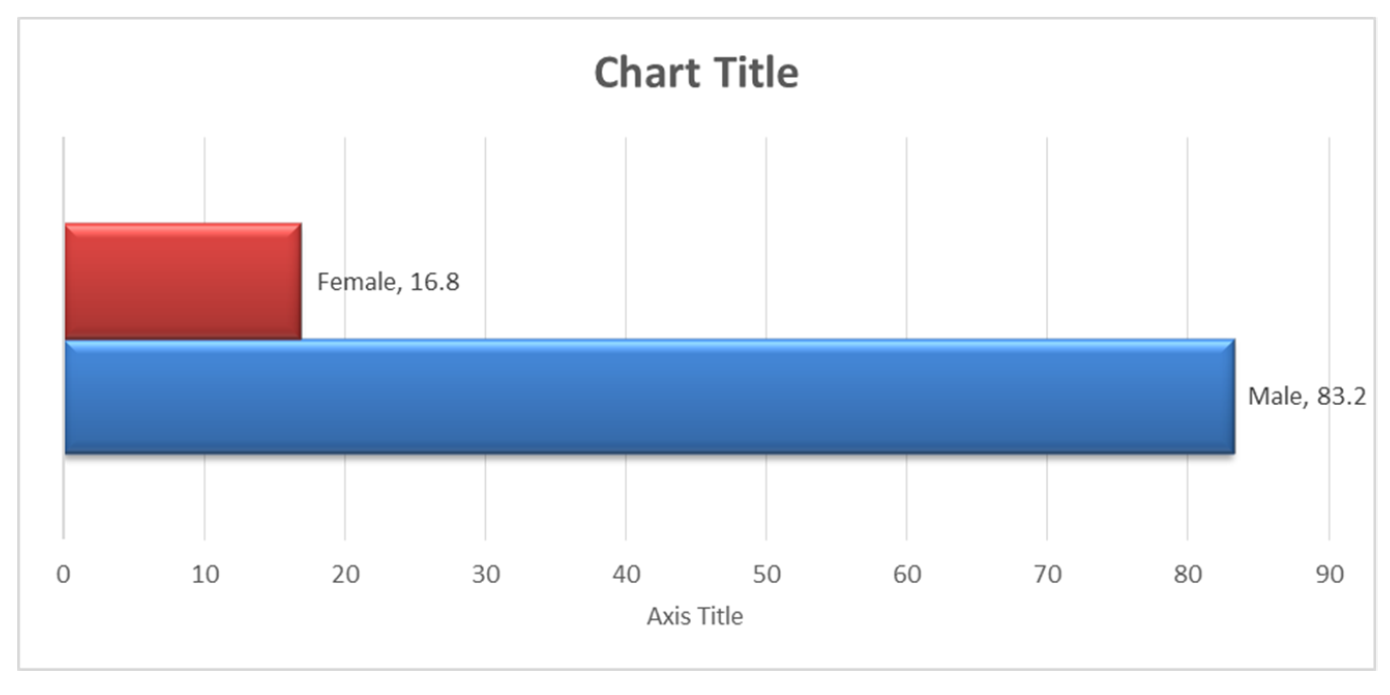
In Figure 1 it shows that Gender wise distribution of the respondents above table shows that majority 83.20 per cent respondents were male and only 16.80 per cent of respondents were Female.


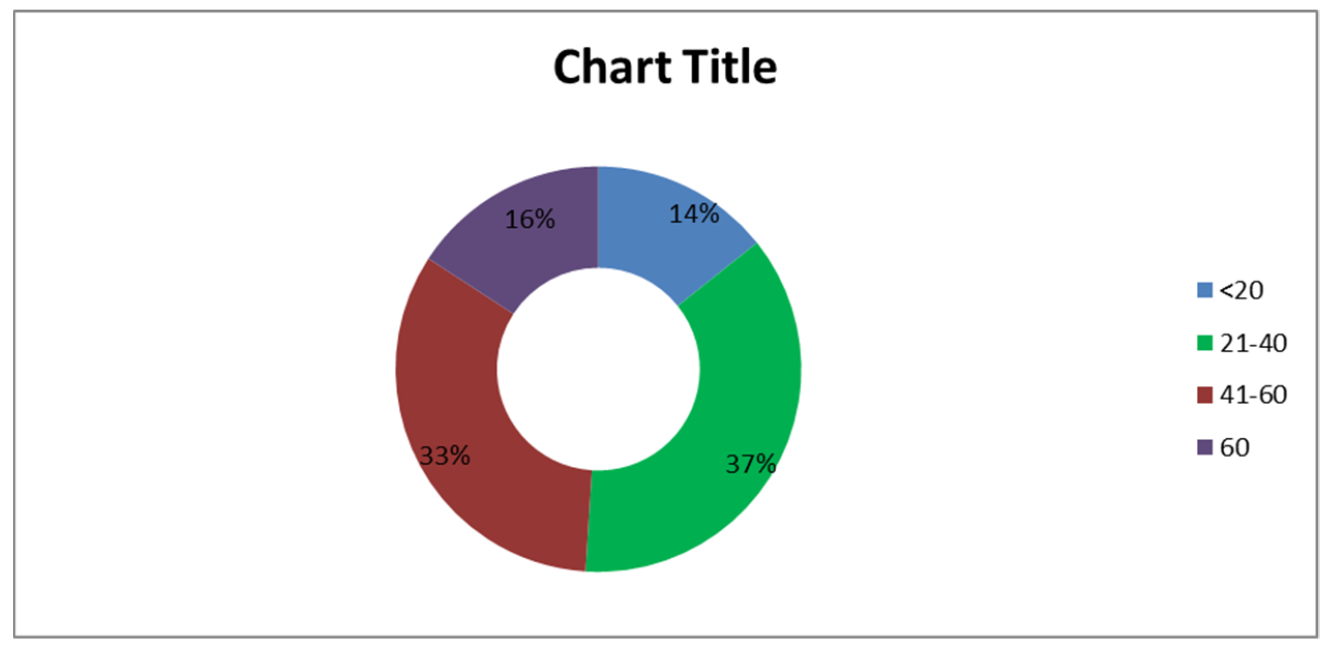
In Figure 2 it shows that what age respondent started vending above table shows that maximum 36.73 per cent of the respondents were started vending in the age between 21-40 years and minimum 14.28 per cent of the respondents started vending from <20 years.


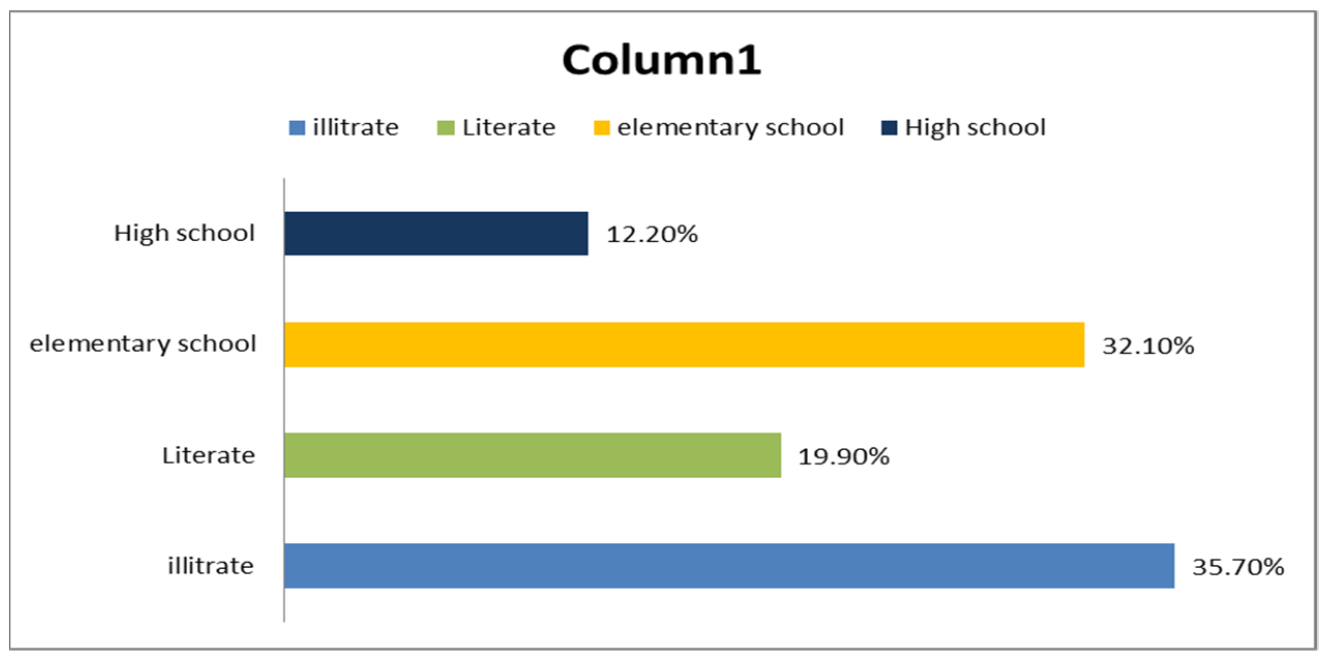
In Figure 3 it shows that educational level of the respondents above table shows that maximum 35.7 per cent of the respondents were illiterate and minimum 12.2 per cent of the respondents were high school educated. 


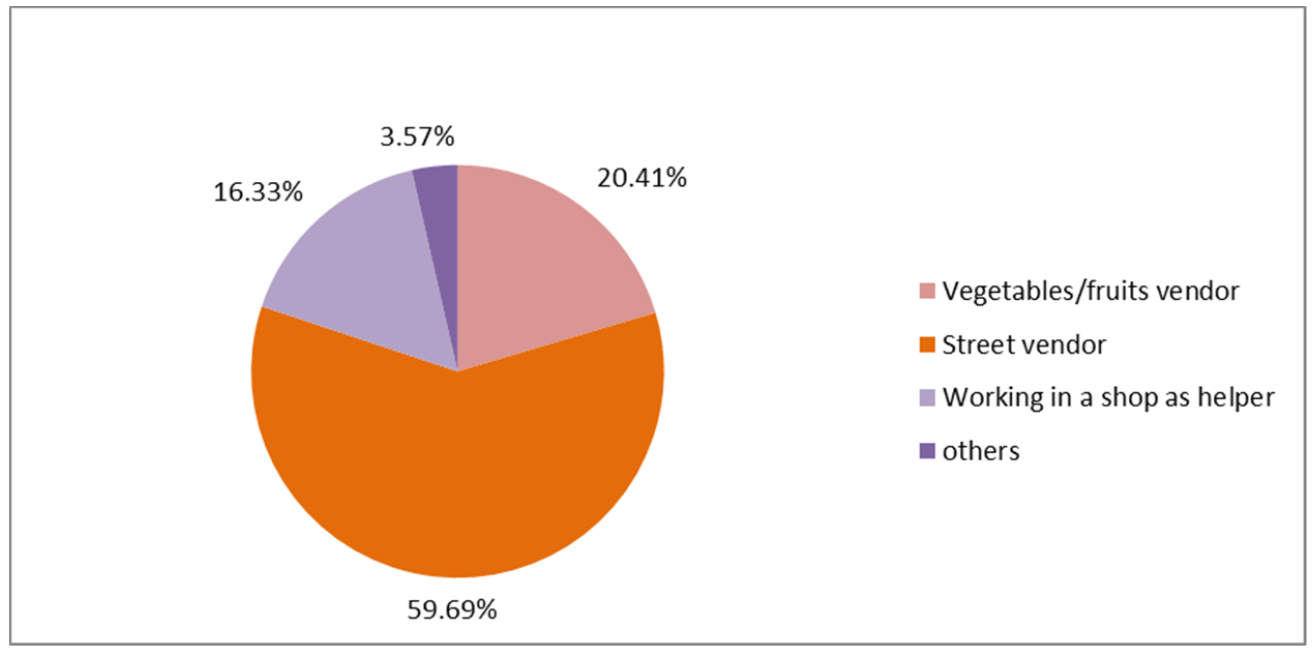
In Figure 4 it shows that types of vending above table shows that maximum 59.7 per cent of the respondents were working as a helper in shops and minimum 3.6 per cent of the respondents were working other work.


Figure 1: Gender of the respondents


Figure 2: Age of started vending of the respondents


Figure 3: Educational level of the respondents


Figure 4: Types of vending of the respondents

DISCUSSION

This study was carried out in view of the health problems that are faced by vendors in various type of vending. It was revealed that 83.2% participants of the study were males while 16.8% were female participants. This showed similarity to the study carried out by Bhatt et al which revealed 74% males and 26% females. 14.28% of vendors started vending at a very young age i.e; < 20 years. 36.73%, 33.16, 15.81 of the vendors were in the age bracket 21-40, 41-60, > 60 respectively. Further, the study data reveals the education of the participants was; 35.7%, 19.9%, 32.1% and 12.2% were illiterate, literate, elementary and high school. This shows that maximum number of vendors were illiterate which in comparison to the Bhatt et al study shows high similarity. It is seen that most of the female vendors are illiterate and had fewer skills. 20.4% of vendors were involved in vegetables/ fruit vending, 59.7% were street vendors, 16.3% worked as helpers while 3.6% were involved in other vending activities. This shows similarity as similar findings were scene in study by Bhatt et al in Surat. It was observed that the majority of the street vendors sell fruits, vegetables and food, while the rest are involved in other things like clothes, belts, seasonal things, garage, and like that [3]. The study data further gives insight of the problems faced by the vendors which directly affect their health. It was revealed that 26.5% were suffering from asthma, 54.6% had backpain, 21.4% faced diarrhoea, 17.3% had hypertension, 35.2% & 26% had faced cut and burn injuries respectively. Out of the total, 25% were malnourished, 33.2% had skin diseases. 44.9% has stress and depression. The problem of insomnia was faced by 39.3% and 51.5% were overloaded with work.

CONCLUSION

The study concludes that vending is a hazardous job and it affects the health of all the individuals involved in it but it mainly affects the growth and development both from the health as well as education point of view as they have no scope of earning livelihood because of the low socio-economic status right from the beginning of their childhood. It has also been reported in many studies that street vendors spend relatively more time near roadways and are vulnerable to air pollution related health disorders. However, there is limited information on the quality of the air they breathe [4]. It is also reported that almost half 47 per cent of the Indian children are malnourished and illiterate. Therefore, street vending is a way for poor people to earn livelihood and make their way out of poverty [5]. In deeper context, it is understood that street vendors who have developed problems because of vending have chances of genetically transferring this problem to their children. Thus, the burden of disease burden will just add up. It is important to make note of the health effects that the vendors face in order to make efforts that target thus specific population that has been neglected over the decades. 

REFERENCE
  1. Bhatt, B.V., and A.D. Jariwala. A Study of Street Vending Activities in the Southeast Zone of Surat.

  2. Chandra, A., and R. Jain. Property Rights of Street Vendors. Centre for Civil Society, June 2015.

  3. National Association of Street Vendors of India (NASVI). Overview of Street Vendors: A Little History., 2014, http://nasvinet.org/newsite/overview-of-street-vendors-a-little-history/. Accessed March 2020.

  4. Prabhu, V. et al. “Exposure to Atmospheric Particulates and Associated Respirable Deposition Dose to Street Vendors at the Residential and Commercial Sites in Dehradun City.” Safety and Health at Work, vol. 10, no. 2, 2019, pp. 237–244.

  5. World Health Organization. Chapter 3., 2015, https://shodhganga.inflibnet.ac.in/bitstream/10603/204714/9/09_chapter%203.pdf. Accessed March 2020.

Recommended Articles
Research Article
An evaluation of Profile of Medico-legal autopsies conducted at Dr. Radhakrishnan Govt. Medical College, Hamirpur, Himachal Pradesh
Download PDF
Research Article
Imaging Evaluation of Ultrasonography Versus Magnetic Resonance, Imaging in Diagnosis of Carpal Tunnel Syndrome among Female Patients with Positive Nerve Conduction Study
Download PDF
Research Article
The Efficacy of 5- Fluorouracil Cream and 25% Podophyllin Solution in Treatment of Plantar Warts in Alternative Day Regimen ; An Open Therapeutic Trial.
Download PDF
Research Article
Silent Threats: Evaluating Knowledge of Pelvic Inflammatory Disease Among Reproductive-Age Women in District Kangra
Published: 27/11/2024
Download PDF
Chat on WhatsApp
Flowbite Logo
PO Box 101, Nakuru
Kenya.
Email: office@iarconsortium.org

Editorial Office:
J.L Bhavan, Near Radison Blu Hotel,
Jalukbari, Guwahati-India
Useful Links
Order Hard Copy
Privacy policy
Terms and Conditions
Refund Policy
Shipping Policy
Others
About Us
Team Members
Contact Us
Online Payments
Join as Editor
Join as Reviewer
Subscribe to our Newsletter
+91 60029-93949
Follow us
MOST SEARCHED KEYWORDS
Copyright © iARCON International LLP . All Rights Reserved.