The concentrations of selected heavy metals (Cd, Pb, Zn, Cr, Fe, Mg, Mn, Co, Ni and Cu) along Njairi-Gerie highway were analyzed. Sample of road side surface soil were collected from five towns, these include Mubi, Hong, Gombi, Song and Gerei. Six samples were taken in each town at a distance of 10, 20 and 30 m away from the edge of the road on each (Eastern and Western) side, using soil auger and digested using HNO3 and HCl. Subsequently, the concentrations of these metals were analyzed using Atomic Absorption Spectrophotometer. The result revealed that Cd, Pb, Zn, Cr, Fe, Mg, Mn, Co, Ni and Cu were present in the studied soil samples. The mean concentration ranged from Cd(0.03±0.01-0.06±0.03 mg/Kg), Pb(0.37±0.03-1.90±0.15 mg/Kg), Zn(6.72±0.31-14.57±4.00 mg/Kg), Cr(0.01±0.00-0.07±0.02 mg/Kg), Fe(183.36±22.42-240.61±27.82 mg/Kg), Mg(4.13±0.08-5.30±0.09 mg/Kg), Mn(11.64±2.13-12.89±2.50 mg/Kg), Co(0.33±0.02-0.49±0.13 mg/Kg), Ni(0.16±0.01-0.42±0.87 mg/Kg) and Cu(0.14±0.01-0.17±0.02 mg/Kg). There was significant difference at p = 0.01 in the mean concentration of the heavy metals among the sites. Also the values of these heavy Metals decreased with increasing distance away from the edge of the road. Correlation analysis was performed and it was found that there was positive correlation among some of the heavy metals at p = 0.05 significant level. Generally the studied area was contaminated by almost all the elements. Consequently, it is imperative to continually assess and monitor the levels of heavy metals in the environment due to anthropogenic activities for evaluation of human exposure and for sustainable environment.
Soils polluted with heavy metals have become common across the globe due to increase in geologic and anthropogenic activities. These activities increased the concentration of these elements to amount that are harmful to both plants and animals [1]. Plants growing on these soils show a reduction in growth, performance and yield. Growth reductions as a result of changes in physiological and biochemical processes in plants growing on heavy metal polluted soils have been recorded [2]. Declined in plants growth reduces yield which eventually lead to food insecurity. Road sides soils have been shown to have considerable contamination due to both depositions from vehicle derive metal and relocation of metals deposit on road surface [3]. Heavy metals are typical road traffic source contaminants in the local ecological environments and thus threaten public health [4,5].
Paul et al. [6] defined heavy metals as metallic elements that have a relatively high density compared to water, with the assumption that heaviness and toxicity are inter-related, heavy metals also include metalloids, such as arsenic, that are able to induce toxicity at low level of exposure. Heavy metals are metals or metalloids (elements that have both metal and non-metal characteristics) [7]. Elements of highest concern include: cadmium, cobalt, chromium, copper, mercury, manganese, nickel, lead, tin and thallium, persistent in all parts of the environment [8].
Owing to more complex roadside environments and more intense driving conditions on mountainous highways, heavy metal accumulation and distribution patterns in farmland soil due to traffic activity could be different from those on plain highways [9]. Automobile traffic pollutes roadside environments with a range of contaminants [10]. Heavy metals are found in the walls of fuel tanks, in engines, in fuels and other vehicle components and in catalytic converters, brake pads and tires, as well as in road surface materials [4,11].
Traffic activities are one of the major sources leading to heavy metal contamination in roadside soils due to their long-term accumulation [9]. Emission of heavy metals from traffic activities is an important pollution source to roadside farmland ecosystems. Metals such as Cr, Pb, Zn, Cd, Fe and Cu are heavy metals frequently reported in literature with regards to potential hazards and occurrences in contaminated soils [12,13]. Emission from heavy traffic were reported to contain Lead, Cadmium, Zinc and Nickel which are present in fuel as anti-knock agent [14,15]. Vehicle exhausts, as well as several industrial activities emit these heavy metals such that soils, plants and even residents along roads with heavy traffic loads are subjected to increasing levels of contamination with heavy metals [16].
Through the atmospheric deposit or road runoff, heavy metals can be transported into the roadside soils [17]. Roadside plants absorb these heavy-metals elements from the soil through their roots. The plants’ leaves or stems may also absorb heavy metals from atmospheric particles [18]. Due to the disturbance and acceleration of nature’s slowly occurring geochemical cycle of metals by man, most soils of rural and urban environments may accumulate one or more of the heavy metals above defined background values high enough to cause risks to human health, plants, animals, ecosystems or other media [19].
Through absorption from roadside soils, the heavy-metal elements are further transferred into the roots, stem and leaves of vegetation. Therefore, the factors influencing the soil’s heavy-metal content have nearly the same effect on the heavy-metal concentrations in roadside vegetation. The plants along roadside also have higher heavy metal content and can effectively lower the concentration of heavy metals in soil [20].
Generally, as the highway usage time increases, the higher the concentration in the roadside soil, because it is positively related to traffic volume [9,21]. Many previous studies concluded that the heavy metal content in roadside soil has a belt-shaped distribution in terms of distance to road edge, decreasing exponentially with increment of roadside distance away from the edge of the road [4,22,23]. Compared to the background nature value of heavy metal content, the influential space of traffic pollution can be up to 50 m far from road but within 100 m. In addition, most of the deposited metal particles remain in the 0-5 cm of the roadside surface soil depth [9,24].
These metals are found in fuels, fuel tanks, engines and other vehicle components, catalytic converters, tires and brake pads, as well as in road surface materials [20]. Heavy metal contaminants can easily impact people residing within the vicinity of the roads via suspended dust or direct contact [21]. If there are farmlands within the scope that the contaminants can reach, they may enter the food chain as a result of their uptake by edible plants [25] thus causing serious health risks. Roadside soils are the major reservoirs of traffic-related heavy metals [21]. The concentrations of heavy metals in roadside soils are indicators of heavy metals’ accumulation through atmospheric deposition and road runoff, [26].
Reports from the studies conducted from many countries such as Hong Kong [27,28], Beijing [21], Mexico City [29], Turkey’s Elazig [25], England’s Yorkshire [22], Jordan’s Amman [30], Greece’s Kavala [26] and Nigeria [3,31], to investigate the heavy metal contamination of roadside soils and vegetation. It was found that the road side soil and vegetation pollution in these studies was attributed to traffic. Thus, emissions from automobiles and heavy traffic are a global phenomenon. An assessment of environmental risk caused by soil contamination is especially important for agricultural as well as non-cultivated areas due to the fact that metal’s potentially harmful to human health persist in soils and vegetation for a relatively long time and may transfer into the food chain in considerable amounts [32].
In general, heavy metals with high concentrations in the environment result in health problems adversely affecting the nervous, blood forming, cardiovascular, renal and reproductive systems. The consequences of heavy metal pollution include reduced intelligence, attention deficit and behavioral abnormality, as well as contribution to cardiovascular disease in adults [33]. Some trace metals (such as Cu and Zn) are harmless in small amounts but the others (mainly Pb, As, Hg and Cd), even at extremely low concentrations, are toxic and are potential cofactors, initiators or promoters in many diseases, including increased risk of cancer [34,35]. However, it is not easy to remove heavy metals from the soils because of their irreversible immobilization within different soil components [9].
The environmental issues related to heavy metal contamination are becoming serious in developing countries. With the rapid industrialization and urbanization trend, the increment of traffic activities substantially contributes to the accumulations of heavy metals discharged by vehicles in roadside environments. Heavy metal pollution in agricultural areas owing to traffic emissions may contaminate the crops growing near the roadsides [21,36]. In agricultural areas, uptake of heavy metals through the soil-crop system could play a predominant role in human exposure to heavy metals. Heavy metals present in the roadside soils may be transported through the food chain, which may have a significant toxicity to both plants and animals. Because of their toxicity (especially for Cd and Pb), persistence and non-degradability characteristics, it is of great importance to monitor the heavy metals concentrations in roadside environments. This study aimed at assessing the variation in heavy metal concentrations in the road side soil from Jeri - Gerie highway in Adamawa State.
Area of Sampling
Five (5) major towns along Njairi-Gerie highway were selected for soil sampling. This road was chosen for the study because it is the only major road with heavy traffic linking Njairi to Gerie. The selected towns were: Njairi, Hong, Gombi, Song and Gerie.
Sample Collection
A total of thirty surface soil samples were randomly collected from Njairi, Hong, Gombi, Song and Gerei. Six surface soil samples were randomly collected from each town, three each from each side of the road at variable distances of 10, 20 and 30 m away from the edge of the road. The soil sampling spot were cleared of debris before the samples were taken [37]. These samples were collected with the aid of hoe and stainless spoon. These were washed with soap and rinsed with distilled water after each sampling as described by Alexander [10].
Twenty gram of soil samples were collected from each location along Njairi-Gerie highway. The collected soil samples were placed in labeled cellophane bags [38] and were taken to the laboratory for pre-treatment and analysis.
Sample Preparation
The composite samples of each site, was obtained by bulking procedure to standardize the samples. A conning and quartering method was applied repeatedly to reduce the sample volume [10]. Representative sample collected from each site was then labeled and taken to the laboratory for processing/pretreatment and analysis [37]. The samples were air dried in an oven at 30°C to a constant weight before passing it through a 0.2 mm sieve.
Sample Digestion
About 2 g of measured powdered soil sample was placed in 100 cm3 form beaker and 10 cm3 of 1:3 nitric acid and HCl was added and allowed to boil gently on a hot plate until the volume is reduced to near dryness then allowed to cool. 10 cm3 of distilled water was added to it and then boiled gently again until the volume is 5 cm3. The suspension was allowed to cool and filtered through a Whatman No. 540 filter paper, the beaker and filter paper was washed with small portions of distilled water until a volume of 25 cm3 was obtained. The filtrates were transferred into a 50 cm3 graduated flasks and made up to the mark with more distilled water.
Determination of Heavy Metal, pH and Electrical Conductivity
The quantitation of metallic content of digested soil samples was carried out in replicates analysis using Atomic Absorption Spectrophotometer (AAS) 2010 VPG Buck Scientific Model. The pH meter was calibrated with 4.0, 7.0 and 10.0 pH buffers and ensured that a plot of mV verses pH followed the Nerstian relation. A 100 mL aliquot of each sample was measured into a beaker and the pH determined using a pH meter [37].
The conductivity meter was standardized with 0.01N KCl solution. The conductivity of this solution was found to be 1413 µmhos/cm at 25°C with a cell constant of 1. 100 ml sample of solution was measured into a beaker and its conductivity determined with the conductivity meter as described by Mahananda et al. [39].
Statistical Analysis
The data obtained were subjected to analysis of variance (ANOVA). The results were presented in the form of Means±SD. Pearson correlation was used to determine a common source and relationship between the heavy metals.
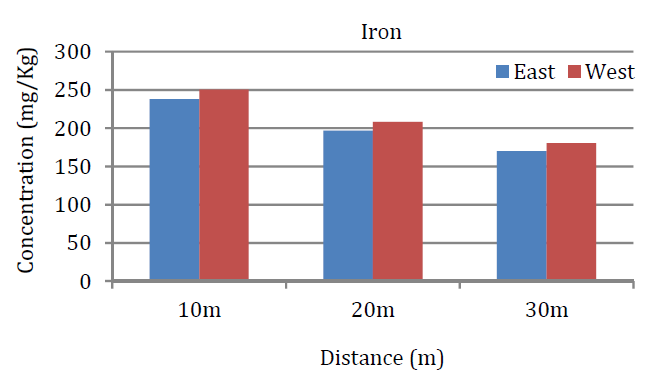
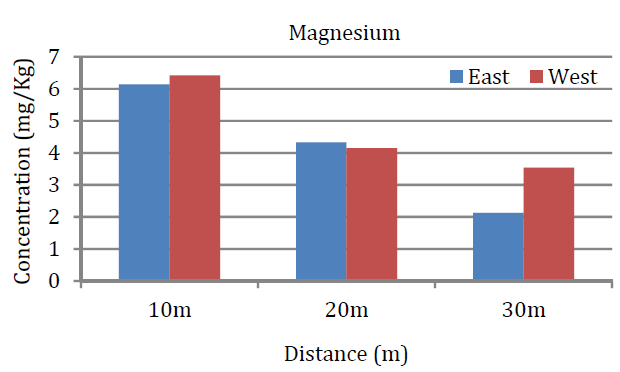
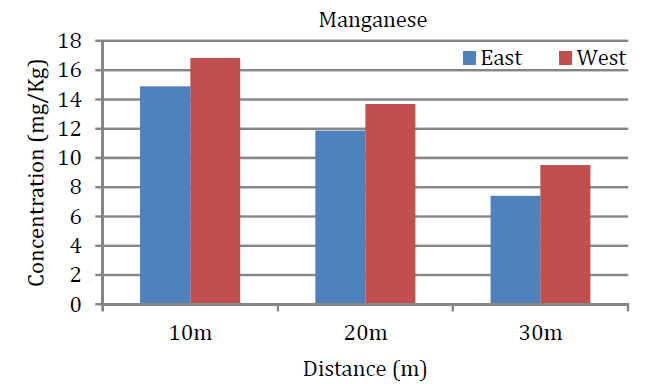
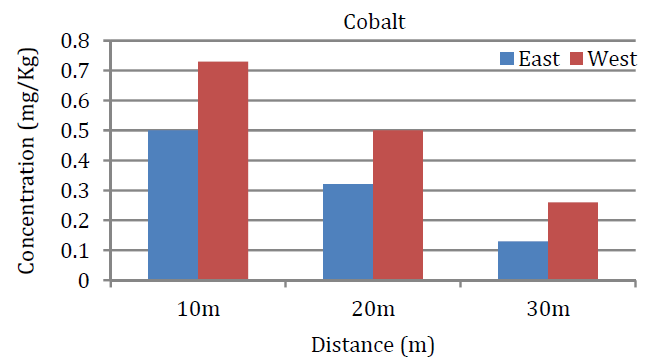
The result of the physicochemical analysis and mean concentrations of heavy metals in roadside surface soil along Njairi-Gerie highway is presented in Table 1 and 2 respectively. High elemental concentration was observed in Fe followed by Mn Zn, Mg, Pb, Co, Ni, Cu, Cd and Cr in all the five different sampling sites. The variations in heavy metal concentrations in roadside soil at different distances of 10, 20 and 30 m from the edge of the road on both the eastern and western sides of the road along Njairi-Gerie highway were presented in Figure 1-10. High away from the edge of the road in all the five different sampling sites. Similarly Table 3 showed the result of the Pearson’s correlation coefficients. Both positive and negative correlation was observed between the elements.

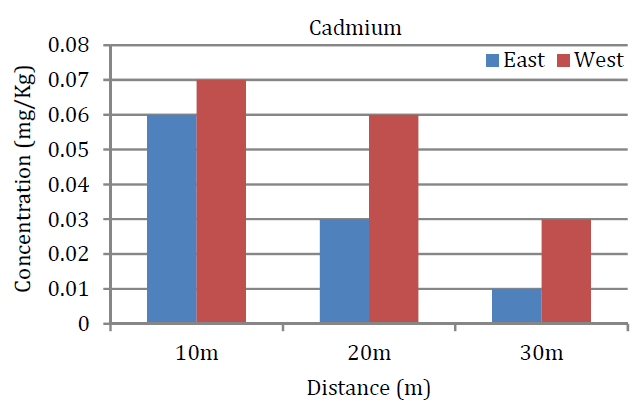
Figure 1: Variation in Concentration of Cd in Road Side Soil at Different Distances Away from the Edge of the Road on Both Side (East and West)

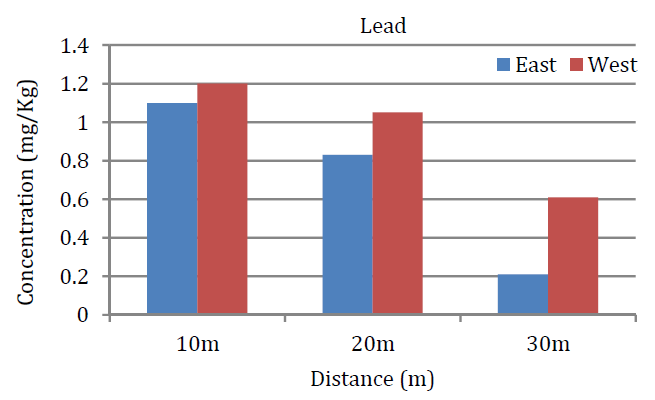
Figure 2: Variation in Concentration of Pb in Roadside Soil at Different Distance Away from the Edge of the Road on Both Side (East and West)

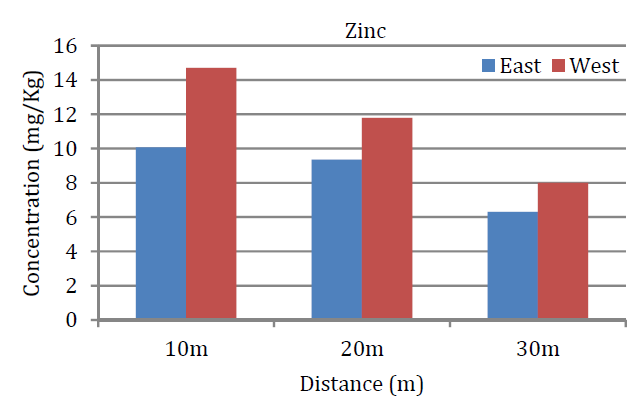
Figure 3: Variation in Concentration of Zn in Road Side Soil at Different Distances Away from the Edge of the Road on Both Side (East and West)
Table 1: Physicochemical Analysis
Variables | Njairi | Hong | Gombi | Song | Gerei |
pH | 7.4±0.6 | 7.5±0.8 | 7.6±0.9 | 7.4 ±0.5 | 7.5±0.8 |
EC (mScm⁻1) | 0.22±0.02 | 0.28±0.04 | 0.25±0.03 | 0.18±0.01 | 0.32±0.06 |
Result presented in Mean± SD of three replicate determinations
Table 2: Mean Concentrations of Heavy Metals in Roadside Surface Soil Along Njairi -Gerie Highway (mg/Kg) Compared with WHO Standard
Variables | Njairi | Hong | Gombi | Song | Gerei | WHO (2007) |
Cd | 0.04±0.01 | 0.05±0.01 | 0.06±0.03 | 0.03±0.01 | 0.04±0.01 | 0.15 |
Pb | 0.52±0.04 | 0.37±0.01 | 0.38±0.01 | 1.13±0.10 | 1.90±0.15 | 0.15 |
Zn | 11.92±1.0 | 13.57±4.0 | 6.72±0.31 | 9.75±2.23 | 11.13±1.00 | 15 |
Cr | 0.06±0.0 | 0.02±0.01 | 0.01±0.00 | 0.04±0.02 | 0.07±0.02 | 0.4 |
Fe | 183.36±22.42 | 204.23±24.12 | 186.58±23.01 | 240.61±27.82 | 220.26±23.67 | 40 |
Mg | 4.13±0.87 | 5.30±0.09 | 4.92±0.08 | 4.61±0.08 | 4.90±1.01 | 15 |
Mn | 12.82±2.34 | 12.22±1.05 | 12.89±2.50 | 12.24±1.02 | 11.64±2.13 | 0.5 |
Co | 0.39±0.02 | 0.33±0.02 | 0.40±0.03 | 0.40±0.08 | 0.49±0.13 | 0.05 |
Ni | 0.39±0.05 | 0.16±0.01 | 0.25±0.06 | 0.29±0.04 | 0.42±0.89 | 0.03 |
Cu | 0.17±0.01 | 0.14±0.01 | 0.17±0.01 | 0.15±0.01 | 0.17±0.02 | 0.8 |
Result Presented in Mean±SD of Three Replicate Determinations, WHO Means World Health Organization

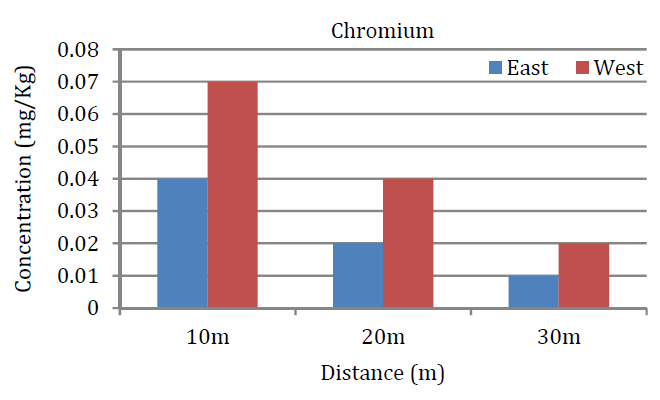
Figure 4: Variation in Concentration of Cr in Road Side Soil at Different Distances Away from the Edge of the Road on Both Side (East and West)

Figure 5: Variation in Concentration of Fe in Road Side Soil at Different Distances Away from the Edge of the Road on Both Side (East and West)

Figure 6: Variation in Concentration of Mg in Road Side Soil at Different Distances Away from the Edge of the Road on Both Side (East and West)

Figure 7: Variation in concentration of Mn in road side soil at different distances away from the edge of the road on both side (East and West)

Figure 8: Variation in concentration of Co in road side soil at different distances away from the edge of the road on both side (East and West)

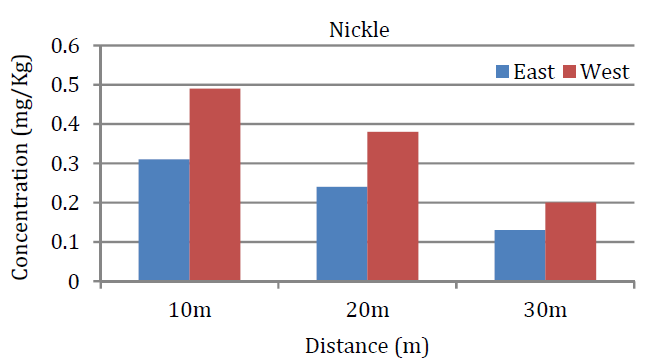
Figure 9: Variation in concentration of Ni in road side soil at different distances away from the edge of the road on both side (East and West)
Table 3: Pearson Correlation Matrix of Heavy Metal in the Surface Soil
Cd | Pb | Zn | Cr | Fe | Mg | Mn | Co | Ni | Cu | |
Cd | 1 | |||||||||
Pb | -0.508 | 1 | ||||||||
Zn | -0.032 | 0.114 | 1 | |||||||
Cr | -0.347 | 0.707* | 0.337 | 1 | ||||||
Fe | -0.638* | 0.674* | 0.171 | 0.218 | 1 | |||||
Mg | 0.476 | 0.138 | 0.312 | -0.082 | 0.271 | 1 | ||||
Mn | 0.607* | -0.18 | 0.165 | -0.071 | 0.015 | 0.594* | 1 | |||
Co | 0.214 | 0.562* | 0.138 | 0.474 | 0.365 | 0.51 | 0.604* | 1 | ||
Ni | 0.001 | 0.597* | 0.166 | 0.717** | 0.175 | 0.102 | 0.445 | 0.766** | 1 | |
Cu | 0.501 | 0.219 | 0.185 | 0.268 | 0.096 | 0.529 | 0.849** | 0.877** | 0.731** | 1 |
*Correlation is significant at p = 0.05, **Correlation is significant at p = 0.01

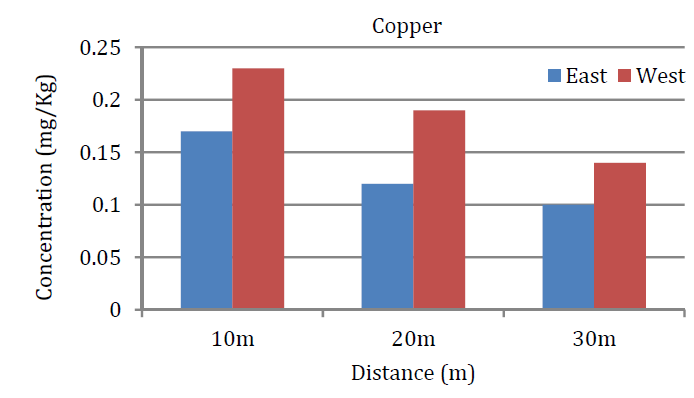
Figure 10: Variation in concentration of Cu in road side soil at different distances away from the edge of the road on both side (East and West)
pH and Electrical Conductivity
The pH of the roadside soil of the studied area ranged from 7.4±0.6-7.6±0.9 (Table 1) close to neutral value indicating that roadside soil is most neutral to the high contents of carbonate, ash and cinder of anthropogenic origin. Similar value (7.5-8.0) was observed by Mafuyai et al. [40] in Jos Nigeria. This could be attributed to the alkaline components in the atmosphere which can eventually deposit on the ground and affect pH in the soil [41]. The pH of a solution is a measure of the molar concentration of hydrogen ions in the solution and as such is a measure of the acidity or basicity of the solution. The letters pH stands for "power of hydrogen" and numerical value for pH is just the negative of the power of 10 of the molar concentration of H+ ions [40].
In chemistry, pH (potential of hydrogen) is a logarithmic scale used to specify the acidity or basicity of an aqueous solution. It is approximately the negative of the base 10 logarithm of the molar concentration, measured in units of moles per liter, of hydrogen ions. If a water molecule (H2O) gains a hydrogen (H) atom for some reason, it becomes hydronium (H3O), the solution becomes more acidic and the pH will lower. If phosphoric acid (H3PO4) is combined with water (H2O) it donates a hydrogen atom to the water creating hydronium ions (H3O) [41].
The electrical conductivity ranges from 0.18±0.01-0.32±0.06 (Table 1) which is relatively high an indicative of the presence of ionic species. The value is almost the same with the one (0.18-0.31) reported by Mafuyai et al. [40] in Jos Plateau State Nigeria. Electrical conductivity is a quantitative measure of the ability of a substance to pass electric current. This ability depends largely on the quantity of salts present in it.
Cadmium
The concentration of Cadmium determined in the soil sample ranged from 0.03±0.01-0.06±0.03 mg/Kg. The highest concentration 0.06±0.03 mg/Kg was recorded in Gombi while the lowest concentration 0.03±0.01 mg/Kg was found in Song (Table 2). The high value obtained at Gombi could be due to observed vulcanizing workshop near the sampling point. Cadmium in this study area are lower compared to other studies in Yola which reported the concentration of Cd in dust to be (0.42-1.54 µg/g), Mubi (0.59-1.39 µg/g), Abuja (3.40 µg/g), Amman (0.75 µg/g), Auckland (0.4 µg/g), London (4.20 µg/g), Birmingham (0.7 µg/g), North Wale (6.9 µg/g), Ecuador (0.36 µg/g) and USA (0.89 µg/g) [42]. However, the recorded values fall within the permissible limit of WHO standard limit (Table 2). This result agrees with the report of Bi et al. [43] in Hainan Island China.
The likely source of Cd might be from metal plating, tire rubber and in lubricating oil as part of many additives. It was reported that the Cd level in car tires is in the range of 20-90 µg/g as associated with Cd concentration in the process of vulcanization [11]. Where there are no major industries in the sampling site, the level of Cd could be due to burning of old tires that are frequently used and the rough surface of the road which increase the wearing of tire. Cadmium compounds are classified as carcinogens by several regulatory bodies [44]. Cadmium is a very toxic metal that should be monitored to prevent Cd related diseases.
Lead
The concentrations Pb ranged from 0.37±0.01-1.90±0.15 mg/Kg which collaborate the report of Alexander [10]. The highest value 1.90±0.15 mg/Kg was observed in Gerei while the lowest value 0.37±0.01 mg/Kg was recorded in Hong (Table 2). The high value observed in Gerei could be due to observed checking point near the sampling point. The value of Pb in this study were lower compared to the ones reported by Tsafe et al. [45] 29.66 mg/Kg and Wu et al. [46] 216.93 mg/Kg. The concentration of lead in all the study areas was higher than WHO standard limit (Table 2).
The high level of Pb observed in all the study areas could be attributed to the heavy traffic volume, excessive application of fertilizer as well as discharge from batteries. The most probable source of such contamination is the lead particulate matter emitted from gasoline vehicles which settles not far from the road [47]. Lead is a naturally occurring bluish-gray metal present in small amount in earth crust. Although Pb occurs naturally in the environment, anthropogenic activities such as fossil fuel burning, mining and manufacturing contribute to the release of high concentrations [44,48].
Therefore control measure should be taken to reduce the high level of Pb which can enter into the food chain through contamination of food crops grown near the road side because Pb is noted as toxin and it has adverse effect.
Zinc
The value of Zn ranged from 6.72±0.31-13.57±4.02 mg/Kg, the highest value 13.57±4.02 mg/Kg was observed at Hong while the lowest value 6.72±0.31 mg/Kg was found at Gombi (Table 2). This finding agreed with the report of Mafuyai et al. [40]. The value of Zn obtained in this study is lower than the one (68.9 mg/Kg) reported by Tsafe et al. [45] at Yargalma of Northern Nigeria. The observed values were below WHO standard limit (Table 2). The mobility of the metal depends on soil pH and organic matter and granulometric composition of the soil [49]. In the absences of the existence of major industries in the study area such as smelting operations, we may assume that the primary source of Zn are probably attrition of motor vehicle tire rubber exacerbated by poor road surfaces and lubricating oils in which Zn is found as part of many additives such as dithiophosphates [6,42].
Zinc is the least toxic among all the elements and an essential element in the human diet as it is required to maintain the proper functions of the immune system [10].
Chromium
The concentration of Cr ranged from 0.01±0.00- 0.07±0.02 mg/Kg, these values are within the acceptable limit of WHO standard limit (Table 2). The highest value 0.07±0.02 mg/Kg was obtained at Gerei and the lowest value 0.01±0.01 mg/Kg at Gombi (Table 2). However, mean concentration of Cr for the study area was lower than other soil samples reported in Pretoria South Africa 85.79±6.59 mg/Kg [50] and Plateau Nigeria 16.73 mg/Kg [45]. The source of Cr in roadside soil is believed to be due to corrosion of vehicular parts [51]. Cr is toxic even at low concentration; Cr is a highly toxic metal that has been linked to cancer in humans following prolonged inhalation [52].
Iron
The concentration of Fe ranged from 183.36±22.42- 240.61±27.82 mg/Kg. The highest value 240.61±27.82 mg/Kg was found at Song and the lowest value 183.36±22.42 mg/Kg at Jeri (Table 2). All the values in the study area were above WHO standard limit (Table 2). The high concentration observed is a true reflection of Nigerian soil because it has been reported that Fe occurs at high concentration in Nigerian soil [1,53]. However, the values obtained in the study collaborates the reports of Akbar et al. [22] and Kumar et al. [54]. The values of Fe obtained in this study were higher compared to the one (195.25 mg/Kg) reports of Tsafe et al. [45] and Mafuyai et al. [40] 27.7-125 mg/Kg. Iron is the predominant metal found in the entire study area.
Magnesium
In this study the average concentration of Mg ranged from 4.13±0.87-5.30±0.09 mg/Kg, the highest value 5.30±0.09 mg/Kg was obtained at Hong while the lowest value 4.13±0.87 mg/Kg was recorded at Njairi (Table 2). All the values were below WHO standard limit. The findings are in line with the report of Chimuka et al. [37]. The value of Magnesium observed in this study is lower compared to the one (100.81 mg/Kg) reported by Tsafe et al. [45]. Magnesium is the 8th most abundant element on the earth crust and it is found in minerals like dolomite, magnesite etc. [44]. Magnesium is essential for proper functioning of living organism. Human body contains about 25 g of Mg (60% in bones and 40% in muscles and tissues) [55].
Manganese
The values of Mn ranged from 11.64±2.13-12.89±2.50 mg/Kg. The highest value of 12.89±2.50 mg/Kg was found at Gombi while the lowest value 11.64±2.13 mg/Kg at Gerie. The result of the investigation revealed that the values of Mn in the studied area were higher than that of WHO standard limit (Table 2). The high concentration of Mn observed could be due to the presence of dry cell battery workshop near the sampling area, since Mn is used to depolarize dry cells. The result collaborate the report (0.43-2.58 mg/Kg) of Mafuyai et al. [40].
Manganese-bearing minerals are quite common, with oxides, silicates and carbonates being the most common. Minerals such as Pyrolusite (MnO2) and Rhodochriste (MnCO3) rank amongst the most common manganese-bearing minerals. In addition to these sources, many large nodules of manganese (containing about 24% manganese) have been found on ocean floors and could provide another source of manganese. Mn is essential nutrients that are required for biochemical and phisiological function.
Cobalt
The mean concentration ranged from 0.33±0.02-0.49±0.13 mg/Kg. The highest concentration 0.49±0.13 mg/Kg was recorded at Gerie and the lowest 0.33±0.02 mg/Kg at Hong (Table 2). The concentrations were higher than WHO standard limit. Cobalt is an important element which is used extensively in the chemical and electronic industry for the construction of batteries, adhesives and soaps [45]. In the absence of anychemical and electronic industry in the study area, the likely source of Co could be due to the presence of vegetables around the sampling area. Similar result was reported by Bi et al. [43] in Hainan Island China. However, the values of Co obtained in this study are lower compared to the one (1.50 mg/Kg) reported by Tsafe et al. [45]. Though Co is a toxic metal but has importance as trace element.Small traces of cobalt are found in the human body due to the consumption of vegetables and meat dishes. Cobalt is an important component in the vitamin B12, which is required for the normal functioning of the brain and nervous system [1].
Nickle
The concentration of Ni ranged from 0.16±0.01- 0.42±0.89 mg/Kg, with highest value 0.42±0.89 mg/Kg obtained at Gerie and the lowest 0.16±0.01 at Hong (Table 2). All the values are higher than that of WHO standard limit. The result obtained in this study was lower than the one (19.2- 21.5 mg/Kg) reported by Zhang et al. [23] at China. The high value observed might be due to corrosion of vehicular parts or the presence of Ni in fuel as antiknock agents [14]. Ni present in fuel as anti-knock agent and is a toxic metal [14].
Copper
Copper concentrations ranged from 0.14±0.01-0.17±0.02 mg/Kg. The highest value 0.17±0.02 mg/Kg was obtained at Njairi, Gombi and Gerie and lowest value 0.14±0.01 at Hong (Table 2). The observed values were lower than the WHO standard limit. The value of Cu in this study was lower than the ones observed by Zhang et al. [23] 0.087-0.110 mg/Kg at Liaoning Province China and Wu et al. [23] 54.13 mg/Kg. The presence of Cu in road side soil is attributed to smelting, battery and soldering work. Cu is also derived from engine wear, thrust bearings, bushing and bearing metals [22].
The variation in heavy metal concentrations in roadside soil at different distances of 10, 20 and 30 m from the road at both the eastern and western sides of the road along Jeri-Gerie highway were presented in Figure 1-10 of different heavy metals. The results revealed that the concentrations of these heavy metals decreases with an increasing distance away from the road and also from Figure 1-10 it was observed that the average concentrations of these heavy metals were higher on the western side of the road than the eastern side for all the sampling sites; this may be attributed to easterly wind [36].
There were not simple monotonic decreasing treads in all heavy metal concentration with increase of distance from the roadsides. The heavy metals in automobile exhaust diffused rely on the sorption of different particle size dust. The adsorption effect from different heavy metals and different particle size dust from the same heavy metals were inconsistent. Some significant differences in the distribution patterns of heavy metals between the five areas studied were found [23].
In the studied areas, the concentrations of all the metals were comparatively similar except Fe and Mn. On the eastern side, the concentration of these metals was lower as compared to the western side. Generally, the entire metals studied have their concentrations decreases with increasing distances away from the road. The distribution patterns of heavy metals were similar on both sides of the road. Concentration of all heavy metals decreased gradually with distances in different trends [4,22,23]. Yan et al. [56] found that the heavy metal concentration decreases exponentially with distance from the road in the Qinghai-Tibet plateau in China. In this study heavy metal concentration on the eastern side gradually decreased to a relatively low value at a distance of about 30m from the road edge. The decreasing trend of contaminations of all the ten metals was more gradually than on the western side however, even 30 m from the road edge, the concentrations continued to decrease. In this study the lowest metal concentration was observed 20 m from the road edge, in the east and 30 m from the road in the west, this illustrate that heavy metals can be transported to a greater distance in the west.
Heavy metals released by traffic emission are generally released with particulate matter and do not readily settle in the road bed because of the air turbulence coursed by movement of the vehicle when particulate matter left the road bed for some distance with the weaker space dynamic conditions of subsidence and the condition could be availed for the deposition process of particles, thus appeared the non-normal distribution [57].
In all the studied areas, heavy metal concentration on the eastern side were lower than those on the western side Figure 1-10 which could be as a result of the predominant wind direction; this is conducive to the accumulation of motor vehicle exhaust on the western side of the road. Heavy metals emitted from automobile exhaust occur at very small particles and are transported by horizontal diffusion and influence by wind speed and direction. Thus, the emitted particles are spread over a wide area accumulated in higher concentration on the down wind direction. These particles accumulate on surface soil as a result of atmospheric sedimentation, compaction and interception. Therefore, the predominant wind direction is an important factor influencing the spatial distribution pattern of heavy metals emitted from vehicle exhaust [58].
Statistical evaluation using One-way analysis of variance (ANOVA) was carried out to correlate the significant differences for the investigated metals between the different chosen locations. The result showed that there was significant difference at p = 0.01 level.
Pearson’s correlation coefficient is frequently used to express the correlation between elements and indicate their potential source [23].
At p = 0.05 positive correlation was observed between soil concentration of Cr and Pb (r = 0.707), Fe and Pb (r = 0.674), Mn and Cd (r = 0.607), Co and Ni (r = 0.562), Co and Mn (r = 0.604), Pb and Ni (r = 0.597). Also strong positive correlation was observed at P = 0.01 for Ni and Cr (r = 0.717), Ni and Co (r = 0.766), Cu and Co (r = 0.877), Cu and Ni (r = 0.731), implying that roadside soil contamination by metal originating from a common anthropogenic source, with probably automobile emission as their main source [50].
On the other hand, it was observed that there was negative correlation between Fe and Cd at, p = 0.05 (r = -0.638) (Table 3). Suggesting Fe and Cd are from different contamination source. Cd was closely related with agricultural activity and Fe mainly originated from the local parent material which describes the nature of Nigerian soil.
Generally the result of the study revealed that the concentration of heavy metals decreased as the distance away from the edge of the road increased on both side. However, the concentration was higher on the western side of the road. The concentrations are in the order Fe>Mn>Zn>Mg>Pb>Co>Ni>Cu>Cd>Cr. There was positive correlation between the metals at p = 0.05 indicating that roadside soil contamination by metals originated from a common anthropogenic source, with probably automobiles as a major common source.
Chibuike, G.U. and C.S. Obiora. “Heavy Metal Polluted Soils: Effect on Plants and Bioremediation Methods.” Applied and Environmental Soil Science, vol. 2014, 2014, pp. 1-12.
Taofeek, A.Y. and Tolulope, O.O. “Evaluation of Some Heavy Metals in Soils along a Major Road in Ogbomoso, South West Nigeria.” Journal of Environment and Earth Science, vol. 2, no. 8, 2012.
Okunola, O.J. et al. “Level of Trace Metals in Soil and Vegetation along Major and Minor Roads in Metropolitan Kaduna, Nigeria.” African Journal of Biotechnology, vol. 6, no. 140, 2007, pp. 1703-1709.
Saeedi, M. et al. “Assessment of Heavy Metals Contamination and Leaching Characteristics in Highway Side Soils, Iran.” Environmental Monitoring and Assessment, vol. 151, 2009, pp. 231-241.
Xuedong, Y. et al. “Relationships between Heavy Metal Concentrations in Roadside Topsoil and Distance to Road Edge Based on Field Observations in the Qinghai-Tibet Plateau, China.” International Journal of Environmental Research and Public Health, vol. 10, no. 3, 2013, pp. 762-775.
Paul, B.T. et al. “Heavy Metals Toxicity and the Environment.” EXS, vol. 101, 2012, pp. 133-164.
Singh, M.R. “Impurities-Heavy Metals: IR Perspective.” United States Pharmacopeia, 2009, http://www.usp.org/ pdf/EN/meetings/asMeetingIndia/2008Session4track1.pdf.
Nies, D.H. “Microbial Heavy-Metal Resistance.” Applied Microbiology and Biotechnology, vol. 51, 1999, pp. 730-750.
Fan, Z. et al. “Influence of Traffic Activity on Heavy Metal Concentrations of Roadside Farmland Soil in Mountainous Areas.” International Journal of Environmental Research and Public Health, vol. 9, 2012, pp. 1715-1731.
Alexander, P. “Assessment of Heavy Metals in Roadside Surface Soil and Vegetation Along Mubi-Michika Road in Adamawa State, Nigeria.” International Journal of Applied Science and Biotechnology, vol. 3, no. 3, 2015, pp. 545-551.
Deska, J. et al. “Lead and Cadmium Content in Soils Adjacent to European Highway E30.” Polish Journal of Environmental Studies, vol. 20, no. 2, 2011, pp. 317-323.
Alloway, J.B. “Soil Pollution and Land Contamination.” Pollution: Causes, Effects and Control, Harrison, R.M. (Ed.), The Royal Society of Chemistry, Cambridge, 1995.
Akoto, O. et al. “Heavy Metal Pollution in Surface Soils in the Vicinity of Abundant Railway Servicing Workshop in Kumasi, Ghana.” International Journal of Environmental Research, vol. 2, no. 4, 2008, pp. 359-364.
Suzuki, T.Y. and Ono, Y. “Roadside Rhododendron pulchrum Leaves as Bioindicators of Heavy Metal Pollution in Traffic Areas of Okayama, Japan.” Environmental Monitoring and Assessment, vol. 149, 2008, pp. 133-141.
Atayese, M.O. et al. “Heavy Metal Contamination of Amaranthus Grown Along Major Highways in Lagos.” African Crop Science Journal, vol. 16, 2009, pp. 225-235.
Ghrefat, H. and N. Yusuf. “Assessing Mn, Fe, Cu, Zn and Cd Pollution in Bottom Sediments of Wadi Al-Arab Dam, Jordan.” Chemosphere, vol. 18, 2006.
Nabuloa, G. et al. “Assessment of Lead, Cadmium and Zinc Contamination of Roadside Soils, Surface Films and Vegetables in Kampala City, Uganda.” Environmental Research, vol. 101, 2006, pp. 42-52.
Prasad, M. and Freitas, H. “Removal of Toxic Metals from Solution by Leaf, Stem and Root Phytomass of Quercus ilex L. (Holly Oak).” Environmental Pollution, vol. 10, 2000, pp. 277-283.
Amore, D.J.J. et al. “Methods for Speciation of Metals in Soils: A Review.” Journal of Environmental Quality, vol. 34, no. 5, 2005, pp. 1707-1745.
Zehetner, F. et al. “Distribution of Road Salt Residues, Heavy Metals and Polycyclic Aromatic Hydrocarbons across a Highway-Forest Interface.” Water, Air and Soil Pollution, vol. 198, 2009, pp. 25-132.
Chen, X. et al. “Heavy Metal Concentrations in Roadside Soils and Correlation with Urban Traffic in Beijing, China.” Journal of Hazardous Materials, vol. 181, 2010, pp. 640-646.
Akbar, K.F. et al. “Heavy Metal Contamination of Roadside Soils of Northern England.” Soil and Water Research, vol. 4, 2006, pp. 158-163.
Zhang, F. et al. “Influence of Traffic Activity on Heavy Metal Concentrations of Roadside Farmland Soil in Mountainous Areas.” International Journal of Environmental Research and Public Health, vol. 9, 2012, pp. 1715-1731.
Brady, N.C. and R.R. Weil. The Nature and Properties of Soils. 12th Edn., Prentice Hall, Upper Saddle River, NJ, 1999.
Bakirdere, S. and M. Yaman. “Determination of Lead, Cadmium and Copper in Roadside Soil and Plants in Elazig, Turkey.” Environmental Monitoring and Assessment, vol. 136, 2008, pp. 401-410.
Christoforidis, A. and N. Stamatis. “Heavy Metal Contamination in Street Dust and Roadside Soil Along the Major National Road in Kavala’s Region, Greece.” Geoderma, vol. 151, 2009, pp. 257-263.
Li, X. et al. “Heavy Metal Contamination of Urban Soils and Street Dusts in Hong Kong.” Applied Geochemistry, vol. 16, 2001, pp. 1361-1368.
Lee, C.S. et al. “Metal Contamination in Urban, Suburban and Country Park Soils of Hong Kong: A Study Based on GIS and Multivariate Statistics.” Science of the Total Environment, vol. 356, 2006, pp. 45-61.
Morton, O. et al. “Heavy Metal Concentrations in Surface Soils from Mexico City.” Bulletin of Environmental Contamination and Toxicology, vol. 68, 2002, pp. 383-388.
Qasem, M.J. and Momani, K.A. “Contamination of Roadside Soil, Plants and Air with Heavy Metals in Jordan: A Comparative Study.” Turkish Journal of Chemistry, vol. 23, 1999, pp. 209-220.
Tanee, Y. and Albert, E. “Heavy Metals Contamination of Roadside Soils and Plants along Three Major Roads in Eleme, Rivers State of Nigeria.” Journal of Biological Sciences, vol. 13, 2013, pp. 264-270.
Szynkowska, M.I. et al. “Toxic Metal Distribution in Rural and Urban Soil Samples Affected by Industry and Traffic.” Polish Journal of Environmental Studies, vol. 18, no. 6, 2009.
Jarup, L. “Hazards of Heavy Metal Contamination.” British Medical Bulletin, vol. 68, 2003, pp. 167-182.
Dockery, D. and A. Pope. “Epidemiology of Acute Health Effects: Summary of Time Series Studies.” Particles in Our Air: Concentration and Health Effects, edited by R. Wilson and J.D. Spengler, Harvard University Press, Cambridge, MA, 1996, pp. 123-147.
Willers, S. et al. “Environmental Tobacco Smoke (ETS) Exposure in Children with Asthma-Relation between Lead and Cadmium and Nicotine Concentrations in Urine.” Respiratory Medicine, vol. 99, 2005, pp. 1521-1527.
Zeng, H. “Advance in Study on Effects of Traffic and Transportation on Soil and Plants at Both Sides of Road.” Journal of Meteorological Environment, vol. 24, 2008, pp. 52-55.
Chimuka, L. et al. “Metals in Environmental Media: A Study of Trace and Platinum Group Metals in Thohoyandou, South Africa.” Water SA, vol. 31, no. 4, 2005, pp. 581-588.
Bamgbose, O. et al. “Earthworms as Bioindicators of Metal Pollution in Dumpsite of Abeokuta, Nigeria.” Revista de Biología Tropical, vol. 48, 2000.
Mahananda, M.R. et al. “Physico-Chemical Analysis of Surface and Groundwater of Bargarh District, Orissa, India.” IJRASS, vol. 2, no. 3, 2010, pp. 284-295.
Mafuyai, M.G. et al. “Heavy Metal Contamination in Roadside Dust along Major Traffic Roads in Jos Metropolitan Area, Nigeria.” European Journal of Earth and Environment, 2015.
Kim, K.R. et al. “Effect of Root-Induced Chemical Changes on Dynamics and Plant Uptake of Heavy Metals in Rhizosphere Soils.” Pedosphere, vol. 20, 2010, pp. 49-54.
Shinggu, D.Y. et al. “Analysis of Street Dust for Heavy Metal Pollutants in Mubi, Adamawa State, Nigeria.” International Journal of Physical Sciences, vol. 2, no. 11, 2007, pp. 290-293.
Bi, X. et al. “Transfer of Cadmium and Lead from Soil to Mangoes in an Uncontaminated Area, Hainan Island, China.” Geoderma, vol. 155, 2010, pp. 115-120.
Dusa, A.A. et al. “Determination of Heavy Metals in Boreholes, Dug Wells and Surface Water in Some Selected Areas of Mubi North Local Government Area, Adamawa State, Nigeria.” International Research Journal of Chemistry and Chemical Sciences, vol. 4, no. 1, 2017, pp. 75-81.
Tsafe, A.I. et al. “Evaluation of Heavy Metal Uptake and Risk Assessment of Vegetables Grown in Yargalma of Northern Nigeria.” Journal of Basic and Applied Sciences Research, vol. 2, no. 7, 2012, pp. 6708-6714.
Wu, Y. et al. “Evaluation of Ecological Risk and Primary Empirical Research on Heavy Metals in Polluted Soil over Xiaoqinling Gold Mining Region, Shaanxi, China.” Transactions of Nonferrous Metals Society of China, vol. 20, 2010, pp. 688-694.
Harrison, R.M. and D.H. Laxen. Lead Pollution: Causes and Control. Chapman and Hall, New York, 1981, pp. 24-30.
Shinggu, Y.D. “Analysis of Roadside Dust for Heavy Metal Pollutants in Jimeta/Yola, Adamawa State, Nigeria.” International Research Journal of Pure & Applied Chemistry, vol. 4, no. 6, 2014, pp. 670-677.
Adeola, A.A. et al. “Assessment of Heavy Metals Pollution in Soils and Vegetation Around Selected Industries in Lagos State, Nigeria.” Journal of Geoscience and Environment Protection, vol. 3, 2015, pp. 11-19.
Joshua, O. et al. “Trace Metals in Soil and Plants around a Cement Factory in Pretoria, South Africa.” Polish Journal of Environmental Studies, vol. 24, no. 5, 2015, pp. 2087-2093.
Liu, W.X. et al. “Uptake of Toxic Heavy Metals by Rice (Oryza sativa L.) Cultivated in the Agricultural Soils near Zhengzhou City, People’s Republic of China.” Bulletin of Environmental Contamination and Toxicology, vol. 79, 2007, pp. 209-213.
Achi, M.M. et al. “Chemical Fraction of Heavy Metals in Soil Around the Vicinity of Automobile Mechanic Workshops in Kaduna Metropolis, Nigeria.” Journal of Environmental Chemistry and Ecotoxicology, vol. 3, no. 7, 2011, pp. 184-194.
Carrero, J.A. et al. “Diagnosing the Impact of Traffic on Roadside Soils through Chemometric Analysis on the Concentrations of More than 60 Metals Measured by ICP/MS.” Highway and Urban Environment, 2010.
Kumar, N.J.I. et al. “Characterization of Heavy Metals in Vegetables Using Inductive Coupled Plasma Analyzer (ICPA).” Journal of Applied Sciences and Environmental Management, vol. 11, no. 3, 2007, pp. 75-79.
Fasae, O.A. and O.E. Omolaja. “Assessment of Drinking Water Quality from Different Sources in Smallholder Ruminant Production in Abeokuta, Nigeria.” Food Science and Quality Management (Online), 2014.
Yan, X.D. et al. “Relationship between Heavy Metal Concentrations in Roadside Soil and Distance to Road Edge Based on Field Observation in the Qinghai-Tibet Plateau, China.” International Journal of Environmental Research and Public Health, vol. 10, 2013.
Von D.L.M. et al. “Human-Mediated Dispersal of Seed by the Airflow of Vehicles.” PLoS One, vol. 8, 2013.
Sanderson, P. et al. “A Review of Chemical and Physical Characterization of Atmospheric Metallic Nanoparticles.” Atmospheric Environment, vol. 94, 2014, pp. 353-365.