Deliberate efforts have been made by the government of Imo State, Nigeria to commercialize agriculture through market and trade liberalization. However, marketed livestock off take has remained low contributing to the existing per capita meat deficit. A survey was conducted by way of personal interviews with 180 respondents in selected pastoral study areas of Ngor Okpala, Imo State. The study was initiated with the overall purpose of assessing the factors that influence cattle keepers’ participation in commercialization of livestock production in the pastoral communities and to establish the factors affecting cattle keepers’ decision to sell cattle. Descriptive statistical analysis was used to answer the study objectives. The average household size was 10 members and 8 years of formal education an equivalent of secondary school was the household heads’ average level of education. The average household grazing land owned did 157 hectares with some households own as small as 2.3 hectares due to increasing land pressure and few others owned as large as 301 hectares. Results revealed that the majority of the cattle keepers (51%) kept indigenous breeds mostly Muturu cattle with an average herd size of 57 heads of cattle followed by cross breed keepers (45%) with an average of 35 heads of cattle and the exotic breed cattle keepers who consisted of a dismal 1% with an average of 3 heads of exotic cattle. The herds were dominated by female cows constituting 50.4 %, heifers (24.3%), calves (15.8%) and mature bulls (1.5%). A sales rate of 17.6% was recorded close to the 18% typical of other grasslands. Cattle were kept as a form of insurance and store of wealth rather than for commercial purposes. Selling cattle was made to satisfy cattle rearers’ specific cash needs and was not driven by the market demand, a pattern that negatively affected their cattle sales rates. Livestock markets operated on a four tier system; farm gate, primary market, secondary market and terminal markets. Abattoir dealers were the major market outlet and cattle markets played a facilitative role to increase cattle keepers’ sales rates. Culled cows dominated the sold cattle because they were most available in the herd followed by immature bulls to reduce competition with the female reproductive cattle for pastures and water. Cattle keepers‘ sales rate were positively influenced by sex of the household head (5%), access to market information (5%), distance to the nearest livestock market (10%), value of the milk sold (5%), cattle prices (5%); while road condition (5%) and access to alternative sources of income (10%) negatively affected the cattle rearers’sales rate. Essentially, pastoral cattle keepers were willing to sell their cattle despite the encountered marketing constraints. Hence improving market information access and flow as well as upgrading of physical infrastructure would potentially increase pastoral cattle keepers‘sales rates and consequently improve their participation in livestock commercialisation.
Keywords
Commercialisation
Cattle
Livestock Market
Grazing Lands
Breeds
INTRODUCTION
Livestock production is a major component of the agriculture industry in Imo State contributing 9 % of Gross Domestic Product and 17% of Agricultural Gross Domestic Product. In addition to food and income, it provides social security cum insurance and serves as mobile banks, wealth accumulation and social esteem [1,2]. However, these contributions are predominantly in the non-monetary sector because of limited commercialization of production of meat and milk in the pastoral systems, which have approximately 90% of the national cattle population ; produce 85% of the milk and 95% of the beef consumed in the country [3].
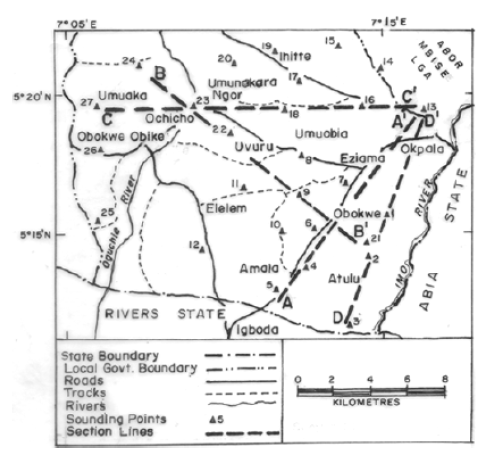
Figure 1: Location Map of Ngor-Okpala L.G.A. Imo State
Adopted from Ministry of Land and Survey, Owerri
The cattle corridor ‘covers the dry lands which range from the three Agricultural zones of Imo State (Figure 1). The rangeland refers to the areas on which the native vegetation (climate or natural potential) is predominantly grasses, grass-like plants, forbs or shrubs suitable for browsing or grazing by animals [4]. In Nigeria rangelands are characterized by low and erratic rainfall regimes leading to frequent and severe droughts; fragile soils with weak structures which render them easily eroded; and land tenure systems that lack incentives for pastoralists to invest in preservation of the range as a common pool resource.
Degradation of rangelands manifested by bush encroachment, gullies due to soil erosion and bare ground along the cattle paths and resting grounds, has greatly affected their carrying capacity and production potential [5]. This rangeland degradation affects the productivity of cattle in terms of growth and number thus reducing the cattle keepers‘ sales rates. Pastoralism, a farming system involving mobility of people with their livestock in search of pastures and water is the major characteristic of rangelands. However, events of climate extremes often induce transhumant pastoralism to areas where water and pasture can be found but return to the settled areas after the rains return [6]. Mobility enables pastoralists to adapt to climate variability [7]; maximize on herd size and herd productivity [8] and increase the effectiveness and efficiency of land use [9].
The current level of contribution of the livestock sector in Nigeria is still below its potential given the size of the livestock population due to a number of factors. Low productive indigenous cattle breeds, diseases, feed availability and quality constrain cattle productivity [10-12]. Poor market infrastructure, price variability, limited marketing support services, market information, credit services to traders, cattle keepers, absence of effective producer organizations at the grassroots and limited access to markets provide inadequate opportunities for increased incomes [13]. Therefore market off-take is low (10-12%) compared to other grassland based systems such as those of Namibia (15-25%) and Brazil which fluctuates between 15 and 18% [14].
In addition to infrastructural problems [15] low market off-take is attributed to a number of disincentives for pastoralist to participate in the livestock markets. These include inadequate investments in non-livestock sectors in pastoral systems to provide local market for livestock products [16]; disproportionate balance between socio-cultural and monetary values that pastoralists attach to livestock [17] and export barriers and import restrictions at international level [18].
Of these disincentives, the most prominent constraints are the overwhelming socio-cultural values of livestock and risk aversion strategy [19]. This contrasts with commercial production objectives that emphasize production for the market [20]. Therefore cattle herders keep animals as stores of wealth-in-kind and insurance scheme that smoothen returns from the market [2]. As risk aversion strategy pastoralists participate in the market primarily for convenience of adapting to inclement weather and disease incidences. Their monetary values are `limited to subsistence cash economy and need for petty cash needs for medical bills, scholastic requirements and occasional household needs [21].
This situation accentuates erratic supply and price disincentive for producers as well as traders [2]. Despite government‘s effort to commercialize agriculture through trade and market liberalization, marketed livestock off take has remained low; fluctuating between 10 and 12% thus contributing to the existing per capita meat deficit of 41.2 kilogramme [14]. This has been further exacerbated by the pastoralists‘ survival strategy of minimizing risk by maintaining large herds so that production does not drop below subsistence level (consumption smoothening) and the risk of total loss of the herd [22] rather than maximizing benefits per animal in cash or energy currencies [19].
As such, livestock cattle keepers have not responded to the demand and sometimes have tended to hold on to their livestock and only sell when they are cash constrained; not when it is most profitable [23] which subsequently results into low levels of income. Sandford [24] observed little supply response from the pastoralists to changes in prices for livestock which was attributed to the low demand for cash other than for essentials such as schools and taxes. However, there are no information updates on the level of participation of pastoralists in livestock market as well as limited understanding of the circumstances that make pastoralist recalcitrant to market price incentives.
Therefore, this study was initiated with the overall purpose of assessing the factors that influence cattle keepers‘participation in commercialization of livestock production in the pastoral communities and to establish the factors that affect cattle keepers ‘decision to sell livestock.
MATERIALS AND METHODS
The study was conducted in Ngor Okpala Local Government of Imo State of the cattle corridor. Ngor Okpala is a Local Government Area of Imo State, Nigeria. Its headquarters is in the town of Umuneke Ngor. It has an area of 561 km²; it has a population of 159,932 at the 2006 census. It is a notable place in Imo state because of the LGA's locational position. Ngor Okpala Local Government Area in Imo State of Nigeria which is located in the rain forest belt of Nigeria; was carved out of Owerri North and Owerri Municipal. Ngor Okpala lie between latitude 5o 25`N and 5o 31`N and longitude 60 59`E and 7o 04`E. Ngor Okpala has a land area of about 12, 145 square kilometres, with population of about 950,000. Climatically, Ngor Okpala is characterized with heavy rainfall pattern averaging about 1900 mm (190 cm) per annum, temperature ranging from 220-340°C daily. The area was chosen because most of the inhabitants are engaged in cattle farming; this is justified by the presence of thick forests in the area which from time origin.
The cattle corridor is a rangeland area measuring approximately 84,000 km2 (almost 40% of the country) and stretches from North East to South East of the country between latitude 40 12‘ and 10 29‘S and longitude 290 34‘ and 350 E. The cattle corridor has been the focus of national and international attention for the implementation of livestock development programmes aimed at poverty alleviation [25]. The study area is located within the agro pastoral production system where livestock production is the major economic activity [26]. Cattle keepers derive their livelihood from the livestock kept, seasonally move their herd in such of water and pasture and participate in livestock marketing.
Four communities namely Obiangwu/Logara, Obib-Ezena, Amala/Olulu/Oburu and Ohekelem/Nnorie were randomly selected from Ngor Okpala Local Government Council. Ten villages of Eziama, Obohia and Umueze in Obiangwu/Logara community, Emeke, Eziobo, Umuikea in Obib-Ezena community; Alatia and Ikem in Amala/Olulu/Oburu community and Egbelu and Amankwu from Ohekelem/Nnorie community where livestock production was the major source of livelihood were randomly selected. From each village, 18 farm household heads were randomly selected from an up to date list of farmer households provided by the Community Veterinary Officers in conjunction with their village extension staff.
Primary data were collected by a pre tested semi- structured questionnaire administered through face to face interviews to capture the underlying social, cultural and economic data. Data collected included age, sex of the household head, size of the grazing land owned, access to market information, reasons of keeping cattle, participation in the livestock marketing and channels used, road infrastructure status and challenges encountered. Secondary data to augment the research included livestock production estimates and livestock off-take rates was collected from Agricultural Development Programme (ADP) office in Owerri, Imo State.
Data Analysis
Data were entered, cleaned in Statistical Package for Social Scientists (SPSS) and subjected to statistical analysis to generate descriptive statistics. The first objective was achieved by use of descriptive statistics generated from the SPSS. The second objective was achieved by use of the structure, conduct and performance market study paradigm supported by data from the SPSS analysis. The third objective was achieved by transferring the data from SPSS to STATA version 9 in which empirical analysis was carried out to analyse the factors that affect the sales rates for the cattle keepers.
RESULTS AND DISCUSSIONS
Socio-Economic Characteristics of the Sampled Cattle Keepers in the Pastoral Areas of Ngor Okpala, Imo State, Nigeria
The characteristics of the sampled households included the respondent‘s level of education, household size, size of household grazing land , herd size and composition, purpose of keeping cattle, their cattle sales and the constraints they encountered in producing and marketing their livestock.
Household Characteristics
The household characteristics of the respondents in the study area comprised of the household size, education level of the household head and the size of household grazing land (Table 1).
The study revealed that the average household size was 10 members which were close to 11 members reported by Wurzinger et al. [27] (Table 1). Households with many members are likely to have more needs and demands to be met. Since cattle is the household‘s major source of livelihoods; larger households are likely to be faced with increased household needs thus leading to an increase in the number of animals sold which may translate into a relatively higher sales rate. An increase in the household size and number of dependants both increase participation of small scale cattle keepers in the cattle markets. A bigger household size translates into an increased demand for market goods which will increase participation of the small scale cattle keepers in livestock markets [28] thus increasing their sales rate. The pastoralists have changed their lifestyle. They have crossbred their cattle and sell their milk as an alternative source of income and have thus reduced number of cows.
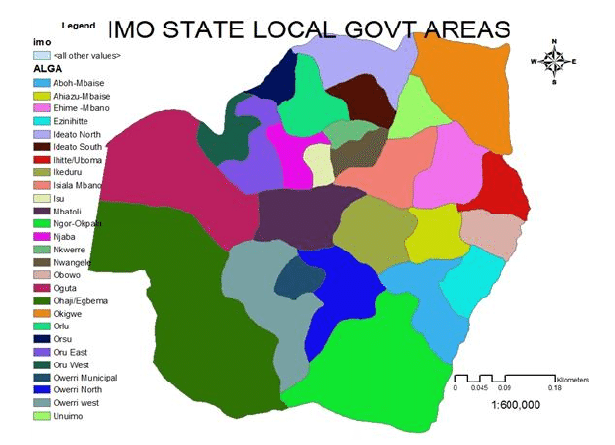
Figure 2: Map of Imo State Showing the Three Agricultural Zones
Table 1: Household Size
Characteristic
Mean
Standard deviation
Household size (Number of Persons)
10
5.41
Education level (years)
8
4.46
Household grazing land (Ha)
151.7
149.42
The average number of years of formal education per farm household was 8 years an equivalent of form one (secondary education) (Table 1). Cattle keepers who attain some level of formal education are more likely to adopt better livestock husbandry practices such as observing recommended stocking rates and do livestock keeping as a business compared to the less educated. Education increases the ability of cattle keepers to use their resources efficiently and the allocative effect of education enhances the farmer‘s ability to obtain, analyse and interpret market information available.
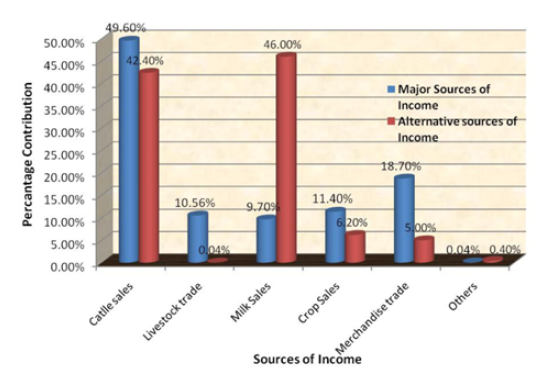
Isabbella and Steve [29] reported a positive relationship between years of formal education and higher bargaining power for educated cattle keepers since learned cattle keepers are more likely to use the existing market information more efficiently thus negotiate for a higher price and have more sales rate. The findings from this study revealed that education level was significant (10%) and had a negative relationship implying that the more educated one becomes, the lower his/her sales rate is likely to become. This conforms to the field observations made during the study where some of the more educated cattle keepers had alternative sources of income including milk sales, crop sales, livestock trade, general merchandise (retail shops in trading centres) and other sources such as salaried employment working as parish chiefs and teachers thus reported to have bought more cattle to restock as a saving mechanism rather than sell the ones in the kraal (Figure 2).
Most of them had crossbreeds geared towards milk production than beef production most especially in Obiangwu/Logara community. This indicated that pastoralists in the cattle corridor especially in Ngor Okpala, Imo State no longer solely depend on cattle sales but have diversified sources of income. Similar findings were reported by David et al. [2] who noted that even educated members of the of pastoral ethnic groups, no longer dependent upon pastoral production for their livelihood are inclined to continue investing in livestock (sometimes as absentee owners) since large herds guarantee subsistence and income, confer status and may provide insurance against the impact of drought.
The average size of the grazing land owned by households was 157.1 hectares with some households owning as small as 2.3 hectares due to increasing land pressure and few others owned as large as 301 hectares. The results in this study are however higher than the observations of Serunkuuma and Kent [30] where some pastoralists in Umueze in Obiangwu/Logara community owned an average of 119 hectares of grazing land. Pastoralists use large land expanses as well the communal grazing areas since they depend on natural pastures in the rangeland with little or no improvement to raise their cattle.
The size for grazing area owned by the household was significant (1%) and negatively affected the farmer‘s sales rate. An increase in the size of grazing area owned by the household by 1 hectare led to a decrease in the cattle keepers‘sales rate by 5 percent (Table 2). Asfaw and Jabbar [23] observed that an increase in size of the household land owned had a negative effect on the household decision to participate in the livestock market as a seller. This may be so because increase in the cattle keepers‘ grazing area owned creates the need for more cattle for breeding and dairying than selling to the market [31].
Households that owned large grazing area reported low levels of cattle sales but rather cited that they were in need of more cattle to fully utilize the available abundant pastures. However, due to increasing population, individualization of land under fencing and paddocking as well as alternative uses of land for cultivation, some pastoralists are being forced to dispose - off some of their livestock to avoid starvation and death of their stock especially during the dry periods thus increasing their sales.
Table 2: Purposes for Keeping Cattle by Pastoralists
Cattle Purpose (N = 180)
Strongly Agree (%)
Agree (%)
Disagree (%)
Strongly Disagree (%)
Prestige
25
53.3
16
5.6
Way of Life
42.7
53.3
4.4
0
Store of Wealth
66.3
30
2.8
1.1
Security/insurance
78.9
21.1
0
0
Food
50.2
47.8
2
0
Source of Income
44.6
48.3
7.8
0
Commercial Purposes
33.1
16.1
26.7
23.9
Source: Survey Data 2007
Figure 3: Sources of Income Among the Pastoral Cattle Keepers in Ngor Okpala
Herd size, Composition and Structure
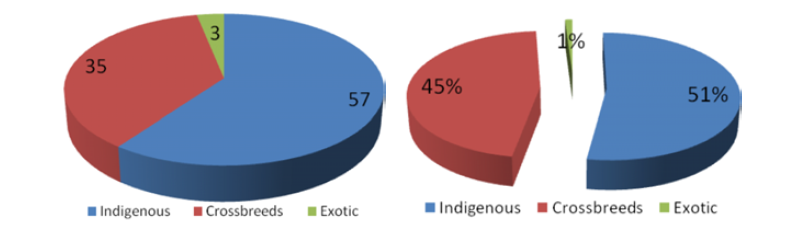
The study findings revealed that almost half of the cattle keepers (51%) in the study area kept indigenous breeds mostly Muturu cattle with an average herd size of 57 heads of cattle followed by the cross breed keepers (45%) with an average of 35 heads of cattle and lastly the exotic breed cattle keepers who consisted of a dismal 1% with an average of 3 heads of exotic cattle (Figure 3).The few exotic cattle kept were under zero grazing.
Respondents keeping indigenous breeds indicated that they were kept mainly because they are hardy, can survive on poor grazing and extensive walk to water points and in search of grazing although they mature slowly and have low productivity. The slow growth and low productivity translates into delayed maturity of the indigenous cattle thus contributing to the deficit of animals that would be sold and thus low sales rate since size of the animal offered for sale affects the price and amount of money earned upon being sold.
Pastoralists carry out breed improvement to increase productivity especially milk output following introduction of Holstein-Friesian cows to rehabilitate the diary sector and meet urban market demands [32]. Cattle keepers reported to prefer cross breeds to pure exotic breeds because of their ability to fetch higher prices than local breeds due to their heavier body weight and at the same time are hardier to harsh conditions and diseases than pure exotic breeds. Breed improvement towards a higher milk productive herd has contributed to the decreasing cattle keepers‘ sales rates since many sales made were of cull cows and bull yearlings and small numbers of improved cattle breed that were being kept.
The cattle keepers in the study areas also practiced breed diversification whereby they were raising two separate herds on the same land especially in Obiangwu/ Logara community, an improved breed herd alongside a local herd of pure local cattle as a risk management measure. This was a result of past experience where the pastoralists that rushed into breed improvement prior to adopting better animal practices. In fact, some pastoralists were reluctant to start improvement despite knowing that it will enhance productivity of their herds.
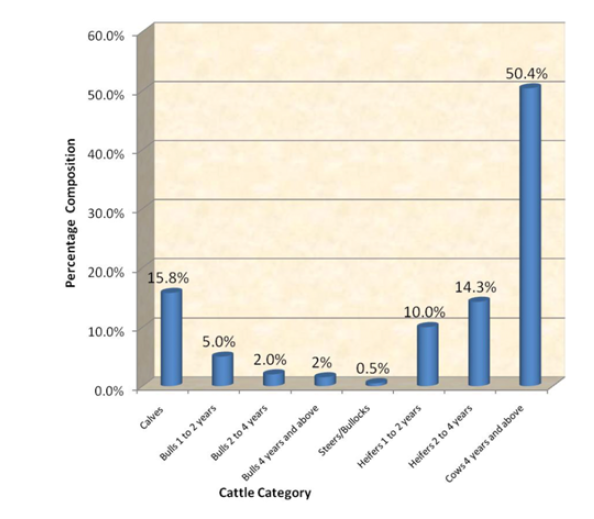
Herd size is a very important factor in herd accumulation in the pastoral production systems. Climatic shocks cause sharp decrease in herd size and accumulation and herd recovery after shock depends on the pre climatic shock levels of herd size [33]. Thus herd accumulation is an effective way of reducing risks by the pastoralists [34]. The respondents indicated that they sold more cattle from the local herds compared to the improved herd because the improved breeds would have to be sold at higher prices and yet the traders were not willing to pay the amount of money requested. This led to easy sale of a high number of local breeds compared to the improved ones. The structure of the respondents‘cattle herds were mainly dominated by female cows constituting 50.4 %, followed by heifers (24.3%), calves (15.8%) and mature bulls 1.5% (Figure 4). As can be noted in this figure, the percentage composition of the bulls was low because the bulls were sold while still young as yearlings. The pastoral herds in the study area were structured to provide supplies of milk, high rates of reproduction and rapid herd recovery following disasters thus contributing to the low observed cattle sales rate since sale of the productive cows would compromise the pastoralists‘herd milk production and herd growth objectives.
These observations concur with the findings of O‘Leary and Binsbergen [35]. Young bulls are sold early after weaning to avoid competition for pasture with the productive female cattle leaving one or two mature bulls for breeding purposes. The immature bulls and other culled animals especially the non-milking cows and heifers can be fattened to produce heavier weight and better quality meat animals which can be sold at higher prices than disposing them off early. Setting up of finishing feedlots in the pastoral areas tapping on these immature bull sales can contribute significantly in improving on the sales rates and income of the pastoralists in the cattle.
The respondents indicated that there was a wide range of reasons for which households kept cattle which varied across households reflecting the individual household‘s needs either directly (for example: food) or indirectly (for example: income) as shown in Table 2. These results revealed the low importance attached to keeping cattle for commercial purposes (33.1%) as opposed to provision of security/insurance (78.9%)followed by being a store of wealth (66.3%) and source of income (44.6%) to finance the expected expenses such as school fees, purchase of animal drugs, arcaricides and payment of labour.
Figure 4(a-b): Average Herd Size and Breed Distribution Among the Pastoralists in the Cattle Corridor October to November, 2020, (a) Average Herd size (Heads of Catlle) and (b) Breed Composition (Percent)
Figure 5: Cattle Herd Structure of the Pastoralists in Communities and Villages in Ngor Okpala
Use of cattle as a store of wealth was also reported by Serunkuuma and Kent [30] who noted that pastoralists in Amala/Olulu/Oburu community, Obiangwu/Logara community used cattle as a store of wealth instead of banking services. The more likely pastoralists’ use banking as store of wealth or saving storage alternative, the more likely they were to regulate their cattle herds. Kosgey et al. also found that most pastoralists in the Northern part of Nigeria kept livestock/small stock for regular cash income or as an insurance against emergencies.
Daniel [36] also found similar practices among the Northern part of Nigeria where pastoralists sold their cattle to meet acute cash needs. The findings in the present study show that the pastoralists in the study area attached low importance to commercial livestock keeping, in effect explaining the low off take since the cattle keepers ‘objective is not keeping cattle for selling but rather to maximize milk production and herd growth; thus the few cattle sales that are made are meant for problem solving but not as intentional selling to earn profit from their sales. Fafchamps [37] contended that unless herders have alternative access to saving institutions so that they can liquidate livestock if they fear losing animals, they will tend to cling onto their assets as highly imperfect forms of insurance. Thus there is need to design acceptable alternative investment opportunities favourable for pastoralists. Consequently, livestock becomes less important as a means of self- insurance, thus reducing the market risks faced by pastoralist. Therefore they will increase their off take thereby lowering stocking rates to levels that reduce widespread losses during droughts. As a result, it will stabilize livestock throughput volumes and enhance incentives to invest in meat processing capacity.
Cattle Sales among the Pastoral Cattle Keepers
Ninety six percent of the respondents reported to have participated in livestock marketing during the previous calendar year. A sales rate of 17.6% was recorded amongst the respondent cattle keepers in the cattle corridor which was close to 18% reported in other rangelands like in the grasslands [14]. This was attributed to the structure of their cattle herds that were predominantly females and with few bulls designed to produce milk and achieve high rates of reproduction and to recover quickly from shocks (drought and diseases) to the system which would be compromised by higher sales rates. The willingness of herders to dispose of productive animals, the largest population of the herd is usually a sign of extreme economic and social stress.
Pastoralists are more likely to value livestock as a source of income in kind (milk and reproduction) rather than cash under which circumstances these income generating assets will be held until generating value falls below salvage (during drought). This partially explains the limited supply response of pastoralists to favourable market conditions (high prices). Coppock [38] noted that pastoralists often have low off takes of around 5% to cope with drought, their cash needs and availability of alternative forms of investment. The results of this study clearly revealed that pastoralists sell their animals despite the different reasons that instigate sale of their cattle. Respondents indicated that only 2.3% of them sold their cattle as a business while 97.7% sold to meet their immediate cash needs. This observation concurs with the hypothesis that livestock sales are largely driven by households‘immediate cash needs as postulated by Osterloh et al. [39]. School fees, medical bills, payment of farm labour and purchase of household needs were the most common immediate needs for which cattle were sold (Figure 5).
Elsewhere, cash proceeds from sale of ruminants were used for paying school fees, paying medical bills and a small percentage (4%) on restocking. The majority of the respondents (70%) reported to use the cash proceeds from cattle sales to pay school fees (Figure 5). This observation corroborates with the findings of Barton et al. [40] who found that many pastoral households need to find cash throughout the year to pay for school fees because they recognize the value and availability of education for their children therefore have to sell their livestock. Similar findings were reported in Northern part of Nigeria where pastoralists were found to have sold their livestock to cover cash needs to fill the household food gaps, clothing, medical fees, social events, credit repayment, payment of labour, buy other inputs as well as forced sale due to the feed shortage during the dry period [41,42].
Cattle keepers‘ perception on livestock sales is based on the decision making behaviour. They consider livestock as a productive asset that generates future income therefore the incentive to sell or buy animals in response to shocks and/to price fluctuations is more complex and militates against sales. Mcpeak (2004) noted a similar observation in Northern Nigeria. The possible reasons why most cattle keepers (78.9%) were more concerned with their security/insurance than profits could be due to the ease of animal liquidation into cash when need arises instead of holding liquid cash which depreciates due to inflation thus loosing value and purchasing power. As such, livestock serve as banks-on-hooves and productive assets that generate future household income in form of calves, milk and meat therefore pastoral households accumulate herds over time. Gebremedhin et al. [41] found that average rural households in Ethiopia with limited investment opportunities were using cattle as a store of wealth and hedge against inflation. Imai [43] noted that pastoralists in Northern part of Nigeria used livestock as a liquid asset due to the feeling of uncertainty about the future, enforced by long periods of inflation and weak social and economic institutions.
Sometimes cattle wealth is used directly through slaughtering and meat consumption but is more often sold to purchase food, pay school fees as a method of consumption smoothening [2]. Cattle keepers across the 4 communities preferred keeping cattle on the farm than hold liquid cash at hand or at bank. They argued that whereas the liquid cash held depreciates due to inflation and loses its purchasing power, the cow will have produced a calf as a profit. If there is need for money, they will sell off mother cow at the same or higher price better still and at the same time remain with a calf. However, it should be noted that cattle keepers have at times not responded to the demand, held onto their livestock in the face of rising prices and sell when cash constrained [44] not when it is profitable. As a consequence, they are offered low prices which translate into low levels of income. Pastoralists prefer minimization of risks to optimization of incomes [45]. Anderson et al. [46] found that the number of female cattle rose sharply in 1990s even as cattle prices rose among the cattle ranchers in the United States of America. Cattle keepers hold onto their animals despite the high prices may be because livestock offer the best rate of return of asset in the pastoral areas, thus their prices increase with improvement in underlying forage and water available, reflecting greater animal productivity as noted by Barrett et al. [47] among the pastoralists in Northern part of Nigeria.
Types of Cattle Offered for Sale among the Pastoral Cattle Keepers
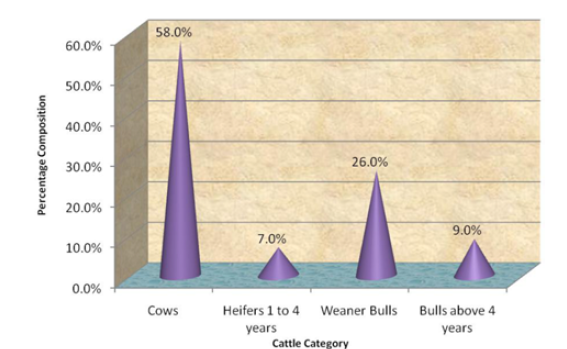
The type of cattle offered for sale was largely a function of the type of stock cattle keepers were prepared to sell as well as the herd structure. Fifty eight percent of the respondents reported to have sold cows aged between 4 to 10 years followed by twenty six percent who sold immature bulls aged between 12 to 48 months then nine percent sold bulls aged 4 to 7 years while seven percent sold heifers aged 12 to 48 months (Figure 6). Important to note is the age at which animals are sold; sixty seven percent preferred selling old animals of 4 years and above. Low levels of nutrition combined with the poor local breed result in delayed reaching a marketable age thus contributing to a low off-take rate.
The pastoral herds are dominated by female cattle (74.7%), the majority being cows (50.4%) aged 4 years and above. Therefore the cattle keepers sell culled cows because they are the majority of the available animals. The sales are also influenced by the magnitude of immediate cash needs such as school fees, medical bills which usually requires large sums of money thus making mature culls cows the appropriate target for sale. In addition, the pastoralists in the cattle corridor of Ngor Okpala kept dual purpose breeds (i.e. mix of milk and meat animals) therefore pastoral herders offer cull cows, low or poor milk producing cows, infertile heifers for sale as a way of balancing the marketing preferences against the fundamental pastoral considerations such as securing the future reproduction of the herd and maximizing milk flows.
John [48] reported that when herders are confronted with the necessity of selling cattle, they prefer to restrict such off-take to non-productive elements such as sterile heifers, non- breeding males and bull yearlings. Sale of immature bulls was reported to be influenced by the farmer‘s strategy to reduce pressure on the pastures, reduce milk consumption and allow quick improvement in the body condition of the lactating cows. Semenye [49] had earlier observed that pastoralists when stressed may be forced to cull male animals shortly after birth to reduce competition with humans and female calves for milk. The sold cows and weaner bulls due to stress and pressure reduction on the grazing pastures usually fetch low prices compared to when they have been fattened and sold at a later date when prices have improved.
Figure 6: Category of Cattle mostly Sold by the Pastoralists in Communities and Viiages in Ngor Okpala
The cattle sales as bull yearlings and cow culls reported by the cattle keepers in the study presents an opportunity to purchase and castrate the weaner bulls and the poor body conditioned cows, fatten and sell them at better prices at later time. The fact that cattle keepers reported to have sold some of their cattle in order to solve some problems shows that they are willing to sell some of their livestock due to cash needs and this can be taken advantage of by establishing strategic feed lots in an effort to commercialize livestock production in the pastoral communities.
CONCLUSION
This study was initiated with the overall objective of assessing the factors affecting the cattle keepers‘participation in commercialisation of livestock production within the pastoral communities. Results revealed that pastoralists within the villages and communities of the cattle corridor were willing to offer their cattle for sale mainly to meet immediate cash needs during specific seasons such as dry periods, school opening calendar months and festive seasons. The pastoralists also participated in cattle marketing as net sellers thus they used cattle markets mostly for selling than restocking. It was also found that pastoral cattle keepers mostly sold culled female cattle (i.e., poor milkers, infertile heifers) and young bulls to reduce competition for pastures an indication that the cattle category sold were not specifically raised for commercial purposes. This provides opportunities for initiatives focused at encouraging raising of steers, setting up of finishing feedlots in close proximity to the cattle keepers for improving culled cows and bull yearlings will greatly contribute towards increased cattle keepers‘participation in cattle marketing and commercialisation of the livestock sector among the pastoral communities.
Important to note was a positive relationship between access to market information and cattle keepers sales rates suggesting that pastoralists with access to market information offer larger proportions of their cattle herds for sale. Consequently, it is imperative that availing market information to the pastoral cattle keepers would improve their participation in cattle marketing.
Results further revealed that cattle keepers located at longer distances from the cattle markets offered a larger number of cattle for sale. This demonstrates that cattle keepers are willing to offer larger proportions of their cattle herd for sale in reliable cattle markets where better prices are offered despite the distance to the market. Therefore establishing reliable markets to the proximal to the pastoral cattle keepers’ communities could improve their participation in cattle markets and increase their cattle sales rates.
Generally, it can be concluded that pastoral cattle keepers are willing to sell their cattle despite the encountered marketing constraints. Hence interventions to alleviate the constraints facing these cattle keepers such as improving market information access and flow as well as upgrading of physical infrastructure (i.e. road networks and cattle markets) and changing from subsistence to market oriented cattle production would potentially increase pastoral cattle keepers‘ sales rates and consequently improve their participation in livestock commercialisation.
REFERENCE
Davie, J. and R. Bennet. “Livelihood Adaptation to Risk: Constraints and Opportunities for Pastoral Development in Ethiopia’s Afar Region.” Journal of Development Studies, vol. 43, no. 3, 2007, pp. 490-511.
David, B. et al.Drought, Losses, Pastoral Saving and Banking: A Review. DFID Advisory Support Services Commission Project ZW0027, NRI Project L0114, 2001.
King and Allan. Joint Donor Agencies Study on the Performance and Growth Prospects for Strategic Exports in Uganda: Annex to Case Study on Livestock and Livestock Products. Delegation of the European Commission, 2002.
Society of Range Management. A Glossary of Terms Used in Range Management. Kothman, M.M. (Ed.), 1989.
Mpairwe, D. Under Nutrition in Dairy Ruminants and Intervention Options for Coping with Feed Scarcity in Smallholder Production Systems in Uganda. 2001.
Muhereza, E.F. and P.O. Otim. Pastoral Resource Competition in Uganda: Case Studies into Commercial Livestock Ranching and Pastoral Institutions. International Books and OSSREA, 2000.
Jacobs, M. and D.L. Coppock. A Review of Changes in Rangeland Vegetation and Livestock Populations for Northern Kenya. GL-CRSP Pastoral Risk Management Project Technical Report 06/99, Utah State University, 1999.
Western, D. and D.L.M. Nightingale. “Environmental Change and the Vulnerability of Pastoralists to Drought: A Case Study of the Masai in Amboseli, Kenya.” UNEP Net Africa, 2002.
Oxfam G.B. Survival of the Fittest: Pastoralism and Climate Change in East Africa. Oxfam Briefing Paper No. 116, 2008.
Kisamba-Mugerwa, W. et al.“Impacts of Individualization of Land Tenure on Livestock and Rangeland Management in South Western Uganda.” 2006.
McIntire, J. et al.Crop-Livestock Interaction in Sub-Saharan Africa. World Bank, 1992.
Jhanke, H.E. Livestock Production Systems and Livestock Development in Tropical Africa. Kieller Wissenschaftsverlag Vauk Publishers, 1982.
Coetzee, L. et al. “The Marketing of Livestock on Communal Lands in the Eastern Cape Province: Constraints, Challenges and Implications for Extension Services.” South African Journal of Agricultural Extension, vol. 34, no. 1, 2005.
FAO. FAOSTAT Statistical Database. Food and Agriculture Organization, 2006.
Jansen, H.G.P. et al.“Policies for Sustainable Development in the Hillside Areas of Honduras: A Quantitative Livelihoods Approach.” Journal of Agricultural Economics, vol. 34, 2006, pp. 141-153.
Barrett, C.B. et al.Constraints Limiting Marketed Livestock Offtake Rates among Pastoralists. PARIMA Research Brief 04-06, University of California, Berkeley, 2004.
Moll, H.A.J. “Costs and Benefits of Livestock Systems and the Role of Market and Non-Market Relationships.” Journal of Agricultural Economics, vol. 32, 2005, pp. 181-193.
Aklilu, Y. An Audit of the Livestock Marketing Status in Kenya, Ethiopia and Sudan. Issues and Proposed Measures. Vol. II, Organisation of African Unity/Inter-African Bureau of Animal Resources, 2002.
Djamen, P. et al. “Higher Insertion in Marketing and Vulnerability of Cattle Farms in North Cameroon.” 8th European IFSA Symposium, 6-10 July 2008, Clermont-Ferrand, France.
Patrick, M. et al.From Subsistence to Specialised Commodity Production: Commercialization and Pastoral Dairying in Africa. ODI, 1993.
Oxfam GB. An Analysis of Factors Affecting Livestock Market Access in Nakasongola, Kotido and Sembabule Districts. Prepared by Frank Emmanuel Muhereza, 2003.
Mace, R. and A. Huston. “Pastoralists’ Strategies for Survival in Unpredictable Environments: A Model of Herd Composition that Maximizes Household Viability.” Agricultural Systems, vol. 31, 1989, pp. 185-204.
Asfaw, N. and M. Jabbar. Livestock Ownership, Commercial Offtake Rates and Their Determinants in Ethiopia. Research Report 9, ILRI, 2008.
Sandford, S. Management of Pastoral Development in the Third World. John Wiley and Sons, 1983.
Kyeyamwa, H. et al. “Structure and Dynamics of Livestock Marketing in Rural Uganda: Constraints and Prospects for Research and Development.” Journal of International Food and Agribusiness Marketing, 2008.
Muhereza, F.E. An Analysis of Factors Affecting Livestock Market Access in Nakasongola, Kotido and Sembabule Districts: A Report to Oxfam GB. 2003.
Wurzinger, M. et al. “Lifestyle and Herding Practices of Bahima Pastoralists in Uganda.” African Journal of Agricultural Research, vol. 3, no. 8, 2008, pp. 542-548.
Fidzani, N.H. Understanding the Offtake Rates in Botswana. PhD dissertation, Boston University, 1993.
Isabbella, B. and S. Steve. “Beyond One-Size-Fits-All: Differentiating Market Access Measures for Commodity Systems in the Kenyan Highlands.” Journal of Agricultural Economics, vol. 58, no. 3, 2007, pp. 536-548.
Serunkuuma, D. and O. Kent. “Private Property Rights and Overgrazing: An Empirical Assessment of Pastoralists in Nyabushozi County, Western Uganda.” Economic Development and Cultural Change, vol. 49, no. 4, 2001, pp. 769-792.
Sara, P. Livestock Marketing in Kenya-Ethiopia Border Areas: A Baseline Study. Humanitarian Policy Group Working Paper, Overseas Development Institute, 2010.
Mpairwe, D. “Under Nutrition in Dairy Ruminants and Intervention Options for Coping with Feed Scarcity in Smallholder Production Systems in Uganda.” Coping with Scarcity in Smallholder Livestock Systems in Developing Countries, Ayantudea A. et al. (Eds.), Animal Science Group, UR Wageningen; University of Reading; Swiss Federal Institute of Technology Zurich; International Livestock Research Institute, 2005, pp. 130-148.
Santos, P. and C.B. Barrett. Herd Dynamics, Social Network and Informal Transfers among the Southern Ethiopian Pastoralists. Research Brief 05-07, PARIMA, GLCRSP, University of California, Davis, 2005.
McPeak, J. “Contrasting Income Shocks with Asset Shocks: Livestock Sales in Northern Kenya.” Oxford Economic Papers, vol. 56, no. 2, 2004, pp. 263-284.
O’Leary, J.D. and J. Van Binsbergen. The Economics of Pastoralism in Northern Kenya: The Rendille and Gabra. Integrated Project in Arid Lands, Technical Report No. F-13, UNESCO, 2006.
Daniel, T. Beef Cattle Production Systems and Opportunities for Market Orientation in Borena Zone, Southern Ethiopia. MSc thesis, Haramaya University, 2008.
Fafchamps, M. The Tragedy of the Commons, Cycles and Sustainability. Stanford University, 1998.
Coppock, D.L. The Borana Plateau of Southern Ethiopia: Synthesis of Pastoral Research, Development and Change, 1980-91. ILCA, 1994.
Osterloh, S. et al.Pastoralist Livestock Marketing Behaviour in Northern Kenya and Southern Ethiopia: An Analysis of Constraints Limiting Off-take Rates. PARIMA Report, 2004.
Barton, D. et al.Drought Losses, Pastoral Saving and Banking: A Review. Natural Resources Institute, DFID Advisory and Support Services Commission Project ZW0027, 2001.
Gebremedhin, B. et al.Heading Towards Commercialization? The Case of Live Animal Marketing in Ethiopia. Working Paper 5, ILRI, 2007.
Ayele, S. et al. Livestock Marketing in Ethiopia: A Review of Structure, Performance and Development Initiatives. Socio-economics and Policy Research Working Paper 52, ILRI, 2003.
Imai, K. “Is Livestock Important for Risk Behaviour and Activity Choice of Rural Households? Evidence from Kenya.” Journal of African Economies, vol. 12, no. 2, 2003, pp. 271-295.
Bailey, D. et al. Livestock Markets and Risk Management among East African Pastoralists: A Review and Research Agenda. GL-CRSP Pastoral Risk Management Project Technical Report No. 03/99, Utah State University, 1999.
Djamen, N.P. et al. “A Research Approach to Study the Dynamics of Cattle-Livestock Interacting Market Forces.” Farming Systems Design 2007: International Symposium on Methodologies in Integrated Analysis on Farm Production Systems, Book 1, 10-12 Sept. 2007, Catania, Italy, pp. 46-47.
Anderson, D.P. and G.R.M. James. “The Cattle Cycle.” Managing for Today’s Cattle Market and Beyond, Department of Agricultural Economics, University of Wyoming, 1997.
Barrett, C.B. Constraints Limiting Marketed Livestock Offtake Rates among Pastoralists. GL-CRSP, Research Brief 04-06-PARIMA, Aug. 2004.
John, S.W. “Cattle and Inequality: Herd Size and Pastoral Production Among the Fulani of North Eastern Senegal.” Africa: Journal of the International African Institute, vol. 57, no. 2, 1987, pp. 196-218.
Semenye, P. A Study of Masai Herds on Elangata Wuas Group Ranch near Kajiado District, Kenya. Working Document No. 14, International Livestock Research Centre for Africa, 1980.
Recommended Articles
Research Article
OBSERVATIONS ON THE HOMOGENEOUS TERNARY QUADRATIC DIOPHANTINE EQUATION x2 + 4xy + 9y2 = 21z2
Download PDF
Research Article
Machine Learning-Based Intrusion Detection for Detecting DDoS Attacks in Software-Defined Networks
Zainab Abbas Fadhil
Published: 30/06/2026
Download PDF
Research Article
Computer Driven Library Management and Service Rendering System: Mobile Library Landscape
Yekini N. A,
...
Ojo O
Published: 10/06/2020
Download PDF
Research Article
A Deep Representation Learning Framework Based on PCA-Compressed EfficientNetB0 Embeddings and Neural Spline-Based Classification for Iraqi Banknote Authentication
Saba Hussein Rashid
Published: 30/06/2026
Download PDF
PO Box 101, Nakuru
Kenya.
Email: office@iarconsortium.org
Editorial Office:
J.L Bhavan, Near Radison Blu Hotel,
Jalukbari, Guwahati-India
Eke, I., Ahaotu, E., Oko, E. C. & Lawal, M. (2021). Factors Affecting the Level of Commercialization among Cattle Rearers in Ngor Okpala Local Government Council of Imo State, Nigeria. IAR Journal of Engineering and Technology, 2(1), 1-9.
MLA
Eke, I.O., et al. "Factors Affecting the Level of Commercialization among Cattle Rearers in Ngor Okpala Local Government Council of Imo State, Nigeria." IAR Journal of Engineering and Technology 2.1 (2021): 1-9.
Chicago
Eke, I.O., E.O. Ahaotu, E. C. Oko and M. Lawal. "Factors Affecting the Level of Commercialization among Cattle Rearers in Ngor Okpala Local Government Council of Imo State, Nigeria." IAR Journal of Engineering and Technology 2, no. 1 (2021): 1-9.
Harvard
Eke, I., Ahaotu, E., Oko, E. C. and Lawal, M. (2021) 'Factors Affecting the Level of Commercialization among Cattle Rearers in Ngor Okpala Local Government Council of Imo State, Nigeria' IAR Journal of Engineering and Technology 2(1), pp. 1-9.
Vancouver
Eke I, Ahaotu E, Oko EC, Lawal M. Factors Affecting the Level of Commercialization among Cattle Rearers in Ngor Okpala Local Government Council of Imo State, Nigeria. IAR Journal of Engineering and Technology. 2021 Jan;2(1):1-9.



 Download PDF
 Download XML