A Deep Representation Learning Framework Based on PCA-Compressed EfficientNetB0 Embeddings and Neural Spline-Based Classification for Iraqi Banknote Authentication
Saba Hussein Rashid
1
1
Department of Computer Science, College of Computer Science and Mathematics, Tikrit University, Iraq
Banknote authentication is one of the key functions in automatic currency verification systems. However, there is a lack of research on Iraqi banknote authentication regarding modern deep representation learning approaches. This study proposes an intelligent system for Iraqi banknote authentication integrating handcrafted feature extraction, deep feature learning, dimensionality reduction, and neural classification. Handcrafted features were extracted to represent complementary visual attributes, and high-level feature embeddings were extracted with a pretrained EfficientNetB0 network. To reduce the features dimensionality and increase the computational efficiency, Principal Component Analysis (PCA) was applied to retain the most informative features. These feature representations were then tested with a Multilayer Perceptron (MLP) and a Kolmogorov-Arnold Network (KAN) classifiers on a set of 7,260 Iraqi banknote images collected with various visual settings. The experimental results showed that the EfficientNetB0 embeddings performance surpassed the handcrafted descriptors significantly, proving the superiority of deep representation learning for banknote authentication. Moreover, the results of the KAN classifier revealed that neural spline-based learning has the potential to be used for currency authentication applications. The proposed work would be a powerful, effective solution for the authentication of Iraqi banknotes and would lay the groundwork for future intelligent banknote authentication systems.
Keywords
EfficientNetB0
Kolmogorov–Arnold Networks
Computer Vision
Pattern Recognition
Iraqi Banknote Authentication
Introduction
Physical currency is one of the most essential media of financial exchanges in the world. [1] As the use of modern banking systems such as automated teller machines (ATMs), vending systems, self-service cabins, and cash deposit machines is increasing [2], the need for fast, robust authentication mechanisms has become essential to process large volumes of banknotes with minimal errors. In Iraq, banknotes are the main instrument of financial transactions [3]. With the increase in cash handling volume in different economic and commercial exchanges [4], the creation of an automated authentication system that can verify the legitimacy of banknotes under real-world conditions, such as differences in illuminations, occlusion, and physical wear, is important to support and enhance currency processing and verify Iraqi banknotes accurately and efficiently. Over time, different studies have discussed banknote recognition and authentication approaches using various techniques. Several studies have explained the use of handcrafted visual attributes, such as color, texture, and segmentation techniques, for banknote classification [5-8]. These papers presented the probability of automated currency authentication, but the results were influenced by various conditions, including image quality and differences Over time, different studies have discussed banknote recognition and authentication approaches using various techniques. in illumination, limiting their applicability across environmental conditions. Previous studies have investigated the application of machine learning and deep learning techniques to a wide range of classification problems, particularly for the classification of banknotes from various currencies, including Jordanian, Egyptian, Libyan, Bulgarian, Indian, Malaysian, and Bangladeshi banknotes [9–23]. These papers presented convolutional neural networks (CNNs) to improve banknote image recognition and classification. However, their primary focus was on proposing models for visually impaired assistance or counterfeit currency detection, not banknote authentication. Studies involving Iraqi banknotes are currently limited, with the majority focusing on simple image processing techniques or on forgery detection and assistance for visually impaired people [24-28]. These papers did not explore the Iraqi banknote authentication approach, which makes the application of such frameworks to Iraqi banknote authentication unexplored. Despite continuous development in intelligent currency recognition and banknote research, studies focusing on Iraqi banknote authentication are scarce and focus on visually impaired assistance or counterfeit detection. Also, presenting deep learning models for Iraqi banknote authentication that extract discriminative features while maintaining computational efficiency through the integration of advanced neural techniques and dimensionality reduction methods remains limited. As a result, a robust authentication framework for Iraqi banknotes, serving as the foundation for more effective currency recognition mechanisms in the future by learning informative descriptors through advanced learning architectures, is necessary to provide reliable and effective digital Iraqi banknote verification systems. To overcome these drawbacks, the current study suggests an Iraqi banknote authentication based on deep learning framework, which integrates a set of handcrafted features and a set of deep embedding extraction techniques. For the proposed framework, a large dataset of 7,260 bank note images that are both authentic and from Iraq is used. The dataset is for all 14 denominations of Iraqi bank notes in Arabic and English. The visual characteristics of the Iraqi banknotes are captured through handcrafted features such as statistical, textural and structural features. Then, high-level representation embeddings are learned via the EfficientNetB0 network. Principal Component Analysis (PCA) is applied to improve feature optimization by reducing redundancy and preserving the most prominent features. Additionally, a Conventional Multilayer Perceptron (MLP) and a Kolmogorov-Arnold Network (KAN) are applied and compared to evaluate the efficiency of deep learning models in Iraqi banknote authentication. Moreover, several extensive data audit pipelines are applied to confirm the integrity and the reliability of the proposed framework. To the best of our knowledge, this is the first study to investigate PCA-compressed EfficientNetB0 embeddings combined with Kolmogorov-Arnold Networks for Iraqi banknote authentication.
MATERIALS AND METHODS
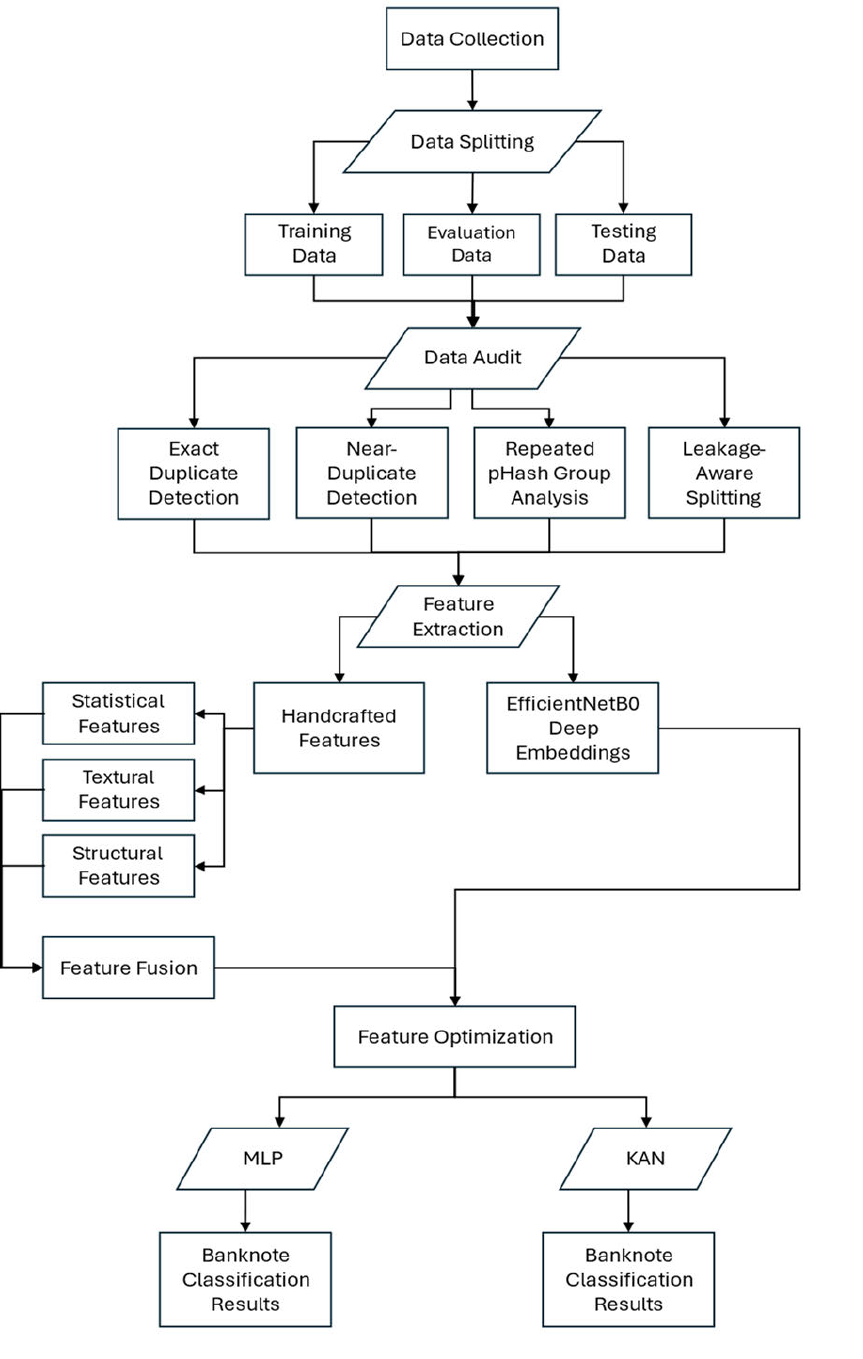
The framework of the proposed Iraqi banknote authentication system consists of the following steps as demonstrated in Figure 1: First, a large dataset of 7,260 Iraqi banknote images of all denominations was collected. Second, the datasets went through an extensive data audit utilizing hash-based techniques to confirm the quality of the data for the following training, evaluation, and testing procedures. Third, a unified image enhancement pipeline was conducted on the data and included image resizing, conversion to greyscale, denoising, application of CLAHE contrast enhancement, and histogram equalization. Fourth, feature extraction was conducted using two complementary methods: handcrafted feature extraction to capture statistical, textural, and structural features of the images, and pre-trained EfficientNetB0 deep embedding extraction to extract high-level deep features. Fifth, the extracted features were applied through feature apace optimization including dimensionality reduction using Principal Component Analysis (PCA) to clean the features while preserving the variance of the most informative features. Lastly, two models, Multi-Layer Perceptron (MLP) and a Kolmogorov–Arnold Network (KAN) were both trained and evaluated, and multiple evaluation metrics were used to analyze the most effective model for the authentication of Iraqi banknotes, such as accuracy, precision, recall, and F-1 score.
Figure 1: Steps of the general methodology
Dataset Loading and Configuration
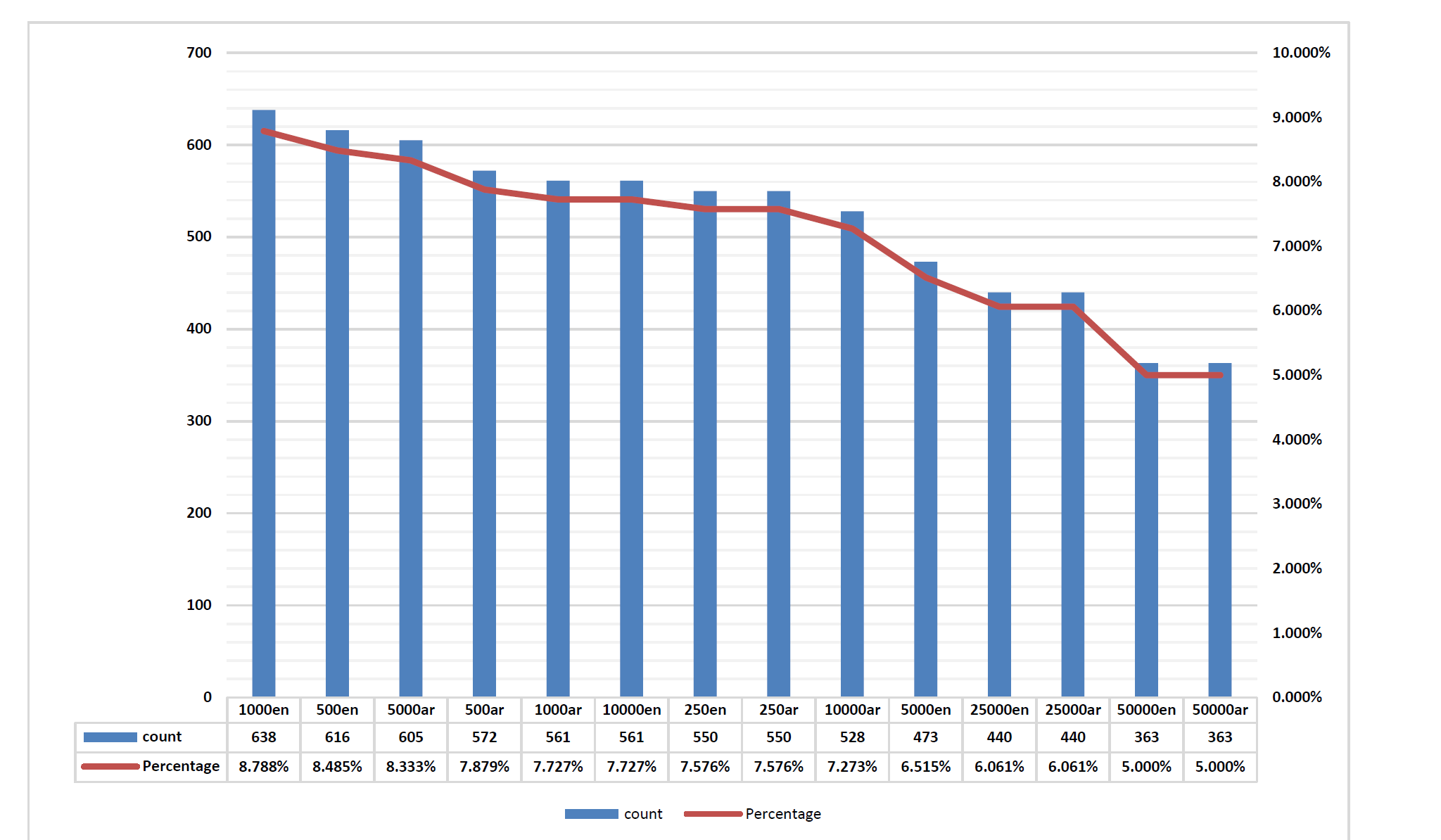
The data set “Iraqi Money” was downloaded from Kaggle [29] and used in this research. There are 7,260 real images of bank notes from Iraq. At first sight, the data set consists of 14 denominations of banknotes, in both Arabic and English. The distribution of samples of the dataset is shown in Figure 2. The images were captured in various modes to match the visual variations that one could expect in the real world, a normal light mode, a dark mode, a partially cropped mode and a rotated mode. These variations are added to increase the robustness and to achieve realistic operational conditions that would occur in practical banknote authentication situations.
Figure 2: Distribution of class samples of the Iraqi banknote dataset
Dataset Splitting
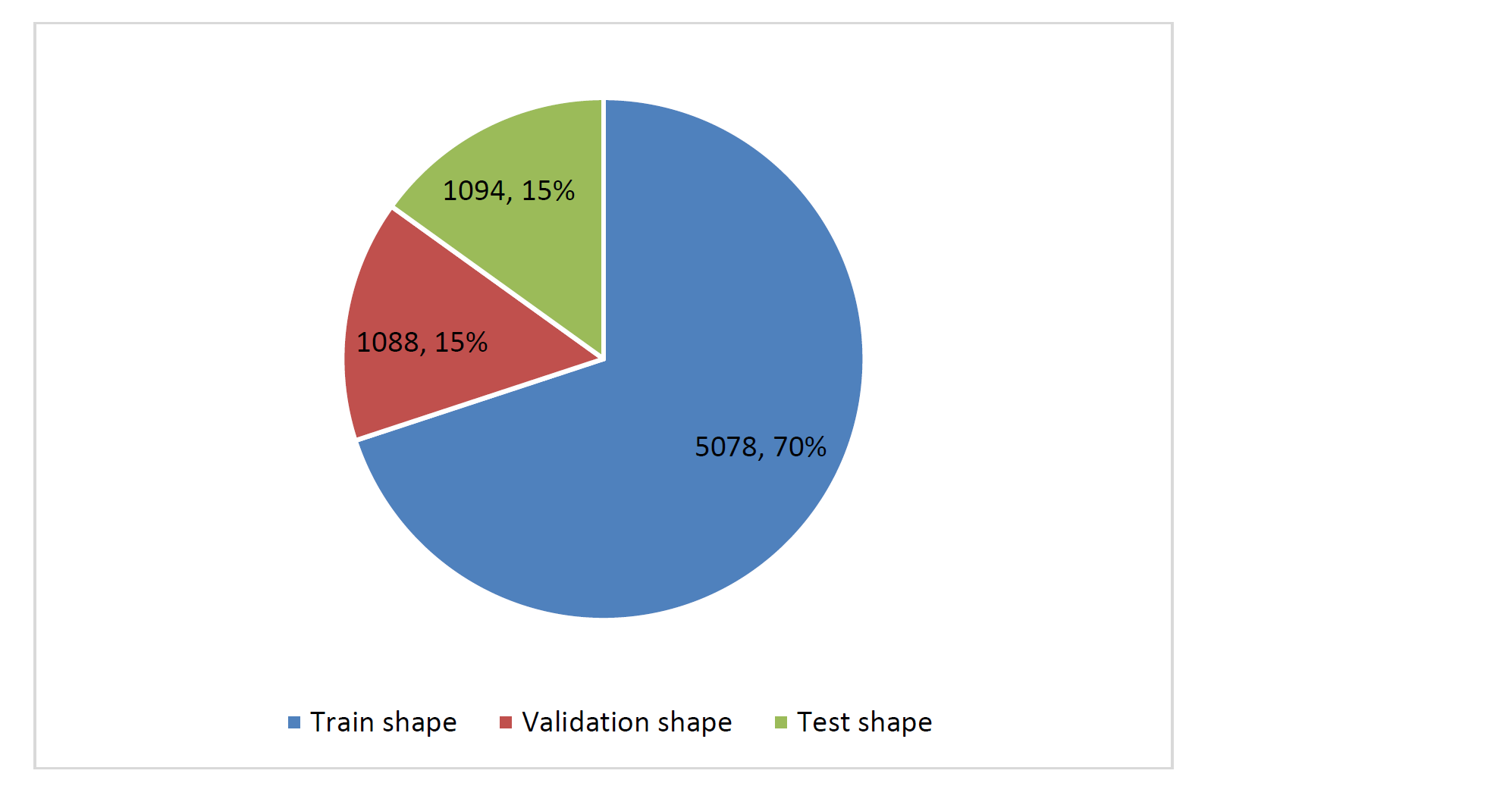
The dataset was split into three subsets: training, validation, testing, as shown in Figure 3. In this early splitting strategy, the proposed models would ensure realistic and unbiased results as the validation and test subsets would be independent from each other, avoiding it from leaking the data. Early splitting also helped the models to give better predictions on new data sets in which they have not seen before, instead of memorizing the patterns that appeared in the whole data set. It would also enhance the predictability of the models by separating the test set from the preprocessing and training stages. The subsets obtained were training subset of 5,078 samples, validation subset of 1,088 samples and testing subset of 1,094 samples.
Figure 3: Distribution of data splitting
Dataset Auditing
A set of comprehensive data set audits were performed to identify exact duplicates, similar looking samples, repeated image sets, and data leakage to maintain the scientific authenticity and integrity of the proposed framework. The audit steps followed were as follows:
Exact Duplicate Detection
This audit was performed on these data subsets with the MD5 cryptographing hashing algorithm [30]. In this step each picture was assigned a unique digital fingerprint based on a MD5 hash converted from the image itself, without regard to the file names or place where they are stored. The hash codes produced were then compared for duplications and thus images that were identical. This process helped to increase integrity, to eliminate leakage and to minimize redundancy.
Near-Duplicate Detection
To avoid overestimating the model's performance, it was decided that visually redundant images (even if they were slightly changed, as brightness, compression, rotation or resize) will be identified by Perceptual Hashing (pHash) [31]. The images were processed into pHash values using the Python Imaging Library (PIL) to get a sense of the structural appearance of the banknote; the pHash values were then analysed for similar values that indicate highly similar images in the data.
Repeated pHash Group Analysis
A detailed analysis of repeated perceptual pHash groups was performed by using perceptual pHash data to form groups, to identify similarities that exist across classes of the Iraqi banknotes. Cross-class repeated groups were analyzed for each group to compute the number of unique denomination classes, number of repeated images, and several statistical measures to determine if there were overlapping patterns, images that might be misinterpreted, and inconsistencies in naming that might compromise the reliability of the classifications.
Leakage-Aware Dataset Splitting
To avoid any hidden leakage and guarantee the experimental fairness, a stratified two-stage splitting process was carried out at the perceptual pHash group level in this step [33]. By that, these two pictures were considered as a single entity if they have the same pHash value. These pHash groups were split into training and temporary groups, followed by the division of the temporary groups into validation and test groups, all while maintaining class balance. The grouped data was then mapped to image-level records, and denomination labels were translated to numeric identifiers, and the pHash overlap verification was performed with the partitions.
Image preprocessing and enhancements
To standardize Iraqi banknote images and enhance structural visibility, a unified image-preprocessing and enhancement pipeline was applied to generate normalized inputs suitable for the proposed deep learning framework. Initially, the spatial dimensions of all data samples were defined by resizing all images to a fixed resolution of 224*224 pixels using area-based interpolation. Then, the images were converted to the RGB format to maintain compatibility with standard visualization. The images were subsequently converted to greyscale to preserve structure and texture-related information while reducing computational complexity. Following this, Non-Local Means Denoising [34] was applied to remove unwanted noise while preserving important delicate details. Then, Contrast Limited Adaptive Histogram Equalization (CLAHE) [35] was performed to enhance local image regions independently and, by that, reveal security-related details embedded within the banknote, in addition to preventing excessive amplification of noise in homogeneous regions by utilizing CLAHE’s contrast limiting mechanism. Following this enhancement, global histogram equalization [36] was applied to enhance the visibility of structural regions and increase contrast consistency across different illumination conditions. Next, the processed pixel values were normalized to the range [0,1] via min-max normalization to stabilize the inputs and improve training optimization. Finally, the results were saved as a JSON configuration file for future training and deployment environments.
Feature Extraction
To capture the complementary characteristics of Iraqi banknotes, the proposed methodology included a four-branched feature-extraction pipeline to obtain statistical, textural, structural, and semantic descriptors. This pipeline consisted of three steps: handcrafted feature extraction, visual deep embedding, and multimodal feature fusion.
Handcrafted Feature Extraction
In this step, three feature groups were extracted to serve as interpretable descriptors of banknote images. These groups include statistical, textural, and structural features.
Statistical Feature Extraction
To capture the numerical characteristics and global intensity distribution of banknote images, each image was transformed into a numerical representation, yielding multiple statistical descriptors related to brightness, contrast, intensity randomness, structural complexity, and distribution asymmetry. These descriptors included minimum, maximum, and mean intensity values; median; standard deviation; variance; skewness; kurtosis; entropy; interquartile range; and a 16-bin normalized intensity histogram.
Textural Feature Extraction
To preserve fine-grained visual patterns associated with print and security-related regions of Iraqi banknotes, textural feature extraction was performed by utilizing three processes: First, Angular Second Moment (ASM), correlation, energy, homogeneity, dissimilarity, and contrast were computed using Grey-Level Co-occurrence Matrix (GLCM) to capture the spatial relationships between neighboring pixels. Next, normalized histograms and associated statistical measurements were computed using Local Binary Patterns (LBP) to capture the micro-textural complexity of the images. Finally, Sobel operators and Canny Edge Detection were applied to measure structural transitions, boundary distributions, and edge intensity variations within the banknote images.
Structural Feature Extraction
To emphasize the layout and structural composition of Iraqi banknotes, several categories of structural features were extracted using various computations. First, each image was divided into equal grid regions to compute global density, foreground, and edge distributions. Next, horizontal-and-vertical projection profiles were generated to compute the distribution of foreground regions across grid rows and columns. Additionally, original images were compared with horizontally and vertically flipped versions via symmetry analysis to measure layout balance. Furthermore, the Shi-Tomasi Corner Detector was employed to extract corner-based descriptors and to preserve prominent key points related to security-printed elements. Finally, the organization, size, and distribution of isolated structural regions were obtained using Connected Component Analysis to provide a compact representation of banknote spatial composition.
Feature Fusion
To construct a unified multi-model representation for Iraqi banknote authentication, a feature fusion pipeline was developed that combined handcrafted descriptors. Initially, the handcrafted features were concatenated into a single tabular dataset column-wise. Then, the extracted features were integrated to create the final extracted features. To prevent name conflicts, all features were assigned distinct prefixes before concatenation. The final representation was saved separately to improve interpretability for the proposed framework.
EfficientNetB0 Deep Embeddings Extraction
EfficientNetB0 is a convolutional neural network model developed by Google Research and pretrained on the large-scale ImageNet dataset to produce high image classification accuracy with computational efficiency [37], [38]. For the proposed method, EfficientNetB0 was employed to obtain complex visual representations beyond manually extracted features. First, EfficientNetB0 was initialized using ImageNet weights with the original classification head removed. Then, each banknote image was resized to 224*224-pixel samples and processed into mini-patches using forward inference. Global Average Pooling was applied next to transform convolutional feature maps into fixed-length vectors, yielding compact deep embeddings of 1,280 features per image, with rich information about the shape, texture, structure, and organization of the banknote visual patterns.
Feature Space Optimization and Dimensionality Reduction
The data were processed through a feature-space optimization pipeline to eliminate redundant information, normalize distributions and enhance data quality to ensure the results were reproducible and universally applicable across frameworks for robust inferences. This pipeline applied numeric conversion, missing value imputation, duplicate feature removal, standardization and Principal Component Analysis (PCA).
Numerical Conversion and Stabilization
Non-numeric data values were coerced to numeric types to ensure compatibility with future training processes and with values that were invalid or infinite, automatically coerced to NaN, which is a value that is neither valid nor infinite, but will prevent any instability.
Missing value replacement
A median-based imputation and replacement method was used in this step to deal with missing and corrupted data. The median-based imputation method was chosen due to its superior performance in handling outliers and avoiding leakage between data partitions.
Duplicate and Low-Variance Feature Removal
In this step, low-variance filtering was used to eliminate redundancy in the embedding space and set the threshold as 1*10-8; the features with the very small variance were not select because they didn't provide the enough information and calculation cost.
Correlation-Based Feature Reduction
To avoid duplication of information and decrease the complexity of the feature space, correlation-based feature filtering was performed to exclude highly correlated features (correlation values > 90%) and conserve only the most informative features from the data.
Standardization
After the feature reduction, the features are normalized with their corresponding mean and variance (z-score normalization) to be standardized. This was required to make sure the following PCA dimensionality reduction runs correctly.
Principal Component Analysis (PCA)
To compact the feature space into a low-dimensional representation with only the most important information, Principal Component Analysis (PCA) [39],[40] was applied with a 0.95 preserving configuration, meaning that 95% of the total variance within the data space was retained within sufficient principal components, keeping only the efficient and discriminative characteristics required for Iraqi banknote authentication.
Multi-Layer Perceptron (MLP)
The Multi-Layer Perceptron (MLP) is a feedforward artificial neural network that utilizes hierarchical representation learning [41] to learn complex nonlinear relationships between features and classes by adjusting neuron weights using gradient-based optimization and backpropagation to minimize classification errors [42]. MLP was chosen as a benchmark neural classifier to evaluate whether the extracted features correspond to valid Iraqi banknote denomination by learning the visual patterns and complex interactions between the extracted features to determine how well the optimized banknote embeddings can support denomination-level authentication through conventional deep neural learning before introducing the more advanced neural spline-based KAN architecture. Table 1 shows the hyperparameters of MLP used in the proposed methodology. In the proposed framework, the MLP architecture consisted of two hidden, fully connected layers with 64 and 128 neurons, respectively. The modeling of complex feature relationships was managed using the Rectified Linear Unit (ReLU) activation function, and the Adaptive Moment Estimation (Adam) optimization algorithm was employed to stabilize convergence and enhance computational efficiency. Also, L2 regularization was used with a coefficient of 1×10⁻⁴ to reduce overfitting, and a batch size of 64 samples was used to stabilize gradient updates and optimization during training. A maximum number of 300 epochs were set and a starting learning rate of 0.001 was used. During training, the MLP propagated features through the hidden layers one after another; the propagated values allowed the MLP to learn high-level, highly nonlinear relationships between features related to the visual patterns of banknotes. The optimized classifier was further tested with the validation and test subsets and various evaluation metrics, confusion matrices, and classification reports were then generated for more detailed analysis to better understand the performance of the proposed framework for authenticating Iraqi banknotes, while the training and inference times were also calculated for examining the efficiency of the proposed framework.
Table 1: Hyperparameters of MLP
Hyperparameter
Value
Description
Model Type
Multi-Layer Perceptron (MLP)
Feedforward artificial neural network used for multiclass classification
Hidden Layer Sizes
(128, 64)
Two fully connected hidden layers containing 128 and 64 neurons
Activation Function
ReLU
Introducing nonlinear transformations within hidden layers
Solver / Optimizer
Adam
Adaptive gradient-based optimization algorithm
Regularization Parameter ((\alpha))
(1 \times 10^{-4})
L2 regularization coefficient used to reduce overfitting
Batch Size
64
Number of samples processed before weight updates
Initial Learning Rate
0.001
Starting learning rate for the optimizer
Maximum Iterations
300
Maximum number of training epochs
Early Stopping
Enabled
Stops training automatically when validation performance stagnates
Validation Fraction
0.15
Portion of training data reserved internally for early stopping
No Improvement Iterations
20
Training terminates if no improvement occurs for 20 consecutive iterations
Random State
42
Fixed seed used to ensure reproducibility
Classification Type
Multiclass Classification
Used for Iraqi banknote denomination authentication
Input Representation
PCA-Optimized Handcrafted Features
Statistical, texture, and structural fused descriptors
Evaluation Metrics
Accuracy, Precision, Recall, F1-score
Metrics used for performance evaluation
Neural Spline-Based Classification Using Kolmogorov–Arnold Network (KAN)
Kolmogorov–Arnold Network (KAN) is a neural architecture inspired by the Kolmogorov–Arnold representation theorem, which states that "every multivariate continuous function can be represented as a superposition of continuous single-variable functions," [43] making KAN appropriate for modeling complex relationships within high-dimensional feature spaces since it could produce learnable nonlinear transformations within the network mapping, unlike conventional neural networks that conduct fixed nonlinear activation functions at neurons instead [44]. The objective of using KAN in the proposed method is to exploit high-level visual information extracted from the deep feature space and to optimize a flexible, nonlinear mapping between the deep feature space and the corresponding Iraqi banknote denominations. The KAN architecture used in the proposed methodology consisted of three sequential neural spline-style layers followed by a final linear classification layer. There are three main components in each layer: a linear transformation, a learnable nonlinear transformation, and a residual transformation. A learnable projection, accompanied by the Sigmoid Linear Unit (SiLU) activation function, was implemented for the nonlinear component. At the same time, a small scaling factor was added to the residual component to stabilize learning mapping. Table 2 presents the hyperparameters of KAN utilized in this framework. The three layers of KAN worked as follows: the first layer transformed the EfficientNetB0 input vector, after PCA compression, into a 256-dimensional representation. Then, the new representation went through batch normalization and dropout with a rate of 0.25. On the second layer, the representation was reduced from 256 to 128, followed by batch normalization and a dropout with a rate of 0.20. On the third layer, the representation was reduced from 128 to 64 dimensions, with batch normalization and a dropout rate of 0.15. The final output layer mapped the 64-dimensional representation to the number of Iraqi banknote classes. The reason behind conducting batch normalization after each KAN layer was to improve convergence and stabilize the hidden activations during training. The progressive regularization of the dropout rate across the hidden layer was to preserve more information in the compact layer while maintaining generalization and reducing overfitting. Since KAN was used for multiclass classification, a cross-entropy loss function was used to train the model. The Adaptive Moment Estimation with Weight Decay (AdamW) optimizer was used with a weight decay coefficient equal to 1*10^-4 and an initial learning rate of 0.001 because it provided stable optimization and improved regularization in neural networks by separating weight decay from gradient-based parameter updates, preventing the model from overfitting and producing much more stable training. The model's training epochs were set to 120. During training, the training subset was divided into mini-batches, and each epoch included computing predictions and cross-entropy loss, recording training loss and accuracy, backpropagating gradients, and updating parameters using AdamW. The model continued to refine its parameters during training by employing the ReduceLROnPlateau learning rate scheduling strategy, monitoring validation accuracy, and reducing the learning rate by a factor of 0.5 if validation accuracy stopped improving after 8consecutive epochs. After training, the model was evaluated using the evaluation subset in inference mode without gradient computation. Eventually, the model was tested using the unseen testing subset where the performance of the model was recorded and assessed via multiple evaluation metrics, including accuracy, precision, recall, and F-1 score, in addition to recording the training and inference times and a detailed classification report and confusion matrix to evaluate the computational efficiency of the proposed KAN-based classifier and obtain a deeper estimation of class-level prediction behavior and identify any denomination-specific misclassification patterns.
Table 2: Hyperparameters of KAN
Hyperparameter
Value
Model
KAN-inspired classifier
Input representation
EfficientNetB0 PCA features
Framework
PyTorch
Batch size
64
Hidden layer 1
KANLayer: input dimension → 256
Hidden layer 2
KANLayer: 256 → 128
Hidden layer 3
KANLayer: 128 → 64
Output layer
Linear: 64 → number of classes
Nonlinear activation
SiLU
Residual scaling factor
0.1
Batch normalization
After each KAN layer
Dropout rates
0.25, 0.20, 0.15
Loss function
Cross-entropy loss
Optimizer
AdamW
Learning rate
0.001
Weight decay
(1 \times 10^{-4})
Learning-rate scheduler
ReduceLROnPlateau
Scheduler mode
Maximize validation accuracy
Scheduler factor
0.5
Scheduler patience
8 epochs
Maximum epochs
120
Early stopping patience
20 epochs
Model selection criterion
Best validation accuracy
Evaluation metrics
Accuracy, precision, recall, F1-score
Metric averaging
Weighted
RESULTS AND DISCUSSION
The outcomes of the various processes performed in the methodology (data processing, feature extraction, dimensionality reduction and classification) are discussed and analyzed to evaluate the efficiency of the proposed Iraqi banknote authentication framework.
Dataset Audit Results
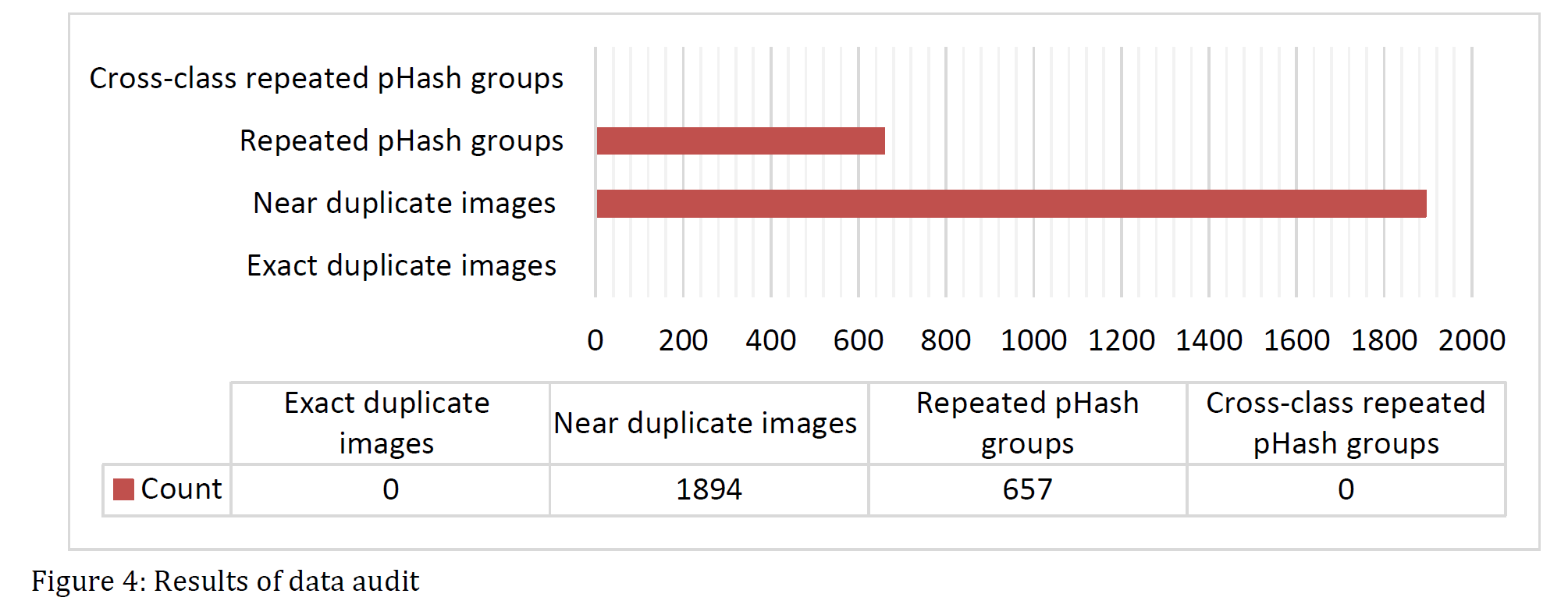
The results of an extensive duplicate audit on the data to guarantee integrity and to remove the potential leakage of data between subsets are presented in Figure 4. It was first necessary to hash the samples with MD5 to find any identical copies by hashing their bytes. The results showed that there was no image file that appeared more than once among the subsets, meaning there were no exact image duplicates in the data set. In the second step of the audit, pHash analysis found 1,894 images to be classified into 657 perceptual-hash groups. This result is achieved in the case of Iraqi banknote authentication, due to the fact that the visual patterns of images of the same denomination are very similar, for example typography, colors distribution, geometric layouts, security patterns, etc., which reflects the visual uniformity of the authentic banknote samples. The third step involved cross-class pHash analysis to determine whether perceptual hashes were identical across different denominations. The results produced 0 cross-class repeated pHash groups, indicating that visually similar image groups remained within their correct category and, by that, supporting the validity of the upcoming classification processes.
Feature Extraction and Feature Fusion Results
The components of the three types of handcrafted extracted features were presented in Figure 5. The results of the extraction were as follows: the data contained 27 statistical features, providing a summary of the visual appearance of Iraqi banknotes and capturing differences in denomination, visual complexity, color distribution, and printing density. 46 structural features were extracted from banknote images; these features were particularly important for Iraqi banknote authentication because currency, in general, contains distinctive security patterns, background designs, and other microstructures that form unique visual elements, enabling the models to distinguish between denomination classes. The third category of extracted features, structural features, was most important and gave 41 descriptors, which gave useful information as it was based on the structure of the banknote image with regards to spatial organization and geometric arrangements. The final process was to merge the three types of handcrafted features which merged 114 descriptors. This fusion was a significant one for banknote authentication, where for instance features may share similar appearances in a domain, but be different in another one, hence building good foundations for strong learning and classification processes.
EfficientNetB0 Deep Embedding Results
The deep feature extraction using EfficientNetB0 results provided significantly more detailed information than the handcrafted feature dataset previously discussed. With handcrafted features, the proposed pipeline produced 114 features before dimensionality reduction. In contrast, the EfficientNetB0 framework generated 1,280 features per banknote image, capturing deep, complex characteristics that manually engineered extraction techniques could not capture. The deep feature embedding contained about 9,292,800 learned feature values, establishing a rich and descriptive representation. As such, a high-dimensional feature space was able to preserve a large variety of denomination characteristics, from spatial relationships and texture patterns to denomination markings and geometric structures, contributing valuable information for authentication performance. Additionally, the computation time of extraction was 708.66 seconds, reflecting the computational complexity linked to deep convolutional feature extraction. However, once the embeddings are extracted, the following processes could be conducted without the latency of repeating the EfficientNetB0 pipeline. The extracted features from the deep framework served as the basis for the proposed authentication framework because they transformed the Iraqi banknote image into an information-rich representation, thereby enabling a highly dependable authentication model.
Feature Compression Results
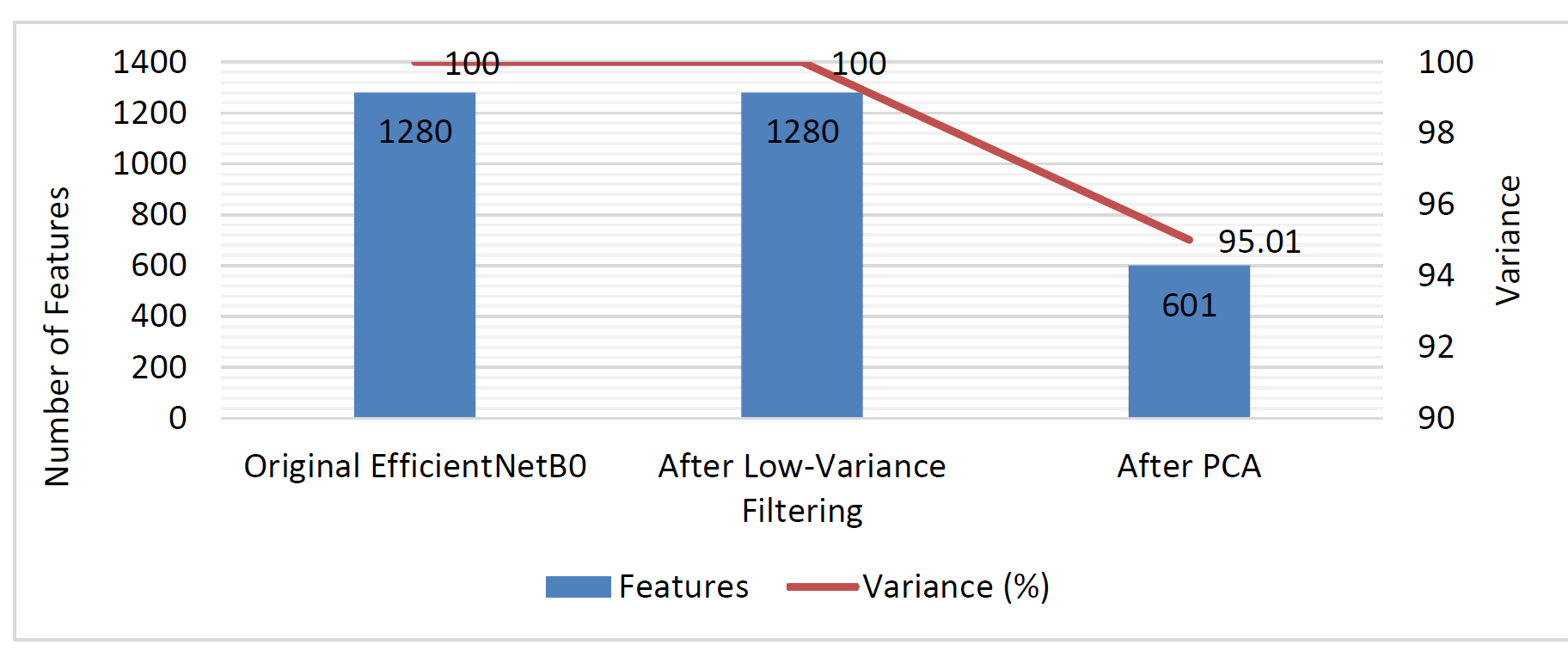
Figure 6 (A and B) displays the PCA dimensionality reduction of the handcrafted and EfficientNetB0 extracted features. For the handcrafted features, the application of feature removal and low-variance filtering reduced the features from 114 to 111. However, the correlation filtering removed 28 unimportant representations, leaving the data with 73 features. Then, PCA further reduced the number of important features to only 30, with an approximate compression rate of 58.9% while retaining the most informative feature components. For the EfficientNetB0 Embeddings, after low-variance filtering, no features were eliminated during this step, as the number of features remained unchanged at 1,280. This result indicated that the embeddings provided significant variability across Iraqi banknote images, as EfficientNet0 effectively distributed information across the feature space rather than compressing it into a limited feature space. After PCA, the dimensionality was reduced from 1,280 to 601 features, yielding an approximate compression rate of 53.05%. While 679 features were removed during this stage, the resulting feature data retained 95.01% of the total variance contained in the original embeddings. Although the production of a high retention rate while removing a large number of descriptors indicated that the transformation effectively preserves the most informative characteristics of the banknote images, it also showed high redundancy in the deep-extracted features, as multiple neurons frequently encode related visual characteristics. However, PCA's ability to merge overlapping representations into a compressed feature space without significantly sacrificing valuable information was one of the main reasons for this step. The compressed representation reduced the computational cost of using deep neural frameworks such as multilayer perceptrons and Kolmogorov–Arnold Networks, improving generalization and reducing overfitting while preserving memory consumption during training and inference.
Figure 6 (A): Handcrafted Feature Compression
Figure 6(B): EfficientNetB0 Feature Compression
MLP Results on Handcrafted PCA Features
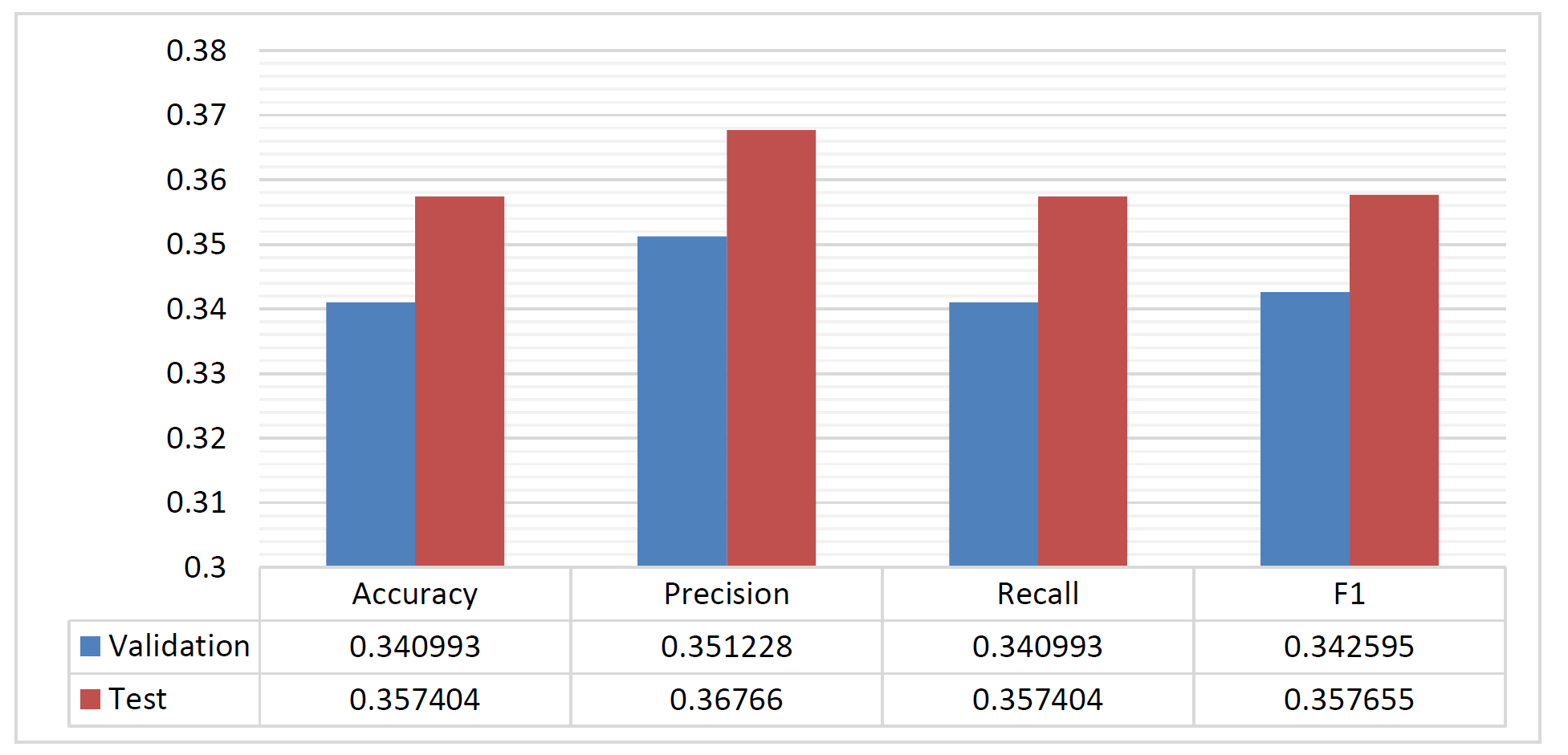
The classification performance of the MLP classifier trained on the PCA-compressed handcrafted features is depicted in Figure 7. The validation results recorded an accuracy score of 34.10%, a precision score of 35.12%, a recall score of 34.10%, and an F-1 score of 43.26, while the test results recorded a slightly higher score with an accuracy of 35.74%, precision of 36.77%, recall of 35.74%, and an F-1 score of 35.77%. The minor differences in the results of both performances indicate that the model generalizes well without severe overfitting. The above results are considered above random classification, although they are lower than is expected for an operational authentication system. Given that the expected accuracy for a random classification problem of 14 classes is 7.14%, the observed accuracy is an improvement. It indicates that the handcrafted features have successfully captured meaningful information about Iraqi banknote denominations. Yet, the provided information is considered incomplete because it cannot capture the rich visual complexity of the banknote images, which cannot be adequately extracted using manually engineered extraction techniques alone. Also, the significant PCA reduction of features during feature optimization may be another factor contributing to the low classification report, as several Iraqi banknotes share comparable design characteristics and structural layouts, which may overlook certain denomination-specific variations that can be important for accurate classification within visually similar banknote classes. These results motivate the need for a deep feature learning strategy that can learn from the complex inter-class structure of banknote images to improve representation in the banknote authentication framework.
Figure 7: Results of MLP evaluation on the handcrafted features
KAN Performance on PCA-Optimized Handcrafted Features
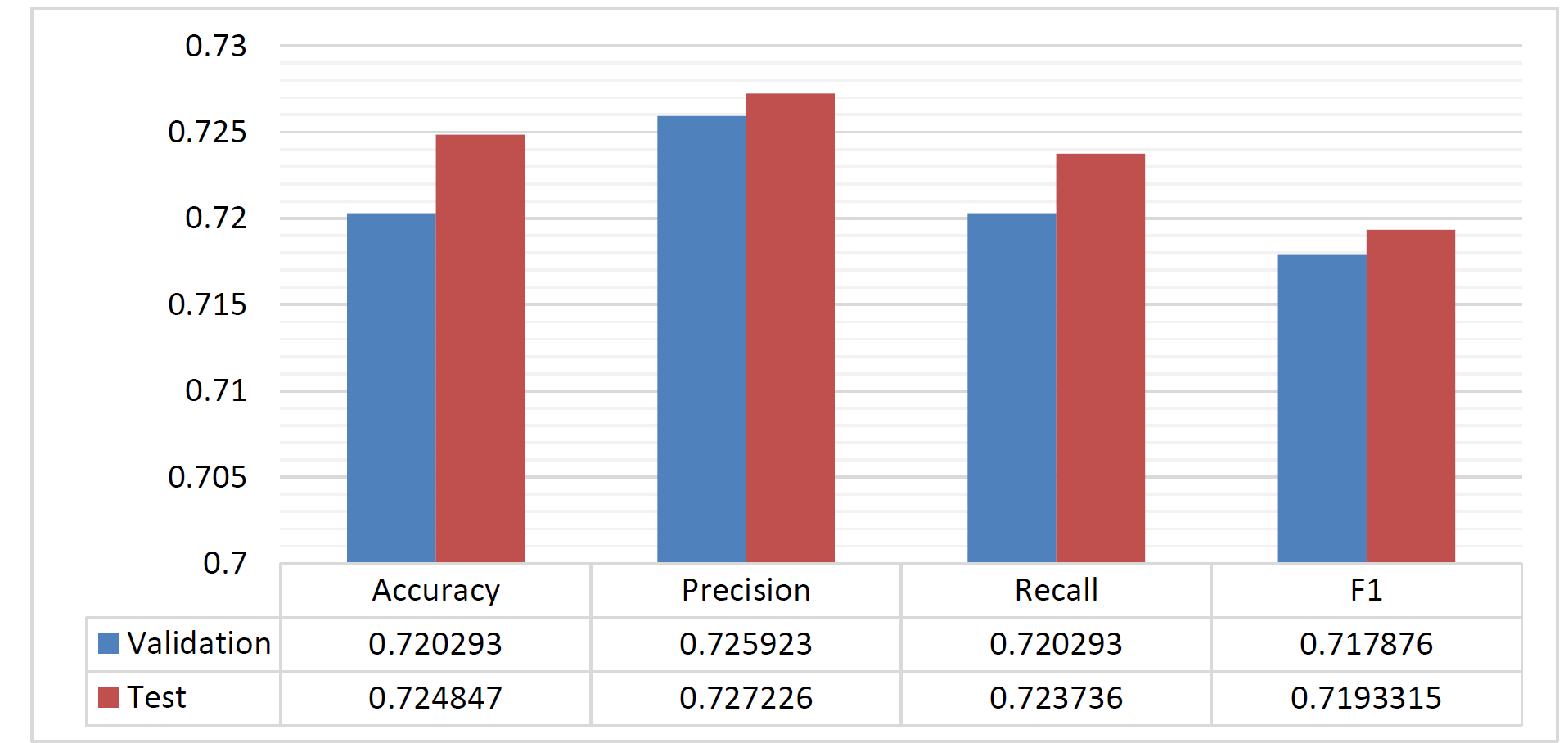
The third category of extracted features, structural features, was most important and gave 41 descriptors, which gave useful information as it was based on the structure of the banknote image with regards to spatial organization and geometric arrangements. The final process was to merge the three types of handcrafted features which merged 114 descriptors. This fusion was a significant one for banknote authentication, where for instance features may share similar appearances in a domain, but be different in another one, hence building good foundations for strong learning and classification processes. The aforementioned results, shown in Figure 8, demonstrate that handcrafted features can remain advantageous when an appropriate learning framework is chosen, as they retain rich information that traditional neural architectures may not fully learn. However, the limited results, which cannot be used for a robust banknote authentication system, can be derived from the fact that the handcrafted features may neglect delicate visual characteristics that can still be captured by KAN, highlighting the necessity to conduct a different method to extract all the useful denomination-specific information from banknote images for obtaining better results.
Figure 8: Results of KAN evaluation on the handcrafted features
MLP Results on EfficientNetB0 Embeddings
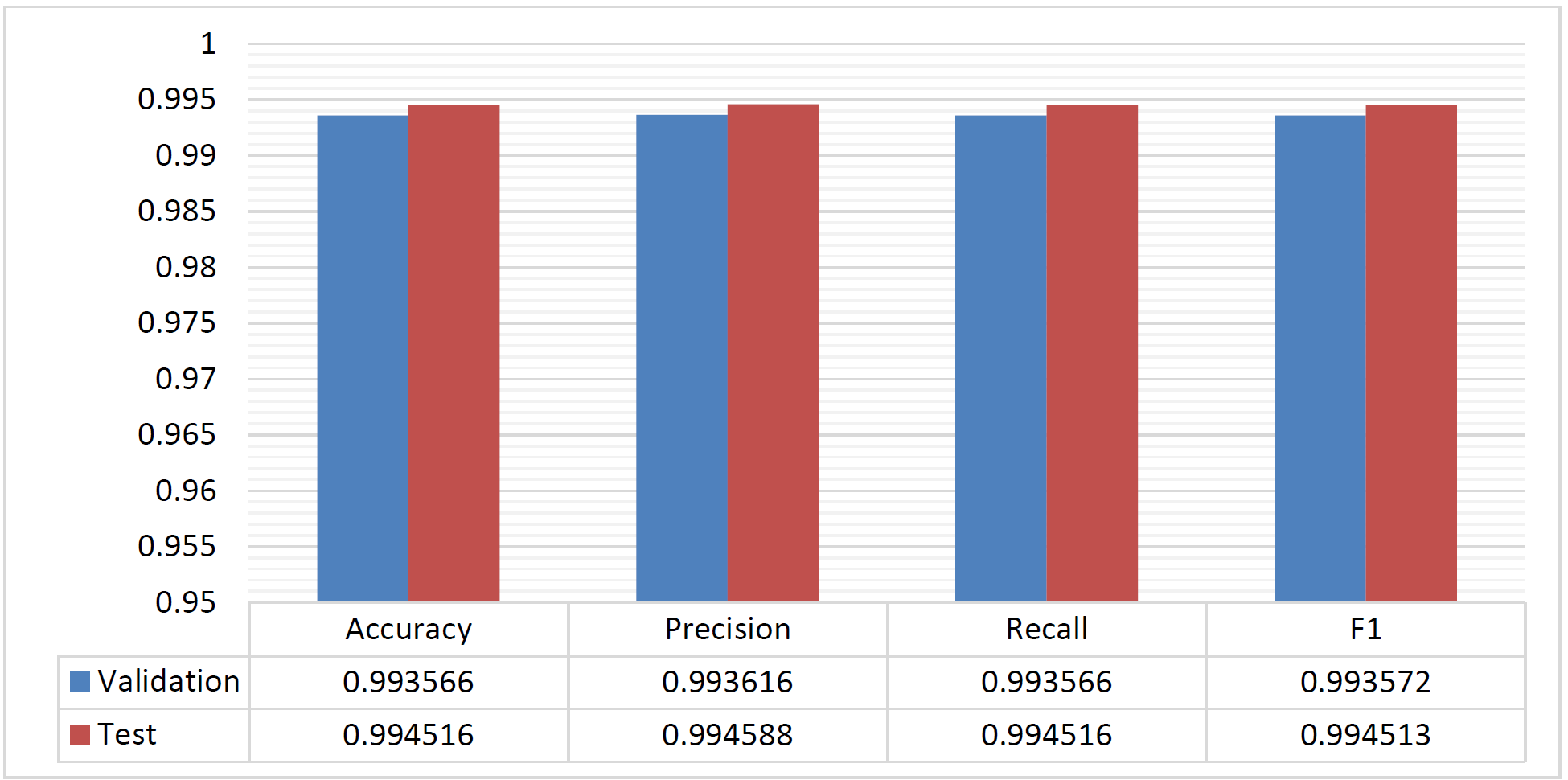
The validation and test performance results of the MLP using PCA-compressed EfficientNetB0 embeddings are presented in Figure 9. The classifier achieved a validation-stage accuracy of 98.53%, a precision of 98.55%, a recall of 98.53%, and an F-1 score of 98.53%. In comparison, the test stage recorded 98.63% accuracy, 98.64% precision, 98.63% recall, and 98.63% F-1 score. The results show that the model provides consistent high recognition performance across denominations. One of the major motivations for this is that deep learning feature extraction allows to encode a more comprehensive set of image features of the bank notes which serves as a stronger basis for denomination classification, compared to the handcrafted features in the previous cases. Pretrained convolutional networks such as EfficientNetB0 have been found to be useful in the denomination-specific authentication systems for Iraqi banknotes, as banknotes are generally visual objects with complex characteristics that do not easily lend themselves to analysis using manually engineered approaches, especially because they allow for capturing hierarchical visual features directly from images, ranging from low-level features such as edges and textures to high-level features such as denomination-specific patterns and structural signatures.Additionally, the PCA dimensionality reduction did not negatively affect classification performance, confirming that the discarded features contained redundant information that might have affected MLP performance. Also, the results indicate that, although the learned embeddings do not directly correspond to specific visual characteristics, EfficientNetB0 can be advantageous for automated banknote authentication systems, as the extracted embeddings contain rich, denomination-specific information that can be used to achieve better classification results.
Figure 9: Results of MLP evaluation on the EfficientNetB0 deep embeddings
KAN Results on PCA-Compressed EfficientNetB0
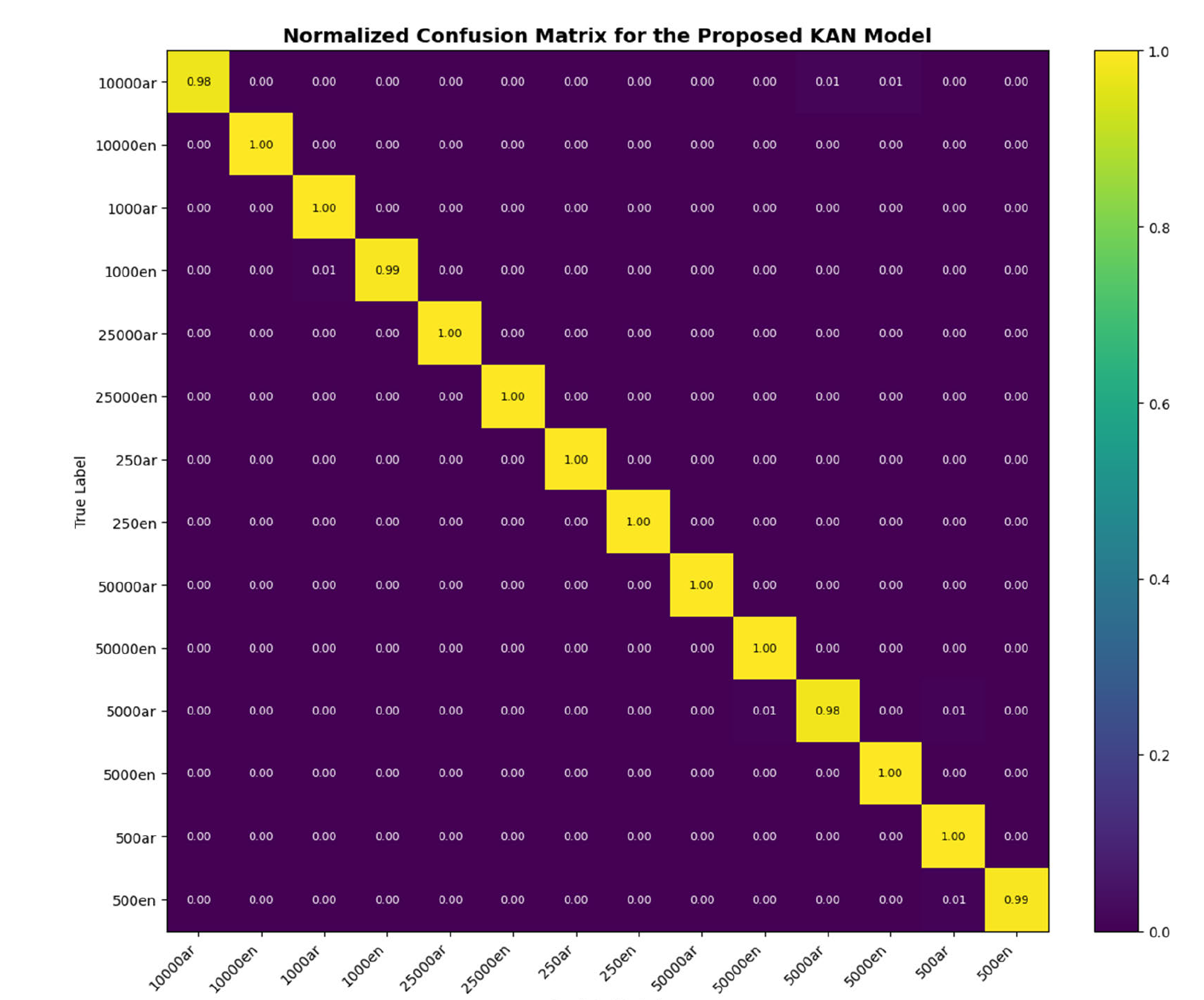
The results of KAN performance on PCA-optimized EfficientNetB0 embeddings are illustrated in Figure 10. In the validation stage, KAN recorded an accuracy score of 99.36%, a precision of 99.36%, a recall of 99.36%, and an F-1 score of 99.36%. During the testing stage, the classifier achieved an accuracy of 99.45%, a precision of 99.46%, a recall of 99.45%, and an F1 score of 99.45%. Figure 11 presents the normalized confusion matrix of the proposed KAN classifier. The matrix indicates indicating that performance is distributed across the entire dataset rather than driven by a specific class subset. It also demonstrates the classifier's ability to recognize all currency categories, regardless of frequency or visual similarities. Figure 12 demonstrates the accuracy and loss curves. Both accuracy curves show rapid convergence within a few epochs, suggesting that the produced embeddings provide a highly informative representation of Iraqi banknote denominations. Also, the loss curves decrease rapidly during training epochs, supporting the efficiency of the proposed model framework. The excellent performance of KAN can be attributed to its spline-based learning mechanism, in addition to the highly informative EfficientNetB0 embeddings. KAN addresses the challenge of the complex mapping between the PCA-transformed feature space and denomination classes by enabling more flexible modeling of the interaction among subtle features through adaptive nonlinear functions learned along network connections. This ability of KAN is beneficial for EfficientNetB0 embedding training, as it incorporates various deep feature representations, so any small improvements in decision boundaries can be interpreted as significant gains in the model’s performance. Another reason for the increase in classification performance is the dominance of feature representation quality, as the deep EfficientNetB0 embeddings contain richer information than the handcrafted features discussed previously. These findings make the proposed framework more dependable for the deployment of an automated denomination authentication system, as banknotes contain various minute details that must be analyzed to achieve more robust classification performance. The achieved performance demonstrates that the proposed framework successfully integrates powerful deep visual representations with advanced spline-based learning mechanisms, resulting in highly accurate and robust Iraqi banknote authentication.
Figure 10: Results of KAN evaluation on EfficentNetB0 deep embeddings
Figure 11: Normalized confusion matrix of KAN classification of Iraqi banknotes
Figure 12: Accuracy and loss curves of KAN training and validation
Comparative Results Analysis
A comparative analysis of the performance of the proposed frameworks is depicted in Figure 13. The results reveal the considerable difference among the evaluated frameworks, with the lowest performance of 35.74% accuracy, recorded by MLP on PCA-compressed handcrafted features. While the results indicate that the model exceeded random classification performance, they confirm that manually engineered descriptors alone, paired with a convolutional neural network, are not sufficient for a robust denomination authentication system. After replacing MLP with KAN, the results showed a significant improvement to 72.48% testing accuracy, with an absolute gain of 36.74%. These results demonstrate that handcrafted features extracted from Iraqi banknote images can be informative when paired with a spline-based learning architecture, as KAN can learn the complex nonlinear relationships across the denomination-related descriptors. KAN performance on PCA-optimized EfficientNetB0 embeddings exceeded that of all other frameworks. While the difference between KAN's results and the previous MLP results on the same feature category is modest, the modest gains become more difficult to obtain as performance approaches saturation levels, indicating that KAN’s spline-based learning mechanism offers strong discriminative performance with highly informative data. Moreover, the analysis reveals that feature representation plays a larger role than just classification selection, as both MLP and KAN achieved higher classification results when trained on deep EfficientNetB0 embeddings. This finding indicates that the primary factor in achieving such high results is that deep convolutional networks are better at learning hierarchical visual representations, making them more suitable for running a successful Iraqi banknote authentication system. The proposed KAN framework with PCA-optimized EfficientNetB0 embeddings provides a compromise between prediction performance, data quality, and computational efficiency as an example. The PCA reduction reduced the feature space from 1208 to 601 features but captured 95.01% of the variance. KAN, however, could achieve near-perfect classification performance and successfully make use of the produced representation. The fusion of the two is the most reliable model and confirms the significance of using a spline-based learning architecture and deep representation learning to make an effective banknote authenticator for the Iraqi bank note.
Figure 13: Comparison of results of KAN and MLP on handcrafted and EfficientNetB0 features
Time-Performance Trade-Off
To assess the computational efficiency of the proposed method, a thorough analysis of the trade-off between training and prediction time was conducted to determine the reliability of the model’s deployment in intelligent banking, cash handling, and mobile authentication applications, as demonstrated in Figure 14. For training time, the shortest duration was recorded for KAN operating on PCA-optimized handcrafted features, at 10.26 seconds. MLP required 14.51 seconds to train on the same data, indicating that KAN was more computationally efficient, achieving higher classification performance while maintaining a shorter training time of approximately 29.3% than MLP. On the other hand, KAN trained on PCA-optimized EfficientNetB0 embeddings and recorded a training time of 74.83 seconds, compared to 80.19 seconds for MLP training on the same embeddings. These results indicate that the time is marginally higher than that for training on handcrafted features due to differences in size and complexity. Although the difference in training time between the two frameworks using the same deep feature embeddings is small, it shows that KAN consistently provides superior performance. For the prediction time, KAN obtained the lowest inference time in both feature representations, with 0.0110 seconds for handcrafted feature prediction and 0.0479 seconds for EfficientNetB0 embeddings, compared with 0.0141 seconds of MLP inference of handcrafted features and 0.0765 seconds of deep embeddings prediction. However, the increase in observed computational time is expected with deep learning representations, as both MLP and KAN require longer training and inference times to learn the characteristics of the complex feature space than their simple handcrafted counterparts. While this increase in times can be viewed as a computational burden, the performance gains obtained from deep feature learning are more significant. Even though the difference in prediction time latency between the KAN classifier operating on handcrafted PCA-optimized features and PCA-optimized EfficientNetB0 embeddings is approximately 37 milliseconds, it is considered appropriately low for authentication applications, especially with the associated increase in classification accuracy, which can be a favorable performance-time trade-off. For the proposed Iraqi banknote authentication system, the KAN-PCA-EfficientNetB0 framework achieves high classification accuracy while maintaining low computational time, making it more suitable for automated systems such as banking and currency verification applications.
Figure 14: Time trade-off between training and prediction of both models
Results Comparison with Related Work
Table 3 presents the comparative analysis of the results obtained from the method proposed in this paper and the existing literature discussed previously in Section 1 regarding banknote recognition and authentication research. The results highlight the significance of combining deep feature embeddings with neural spline-based learning for a robust performance of the Iraqi banknote authentication framework.
Table 3: Comparison of the proposed framework results with existing literature
Ref. No.
Banknote Type
General Method
Model
Dataset
Accuracy (%)
22
Bangladeshi
Dual-stream deep feature extraction and classification
PCA-compressed deep feature learning and neural spline-based classification
EfficientNetB0 + PCA + KAN
7,260 Iraqi banknote images
99.45
CONCLUSION
This study proposes a neural-spline-based learning system for Iraqi banknote authentication, combining handcrafted feature extraction and deep feature embedding. Handcrafted image descriptors, including statistical, textural, and structural features, are extracted to obtain complementary attributes of the banknote images. Finally, deep embeddings were obtained to provide high level information. The Principal Component Analysis (PCA) was used to reduce the number of features and to have a better performance with the computational aspect; and then the Multilayer Perceptron (MLP) and Kolmogorov-Arnold Network (KAN) were used to classify the denominations of Iraqi banknotes. The experiment was performed using a large database of images of Iraqi bank notes taken under different real-world conditions, consisting of 67,260 images. The results showed the proposed model to be efficient in extracting high-level discriminative features using EfficientNetB0 deep embeddings, outperforming the manually engineered features in all evaluation pipelines, emphasizing the power of deep visual embeddings over the manually engineered ones. The KAN classifier yielded the highest performance, which is consistent with the performance of the neural net-based authentication systems in which the KAN outperforms traditional neural networks due to its neural spline-based learning. The study shows that using advanced neural-based learning methods, deep feature embeddings, and feature optimization is a powerful method for Iraqi banknote authentication. This paper adds to the future development of robust architecture of verification of the currency by laying the groundwork for automated Iraqi banknote authentication system for automated financial security applications.
Limitations and Future Work
Although the proposed framework was successful, it did have some drawbacks. Only one set of images of Iraqi banknotes were used to train and evaluate the proposed models. This data set is large and includes a variety of different situations but may not adequately reflect real world conditions or differences between imaging devices. Additionally, the dataset includes only authentic Iraqi banknotes. The proposed framework is presented as an authentication system that can be integrated into future forgery classification frameworks rather than a standalone counterfeit detection system. Future studies may leverage more diverse Iraqi banknote datasets that incorporate greater real-world and environmental variation, thereby enhancing the system's generalization and robustness. Also, the incorporation of diverse deep and hybrid learning architectures capable of enhancing representations of Iraqi banknotes may offer additional efficiency gains for future banknote recognition architectures. Finally, as the proposed framework is presented as an authentication system to learn denomination-specific information, future studies may integrate this approach as part of a larger counterfeit-detection system with effective discrimination between legitimate and forged Iraqi banknotes.
REFERENCES
Kumar, A. "The Emerging Trends in International Market Currency." International Journal of Innovations in Science Engineering and Management, Apr. 2025, pp. 88–93. https://doi.org/10.69968/ijisem.2025v4si188-93.
Khalatur, S., et al. "Innovation Management as Basis of Digitalization Trends and Security of Financial Sector." Entrepreneurship and Sustainability Issues, vol. 9, no. 4, June 2022, pp. 56–76. https://doi.org/10.9770/jesi.2022.9.4(3).
Kitamura, Yutaka. "The Impact of Denomination Choice on Commercial Trading: A Policy Evaluation of a New Iraqi Monetary System." Quest for Good Money: Past, Present and Future, edited by Yutaka Kitamura, Springer Nature Singapore, 2022, pp. 27–50. https://doi.org/10.1007/978-981-19-5591-4_3.
Hanna, R. D., and B. A. Alyouzbaky. "Investigating Factors Affecting Bitcoin Adoption Using the Technology Acceptance Model in Iraq." Foresight, vol. 27, no. 4, June 2025, pp. 692–712. https://doi.org/10.1108/FS-05-2022-0061.
Mohammed, B. K., and B. Khalaf Jabbar. "Detection of Forgery in Iraqi Banknotes of Denominations (25 and 10) Thousand Dinar and Matching Them with the Original Currencies by Microscopic Detection." International Journal of Research and Innovation in Applied Science, vol. 10, no. 5, 2025, pp. 492–498. https://doi.org/10.51584/IJRIAS.2025.100500045.
Akram, A. T., and O. Ali. "Hybrid Modeling of Currency Circulation Volatility: Evidence from the Central Bank of Iraq." Statistics, Optimization & Information Computing, vol. 15, no. 5, Feb. 2026, pp. 3613–3629. https://doi.org/10.19139/soic-2310-5070-3279.
Abd, S. H., et al. "Extraction and Segmentation Process for the Iraqi Paper Currency." TELKOMNIKA (Telecommunication Computing Electronics and Control), vol. 20, no. 3, June 2022, p. 621. https://doi.org/10.12928/telkomnika.v20i3.23299.
Kumar, A., and R. Singh. "Currency Authentication Using Color Based Processing." 2023 14th International Conference on Computing Communication and Networking Technologies (ICCCNT), IEEE, 2023, pp. 1–7. https://doi.org/10.1109/ICCCNT56998.2023.10307217.
Assentay, M., et al. "Benchmarking Deep Transfer Learning for Banknote Recognition: Vision Transformers Vs. CNNs on the KZ-BD Dataset." 2026 18th International Conference on Electronics, Computer, and Computation (ICECCO), IEEE, 2026, pp. 1–6. https://doi.org/10.1109/ICECCO67619.2026.11488799.
Mersal, A. M., et al. "Libyan Currency Recognition System to Assist the Blind Community with Machine Learning Techniques." 2023 IEEE 11th International Conference on Systems and Control (ICSC), IEEE, 2023, pp. 288–293. https://doi.org/10.1109/ICSC58660.2023.10449806.
Sravanthi, D., et al. "Explainable Multi-Feature Deep Learning Framework for Real-Time Counterfeit Currency Detection Across Multi-Denomination Banknotes." 2026 8th International Conference on Intelligent Sustainable Systems (ICISS), IEEE, 2026, pp. 1–8. https://doi.org/10.1109/ICISS67859.2026.11454071.
Hanafiah, N. I. M., et al. "Malaysian Banknote Recognition App for the Visually Impaired Using Deep Learning." 2023 4th International Conference on Artificial Intelligence and Data Sciences (AiDAS), IEEE, 2023, pp. 287–292. https://doi.org/10.1109/AiDAS60501.2023.10284630.
Narale, Dnyaneshwari B., Anita M. Pujar, and K. R. Pardeshi. "Proposed Solution for Currency Classification and Fake Currency Detection Using Machine Learning." 2025 4th International Conference on Sentiment Analysis and Deep Learning (ICSADL), IEEE, 2025, pp. 1030–1036. https://doi.org/10.1109/ICSADL65848.2025.10932996.
Sadyk, U., C. Turan, and R. Baimukashev. "Overview of Deep Learning Models for Banknote Recognition." 2023 17th International Conference on Electronics Computer and Computation (ICECCO), IEEE, 2023, pp. 1–5. https://doi.org/10.1109/ICECCO58239.2023.10147142.
Mian, R. M., S. Khan, and R. H. Ali. "Bank Note Authentication Using Deep Learning." 2024 International Conference on IT and Industrial Technologies (ICIT), IEEE, 2024, pp. 1–6. https://doi.org/10.1109/ICIT63607.2024.10859681.
Nayef, M., I. Nikolova, and G. Zapryanov. "Bulgarian Banknotes Denomination Classification Using Transfer Learning." 2024 12th International Scientific Conference on Computer Science (COMSCI), IEEE, 2024, pp. 1–7. https://doi.org/10.1109/COMSCI63166.2024.10778514.
Reddy, K. S. S., et al. "An Automated System for Indian Currency Classification and Detection Using CNN." E3S Web of Conferences, vol. 430, 2023, article 01077. https://doi.org/10.1051/e3sconf/202343001077.
Park, C., and K. R. Park. "MBDM: Multinational Banknote Detecting Model for Assisting Visually Impaired People." Mathematics, vol. 11, no. 6, 2023, article 1392. https://doi.org/10.3390/math11061392.
Bandara, A. "Money Recognition for the Visually Impaired: A Case Study on Sri Lankan Banknotes." arXiv, Feb. 2025. http://arxiv.org/abs/2502.14267.
Nasayreh, A., et al. "Jordanian Banknote Data Recognition: A CNN-Based Approach with Attention Mechanism." Journal of King Saud University – Computer and Information Sciences, vol. 36, no. 4, 2024, article 102038. https://doi.org/10.1016/j.jksuci.2024.102038.
Ghanem, A. M., et al. "Recognizing Egyptian Currency for People with Visual Impairment Using Deep Learning Models." Scientific Reports, vol. 15, no. 1, 2025, article 34288. https://doi.org/10.1038/s41598-025-20646-x.
Hossain, M. Amzad, et al. "Robust and Real-Time Bangladeshi Currency Recognition: A Dual-Stream MobileNet and EfficientNet Approach." GitHub, https://github.com/subreena/bangladeshi. Accessed 1 Aug. 2026.
Mohammed, M. Masoud, A. I. G. Masbah, and M. M. Elmansori. "Developing and Evaluating an Explainable Deep Learning–Based User Interface for Libyan Currency Authentication." Scientific Journal of University of Benghazi, vol. 38, no. 2, 2025, pp. 73–93. https://doi.org/10.37376/sjuob.v38i2.7470.
Hamed, N. M. Z., and F. Al Azzo. "Develop a Robust System for Detecting Counterfeit Iraq Currencies Based on Deep Learning Techniques." Journal of Computational Analysis & Applications, vol. 33, no. 2, 2024.
Hantoush, S. A. "Artificial Intelligence Model of Iraqi Paper Currency Detection in Vending Machines." Ibn AL-Haitham Journal for Pure and Applied Sciences, vol. 39, no. 2, Apr. 2026, pp. 299–311. https://doi.org/10.30526/39.2.4330.
Awad, S. R., et al. "Deep Learning-Based Iraqi Banknotes Classification System for Blind People." Eastern-European Journal of Enterprise Technologies, vol. 1, no. 2 (115), Feb. 2022, pp. 31–38. https://doi.org/10.15587/1729-4061.2022.248642.
27. Akram, A. T., and O. Ali. "Hybrid Modeling of Currency Circulation Volatility: Evidence from the Central Bank of Iraq." Statistics, Optimization & Information Computing, vol. 15, no. 5, Feb. 2026, pp. 3613–3629. https://doi.org/10.19139/soic-2310-5070-3279.
28. Hamed, N., and F. Al Azzo. "Advanced Methods for Identifying Counterfeit Currency: Using Deep Learning and Machine Learning." NTU Journal of Engineering and Technology, vol. 3, no. 3, Sept. 2024. https://doi.org/10.56286/ntujet.v3i3.944.
30. Hira, S. I. "XAI-KAN: Inherently Interpretable Malware Detection via Symbolic Kolmogorov-Arnold Network Extraction." Journal of Computer Virology and Hacking Techniques, vol. 22, no. 1, June 2026, p. 48. https://doi.org/10.1007/s11416-026-00628-x.
31. Jakhar, Y., and M. D. Borah. "Effective Near-Duplicate Image Detection Using Perceptual Hashing and Deep Learning." Information Processing & Management, vol. 62, no. 4, July 2025, article 104086. https://doi.org/10.1016/j.ipm.2025.104086.
32. Mahmud, M. F., Z. Nusrat, and W. D. Pan. "Comparative Evaluation of Perceptual Hashing and Deep Embedding Methods for Robust and Efficient Image Deduplication." Electronics, vol. 15, no. 7, Apr. 2026, article 1493. https://doi.org/10.3390/electronics15071493.
33. Prathima, C., and N. B. Muppalaneni. "A Novel Framework for Handling Duplicate Images Using Hashing Techniques." 2023 3rd International Conference on Innovative Mechanisms for Industry Applications (ICIMIA), IEEE, 2023, pp. 984–991. https://doi.org/10.1109/ICIMIA60377.2023.10425973.
34. Dhillon, D., and R. Chouhan. "Edge-Preserving Image Denoising Using Noise-Enhanced Patch-Based Non-Local Means." Multimedia Systems, vol. 29, no. 3, June 2023, pp. 1025–1041. https://doi.org/10.1007/s00530-022-01035-0.
35. Zhang, D., et al. "CLAHE-Based Contrast Improvement and Noise Reduction for Foggy Images." National Academy Science Letters, Oct. 2025. https://doi.org/10.1007/s40009-025-01856-3.
36. Malik, A., and N. U. Khan. "A Comparative Survey on Histogram Equalization Techniques for Image Contrast Enhancement." Emergent Converging Technologies and Biomedical Systems, edited by S. Jain et al., Springer Nature Singapore, 2024, pp. 375–386. https://doi.org/10.1007/978-981-99-8646-0_30.
37. Akbar, A. Taufiq, et al. "Robust Classification of Beef and Pork Images Using EfficientNet B0 Feature Extraction and Ensemble Learning with Visual Interpretation." Register: Jurnal Ilmiah Teknologi Sistem Informasi, vol. 11, no. 1, June 2025, pp. 41–53. https://doi.org/10.26594/register.v11i1.4045.
38. Gencer, K. "Brain Tumor Classification with Deep Learning: A Comparative Study of AlexNet and EfficientNetB0 Using Principal Component Analysis." Health Sciences Quarterly, vol. 5, no. 3, July 2025, pp. 337–346. https://doi.org/10.26900/hsq.2804.
39. Chen, H., et al. "Hyperspectral Image Classification Based on Fusing S3-PCA, 2D-SSA and Random Patch Network." Remote Sensing, vol. 15, no. 13, July 2023, article 3402. https://doi.org/10.3390/rs15133402.
40. Yuan, Y., and X. Chen. "Vegetable and Fruit Freshness Detection Based on Deep Features and Principal Component Analysis." Current Research in Food Science, vol. 8, Jan. 2024, article 100656. https://doi.org/10.1016/j.crfs.2023.100656.
41. Seba, P. A., R. Selvakumaran, and D. Raj. "Predictive Analytics for Fake Currency Detection." Proceedings of International Conference on Intelligent Vision and Computing (ICIVC 2022), edited by H. Sharma, A. K. Saha, and M. Prasad, Springer Nature Switzerland, 2023, pp. 128–137. https://doi.org/10.1007/978-3-031-31164-2_11.
42. S., S., et al. "Comparative Analysis of Machine Learning Algorithms for Fake Currency Detection: A Probabilistic Approach." 2024 IEEE 4th International Conference on ICT in Business Industry & Government (ICTBIG), IEEE, 2024, pp. 1–4. https://doi.org/10.1109/ICTBIG64922.2024.10911677.
43. Somvanshi, S., et al. "A Survey on Kolmogorov-Arnold Network." ACM Computing Surveys, vol. 58, no. 2, Jan. 2026, pp. 1–35. https://doi.org/10.1145/3743128.
44. Zheng, H., et al. "Graph Kolmogorov-Arnold Convolutional Network for Hyperspectral Image Classification." IEEE Journal of Selected Topics in Applied Earth Observations and Remote Sensing, vol. 18, 2025, pp. 14738–14751. https://doi.org/10.1109/JSTARS.2025.3575805.
45. Hussein, A. S., T. Li, N. S. Jaber, and C. W. Yohannese. "A Rough Set Based Hybrid Approach for Classification." Data Science and Knowledge Engineering for Sensing Decision Support: Proceedings of the 13th International FLINS Conference (FLINS 2018), 2018, pp. 683–690.
46. Hussein, A. S., T. Li, C. W. Yohannese, and K. Bashir. "A Novel Hybrid Approach Based on Rough Set for Classification: An Empirical Comparative Study." Journal of Multiple-Valued Logic & Soft Computing, vol. 33, 2019.
47. Jaber, N. S., A. S. Hussein, and H. S. Almalikee. "A New Approach to Predict the Location of Petroleum Reservoirs Using FFNN." 2019 IEEE 14th International Conference on Intelligent Systems and Knowledge Engineering (ISKE), IEEE, 2019, pp. 168–175.
Recommended Articles
Research Article
OBSERVATIONS ON THE HOMOGENEOUS TERNARY QUADRATIC DIOPHANTINE EQUATION x2 + 4xy + 9y2 = 21z2
Download PDF
Research Article
Computer Driven Library Management and Service Rendering System: Mobile Library Landscape
Yekini N. A,
...
Ojo O
Published: 10/06/2020
Download PDF
Research Article
Influence of Optimum Percentage of Waste Ceramic Powder as a Fine Aggregate Replacement on Hardened Properties of Concrete
Mohammad Ali Asaad,
...
Mohammed Muhsin
Published: 11/06/2020
Download PDF
Research Article
The Possibility of Treating Corrosion in Iron Valves of Flow Regulators, Pumping Station Components, and Suspended Solids Filtration Networks in Rivers and Streams in Al-Qadisiyah Governorate
Qasim M. Turki,
...
Ahmed Hakem Jabor
Published: 02/03/2026
Download PDF
PO Box 101, Nakuru
Kenya.
Email: office@iarconsortium.org
Editorial Office:
J.L Bhavan, Near Radison Blu Hotel,
Jalukbari, Guwahati-India
Rashid, S. H. (2026). A Deep Representation Learning Framework Based on PCA-Compressed EfficientNetB0 Embeddings and Neural Spline-Based Classification for Iraqi Banknote Authentication. IAR Journal of Engineering and Technology, 7(1), 1-17.
MLA
Rashid, Saba Hussein. "A Deep Representation Learning Framework Based on PCA-Compressed EfficientNetB0 Embeddings and Neural Spline-Based Classification for Iraqi Banknote Authentication." IAR Journal of Engineering and Technology 7.1 (2026): 1-17.
Chicago
Rashid, Saba Hussein. "A Deep Representation Learning Framework Based on PCA-Compressed EfficientNetB0 Embeddings and Neural Spline-Based Classification for Iraqi Banknote Authentication." IAR Journal of Engineering and Technology 7, no. 1 (2026): 1-17.
Harvard
Rashid, S. H. (2026) 'A Deep Representation Learning Framework Based on PCA-Compressed EfficientNetB0 Embeddings and Neural Spline-Based Classification for Iraqi Banknote Authentication' IAR Journal of Engineering and Technology 7(1), pp. 1-17.
Vancouver
Rashid SH. A Deep Representation Learning Framework Based on PCA-Compressed EfficientNetB0 Embeddings and Neural Spline-Based Classification for Iraqi Banknote Authentication. IAR Journal of Engineering and Technology. 2026 Jan;7(1):1-17.



 Download PDF
 Download XML