Calcium is one of the body's electrolytes, which are minerals that carry an electric charge when dissolved in body fluids such as blood. Calcium is a mineral most often associated with healthy bones and teeth, although it also plays an important role in blood clotting, helping muscles to contract, and regulating normal heart rhythms and nerve functions. About 99% of the body’s calcium is stored in bones, and the remaining 1% is found in blood, muscle, and other tissues. If people do not consume enough calcium, too much calcium is mobilized from the bones, weakening them. Osteoporosis can result. Without sufficient calcium levels, thrombocytes (blood cells that play a key role in blood clot formation) would not be able to release their contents during an acute blood loss, which could lead to death Ionized or free calcium is the most active form calcium present in our body. Only the ionized or free calcium (Ca++) is the physiologically active form of calcium in our body. It is the form that triggers various biological functions and responses, such as blood coagulation, muscle contraction and hormone release. Calcium exists in 3 distinct forms. Approximately 15% is complexed calcium bound to organic and inorganic anions, 40% is bound to albumin, and the remaining 45% circulates as free ionized calcium. A randomized cross-sectional study of 120 patients comprising of 61 females and 59 males who were selected on the basis of age group (below and above 40 age group) for the study samples who attended Medicine OPD and IPD in A.C.S Medical college and hospital . After getting consent from the patients’ blood sample was collected. Serum was separated, and then calcium estimated by Arsenazo III method. Out of 120 samples, Out of 60 peoples included in below 40 age group, 60 people (100%) people had normal calcium and normal prothrombin time. Out of 60 peoples included in above 40 age group, 30 people (50%) people had normal calcium and normal prothrombin time and 30 (50 %) people had hypocalcemia and increased prothrombin time.
Calcium is one of the body's electrolytes, which are minerals that carry an electric charge when dissolved in body fluids such as blood. Calcium is a mineral most often associated with healthy bones and teeth, although it also plays an important role in blood clotting, helping muscles to contract, and regulating normal heart rhythms and nerve functions. About 99% of the body’s calcium is stored in bones, and the remaining 1% is found in blood, muscle, and other tissues [1-2].
The body precisely controls the amount of calcium in cells and blood. The body moves calcium out of bones into blood as needed to maintain a steady level of calcium in the blood. If people do not consume enough calcium, too much calcium is mobilized from the bones, weakening them. Osteoporosis can result. To maintain a normal level of calcium in blood without weakening the bones, people need to consume at least 1,000 to 1,500 milligrams of calcium a day [3].
Without sufficient calcium levels, thrombocytes (blood cells that play a key role in blood clot formation) would not be able to release their contents during an acute blood loss, which could lead to death. Also, neurons cannot be activated until some calcium has been released from intracellular stores.
Ionized or free calcium is the most active form calcium present in our body. Only theionized or free calcium(Ca++) is the physiologically active form of calcium in our body. It is the form that triggers various biological functions and responses, such as blood coagulation, muscle contraction and hormone release.
Calcium exists in 3 distinct forms. Approximately 15% is complexed calcium bound to organic and inorganic anions, 40% is bound to albumin, and the remaining 45% circulates as free ionized calcium [4-5].
Role of Calcium in Coagulation Time
Calcium (Ca2+) is the IVth factor in blood coagulation. There are two types of pathways in blood coagulation which are necessary for clot formation. Intrinsic pathway requires ionized calcium for the activation of factor IX by factor IXa. Extrinsic pathway requires both calcium and tissue factor for the activation of factor IX by factor VIIa.
Prothrombin is a glycoprotein, produced in the liver that is converted into thrombin during bleeding and subsequent clotting while thrombin is an enzyme in blood that facilitates blood clotting by converting Fibrinogen to Fibrin (by means of ionized Calcium).A single calcium ion contains a charge of +2. Therefore, this calcium ion serves to bind the clotting factors together for coagulation to occur.In the presence of calcium ions and other clotting factors; factor X activates an enzyme called prothrombin activator. This enzyme then converts the plasma protein prothrombin into thrombin. Thrombin is an enzyme that, in turn, converts fibrinogen to fibrin which causes the blood to clot. Prothrombin activator converts prothrombin into thrombin in the presence of calcium
Clot Formation
The platelets and injured tissue releases thromboplastin, which initiates the formation of enzyme prothrombinase in the blood. The prothrombinase in presence of Ca ions converts inactive plasma protein called prothrombin into active thrombin. The thrombin converts soluble fibrinogen into insoluble fibrin. The fibrin fibres enmesh platelets, blood cells and plasma to form the clot.
equirements:
Sodium Citrate Tube
Plain Tube
Pipette
Pipette Tips
Vials
Dry Bath
Hemostatic Analyser (Hemostar Xf 2.0)
Semi Auto Analyser (Microlab 300)
Distilled Water
Personal Protective Equipment (Ppe)
Centrifuge
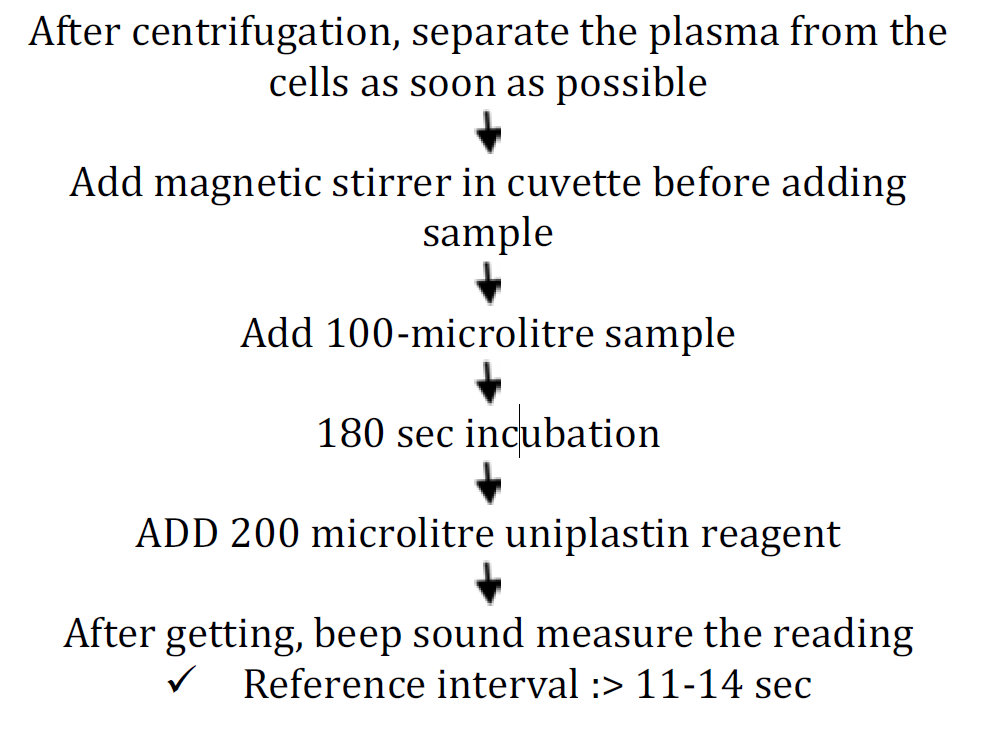
Prothrombin Time Determination
Principle: The calcium in whole blood is bound by sodium citrate thus preventing coagulation tissue thromboplastin to which calcium has been added is mixed with the plasma and the clotting time is noted.

Serum Calcium Determination
Principle: At acidic PH, the Ca ++ forms a complex with Arsenazo III, the colour intensity of which is directly proportional to the concentration of calcium in the sample.
Procedure

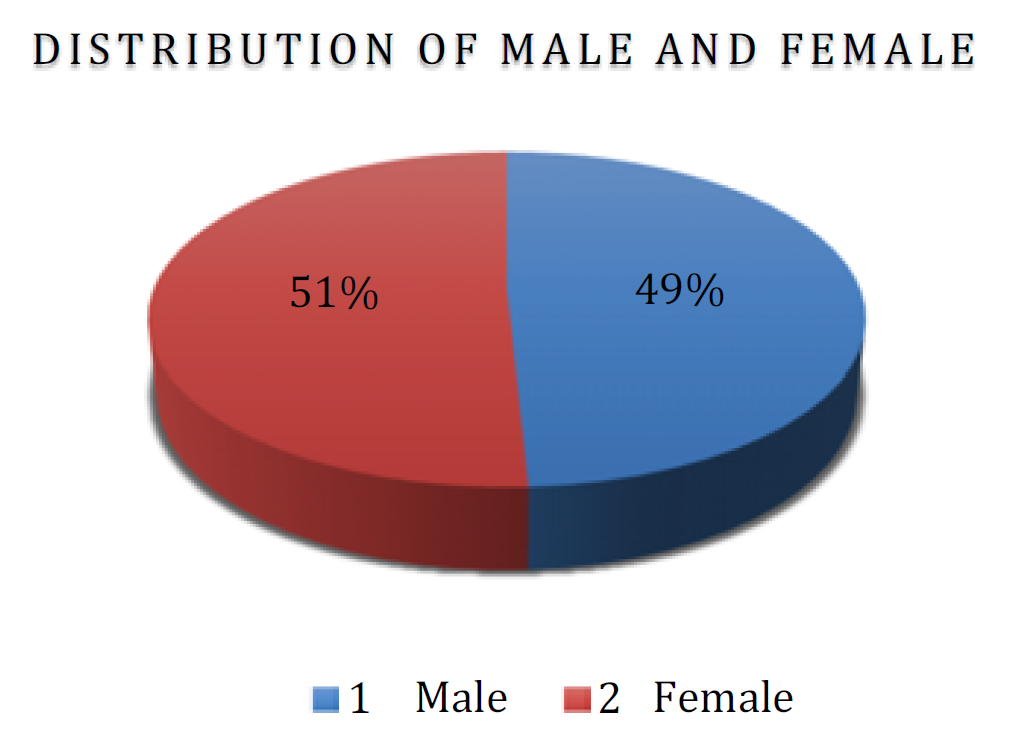
A total of 120 individuals were screened for prothrombin time, serum calcium the relation between the two parameters both in normal and abnormal variants.
Out of the 120 apparently (males 61 female sample, 59 male sample) patients of ACS Medical college
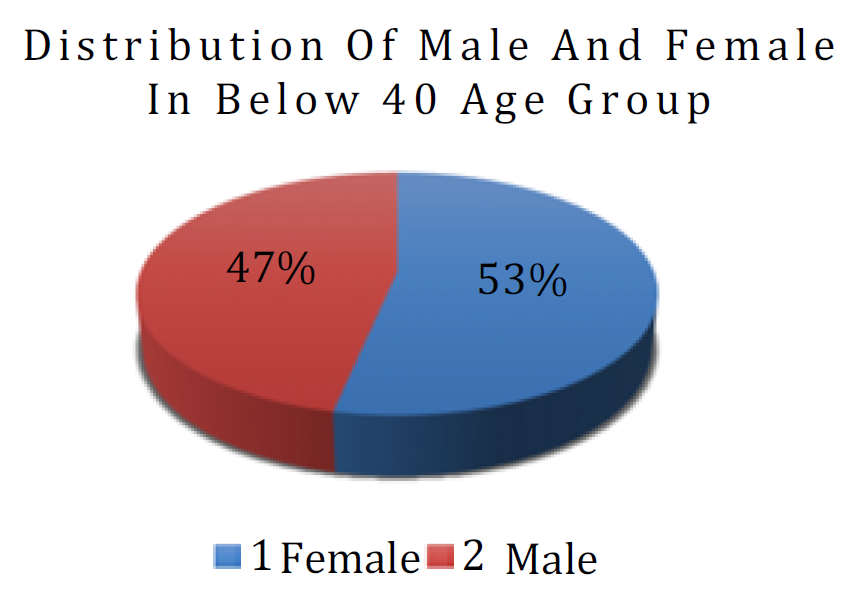
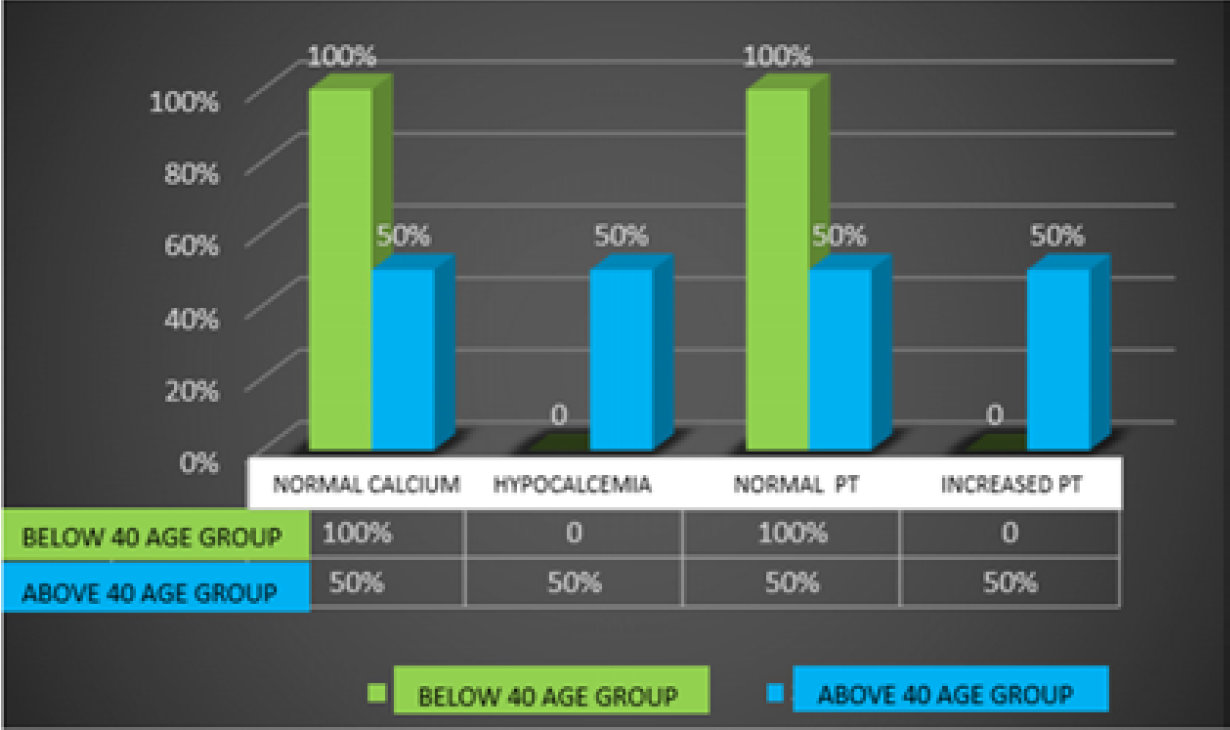
A total of 120 individuals were screened for prothrombin time, serum calcium the relation between the two parameters both in normal and abnormal variants. Out of 60 peoples included in below 40 age group, 60 people (100%) people had normal calcium and normal prothrombin time (Figure and Table 1-3).
Table 1: Gender Distribution of the Study Participants
| Gender | Frequency |
| Male | 49.2% |
| Female | 50.8% |
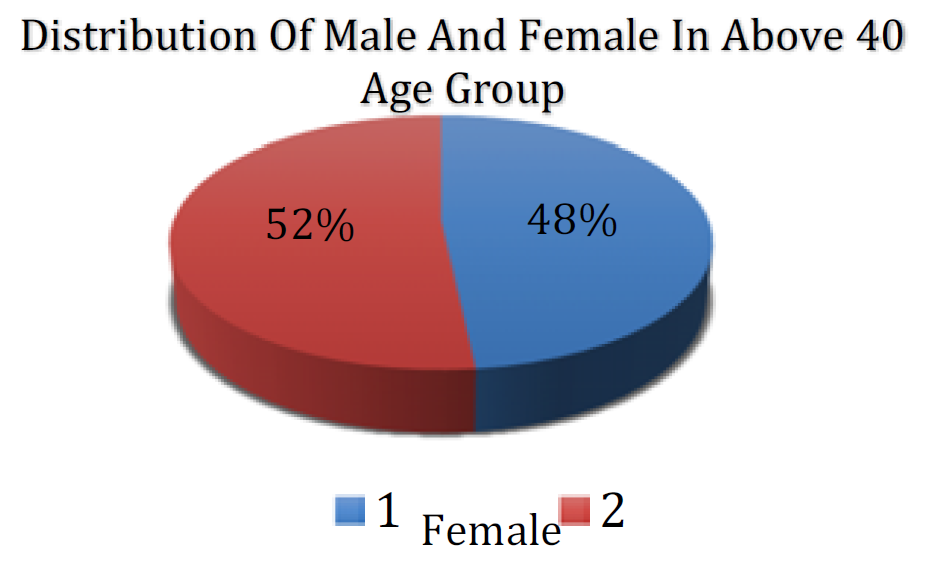
Table 2: Distribution of Participants by Age Group and Gende
Age Group | Female | Male |
Below 40 Age Group | 53.3% | 46.7% |
Above 40 Age Group | 48.3% | 51.7% |
Table 3: Distribution of Calcium and Prothrombin Time Based on Age Group
Age Group | Normal Calcium | Hypocalcemia | Normal Prothrombin Time | Increased Prothrombin Time |
Below 40 Age Group | 60 (100%) | 0 (Nil) | 60 (100%) | 0 (Nil) |
Above 40 Age Group | 30 (50%) | 30 (50%) | 30 (50%) | 30 (50%) |

Figure 1: Gender Distribution of Study Participants
Out of 60 peoples included in above 40 age group, 30 people (50%) people had normal calcium and normal prothrombin time and 30 (50 %) people had hypocalcemia and increased prothrombin time (Figure and Table 4).
Table 4:Mean and Standard Deviation Values of Calcium and Prothrombin Time in Below 40 Age Group
Parameters | Calcium (Mg/Dl) | Prothrombin Time (Seconds) |
Below 40 Age Group | Mean+Std | Mean+Std |
9.62+0.49 | 13.43+0.85 |

Figure 2: Below 40 Age Group

Figure 3: Above 40 Age Group

Figure 4: Calcium and PT Levels by Age Group
Above 40 age group tend to have low calcium levels than below 40 age group. When we compare the mean values of below and above 40 age group, we can say that average value of above 40 age group is low than that of below 40 age group which shows that calcium levels in the body decreases as age increases.We can see that when we compare the mean values of prothrombin time in above and below 40 age group, we can see that it is increasing as age increases(Table 5-7). 30 people out of 60 had hypocalcemia and increased prothrombin time and remaining 30 had normal calcium and prothrombin time.So when we correlate the abnormal values of calcium and prothrombin time in above 40 age group using Pearson’s correlation coefficient we get the p value as 0.03We correlated these and got the p value statistically significant.P value is significant if it is less than 0.05.
![]()
Table 5: Mean and Standard Deviation Values of Calcium and Prothrombin Time In Above 40 Age Group Having Normal Calcium and Normal Prothrombin Time

Table 6: Mean and Standard Deviation Values of Calcium and Prothrombin Time in Above 40 Age Group Having Hpocalcemia and Increased Prothrombin Time

Table 7: Correlation of Calcium and Prothrombin Time

This study has been carried out to determine the calcium values in patients, how it effects the coagulation time, how does age effect the calcium synthesis in our body. Calcium plays an important role in our human body,, ionised calcium is the most active form of calcium present in our body. So, if its level goes down then the prothrombin time rises since calcium is the IVth factor of coagulation of blood. Calcium and prothrombin time are inversely proportional to each other. Decrease in calcium value increases prothrombin time that is, blood takes more time for getting clot and more blood loss occurs. In this study 120 blood samples of study group (59 male, 61 female).and the blood samples were collected on haematological parameter prothrombin time and serum calcium for the study of serum calcium and prothrombin time in above and below 40 age group.Out of the 120 patients of ACS Medical college made up of 59 males (49.2%) and 61 females (50.8%) subjects. Below 40 age group had people 60(100%) who had normal calcium and prothrombin time. Above 40 age group had two groups of people one having normal calcium and prothrombin time and another having hypocalcemia and increased prothrombin time. 30 people (50%) having normal calcium and prothrombin time, 30 people (50%) having hypocalcemia and increased prothrombin time. Serum Calcium are prone to hypocalcemia and prothrombin is higher in above 40 age group than below 40 age group. There is a negative correlation between the calcium and prothrombin, if calcium is low in an individual then their prothrombin values are high.
The calcium value in above 40 age group was low and as compared to the below 40 group people. Significant association was seen in both the groups in above age group age group people .Ionised calcium is the most active form of calcium present in our body . So, if it’s level goes down then the prothrombin time rises since it is the coagulation factor .In above 40 age group with normal values we got p value as 0.043 . In above 40 age group with hypocalcemia and increased prothrombin values we got p value as 0.03 .Out of 120 patient samples, 60 in above 40age group and 60 in below 40 age group, we got 50% of the values as hypocalcemic and the same samples(50%) had increased prothrombin time. So from this we conclude our study that above 40 individuals have low calcium values than below 40 individuals. This leads to increase in coagulation time. Hence we can say that when calcium value decreases prothrombin time increases which causes more bleeding to occur since calcium is the fourth factor for coagulation.
Geleijnse, J.M. et al. “Dietary intake of menaquinone is associated with a reduced risk of coronary heart disease: The Rotterdam Study.” Journal of Nutrition, 2004.
Beulens, J.W.J. et al. “High dietary menaquinone intake is associated with reduced coronary calcification.” Atherosclerosis, vol. 203, 2008, pp. 489–493.
The price to pay for anticoagulation therapy with vitamin K-antagonists. Blood Reviews, vol. 26, pp. 155–166.
Luo, G. et al. “Spontaneous calcification of arteries and cartilage in mice lacking matrix GLA protein.” Nature, vol. 386, 1997, pp. 78–81.