Dairy farming remains a major source of livelihood to rural population in Kenya. Despite the growth and development in dairy sector over years, the level of milk production is low in Kandara Sub- County. This research aimed at determining the factors associated with low milk production among small scale farmers in the Sub- County. The research adopted a descriptive survey design to gather data from the sampled small-scaled dairy farmers. Stratified random sampling method was used to obtain a sample size of 90 dairy farmers from the target population of 1000 farmers in the Sub- County. A structured questionnaire was used to collect data. Data were analyzed by use of SPSS version 16.0 and summarized using descriptive statistics. Results showed that financial constraints were perceived to greatly affect milk production. Even though a majority (47.8%) of dairy farmers incurred expenses of more than Kshs 10,000, it is only 31.1% of the farmers who earn above Kshs 10,000 annually from the dairy enterprise. The study revealed that most of farmers (50%) depended on other farming business to support dairy farming. The level of milk production was also thought (50%) to have been affected by lack of adoption of appropriate management practices. The results also showed that many of the farmers (73.4%) had not adopted modern dairy technologies meant to boost milk production. However, majority (96.7%) of the farmers had adopted atleast one form of technology although in some there was observed low adoption due to the associated high cost. To boost milk production in the Sub- County, more farmer extension contacts are needed to allow dissemination and subsequent adoption of the technologies that could boost milk production. Extension agents need to link farmers to better milk market that can fetch farmers’ better prices. This would improve income generation and subsequently result in increased adoption of recommended management practices.
Keywords
Financial Constraint
Dairy Management Practices
Technological Changes
Small-Scale Dairy Farmers.
INTRODUCTION
Agriculture sector is a major contributor to the gross domestic product of a countries’ economy [1]. Globally agriculture supports a big percentage of people who earn a living from farming either directly or indirectly. Dairy sector is of importance to human life because milk from cows, sheep, goat and camel is nutritious for it contains 87% water, 4% milk fat, 4% lactose, 0.65% minerals, 3% minerals, 9% solids-not-fat and other substances like vitamin and enzymes in smaller amount. Goats were the first domesticated animals. Goat farming was first adopted in Western Asia from wild forms about 11000 to 10000 years ago. As domestication went on, cattle were among the earliest to be domesticated animals perhaps of their useful number of importance for they provide for example milk production, source of meat, pulling plough tractor. Currently they are reared mostly for milk production. Dairy industry is a major employer in the world and it is growing further as its demand is increasing at a higher rate due to increase in population to over 7.6 billion mark. Globally milk production in the world has increased with 32% whereas per capita has decreased by9%. This shows that milk production has been increasing at a much lower rate compared to the rate of population increase (Food and Agriculture Organization [2]. India is the first milk producing country in the world. India has outs paced the global milk production with an annual growth rate of 5.53% compared to 2.09% annual growth rate achieved globally. Milk production which was about 17-22 million tones in 1960s has increased to 163.7 million tones in 2016/17. In comparison with 2013/14 and 2016/17 there is a recorded increase of 19%.
In Africa, the highest four milk producing countries are Ethiopia, Kenya, South Africa and Sudan. Out of the four countries, Ethiopia has the largest number of dairy animals while South Africa has the highest milk producing level per cow [2]. Among the four countries only two that is Kenya and Ethiopia are self-sufficient, meaning daily production meet or exceed daily consumption. With Africa, two different dairy model exist; modern model and smallholder model. An example of modern model is what is practiced in South Africa. Small holder dairy farming is practiced in Kenya where 80% of dairy farms have less than five cows.
In Kenya dairy industry is the largest agricultural subsector, larger than coffee or tea. Dairy sector contributes 14% of GDP in agricultural sector and when combined to Kenya Good National Product (GNP) it produces 3.5%. Dairy farming is a major farm activity in Kenya where it is regarded as small scale and also large-scale sources of income incorporating over 1.8 million farm household. Most reared dairy breeds in Kenya include Zebu, Freshian, Ayrshire, Guernsey and Jersey. About 90% of milk produced is either sold through formal or informal channel. The informal market controls an estimate of 70%of total milk marketed in Kenya.
Dairy farming in Kenya is commonly practiced in highlands and this is mostly because of favorable agro climatic condition characterized by cool and humid climate. In these areas the agro pastoral system is predominant. Rift valley is the leading milk producer followed by Central province of Kenya. Central province is made up of the following counties: Kiambu, Murang’a, Kirinyaga, Nyeri and Nyandarua in where they all practice dairy farming.
Milk production in Murang’a County has registered 20-fold increase to 127,000 kilograms per day in two years. This has been brought up by the help of Murang’a County government’s intervention on milk or dairy sector. Murang’a County government in 2014/15 bought thirty-five milk coolers which were donated to dairy cooperatives. A guaranteed buying price of thirty-five shillings per liter of milk has been part of success of dairy sector in Murang’a County. This has attracted more farmers to join Murang’a county creameries (MCC).
Kandara Sub-county in Murang’a is where these extended organs of county government in dairy sector have been observed. There is introduction of more than one creamery in almost every ward for example Nga’araria, Ithiru, Muruka, Kagundu-ini, Ruchu and Gaichanjiru. This has a negative effect on the amount of milk that was sold to Kenya Creameries Cooperatives (KCC) before the year 2015 when MCC was introduced. Despite Kandara sub-county being on highlands part of Kenya as well as good support by county government on milk production there are still some challenges faced by farmers in the production of good quality milk. These challenges include climatic changes which affect milk production a great deal. This is because growth of fodder does well during period of heavy rain which leads to variation in milk production in a positive way. In case the rainfall distribution falls to low there is expected low milk production hence low output.
Holding climatic conditions constant there is still low milk production. These would have been caused by either technical, economic or institutional problems which could have led to low milk output in Kandara sub-county. According to (Ministry of Agriculture and Livestock Development [3] dairy sector in Kandara sub-county have not yet been fully developed and this is reflected by low milk production level per annum of about 521,800 liters. Therefore, since the main aim of every farmer is to maximize on output and minimize on production cost there was found a need to investigate on the factors affecting milk production by small scale farmers in Kandara sub – county so as at the end the farmers will be aware of this problems and know possible ways of solving them.
MATERIALS AND METHODS
Study Area
Kandara sub-county is located in the central part of Kenya, Muranga’a County. Kandara sub county boarders Kigumo Sub-county to the north, Thika Sub-county to the south, Gatanga Sub-county to the west and Maragua Sub-county to the east. Where the research was concentrated in Ruchu ward due to high number of different creameries i.e. KCC and MCC, favorable climatic conditions that allows quality fodder production and also suitability of the area to milk producing breeds [4].
The area has an estimated population of 36,000 households covering land area of 235.9 km2. The area annual average temperatures and precipitation are 18.9oC and 1,231mm respectively. Kandara Sub-county is characterized by a bimodal rainfall pattern. The long rains fall between the month of March and July and short rains between Octomber and December.
Instruments Reliability/Validity
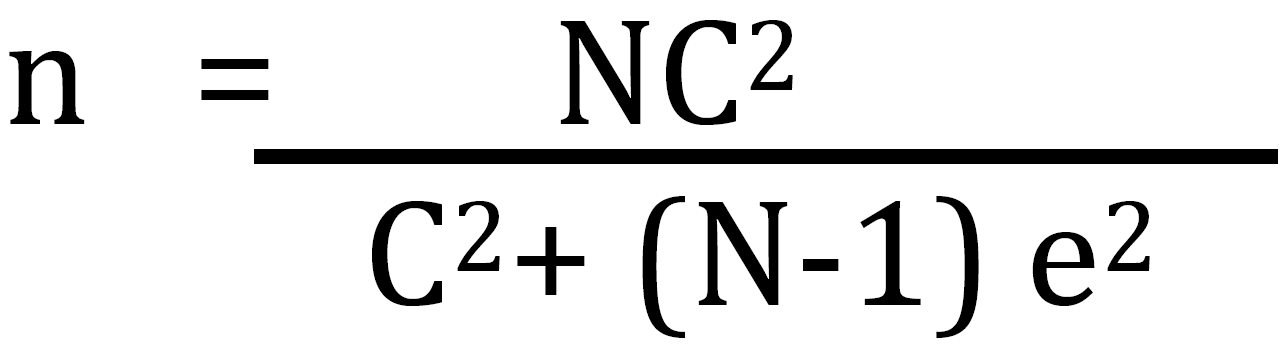
Study Design: The research design adopted in this study was descriptive survey design. A sample size of 90 respondents was selected from the three locations; Githumu, Gacharage and Gituru by use of stratified random sampling method. Small scale farmers were stratified on the basis of locations they came from. Sample size arrived at by use of Nassiuma’s 2000 formula.
n is the sample size
N is the target population (1000dairyfarmers)
C is coefficient of variation (0.5)
E is the level of precision (0.05)
(Nassiuma, 2000)
Data Collection
A structured questionnaire was used to collect data from the selected ninety respondents.
Data Analysis
The data was analyzed using statistical package for social sciences (SPSS) version 16 and descriptive statistics were used to present the analyzed data [5].
RESULTS AND DISCUSSION
Demographic Characteristics
The study engaged a total of 90 small scale dairy farmers where majority (n = 50 (55.6%)) were male and 40 (44.4%) were females. Based on the time they have spent in that exercise, 16.7% had been in for 1-5 years, 27.8% had been in for 6-10 years, 24.4% had been in for 11-15 years, 17.8% an experience of 16-20 years and 13.3% an experience of 21 years and above in dairy farming. This shows that majority (83.3%) of the farmers had adequate information to address research objectives as they were much familiar with challenges facing dairy farming. It was found that 57.8% respondents had 3-5 dairy cows and 36.7% had 1-2 dairy cows. It was further found that 67.8% dairy animals produce between eight liters of milk and below, 16.7% produces 9 to 11 liters of milk and 15.6% produces 12 liters of milk and above. This was a clear indication that milk production per cow was low therefore not enough for sale in order to cater for livestock need. This therefore formed the basis of our research in order to identify factors contributing to low milk production, find possible ways to solve this problem and as a result to increase milk production level [6].
Perceived Effect of Income on Milk Production
Dairy farmers’ finances were assessed based on their monthly income, expenses, other sources of finance to support dairy farming and the extent to which financial constrain affecting milk production.
It was found that majority 68.9% (n = 62) respondents earns Kshs 10,000 and below and 31.1% (28) earns Kshs 10,000 and above from dairy farming per month. Contrary it was found that majority 47.8% (n = 42) of the respondents incurs high expenses of above Kshs 10,000. This showed that most of the farmers operate under a loss hence no motivation towards dairy farming. Due to low income from dairy farming it was found that majority (50%) depends on other farming enterprises, 26.7% loans from banks, 13.3% from cooperatives and 10% from friends for finance to support dairy farming. A majority (82.2%; n = 74) of the respondents stated that financial constrain affect milk production a great extent. This implies that for success of dairy farming finance there has to be considered as a key factor.
Table1: Distribution of Farmers by Monthly Dairy Income and Credit Sources (N = 90)
Parameters
Frequency
Percentage
0 to 2500
2501 to 5000
5001 to 7500
7501 to 10000
Above 10000
9
19
18
16
28
10.0
21.1
20.0
17.8
31.1
0 to 2500
2501 to 5000
5001 to 7500
7501 to 10000
Above 10000
12
16
8
11
43
13.3
17.8
8.9
12.2
47.8
Loans from bank
Friends
Cooperatives
Other farming enterprise
24
9
12
45
26.7
10.0
13.3
50.0
Very low extent
low extent
Moderate extent
Great extent
Very great extent
1
2
13
55
19
1.1
2.2
14.4
61.1
21.1
Relationship between Dairy Management Practices and Milk Production Objective two sought to determine the relationship between adopted dairy management practices and milk production. Adoption of management practices was assessed using a four point like-type scaled items ranging from strongly agree to strongly disagree.
Results indicates that majority (98.9%) milks atleast two times a day as shown in Table 2, perhaps this could be as a result of favorable environment for dairy farming and also adoption of pure breed. The findings were in accordance with that more frequent milking times leads to an increase lying times due to reduced udder tension thus more milk is made and also chances of contracting disease are reduced.
Table 2: Number of times Respondents Milk Their Cows in Day
Milking Frequency
Frequency
Percentage
One
1
1.1
Two
76
84.4
Three
13
14.4
Total
90
100.0
Table 3 indicates that majority (81.1%) of the respondents agreed that nutrition management of dairy animal affect milk production therefore feeds fed to dairy animals should be of nutrition value and well balanced. They assumed that for a dairy animal to be in a general healthy condition for optimal milk production they need to be fed with products of suitable quality and safety at chosen intervals and provide them with clean water. This concurs with [1] findings that proper nutrition is critical to enable modern, high producing dairy cows to meet their genetic potential for milk production. Result also indicates that majority (88.9%) of the respondent agreed that dairy health management affect milk production and perhaps dairy farmer should employ a regular checkup of the dairy animal to prevent spread of diseases and maintain a good health for the animal so as to maintain high milk production level. This concur with Wanjohi findings that health management practices affect milk production and small-scale dairy farmers should always and continually makes improvements on animal nutrition, beddings, shed management and timely delivery of feeds for this will maintain good healthy condition of an animal. Table 3 also shows that majority (70%) of respondents agreed that financial management affects milk production. As a result, it is assumed that good financial management helps farmer to make decision on whether to borrow fund or utilize his equity in order to reach the required practices on his farm. This concurs with Gloy that financial management should be employed in a farm for it one to determine activities to be carried out in a farm. As indicated in table 3, majority (78.9%) of respondent agreed that shed management practices affect milk production. Perhaps this could be as a result of high experience respondent had in dairy farming thus may have adopted different kinds of shed structure and were able to tell the difference. The findings are also in line with those of Njunguna who found that clean dairy shed provides comfort to the animal and controls environmental diseases which affect animal’s wellbeing.
Results in Table 3 also indicates that majority of the respondent (73.4%) agreed that dairy management practices adopted by respondent on his farm affected milk production at a great extent level. This was associated with high experience level respondents has in dairy farming thus they were able to adopt improved management practices and they could clearly tell how this management practices affected milk production.
Effect of Technological Changes on Milk Production to obtain these information respondents were asked to answer questions on; type of breed they rear, breeding method used, milking method adopted, method used in preparing fodder and the extent to which farmers find the adopted technology affecting milk production.
Table 3: Agreement Level on Effect of Management Practices on Milk Production
Variable
Parameter
Frequency
Valid Percent
Nutrient Management
Disagree
Neutral
Agree
1
16
73
-
17.8
81.1
Health Management
Disagree
Neutral
Agree
1
9
80
1.1
10.0
88.9
Shed Management
Disagree
Neutral
Agree
5
14
71
5.5
15.6
78.9
Financial management
Disagree
Neutral
Agree
11
16
63
12.2
17.8
70
As shown in Table 4 below, 96.7% (n = 87) had adopted at least one form of technology, this indicated that information dairy farmers held was adequate enough to address this objective. As indicated in Table 5, majority 94.4% (n = 84) of the respondent rears pure breed where this ought to be reflected in milk production since pure breeds are said to be more productive than crosses. Perhaps this high adoption in pure breeds is due to associated likely transmitted diseases through natural mating. This concurs with Muriuki findings that in his study the dairy breed was mainly composed of Fresian, Ayrshire, Gurneys and Jersey which made up over 50% of the total herd. As shown in Table 5, 8.9% of the respondent rears Jersey, 5.6% rears zebu, 6.7% rears Guernsey and 66.7% rears Freshian breed.
Table 4: Adoption Rate of Dairy Technology by Respondent
Adoption Any Form of Technology
Frequency
Valid Percent
No
3
3.3
Yes
87
96.7
Total
90
100.0
Results showed that 94.4% (n = 85) of the respondents uses artificial insemination method of breeding. Perhaps this could be as a result of high cost of up keep of a bull to ensure efficient natural insemination. These results support the fact that most of the dairy breed in the area are pure breeds and therefore side effects brought about by inbreeding method are minimized. The results contradict those of Bebe who reported that the most common way of mating among small scale farmers is by use of natural insemination method which leads to inbreeding of dairy animals. According to Madalena finding natural mating affects milk production in a negative way simply because it usually reduces reproduction efficiency and also leading to expression of undesirable traits.
The results indicated that 95.6% of the respondents use hand milking method. Perhaps low adoption of AMS has been brought about by high cost of AMS machine as well as high maintenance cost such that farmers cannot afford due to low-income level. Some farmers were not aware of the AMS machine while others lacked adequate information and this contributed to low adoption process. This agrees with Bisstar finding that on his study there was low adoption of AMS which was associated with high cost compared to income from dairy farming.
Table 5: Adopted Technological Changes in Dairy sector
Variable
Parameter
Frequency
Percent
Type of Breed Reared
Jersey
Zebu
Guernsey
Ayrshire
Freshian
8
5
-
6
11
60
8.9
5.6
6.7
12.2
66.7
-
Breeding Method Used
Artificial insemination
Natural mating
85
5
94.4
5.6
Milking Method
AMS method
Hand milking
4
86
4.4
95.6
Tool Used in Preparing Fodder
Chaff cutter
Panga
59
31
65.6
34.4
Extent to Which Adopted Technology Affect Milk Production
Low extent
Moderate extent
Great extent
10
10
67
11.5
11.5
77.5
Result shows that the majority (65.6%) of the respondent uses chaff cutter in preparing fodder for their dairy animals. Perhaps this attributed by during the wet season fodder production in this area is high thus more farmers are motivated to make silage where they require chaff cutter to slice fodder for efficient storage. Those whom uses chaff cutter in fodder preparation argued that fodder is sliced into small pieces that makes it possible for feed mixing making the method more effective. This concurs with Misra that most of the respondents on his study used chaff cutter to prepare fodder for their animals.
74.4% of the respondents argued that adoption of technology in dairy farm has helped to increase milk level for example introduction of nutritious feeds i.e. dairy meal, introduction of vaccines has helped to prevent dairy animals from diseases and introduction of AI method has also helped to improve dairy breeds. This concurs with Svenson findings that there is a notable potential of change for this technology have brought about for example improvement of animal health which in turn brings about increase in milk production level of dairy animals for these tools are able to identify animal needing attention immediately it is recognized compared to that which is impossible to human observation.
Respondent Opinion on How Milk Production Level Can Be Improved in this Region
Table 6 below shows opinion by dairy farmers on how dairy farming can be improved in Kandara. The four options were found to be dominant during the pilot study.
The results in Table above shows majority (58.9%) of the respondent opted for an improvement on extension services that farmers will be trained more about dairy farming. Lack of proper training facilities for extension officers has increased the gap between farmers’ production return and the livelihood of farmers. According to South Africa Journal of Agricultural Extension agricultural extension can be viewed as transfer of knowledge, science and technologies from laboratories to farmers in order to assist them with farm planning, decision making, record keeping, the use of inputs, storage, processing and marketing, ensuring supplies and services, increasing production, capacity building and improving their occupation, family livelihood and community lives.
Table 6: Ways in Which Milk Production Level Can Be Improved
Opinions
Frequency
Percent
Improvement on extension services
53
58.9
Improve on security
17
18.9
Improvement on infrastructure
6
6.7
Provision of electricity
14
15.6
Total
90
100.0
CONCLUSION
The level of dairy production is low in Kandara Subcounty as many farmers generate below Kshs 10,000 a month from the sale of dairy products. This may be attributed to an increase on other farming business to cater for these high expenses. This low income may have resulted to financial constrain among dairy farmers which have led to low milk production.The study found that management practices were found to affect milk production a great extent. Therefore, every dairy farmer should ensure he adopts recommended management practices in dairy farming i.e. nutrient, health, shed and financial management practices. This will increase the dairy animal’s welfare hence increase milk production level in return.
The study found that technology changes in dairy sector affects milk production a great extent. For example, use of AI breeding method usually leads to improvement of dairy breed to those of high milk production. Although despite the existence of technological changes in dairy sector the adoption rate in some changes were reported to be very low i.e. adoption of AMS which was associated with low income from dairy farming.
The study concluded that extension services were insufficient amongst small scale dairy farmers in Kandara sub-county which was indicated by high demand for provision of extension services (58.9% of the respondents) to dairy farmers.
Conflict of Interest
The authors have not declared any conflict of interests.
REFERENCE
Muriuki, H.G. Dairy Development in Kenya. Food and Agriculture Organization of the United Nations, 2011.
Food and Agriculture Organization. FAOSTAT. 2006, http://faostat.fao.org.
Ministry of Livestock Development. Session Paper No. 2 of 2013 on National Livestock Policy. Nairobi, 2013.
Bebe, B.O. et al. “Smallholder dairy systems in the Kenya highlands: Breed preferences and breeding practices.” Livestock Production Science, vol. 82, 2003, pp. 117–127.
Boz, I. et al. “Adoption of innovation and best management practices among dairy farmers in the east mediterranean region of Turkey.” Journal of Animal and Veterinary Advances, vol. 10, no. 2, 2011, pp. 251–261.
Butler, W.R. “Nutritional interactions with reproductive performance in dairy cattle.” Animal Reproduction Science, vols. 60–61, 2000, pp. 449–457.
Recommended Articles
Research Article
Strategy of Cocoa Commodity Based Agrowisata Development in Jembrana Regency
I Gusti Ayu Widari Upadani,
...
Luh Putu Kirana Pratiwi
Published: 30/01/2021
Download PDF
Research Article
Survey on the pollutants effect of some physicals and chemicals characteristics of the White Nile River around Khartoum state in the Sudan
Zeinb E. Elamean,
...
Egbal Osman Ahmed
Published: 20/01/2021
Download PDF
Research Article
Effecting of Hormonal Gonads (Test, Lh, Pro) and Dopamine on Transitional Nuclear Protein /1 Gene Frequency in an Infertile-Men
Taleb K. Odah
Published: 18/09/2023
Download PDF
Research Article
The study on priciple of herd health maagement assesment of Jimma University college of Agriculture And Veterinary Medicine dairy farm
Samson tesfaye,
...
Feyera Gemeda
Published: 01/04/2023
Download PDF
PO Box 101, Nakuru
Kenya.
Email: office@iarconsortium.org
Editorial Office:
J.L Bhavan, Near Radison Blu Hotel,
Jalukbari, Guwahati-India
Odilla, G. A., Usagi, M. B. & Kamau, B. W. (2020). Perceived Determinants of Milk Production among Small Scale Farmers in Kandara Sub-county, Kenya. IAR Journal of Agriculture Research and Life Sciences, 1(2), 1-6.
MLA
Odilla, Gilbert A., Maryanne B. Usagi and Beth W. Kamau. "Perceived Determinants of Milk Production among Small Scale Farmers in Kandara Sub-county, Kenya." IAR Journal of Agriculture Research and Life Sciences 1.2 (2020): 1-6.
Chicago
Odilla, Gilbert A., Maryanne B. Usagi and Beth W. Kamau. "Perceived Determinants of Milk Production among Small Scale Farmers in Kandara Sub-county, Kenya." IAR Journal of Agriculture Research and Life Sciences 1, no. 2 (2020): 1-6.
Harvard
Odilla, G. A., Usagi, M. B. and Kamau, B. W. (2020) 'Perceived Determinants of Milk Production among Small Scale Farmers in Kandara Sub-county, Kenya' IAR Journal of Agriculture Research and Life Sciences 1(2), pp. 1-6.
Vancouver
Odilla GA, Usagi MB, Kamau BW. Perceived Determinants of Milk Production among Small Scale Farmers in Kandara Sub-county, Kenya. IAR Journal of Agriculture Research and Life Sciences. 2020 Jul;1(2):1-6.


 Download PDF
 Download XML