This study was applied in the Fadak palm project. It is located northwest of Karbala Province, Iraq. The aim of study was to calculate the soil organic carbon stock (SOCstock) using the Food and Agriculture Organization equation [1]. Also, to evaluate the state of change in vegetation cover based on the Normalized Difference Vegetation Index (NDVI). The 30 soil samples were taken from the study site. Some general soil characteristics were estimated based on common laboratory analysis methods for soil depth 0-30 cm. The results showed that there is a noticeable variation in the stock of organic carbon in desert soil under the effects of vegetation cover, land use and the temporal changes to which the amounts of organic carbon stock are exposed under the agricultural management method. It was led to the accumulation of organic waste through the variation and difference in soil characteristics and the impact of agricultural practices. The results estimated that there was a significant effect on the content of the organic carbon stock in these lands. These results indicated that the lowest organic carbon stock values were recorded 7.18-31.56 tons/ha⁻1 in the sample sites (2, 3, 4, 10, 11, 12, 13, 17, 18, 19, 20, 21, 23, 24, 25, 26, 27, 28, 29, 30), respectively. The highest value was 32.13-57.66 tons/ha⁻1 at sites (1, 6, 7, 8, 9, 14, 15, 16, 22), respectively. A high significant value was found in palm cultivation sites and its values were recorded at 57.66, 56.76, 51.90 tons/ha⁻1, respectively, for the site (8, 9, 22).
Keywords
Organic Carbon Stocks
Natural Variation
Organic Carbon
Sustainable Management
Palm
INTRODUCTION
Location of the soil organic carbon stock (SOCstock) is an important component of soil in agricultural systems. It plays a major role in terrestrial ecosystems and enhancing them in the soil. It is also an indicator of maintaining soil quality as it contains a high stock of organic carbon. The crop is within the ecosystem and within the limits of land use. It is in order to maintain and improve water and air quality, provide nutrients and its ability to withstand and resist drought to environmental disturbances. Therefore, the effect of improving Soil Organic Matter (SOM) has led to an increase in yield by up to 10% in sandy soils and up to 6% in mixed soils [2]. Meersmans et al. [3], Smith et al. [4] have found that carbon stocks closer to the soil surface respond more strongly to disturbance than carbon below 30 cm depth. It is change within decades through changes in land use and management as well as other determinants carbon stock as soil depth. The results of studies showed that forest lands record a carbon content of 98 tons/ha⁻1, compared to agricultural lands that was 36.6 tons/ha⁻1 and barren lands was 83 tons/ha⁻1. It was also found that the Bulk Density (BD) is lower in forest soils compared to other lands at all depths, which showed a negative correlation with the soil organic carbon stock (SOCstock) [5].
The increase in organic waste inputs that fall on the soil from plant biomass (leaf and plant waste) compared to land uses showed that the stock value of organic carbon in forest lands was 75±11.1 mgcha⁻1. As for agricultural lands, it was 58±7.0 mgcha⁻1 and a barren land was 44±6.5 mgcha⁻1 [6]. The differences in the stock of organic carbon in the soil are closely related to the type of vegetation cover and the high bulk density of the soil. Understanding soil quality means evaluating and managing soil so that it grows optimally now and does not deteriorate for future use because of its profound impact on the health and productivity of a given environment and its associated environments. Palm trees are considered the cornerstone of providing services to the ecosystem. It saves approximately 40 tons/ha⁻1/carbon and increasing sustainability methods for these trees (palms) has contributed to creating economic benefits and contributing to carbon storage compared to planting them in low-productivity areas or on degraded lands [7].
Sustainable management methods are one of the most important managing the organic carbon in the soil, which creates carbon stocks in a positive way through servicing agriculture, integrated and diversified cropping systems. The use of organic amendments that restore soil functions, which is an appropriate indicator of soil health affecting the physical, chemical, biological and environmental properties of the soil [8]. When compared to traditional management techniques, soil management practices can transfer net carbon (C) from the atmosphere to the ground [9]. As for afforestation and converting arable land to agriculture, the amount of organic carbon may decrease with age and with the passage of time. Therefore, the rates of improving soil management are the most efficient after restoring degraded lands or radical management of the soil due to human movement in the soil and the accumulation of carbon in the soil [10].
The Studies have confirmed that achieving the best carbon sequestration in the soil under best management practices is 4 per mile and can reach 10 per mile for the initial SOCstock (topsoil less than 30 tons/ha) in the first twenty years after implementing best management practices [11]. The estimation of SOC in the desert environment depends on the chronological age. The stock of organic carbon in the soil decreases repeatedly with age in those lands. The increase in its stock depends on the amount of carbon input and deep soil horizons that contribute to improving and protecting SOC against decomposition. Sustainable land management is the solution to carbon sequestration and food security. Sustainable Land Management (SLM) can lead to increased productivity by improving water use efficiency, improving nutrient cycling and supply for crop production, in addition to enhancing vegetation cover and improving food security.
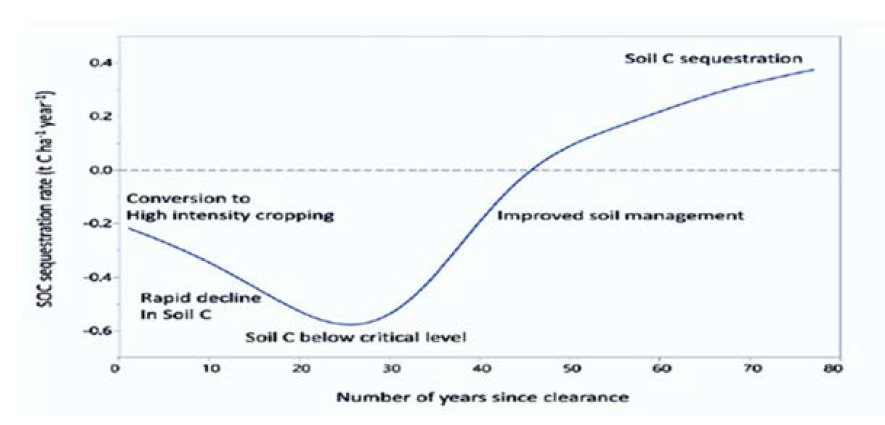
Healthy soil produces healthy food, supports healthy living and promotes a healthy environment [12]. The main soil management systems include planting palm and increasing their stocks as a result of increased inputs or decreased outputs. Therefore, perennial plants not only produce more plant residues than annuals, but they have additional potential, including date palm inputs from management interventions such as pruning and keeping waste (garbage) on site and the stock of organic carbon produced by the root through the root secretion of carbon from root exudates [13]. Figure 1 shows a phase of rapid decrease in the proportion of carbon in the soil to a critical level, followed by a critical phase of decrease in soil fertility with an increase in the number of years in service. Finally, through the use of agricultural practices (improving soil management), an increase in organic carbon sequestration in soil occurs soil [14].
The larger roots of planted perennial crops (vegetation cover) create increased root exudates, soil microbial interaction and more soil carbon capture when this occurs over a period of approximately more than 5 years [15]. Date palm species are a good alternative to CS in arid desert ecosystems because they require minimal life supplies and tolerate harsh growing conditions, high temperatures, drought and high salinity levels and are among the most salt tolerant fruit crops [16].
Studies have shown that the 20-year period, which included a change from annual crops to perennial crops, brought about an average increase of 20% in the SOC at a depth of 0-30 cm and a total increase of 10% at a depth of 0-100 cm at the soil level. The results showed that the increase in these percentages was a result of the accumulation of SOC for perennial crops over time, especially for woody crops. It was noted that the difference occurring in the dynamics of organic carbon stocks in the soil depends on temperature, which had a major role in these differences depending on the age of the crop, the bulk density of the soil and the clay content and soil depth [17].
Figure 1: Organic Carbon Sequestration Rate after Converting Vegetation to Agriculture with a High Density of Vegetation (Crops)
A State of Deterioration and Positive Sequestration after Improving the Soil [14]
MATERIALS AND METHODS
The Study Area
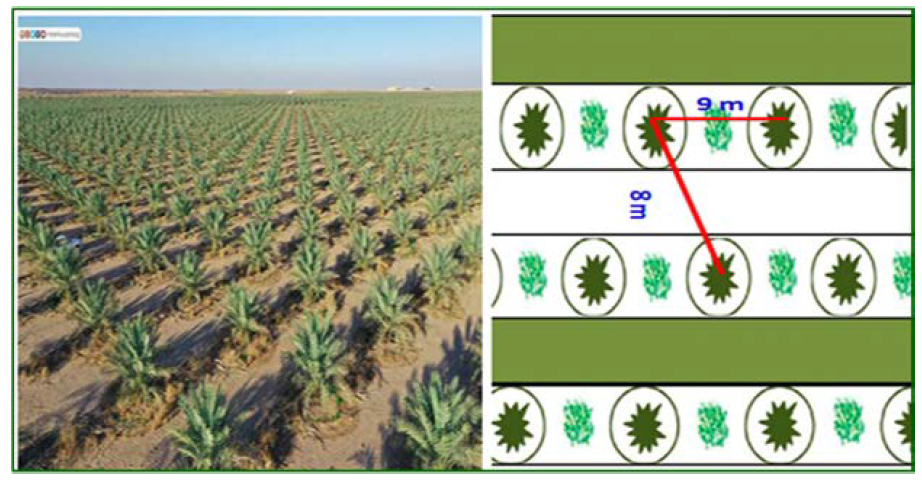
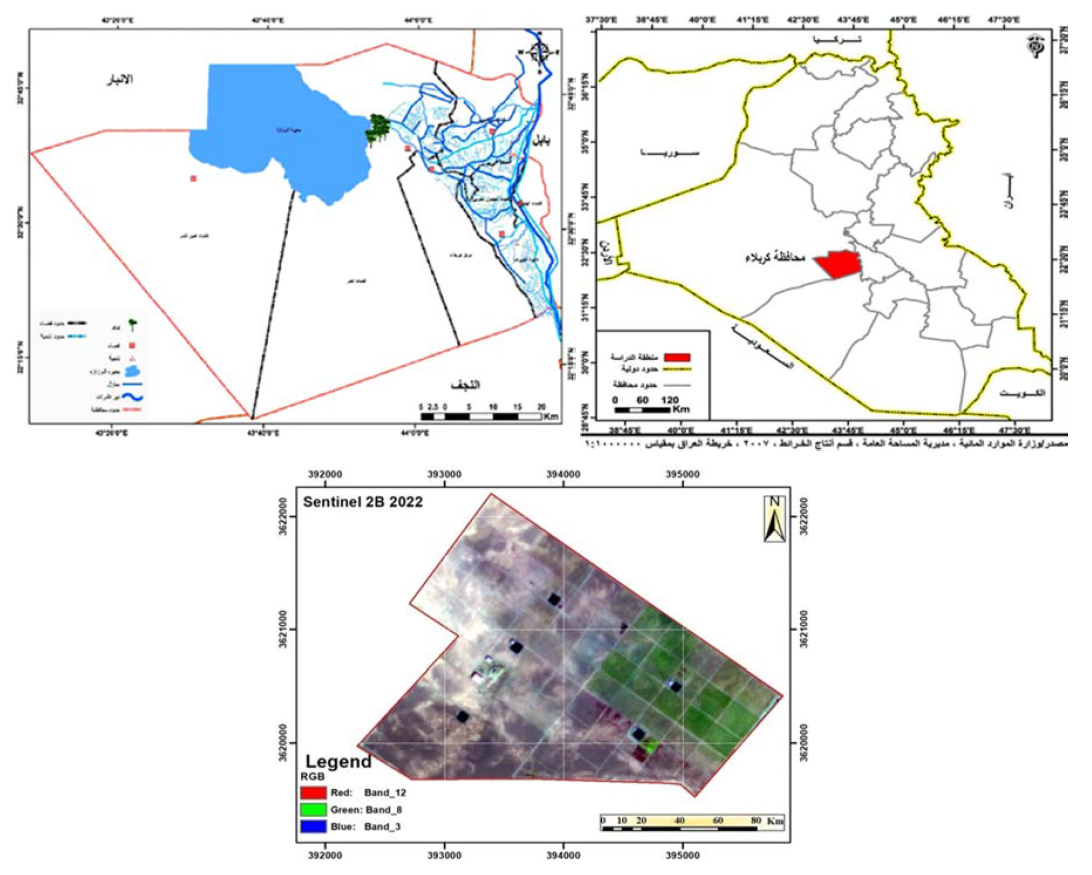
The study site was chosen in the Fadak palm project, located within the geographic coordinates 43°51'53ʺ E2 32°40'15ʺ N2 42°55'53ʺ E1 32°42'26ʺ N1 within the borders of Karbala Province, Iraq. The site is located northwest of the city of Karbala, near Al-Razzaza Lake, 20 km from the center and the north of Anbar Province, to the south, District 61/Karbala Island and to the east, District 11, Kamaliya/Karbala, to the west, Al-Razzaza Lake. The project began in 2016, with an area of 500 ha. Palm trees were planted on the site in a triangular (Figure 2) with a distance of 8×9 m to facilitate systematic management and the conduct of various activities widely in the study area.
Figure 2: Date Palm Cultivation Area
This area was cultivated in stages using all agricultural practices (integrated management), especially the use of organic waste (fronds, organic waste and fertilizer) and inorganic fertilizers, in addition to pruning and stacking fronds in piles placed under the influence of sustainable management for a period of 6 years.
Entering and analyzing the quantitative data used and determining the satellite visualization of the study area as follow:
Descriptive data were obtained from a field survey of the two study sites
Download satellite visuals from the World Wide Web, available on the official website of the US Geological Survey (USGS) of the study area, captured by the European satellite (Sentinel-2) with a spatial resolution of 10×10 m, with the TIFF extension of the sensor (Multi-Spectral Instrument) from The European Space Agency (ESA) website, taken for the year 2022 according to the UTM WGS 1984 coordinate system (Figure 3)
Figure 3: Satellite Visualization of the Fadak Palm Farm Project, Study Area for the 2022
The satellite visuals were processed and analyzed and the value of the spectral evidence was extracted through the QG1S3.16 program. The appropriate combination was chosen to determine the land covers of the study area
A vector file representing the administrative boundaries of the study site in Karbala Province was drawn and exported using the geographic information system program ArcGIS V10.8
The visual was extracted to produce a map representing the study area using the Extract by mask tool according to the Arc GIS V10.8 program
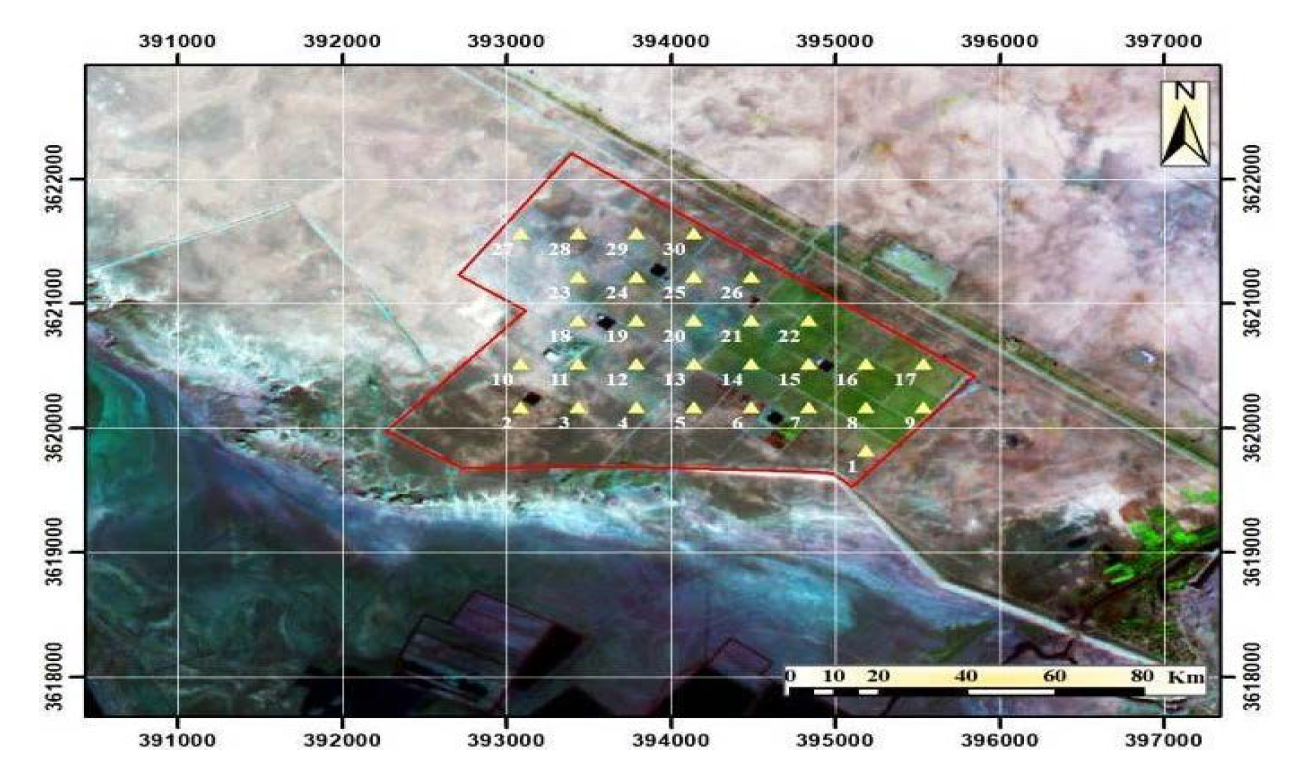
Determine the survey method by gridding the area into (30 points) using a GPS device with the global coordinate system according to the UTM coordinate system
Soil samples were taken for the site of the study area (Fadak palm), with an area of 2000 (500) ha at a depth of 0-30 cm (Figure 4).
Figure 4: Map and Satellite Showing the Study Points and Soil Sampling Locations
The soil texture was analyzed using a hydrometer and the bulk density was determined using the cylinder method. The bulk density was determined by the metal cylinder method (Core sample) as described by (Black and Hartge), while the organic matter was calculated by the wet oxidation method and according to (Walkely and Black) that described by (Jackson)
Calculating soil organic carbon stocks as mentioned in FAO [1]:
SOCstock (t.ha⁻1) = SOC (%)*d(cm)*BD (gcm⁻3)
(1)
Where:
SOCstock = Organic carbon stock
SOC = Soil organic carbon concentration
d = Thickness of the soil layer
BD = Bulk density
CFst (the correction factor for sifting soil samples with a sieve (2 mm) was neglected to get rid of gravel and stones) = correction factor for stone (-1%), including subtracting gravel and stones (Table 1).
Table 1: Calculating Organic Carbon Stocks from Field at Fadak Palm for the 2022
Code No.
X,Y meters*
Depth (cm)
Bulk density (g.cm⁻3)
OC (%)
SOCSTOCK (t.ha⁻1)
S1
395186.75
3619816.14
0-30
1.71
0.79
40.53
S2
393086.75
3620166.14
0-30
1.72
0.32
16.51
S3
393436.75
3620166.14
0-30
1.70
0.32
16.32
S4
393786.75
3620166.14
0-30
1.72
0.37
19.09
S5
394136.75
3620166.14
0-30
1.71
0.36
18.47
S6
394486.75
3620166.14
0-30
1.70
0.63
32.13
S7
394836.75
3620166.14
0-30
1.67
0.84
42.08
S8
395186.75
3620166.14
0-30
1.55
1.24
57.66
S9
395536.75
3620166.14
0-30
1.72
1.10
56.76
S10
393086.75
3620516.14
0-30
1.71
0.37
18.98
S11
393436.75
3620516.14
0-30
1.69
0.16
8.11
S12
393786.75
3620516.14
0-30
1.68
0.31
15.62
S13
394136.75
3620516.14
0-30
1.73
0.19
9.86
S14
394486.75
3620516.14
0-30
1.69
0.70
35.49
S15
394836.75
3620516.14
0-30
1.67
0.69
34.57
S16
395186.75
3620516.14
0-30
1.73
0.72
37.37
S17
395536.75
3620516.14
0-30
1.69
0.56
28.39
S18
393436.75
3620866.14
0-30
1.71
0.14
7.18
S19
393786.75
3620866.14
0-30
1.68
0.23
11.59
S20
394136.75
3620866.14
0-30
1.68
0.45
22.68
S21
394486.75
3620866.14
0-30
1.53
0.26
11.93
S22
394836.75
3620866.14
0-30
1.73
1.00
51.90
S23
393436.75
3621216.14
0-30
1.71
0.41
21.03
S24
393786.75
3621216.14
0-30
1.71
0.39
20.01
S25
394136.75
3621216.14
0-30
1.71
0.45
23.09
S26
394486.75
3621216.14
0-30
1.67
0.63
31.56
S27
393086.75
3621566.14
0-30
1.71
0.43
22.06
S28
393436.75
3621566.14
0-30
1.58
0.30
14.22
S29
393786.75
3621566.14
30-0
1.65
0.46
22.77
S30
394136.75
3621566.14
30-0
1.66
0.56
27.89
*World coordinate system according to the coordinate system WGS- 1984-UTM -Zone-38N Transverse Mercator UTM
The Use of the Software
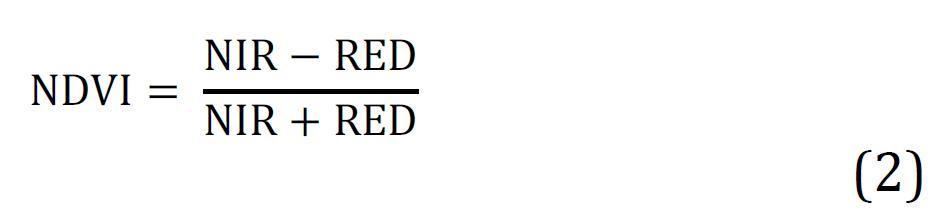
The geographic information systems program (ArcGIS V10.8) was used. The field survey data was linked using the Quantum GIS program. One of the most important open source geographic information systems programs, in correcting reflectivity values for satellite visuals 2-Sentinel. The values of the vegetation index (NDVI) were calculated, which is among the most common spectral vegetation indicators for monitoring vegetation cover, assessing crop cover and monitoring drought. It is a simple and effective standard indicator for indicating the vegetation cover of the soil surface and the state of crop growth in the field of remote sensing [18]. It is calculated from the ratio of the difference between the canopy’s reflectance of Near-Infrared Rays (NIR) and infrared rays (Red Radiation), respectively and the changes that occur in vegetation over time. NDVI values range (-1 and +1) [19] (Table 2).
Table 2: NDVI Categories and Ranges
No
Code
Categories
Ranges
1
C1
Water
-0.028-0
2
C2
No Veg. area
0.01-0.13
3
C3
Low
0.14-0.19
4
C4
Moderate
0.2-0.27
5
C5
High
0.28-0.36
6
C6
Very High
0.37-0.76
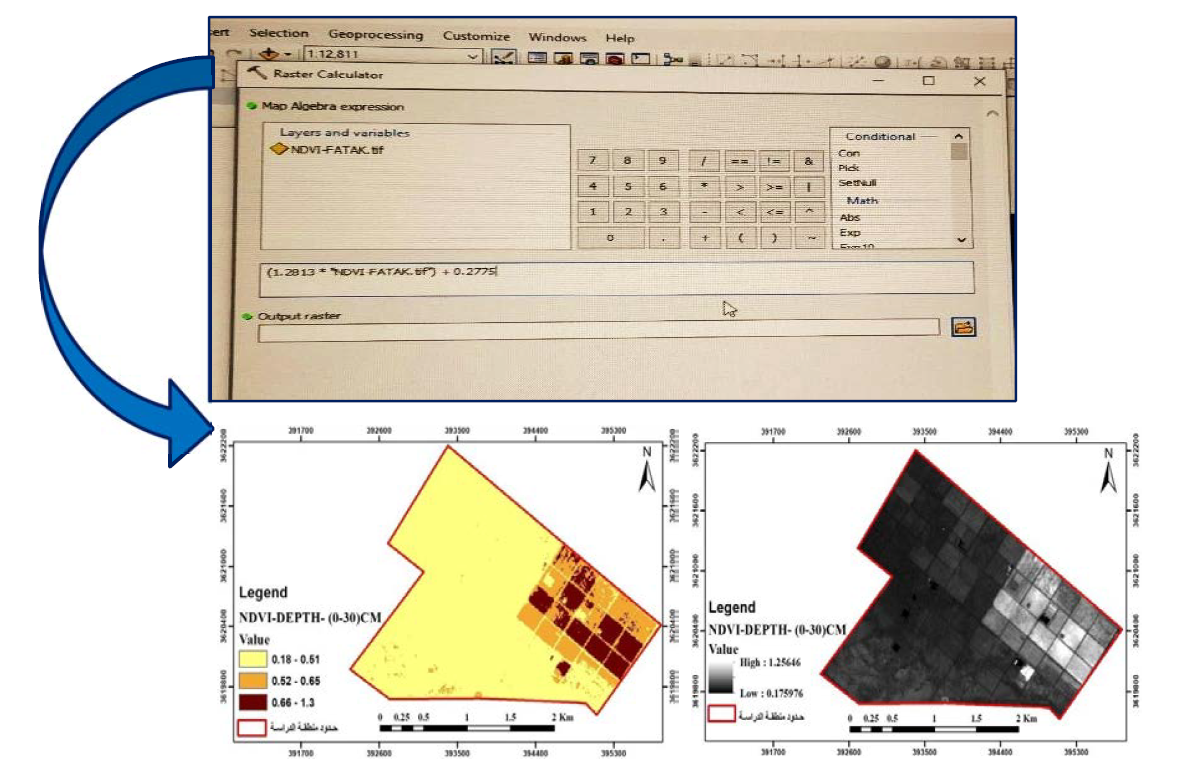
Using the Raster calculator, which is located within Raster Tools, this tool calculates the spectral reflectivity of the selected spectral wavelengths within the set of wavelengths made available by satellite visualization, which gives a mathematical relationship to calculate the spatial relationship of organic carbon and NDVI spectral index values for the study area (Figure 5, 6).
Statistical Analysis
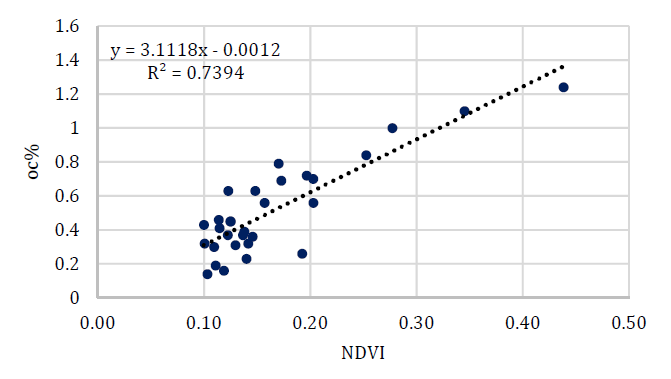
Simple linear regression coefficient has been used to find the relationship between organic carbon and the Normalized Difference Vegetation Index (NDVI) for the sample sites of the study area within the (SPSS) 21 program.
Figure 5: The Relationship Between Organic Carbon and the NDVI Index in the Fadak Palm farm for 2022
Figure 6: The Relationship Between Organic Carbon and the NDVI Index under the Influence of the Simple Regression Equation at a Depth of 0-30 cm in the Fadak Palm Farm for 2022
RESULTS AND DISCUSSION
The results of applying the equation for calculating the stock of primary organic carbon and its components in the soil of the study area showed the presence of variation and difference in the content of organic carbon as a result of the difference in the general properties of the soil due to the presence of vegetation (palm trees) and environmentally sustainable agriculture. It is linked to the return of crop residues (cutting the remains, combining and burying) and long-term use. This is for the purpose of making improvements to increase the soil's ability to store organic carbon [20]. The values of the soil organic carbon stock (SOCstock) ranged in Table 1, with the lowest value showing between 7.18-31.56 tons/ha⁻1 in the study sample sites for values 7.18, 8.11, 9.86, 11.59, 11.93, 14.22, 15.62, 16.32, 16.51, 18.47, 18.98, 19.09, 20.01, 21.03, 22.06, 22.68, 22.77, 23.09, 27.89, 28.39, 31.56 tons/ha⁻1. The highest value was 32.13-57.66 tons/ha⁻1 for the sampling site 32.13, 34.57, 35.49, 37.37, 40.53, 42.08, 51.90, 56.76, 57.66 tons /ha⁻1.
The highest values was at the sample sites (8, 21, 28) and the difference and variance occurring in the values of organic carbon stocks may be due to the amount of plant residues added to the soil in sites close to palm trees, as well as the amounts of organic fertilizers added, in addition to the nature of the source material and its use. These values varied from one soil to another.
This is agreed with Muhaimeed and Gomaa [21]. These results record the demonstrate the importance of improved agricultural practices, such as increasing fertilizer inputs, returning crop residues to the soil and irrigation, which can increase the percentage of organic carbon in the soil by enhancing underground biomass inputs. The positive effects of these management practices on soil organic restoration [22,23]. The values of the Vegetative Difference Index (NDVI) were ranged (0.28-0.76) and were classified within the high range (0.28-0.36) and the very high range (0.37-0.76) for 2022. Through these data extracted with satellite visuals for the spectral index (NDVI), it was finding a statistical relationship between organic carbon and the vegetative difference index (NDVI). These results obtained from spatial modeling of the values of field measurements of organic carbon and spectral evidence indicated that the prediction values of organic carbon in soil ranged between the ranges (0.25-2.37).
As in Figure 5, these results indicate that there is a significant correlation between organic carbon and the index (NDVI) with an amount of R2 (0. 7394) and for the sample sites (1, 6, 7, 8, 9, 14, 15, 16, 17, 22, 26). Due to the presence of dense vegetation (palm trees) and mature age stages, as a result of their significant impact on organic carbon in the soil [24]. These results also depended on the density of vegetation cover at different ages (young, medium and mature). These results also agreed with [25]. The results increase with a moderate agricultural system and a time age of approximately 14 years, as vegetation cover is closely linked with its roots and presence in the surface horizon [26].
CONCLUSION
The study concludes that sustainable management strategies provide tremendous opportunities and benefits, especially for desert lands, as they are sites with poorly developed soils and low reserves of organic carbon. Increasing the factor of organic waste accumulation showed changes in the state of soil development and its important role in the variation of organic carbon stocks in the soil according to its chronological age. The possibility of producing a spatial map of soil organic carbon based on remote sensing data under the influence of a simple linear correlation that provides important insights into predicting organic carbon stocks for soil management. Reducing desert areas by investing in the desert and increasing the green area through sustainable agricultural practices in the study area and relying are successful management of soil management to improve its physical and chemical characteristics that contribute to increasing agricultural production and enhancing food security at the global level.
REFERENCE
FAO. Soil Organic Carbon: The Hidden Potential. Food and Agriculture Organization of the United Nations, 2017.
Körschens, M. et al. “Effect of Mineral and Organic Fertilization on Crop Yield, Nitrogen Uptake, Carbon and Nitrogen Balances and Soil Organic Carbon Dynamics.” Archives of Agronomy and Soil Science, vol. 59, no. 8, 2013, pp. 1017-1040.
Meersmans, J. et al. “Changes in Organic Carbon Distribution with Depth in Agricultural Soils in Northern Belgium, 1960-2006.” Global Change Biology, vol. 15, no. 11, 2009, pp. 2739-2750.
Smith, P. et al. “Biogeochemical Cycles and Biodiversity as Key Drivers of Ecosystem Services Provided by Soils.” SOIL, vol. 1, no. 2, 2015, pp. 665-685. https://doi.org/10.5194/ soil-1-665-2015.
Bhandari, S. and S. Bam. “Comparatives Study of Soil Organic Carbon (SOC) under Forest, Cultivated and Barren Land: A Case of Chovar Village, Kathmandu.” Nepal Journal of Science and Technology, vol. 14, no. 2, 2013, pp. 103-108.
Sykes, A.J. et al. “Characterising the Biophysical, Economic and Social Impacts of Soil Carbon Sequestration.” Global Change Biology, 2019. https://doi.org/10.1111/gcb. 14844.
Vander Hoek, Y. et al. “The Palm Mauritia flexuosa: A Keystone Plant Resource on Multiple Fronts.” Biodiversity and Conservation, 2019. https://doi.org/10.1007/s10531-018-01686-4.
Lal, R. “Soil Health and Carbon Management.” Food and Energy Security, vol. 5, no. 4, 2016, pp. 212-222. https:// doi.org/10.1002/fes3.96.
Powlson, D.S. et al. “Soil Management in Relation to Sustainable Agriculture and Ecosystem Services.” Food Policy, vol. 36, 2011, pp. 72-87.
Sanderman, J. and J.A. Baldock. “Accounting for Soil Carbon Sequestration in National Inventories: A Soil Scientist's Perspective.” Environmental Research Letters, vol. 5, no. 3, 2010, p. 034003.
Minasny, B. et al. “Soil Carbon 4 per Mille.” Geoderma, vol. 292, 2017, pp. 59-86. https://doi.org/10.1016/j. geoderma.2017.01.002.
Paul, K.I. et al. “Change in Soil Carbon Following Afforestation.” Forest Ecology and Management, vol. 168, 2002, pp. 241-257.
Ferchaud, F. et al. “Changes in Soil Carbon Stocks under Perennial and Annual Bioenergy Crops.” GCB Bioenergy, vol. 8, no. 2, 2016, pp. 290-306. https://doi.org/10.1111/ gcbb.12249.
Minasny, B. et al. “Is Soil Carbon Disappearing? The Dynamics of Soil Organic Carbon in Java.” Global Change Biology, vol. 17, no. 5, 2011, pp. 1917-1924.
FAO and ITPS. Status of the World’s Soil Resources (SWSR): Main Report. Food and Agriculture Organization of the United Nations and Intergovernmental Technical Panel on Soils, 2015.
El-Juhany, L.I. “Degradation of Date Palm Trees and Date Production in Arab Countries: Causes and Potential Rehabilitation.” Australian Journal of Basic and Applied Sciences, vol. 4, no. 8, 2010, pp. 3998-4010.
Ledo, A. et al. “Changes in Soil Organic Carbon under Perennial Crops.” Global Change Biology, 2020. https://doi. org/10.1111/gcb.15120.
Gandhi, G.M. et al.“NDVI: Vegetation Change Detection Using Remote Sensing and GIS - A Case Study of Vellore District.” Procedia Computer Science, vol. 57, 2015, pp. 1199-1210. https://doi.org/10.1016/j.procs.2015.07.415.
Rouse, J.W. et al.“Monitoring Vegetation Systems in the Great Plains with ERTS.” Third ERTS-1 Symposium, NASA SP-351, 1974, pp. 309-317.
Wang, X. et al. “Effects of Residue Returning on Soil Organic Carbon Storage and Sequestration Rate in China’s Croplands: A Meta-Analysis.” Agronomy, vol. 10, no. 5, pp. 691. http://doi:10.3390/agronomy10050691.
Muhaimeed, A.S. and Afaq I. Gomaa. “Organic Carbon Stock in Some Iraqi Soils and Factors Affecting It.” International Journal of Biosciences, vol. 13, no. 5, 2018, pp. 417-426. https://doi.org/10.12692/ijb/13.5.417-426.
Lal, R. “Soil Carbon Sequestration Impacts on Global Climate Change and Food Security.” Science, vol. 304, no. 5677, 2004a, pp. 1623-1627. https://doi.org/10.1126/ science. 1097396.
Lal, R. “Soil Carbon Sequestration to Mitigate Climate Change.” Geoderma, vol. 123, 2004b, pp. 1-22. https://doi. org/10.1016/j.geoderma.2004.01.032.
Dahy, B. et al. “Geo-Spatial Modelling of Carbon Stock Assessment of Date Palm at Different Age Stages: An Integrated Approach.” Ecological Modelling, vol. 481, 2023, p. 110377.
Simón, N. et al. “Spatial Distribution of the Soil Organic Carbon Pool in a Holm Oak Dehesa in Spain.” Plant and Soil, vol. 366, no. 1-2, 2012, pp. 537-549. https://doi.org/10. 1007/s11104-012-1443-9.
Upson, M.A. et al.“Soil Carbon Changes after Establishing Woodland and Agroforestry Trees in a Grazed Pasture.” Geoderma, vol. 283, 2016, pp. 10-20. https://doi.org/10. 1016/j.geoderma.2016.07.
Recommended Articles
Research Article
Strategy of Cocoa Commodity Based Agrowisata Development in Jembrana Regency
I Gusti Ayu Widari Upadani,
...
Luh Putu Kirana Pratiwi
Published: 30/01/2021
Download PDF
Research Article
Survey on the pollutants effect of some physicals and chemicals characteristics of the White Nile River around Khartoum state in the Sudan
Zeinb E. Elamean,
...
Egbal Osman Ahmed
Published: 20/01/2021
Download PDF
Research Article
Effecting of Hormonal Gonads (Test, Lh, Pro) and Dopamine on Transitional Nuclear Protein /1 Gene Frequency in an Infertile-Men
Taleb K. Odah
Published: 18/09/2023
Download PDF
Research Article
Growth and Yield Performance of “Sakurab” Scallion Green Onion (Allium Fistulusom L.) Under Different Rates of Chicken Dung and Sources of Soil Amendment
Rashdi Macalangcom Casim
Published: 20/01/2021
Download PDF
PO Box 101, Nakuru
Kenya.
Email: office@iarconsortium.org
Editorial Office:
J.L Bhavan, Near Radison Blu Hotel,
Jalukbari, Guwahati-India
Mahmoud, M. A. & Ali, A. K. (2024). Calculate the Organic Carbon Stock of some Palm Orchard Soils under the Sustainable Agricultural Management Method and the NDVI Index in Desert Lands. IAR Journal of Agriculture Research and Life Sciences, 5(1), 1-7.
MLA
Mahmoud, Maison A. and Ayad K. Ali. "Calculate the Organic Carbon Stock of some Palm Orchard Soils under the Sustainable Agricultural Management Method and the NDVI Index in Desert Lands." IAR Journal of Agriculture Research and Life Sciences 5.1 (2024): 1-7.
Chicago
Mahmoud, Maison A. and Ayad K. Ali. "Calculate the Organic Carbon Stock of some Palm Orchard Soils under the Sustainable Agricultural Management Method and the NDVI Index in Desert Lands." IAR Journal of Agriculture Research and Life Sciences 5, no. 1 (2024): 1-7.
Harvard
Mahmoud, M. A. and Ali, A. K. (2024) 'Calculate the Organic Carbon Stock of some Palm Orchard Soils under the Sustainable Agricultural Management Method and the NDVI Index in Desert Lands' IAR Journal of Agriculture Research and Life Sciences 5(1), pp. 1-7.
Vancouver
Mahmoud MA, Ali AK. Calculate the Organic Carbon Stock of some Palm Orchard Soils under the Sustainable Agricultural Management Method and the NDVI Index in Desert Lands. IAR Journal of Agriculture Research and Life Sciences. 2024 Jan;5(1):1-7.


 Download PDF
 Download XML