Investigating The Relationship Between Civil Behavior And Distributive Justice, Procedural Justice And Interactive Justice Of Employees (Case Study In Ardabil Social Security Organization)
Akbar Mahdavi Ghareh agaj Olya
1
,
Hojjat Rezazadeh
2
1
Graduated from Master of Strategic Management in Sports Organizations, Islamic Azad University, Tabriz Branch, Iran
2
Graduated from Master of Strategic Management in Sports Organizations, University Tabriz, Iran
In this study, we examine the relationship between civil behavior and distributive justice, procedural justice and interactive justice of social security employees in Ardabil province. The conceptual model of organizational citizenship behavior research is based on the model of Podsakoff et al. [1]. The statistical population of the present study, managers and employees of social security in Ardabil province is 324 people and the number of statistical samples at the level of 5% error is equal to 230 people. The data collection tool in this research is a standard questionnaire according to the model framework. Popular measurement indices and Bato, were used to measure the independent variable. Pearson correlation was used to determine the relationship between them due to the normality of the statistical population using Cronbach's alpha coefficient. The results show a positive and significant relationship between all hypotheses, including the relationship between organizational citizenship behavior and perceived organizational justice and The relationship between organizational obedience and organizational loyalty and organizational participation and contributing behaviors and individual initiatives and chivalry with perceived organizational justice and the relationship between distributive justice and procedural justice and interactive justice with citizenship behavior.
Keywords
Civil Behavior
Distributive Justice
Procedural Justice
Interactive Justice
Social Security
INTRODUCTION
More than 60 years ago, organizational behavior researchers recognized the importance of participatory behaviors and non-functional behaviors in promoting organizational effectiveness. It should be noted that so far, three general concepts have been identified and proposed to describe and explain such participatory behaviors. The first concept is organizational citizenship behavior, first developed by Batman and Organ and Smith et al. to describe, conceptualize and measure contributory and participatory behaviors, also known as role-playing behaviors. The development of this concept stems from Barnard's 1938 writings on the willingness to collaborate and Katz's study of spontaneous and innovative practices and behaviors in 1964, 1966 and 1978 [2]. In humanities research, justice is considered as a structure that is created socially. This means that it is considered a fair act if most people perceive it fairly. Research on organizational justice has grown significantly in the last thirty years. The issue of organizational justice has been the predominant issue in industrial-organizational psychology, human resource management and organizational behavior in recent decades. The study of justice began with Adams, on the theory of equality, in which Adams emphasized perceived fairness of consequences. Regarding the difference between organizational citizenship behavior and social-oriented organizational behavior, according to Organ [3], it should be noted that organizational citizenship behaviors include behaviors outside the role.
This means that such behaviors are not included in the official job description of the employees. On the other hand, social-oriented organizational behavior includes helpful behaviors that mostly include task behaviors, while also being considered in the job description of employees. Briff and Motovidlo, also believe that social-oriented organizational behavior is a type of behavior that will cause the audience of such behaviors to achieve security and peace of mind before these behaviors. It should be noted that contextual performance, like social-oriented organizational behavior, includes behaviors within the role. Organ [4] continued her studies by concluding that limiting organizational citizenship behavior to extra-role behaviors has drawbacks. Which of these problems is related to disagreement between employees or each other or disagreement between employees and supervisors with each other on the outside of the role or inside the role of organizational behaviors. In other words, a behavior may be considered outside the role of employees outside the role, while the same behavior may be considered as part of the behavior within the role of their supervisors [5]. In general, so far no consensus has been reached on whether or not organizational citizenship behavior, social-oriented organizational behavior and contextual performance are outside or within the role. In a study by Turner et al. on 86 types of organizational behaviors, the ranking of these 86 behaviors indicated that the structure of organizational citizenship behavior, social-oriented organizational behavior and contextual performance have many commonalities with each other. Based on this, it has been decided to consider the type of tasks assigned to the employees of an organization and also, the field of work of that organization, to judge whether these three types of behaviors are inside the role or outside the role [6]. Throughout history, one of the basic human desires has been the implementation of justice and its realization in society. In this regard, various human and divine schools and ideas have proposed different solutions to explain and establish it. The first definitions of justice are attributed to Socrates, Plato and Aristotle. According to Plato, justice is achieved when everyone in the government does what they deserve, Just as a just man is a man whose three components of his soul (anger, lust and intellect) are in harmony under the rule of reason. According to Aristotle, a student of Plato, justice is equal to treating people equally. Aristotle believed that the masses revolutionized because they were treated unfairly. According to Thomas Aquinas, true justice is when the ruler grants privilege to everyone according to her dignity. New work in this area shows that employees are faced with at least two sources regarding the administration of justice in the organization or its violation. The most obvious of these sources is the supervisor or direct manager of the individual. This guardian has complete authority over the subordinate. She can influence important consequences such as increased payments or subordinate promotion opportunities. The second source to which employees may attribute this justice or injustice is the organization itself as a whole. Although this source is less intrusive, it is also important to pay attention to it. Individuals often view their organizations as independent social actors capable of administering or violating justice.
Another area that has been addressed in the field of organizational justice studies and research is the types of justice in organizations, their preconditions and consequences. According to research in this field, three types of justice in the workplace have been identified so far, which are:
Distributive Justice
About 40 years ago, psychologist GC Stacey Adams proposed the theory of equality, showing that people want to be rewarded fairly for their work. In other words, enjoy the rewards of doing the job as much as their co-workers. [7]. Equality, according to Adams, is achieved when employees feel that the ratios of their inputs (efforts) to their outputs (rewards) are equal to those of their co-workers.
Procedural Justice
Due to the change in research in social psychology, the study of justice in organizations has also changed from a mere emphasis on the results of reward allocation (distributive justice) to an emphasis on the processes that lead to this allocation (procedural justice). Procedural justice means perceived justice is the process used to determine the distribution of rewards.
Interactive Justice
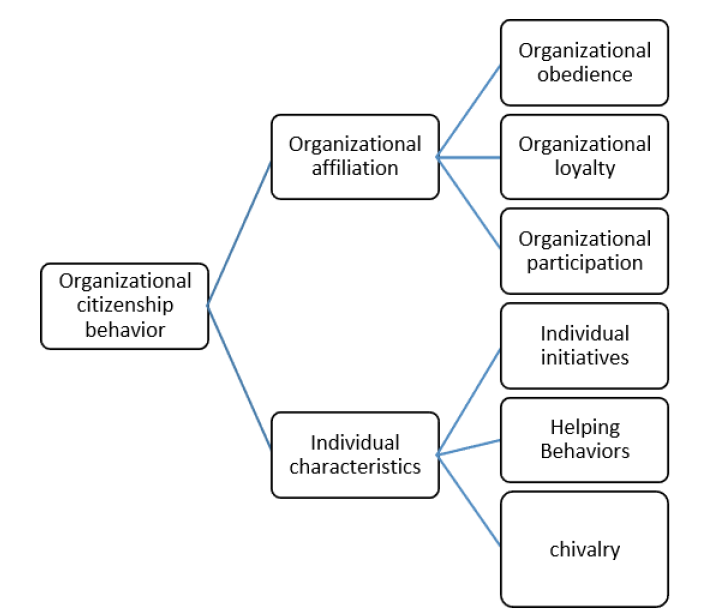
The third type of justice in organizations is called interactive justice. Interactive justice involves the way in which organizational justice is passed on to subordinates by supervisors. This type of justice is related to aspects of the communication process (such as politeness, honesty and respect) between the sender and receiver of justice. Because interactive justice is determined by management behavior, this type of justice is related to cognitive, emotional and behavioral responses to management, or in other words, the supervisor. Therefore, when an employee feels interactive injustice, it is more likely that the employee will react negatively to his/her supervisor instead of the organization. Therefore, it is expected that the employee is dissatisfied with her direct supervisor instead of the organization as a whole and the employee feels less commitment than the supervisor to the organization. Also, her negative attitudes are mainly towards the supervisor and a small part of these negative attitudes go back to the organization. According to Morman, distributive justice, procedural justice and interactive justice are interrelated and each is a distinct aspect of organizational justice. In his view, organizational justice is defined as the sum of distributive, procedural and interactive justice (Figure 1).
Figure 1: Operational Model of Organizational Citizenship Behavior Research Based on Podsakoff et al. [1] Model
MATERIALS AND METHODS
The present study is a descriptive correlational method. Correlation research is one of the descriptive (non-experimental) research methods that examines the relationship between variables based on the purpose of the research. In correlation research, the aim is to determine whether there is a relationship between two or more quantitative variables. And if so, what is its unit size?
In the present study, the library method is used to compile the theoretical literature and research background and the statistical community is used to collect data from the statistical community to test the hypotheses using a questionnaire. In the library method, information was collected using books, journals and scientific articles, as well as using Internet resources. In the field method, a standard questionnaire with three sections of demographic information, measuring the independent variable of organizational citizenship behavior and the dependent variable of perceived organizational justice of employees was used. Therefore, the data collection tool in this research according to the model framework is a standard questionnaire. To measure the independent variable, the popular and you measurement indices are used, which are distributed after localization. Questionnaire questions that are designed as a 5-point Likert scale very low-low-medium-high-very high. This questionnaire also has the following specifications.
Pearson correlation was used to determine the relationship between them due to the normality of the statistical population using Cronbach's alpha coefficient.
RESULTS
The results of Table 1 show that because the sig (significance level) obtained for all variables is greater than 0.05, so these variables have a normal distribution. Therefore, parametric tests can be used to test relationships.
According to the obtained results Table 2, since the significance level (p) obtained for the tests is greater than our significance level of ∝ = 0.05, The assumption of data normality is accepted and parametric statistical methods can be used to test the hypotheses that we will use the Pearson test here.
According to Table 3, which shows the Pirusson correlation test for the dependent variable with the independent variable, It can be said that the correlation coefficient between organizational justice with obedience is 0.697 and the significance level is 0.000, the correlation coefficient between organizational justice with loyalty is 0.875 and the significance level is 0.000, Correlation coefficient between organizational justice with participation 0.455 and significance level 0.000, correlation coefficient between organizational justice with contributing behavior 0.501 and significance level 0.000, Correlation coefficient between organizational justice with individual initiatives 0.680 and significance level 0.027, correlation coefficient between organizational justice with chivalry 0.517 and significance level 0.031, The correlation coefficient between organizational justice with distributive justice is 0.507 and the significance level is 0.021, the correlation coefficient between organizational justice with procedural justice is 0.506 and the significance level is 0.041 and the correlation coefficient between organizational justice with interactive justice is 0.625 and the significance level is 0.031.
Table 1: Questionnaire Rank Scale
Numerical value of positive questions
1
2
3
4
5
Options
I completely disagree
I disagree
I have no opinion
I agree
I quite agree
Numerical value of negative questions5
5
4
3
2
1
Table 2: Results of Kolmogorov-Smirnov Test
Variables
Kolmogorov-Smirn of statistics
Sig
Organizational obedience
1.901
0.188
Organizational loyalty
0.888
0.248
Organizational participation
1.544
0.422
Individual initiatives
1.621
0.090
Helping Behaviors
1.346
0.101
chivalry
1.190
0.153
Distributive justice
1.744
0.162
Procedural justice
1.288
0.342
Interactive justice
1.236
0.123
Citizenship behavior
1.032
0.194
Organizational Justice
1.130
0.102
Table 3: Pearson Correlation Test Results
Interpretation
Sig
correlation coefficient
independent variable
dependent variable
Significant relationship
0.000
0.697
Organizational obedience
Organizational Justice
Significant relationship
0.000
0.875
Organizational loyalty
Organizational Justice
Significant relationship
0.000
0.455
Organizational participation
Organizational Justice
Significant relationship
0.000
0.504
Individual initiatives
Organizational Justice
Significant relationship
0.027
0.680
Helping Behaviors
Organizational Justice
Significant relationship
0.031
0.517
chivalry
Organizational Justice
Significant relationship
0.021
0.507
Distributive justice
Organizational Justice
Significant relationship
0.041
0.506
Procedural justice
Organizational Justice
Significant relationship
0.031
0.625
Interactive justice
Organizational Justice
DISCUSSION
As explained in the previous discussion, employees' perception of organizational justice affects the amount of committed job behaviors of employees, including organizational citizenship behaviors. Regardless of the various studies that have confirmed the relationship between these two variables, Employees who feel they have been treated unfairly and who do not respect their personality are not expected to be committed to their organization to some extent that Who want to show positive behaviors in addition to their formal role. According to the results of this study, there is a significant direct relationship between the two variables. Accordingly, changes in employees' organizational citizenship behavior can be predicted by the variable of perception of organizational justice. The results of this study in this regard with the results of the study of Goodersvand Chegini, Margson, Cohen and Spector, Choi, Park Vion, Kolkowit et al., Maschelder et al., Liu and Rapp, Mayer et al., Ramin Mehr et al. and Rezaian and Mirzadeh. As mentioned, based on organizational theory, it can be predicted that employees will react to the presence or absence of organizational justice in the workplace. One of these reactions is to increase or decrease the output, which means that if employees notice that it is not being implemented in the justice organization, they will experience negative stress. As a result, to reduce this stress, they try to reduce the amount of input and their contributions to the organization. Conversely, if employees have a good understanding of organizational justice in their workplace, they are motivated to increase their inputs and participation in the organization by performing supportive behaviors such as organizational citizen behaviors. One researcher hypothesized in her research that organizational citizenship behavior might be an equal proportion of data and that employees play an unequal role in increasing or decreasing levels of organizational citizenship behaviors in response to inequality more definitively than failing to comply with formally prescribed requirements.
CONCLUSION
Practical Suggestions
Based on the results of the present study, the following suggestions are presented:
Creating a favorable environment to increase the level of duty-oriented employees, especially the facilities and credits department with the aim of increasing their spirit of cooperation in collecting receivables from customers and attracting maximum resources
Plan to increase work motivation among employees so that they themselves value being on time and regularly in the workplace and promote a culture of conscientiousness
Develop training and skills programs to increase the communication skills of employees, especially cashiers and the credit department in order to establish long-term and effective communication with customers, especially loyal customers, to provide them with a greater presence in the customer service system
Create an environment where people can be more involved in organizational activities and communication based on mutual trust
Individual initiatives are stimulated and improved through the implementation of workshops (creativity and innovation)
Create an atmosphere of honest and trustworthy communication. The managers of the organization must create this space in the organization so that the employees become committed to the organization and as a result take steps towards the organizational goals
REFERENCES
Podsakoff, P.M. et al. “Transformational leader behaviors and their effects on followers’ trust in leader, satisfaction and organizational citizenship behavior.” Leadership Quarterly, vol. 1, 1990, pp. 107–142.
Castro, C.B. et al. “The influence of employee organizational citizenship behavior on customer loyalty.” International Journal of Service Industry Management, vol. 15, no. 1, 2004, p. 27.
Organ, D.W. Organizational citizenship behavior: The good soldier syndrome. Lexington Books, 1998.
Organ, D.W. “OCB in the Context of Organization Theory.” 2005, p. 46.
Lam, S.S.K. et al.“Organizational citizenship behavior: Comparing perspectives of supervisors and subordinates across four international samples.” Journal of Applied Psychology, vol. 84, 1999, pp. 594–601.
Vigoda-Gadot, E. et al. “Group-level organizational citizenship behavior in the education system: A scale reconstruction and validation.” Educational Administration Quarterly, vol. 43, no. 4, 2007.
Greenberg, J. and R.A. Baron. Behavior in organizations. Prentice Hall, 2000.
Recommended Articles
Research Article
The Hidden Killer: Algorithmic Atmospheres and the Death of the User
Yaman Birawi
Published: 30/05/2026
Download PDF
Research Article
The Legal Regulation for Protecting Persons with Mental Disabilities
Budoor Salim Mahdi
Published: 30/06/2025
Download PDF
Research Article
The Role of the United Nations in Combating the Crime of Money Laundering
Asan Juma Fadil,
Musaab Ayad Ibrahim
Published: 04/01/2026
Download PDF
Research Article
The Management of Forest Area by Forest Management Unit in Creating Law Certainty and Justice (A Case Study in Daerah Istimewa Yogyakarta Province)
Septiawan Risma Saputra,
...
Lego Karjoko
Published: 30/06/2021
Download PDF
PO Box 101, Nakuru
Kenya.
Email: office@iarconsortium.org
Editorial Office:
J.L Bhavan, Near Radison Blu Hotel,
Jalukbari, Guwahati-India
Olya, A. M. G. A. & Rezazadeh, H. (2020). Investigating The Relationship Between Civil Behavior And Distributive Justice, Procedural Justice And Interactive Justice Of Employees (Case Study In Ardabil Social Security Organization). International Academic Journal of Law, 1(1), 1-4.
MLA
Olya, Akbar M. G. A. and Hojjat Rezazadeh. "Investigating The Relationship Between Civil Behavior And Distributive Justice, Procedural Justice And Interactive Justice Of Employees (Case Study In Ardabil Social Security Organization)." International Academic Journal of Law 1.1 (2020): 1-4.
Chicago
Olya, Akbar M. G. A. and Hojjat Rezazadeh. "Investigating The Relationship Between Civil Behavior And Distributive Justice, Procedural Justice And Interactive Justice Of Employees (Case Study In Ardabil Social Security Organization)." International Academic Journal of Law 1, no. 1 (2020): 1-4.
Harvard
Olya, A. M. G. A. and Rezazadeh, H. (2020) 'Investigating The Relationship Between Civil Behavior And Distributive Justice, Procedural Justice And Interactive Justice Of Employees (Case Study In Ardabil Social Security Organization)' International Academic Journal of Law 1(1), pp. 1-4.
Vancouver
Olya AMGA, Rezazadeh H. Investigating The Relationship Between Civil Behavior And Distributive Justice, Procedural Justice And Interactive Justice Of Employees (Case Study In Ardabil Social Security Organization). International Academic Journal of Law. 2020 Jul;1(1):1-4.


 Download PDF
 Download XML