Nursing has been identified as an occupation that brought about hazardous impacts not only on nurses’ health but also on their abilities to cope with job demands. This study was conducted for determining the rate of job stress among nurse’s staff in Baqubah and Al-Batool teaching hospitals; studying its relationship with their socio-demographic characteristic and studying some of general working conditions and its’ relationship with job stress. This is a cross- sectional study was conducted among (314) participants from both sexes: (153) males and (161) females, in Baqubah and Al- Batool teaching hospitals, during the period from 1st of March to 31st August 2016. This study was in different departments (patients’ wards, out-patient clinics, Intensive Care Units (I.C.U.) and emergency units). Three types of questionnaire were introduced, the first one was socio-demographic questionnaire, includes (age, gender, marital status, number of children, time and place of work, educational level, economic status and other questions involve some of general conditions related to work). Second one was General Health Questionnaire (GHQ-28). Third questionnaire was Job Stress Scale (J.S.S.), includes (demands, control, support). Seven participants (2.3%) had psychiatric disorders according to General Health Questionnaire (GHQ-28), were excluded from the study. Data analysis was done and was translated into computerized database structure. The results were presented in simple measures for frequency distribution, percentage and rate. The rate of job stress reported (25.7%), with moderate level of severity (70.9%). Highest percentage reported between (28-37) years old (60.8%), More in females (53.2%) than in males (46.8%), who are married (62%) with ≥4 children (28.8%), and those working at night shifts (51.8%), in busy departments I.C.U. (44.3%), and have secondary school level of education (46.8%) and who have no enough monthly income (53.2%). Highest percentage of job stress reported with those have ≤5 years of work experience (63.3%), as well as not have enough time for rest at work (76%) and not have enough vocational days at work (73.4%). Highest percentage reported in those staff nurses with satisfactory perception of the patients’ attitude (58.2%). The results give an insight for proper direction and helps for designing of an effective stress management programs for them. These findings may go a long way in the development of the mental health, decreasing stress levels of nurses and enhancing them to provide good patients care.
Stress can be defined as the physical and psychological state that results when the resources of the person are not sufficient to cope with the demands and pressures of the situation. Therefore, stress is more likely in some situation than others and in some individuals than others [1]. Stress is a biological phenomenon that was experienced by all persons regardless of their age, occupation, or socio-economic status [2].
The human body has a natural chemical response to a threat or demand, known as (flight or fight) reaction, which includes the release of adrenalin. When the threat or demand is over, the body can return to its natural state. A stressor is the event or set of the conditions which causes the stress response, while strain is the body’s longer term response to chronic stress.
Work play an important role in individual’s social life, providing support of a regular income, personal growth and opportunities, social identity with self- esteem and can have consequences for the worker’s health, various approaches have been developed for estimating the effect of workplace stress on health [3].
United Nation in 1992; declared that work- related stress is the disease of 20th century.
Work stress can result in the lack of health and even hurting people [4] and became one of the most serious health issues in modern world [5].
Nursing job is a protection, promotion optimization of health and abilities, prevention of injury and illness, alleviation of suffering through the diagnosis and treatment of human response and advocacy in the care of individuals, families, communities and populations [6].
Nursing is not only a science, but also it is an art; which provides skillful care for the sick in appropriate relationships with the patients, physicians, families and also with others who have related responsibilities [7].
Nursing has been identified as a job that has high levels of stress. Xianyu Y., Lambert VA. [8], playing an integral part of clinical services and have primary responsibility for significant proportion for a patient care in most healthcare settings. So that, nurses are facing a variety of physical, biological and chemical hazards during performing their duties.
Nurses environment include an enclosed atmosphere, excessive noise, time pressures, long standing hours, sudden swings of from intense to mundane tasks, unpleasant sights and sounds and no second chance. Nurses are trained to deal with those factors but chronic stress takes a toll, when there are additional stress factors like home stress, inadequate staffing and inadequate training, conflict at work, poor teamwork and poor supervision. Stress is known to cause emotional exhaustion in nurses and lead to negative feelings toward those in their care.
According to the studies, nurses’ stress can cause depression, absence and decrease of their qualification and isolation from patients [9]. Occupational stress will result in increasing the occupational hazards and decreasing the efficiency inside and outside the work environment [10].
It is important to know the extent of the sources of stress in healthcare organization, to find stress management strategies in order to help the individual and the environment. Also it affects their health and increases attrition rate, infection rates, injury claims, absenteeism and errors in treating patients [11].
The National Occupational Safety Association of America placed the nursing job in terms of stress at the head of medical professions. The British Health Education Authority introduced the nursing jobs, police, social work and teaching as the four careers with high stress.
The Iraqi health care system in recent years is seriously impacted by different internal and external fights, sociopolitical instability and international sanctions [12].
Aims of Study
The current study aims at determining the rate of job stress among nurse staff in Baqubah and Al- Batool teaching hospitals at Baqubah City
Studying the relationships between socio-demographic characteristic and job stress
Studying some of general working conditions and their relationships with job stress
Literature Review
History of Nursing: The history of nursing span is from the history of human kind. For as long as there has been life, there has been the need for providing care and comforting those suffering from illness and injury. Nursing has been known the oldest of the arts and the youngest of the profession, the word nurse evolved from Latin word nutricius, which means nourishing [7].
Little is known and has been documented about nursing in the pre- Islamic period [13]. Rufaida Al-Asalmiya, who was practiced at the time of the Prophet Mohammed (PBUH), she was the first muslim nurse, while history of nursing in Europe and America identified by Florence Nightingale who was the founder of modern nursing [14,15].
Hussain, [16], claimed that, Rufaida devoted her life for developing and improving nurses, also providing nursing care. Rufaida was also the leader and founder of the first nursing school in the Islamic world.
Rufaida learnt her nursing skills from her father, who was the renowned healer at the time of the Prophet, she provided care to injured soldiers during the jihad (holy wars), also provided shelter to those dying from winds and heat of the harsh desert [14].
History of Stress
The concept of stress is very old. It has been occurred even to prehistoric man, there was something common in the loss of vigor and the feeling of exhaustion that overcame him after hard labor, loss of blood, agonizing fear or any kind of disease and prolonged exposure to cold or heat.
Selye defined stress as the individual’s reaction to an environmental force which affects the individual performance [17].
General Adaptation Syndrome (GAS)
This term coined to Hans Seyle; three distinct physiological phases in reaction to chronic stress: Alarm phase (first stage); resistance phase (second stage); and the thirdand final stage is exhaustion phase [18].
Definition of Stress
Stress from the psychological view is a particular relationship between the individual and the environment that is appraised by the person as exceeding his or her resources and endangering his or her wellbeing [19].
Stress is a concept that has been interested by psychologist for many years; the early studies of stress were done within the field of medicine. In the first decade of this century, physicians have been described the relationships between certain personality patterns and the subsequent diseases.
Is Stress Always Negative
Biologically, stress is the body’s reaction to the environmental changes. It can cause the body to produce “fight or flight” reaction which equips an individual to deal with the stressful situation. Various studies defined stress as, a state of health resulting from any condition that causes the individual to have a generalized psycho-physiological response which deviates from the state of equilibrium.
The consequences of stress is not always negative (distress), it can be positive too (eustress). This is depending on the individual’s perception, reaction to the stress and stressors, interpretation and how they can manage their sensors to transfer the disadvantage into challenges to enhance the performance [20].
Eustress was introduced first by Selye, who distinguished between beneficial stress and harmful one, eustress is the natural response to stressors when they are managed and directed rationally by leaders and had instead of failure positive effect [21].
Reactions to Stress
The reaction to stress includes both psychological and physiological reactions. The psychological reactions; aggression, anxiety, anger, depression, apathy and cognitive impairment. While the physiological reactions include; increased heart rate, increased metabolic rate, increased breathing rate, higher blood pressure, dilatation of pupils, tension of muscles, secretion of endorphins and adreno-corticotrophic hormone (ACTH) and release of extra sugar from the liver [22].
Causes of Stress
Arnold, Cooper and Robertson, identified stressors in all working environments, this includes new technology, work overload, shift work, work conditions, role ambiguity, conflict and the responsibility of the individuals. This somewhat exhaustive and can be particularly relevant to nursing.
Stress in the modern society is studied from various perspectives which are focused not only on the term of stress as being a state of tension which encompasses mental, physical, psychological or social demands, also referred to the cause of stress, which is referred to as stressor [23].
Cooper and Locke did not only explore the physiological and psychological effects of stress, but also the environmental causes, which can be termed as stressor.
Coping with Stress
Ones cannot avoid stress. It is part of our life. Coping with stress helps to take away the bad effects of stress. Four basic ways to cope, the one you use depends on the stressor and depends on you too. First: Accept the stressor; you cannot avoid all stressors, the best thing to do is to accept them. Second: Avoid the stressor; you can cope with some stressors by avoiding certain places or people. Third: Change our self or the way you think about the stressor. Fourth: Change the stressor; changing your stressor by changing what you do in good ways is better for you.
Stressors that challenge homeostasis, regarded as the most urgent of needs, are the best to be known. When the organism’s competence to maintain homeostasis within a specific range is exceeded, the responses are evoked that enable the organism to cope by either remove the stressor or facilitate coexistence with it.
Most people can cope with stress for short period of time but chronic stress produce prolonged changes in the physiological state.
Occupational Stress
Work-related stress in nursing was first assessed by Menzies [24] and can be defined as a disruption of the emotional stability of the individual that induce a state of disorganization in personality and behavior [25].
Occupational stress may refer to any characteristic of workplace that poses a threat to an individual and can be mostly immobilizing due to its’ possible threats to individual performance and family functioning. Job related stress create a difference between the demands and the abilities of families to provide material security for them [17].
According to the National Institute for Occupational Safety and Health (NIOSH), occupational stresses occur when there is no harmony between the occupational requirements and the employees’ capabilities. Occupational stress leads to number of severe physical disorders such as heart diseases, intestinal disorders, respiratory problems, cancers, migraines, insomnia, muscular pain, osteoarthritis and even death.
Job Satisfaction
Job satisfaction shows that how much an employee likes his work as well as the level of his preoccupation with his work. It can be stated that job satisfaction is a sense of comfort and positive experience of the employee related to his job [26].
Working conditions as factors of job satisfaction includes, the influence of factors related to the employee, called as subjective factors; the impact of environmental factors; and the impact of organizational factors which are primarily related to the organization of production [27].
Stress in Organizations
Stress in organizations is an important phenomenon. It is generally associated with several vital individuals, physiological, behavioral and psychological symptoms.
Organizational circumstances of occupational stress include; repetitive occupational absences, delays, motivation and deterioration of quantitative and qualitative parameters, strikes, occupational trust and emergence of antagonism between employees, occupational anxiety, depression, occupational function and sabotage.
The Impact of Job Stress on Performance
Performance of the employee at workplace is a point of concern for all the organizations irrespective to all of factors and conditions. Consequently, the employees are considered to be very important asset for their organizations.
Good performances of the employees of an organization lead towards good organizational performance thus making an organization more effective and successful and vice versa.
Four types of relationships were proposed to exist between the measures of job-related stress and job performance: First; is a negative linear relationship, the productivity decreases with stress (distress). Second; productivity could also increase as a consequence of stress, so that implying a positive linear relationship between them. Third; there could be a U-shape or a curvilinear relationship, mild stress could increase the productivity initially up to the peak and then declines as the person descends into a state of distress. Fourth; there is no need to be any quantifiable relationship between the two [28].
Theories of Occupational Stress
Several theories of occupational stress include; the “person-environment fit theory”, the “conservation of resources theory”, the “demand-control support theory” and the “cybernetic and systems theory”, would be selected theories since they were prevalent and central on occupational stress.
Person- Environment (PE) Fit Theory
According to this theory, stress and stressors are not defined in terms of either the person or the environment, but rather in terms of the degree to which there is “misfit” between them [29].
In this theory, there should be a match between what the people want and what they receive, as well as a match between their abilities (skills and knowledge) and the demands placed upon them. Lacks of this match creates strain and reduce their sense of psychological well-being. The outcome of PE fit theory consists of the individuals’ potential reactions to misfit, which can be characterized by either coping or defense [29,30].
Conservation of Resources Theory
It is very popular theoretical model of the stress process that developed by Stevan Hobfoll, called as the Conservation of Resources theory. This perspective bears marked similarity with the P-E fit model, specifically in that both approaches examine the interaction between the person and the environment and the degree of correspondence between the demands in the environment and the individual’s resources to deal with these demands.
Demand-Control-Support Theory
The demand- control theory concern, the joint effects of job demands and job control of the employee wellbeing [29].
According to Karaseks’ job demand-control model, strain happens when high job demands combine with low opportunity which influences tasks and procedures, resulting in poor health of the employee and low job satisfaction.
Empirical support for the job demand-control model has been produced, with several studies demonstrating moderate influence of the discretion or the control on the relationship between demands of work and psychological strain.
Heavy workload [25,31], long working hours and shift work, infrequent rest breaks; hectic and routine tasks that have little inherent meaning, not to utilize workers’ skills and provide little sense of control.
Locus of control and self-efficacy have a major impact on perceived stressors and resultant stress [29,32], so that, an increase in the control is positively correlated with the job satisfaction [29].
The additional of social support to the model was based on extensive evidence that the variable can play a substantial role in alleviating stress among workers although there has been a considerable debate over its’ impact is either direct; that is, more support is associated with decreased strain, or indirect; that is, support will buffer the impact of the stressors on strain [33].
Cybernetic and Systems Theory
Cybernetic has been known as the science of communication and control in man and machine; an epistemological foundation for individual and social change, which focuses on mental process, whereby personals monitor their physiological and psychological reactions to various stressors [29].
Cybernetic theory deals with the responses of systems and information using feedback. The theory emphasizes on wholeness and the interaction of the component parts. It incorporates the organization as unifying principles as well as incorporates the non-liner theories of causation and is based on the circular epistemology [29].
Sources of Occupational Stress
Job-related stress grouped by Burke into the following six categories; physical environment, career development, role stressors, organizational structure and job characteristics, relationships with others and work-family conflict [5].
There were six sources of stress at work; factors intrinsic to the job, relationship with others, management role, home-work interface, career and achievement and organizational structure and climate [5,33].
More simply, Antoniou pointed that specific conditions that made jobs stressful could be categorized either as exogenous (i.e. excessive workload, unfavorable occupational conditions, lack of collaboration) or endogenous pressures (i.e. individual personality characteristics) [34].
Effects of Occupational Stress
Stressful jobs, has been reported to be result in a significant monetary cost for the health care systems [35].
Effects on the Individual Includes
Ivancevich, J.M. [36] and Kreitner and Kinicki [37], distinguished between three types of effects; behavioral which cover the individual behaviors, intentions, attitudes and job satisfaction. The cognitive effect; enclose irrational decisions, lack of concentration, disappointment that lead to frustration, depression and lastly the physiological effect; that the individual might have hypertension and diseases related to the heart and the immune system. Sometimes, job pressure lead to heavy use of alcohol and other drugs, in a way that affect the ability of workers to perform jobs in an effective manner [38].
Effects On the Organization Includes
Poor performance, high absenteeism, low morale, high labor turnover, poor time keeping productivity, poor motivation., increased ill-health, increased employee complaints, accidents and incidents reports [39].
Steers, indicate that occupational stress became an important topic for study of organizational behavior due to several reasons: First; stress is a major cause of employees’ turnover and absenteeism. Second; stress has harmful psychological and physiological effects on employees. Third; stress experienced by one employee can affect the safety of others employees. Forth; controlling dysfunctional stress, individual and organization can be managed effectively [40]. Fifth; occupational stress increases the risks of work-related diseases and accidents in healthcare sectors that have experienced rapid industrialization [41].
Researchers have studied personal differences in the belief that they influence reactions to objective stressful events or appraisals of events as being stressful, or they simply added to the variance explanations in the stress outcomes.
Cole and Nelson reported that, (93%) of nurses were frequently under the influence of stress factors at their workplace.
Ghasemi and Attar investigated the occupational stressors among Iranian nurses and reported that death and suffering of the patients, workload and nurse- physician conflicts were profoundly contributed to the nurses’ stress.
Although Adib-Hajbagheri, did not paid attention directly to the Iranian nurses’ stress, he has reported that factors such as organizational culture, lack of time, lack of support and insufficient clinical experience put pressure on nurses and prevent them to make appropriate clinical decisions and providing them an evidence -based care [42].
Shah MA. [43], conducted a research on the determinants of job satisfaction among a selected care provider in Kuwait. The objective was to study job satisfaction among physician, pharmacists, nurses and medical laboratory technologists in the Ministry of Health hospitals in Kuwait. Dunnette’s scale used for measuring job satisfaction. The results of the study showed that the respondents in all four categories were satisfied with all aspects of their jobs except the salary. The medical laboratory technologists were dissatisfied with professional advancement.
Herdis Sveinsdottir et al., [44], conducted a research on the occupational stress, job satisfaction and working environment among Icelandic nurses, a cross- sectional questionnaire survey. The objective of the study was to explore what factors contribute to work- related stress among nurses working inside and outside the hospital environment. The data was collected using a self-administered questionnaire. The results of the study showed that the strenuous conditions of Icelandic nurses were felt more severe among the hospital nurses than among those working outside the hospital settings.
Nakakis K. and Ouzoni Christina, [45], conducted a research including the factors influencing stress and job satisfaction of the nurses working in the psychiatric units in Greece. The analysis was done by review research studies to investigate variables which influence stress and job satisfaction among nurses working in mental settings. The result of the study showed that nurses’ job satisfaction was found to be influenced primarily by the psychological stress and by the quality of clinical leadership.
Mateja Lorber. and Brigita Skela S. [46], conducted a research on job satisfaction among nurses and identifying factors of job satisfaction in Slovenian Hospitals. The objective of the study was for determining the level of job satisfaction of the nursing professionals in Slovenian hospitals and the factors influencing job satisfaction among nursing. Data collection structured survey questionnaire was administered. The result of the study showed that medium level of job satisfaction in both leaders and employees.
Akif Lutfi Al- khasawneh and Sahar Moh’d Futa, [47], conducted a research to determine the relationships between job stress and nurses’ performance in the Jordanian hospitals. The study assesses the relationships between five stressors (the family factors, job difficulty, the economic factors, peer’s competition and organizational climate) with nurses’ performance, at King Abdullah hospital at Irbid city in Jordan. It was found that, there was no relationship between the family factor and nurses’ performance, but there was a significant positive relationship between other four factors.
Huda M. Al- Makhaita et al. [48], conducted a research on the predictors of work- related stress among nurses working in primary and secondary health care levels in Dammam Eastern Saudi Arabia; the data was collected using a self- administered questionnaire. The study demonstrated a high prevalence of job stress among the nurses in both primary and secondary health care levels. Young age, married, having more than three children were the associating factors of job stress among nurses in primary level, while young ages, female, married nurse, working shifts and working in surgical department were the predictors of stressful jobs among the nurses in secondary level.
Management of Occupational Stress in Health Care Sector
The negative effects of occupational stress are: Reduce efficiency, decrease capacity to perform, increase rigidity of thought and reduce interest at work, lack of concern for the organization and the colleagues and loss of responsibility.
Health care sector must find as much as possible factors to reduce the level of occupational stress in the workplace so that; there are some suggestions to manage as the following:
Organize a stress management programs which focuses on different employees at all hierarchical level
Adequate steps to redesign jobs, which are taxing to the abilities and capacities of the employees
Adequate role clarification to be made whenever necessary to reduce role ambiguity
Encourage open channels of communication to deal with work related stress
Undertake stress audit at all levels in the organization to identify stress area to improve conditions of job and reducing job stress
Study Sample
The sample includes (314) participants (nursing staff) from both sex’s males (153) and females (161) in both teaching hospitals.
Time and Place
This study was conducted from the 1st of March to 31st August 2016, in Baqubah and Al-Batool teaching hospitals in Baqubah city, including different departments of both hospitals (patients’ wards, out-patient clinics, Intensive Care Units (I.C.U.) and emergency units).
Study Design
A cross-sectional study was used to achieve the aims of the study.
Methods
The data was collected through a direct interview with the participants of nurse’s staff; three types of questionnaire introduced and were filled-out during work-hours in work-place.
First one was socio-demographic questionnaire as shown in appendix (1)/A. Second one was general health questionnaire (GHQ-28); a special questionnaire designed by Goldberg, as shown in appendix (2)/A; developed as a screening tool to detect those likely to have or to be at risk of developing psychiatric disorder, it is 28 items measures of emotional distress in medical setting. The (GHQ-28) has been divided into 4 subscales. These are somatic symptoms (items1-7); anxiety, insomnia (items 8-14); social dysfunction (items15-21); and severe depression (items22-28). The questionnaire takes less than five minutes to complete answering all the items. Total score (84); the participants who took (65) degree or more means have psychiatric disorders.
Third questionnaire was job stress scale (J.S.S.) as shown in appendix (3)/A; which allows us to evaluate job stress in work place, designed by Robert karasek and completed by Johnson. Comprising (17) questionnaires, five questions evaluate demand; six evaluate control; and six social supports. The demand section includes, four questions related to quantitative aspects such as time and speed to perform tasks and one question concerned with evaluating qualitative aspect of the job process related to the conflicts between different demands. The section on control includes four questions related to the use and the development of abilities and two related to the decision latitude related to the work process. For both dimensions, the answer options ranging between “frequently” and “never/ almost never”. While the section on social support, related to the workers’ relationships with colleagues and superiors and includes four answer options ranging between “strongly agree” and “strongly disagree”. Total score (68) were classified into:
(1-17): Normal (stress is not a problem in life)
(18-34): Mild job stress (stress can be reasonably being reduced)
(35-51): Moderate job stress (stress is clearly a problem and needs remedial action)
(52-68): Severe job stress (stress is a major problem, feeling of inadequate control over one’s work, frustrated hopes and expectations and the feeling of losing of life’s meaning, seems to be independent causes of burnout condition of professional exhaustion. and depression)
Inclusion Criteria
The participants who developed negative (GHQ-28) included in this study were (307); (157) female and (150) male.
Exclusion Criteria
Seven Participants; (4) female and (3) male had psychiatric disorders who developed positive general health questionnaire (+ve) GHQ-28, were excluded from the study.
Statistical Analysis
Data analysis was done by computer. The results were presented in simple measures for frequency distribution, percentage and rate.
Distribution of all participants according to GHQ-28
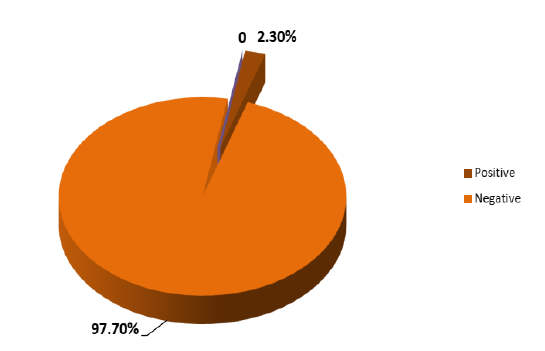
Total number of participants in this study (314) nurse staff in Baqubah and Al-Batool teaching hospitals. According to general health questionnaire (GHQ-28), 7 (2.3%) participants had positive psychiatric disorders; therefore, were excluded from the study. The remaining 307 (97.7%) participants admitted in this study as shown in Table 1 and Figure 1.
Table 1: Distribution of Nurse Staff in Baqubah and Al – Batool Teaching Hospitals According to General Health Questionnaire (GHQ-28)
| (GHQ-28) | No. | % |
| Positive | 7 | 2.3 |
| Negative | 307 | 97.7 |
| Total | 314 | 100 |

Figure 1: The Distribution of (314) Nurses Staff in Baqubah and Al – Batool Teaching Hospitals According to General Health Questionnaire (GHQ- 28)
Distribution of Participants According to Job Stress Scale
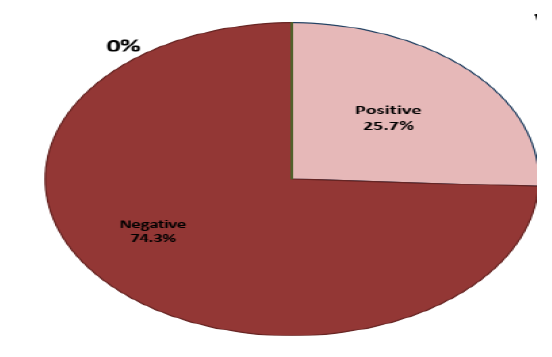
According to job stress scale applied to (307) participants (nurse staff) who developed negative general health questionnaire-28 (-veGHQ-28); (79) participants from them have had positive job stress; their prevalence was (25.7%). While 228 (74.3%) participants reported negative job stress, as shown in Table 2 and Figure 2.
Table 2: Distribution of Participants (Nurse Staff) in Baqubah and Al – Batool Teaching Hospitals According to Job Stress Scale (J.S.S)
| Job stressscale | No. | % |
| Positive | 79 | 25.7 |
| Negative | 228 | 74.3 |
| Total | 307 | 100 |

Figure 2: The Distribution of (307) Participants in Baqubah and Al- Batool Teaching Hospitals According to Job Stress Scale (J.S.S)
Distribution of Participants According to The Level of Severity of Job Stress Scale
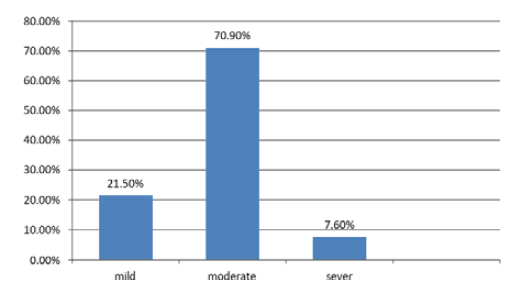
Distribution of (79) participants (nurse staff) in Baqubah and Al-Batool teaching hospitals who have had positive job stress according to the levels of severity. 17 (21.5%) participants have had mild job stress, 56 (70.9%) participants have had moderate job stress and 6 (7.6%) participants have had severe job stress as shown in Table 3 and Figure 3.
Table 3: Distribution of Participants of Nurse Staff in Baqubah and Al- Batool Teaching Hospitals with Positive Job Stress According to The Levels of Severity of Job Stress Scale
| Levels of severity | No. | % |
| Mild job stress | 17 | 21.5 |
| Moderate job stress | 56 | 70.9 |
| Severe jobstress | 6 | 7.6 |
| Total | 79 | 100 |

Figure 3: The Distribution of (79) Participants of Nurse Staff in Baqubah and Al- Batool Teaching Hospitals with Positive Job Stress According to the Levels of Severity of (J.S.S)
Studying the Socio-Demographic Character of (307) Participants (Nurse Staff) In Baqubah and Al-Batool Teaching Hospitals, (79) Participants from Them with Positive Job Stress
Distribution of Participants According to Age
Age ranges from (18-27) years old 162 (52.8%); 15 (18.9%) participants have had positive job stress. (28-37) years old 96 (31.3%); 48 (60.8%) participants have had positive job stress. (38-47) years old 40 (13%); 10 (12.7%) participants have had positive job stress. (48-57) years old 8 (2.6%); 5 (6.3%) participants from them have had positive job stress. while those ≥58 years old, only 1 (0.3%) participant and he has had positive job stress (1.3%) as shown in Table 4.
Table 4: Age Distribution of Participants, Including Participants with Positive Job Stress, In Baqubah and Al-Batool Teaching Hospitals
| Age(years) | All participant | Positive job stress | ||
| No. | % | No. | % | |
| 18-27 | 162 | 52.8 | 15 | 18.9 |
| 28-37 | 96 | 31.3 | 48 | 60.8 |
| 38-47 | 40 | 13 | 10 | 12.7 |
| 48-57 | 8 | 2.6 | 5 | 6.3 |
| ≥58 | 1 | 0.3 | 1 | 1.3 |
| Total | 307 | 100 | 79 | 100 |
Distribution of Participants According to Gender
Female 157 (51%); 42 (53.2%) participants from them have had positive job stress, while male 150 (49%); 37 (46.8%) participants from them have had positive job stress as shown in Table 5.
Table 5: Gender Distribution of Nurse Staff, Including Participants with Positive Job Stress, In Baqubah and Al-Batool Teaching Hospitals
| Gender | All participant | Positive job stress | ||
| No. | % | No. | % | |
| Female | 157 | 51 | 42 | 53.2 |
| Male | 150 | 49 | 37 | 46.8 |
| Total | 307 | 100 | 79 | 100 |
Distribution of Participants According to Marital Status
Those married persons 198 (64.5%); 49 (62%) participants have had positive job stress. Single ones 101 (32.9%); 27 (34.2%) participants from them have had positive job stress. Divorced ones 6 (2%); 2 (2.5%) persons have had positive job stress. Widow persons 2 (0.6%); 1 (1.3%) participant has had positive job stress, as shown in Table 6.
Table 6: Marital Status Distribution of Participants (Nurse Staff), Including Participants with Positive Job Stress, In Baqubah and Al-Batool Teaching Hospitals
| Marital status | All participant | Positive job stress | ||
| No. | % | No. | % | |
| Married | 198 | 64.5 | 49 | 62 |
| Single | 101 | 32.9 | 27 | 34.2 |
| Divorced | 6 | 2 | 2 | 2.5 |
| Widow | 2 | 0.6 | 1 | 1.3 |
| Total | 307 | 100 | 79 | 100 |
Distribution of Participants According to Number of Children of (206) Married Participants
Those have no child 33 (16%); 4 (7.7%) persons from them have had positive job stress. Those had 1 child 34 (16.5%); 9 (17.3%) participants have had positive job stress. Those had 2 children were 51 (24.8%); 11 (21.2%) participants from them have had job stress. Those had 3 children were 40 (19.4%); 13 (25%) participants have had positive job stress. Those had 4 children or more 48 (23.3%); 15 (28.8%) participants have had positive job stress, as shown in Table 7.
Table 7: Distribution According to Number of Children of Married Participants (Nurse Staff), Including Participants with Positive Job Stress, In Baqubah and Al-Batool Teaching Hospitals
| No. of children of married persons | All participant | Positive job stress | ||
| No. | % | No. | % | |
| 0 | 33 | 16 | 4 | 7.7 |
| 1 | 34 | 16.5 | 9 | 17.3 |
| 2 | 51 | 24.8 | 11 | 21.2 |
| 3 | 40 | 19.4 | 13 | 25 |
| ≥4 | 48 | 23.3 | 15 | 28.8 |
| Total | 206 | 100 | 52 | 100 |
Distribution of Participants According to Time Shift
Those working on day shift 212 (69%), 13 (16.5%) participants have had positive job stress, while those working on night shift 54 (17.6%); 41 (51.8%) participants from them have had positive job stress. Those working 24hour 41 (13.4%); 25 (31.7%) participants from them have had positive job stress as shown in Table 8.
Table 8: Time Shift Distribution of Nurse Staff, Including Participants with Positive Job Stress, In Baqubah and Al-Batool Teaching Hospitals
| Time shift | All participant | Positivejob stress | ||
| No. | % | No. | % | |
| Day | 212 | 69 | 13 | 16.5 |
| Night | 54 | 17.6 | 41 | 51.8 |
| 24hour | 41 | 13.4 | 25 | 31.7 |
| Total | 307 | 100 | 79 | 100 |
Distribution of Participants According to Place of Work
Those working in I.C.U. 38 (12.4%), 35 (44.3%) participants from them have had positive job stress. Those working in emergency units 97 (31.6%), 20 (25.3%) participants from them have had positive job stress. While those working in outpatient clinics 75 (24.4%), 14 (17.7%) participants have had positive job stress. Finlay those working in patients’ words 97 (31.6%), 10 (12.7%) participants have had positive job stress, as shown in Table 9.
Table 9: Place of Work Distribution of Nurse Staff, Including Those Participants with Positive Job Stress, In Baqubah and Al-Batool Teaching Hospitals
| Place of work | All participant | Positivejob stress | ||
| No. | % | No. | % | |
| I.C.U. | 38 | 12.4 | 35 | 44.3 |
| Emergency units | 97 | 31.6 | 20 | 25.3 |
| Outpatient clinics | 75 | 24.4 | 14 | 17.7 |
| Patients’ wards | 97 | 31.6 | 10 | 12.7 |
| Total | 307 | 100 | 79 | 100 |
Distribution According to Educational Level
Participants had intermediate school level were 4 (1.3%), 1 (1.3%) participant has had positive job stress. Those had secondary school level were 139 (45.3%), 37 (46.8%) participants have had positive job stress. While those with institute level were 129 (42%), 31 (39.3%) participants from them have had positive job stress. Finally, those had college levels were 35 (11.4%), 10 (12.6%) participants from them have had positive job stress, as shown in Table 10.
Table 10: Educational Level Distribution of Nurse Staff, Including Participants with Positive Job Stress, In Baqubah and Al-Batool Teaching Hospitals
| Educational level | All participant | Positivejob stress | ||
| No. | % | No. | % | |
| Intermediate school | 4 | 1.3 | 1 | 1.3 |
| Secondary school | 139 | 45.3 | 37 | 46.8 |
| Institute | 129 | 42 | 31 | 39.3 |
| College | 35 | 11.4 | 10 | 12.6 |
| Total | 307 | 100 | 79 | 100 |
Distribution According to The Economic Status
156 (50.8%) participants had not enough monthly income, 42 (53.2%) participants from them have had positive job stress. Those with enough income were 144 (47%), 37 (46.8%) persons from them have had positive job stress. While those with more than enough income were 7 (2.2%), no one of them had positive job Stress, as shown in Table 11.
Table 11: Economic Status Distribution of Nurse Staff, Including Participants with Positive Job Stress, In Baqubah and Al-Batool Teaching Hospitals
| Economic status | All participant | Positivejob stress | ||
| No. | % | No. | % | |
| Not enough | 156 | 50.8 | 42 | 53.2 |
| Enough | 144 | 47 | 37 | 46.8 |
| More than enough | 7 | 2.2 | 0 | 0 |
| Total | 307 | 100 | 79 | 100 |
Distribution of (79) Participants with Positive Job Stress According to Some of General Working Conditions and Its Relationship with Job Stress
Distribution of Participants According to Years of Work (Years of Experience)
Those with less or equal than 5 years of job experience were 50 (63.3%) have had positive job stress. While those with more than 5 years of experience were 29 (36.7%), as shown in Table 12.
Table 12: Distribution of Nurse Staff with Positive Job Stress in Baqubah and Al-Batool Teaching Hospitals Is According to Years of Work
| Years of work | Positive job stress | |
| No. | % | |
| Less or equal than 5 years | 50 | 63.3 |
| More than5 years | 29 | 36.7 |
| Total | 79 | 100 |
Distribution of Participants According to Resting Time and Vacational Days at Work
Those with enough rest at work 19 (24%), while those with no enough rest 60 (76%); and about vocational days at work, those with enough vacation 21 (26.6%), while those with no enough vacation 58 (73.4%), as shown in Table 13.
Table 13: Distribution of Participants with Positive Job Stress in Baqubah and Al-Batool Teaching Hospitals Regarding Resting Time and Vacational Days at Work
| Nurse staffwith positive jobstress | Restingtime at work | Vacational days at work | ||
| No. | % | No. | % | |
| Enough | 19 | 24 | 21 | 26.6 |
| Not enough | 60 | 76 | 58 | 73.4 |
| Total | 79 | 100 | 79 | 100 |
Distribution of Participants According to The Perception of Nurse Staff for Attitude at Work
Attitude of the manager 27 (34.2%) staff nurse had excellent perception, while 32 (40.5%) staff nurse had satisfactory perception and 20 (25.3%) staff nurse had poor perception. Regarding attitude of the colleague 30 (38%) staff nurse had excellent perception, 42 (53.2%) staff nurse had satisfactory perception, while 7 (8.8%) staff nurse had poor perception. Regarding attitude of the doctors 29 (36.8%) staff nurse had excellent perception, while 42 (53.2%) staff nurse had satisfactory perceptionand 8 (10%) staff nurses had poor perception. Regarding attitude of the patients 26 (33%) staff nurses had excellent perception, 46 (58.2%) staff nurse had satisfactory perception and 7 (8.8%) staff had poor perception, as shown in Table 14.
Table 14: Distribution of Participants in Baqubah and Al-Batool Teaching Hospitals Regarding Perception for Attitude at Work
| Perception of nurse staffwith positive job stress forattitude | ||||||||
| Attitude of theManager | Attitude of thecolleague | Attitude of thedoctors | Attitude of thepatients | |||||
| No. | % | No. | % | No. | % | No. | % | |
| Excellent | 27 | 34.2 | 30 | 38 | 29 | 36.8 | 26 | 33 |
| Satisfactory | 32 | 40.5 | 42 | 53.2 | 42 | 53.2 | 46 | 58.2 |
| Poor | 20 | 25.3 | 7 | 8.8 | 8 | 10 | 7 | 8.8 |
| Total | 79 | 100 | 79 | 100 | 79 | 100 | 79 | 100 |
Distribution of all Participants According to General Health Questionnaire (GHQ-28) As Shown in Table 1
In this study, from (314) participants, 7(2.3%) participants who developed positive General Health Questionnaire (GHQ-28) were excluded from the study, this mean they have psychiatric disorders, these disorders either occurred previously, or they became disordered as a result of their job.
This study is similar to the study of [49], they determine a fifth of the Iranian people under survey had mental disorders, through using (GHQ-28); also similar to Seyed Kazem Malakouti et al. [50], they used the same questionnaire to establish a gold standard diagnosis of mental disorders among (204) elderly subjects aged 59 years or older, chosen randomly from residents of Tehran. And also similar to the study of Abdolhamid Tajvar et al. [40], who used (GHQ-28), for assessing mental health status for the nurses in intensive care unit of a general hospital in Bandar Abbas in Iran.
Distribution According to Job Stress Scale as Shown in Table 2
The rate of job stress among staff nurses in this study (25.7%); agree with Al- Hawajreh Kamel [51], who reported the rate of job stress (30%) among Jordanian hospital nurses. Also agree with Christian N., and Liana L. who reported in their study that, the rate of occupational stress was (23.6%) among Brazilian nurses.
This is reflected to the evidence of good management of the different work sites and the proper allocation of the professionals in the work positions, associated with good social support within the work environment and the interpersonal relationships.
Distribution According to The Level of Severity of J.S.S. as Shown in Table 3
Most of nursing staff, 56 (70.9%) have had moderate level of job stress. This result is similar to Khodaveysi M. et al. [52], and Arash Najimi et al., [53], these studies reported that the level of job stress in most Iranian nurses is moderate or medium level. This is reflected to the fact that, the association with physical workload, which increased when the professional autonomy decreased leading to the appearance of suffering in the work.
According to Age Distribution, As Shown in Table 4
Highest percentage of job stress reported between (28-37) years old 48 (60.8%), then other age groups. This is similar to Khodaveysi M. et al., [52], study in Iran. This may be related to the fact that middle adults struggle to establish a career, achieve financial security, or family demands. While late adults have greater consistency, increasing their skills and work experience due to increase of their age, so that they have less job stress.
According to Gender Distribution, as Shown in Table 5
Highest level of job stress was in females, 42 (53.2%). This result is similar to the study of Bayda’a A. et al. [54], in which reported job stress in females more than males in cardiac surgical intensive care units in Baghdad city, also similar to the study of Al-Hawajreh Kamel [51], who showed that females nurses, suffered more job stress than males in selected Jordanian hospitals .This is considered normal because women are more likely to have psychological distress, unlike men experience more physical strain also the demands to balance work and family, resulting in more stressors for women that leads to increase strain.
According to Marital Status, As Shown In Table 6
Highest level of job stress appeared in married persons 49 (62%), then others. Similar to the study of Nirmanmoh Bhatia et al., [55], who reported that most of nurses were married at the time of the study among nurses in tertiary care hospitals in Delhi., also similar to Huda M. et al., [48], who reported that high level of work-related stress in Saudi, married nurses.
This is reflected to our culture, most of young people prepare for marriage after graduation and employing. This could suggest that the additional responsibility of married life may adversely increase the levels of stress.
According to Number of Children, as Shown in Table 7
This study reported that job stress increase with increase number of children. Higher level reported 15 (28.8%) among those have 4 or more children, than others. This study agrees with [56], who reported that job stress increase with increase number of children, among Indian nurses.
This is reflected to the fact that, stressors in everyday life such as worry about children and their studies not being supervised properly, home life getting disturbed due to the nature of the work, dependent relative and inability to attend properly the household activities in addition to their occupational stress.
Regarding Time Shift, as Shown in Table 8
This study reported higher percentage of job stress among those working at night 41 (51.8%), than those working on day shift andon 24hr. call. Similar to Mariza et al. who mentioned high job stress with those on call night shifts among Brazilian nurses. Also agree with Abdolhamid et al. [42], who reported that the nurses on night shifts at Shahid Mohammadi Hospital in Bandar Abbas, Iran, experienced higher level of job stress than other shifts.
This may be reflected to family separation and affect circadian system; shift work create a mismatch between the internal clock and the outside world, this disorder is characterized by sleep disruption, increase risk of accident, workers’ impairment and danger to public safety.
Regarding Hospital Departments, As Shown in Table 9
This study reported higher level of job stress in those working in I.C.U. 35 (44.3%), than other departments. Similarly, Embriaco N. [57], who reported high levels of job stress among nurses working in I.C.U.in Sainte Margureitte teaching hospital, Paris. Also similar to Rahmani F. et al., [58], they reported high job stress in I.C.U. nurses in Tabriz University Hospitals, Iran.
This is reflected to the fact that nurses working in I.C.U. facing risky patients; with higher arousal, too much work and more confronted with life sustaining treatment decisions and issues concerning of patient’s care.
Regarding Educational Level, as Shown in Table 10
Higher level of job stress reported in this study among nurses with secondary school level of education, 37 (46.8%); than those with other degrees of education. Similar to Rajna Golubic et al., [50], who reported in their study, that most of nurses in Croatian hospitals with secondary school were more stressful than nurses with college or other degrees.
This is reflected to the fact that, a more highly educated nursing workforce, is critical for meeting the nations of nursing needs and delivering safe, effective patients care, also meet the changing needs of the patients and finally responding the demands of an evolving health care system andlowering the work related stress.
Regarding Monthly Income, as Shown in Table 11
Higher levels of job stress in this study reported with those staff have not enough income 42 (53.2%) than those have had it, this will affect the work, so that have more job stress, similar to Parul Sharma et al., [60], reported in his study, that inadequate salary was also one of the key factors causing stress as perceived by nurses working in Swami Vivekanad Hospital, in India.
This is reflected to the fact that, the workers with high income are happier with all aspects of their work, some of these things include interesting work, flexibility and interesting coworkers.
Regarding Working Conditions Including Years of Work (Years of Experience), as Shown in Table (12)
This study reported that staff nurses have less or equal than five years of work have higher level of job stress 50 (63.3%), than those have more than 5 years of experience. Agree with (Mustafa Abdul K. [61], who reported that high job stress appeared among staff nurses had five years or less of working experience in psychiatric hospitals of Baghdad city.
This is reflected to the fact that, nurses less than 5 years in nursing profession were found to experience significantly more personal self-doubt than nurses with greater nursing experience.
Regarding Resting Time and Vacational Days at Work, as Shown in Table 13
Those had no enough time for rest at work in this study reported higher percentage of job stress 60 (76%), than those have had it; similar to Parul Sharma et al., [60], who showed that 80% nurses were reported that they had no time for rest, were suffering job stress.
This is due to the fact that, resting time at work by taking short breaks throughout the day to make a walk or take a lunch will help to relax, recharge and increase productivity.
While, vacational days at work, in this study, those had no enough vacation reported higher level of job stress 58 (73.4%), than those had it. Agree with previous studies have also stated the positive effect of vacationing on overall wellbeing especially mental health, like in Tarumi K. et al., [62], who explored that in Japan and Embriaco N et al., [57], in Sainte Marguerites teaching hospital, Paris.
This is due to the fact that, the decrease of leisure vacation chances was correlated with the presence of depression, which contributed to an increase in the absence from work and increase job stress.
Regarding Perception of Staff Nurses for Attitude at Work as Shown in Table 14
Higher percentage of job stress reported in this study, in those staff nurses with satisfactory perception for patients’ attitude 46(58.2%), than for doctors’, colleagues’ and for manager’s attitude. This result disagrees with [60], they reported that, high job stress appeared due to poor and satisfactory doctors’ attitude toward the staff nurses.
There is an intrinsic link between perception and attitude. The establishment of solid relationships between nurses with patients; through integrating the concepts of respect, empathy, trust and confidentiality into their interactions, also creating a conscious commitment on the part of the nurse to care for a patient. This disagreement is either due to social differences between the two societies including differences in patients’ education and communications which are the cornerstone of the nurse- patient relationship.
This study reported the rate of job stress with moderate level of severity among group of nurse staff in Al-Batool and Baqubah teaching hospitals
Highest percentage of job stress reported at age between (28-37) years old. Especially in females who are married with ≥4 children and in those have secondary school level of education, those working at night shifts, in busy departments I.C.U andthose who have no enough monthly income
Demonstrated the importance of the factors related to the working conditions as potential sources of job stress among nurses, including years of experience, resting time and vacational days at work and perception of nurse staff for attitude at work
Recommendations
Stress intervention programs should be introduced for the nurses including training on how to recognize stress with its management strategies
Encouraging the health professionals’ participation in decisions; stress at work, with an increase in the general effectiveness of the health system and improvement in results-both for those providing the assistance and for the service users
Improving level of education of nurses, by increasing the number of baccalaureate-prepared nurses in the work force
Creating good relationships within the workplace and with patients
There should be professional respect among nurses and their supervisors
Limitation the number of night shifts; work in a row to prevent sleep deprivation mounting up
Supplementation with good salary, which will greatly increase productivity and decreasing burnout
Reducing the number of working hours and the general working conditions of the nurses must be improved to sustain the interest of nurses in the profession
Stress is very important issue and it has been noted that everybody could have stress. It is therefore a suggestion that further study should be conducted to look at stress among doctors and other health professionals since this study was limited to nurses only
Michie, S. “Causes and management of stress at work.” An International Journal in All Aspects of Occupational and Environmental Medicine, vol. 59, 2002, pp. 67–72.
Ofoegbu, F. and N. Mon. “Level of perceived stress among lecturers in Nigerian universities.” Journal of Instructional Psychology, vol. 33, no. 1, 2006, pp. 1–8.
Karasek, R.A. et al. “Occupational stress and self-related health among nurses.” Revista Latino-Americana de Enfermagem, vol. 21, no. 2, 2013, pp. 475–483.
Clegg, A. “Causes of Occupational Stress in Nurses: A Cross-Sectional Study.” Iranian Journal of Nursing and Midwifery Research, vol. 7, no. 4, 2012, pp. 301–305.
Lu, L. et al. “Role of occupational stress in organizations.” Interdisciplinary Journal of Contemporary Research in Business, vol. 4, no. 9, 2013, pp. 648–657.
Maryland, S.S. Nursing Scope and Standards of Practice. 2nd ed., American Nurses Association, 2010, p. 1.
Gowri, M. et al. Nursing Theory. Tamil Nadu Textbook, Government of Tamil Nadu, 2010, pp. 2–3.
Xianyu, Y. and V.A. Lambert. “Investigation of the relationships among workplace stressors.” Nursing and Health Sciences, vol. 18, no. 2, 2014, pp. 52–56.
McGrath, A. et al. “Causes of job stress in nurses.” Iranian Journal of Nursing and Midwifery Research, vol. 17, no. 4, 2012, pp. 301–305.
Panah, S.Y. and M. Dianat. “Nurses’ perception of occupational stress and its influencing factors.” Iranian Journal of Nursing, vol. 7, no. 5, 2012, pp. 352–359.
Shirey, M. “Stress causing psychosomatic illness among nurses.” Indian Journal of Occupational and Environmental Medicine, vol. 13, no. 1, 2009, pp. 28–32.
Shabila, N.P. et al. “Iraqi nurses’ perspective on safety issues in maternity services.” Nursing and Midwifery Studies, vol. 4, no. 3, 2015, p. 29529.
Tumulty, G. “Professional development of nursing in Saudi Arabia.” Journal of Nursing Scholarship, vol. 33, no. 3, 2001, pp. 285–290.
Kasule, O.H. “Historical, cultural and contemporary influences on the status of women in nursing in Saudi Arabia.” Online Journal of Issues in Nursing, vol. 11, no. 3, 2006.
Mansour, A. and M. Fikry. “an overview of the nursing profession in Saudi Arabia.” King Khalid Hospital Journal, vol. 3, no. 2, 1987, pp. 20–25.
Hussain, S. “Rufaida Al-Asalmia.” Islamic Medicine, vol. 1, no. 2, 1981, pp. 261–262.
McCubbin, H.I. and C.R. Figley, editors. “Effect of job stress on employees’ job performance: A study on banking sector of Pakistan.” IOSR Journal of Business and Management, vol. 11, no. 6, 2013, pp. 61–68.
Managing Stress Principles and Strategies for Health and Well-Being. Jones and Bartlett, 8th ed., 2015, p. 14.
Lazarus, R.S. and S. Folkman. “Occupational stress among staff nurses.” Indian Journal of Occupational and Environmental Medicine, vol. 18, no. 2, 2014, pp. 52–56.
Sen, S. “The relationship between job stress and nurses’ performance in the Jordanian hospitals: a case study in king Abdullah the founder hospital.” Asian Journal of Business Management, vol. 5, no. 2, 2013, pp. 267–275.
McGowan, J. et al. “The relationship between job stress and nurses’ performance in the Jordanian hospitals: a case study in king Abdullah the founder hospital.” Asian Journal of Business Management, vol. 5, no. 2, 2013, pp. 267–275.
Eduard, J.R. “Theories of psychological stress at work.” Handbook of Occupational Health and Wellness, Springer Science and Business Media, 2012, p. 31.
Le Blanc, P.M. et al. “Causes of stress among nurses in the greater Accra region.” International Journal of Research in Social Sciences, vol. 3, no. 8, 2014, pp. 74–81.
Menzies, I.E. “Occupational stress among staff nurses.” Indian Journal of Occupational and Environment Medicine, vol. 18, no. 2, 2014, pp. 52–56.
Nwadiani, M. “Factors associated with occupational stress and their effects on organizational performance in a Sudanese university.” Creative Education, vol. 3, no. 1, 2012, pp. 134–144.
Rollinson, D. et al. “Relationship between working conditions and job satisfaction.” International Journal of Business and Social Science, vol. 4, no. 2, 2013, pp. 206–213.
Robbins, S.P. “Relationship between working conditions and job satisfaction.” International Journal of Business and Social Science, vol. 4, no. 2, 2013, pp. 206–213.
Jamal, M. “Job stress and job performance controversy revisited: an empirical examination in two countries.” International Journal of Stress Management, vol. 14, no. 2, 2007, pp. 175–187.
Kenny, D.T. “Factors associated with occupational stress and their effects on organizational performance in a Sudanese university.” Creative Education, vol. 3, no. 1, 2012, pp. 134–144.
Rees, C.J. and D. Redfern. “Factors associated with occupational stress and their effects on organizational performance in a Sudanese university.” Creative Education, vol. 3, no. 1, 2012, pp. 134–144.
McKenna, M.K. et al. “Factors associated with occupational stress and their effects on organizational performance in a sudanese university.” Creative Education, vol. 3, no. 1, 2012, pp. 134–144.
Love, P.E.D. et al. “Factors associated with occupational stress and their effects on organizational performance in a Sudanese university.” Creative Education, vol. 3, no. 1, 2012, pp. 134–144.
Dewe, P.J. et al. “Theories of psychological stress at work.” Handbook of Occupational Health and Wellness, 2012, pp. 23–38.
Volkic, N.P. and A. Bogdanic. “Role of occupational stress in organizations.” Interdisciplinary Journal of Contemporary Research in Business, vol. 4, no. 9, 2013, pp. 648–657.
Evans, L. “An exploration of district nurses’ perception of occupational stress.” British Journal of Nursing, vol. 11, no. 8, 2002, pp. 576–585.
Ivancevich, J.M. “The relationship between job stress and nurses’ performance in the Jordanian hospitals: A case study in king Abdullah the founder hospital.” Asian Journal of Business Management, vol. 5, no. 2, 2013, pp. 267–275.
Kreitner, R. and A. Kinicki. “the relationship between job stress and nurses’ performance in the Jordanian hospitals: A case study in king Abdullah the founder hospital.” Asian Journal of Business Management, vol. 5, no. 2, 2013, pp. 267–275.
Shirazi, A. et al. “The relationship between job stress and nurses’ performance in the Jordanian hospitals: A case study in king Abdullah the founder hospital.” Asian Journal of Business Management, vol. 5, no. 2, 2013, pp. 267–275.
Lane, T. University of Cambridge: The Old Schools, 2011.
Jayashree, R. “Role of occupational stress in organizations.” Interdisciplinary Journal of Contemporary Research in Business, vol. 4, no. 9, 2013, pp. 648–657.
Manshor, A.T. et al. “Role of occupational stress in organizations.” Interdisciplinary Journal of Contemporary Research in Business, vol. 4, no. 9, 2013, pp. 648–657.
Tajvar, A. et al. “Occupational stress and mental health among nurses in a medical intensive care unit of a general hospital in Bandar Abbas in 2013.” Electronic Physician, vol. 7, no. 3, 2015, pp. 1108–1113.
Shah, M.A. “Determinants of job satisfaction among selected care providers in Kuwait.” Journal of Allied Health, vol. 30, no. 2, 2001, pp. 68–74.
Sveinsdottir, H. et al. “Occupational stress, job satisfaction and working environment among Icelandic nurses: A cross-sectional questionnaire survey.” International Journal of Nursing Studies, vol. 43, no. 7, 2006, pp. 875–889.
Konstantinos, N. and C. O. “Factors influencing stress and job satisfaction of nurses working in psychiatric units: A research review.” Health Science Journal, vol. 2, no. 4, 2008, pp. 183–195.
Lorber, M. and B.S. Savic. “Job satisfaction of nurses and identifying factors of job satisfaction in Slovenian hospitals.” Croatian Medical Journal, vol. 53, no. 3, 2012, pp. 263–270.
Al-Khasawneh, A.L. and S.M. Futa. “The relationship between job stress and nurses’ performance in the Jordanian hospitals: A case study in King Abdullah the Founder Hospital.” Asian Journal of Business Management, vol. 5, no. 2, 2013, pp. 267–275.
Al-Makhaita, H.M. et al. “Predictors of work-related stress among nurses working in primary and secondary health care levels in Dammam, Eastern Saudi Arabia.” Journal of Family and Community Medicine, vol. 21, no. 2, 2014, pp. 79–84.
Noorbala, A.A. et al. “Mental health survey of the adult population in Iran.” British Journal of Psychiatry, vol. 184, 2004, pp. 70–73.
Malakouti, S.K. et al. “Validity and factor structure of the GHQ-28.” International Psychogeriatrics, vol. 19, no. 4, 2007, pp. 623–634.
Al-Hawajreh, K. “Exploring the relationship between occupational stress and organizational commitment among nurses in selected Jordanian hospitals.” An-Najah University Journal for Research, vol. 25, no. 7, 2011, pp. 1931–1953.
Khodaveysi, M. et al. “Assessment of job stress in nurses.” Scientific Journal of Hamadan Nursing and Midwifery Faculty, vol. 13, no. 2, 2005, pp. 44–50.
Najimi, A. et al. “Causes of job stress in nurses: A cross-sectional study.” Iranian Journal of Nursing and Midwifery Research, vol. 17, no. 4, 2012, pp. 301–305.
Bayda'a, A.I. and S.M. Jacoub. “Assessment of job stress related to social environment among nurses in cardiac surgical intensive care units in Baghdad City.” Journal of the Faculty of Medicine Baghdad, vol. 53, no. 3, 2011, pp. 284–288.
Bhatia, N. et al. “Occupational stress among nurses.” Australian Medical Journal, vol. 3, no. 11, 2010, pp. 731–738.
Kane, P.P. “Stress causing psychosomatic illness among nurses.” Indian Journal of Occupational and Environmental Medicine, vol. 13, no. 1, 2009, pp. 28–32.
Embriaco, N. et al. “Burnout syndrome among critical care healthcare workers.” Current Opinion in Critical Care, vol. 13, no. 5, 2007, pp. 482–488.
Rahmani, F. et al. “Relationship between general health, occupational stress and burnout in critical care nurses of Tabriz teaching hospitals.” Journal of Occupational Stress and Burnout, vol. 23, no. 66, 2010, pp. 54–63.
Golubic, R. et al. “Work-related stress, education and work ability among hospital nurses.” Journal of Advanced Nursing, vol. 65, no. 10, 2009, pp. 2056–2066.
Sharma, P. et al. “Occupational stress among staff nurses: Controlling the risk to health.” Indian Journal of Occupational and Environmental Medicine, vol. 18, no. 2, 2014, pp. 52–56.
Abdullah, M.A.K. “Assessment of job stress for nurses in psychiatric hospitals at Baghdad City.” Kufa Journal for Nursing Sciences, vol. 5, no. 1, 2015, pp. 1–7.
Tarumi, K. and A. Hagihara. “An inquiry into the causal relationship among leisure vacation, depression and absence from work.” J.UOEH, vol. 21, no. 4, 1999, pp. 289–307.