Contents
Download PDF
pdf Download XML
915 Views
230 Downloads
Share this article
Research Article | Volume 3 Issue 1 (Jan-June, 2022) | Pages 1 - 6
Effect of an Educational Program on Nursing Care Given to Neonates with Jaundice in Neonatal Intensive Care Unit at Suez Canal University Hospitals
 ,
 ,
 ,
1
M.Sc. Nursing, Faculty of Nursing, Suez Canal University, Egypt
2
Professor of Pediatric Nursing, Faculty of Nursing, Ain Shams University, Egypt
3
Assistant Professors of Pediatric Nursing, Faculty of Nursing, Suez Canal University, Egypt
Under a Creative Commons license
Open Access
Received
March 3, 2022
Revised
April 11, 2022
Accepted
May 14, 2022
Published
June 30, 2022
Abstract

Background: Neonatal jaundice is an excessive accumulation of bilirubin in the blood; it becomes visible when the total serum bilirubin reaches 5 to 6 mg/dl. Jaundice is considered abnormal or non-physiologic when total serum bilirubin rises more rapidly to higher levels than is expected or stay elevated for longer than normal. Aim: The present study aimed to evaluate the effect of an educational program on nursing care given to neonates with jaundice in neonatal intensive care unit at Suez Canal University Hospitals. Design: A quasi-experimental design was utilized to conduct this study. Setting: The study was conducted at NICU at Suez Canal University Hospitals. Sample: a convenient sample of all nurses (45) in the previously mentioned setting and 60 neonates were available during the study period. Tools: A structured interviewing questionnaire and observational checklists to assess nurses’ knowledge and practices regarding neonatal jaundice. Results: Pre implementation of the educational program, the study revealed poor of total nurses' knowledge and unsatisfactory practices among most of the studied nurses, while post implementation of the educational program the total studied nurses' knowledge and practices were high among most of the studied nurses and there was a statistical significant difference observed between the total studied nurses’ knowledge and their total practice compared with pre implementation of the educational program. Conclusion: The educational program was effective in improving nursing care given to neonates with jaundice in NICU at Suez Canal University Hospitals. Recommendation: Continuous educational program for improving nurses' knowledge and practice regarding neonatal jaundice at NICU periodically.

Keywords
INTRODUCTION

Neonatal jaundice is a common clinical problem encountered during the neonatal period, especially in the first week of life. Nearly 8% to 11% of neonates develop jaundice, when the total serum bilirubin (TSB) rises above the 95th percentile for age (high-risk zone) during the first week of life. Almost 60% of full-term and 80% of preterm neonates develop jaundice [1].


Several types of jaundice have been reported in neonates including physiological jaundice, pathological jaundice, jaundice due to breastfeeding or breast milk and hemolytic jaundice including three subtypes due to Rh factor incompatibility, ABO blood group incompatibility and jaundice associated with Glucose-6-phosphate dehydrogenase (G6PD) deficiency [2].


Jaundice is a potentially life threatening condition that continues to affect the newborns, accounting for continued hospital readmission. The health care providers worldwide recognize that severe jaundice is a silent cause of a significant neonatal morbidity and mortality. Untreated neonatal jaundice can lead to kernicterus and death in neonatal period [3].


High bilirubin levels may be toxic to the developing central nervous system and may cause neurological impairment even in term newborns. In most cases, jaundice is benign and no intervention is required. 


Approximately 5-10% of them have clinically significant jaundice requiring use of phototherapy or other therapeutic options [4].


The neonatal intensive care units provide the whole range of medical and nursing neonatal care for high risk neonate. So, neonatal intensive care unit needs strategic directions and a common goal for strengthening their nursing practice. In order to promote advancing care for the neonates and provide a clean, warm, controlled and stable environment for the sick neonate [5].


Nurses are the largest segments of health care workforce. Nurses are involved in virtually all levels of health care and are often the central point of contact for the clinical care in NICU. The preparation received by nurses at a various levels of training and career affect their roles in prevention and care. Therefore to provide effective care for neonates suffers from jaundice; nurses need to be equipped with appropriate knowledge and skills [6].


In addition, nursing education helps the nursing staff to acquire adequate knowledge and skills to fulfill their duties and responsibilities in the nursing field. The awareness of neonatal jaundice should be emphasized to prevent the occurrence of neonatal jaundice. Nurses should update their knowledge about neonates with jaundice in the neonatal intensive care unit. This can be achieved through structured teaching program or through self-instructional health module prepared by the health professionals [7].


Significance of the Study

Jaundice is the most common health hazard problem and the commonest cause of admission during neonatal period. About 50% of newborn infants in the world and 60% of births in Egypt are having jaundice [8]. 


Nurses’ knowledge and practice play an important role to achieve optimal outcomes for neonates who suffering from jaundice. Neonatal nurses delivering care to neonates suffering from neonatal jaundice need to have sufficient knowledge and competent practices. So, the study was conducted to evaluate the effect of an educational program on nursing care given to neonates with jaundice.


Aim of the Study

The Study Aimed to: Evaluate the effect of an educational program on nursing care given to neonates with jaundice in neonatal intensive care unit at Suez Canal University Hospitals.


Research Hypothesis

Applying an educational program for nurses regarding the care giving to neonates suffering from jaundice will improve their knowledge and practices.

MATERIALS AND METHODS

Technical Design

The technical design for the study included research design, setting, study subjects and tools for data collection.


Research Design

A quasi-experimental design was used in this study.


Setting

The study was carried out Neonatal Intensive Care Unit at Suez Canal University Hospitals. The NICU is divided into 3 parts. First part is the emergency room which consists of 1 incubator and 2 radiant warmers. second part, is the clean room includes 4 rooms consists of; 1 for premature cases (2 incubators), 1 for hypoxic cases (1 incubator), 1 for surgical cases (2 incubators) and 1 for jaundice cases (3 photo blanket and 3 phototherapy). Third part consists of 2 rooms for septic cases; each room consists of 4 incubators.


Subjects

Nurses were working at Neonatal Intensive Care Unit.


Sample

The study sample included a convenient sample of 45 nurses were working at the previously mentioned settings and 60 neonates diagnosed with jaundice and were available during the study period.


Tools of Data Collection

Data was collected through the use of the following tools:


Tool I: A structured Interviewing Questionnaire

This tool was designed by the researcher based on scientific literature review. It was composed of the following items:


  • Characteristics of the studied nurses namely; age, qualification, gender and years of experience

  • Characteristics of the studied neonates subjected to nursing care from the study subjects during the study period (gender, gestational age and birth weight) 

  • Assessment of nurses’ knowledge regarding neonatal jaundice and its care


Scoring System of Nurses’ Knowledge

The total number of questions (58 questions) that assessed the studied nurses' knowledge was checked with model key answer. Regarding the knowledge scores, the correct answer was given two scores, the incomplete correct answer was given one score and don’t know or incorrect answers were given zero. The total knowledge scores were 116 scores = 100%. The scores were summed up and converted into percent score. Knowledge was considered to be good (if the studied nurses' total score of knowledge percent was ≥75%), average (if the studied nurses' total score of knowledge percent was 60% <75%) or poor (if the studied nurses' total score of knowledge percent was >60%).


Tool II: Observational Checklists

The observation checklists were adapted from Lomax, [9], Lynn, [10], Bowden and Greenberg, [11] and MacDonald et al. [12] and used to assess nurses’ actual practices regarding care for neonatal jaundice. A certain modifications were done by the researcher in the adapted checklists to suit the nature of the study. It included the following procedures: taking venous blood sample, eye care, umbilical cord care, bathing, diaper care, care of neonate under phototherapy, care for neonates during blood exchange transfusion and bottle feeding.


Scoring System of Nurses’ Practices

The total number of steps in all observational checklists was 144 steps. Actual nurses’ practice was assessed by the observational checklists and accordingly their practice was classified either "done" or "not done". Regarding the practices scores, each correct step done by the nurse was given (1) score and either done incorrectly or not done was given (0) score. The total practice scores were 144 scores. The scores were summed up and converted into percent score. The total nurses’ practices were considered to be either satisfactory (if the studied nurses' total score of practices was ≥75%) or unsatisfactory (if the studied nurses' total score of practices was >75%).


Reliability of the Study Tools

Reliability analysis by Cronbach's Alpha test was 0.863 for the structured interviewing questionnaire and 0.785 for the observational checklists.


Operational Design

The operational design of this study included the preparatory phase, pilot study and field work.


Preparatory Phase

A review of the past, current, national and international literatures related to the various aspects of the study was done using books, articles, periodicals, websites and magazines.


Pilot Study

A pilot study was carried out after the development of the study tools and before collecting the data. It was conducted over a period of one month. It was conducted including 10% of nurses, to evaluate tools for its applicability and clarity and to estimate the time needed for filling in tools. After obtaining the results of the pilot study, ambiguous items were omitted, other items were added and others were modified and the final form was developed according to the subjects' responses. The nurses included in the pilot study were excluded from the final study.


Field of Work

Program Construction: The educational program was constructed based on actual educational needs’ assessment of the studied nurses. The objective of the program was to improve the nurses’ knowledge and practices regarding nursing care given to neonates with jaundice at NICU affiliated to Suez Canal University Hospitals.


The purpose of the study was explained clearly by the researcher for nurses who were willing to participate. The actual field work was carried out over a period of six months, starting from May to November 2019.The average time needed to fill the structured interviewing questionnaire was about 20-30 minutes to assess their knowledge. The actual nurses’ practices regarding neonatal jaundice were assessed using observational checklists. The average time required for the completion of each checklist was ranged from 5:10 minutes. The researcher met the studied nurses at the working time.


Program Implementation

The program was implemented over ten weeks. The program involved 7 sessions (4 for theory and 3 for practices).


The program was implemented for a group of nurses that entailed 4-5 nurses according to the mitigating circumstances and the nurses' physical and mental readiness. The duration of each session ranged from 45-60 minutes including the time for discussion. The researcher was available by rotation 4 days from Sunday till Wednesday per week. 


At the beginning of the first session an introduction about the program and its aim was done. Feedback was given at the beginning of each session regarding the previous one. Various teaching methods were utilized such as; modified lecture, group discussion, demonstration and re-demonstration. The media included; hand out, power point presentation, posters, videos and real objects.


Program Evaluation

Evaluating the effect of the program on the nurse’s knowledge and practices for care of neonates with jaundice was done through using the same tools used in the pre program assessment. The program evaluation was applied immediately after the program completion.


Administrative Design

An official letter was obtained from the Dean of the Faculty of Nursing, Suez Canal University, to the Director of Suez Canal University Hospitals, for permission and cooperation to conduct the study. The aim of the study and its expected outcomes were illustrated.


Ethical Consideration

The research approval was obtained from the Ethical Committee/Faculty of Nursing/Suez Canal University. Oral consent was also obtained from the studied nurses providing care to the neonate suffering from jaundice. Confidentiality was secured for each study subject. The studied nurses were informed that they have the right to withdraw from participation in the study at any time.


Statistical Design

Upon the completion of data collection, the gathered data were organized and coded prior to computer entry. The data were imported into statistical package for social sciences (SPSS version 20) software for statistical analysis. The following statistical measures were used: 


Descriptive statistics including, frequency and percentage for qualitative variables, means and standard deviations for quantitative variables. Wilcoxon, Chi-square and Fisher's exact tests were used to compare between two groups. Pearson correlation coefficient was used to assess relationship between various study variables. p-value<0.05 was considered statistically significant (*), p-value<0.001 was considered highly statistically significant (**) and p-value≥0.05 was considered statistically insignificant (NS).
RESULTS

Table 1, indicates that 64.4% of the studied nurses were in the age group from 20<25 years old (x̄± SD, 23.76±5.16 years). Also, 84.4% of them were females. Regarding nurses’ qualification, the majority of the studied nurses (93.3%) had technical nursing institute diploma. Concerning years of experiences of the studied nurses, it was clear that 66.7% of them had experience in the neonatal intensive care unit from 1 <5 years. Only 6.7% of them received training course in neonatal jaundice.


Table 1: Distribution of the Studied Nurses According to their Characteristics (n = 45)

Nurses’ CharacteristicsNumberPercentage
Age in Years:
20<252964.4
25 < 30817.8
30≤ 35817.8
x̄± SD23.76±5.16
Gender:
Male715.6
Female3884.4
Qualification:
Diploma of Nursing School12.2
Technical Nursing Institute Diploma4293.3
Bachelor in Nursing Science24.4
Years of Experiences:
1< 53066.7
5 < 101328.9
10≤1524.4
x̄± SD20±0.88 
Having Training Course in Neonatal Jaundice: 
Yes36.7
No4293.3


Table 2, clarifies that, 65% of the studied neonates were males. Regarding, types of feeding, 45.0% of the studied neonates fed by artificial feeding, more than half (51.7%) of them diagnosed as a physiological jaundice. As regards phototherapy treatment, 45.0% of them treated with double phototherapy.


Table 2: Distribution of the Studied Neonates According to their Characteristics (n = 60)

Neonates’ CharacteristicsNo.%
Gender:
Male 3965.0
Female 2135.0
Types of Feeding:
Breast Feeding1830.0
Artificial Feeding2745.0
Both of the above1525.0
Types of Jaundice:
Physiological3151.7
Pathological2948.3
Phototherapy Treatment:
Single1321.7
Double2745.0
Triple 2033.3


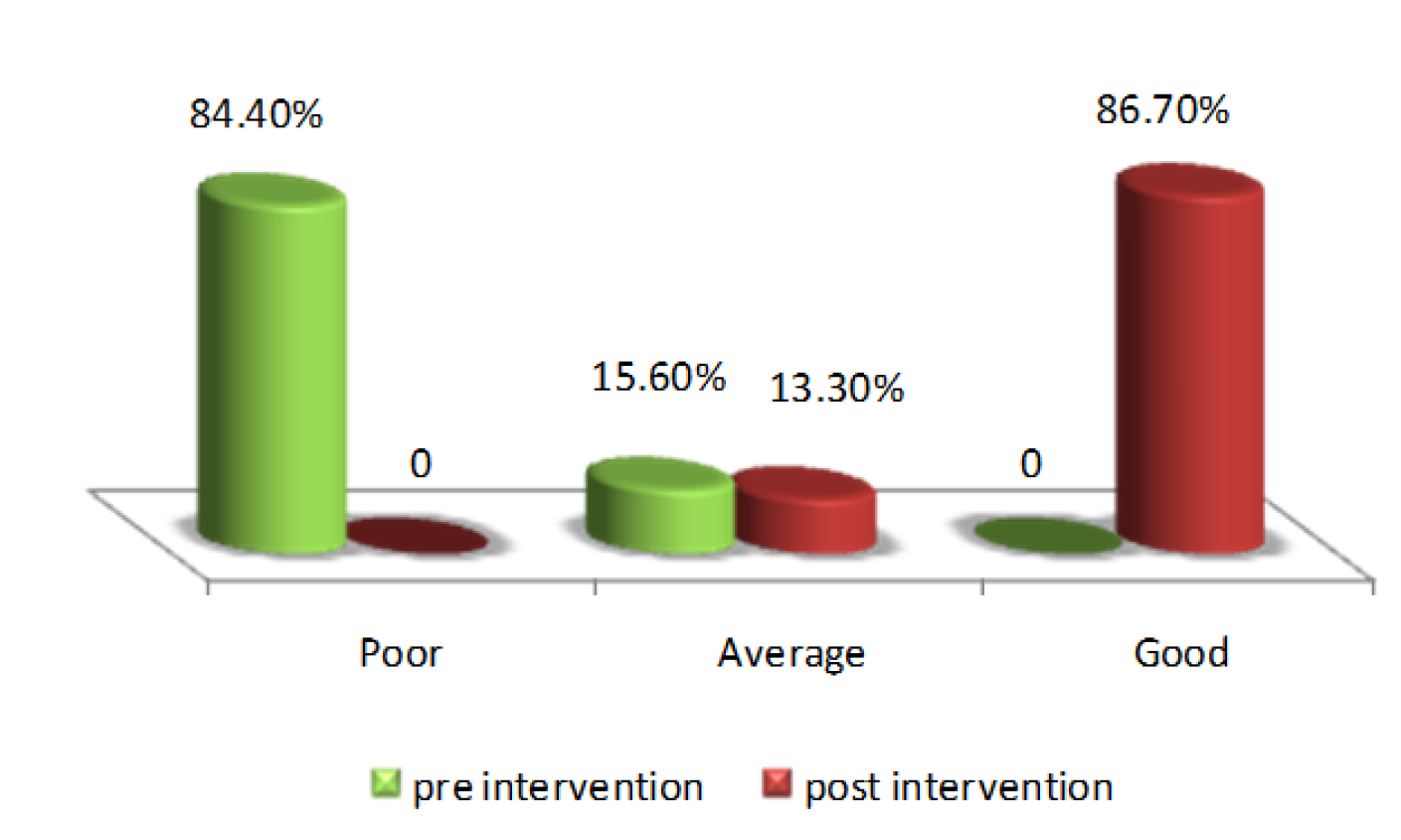
Figure 1, illustrates that a statistical significant difference was observed between studied nurses' total knowledge pre and post implementation of the educational program (p<0.0001). As 84.4% of them had poor total knowledge regarding neonates with jaundice pre implementation of the educational program compared with 86.7% of them had good total knowledge post implementation of the educational program.


Figure 1: Percentage Distribution of the Studied Nurses’ Total Knowledge Regarding Neonatal Jaundice Pre/Post Implementation of the Educational Program


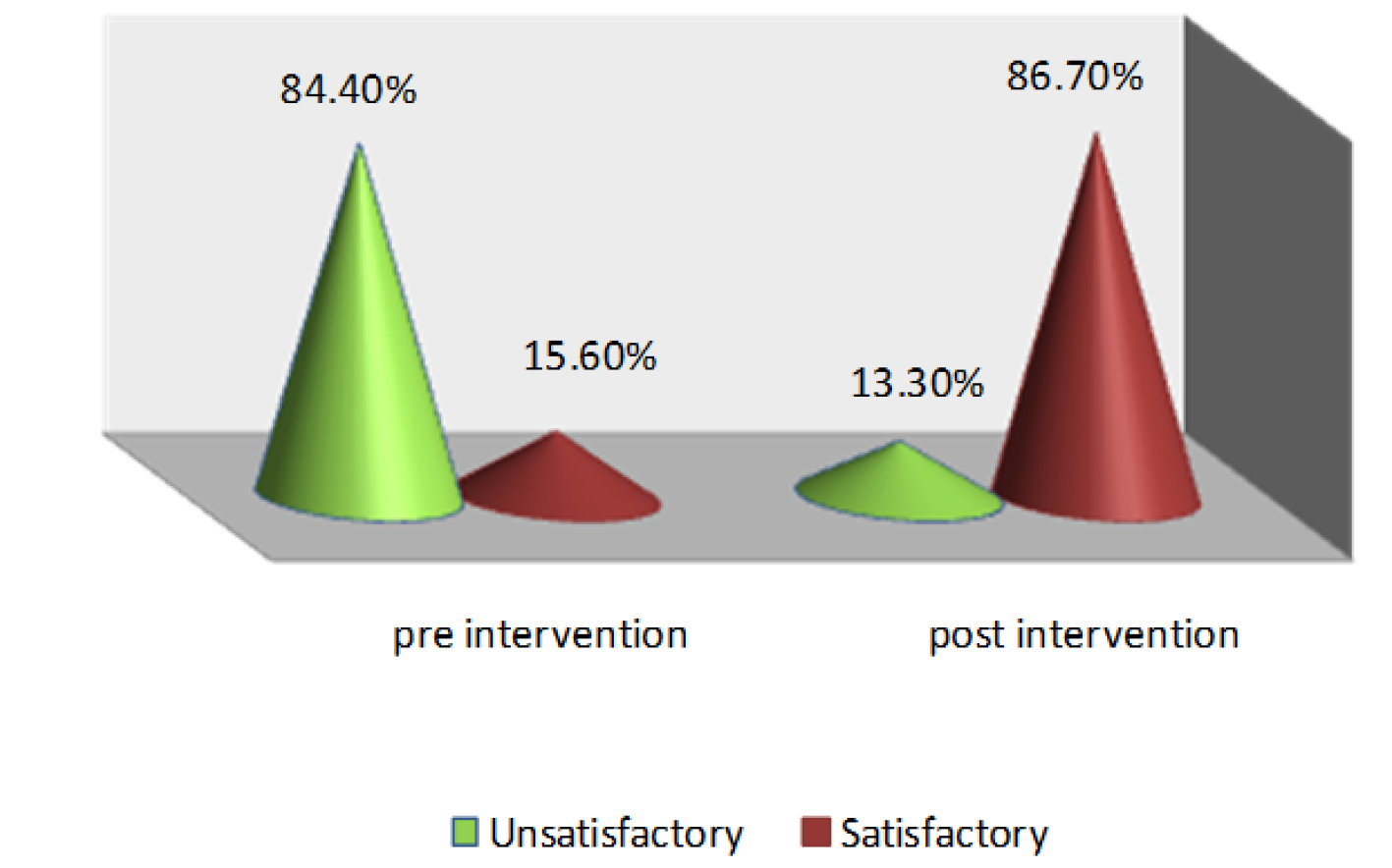
Figure 2, illustrates that there was a statistical significant difference between the studied nurses' total practices regarding care provided to the neonatal jaundice pre/post implementation of the educational program (p<0.0001). As 84.4% of them had unsatisfactory total practices, pre implementation of the educational program compared with 86.7 % of them had satisfactory total practices post implementation of the educational program.


Figure 2: Percentage Distribution of the Studied Nurses’ Total Practices Regarding Care Provided to Neonates with Jaundice Pre/Post Implementation of the Educational Program


Table 3, demonstrates that there was a statistically significant relation between total studied nurses’ knowledge and their total practices’ post implementation of the educational program.


Table 3: Correlation Between the Studied Nurses’ Total Knowledge and Their Total Practices Post Implementation of the Educational Program (n = 45)

Items Total nurses’ knowledge
Total nurses’ practicesrp-value
0.590.0001**


Table 4, demonstrates that, there was a statistically significant difference between the studied nurses’ total knowledge and their qualification (p = 0.032) and attending training courses post implementation of the educational program (p = 0.043). 


Table 4: Relationship Between the Studied Nurses’ Total Knowledge and Their Characteristics at Pre/Post Implementation of the Educational Program (n=45)

ItemsPre-testχ 2pPost-testχ 2p
Poor (38)Average (7)Average (n = 6)Good (n = 39)
Qualification  6.880.032*
Diploma of nursing school1100.0000.590.741100.000.0
Diploma of technical nursing institute 3583.3716.7511.93788.1
Bachelor of nursing sciences2100.00000.02100.0
Attending Training course in Neonatal Jaundice:
Yes 3100.000.0F0.99266.7133.3F0.043*
No 3583.3716.749.53890.5


Table 5, indicates that, there was a statistically significant difference between the studied nurses’ total practice and their age and years of experience post implementation of the educational program (p = 0.0001).


Table 5: Relationship Between the Studied Nurses’ Total Practices and Their Characteristics Pre/Post Implementation of the Educational Program (n = 45)

ItemsPre-test

χ 2

PPost-testχ 2p
Unsatisfactory (n = 38)

Satisfactory (n = 7)

Unsatisfactory (n = 6)

Satisfactory (n = 39)

No.%No.%No.%No.%
Nurses’ Age (in years)
20 < 252482.8517.2F0.39000.028100.0F0.001*
25 < 301090.919.1640.0960.0
30≤ 35480.0120.0000.02100.0
Years of Experience:
1< 52482.8517.2F0.4800.028100.0F0.001*
5 <101090.919.1640.0960.0
10≤15480.0120.000.02100.0


DISCUSSION

Concerning the characteristics of the studied neonates, the present study reflected that, one third of the studied neonates were males. This finding agreed with Abd El Moktader et al. [2], in a study entitled "Hyperbilirubinemia in Neonatal Intensive Care Unit: Incidence and Etiology at Fayoum University Hospital", who showed that the majority of neonates with jaundice were males.


In relation to treatment modalities, the current study reflected that more than two thirds of the studied neonates treated with double phototherapy. This finding was agreed with Asefa et al. [13], in study entitled "Determinants of Neonatal Jaundice among Neonates Admitted to Neonatal Intensive Care Unit in Public General Hospitals of Central Zone, Tigray, Northern Ethiopia" who reported that two third of the cases were treated with phototherapy, blood exchange transfusion and drug therapy together. also, in accordance with Ashor et al. [1], who stated that the neonates were treated under double phototherapy.


According to gestational age of the studied neonates, the present study showed that the gestational age ranged from 36 to 39 weeks (x̄± SD age of 37.05 ± 0.89 weeks). This finding agreed with Abdel Gafour et al. [14], study which entitled "Effect of Nursing Intervention on Care of Neonates Suffering from Hyperbilirubinemia" who demonstrated that the gestational age ranged from 34.24±2.24 and 34.14±1.86 weeks among the studied neonates. 


Concerning the total score of knowledge regarding neonatal jaundice, the majority of the studied nurses had good level of knowledge (x̄± SD 114.93±12.49) post implementation of the educational program compared with preprogram phase. This result could be due to the effectiveness of the program on nurses’ knowledge and practices regarding neonatal jaundice. However, health care professionals should always be encouraged to update their knowledge and maintain clinical competence in care of neonates suffering from jaundice at NICU.


The findings of the study go in the same line with Abdel Gafour et al. [14], who found that, the majority of the studied nurses had adequate knowledge post intervention compared with pre intervention program. Also, Mohamed et al. [3], mentioned that the highest percentage of the studied nurses had a good level of knowledge after the intervention program. 


Regarding total practice scores about neonatal jaundice, the majority of the studied nurses had a satisfactory practices post implementation program. This finding is in accordance Hussian and Aziz, [15], study about "Effectiveness of an education health program on nurses’ knowledge about care of neonatal jaundice at neonatal intensive care unit in Al-Nasiriyah City Hospitals" who demonstrated that nurses had poor practice in care of newborn with neonatal jaundice before application of program in pretest and showed good practices in posttest. 


Concerning correlation between the studied nurses’ total knowledge and their total practices post implementation of the educational program. The present study reflected that there were highly statistical significant positive correlations between total knowledge and total practices (r = 0.59). As stated by Sowunmi et al. [16], that, increased knowledge level of the studied nurses lead to increase practices level and vice versa. This result was supported by Santhi et al. [17], who performed a study namely " A Study to Assess the Effectiveness of Protocol on Care of Newborn in Phototherapy on Knowledge and Practice among Nurses at Selected Hospitals in South India" and found a high correlation (r = 0.80) between the overall mean improvement level of knowledge and practices of nurses regarding care of newborn in phototherapy. The researcher believes that improving knowledge of nurses will result in improvement of their practice in care of neonates at NICU. 


The present study showed that, there were statistical significant difference between the studied nurses’ total knowledge and their qualifications post implementation of the educational program. The nurses’ level of knowledge should be improved with high level of education. This finding was supported by Khudair, [18], who reported that there was a significant relationship between level of education and nurse's knowledge. 


The present study showed that, there were highly statistical significant difference between the studied nurses’ total practices and their age and years of experience post program implementation. This result may indicate that, increase in years of experience had a positive effect on improving level of practice. The study finding was in the same line with Ali et al. [19], in study entitled Nurse’s Skills regarding Care of Preterm Infants in Neonatal Intensive Care Unit Selected in Jazan, KSA, who showed that there was statistically highly significant difference between the years of experiences of nurses and their performance regarding incubator care in most items. In facts increasing nurses’ age and years of experience can affect positively their level of practice regarding care of neonates suffering from jaundice at NICU.

CONCLUSION

In the light of the current study, it can be concluded that, the educational program was effective in improving nursing care given to neonates with jaundice in NICU at Suez Canal University Hospitals.


Recommendations


  • Assessment for barriers hindering nursing care of neonates suffering from jaundice

  • Periodic assessment of knowledge and practice of nurses providing care to neonates with jaundice

  • Proper antenatal care and maternal counseling for prevention of neonatal jaundice

  • Continuous educational programs based on actual need assessment of nurses providing care to neonates with jaundice to update nurses’ knowledge and practices toward providing optimum nursing care for neonates undergoing phototherapy

  • Continuous educational program for nurses' knowledge and practice regarding care of neonates with jaundice at NICU periodically

REFERENCES
  1. Ashor, G. et al. "Effect of a designed nursing care protocol on clinical outcomes of neonates with jaundice." Novelty Journals, vol. 3, no. 3, 2016, pp. 62-76. www.noveltyjournals.com. Accessed 27 November 2017.

  2. Abd El Moktader, A. et al. "Hyperbilirubinemia in neonatal intensive care unit: Incidence and etiology at Fayoum university hospital." Fayoum University Medical Journal, vol. 3, no. 2, 2019, pp. 8-14. fumj.journals.ekb.eg. Accessed 11 June 2020.

  3. Mohamed, A. et al. "Impact of an educational program on nurses’ knowledge and practice regarding neonatal jaundice." Port Said Scientific Journal of Nursing, vol. 3, no. 1, 2016, pp. 74-85.

  4. Pattanshetti, P. and P. Dash. "Review of neonatal jaundice and its management." International Journal of Research – GRANTHAALAYAH, vol. 6, no. 1, 2018, pp. 172-76. https://doi.org/10.5281/zenodo.1162848.

  5. Joke, M. et al. "European neonatal intensive care nursing research priorities: an e-delphi study." BMJ Group, 2014. http://group.bmj.com/group/rights-licensing/permissions.

  6. Ali, R. et al. "Assessment of nurses’ knowledge and practices regarding care of neonates suffering from hyperbilirubinemia and treated under exchange transfusion in neonatal intensive care units in Ismailia hospitals." Master's thesis, Suez Canal University, 2017, pp. 35-39.

  7. Nizzi, V. et al. "Nursing personnel’s knowledge and practice regarding infection control measures in neonatal intensive care unit-effectiveness of structured teaching programme." International Journal of Medical and Health Research, vol. 5, no. 10, 2019, pp. 83-88. www.medicalsciencejournal.com.

  8. Ahmed, S. and M. Hani. "Assessment of nurses’ knowledge and practices working in district hospitals at Minia governorate about neonatal hyperbilirubinemia." Journal of Nursing and Health Science, vol. 6, no. 2, 2017, pp. 9-11. www.iosrjournals.org.

  9. Lomax, A. Examination of the Newborn. 2nd ed., Wiley, 2015.

  10. Lynn, P. Taylor’s Clinical Nursing Skills. 4th ed., Lippincott Williams and Wilkins, 2014.

  11. Bowden, V. and S. Greenberg. Pediatric Nursing Procedures. 3rd ed., Lippincott Williams and Wilkins, 2012.

  12. MacDonald, M. et al. Atlas of Procedures in Neonatology. 5th ed., Lippincott Williams and Wilkins, 2012.

  13. Asefa, G. et al. "Determinants of neonatal jaundice among neonates admitted to neonatal intensive care unit in public general hospitals of central zone, tigray, northern Ethiopia: A case-control study." BioMed Research International, vol. 2020, pp. 1-8.

  14. Abdel-Gafour, F. et al. "Effect of nursing intervention on care of neonates suffering from hyperbilirubinemia." International Journal of Novel Research in Healthcare and Nursing, vol. 7, no. 3, 2020, pp. 142-52. www.noveltyjournals.com. Accessed 12 March 2021.

  15. Hussian, M. and A. Aziz. "Effectiveness of an education health program on nurses’ knowledge about care of neonatal jaundice at neonatal intensive care unit in al-Nasiriyah city hospitals." Indian Journal of Public Health Research and Development, vol. 9, no. 8, 2018, pp. 1191-96. www.indianjournals.com.

  16. Sowunmi, C. et al. "Effect of instructional module on knowledge and its management of neonatal jaundice among nurses in pediatric unit of two selected tertiary hospitals, Ogun state." African Journal of Health, Nursing and Midwifery, vol. 3, no. 3, 2020, pp. 11-12. www.abjournals.org.

  17. Santhi, V. et al. "A study to assess the effectiveness of protocol on care of newborn in phototherapy on knowledge and practice among nurses at selected hospitals in south India." Executive Editor, vol. 11, no. 01, 2020, p. 715.

  18. Khudaire, A. "Assessment of nurses’ knowledge regarding jaundice in basra hospitals." International Journal of Microbiology and Applied Science, vol. 7, no. 9, 2018, pp. 2248-54.

  19. Ali, L. et al. "Nurse’s skills regarding care of preterm infants in neonatal intensive care unit selected in Jazan, KSA." Neonatal and Pediatric Medicine, vol. 5, no. 2, 2019, pp. 1-7. https://www.omicsonline.org/open-access-pdfs/nurses-skills-regarding-care-of-preterm-infants-in-neonatal-intensive-care-unit-selected-in-jazan-ksa.pdf.

Recommended Articles
Research Article
Anti-SRP positive myositis following a SARS-CoV-2 vaccination
Published: 30/05/2022
Download PDF
Research Article
Isolation and Molecular Characterization of Bacterial Pathogens Associated with Circumcision-Related Infections in Pediatric Patients
Published: 30/06/2025
Download PDF
Research Article
Factors affecting pre hospital treatment delay in acute myocardial infarction patients
Published: 30/05/2022
Download PDF
Research Article
Quality of the Nursing Care Provided to Patients Diagnosed with Cerebrovascular Accident (CVA)
Published: 30/03/2024
Download PDF
Chat on WhatsApp
Flowbite Logo
PO Box 101, Nakuru
Kenya.
Email: office@iarconsortium.org

Editorial Office:
J.L Bhavan, Near Radison Blu Hotel,
Jalukbari, Guwahati-India
Useful Links
Order Hard Copy
Privacy policy
Terms and Conditions
Refund Policy
Shipping Policy
Others
About Us
Team Members
Contact Us
Online Payments
Join as Editor
Join as Reviewer
Subscribe to our Newsletter
+91 60029-93949
Follow us
MOST SEARCHED KEYWORDS
Copyright © iARCON International LLP . All Rights Reserved.