In Kenya, most family planning services are utilized by female clients and this has led to this study to establish the factors hindering the utilization of family planning services among men of reproductive age in Langata Sub-County, Nairobi, Kenya. A descriptive cross-sectional research design was used. Convenience sampling technique was used to recruit the study participants. Data was collected using a questionnaire and with key informant interviews. Quantitative data was analyzed statistically while qualitative data was analyzed thematically. The results indicate that 100% of the participants had heard about Family Planning (FP) methods. Knowledge on FP methods for men was high for male condoms (88%), sterilization (24%), while withdrawal was identified by 4% of the participants. 28% of the men felt that family planning was a woman’s affair and only 4% (n-1) had visited a FP clinic. Additionally, 80% of the men reported current use of a FP method by their female partner. Barriers cited as hindering the utilization of family planning services by men include fear of vasectomy, lack of male friendly services, substance abuse and lack of time. The study concluded that men recognize that they have a role to play in family planning but admit that there are barriers to the utilization of family planning services. The study recommends the implementation of transformative family planning programmes that will actively engage men in the family planning agenda. Gender mainstreaming into family planning programmes will also be crucial to address the gender norms that make men shy away from utilizing family planning services.
Keywords
Family Planning
Contraceptive Methods
Men of Reproductive Age
Male Involvement
Vasectomy
Kenya
INTRODUCTION
Kenya’s population has steadily grown from 9 million at the country’s independence in 1963 to 47.6 million in 2019 [1]. Family Planning (FP) has been adopted as one of the strategies for curbing Kenya’s population growth which is projected to be more than 64 million by the year 2030, (National Coordinating Agency for Population and Development, 2010). Indeed, Kenya pioneered fertility control in Sub-Saharan Africa (SSA) and became the first African country to adopt an official family planning policy in 1967 [2]. The FP programme in Kenya has recorded gradual success as evidenced by the increase in Contraceptive Prevalence Rate (CPR) which has improved from 7% in 1970’s to 58 % in the year 2014 [3]. At the same time, the country has witnessed a decline in the Total Fertility Rate (TFR) from 8.1 in 1977 to 3.9 in 2014 [2,3]. The decline in fertility is largely attributed to the adoption and utilization of family planning contraceptives. However, 18% of married women in Kenya still report unmet need for family planning, leading to many unintended pregnancies and increased risk for both maternal and neonatal morbidity and mortality [3]. Despite the good progress made in the adoption and utilization of family planning in the country, male involvement in family planning services has remained low in the country due to many factors including cultural perceptions, access and knowledge barriers as well as policy related barriers [4].
Traditionally, family planning has been gendered and remains a role mostly relegated to women, with men only playing a secondary role [5]. There have been notable global efforts to reposition family planning in the context of sustainable development as evidenced by the International Conference on Population and Development (ICPD) of 1994, the Millennium Development Goals, Sustainable Develo```pment Goals and the commitments of ICPD25. Advocacy for male involvement in family planning in Kenya has been ongoing notably with the enactment of the National Reproductive Health Policy [6] and the roll out of the National Reproductive Health strategy 2009-2015 [7]. Despite all these efforts, male involvement in FP remains low and most family planning services are utilized by female clients [3,4]. It is worth noting that there exist family planning services for men such as vasectomy, condoms and health education and screening for infertility. Gender norms that feminise family planning activities are some barriers to the utilization of family planning services by men in Kenya [4,8,9]. The situation is not unique to Kenya and is documented elsewhere in South Africa [10] and in Nigeria [11].
Despite all the concerted efforts, the involvement of men in family planning services has remained low [4,7]. Even though, men are generally aware of family planning services and contraceptives they are often reluctant to take up the contraceptives themselves [12,13]. There is evidence that involving men in family planning results in improved sexual and reproductive health outcomes [14-16]. Studies have shown that there exists both perceived and actual barriers to the utilization of FP and reproductive health services by men [8,17,18]. Indeed, the male contraception method vasectomy is highly stigmatised in many cultures [19-21].
This study was conducted to explore the factors that hinder the utilization of family planning services among men of reproductive age in Langata Sub County, Nairobi City County. The specific objectives were to:
To establish the level of knowledge of family planning among men in Mugumoini location, Langata Sub County
To explore the percentage of men in Mugumoini location who use family planning services
To establish the barriers to utilizing family planning services by men in Mugumoini location, Langata Sub County
Justification and Significance of the Study
Data from research studies that focus on utilization of FP services by men is still scanty. The finding will add value to existing literature. The results from this study will illuminate on the barriers to the utilization of family planning services amongst men and can be used to develop transformative family planning programmes that take into consideration male involvement. In addition, the purpose of male involvement in family planning is to attain positive outcomes in sexual and reproductive health and it is hoped that the results of this study will be of great use to policy makers, FP practitioners and other stakeholders in addressing the gender gap in the utilization of family planning services.
MATERIALS AND METHODS
Research Design
A descriptive cross-sectional design was used where both quantitative and qualitative data was collected. Study was conducted in Langata subcounty, Mugumoini location in Nairobi City County.
Study Population
The study population was men of reproductive age between 15 and 49 years.
Sampling Procedure and Sample Size
Convenience sampling technique was used in this study to recruit the study participants. Men who were available during the time of data collection were approached and requested to take part in the study. A total of 25 men and three family planning service providers took part in this study.
Data Collection Process
A structured questionnaire with both closed and open-ended questions was used. Additionally, Key Informant Interviews (KIIs) with FP service providers were conducted.
Data Processing And Analysis
The questionnaires were checked for completeness and responses coded and entered excel spreadsheets for easier data analysis. This generated bar graphs, frequency tables and pie charts for the interpretation of data. Descriptive statistics were used to analyses the quantitative data. Qualitative data were analyzed by content analysis to identify the main themes emerging from the data.
Ethical Considerations
Clearance to conduct the study was obtained from the University of Nairobi and the local administration of Mugumoini location. Consent to participate in the study was sought from each of the study participants. All participants signed an informed consent form.
The major limitation in this study is that findings cannot be generalized to all men of reproductive age due to the small sample size used. Additionally, the researcher used nonprobability sampling technique to draw up the sample and therefore the sample of the men that took part in this study may not be representative of all the men in the study area [22], observe that samples drawn conveniently are not representative and therefore findings obtained from such samples cannot be generalized.
RESULTS
Demographic Characteristics of the Respondents
Age
Participants were asked to state their ages in completed years. The mean age was 37 years.
Level of Education
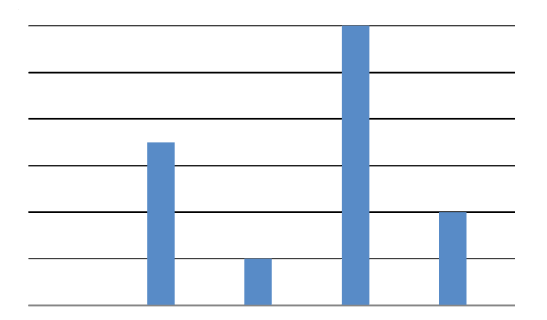
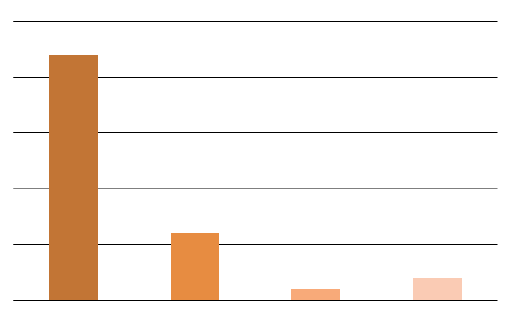
Participants were asked to state the highest level of education completed. 48 % of the participants had competed secondary school education and 28% had completed primary school.16% of the participants had completed higher education including colleges and universities. 8 % (N = 2) had completed vocational training (Figure 1).
Figure 1: Level of Education of Study Participants
Employment Status
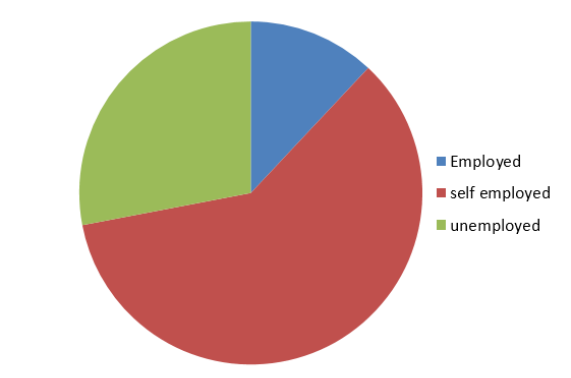
Participants were asked to indicate their employment status. Majority of the participants (60%) were self-employed. Participants who were employed were 12% and the unemployed formed 28% of the study population (Figure 2).
Figure 2: Employment Status
Marital status
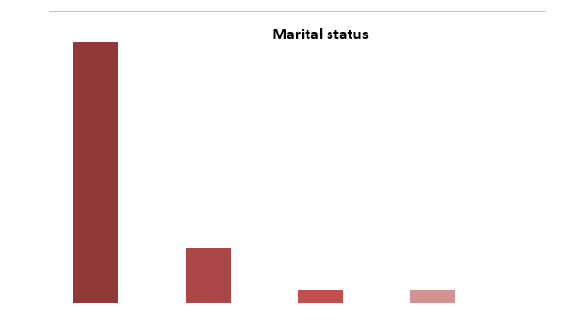
About 76% of the participants (N = 19) reported that they were married. 16% were never married while the divorced and separated study participants constituted 4% each of the study participants (Figure 3).
Figure 3: Marital Status
Number of children
Majority of the participants had either 2 or 3 children (N = 17) and 16 % of the participants did not have children.
Level of Knowledge of Family Planning Services
Ever Heard of Family Planning
All participants (N = 25) reported that they had heard about family planning (Table 1).
Table 1: Ever Heard Of Family Planning
Frequency
Percentage
YES
25
100
NO
0
0
Total
25
100
Knowledge of Family Planning Methods
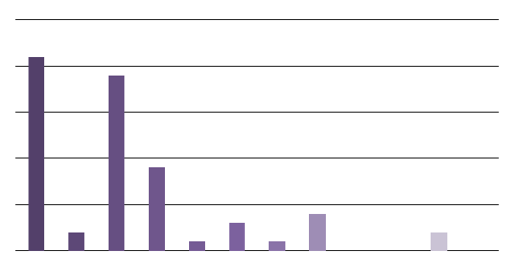
Participants were asked to name the family planning methods that they knew and all the participants could correctly identify at least one method of family planning. Majority (84%) of the participants named male condom as a method of family planning. This was followed by the pill (76%) and then injectables (36%). Only 12% named male sterilization or vasectomy and none of the participants named lactational amenorrhoea method (LAM) and emergency contraception as methods of family planning (Figure 4).
Figure 4: Knowledge of FP Methods
Knowledge of Male Family Planning Methods
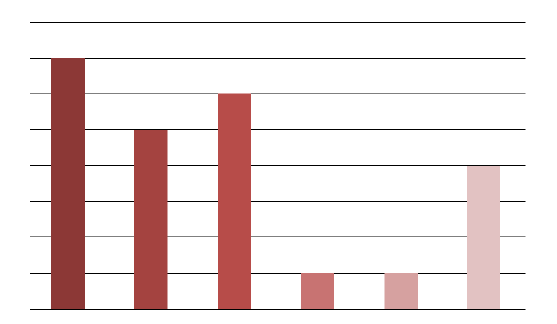
Participants were asked to name the family planning methods that can be used by men. 88% of the study participants (N = 22) named male condoms while 24% identified male sterilization. 4% (N = 1) named withdrawal method and 16 % (N = 2) did not know any family planning method for men (Figure 5).
Figure 5: Knowledge of Male FP methods
Source of Family Planning Information
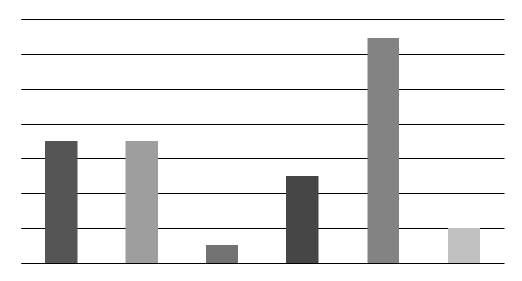
Participants were asked to indicate the source of the information on family planning information that they had. 52% of the participants (N = 13) had received the information from health workers including community health workers who are based at the community. The media including the radio, television and newspapers were also significant in passing information on family planning. 20% of the participants had received the information from their peers or friends and at least 8% had received the information from their female partners (Figure 6).
Figure 6: Source of FP Information
Talked to by a Health Worker in the Last 12 Months
About 68 % of the participants reported that no health worker had talked to them in the last 12 months about family planning while 32% had received a health talk about family planning from a health worker in the last 12 months as at the time of this study (Table 2).
Table 2: Number Talked To By Health Worker On Family Planning
Frequency
Percentage
YES
8
32
NO
17
68
Total
25
100
Utilization of Family Planning Services
Participants were asked whether they had ever sought for family planning services in a health facility. 96% had never visited a health facility to seek for family planning services. Only one participant (4%) had visited health facility to seek for family planning services (Table 3).
Table 3: Ever Visited FP Clinic
No. Ever visited FP clinic
Frequency
Percentage
YES
1
4
NO
24
96
Total
25
100
Reasons for Visiting or Not Visiting a Family Planning Clinic
Participants where further asked to give reasons why they visited or did not visit the health facility. The participant who had visited the health facility explained: “My wife had just given birth and I felt we had enough children. I wanted to space the children”.
Participants who reported never accompanying gave reasons that included: male condoms are available everywhere, saw no need to go since the partner goes, lack of time and FP clinics are mainly for women.
FP Being a Woman’s Affair
Majority of the participants, 72% disagreed that family planning is woman’s affair and 28% agreed that it is a woman’s affair. Majority of those who disagreed (N = 16) felt that FP is a shared responsibility that the couple need to talk and agree. At the same time, 2 participants felt that either the woman or the man can use contraceptives and therefore it cannot be said to be a woman’s affair.
On the other hand, participants who felt that family planning was a woman’s affair tended to share a common perception that it is a woman’s responsibility. One participant put it this way ‘‘it is the woman who gets pregnant and she is therefore responsible” (Table 4).
Table 4: Perception of Family Planning as Being a Woman’s Affair
Frequency
Percentage
YES
7
28
NO
18
72
Total
25
100
Current Use of FP by Couples
About 80 % of the study participants (N = 20) reported using a method of family planning with their partner. 20% reported not using any family planning method (Table 5).
Table 5: Couple Currently Using FP Methods
Currently using FP
Frequency
Percentage
YES
20
80
NO
5
20
Total
25
100
Family Planning Methods Currently in Use
About 28 % of the participants were using male condoms while 24% reported their partners were using injectables. Use of the pill was reported by 20% of the participants and the use of female sterilization and implants was each at 4%. However, 16% (N = 4) did not know the family planning method that their partner was on (Figure 7).
Figure 7: FP Methods Currently In Use by Participants & Their Partners
Ever Accompanied Partner to FP Clinic
About 76% of the participants (N = 19) had never accompanied their partners while 24% had. The participants who had accompanied their partners to the health facility were further asked to give reasons why they did so and 83% (N = 5) said they wanted to give their wives support while one participant said that he wanted the wife to conceive and accompanied her to get more information (Table 6).
Table 6: Ever Accompanied Partner to FP Clinic
Frequency
Percentage
YES
6
24
NO
19
76
Total
25
100
Awareness of Where to Get FP Services
When asked whether they knew where to get family planning services, 92% answered in the affirmative while 8% did not know where to get family planning services (Table 7).
Table 7: Awareness on Where to Get FP Services
Aware of where to get FP services
Frequency
Percentage
YES
23
92
NO
2
8
Total
25
100
Where to Access Family Planning Services
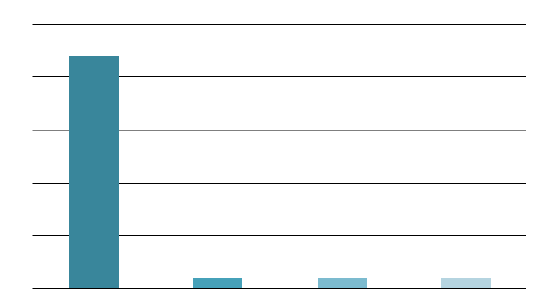
On the same note, participants who knew where to get FP services were asked to name the possible places where one would get FP services and all participants could correctly identify at least one place where FP services can be accessed (Figure 8).
Figure 8: Where to Access FP Services
Majority of the participants (91%) cited health facilities while 8.6% named pharmacies. Health distributors and the shops were each cited by 4.3% the participants.
Barriers to Using Family Planning Services
The 25 study participants together with the 3 key informants were asked what they thought were the barriers to the utilization of family planning services by men. The qualitative data led to the emergence of 6 themes. Each of these themes will be presented in this report separately.
Fear of Vasectomy
Some participants felt that vasectomy or male sterilization was thought by most men as having bad side effects. The most cited myth associated with vasectomy in this study was that it is believed to cause loss of libido in a man.
Being a Man
The view of family planning as being a woman’s affair was cited by 36% of the respondents. One of the respondents said, “they (men) think they are not part of it….it is a woman’s affair”. On the other hand, women were also said to hide family planning use from their husbands as indicated by a key informant, “I am very free with my clients. They (women) tell me everything and they often hide it (family planning) from their husbands”.
A significant number of respondents cited the need for men to sire more children as a barrier to the use of family planning. One respondent had this to say, “A man may need to marry again in future and have more children and this may make him not to go for family planning (vasectomy)”. One of the key informant interviewees also observed that cultural beliefs in Africa may act as barrier to family planning use citing an instance where men may not accept condom demonstration by female health providers. A participant when asked why he has never visited a health facility to seek for family planning said, “I don’t need to go to the health centre when she (the wife) is going. It is the duty of the woman to go since family planning is for women”.
Lack of Men Friendly Services
It came out severally from the study participants that most family planning contraceptives are made for women and that men have limited choices. It was also pointed out that health service providers may have an attitude that may discourage the use of services by men. A key informant said, “When men come to ask for condoms from the facility, the service provider may think the man is promiscuous and this may discourage them (men) from collecting condoms”.
Another key informant cited stigma associated with men going for family planning services in the society, “like here where I work, I only have one male client for family planning (condoms)”. Another key informant noted that there was lack of gender equality in the allocation of providers to the family planning clinic and that that it was mainly female service providers that are allocated to the family planning rooms. This according to the key informant “makes men shy away”.
Substance Abuse
Alcohol and drug use were also raised by 7% of the participants as acting as a barrier to the use of family planning services by men.
Lack of time
Other respondents cited those men are busy with work and thus lack time to go for family planning services. A key informant said, “Men generally don’t like queuing and therefore lack of enough staff will discourage them (men) from coming to the family planning clinics.
DISCUSSION
Results of this study demonstrate that men know the existence of family planning and this is supported by the KDHS report [3]. It is evident from this study that knowledge about family planning contraceptives does not translate into their usage. Transformative interventions geared towards changing gender norms may be necessary. Similarly, this study illuminates the gender power differences that exist between men and women as indicated by most women reportedly using family planning contraceptives in hiding. Meaningful male involvement will ensure that couples can openly and freely talk about family planning and choose the most suitable method for them. In most African settings, the burden of nurturing and reproductive roles including family planning are taken up by women [5,10,23]. This amplifies the cultural gender role expectations on men in many African communities. In this study, some men expressed fear and resentment of vasectomy. Other studies have documented those men who have undergone vasectomy do so in secrecy and are embarrassed to disclose the same [23], An important finding in this study is that health workers and the media emerged to be the main sources FP information, a fact documented in a national survey on utilization of FP by men in Kenya [4].
CONCLUSION
It is apparent from this study that there are several factors hindering the utilization of family planning services by met. The recognition of cultural impediments to the utilization of family planning services by men in this study can provide a basis for the development of targeted male involvement programmes that will not only create awareness to men but also challenge the long held gendered expectation that women control fertility. Furthermore, the results of this study can be used in the advocacy of male involvement initiatives in family planning. The assertiveness of men in this study as key decision makers about use of contraceptives by the female partners is significant. On the same note, men’s desire and support for family planning as evidenced in this study may serve as a platform for meaningful male engagement in family planning programmes. Deliberate programmes will be needed to engage men to reflect on their roles in family planning. This may involve going to the men instead of waiting for them to go to the health facilities. Orientation of service providers on gender norms that hinder uptake of family planning is needed to allow the service providers engage men effectively by mainstreaming gender into the family planning programmes. Training of more health workers to avoid long waiting times for family planning clients may be helpful to male family planning users. A more couple oriented approach to the delivery of family planning is also recommended so that men do not feel as though family planning clinics are meant for women only. Empowering women so that they can engage their partners in family planning use and to avoid women using FP contraceptives in hiding Overly, this study underpins the need for gender-equitable ways to increase the reproductive role of men especially in family planning and therefore gender mainstreaming in community health projects will be imperative. Further research to establish the solutions to low male involvement in family planning services is recommended.
Acknowledgment
The authors would like to thank all those involved in the study. We would like to appreciate the participants who availed themselves to be interviewed and share their invaluable perceptions. RM would like to thank Dr Tom Odicho of the University of Nairobi, Institute of Anthropology, Gender and African Studies for his guidance during this research project.
REFERENCES
Kenya National Bureau of Statistics. Kenya Population and Housing Census. Government of Kenya, 2019.
National Council for Population and Development. The State of Kenya Population 2020: Zero Harmful Practices – Accelerating the Promise of ICPD25. Government of Kenya, 2020.
Kenya National Bureau of Statistics. Kenya Demographic and Health Survey (KDHS). Government of Kenya, 2014.
National Council for Population and Development. National Survey on Male Involvement in Family Planning and Reproductive Health in Kenya. Government of Kenya, 2014.
Were, O.E. and J.K. Karanja. “Attitudes of males to contraception in a Kenyan rural population.” East African Medical Journal, vol. 71, no. 2, 1994, pp. 106–109.
Ministry of Health. National Reproductive Health Policy. Government of Kenya, 2007.
Ministry of Health. National Reproductive Health Strategy 2009–2015. Government of Kenya, 2009.
Onyango, M.A.et al. “Factors that influence male involvement in sexual and reproductive health in western Kenya: A qualitative study.” African Journal of Reproductive Health, vol. 14, no. 4, December 2010, pp. 32–42.
Kriel, Y.et al. “Male partner influence on family planning and contraceptive use: Perspectives from community members and healthcare providers in Kwazulu-Natal, south Africa.” Reproductive Health, vol. 16, no. 89, 2019. https://doi.org/10.1186/s12978-019-0749-y
Ademola, A.et al. “Male involvement in family planning: Challenges and way forward.” International Journal of Population Research, 2014. https://doi.org/10.1155/2014/416457
Bawah, A.A.et al. “Women's fears and men's anxieties: The impact of family planning on gender relations in northern Ghana.” Studies in Family Planning, vol. 30, no. 1, March 1999, pp. 54–66. https://doi.org/10.1111/j.1728-4465.1999.00054.x
Walston, N. Challenges and Opportunities for Male Involvement in Reproductive Health in Cambodia. USAID, 2005. Retrieved from http://pdf.usaid.gov/pdf_docs/PNADD199.pdf
Hartman, M.et al. “Changes in couple communication as a result of a male involvement family planning intervention.” Journal of Health Communication, vol. 17, no. 7, 2012, pp. 802–819. https://doi.org/10.1080/10810730.2011.650825
World Health Organization. Programming for Male Involvement in Reproductive Health: Report of the Meeting of WHO Regional Advisers in Reproductive Health, WHO/PAHO, Washington DC, USA, 5–7 September 2001. WHO, Geneva, 2002. Retrieved from http://apps.who.int/iris/bitstream/handle/10665/67409/WHO_FCH_RHR_02.3.pdf
Shah, N.M.et al. “Comparing private sector family planning services to government and ngo services in ethiopia and Pakistan: How do social franchises compare across quality, equity and cost?” Health Policy and Planning, July 2011, pp. 63–71. https://doi.org/10.1093/heapol/czr027
Fapohunda, B.M. and N. Rutenberg. Expanding Men’s Participation in Reproductive Health in Kenya. African Population Policy Research Center, Nairobi, 1999.
Wilkinson, D.et al. “Improving Vasectomy Services in Kenya: Lessons from a Mystery Client Study.” Reproductive Health Matters, vol. 4, no. 7, 1996, pp. 115–121. https://doi.org/10.1016/S0968-8080(96)90013-0
Richardson-Tench, M.et al. Research in Nursing: Evidence for Best Practice. 4th ed., Cengage Learning, South Melbourne, Victoria, Australia, 2011.
Li, J. “Gender Inequality, Family Planning and Maternal and Child Care in a Rural Chinese County.” Social Science & Medicine, vol. 59, no. 4, August 2004, pp. 695–708.
Recommended Articles
Research Article
Anti-SRP positive myositis following a SARS-CoV-2 vaccination
Josef Finsterer
Published: 30/05/2022
Download PDF
Research Article
Isolation and Molecular Characterization of Bacterial Pathogens Associated with Circumcision-Related Infections in Pediatric Patients
Ghanim A. Abbas
Published: 30/06/2025
Download PDF
Research Article
Factors affecting pre hospital treatment delay in acute myocardial infarction patients
R. Jyoti Velmurugan,
Deepa Chugh
Published: 30/05/2022
Download PDF
Research Article
Quality of the Nursing Care Provided to Patients Diagnosed with Cerebrovascular Accident (CVA)
Qassim Jawell Odah Abed,
Hussein Abdulmohsin Dabis
Published: 30/03/2024
Download PDF
PO Box 101, Nakuru
Kenya.
Email: office@iarconsortium.org
Editorial Office:
J.L Bhavan, Near Radison Blu Hotel,
Jalukbari, Guwahati-India
Maithya, R. M. & Nyongesa, M. W. (2021). Factors that hinder the utilization of Family Planning services among men of Reproductive Age in Langata Sub-County, Nairobi, Kenya. International Academic Journal of Advanced Practices in Nursing, 2(2), 1-7.
MLA
Maithya, Ruth M. and Margaret W. Nyongesa. "Factors that hinder the utilization of Family Planning services among men of Reproductive Age in Langata Sub-County, Nairobi, Kenya." International Academic Journal of Advanced Practices in Nursing 2.2 (2021): 1-7.
Chicago
Maithya, Ruth M. and Margaret W. Nyongesa. "Factors that hinder the utilization of Family Planning services among men of Reproductive Age in Langata Sub-County, Nairobi, Kenya." International Academic Journal of Advanced Practices in Nursing 2, no. 2 (2021): 1-7.
Harvard
Maithya, R. M. and Nyongesa, M. W. (2021) 'Factors that hinder the utilization of Family Planning services among men of Reproductive Age in Langata Sub-County, Nairobi, Kenya' International Academic Journal of Advanced Practices in Nursing 2(2), pp. 1-7.
Vancouver
Maithya RM, Nyongesa MW. Factors that hinder the utilization of Family Planning services among men of Reproductive Age in Langata Sub-County, Nairobi, Kenya. International Academic Journal of Advanced Practices in Nursing. 2021 Jul;2(2):1-7.



 Download PDF
 Download XML