Violation of psychological contracts may have a drastic effect on ethical conduct on the part of employees in an organization. This paper explores the connection between the psychological contract violation and the moral voice with the moderator action of moral disengagement. The proposed study is based on the Social Exchange Theory and Social Cognitive Theory that psychological contract violation decreases the willingness of employees to voice morals and enhance the likelihood of moral disengagement. A structured questionnaire was used to collect data on employees who work in two large banks in Iraq in the public sector. The purposive sampling method was used, and the analysis of the responses was conducted with Structural Equation Modeling using SmartPLS on 300 sample size. The findings show that the violation of psychological contract causes a strong negative impact on moral voices and a positive impact on moral disengagement. Moreover, the relationship between psychological contract violation and moral voice is also moderated by moral disengagement considerably, with the negative relation being stronger when moral disengagement is high.
Keywords
Psychological Contract Violation
Moral Voice
Moral Disengagement
Banking Industry
Iraq
INTRODUCTION
The modern organizational environment is becoming more sophisticated and dynamic, posing complex problems and challenges to the employees, and ethical dilemmas that require good judgment and action [1]. In such a dynamic environment, a psychological contract, which is an unwritten mutual expectation between workers and their organization, can be considered a basic structure of workplace relationship regulation [2,3]. Nevertheless, the fact that organizations do not deliver these unspoken promises- Psychological Contract Breach (PCB) is a frequent phenomenon with serious implications on employee attitudes and behaviors [3]. In addition to the cognitive appraisal of PCB, the employees are mostly subjected to a strong negative emotional reaction called Psychological Contract Violation (PCV), which is a response of anger, frustration, and betrayal [3-5]. This emotional distress has proved to play a critical role in the translation of perceived breaches into different undesirable outcomes, including decreased job satisfaction, decreased organizational commitment, and increased intentions to quit [2]. The consequences of PCV are not limited to general attitudes, but the phenomenon has a great influence on the moral functioning of employees at the workplace. In particular, the ability of staff members to raise the Moral Voice, which is defined as the ability to speak out about ethical issues and dubious practices, is crucial to the development of an ethical organizational climate [1]. On the other hand, the predisposition toward the so-called Moral Disengagement enables people to justify immoral actions, in other words, to turn off their moral self-prohibitions [6,7]. It is critical to constructions, especially in an area such as the banking sector, where ethical behavior, trust, and accountability are key to organizational integrity and public trust.
Problem Statement
Although the role of the psychological contract is acknowledged, and the negative consequences of its breach are also noted, the studies have mostly concentrated on the responses of an average employee and counterproductive behaviours such as job procrastination and emotional fatigue [2]. There is still an acute gap in the knowledge of the very mechanisms by which PCV has a direct effect on the moral conduct of the employees, specifically whether they are willing to use Moral Voice or not, and whether they are more likely to engage in Moral Disengagement. Although it is demonstrated that authentic leadership can develop the moral voice with the help of self-regulatory processes, including constructive cognition and moral efficacy [1], the influence of negative experiences, such as PCV, on the dimensions of moral voice is less evident. On the same note, although the concept of moral disengagement has been known to promote unethical pro-organizational behaviors [6], the role of PCV in initiating or enhancing this disengagement, and by extension silencing moral voice, has not been studied extensively.
These relationships become specifically important in the specific and rather sensitive environment of the Iraqi banking sector, which functions in a specific socio-economic and regulatory framework. State-owned banks, such as Rafidain Bank and Rasheed Bank are key players in the national economy and the perceptions of the employees regarding fairness and treatment in an ethical way can have a significant impact on their moral compass and readiness to confront ethical breaches. Unfulfilled promises will result in high PCV, which, in turn, may be the cause of frustration and betrayal, moral courage and ownership of an employee may decline, which will prevent the latter to speak in their own moral voice [4]. At the same time these negative experiences could provide good soil to moral disengagement, since the employees may justify their silence or even unethical behaviors as a survival strategy to organizational injustice. Thus, the relationship between PCV, Moral Voice, and Moral Disengagement in this particular setting should be thoroughly studied so that the essential levers to promote ethical behavior and open dialogue could be found.
Research Questions
How great is the adverse effect of Psychological Contract Violation (PCV) on the Moral Voice of the employees in the Iraqi banking industry
Does Psychological Contract Violation (PCV) have a positive relationship with Moral Disengagement in employees in the Iraqi banking industry
Is there a moderating role of Moral Disengagement on the relationship between Psychological Contract Violation (PCV) and Moral Voice among employees in the Iraqi banking industry
Objectives
To investigate the direct correlation between Psychological Contract Violation and Moral Voice in employees in state-owned commercial banks in Iraq
To examine the direct correlation between Psychological Contract Violation and Moral Disengagement in the Iraqi banking industry
To investigate the moderating effects of Moral Disengagement to the relationship between Moral Voice and Psychological Contract Violation
To contribute to theory and practice by offering context-specific data on employee moral behaviour in the under-researched Iraqi banking sector
The proposed study has a quantitative, cross-sectional design, where empirical data is gathered, based on self-report questionnaires, on about 300 employees of two large state-owned commercial banks in Iraq. Structural Equation Modeling (SEM) would be used to test the hypothesized relationships between Psychological Contract Violation, Moral Voice, and Moral Disengagement.
Outline
The rest of the paper is organized as follows: Section 2 provides a literature review on the current research on the psychological contracts, moral voice, and moral disengagement, which is followed by the establishment of certain hypotheses. Section 3 outlines the research methodology, such as sampling procedures, measurement instruments, and data analysis plan. The findings of the empirical analysis are provided in Section 4. Lastly, Section 5 presents the major findings, their theoretical and practical implications to the Iraqi banking industry, the research limitations, and the future research directions.
Literature Review and Hypotheses Development
The section gives an in-depth overview of the theoretical background and empirical data surrounding psychological contract breach, moral voice, and moral disengagement. It formulates the conceptual framework of the study and formulates the specific hypotheses.
Theoretical Framework
This paper combines the concept of the Social Exchange Theory (SET) [8] with the findings of the Social Cognitive Theory (SCT), especially the concept of moral agency, [7] to elaborate the multifaceted relations between the violation of a psychological contract, moral voice, and moral disengagement.
According to Social Exchange Theory, social relationships can be described as an exchange of resources and rewards, the individuals are trying to make the exchange balanced and fair. In the organizational set up, the employees will give effort, loyalty, and skills in return for fair treatment, payment and organizational support. One of the expressions of this type of relationship is the psychological contract [9]. A Psychological Contract Breach (PCB) is realized when a promise made by an organization is not fulfilled by the employees. This mental evaluation can result in emotional response, Psychological Contract Violation (PCV), which is anger, betrayal, and frustration [10]. Set says that the perceived balance of the exchange is broken by PCV, which causes employees to give back negatively in terms of attitudes and behavior, or by not giving discretionary pro-social actions [11].
Social Cognitive Theory (SCT) focuses on how cognitive, behavioral and environmental factors influence human functioning. In SCT, moral agency means the ability of a person to control his moral behavior [12]. Moral ownership, moral courage, and moral efficacy are the key aspects of moral agency that is essential in acting on moral judgment [13]. Nevertheless, other people may also be Morally Disengaged, which is a cognitive process that selectively disengages moral self-sanctions, that enables an individual to commit actions that they would consider immoral without experiencing feelings of guilt or self-blame [9].
By combining these theories, our model suggests that PCV as a form of a radical violation of the social exchange affects the willingness of an employee to be involved in Moral Voice (a pro-social behavior) negatively and also promotes Moral Disengagement as a coping or rationalization strategy. Moreover, we suppose that Moral Disengagement is a moderator, which amplifies the negative influence of PCV on Moral Voice as it undermines the moral agency of the individual and facilitates the repression of moral concerns.
Psychological Contract Violation (PCV)
Psychological contract is the primary concept in organizational behavior and it describes the implied mutual obligations between workers and their employer [14]. The changing employment environments that have been characterised by high uncertainty have increased its significance [3]. Psychological Contract Breach (PCB) is a term used to refer to the cognitive perception of an employee that the organization has not fulfilled its obligation as promised [15] Such an impression may be occasioned by the unmet expectations concerning job security, training, promotion, or fair treatment [16].
In addition to this mental evaluation, Psychological Contract Violation (PCV) is another emotional and affective reaction to the perceived violation on the part of the employees [17]. PCV is the feeling of anger, frustration, and betrayal, which is a higher level of injustice than a breach [18]. The empirical studies always prove that PCV is an essential variable used to explain a broad range of adverse workplace outcomes. Indicatively, [19] established that PCV completes the relationship between PCB and job satisfaction, organizational commitment, intentions to quit, perception of organizational support, and several aspects of organizational citizenship behavior (OCBs) [20]. also associated PCV with job procrastination and emotional exhaustion, pointing at its omnipresent negative impact on the well-being and productivity of employees. These articles highlight the powerful effect of PCV on negative reciprocation among employees, which is consistent with SET principles.
Moral Voice
Moral Voice is the willingness and voluntary action of an employee to report an ethical issue, dubious practice, or possible malpractices in an organization, hoping to improve organizational operation [1]. It is a serious pro-social conduct, which is discretionary and may be at risk [1,5]. The moral voice behaviors are based on the moral potency of an employee which includes moral ownership, moral courage, and moral efficacy [4]. Moral ownership is the understanding of personal responsibility of moral problems, moral courage is the strength to do moral things despite danger, and moral efficacy is the conviction in the ability to accomplish moral actions [4].
Authentic leadership has been cited as one of the antecedents of building moral voice because authentic leaders provide role models of self-regulating behaviors and build an open and trusting atmosphere where employees feel free to voice their concerns. The mediation of this power is achieved by the constructive cognition and moral efficacy of followers, which contribute to moral maturity and trust in their moral competence in acting ethically in employees [1]. Moral voice is therefore not only recognizing problem but also advocating ethics having a moral compass in the heart and the courage to speak up.
Moral Disengagement
Moral Disengagement is a collection of psychological processes by which people tend to selectively detach their moral self-sanctions to their actions so that they can behave in an unethical manner without feeling guilty and without condemning themselves [7]. These processes are moral justification, advantageous comparison, displacement of responsibility, diffusion of responsibility, distortion of the consequences, dehumanization, and blame attribution [6]. With the help of these mental mechanisms, people are able to justify their unethical behavior or lack of it and make it look less wrong or more tolerable [6].
Moral disengagement undermines the connection between moral standards and moral behavior of a person, which exposes them to more risks of becoming involved in or accepting unethical actions [6]. It has been demonstrated that moral disengagement is a major mediator between several antecedents (e.g., organizational identification, bottom-line mentality) and unethical pro-organization behavior [21]. The organizational contexts can contribute to the increased vulnerability of employees to moral disengagement as a form of coping or a means of minimizing cognitive dissonance when the organizational situation is inadequate in addressing ethical concerns or when the employees feel that they are treated unfairly by the organization [22]. This is especially applicable in the context of ethical dilemmas of employees when there is a conflict of interests between the organization and the wider moral principles, as witnessed in the case of unethical pro-organizational behavior [23].
Hypothesis Development
Based on the Social Exchange Theory and Social Cognitive Theory, we would like to state the following hypotheses:
Hypothesis 1
Psychological Contract Violation (PCV) will have negative correlation with Moral Voice.
As SET says, employees will be rewarded in a way they are treated by their organization [8]. With the occurrence of PCV, employees feel that there is a drastic imbalance and unfairness in the exchange relationship and develop the sense of betrayal and frustration [5]. This negative affective condition causes employees who are less ready to be in discretionary pro-social actions like voice with moral concerns (Moral Voice) as negative reciprocity. [19] established that PCV results in the low organizational citizenship behaviors, which frequently involve constructive voice forms. PCV destroys moral voice which is based on moral ownership and courage [1], which requires a sense of commitment and psychological safety. When employees experience betrayal, they are less likely to go against group decision or challenge a leader in matters relating to unethical behavior when they feel that the organization has unfairly treated [1]. Therefore, breached psychological contract is likely to reduce the desire of an employee to promote ethical behavior.
In the event of PCV, the felt organizational injustice leads to psychological distress and cognitive dissonance [2]. Employees have to find a way out of these adverse feelings and the persistent presence in an environment that they consider unfair or one that betrays them, and this can be done through moral disengagement mechanisms [9]. With the removal of moral engagement, employees are able to justify their diminishing performance, lack of action or even minor violation of ethical standards without experiencing any internal conflict. As an example, they may shift the responsibility onto the organization (They broke their vows, so they are not obliged to devote their moral best to the case) or downplay the consequences of their silence on ethical matters. The process assists them in justification of their actions in reaction to perceived wrongful actions in the organization [6]. Thus, PCV will likely generate a fertile soil of moral disengagement as a mental adjustment to the perceived injustice.
Hypothesis 2
Moral Disengagement will mediate the association between Psychological Contract Violation (PCV) and Moral Voice, where the negative association will be greater in case of high moral disengagement.
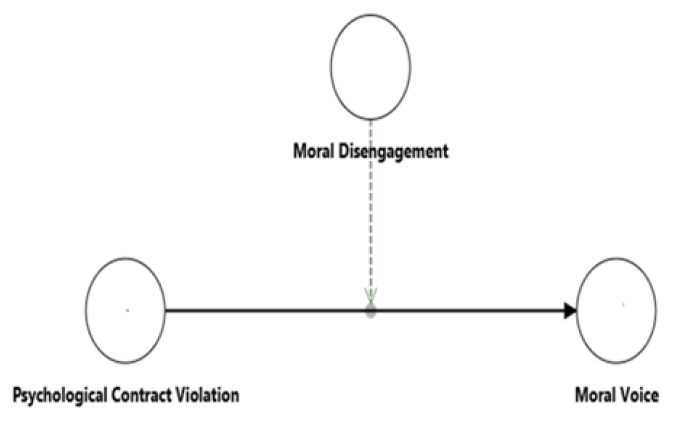
The essence of moral Disengagement undermines the relationship between the moral standards of an individual and his/her actions [9]. Moral voice is demanding, and it needs excellent moral agency, such as moral ownership and moral courage [4], and it is often risky to the individual. In the case of PCV, intrinsic motivation to exercise moral voice by the employees is already low (Hypothesis 1). Provided, at the same time, they are highly morally disengaged, this cognitive off-switch to moral self-sanctions gives them a convenient way out of their silence. Moral disengagement is high, which enables employees to be disengaged with the moral consequences of failure to speak up and the adverse effect of PCV on moral voice becomes even greater. However, when the moral disengagement of employees is low, their high moral compass can lead them to raise the issue even after they have PCV, thus alleviating the adverse impact of PCV on moral voice [1]. Moral disengagement, therefore, would enhance the negative impact of psychological contract violation on the inclination to act ethically among the employees. Thus, the theoretical framework as follows (Figure 1):
Figure 1: Theoretical Model
METHODOLOGY
Data Sampling and Data Collection
This part describes the data collection and sampling methods that were used to examine the effect of Psychological Contract Violation on Moral Voice moderated by Moral Disengagement in the banking industry in Iraq.
Context of the Study
The empirical evidence used in this research was obtained among the employees of two large state-run commercial banks in Iraq: Rafidain Bank and Rasheed Bank. These banks were selected based on the fact that they are the biggest state banking institutions in Iraq [24]. They all utilize a large number of employees working in many branches around the nation and hence offer the right and representative situation of studying how employees view organizational behavior, psychological contracts, and morality in a large government sector industry.
Target Population
The population that was used in the study was the operational and administrative employees who were directly involved in the daily banking operations within the branches of the sampled banks. This came with an array of jobs, including customer service officers, tellers, loan officers, account officers, administrative support staff, and branch supervisors. To secure the topicality and the richness of answers, senior executives and temporary employees were not to participate in the study explicitly, as it is aimed at the employees who are directly engaged in the current organizational interactions and processes. One of the inclusion criteria was critical inclusion criteria, whereby all participants had to have at least two years of continuous work experience in the same branch. This criterion was set to make sure that the respondents had enough organizational tenure and a holistic view of the psychological contract, management practice, and workplace relationship to provide valuable and informed answers on psychological contract violation, moral voice, and moral disengagement in their organization.
Sampling Technique
This study took the form of a purposive sampling method. The sampling technique was selected as non-probability since it is possible to select the participants by design according to the given eligibility criteria, especially those who have the relevant work experience and direct continuous exposure to the organizational environment. Considering the practical limitations inherent like the research and the limited access that would be experienced in the process of undertaking research in the banking institutions in Iraq, it was impossible to have a full sampling frame to achieve probability sampling. Thus, purposive sampling was an effective and appropriate way of selecting respondents who are in the best position to offer credible and useful data that would be relevant to the variables and objectives of the study.
Sample Size
The required sample size was to be large enough to guarantee the statistical reliability and validity necessary in Structural Equation Modeling (SEM) analysis. This study had a target sample of about 300 employees because this is the recommended sample size [25] to ensure that the analysis has a high level of strength and external validity. The questionnaires were sent with the purpose of getting a balanced response from the two institutions, where about half of the responses were targeted to be gotten at Rafidain Bank and the rest at Rasheed Bank.
Data Collection Procedure
The data collection process was done in several well-managed phases to maintain ethical compliance and quality of data. To start with, the management of both Rasheed Bank and Rafidain Bank, as well as the authorities of the respective administrative bodies, were required to give formal consent. In the process of these preliminary interactions, the purpose of the study, the academic character of the study, and the high levels of confidentiality of all responses of the participants were well explained.
Once institutional approval was granted, researchers conducted fieldwork by visiting specific branches. In these visits, the branch supervisors helped to assess qualified employees by determining the people who met the predetermined inclusion criteria. Nevertheless, the researchers also talked directly to each possible subject, explaining the purpose of the research and the fact that their involvement was voluntary, and that all information would be kept confidential and anonymous. The participants were also assured that their personally identifying information would not be collected and that the data would be used solely for academic research, thereby reducing the possibility of response bias, including social desirability.
The structured questionnaires were conducted through physical (paper-based) and online survey methodology, where the respondents were given the option of the method through which they would like to complete it. The respondents were specifically asked to fill out the questionnaires without consulting their colleagues to be able to guarantee the genuineness and uniqueness of the answers. The data collection process lasted about four weeks in the months of March and April 2026. The researchers gathered the completed paper surveys using sealed envelopes immediately, and online submissions were stored automatically in a confidential and encrypted survey database.
Measures
Self-report questionnaires were used to evaluate all the study variables. To reduce possible common method bias, the participants were guaranteed that their names would remain undisclosed and their data would be kept confidential. All the measures were modified into Likert scales based on the context of the banking industry.
Psychological Contract Violation (PCV).
Psychological Contract Violation (PCV) was assessed with a 4-item scale, which was also adapted by [3], that included the emotional and affective reaction to the perceived violation. The answers were gathered on a 5-point Likert scale, with 1 (Strongly Disagree) to 5 (Strongly Agree). An increased score means a more intense sense of psychological contract violation. This reflects the emotions of anger, frustration or betrayal of the banking employees when they feel that their psychological contract has been breached.
Moral Voice
The scale of the scale to measure Moral Voice was a 6-item scale that is based on the moral potency scale by [4], modified and applied by [1]. This scale is a self-reported behavior of speaking up on moral issues by employees and combines both moral ownership and moral courage. As reported by [1], their 6-item scale is based on the initial 7-item moral ownership and moral courage (4 courage, 3 ownership) scale after merging two items and dropping one based on the considerations of the empirical fit. To carry out the research, the six items listed below, including both moral courage and moral ownership will be employed, and the participants will answer the questions on a 5-point Likert scale (1 = Strongly Disagree to 5 = Strongly Agree).
Moral Disengagement
The scale of Moral Disengagement was based on a 5-item scale modified by [26] and applied by [6], which captures the psychological processes by which individuals justify the ethically unacceptable actions and disconnect with moral standards. Respondents responded to a 7-point Likert scale (1= Strongly Disagree, 7= Strongly Agree). An increase in the score means a greater inclination toward moral disengagement. Within a banking setting, this is associated with the employees' defensive actions that can be in violation of ethical guidelines.
Control Variables
The control variables were age, gender, and tenure in the organization because those demographic variables have been demonstrated in organizational studies to cause employee attitudes and behaviors [1]. Age was developed in years, gender was a binary variable (e.g., 0=Male, 1=Female), and organizational tenure was the number of years in the present organization.
Respondent Profile
Table 1 shows the demographic attributes of the respondents to be used in the study. As far as gender is concerned, the findings revealed that 60 percent of the respondents were men (n = 180) and 40 percent were women (n = 120). This distribution shows that the workforce in the sampled banks is more dominated by male employees, but the presence of female employees is also significant. Age-wise, most of the respondents are aged between 31 and 40 years (40%), then employees less than 30 years (30%), and lastly, those over 40 years (30%). This distribution implies that the majority of the participants are in the middle of their careers, which is typically connected with higher professional experience and knowledge of organizational practices.
In terms of work experience, the results show that most respondents (80) have work experience of 6 to 10 years, with 18% having a work experience of over 10 years. A minimal percentage (2) indicated 2 to 5 years of experience. The fact that in the study, the respondents needed to have at least two years of experience in the same branch, this distribution proves that the majority of the respondents have sufficient organizational tenure to give informed responses to the questions on psychological contract violation, moral disengagement, and moral voice behaviors in their organizations.
Table 1: Demographic Characteristics
Variable
Category
Frequency
Percentage
Gender
Male
180
60.00%
Female
120
40.00%
Total
300
100.00%
Age
Below 30
90
30.00%
31–40
120
40.00%
Above 40
90
30.00%
Total
300
100.00%
Experience
Above 10 years
54
18.00%
6 to 10
240
80.00%
Above 2 to 5
6
2.00%
Total
300
100.00%
RESULTS
Descriptive Statistics
Table 2 shows the descriptive statistics and interrelations of the key constructs of the study. The Psychological Contract Violation (PCV) was 3.52 (SD = 0.81) on the 5-point scale, which shows that the employees perceived a moderate degree of emotional violation on average. The mean of the 5-point scale of Moral Voice (MV) was 3.85 (SD = 0.72), implying that the employees tended to speak up concerning moral issues (generally, positively). The mean score of Moral Disengagement (MD) (3.28, SD = 1.25) was slightly lower than the theoretical middle, which means that the sample is moderately prone to moral disengagement. The inter-correlations display statistically significant correlations in accordance with the theoretical framework of the study; PCV was negatively correlated with MV (r = -0.34, p<0.01) and positively correlated with MD (r = 0.41, p<0.01), whereas, MV and MD were negatively correlated (r = -0.46, p<0.01), which fits the hypothesized directions.
Table 2: Descriptive Statistics
Construct
Mean
SD
1
2
3
1. Psychological Contract Violation (PCV)
3.52
0.81
-0.81
-
-
2. Moral Voice (MV)
3.85
0.72
-0.34**
-0.72
-
3. Moral Disengagement (MDE)
3.28
1.25
0.41**
-0.46**
-1.25
Outer Loadings
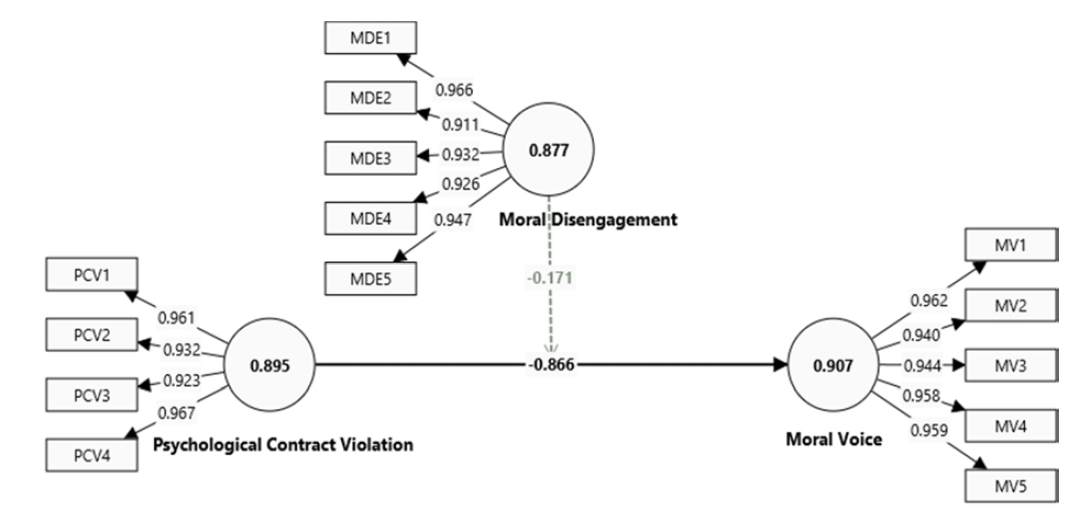
Measurement model was used to measure the reliability and validity of the constructs using the smartPLS Outer loading of all the measurement items varies between 0.78 and 0.966, which is higher than the recommended value of 0.70, meaning that the item reliability is satisfactory. All the indicators loaded significantly on their corresponding constructs, which validates that the observed variables are good representations of the latent constructs of Psychological Contract Violation, Moral Disengagement, and Moral Voice except the one item of moral value. The good relationships between the items and their respective constructs as shown by the factor loadings, are strong evidence of convergent validity of the measurement model (Table 2, Figure 2).
Figure 2: Outer loadings and AVE
Common Method Bias
Due to the fact that all the data collected were based on the same respondents and were measured in one survey, the risk of the common method bias (CMB) was evaluated with the help of Harman's single-factor test. In this process, the measurement items were all keyed into an exploratory factor analysis with the aim of establishing the possibility of a single factor explaining most of the variance. The findings indicate that the former explained a total variance of 31.8, which is significantly less than the suggested mark of 50. Thus, none of the factors prevailed in the variance between the constructs, which implies that common method bias is not likely to pose a threat to the validity of the findings.
Table 3: Standardized Factor Loadings
Construct
Item Code
Outer Loadings
Psychological Contract Violation
PSV1
0.961
PSV2
0.932
PSV3
0.923
PSV4
0.967
Moral Disengagement
MDE1
0.966
MDE2
0.911
MDE3
0.932
MDE4
0.926
MDE5
0.947
Moral Voice
MV1
0.962
MV2
0.94
MV3
0.944
MV4
0.958
MV5
0.959
Reliability and Convergent Validity
The reliability and convergent validity of the constructs are indicated in Table 4. All of the constructs have their Cronbach's Alpha values higher than the recommended value of 0.70, which is satisfactory internal consistency. On the same note, Composite Reliability (CR) values are 0.89-0.93, which is higher than the recommended minimum of 0.70, which proves strong construct reliability. The values of the Average Variance Extracted (AVE) are between 0.65 and 0.68, which is higher than the acceptable level of 0.50, and thus the constructs can account for more than half of the variance in their indicators. Such findings confirm that there is sufficient convergent validity of the measurement model.
Table 4: Composite Reliability (CR) and Average Variance Extracted (AVE)
Construct
Cronbach’s Alpha
Composite Reliability (CR)
Average Variance Extracted (AVE)
Psychological Contract Violation
0.961
0.971
0.895
Moral Disengagement
0.965
0.973
0.877
Moral Voice
0.961
0.980
0.907
Discriminant Validity
Table 5 determines the discriminant validity with reference to the Fornell-Larcker criterion. Under this approach, the square root of the AVE of each construct would be larger than its correlation with other constructs. The diagonal values (bold) are the square root of the AVE, which is 0.82, 0.81 and 0.83, respectively. These correlations exceed the inter-construct correlations, and they show that each construct is empirically different from the other. Hence, the constructs are discriminately valid with each other, Psychological Contract Violation, Moral Disengagement, and Moral Voice, r= 0.65 to 0.68, which is greater than the acceptable level of 0.50. These findings affirm that there is sufficient convergent model validity.
Table 5: Discriminant Validity
Construct
PCV
MD
MV
Psychological Contract Violation (PCV)
0.946
-
-
Moral Disengagement (MD)
-0.779
0.937
-
Moral Voice (MV)
-0.283
-0.787
0.953
Model Fit Indices
The Table 06 gives model fit indices between the saturated model and the estimated model in the structural model assessment. The indices are used to measure the fit of the proposed model to the observed data. The SRMR (Standardized Root Mean Square Residual) of the two models is 0.055, which is less than the recommended value of 0.08, showing a good model fit as well as a little variation between the realized and expected correlation. The dULS values of the saturated and estimated models are 0.313 and 0.312, and the dG values are 0.591 and 0.595, respectively. These values are close enough to indicate that the estimated model is sufficient in the reproduction of the empirical correlation matrix. Chi-square values (939.362 and 939.341) are nearly equal which means that there is not much difference between the saturated and estimated model. Lastly, the NFI (Normed Fit Index) value of 0.87 indicates that there is an acceptable degree of model fit but this is slightly lower than the desirable value of 0.90. In general, these findings suggest that the suggested model has an acceptable and valid fit with the observed data.
Table 6: Model Fit
Parameters
Saturated model
Estimated model
SRMR
0.055
0.055
d_ULS
0.313
0.312
d_G
0.591
0.595
Chi-square
939.362
939.341
NFI
0.87
0.87
Effects Table 7 shows the predictive power and the effect sizes of the structural model. The coefficient of determination (R2) represents the share in the variance that is explained by the predictors. The findings indicate that Psychological Contract Violation accounts 92 percent of the variance in Moral Disengagement, and the joint effects of Psychological Contract Violation, Moral Disengagement and the interaction of the two variables account 17 percent of the variance in Moral Voice, which is a moderate explanatory power of the model.
In addition, the predictive relevance (Q2) values are also above zero which proves that the structural model has sufficient predictive relevance. In general, these findings suggest that the model has good explanatory and forecasting ability in the explanation of the effects of psychological contract violations on moral voice behavior by the use of moral disengagement processes.
Table 7: Effects
Endogenous Construct
R²
Q²
Moral Voice
0.91
0.815
Structural Paths
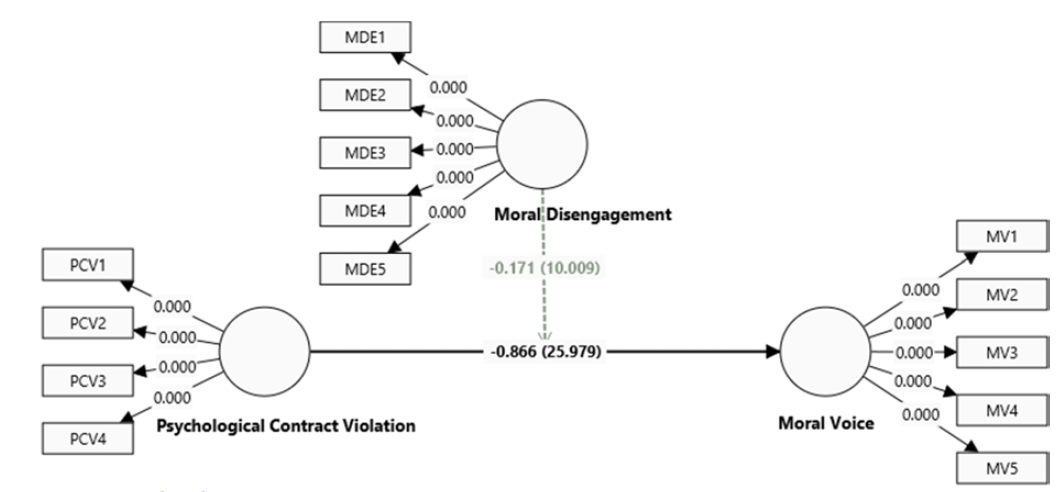
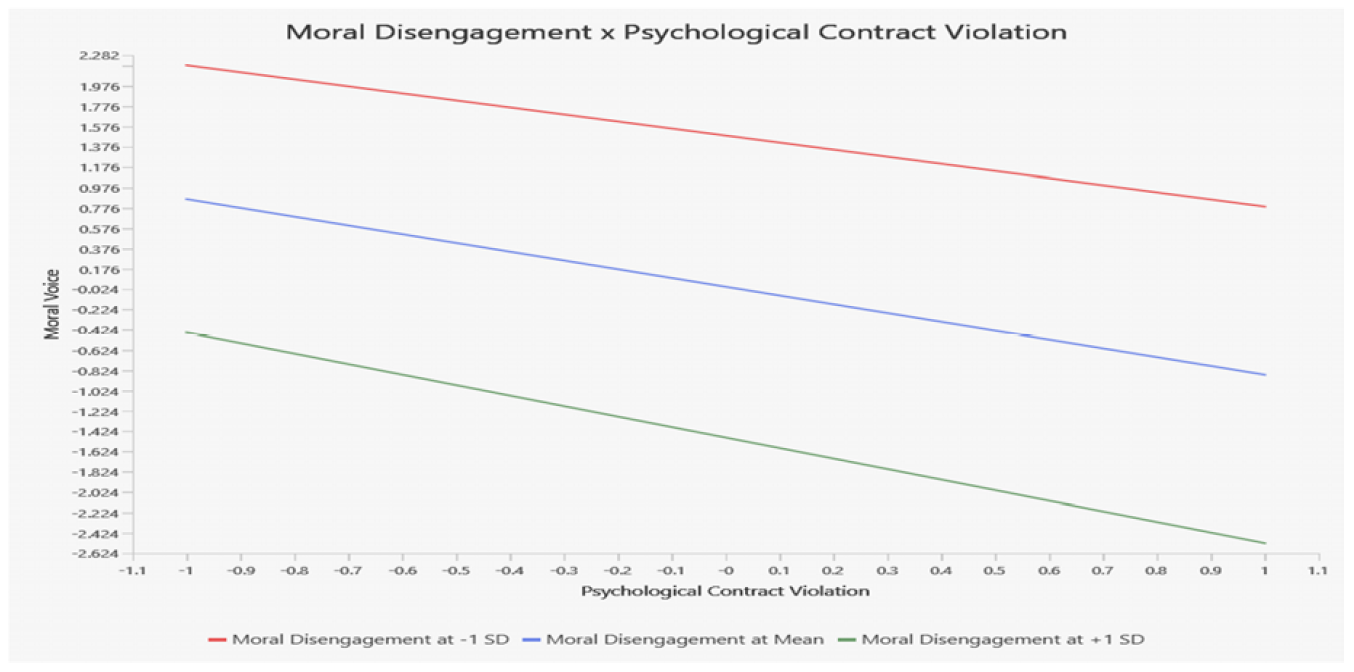
Structural Equation Modelling in smartPLS was used to test the hypothesized relationships between Psychological Contract Violation (PCV), Moral Disengagement, and Moral Voice. The findings prove that Psychological Contract Violation significantly negatively influences Moral Voice (b = -0.866, p = 0.000), which is why Hypothesis 1 is correct. This observation indicates that, the less the employees feel that their organization has breached or violated the psychological contract, the less they would be willing to raise constructive ethical issues or proposals in the workplace. Moreover, the interaction term between Psychological Contract Violation and Moral Disengagement has a significant predictive validity of Moral Voice (b = -0.171, p = 0.000), which supports the moderating effect of Hypothesis 2. The negative interaction coefficient implies that the Moral Disengagement enhances the negative correlation between Psychological Contract Violation and Moral Voice. That is, the more that employees are morally disengaged, the more they tend to disengage themselves in ethical voice actions when they perceive a psychological contract breach. On the other hand, lower moral disengagement employees might continue to have a moral voice even though they have seen the violation of the organization.
On the whole, these results show the importance of cognitive moral processes in employees to determine their reaction to organizational perceived violation. The findings highlight the fact that psychological contract breaches not only have a direct negative impact on the manifestation of ethical voice behavior but also indirectly enhance this effect in terms of the propensity of employees to moral disengagement. For detail see Table 8 and Figure 3 and 4.
Table 08: Structural paths
Hypothesis
Relationship
Standardized Coefficient (β)
S.E.
p-value
Result
H1
PCV → Moral Voice
-0.866
0.061
***
Supported
H2
PCV × Moral Disengagement → Moral Voice
-0.171
0.052
***
Supported
Figure 3: Strcutral Paths
Figure 4: Moderation Chart
DISCUSSION
The results of this research give empirical data about the correlations of psychological contract violation, moral disengagement, and moral voice in the banking industry. The findings substantially contribute to the suggested theoretical framework and provide valuable information on the behavior of employees in the organizational environment.
To begin with, the findings show that violation of the psychological contract has a significant negative impact on the moral voice of the employees, which confirms Hypothesis 1. Moral voice is the readiness of the employees to raise their voice concerning the ethical problems and propose ways of improvement that are beneficial to the organization. Once the employees feel that the organization has not met the promised obligations, they develop a sense of betrayal and injustice. The Social Exchange Theory states that employment relationships are founded on mutual commitments between organizations and employees. Employees can in turn, retaliate by withholding discretionary behaviors like voice when the organization contravenes these expectations. Empirical studies have demonstrated that breaches of psychological contracts are linked to undesired behaviors at work and decreased constructive voice [27].
This observation is in line with other studies that have shown that when employees believe that they have been lied to, they will be less involved in active organizational practices since they will not have the urge to make a positive contribution to the organization. In the same vein, previous research has revealed that psychological contract satisfaction promotes voice behavior and breaches discourage the desire of employees to provide constructive suggestions [28].
Second, the findings demonstrate that psychological contract breach has a positive effect on moral disengagement, which confirms Hypothesis 2. Moral disengagement is the mental process by which people can explain their unethical or morally dubious actions without feeling guilty. The Social Cognitive Theory underlines that people control their moral behavior with the help of internal self-sanctions, but the deactivation of these self-regulatory mechanisms is possible with the help of moral disengagement [9]. These mechanisms can be ignited by organizational stressors like perceived injustice, breach of contract or unfair treatment. It has been demonstrated that when psychological contracts are violated, employees tend to justify detrimental or deviant actions as a reaction to organizational unfairness [29].
Moreover, researchers have also pointed out that moral disengagement tends to be a cognitive process that describes how work-related stressors are converted into unethical actions. Ethical literature reviews suggest that morally detached employees are able to overcome the sense of guilt and justify actions that go against their own moral norms [30].
Third, the moderation test proves that the negative correlation between psychological contract violation and moral voice is reinforced by moral disengagement, which serves as evidence of Hypothesis 3. That is, the more the employees show a greater degree of moral disengagement, the more pronounced the suppressive impact of psychological contract violations upon the moral voice is. This observation is consistent with the Social Cognitive Theory, which indicates that more morally disengaged people tend to disengage themselves with ethical obligations and use silence or unethical actions to defend against negative organizational events.
The psychological contract violations may still be reported by the employees who have a strong moral self-regulation. But when the moral disengagement is high, it is more probable that people would justify their silence or lack of voice behavior by ethical actions. Therefore, moral disengagement enhances the adverse effects of psychological contract violation on ethical communication in organizations.
On the whole, these findings indicate the importance of the cognitive moral processes of the employees in defining their behavioral reactions to the perceived organizational injustice. Via psychological contracts, psychological contract violation does not only diminish positive employee actions directly but also initiates psychological processes that suppress ethical voice even more. The findings are relevant to the body of research on workplace ethics as they combine the findings of the Social Exchange Theory and Social Cognitive Theory to understand the impact that organizational violations exert on employee moral behavior.
Practically, the findings indicate that banking institutions need to be concerned with the continued fulfillment of the psychological contract by ensuring open communication, equitable policies, and uniform managerial behavior. Another method that organizations should enhance is the aspect of ethical climates and ethical training programs that enhance the moral awareness of the employees and minimize the chances of moral disengagement. Through this, organizations will be able to influence employees to voice constructive behaviors even in difficult organizational situations.
Theoretical Contributions
This research has a number of significant contributions to organizational behavior and ethics in employee voice literature. To begin with, the study contributes to the existing literature on the topic of psychological contract violation by investigating its implications on moral voice, a fairly under-researched type of employee voice, namely, the one that addresses the ethical and moral issues in the organizations. The past psychological contract violation research has concentrated on job satisfaction, organizational commitment and turnover intentions as the main outcomes [31]. The connection between psychological contract violation and the idea of moral voice makes the current study a part of the further comprehension of the impact of perceived organizational violation on the readiness of employees to report ethical issues.
Second, this study adds to the emerging literature on moral disengagement in the sense that it places it as a moderating factor in the correlation between psychological contract violation and moral voice. Although previous studies have investigated moral disengagement as the main predictor of unethical behavior, the present study reveals that it is a psychological process that influences the behavioral reaction of employees towards organizational violations. Through this, the study incorporates the knowledge of Social Cognitive Theory [9] with the Social Exchange Theory and presents a more holistic understanding of cognitive processing and responding to perceived organizational injustice by employees.
Third, the research adds to the literature on the issue of employee voice behavior by determining when moral voice can be suppressed. The research offers new theoretical evidence by showing that the negative impact of violation of psychological contract on moral voice is enhanced through moral disengagement, which is why employees are at times silent when they witness unethical behaviors. The contribution contributes to the existing knowledge on ethical communication in organizations and shows the role of cognitive processes of individuals in determining voice behavior.
Lastly, the study can add to the small body of empirical research on organizational behavior within the banking sector of Middle East and Iraq. The majority of past research that investigates the psychological contract and moral disengagement has been in the Western or East Asian settings. The research offers contextual findings that can be used to generalize the scope of organizational behavior studies in other geographical locations since it analyzed employees in the banking industry in Iraq.
Practical Implications
The results of this research have some significant implications on managers and policymakers of the banking industry. To begin with, the findings indicate the significance of upholding psychological contractual performance between the organizations and the employees. Managers ought to make sure that organizational promises, expectations, and obligations are made clear and consistent. Employees are likely to respond to organizational practices with constructive behaviors like moral voice when they feel just, transparent, and dependable.
Second, the companies need to foster an ethical workplace culture that will help employees raise awareness regarding unethical conduct without fear of reprisals. By developing open lines of communication, whistleblowing policies, and ethical leadership principles, it is possible to develop the environment in which employees are psychologically safe to speak up.
Third, the findings show that moral disengagement is a significant factor that determines the behavior of employees. Thus, ethical awareness and moral responsibility of employees should be reinforced by training programs applied by organizations. Workshops on ethical decision making, leadership training and ethics training can be used to minimize the risk of moral disengagement in the employees.
Lastly, ethical leadership and supportive management practices should be invested by the banking institutions. A leader with integrity, fairness and transparency can build trust and mitigate the feelings of psychological contract breach among employees. These leadership practices may eventually facilitate the involvement of employees in moral voice and play a role in the development of the organization.
Limitations and Future Research Directions.
This study has a number of weaknesses that must be noted despite its contributions. To begin with, the research design used in the study was a cross-sectional research design, which constrained the possibility to determine cause and effect relationships between the variables. Future studies might assume longitudinal or experimental designs to have a better study of the causal dynamics between psychological contract violation, moral disengagement, and moral voice.
Second, the data were gathered among employees of two banks in the public sector. Though these institutions are significant parts of the Iraqi banking sector, the results might not be entirely applicable to other industries and to the private banks. Future research ought to contemplate looking into similar relationships in other organizational settings, such as the private financial institutions and non-banking sectors. Third, the research was based on self-reported data, which could have brought about possible response bias. Even though common method bias was measured using statistical procedures, a study in the future can include multi-source data, e.g. supervisor ratings or peer ratings in order to strengthen the results.
Fourth, the paper concentrated on the moderation of moral disengagement. Nevertheless, the relationship between psychological contract violation and moral voice can be affected by other individual or organizational factors as well. Future studies may include other moderators like ethical leadership, organizational justice, or psychological safety or organizational culture. Lastly, future studies can investigate mediating variables that can explain the effects of psychological contract breaches on ethical conduct. Other variables may give additional information on the psychological processes of employee voice behavior including emotional exhaustion, organizational cynicism or trust in leadership.
CONCLUSION
This paper has explored the effects of psychological contract violation on the moral voice and the moderating factor of moral disengagement among workers in the Iraqi banking industry. The findings indicate that the breach of psychological contract diminishes the willingness of the employees to voice moral concerns greatly, and on the other hand, it enhances the likelihood of the employees becoming morally disengaged. Also, moral disengagement enhances the negative correlation between psychological contract violation and moral voice, which implies that the employees that have a higher degree of moral disengagement tend to retreat in an ethical communication when they observe organizational violations.
The results suggest that it is necessary to uphold equitable and transparent organizational behaviors in order to retain the trust of employees and promote the positive voice behavior. The combination of the insights of the Social Exchange Theory and the Social Cognitive Theory makes the study a complete picture of the interactions between organizational violations and cognitive moral processes, which affect employee behavior. In general, the study highlights the importance of organizations promoting ethical workplaces that encourage employee voice and discourage moral disengagement.
REFERENCE
Frömmer, D. et al. "Linking authentic leadership, moral voice and silence—a serial mediation model comprising follower constructive cognition and moral efficacy." German Journal of Human Resource Management, vol. 35, no. 1, 2021, pp. 1–31.
Abdulhassan, A. and Al Hasnawi, H. "Role of psychological contract breach and violation in generating emotional exhaustion: the mediating role of job procrastination." Management Letters / Cuadernos de Gestión, 2020, pp. 1–14.
Suazo, M.M. "The mediating role of psychological contract violation on the relations between psychological contract breach and work-related attitudes and behaviors." Journal of Managerial Psychology, vol. 24, no. 2, 2008, pp. 136–160.
Hannah, S.T. and Avolio, B.J. "Moral potency: building the capacity for character-based leadership." Consulting Psychology Journal: Practice and Research, vol. 62, no. 4, 2010, pp. 291–310.
Morrison, E.W. and Robinson, S.L. "When employees feel betrayed: a model of how psychological contract violation develops." Academy of Management Review, vol. 22, no. 1, 1997, pp. 226–256.
Yan, H. et al. "When and how can organizational punishment stop unethical pro-organizational behaviors in hospitality?" International Journal of Hospitality Management, vol. 94, 2021, p. 102811.
Bandura, A. "Moral disengagement in the perpetuation of inhumanities." Personality and Social Psychology Review, vol. 3, no. 3, 1999, pp. 193–209.
Blau, P.M. "Exchange and Power in Social Life." 1964.
Bahadır, F. et al. "The relation between perceived organizational support and employee satisfaction: the role of relational psychological contract and reciprocity ideology." Kybernetes, vol. 53, no. 1, 2024, pp. 102–122.
Hassan, Y. et al. "Psychological contract violation and knowledge sharing: a moderated mediation model." Journal of Managerial Psychology, vol. 41, no. 2, 2026, pp. 362–384.
Veetikazhi, R. et al. "Unethical employee behaviour: a review and typology." The International Journal of Human Resource Management, vol. 33, no. 10, 2022, pp. 1976–2018.
De Haan, N. "Collective moral agency and self-induced moral incapacity." Philosophical Explorations, vol. 26, no. 1, 2023, pp. 1–22.
Sumanth, J.J. et al. "Generating the moral agency to report peers’ counterproductive work behavior in normal and extreme contexts: the generative roles of ethical leadership, moral potency, and psychological safety." Journal of Business Ethics, vol. 195, no. 3, 2024, pp. 653–680.
Korczynski, M. "The social contract of work: moving beyond the psychological contract." Human Resource Management Journal, vol. 33, no. 1, 2023, pp. 115–128.
Santos, G.G. et al. "Psychological contract breach and organizational citizenship behaviours: the moderating role of contract type." Management Research Review, vol. 47, no. 1, 2024, pp. 18–44.
Faizan, M. et al. "Psychological contract breach and its consequences on employee turnover intentions, job satisfaction, and organizational commitment: insights from human resource management and workplace psychology." Inverge Journal of Social Sciences, vol. 4, no. 3, 2025, pp. 262–273.
Biswas, S. "Behavioral and attitudinal outcomes of psychological contract violation." Journal of Management Development, vol. 35, no. 2, 2016, pp. 261–279.
Özüdoğru, A.G. et al. "Effect of hospital employees’ psychological capital on counterproductive work behavior: role of work alienation and procrastination." SAGE Open, vol. 14, no. 3, 2024, p. 21582440241271138.
Suazo, M.M. "The mediating role of psychological contract violation on the relations between psychological contract breach and work-related attitudes and behaviors." Journal of Managerial Psychology, vol. 24, no. 2, 2009, pp. 136–160.
Saef, R.M. et al. "The influence of personality on emotional and behavioral responses to psychological contract breach." Journal of Managerial Psychology, vol. 41, no. 2, 2026, pp. 385–405.
Ogunfowora, B.T. et al. "A meta-analytic investigation of the antecedents, theoretical correlates, and consequences of moral disengagement at work." Journal of Applied Psychology, vol. 107, no. 5, 2022, p. 746.
Zhang, B. et al. "Warding off cognitive dissonance: how supervisor perspective taking shapes the responses of employees who engage in unethical behavior." Journal of Business Ethics, vol. 199, no. 1, 2025, pp. 71–84.
Mishra, M. et al. "Unethical pro-organizational behavior: a systematic review and future research agenda." Journal of Business Ethics, vol. 179, no. 1, 2022, pp. 63–87.
Looney, R. "Banking on Baghdad: financial change in postwar Iraq." 2004.
Hair, J.F. et al. "PLS-SEM or CB-SEM: updated guidelines on which method to use." International Journal of Multivariate Data Analysis, vol. 1, no. 2, 2017, pp. 107–123.
Moore, C. et al. "Why employees do bad things: moral disengagement and unethical organizational behavior." Personnel Psychology, vol. 65, no. 1, 2012, pp. 1–48.
Botha, L. and Steyn, R. "Psychological contracts and employee voice: does breach matter?" African Journal of Employee Relations, vol. 47, no. 1, 2023, pp. 1–33.
Memon, K.R. and Ghani, B. "The relationship between psychological contract and voice behavior—a social exchange perspective." Asian Journal of Business Ethics, vol. 9, no. 2, 2020, pp. 257–274.
Jain, V. and Sharma, C.S. "Workplace deviant behaviour in response to breach of psychological contract: the mediation effect of moral disengagement." Ramanujan International Journal of Business and Research, vol. 5, 2020, pp. 71–86.
Newman, A. et al. "Moral disengagement at work: a review and research agenda." Journal of Business Ethics, vol. 167, no. 3, 2020, pp. 535–570.
Robinson, S.L. and Morrison, E.W. "The development of psychological contract breach and violation: a longitudinal study." Journal of Organizational Behavior, vol. 21, no. 5, 2000, pp. 525–546.
Recommended Articles
Research Article
Developing Social Media Marketing Visual Contents to Increase Engagement Rate (A Case Study of Healthy Tails Animal Clinic in Malang City)
Aditya Nirwana,
...
Felicia Joscelind Verrel
Published: 20/11/2022
Download PDF
Research Article
The Determinants of the Financial Behaviour of SMEs: Empirical Evidence from an Emerging Economy
Santiago Hernandez,
...
Remo Roscigno
Published: 20/03/2022
Download PDF
Research Article
Responsibility Accounting in Food Enterprises – A Case Study at Kinh do Holdings Company Limited
Thi Ngoc Lan,
...
Ta Thi Thuy Hang
Published: 08/07/2023
Download PDF
Research Article
A Comparative Study of Online Fashion Promotion: Hennes & Mauritz (H&M) and Label in India
Riya Jamble
Published: 20/07/2021
Download PDF
PO Box 101, Nakuru
Kenya.
Email: office@iarconsortium.org
Editorial Office:
J.L Bhavan, Near Radison Blu Hotel,
Jalukbari, Guwahati-India
Al-soltane, A. I. (2026). Role of Psychological Contract Violation in Reducing Moral Voice: The Moderating Role of Moral Disengagement. IAR Journal of Business Management, 7(1), 1-12.
MLA
Al-soltane, Ali I.. "Role of Psychological Contract Violation in Reducing Moral Voice: The Moderating Role of Moral Disengagement." IAR Journal of Business Management 7.1 (2026): 1-12.
Chicago
Al-soltane, Ali I.. "Role of Psychological Contract Violation in Reducing Moral Voice: The Moderating Role of Moral Disengagement." IAR Journal of Business Management 7, no. 1 (2026): 1-12.
Harvard
Al-soltane, A. I. (2026) 'Role of Psychological Contract Violation in Reducing Moral Voice: The Moderating Role of Moral Disengagement' IAR Journal of Business Management 7(1), pp. 1-12.
Vancouver
Al-soltane AI. Role of Psychological Contract Violation in Reducing Moral Voice: The Moderating Role of Moral Disengagement. IAR Journal of Business Management. 2026 ;7(1):1-12.


 Download PDF
 Download XML