The Effectiveness of the of Knowledge Management Usage in Improving the Efficiency of Supply Chain Operations in Service Organizations: Case Study of Jeddah Islamic Port in the Kingdom of Saudi Arabia
Abdulaziz Saleh Eid Alsehly
1
1
Information Science Department, Faculty of Arts and Humanities King Abdulaziz University, Jeddah, Saudi Arabia
The study herein aimed to identify knowledge management's role in improving supply chain operations' efficiency in service organizations, focusing on the Jeddah Islamic Port in the Kingdom of Saudi Arabia. The article used the documentary approach based on a review of the literature related to knowledge management and its impact on improving the performance of supply chain operations. The results of the study concluded the extent of the importance and effectiveness of the role of knowledge management in improving the efficiency of supply chain operations in service organizations and the existence of a direct positive statistically significant effect of knowledge management in improving supply chain practices in service organizations. In addition to the fact that there is a positive relationship between knowledge management processes such as knowledge sharing and supply chain efficiency. The study also recommended many recommendations, the most important of which are: the need to improve communications between the various departments and sections concerned with the supply chain and support the informed decision-making process by providing access to relevant information.
Keywords
Knowledge management
Performance efficiency
Supply chain operations
Service organizations
INTRODUCTION
In light of the rapid transformations in the modern business environment, knowledge management has become an essential element for enhancing the efficiency and effectiveness of corporate operations. Knowledge management is considered one of the fundamental pillars of achieving competitive advantage by improving the utilization of data, information, and expertise within the organization [1]. The importance of knowledge management lies in improving the decision-making process and enabling organizations to better utilize their expertise and knowledge, which contributes to reducing costs, increasing profits, and meeting the needs of beneficiaries [2]. Knowledge management also includes the processes of identifying, acquiring, generating, storing, distributing, and applying knowledge [3,4].
Knowledge management in Saudi service organizations plays a fundamental role in improving performance efficiency and providing value-added services [5]. Studies indicate that knowledge management contributes to improving supply chain operations by enhancing strategic relationships with suppliers and enhancing problem-solving capabilities [6,7]. Supply chains are a vital component of organizational efficiency, encompassing the planning, manufacturing, delivery, and returns phases. Achieving efficiency in these chains represents a fundamental change in business management [8].
Ports in the Kingdom of Saudi Arabia are a cornerstone of international trade, providing direct links between different transportation systems, enhancing the integration of trade chains. Saudi authorities seek to effectively manage ports to ensure maximum operational efficiency [9]. Recognizing the importance of the logistics sector within the Kingdom's Vision 2030, the Ministry of Transport and Logistics has launched strategies to develop this sector, enhance operational efficiency, and improve performance [10]. Within this framework, the current study aims to identify the role of knowledge management in improving the efficiency of supply chain operations at Jeddah Islamic Port, focusing on leveraging knowledge management to enhance operational effectiveness in this context.
MATERIALS AND METHODS
Research Problem
In light of the increasing challenges facing service organizations recently, knowledge management processes have become an essential element for achieving efficiency and effectiveness in various practices. However, research shows that the reality in the Kingdom of Saudi Arabia does not reflect this necessity as hoped. For example, Bin Samhan's [11] study demonstrated shortcomings in the application of knowledge management, particularly with regard to the availability and use of information sources for problem-solving in some service organizations. Al-Mu'tani's [12] study also noted a lack of application of knowledge concepts in reporting within service organizations, as well as challenges in organizing, storing, generating, and sharing knowledge effectively. Regarding ports, which are part of service organizations, Abdul Karim et al. [13] study revealed significant difficulties in keeping pace with technological developments in information systems, which increases errors and delays in shipping operations. This shortcoming has directly impacted the efficiency of supply chain operations. Kadasa et al. [14] study found that the degree of supply chain implementation in companies in the western region of the Kingdom was moderate, indicating the need for clear strategies and supply chain management systems.
Reliance on traditional methods in logistics, transportation, and warehousing operations has led to a deterioration in supply chain efficiency. The lack of information and knowledge and weak communication systems contribute to delays in meeting production requirements, which reinforces the need to improve operational efficiency by enhancing the availability of necessary information and knowledge in line with Saudi Vision 2030 [15]. Based on the above, the need for effective knowledge management strategies to improve the efficiency of supply chain operations in service organizations, particularly at the Jeddah Islamic Port, is evident.
Hence, the main question of the study can be formulated: What is the role of knowledge management in improving the efficiency of supply chain operations in service organizations, with a focus on the Jeddah Islamic Port in the Kingdom of Saudi Arabia? From this, the following sub-questions branch out:
What is the role of knowledge diagnosis in improving the efficiency of supply chain operations at the Jeddah Islamic Port?
What is the role of knowledge generation in improving the efficiency of supply chain operations at the Jeddah Islamic Port?
What is the role of knowledge storage in improving the efficiency of supply chain operations at the Jeddah Islamic Port?
What is the role of knowledge distribution in improving the efficiency of supply chain operations at the Jeddah Islamic Port?
What is the role of knowledge application in improving the efficiency of supply chain operations at the Jeddah Islamic Port?
Research Objectives
The study aims to
To identify the role of knowledge diagnosis in improving the efficiency of supply chain operations at the Jeddah Islamic Port.
To identify the role of knowledge generation in improving the efficiency of supply chain operations at the Jeddah Islamic Port.
Identify the role of knowledge storage in improving the efficiency of supply chain operations at Jeddah Islamic Port.
Identify the role of knowledge distribution in improving the efficiency of supply chain operations at Jeddah Islamic Port.
Identify the role of knowledge application in improving the efficiency of supply chain operations at Jeddah Islamic Port.
Research Importance:
Theoretical Importance: The research reinforces the importance of knowledge management in service organizations as a key element in improving performance efficiency, and the importance of supply chain efficiency as a critical factor for achieving success in service organizations
Practical Importance: Shedding light on the role of knowledge management in improving the efficiency of supply chain operations at Jeddah Islamic Port in the Kingdom of Saudi Arabia. The study can provide data and insights that support the government's efforts to develop the logistics sector within the Kingdom's Vision 2030, particularly with regard to knowledge management
Theoretical Framework
First: Knowledge Management: In the current era, scientific capabilities and knowledge have become essential factors for excellence and competition, as knowledge brings about rapid changes in all economic, social, political, and cultural fields [16]. As a result of the rapid expansion of information, the lack of information is no longer the problem; rather, dealing with the vast amount of information and modern technologies for transmitting and storing information has become the greatest challenge [1]. Therefore, modern organizations aim to achieve efficiency and effectiveness through knowledge management, which enables them to exploit tacit and explicit knowledge to achieve their goals and ensure its continuity [17].
The Importance of Knowledge Management
Knowledge management is considered one of the key factors for organizational success, as it contributes to organizing and coordinating the exchange of expertise and information, facilitating access and use when needed. Knowledge management enhances performance, innovation, and productivity, supports continuous learning and decision-making, and contributes to the development of human capital and the building of an organizational culture based on collaboration and shared knowledge [18]. It is also an essential component of organizational success, enhancing productivity and operational efficiency, and equipping individuals with problem-solving and collaboration skills. It also helps organize unstructured information and experiences, leading to effective problem-solving, dynamic learning, strategic planning, and decision-making [19].
The Role of Knowledge Management in Service Organizations
Knowledge management plays a vital role in service organizations, facilitating knowledge sharing and improving service performance. Its primary mission is to organize the knowledge needed to address complex challenges in service environments, enhancing operational efficiency and customer experience. Knowledge management also contributes to building an institutional memory that enhances strategic decision-making and supports innovation and continuous development [20].
Knowledge management is an integrated system that enhances operational efficiency, improves customer experience, and helps organizations compete effectively in the market and address challenges (Hosseini et al., 2019, p. 16). Its most prominent roles include: raising levels of creativity in service organizations, providing an appropriate environment for creativity and improving competitiveness, generating new knowledge and providing distinguished services, and supporting innovation through knowledge management strategies and positive management practices [21].
The role of knowledge management in improving the efficiency of supply chain operations in service organizations
Knowledge management plays a crucial role in improving performance efficiency within organizations, as it seeks to organize and utilize knowledge in effective and systematic ways. Knowledge management is a comprehensive system that aims to collect, store, and share knowledge and expertise, enhancing the organization's ability to make informed decisions and contributing to improving the quality of organizational performance [22]. Improving performance efficiency, in turn, significantly impacts supply chain management. Internal performance includes improved yields and production times, while external performance impacts customer satisfaction and increased sales. Logistics performance efficiency contributes to reduced costs, improved warehousing, and the provision of appropriate services, which supports the effectiveness of supply chain management [23,24].
Second: Supply Chain Management Processes
Supply chains are an essential component of today's business world, linking suppliers and consumers in an integrated supply chain. Supply chain management is a cornerstone of ensuring the smooth flow of materials and services, requiring careful planning and effective coordination among stakeholders to ensure efficiency, sustainability, and reliable meeting of market needs [25]. As businesses have evolved, organizations have shifted from relying on their internal components to adopting the concept of multiple supply chains. This shift reflects changes in the external environment and competitive pressures, and calls for meticulous supply chain management to achieve objectives effectively and sustainably Shaheen [24].
The Importance of Supply Chains
Supply chains are a vital component for any organization in a competitive and changing market, ensuring a smooth and efficient flow of resources and services from suppliers to customers. Supply chains contribute to cost efficiency, improved product quality, and increased customer satisfaction. They also help narrow the gap between supply and demand and enhance the ability to adapt to rapid changes in the market and customer requirements. Supply chain management is considered a strategic key to achieving competitive advantage and business sustainability [28]. The importance of supply chains is demonstrated by enhancing connectivity between developed and emerging economies and accelerating trade between countries, which contributes to reducing costs and increasing the effectiveness of access to global markets [14].
The Impact of Supply Chains on Service Organizations
Supply chain management is one of the most valuable ways to improve the performance of service organizations and increase their competitive advantage in the face of intense competition in this field. Global pressures have become necessary to provide the right products and services at the right time and place, requiring service organizations to adopt supply chain management concepts and practices to increase profitability and competitive advantage [28]. Strong supply chains are a key means of achieving competitive advantage and improving organizational performance. Competition in today's marketplace extends beyond organizations to include supply chains themselves. Higher levels of supply chain management practices can enhance competitive advantage and improve organizational performance, which has a direct positive impact on performance [29]. Supply chains can contribute to the effective performance and growth of service organizations, leading to improved organizational performance levels. Service organizations must adopt supply chain management processes to achieve better performance, meet customer needs at competitive prices, and ensure the delivery of products of the highest quality, at the lowest cost, and on time [30].
Related Works
Al-Salmi [31] aimed to identify the reality of knowledge management and supply chain practices in companies. To identify the extent of interest of Saudi industrial companies in supply chain practices, the study sample included (218) managers in industrial cities in the Kingdom of Saudi Arabia. The study used the descriptive quantitative survey approach, and also used the electronic questionnaire as a study tool. The study results showed a high level of knowledge management processes, and the dimensions came in the following order: (knowledge generation dimension, followed by knowledge storage dimension, then knowledge application dimension, and finally knowledge distribution dimension); There is a great interest by Saudi companies in supply chain practices, and the dimensions came in the following order: (customer relationship management dimension, followed by the strategic return dimension, followed by the information sharing dimension, and then the lean internal practices dimension); There is a direct, statistically significant positive effect of knowledge management in improving supply chain practices in Saudi industrial companies.
Hamdi et al. [32] study aimed to identify the impact of marketing knowledge management on supply chain management. The study used a documentary approach based on a literature review related to marketing knowledge management and its impact on supply chains. The study's results concluded that marketing knowledge management plays a vital role in developing products and services through marketing information systems and supply chain management. The impact of marketing knowledge management applications on integrated supply chain management is evident in several aspects, and can be demonstrated in the effectiveness of the supply chain and increased satisfaction among all parties, starting with the supplier, then manufacturing and warehousing, and ending with suppliers and the final customer. Azzam's [6] study aimed to reveal a statistically significant effect of knowledge sharing on increasing supply chain efficiency. To identify the reality of supply chains in the chemical industries sector, the study sample included (149) managers at the Holding Company for Chemical Industries in Egypt. The study used the descriptive analytical approach, and also used personal interviews and a questionnaire as study tools. The study results showed a statistically significant effect of knowledge sharing on the efficiency of supply chains (building strategic relationships with suppliers, adhering to delivery dates, the efficiency of technological systems, and generating added value). It was found that there was a defect in the supply chains of these companies.
The study by Nazir et al. aimed to uncover the relationship between knowledge management, supply chain efficiency, and the performance of manufacturing companies in Pakistan. The study population consisted of all supply chain operations managers and knowledge management specialists working in (10) manufacturing companies in Pakistan, while the study sample included (400) supply chain operations managers and knowledge management specialists. The study adopted a quantitative survey approach and used a questionnaire as a study tool. This study reached several results, the most important of which are: a positive relationship between knowledge management processes, such as knowledge sharing, and supply chain efficiency. It was found that knowledge sharing had a positive impact on planning and strategy development for supply chain operations, which enhances the quality of logistics services, which in turn impacts supply chain efficiency. The study by Bahar et al. [33] aimed to reveal the impact of knowledge management capabilities on supply chain management practices, organizational learning, and organizational performance in organizations providing logistics services in Malaysia. The study population consisted of all managers, department heads, owners, chief executives, and executives in (608) organizations operating in the logistics services sector in Malaysia. The study sample included (412) managers, department heads, owners, chief executives, and executives. The study adopted a qualitative approach and used questionnaires and document analysis as study tools. This study reached several results, the most important of which are: There is a positive impact of knowledge management capabilities represented in (generating, sharing, storing, and applying knowledge) on improving managers’ ability to exploit organizational knowledge, develop organizational learning and organizational performance, and improve coordination and information exchange between customers and suppliers during supply chain operations in the logistics services sector.
Takami [34] in his research aimed to uncover the relationship between organizational strategy, organizational structure, and the knowledge management team, and the efficiency of supply chain management processes at Amul Kale Dairy Products Company. The study population consisted of all upper- and middle-level managers and employees involved in knowledge management and supply chain management at Amul Kale Dairy Products Company. The study sample included (58) managers and employees. The study adopted a correlational approach and used a questionnaire as a study tool. This study reached several results, the most important of which are: a positive relationship between organizational strategy—i.e., the comprehensive plan that defines the organization's direction in knowledge management—and increased supply chain efficiency. It also demonstrated a relationship between improving organizational structure and the knowledge management team and increasing levels of efficiency in supply chain processes.
Table 1: Research Gap
Points Focused on by Previous Studies
- Some studies have also addressed the topic of knowledge management to improve the efficiency of supply chain operations. These include: Hamdi et al. [32], which aimed to identify the impact of marketing knowledge management on supply chain management; Nazir et al. [35], which aimed to uncover the relationship between knowledge management, supply chain efficiency, and the performance of manufacturing companies in Pakistan; Al-Salmi [31], which aimed to identify the reality of knowledge management and supply chain practices in companies; and the extent of Saudi industrial companies' interest in supply chain practices. Bahar et al. [33], which focused on uncovering the impact of knowledge management capabilities on supply chain management practices, organizational learning, and organizational performance in organizations providing logistics services in Malaysia.
Research gap: Points overlooked by previous studies, as none of the previous studies addressed the role of knowledge management in improving the efficiency of supply chain operations in service organizations: Jeddah Islamic Port in the Kingdom of Saudi Arabia.
Focus of the Current Study
The study aimed to identify:
1. Identify the role of knowledge diagnosis in improving the efficiency of supply chain operations at Jeddah Islamic Port.
2. Identify the role of knowledge generation in improving the efficiency of supply chain operations at Jeddah Islamic Port.
3. Identify the role of knowledge storage in improving the efficiency of supply chain operations at Jeddah Islamic Port.
4. Identify the role of knowledge distribution in improving the efficiency of supply chain operations at Jeddah Islamic Port.
5. Identify the role of knowledge application in improving the efficiency of supply chain operations at Jeddah Islamic Port.
Commentary on Related Works
The current study agrees with several previous studies in addressing the role of knowledge management in improving the efficiency of supply chain operations, such as Al-Salmi [31] study. The current study also resembles some previous studies in its use of a descriptive approach, such as Al-Salmi [31] study, and in its use of a documentary approach, such as Hamdi et al. [32] study. While some previous studies used different methods than the one used in the current study, such as the quantitative survey method in Nazir et al. [35] and the qualitative method in Bahar et al. [33], the current study agreed with some studies in using a literature review as a study tool, such as Hamdi et al. [32] and Bahar et al. [33]. The current study differed from some previous studies in the study tools, as some studies used a questionnaire, while others used a survey or interview list, such as Al-Salmi [31]. The current study was similar to other studies in targeting workers as a sample, such as Takami [34]. Some previous studies included managers in the study sample, which differs from the sample used in the current study. The study benefited from previous studies in presenting and supporting the theoretical framework with the references used, and previous studies helped in constructing the study problem appropriately and choosing a method. Study and its tools (Table 1).
Research Methodology
The study methodology used in this research is the descriptive-analytical approach, which relies on "describing the phenomenon under study in a precise and systematic manner and analyzing the related data to determine the relationship between the various variables" [36].
Research Limits
Objective Limits: The study focuses on identifying the role of knowledge management in improving the efficiency of supply chain operations, with a particular focus on the Jeddah Islamic Port as an area of application.
Spatial Limits: The study is limited to the Jeddah Islamic Port in the Kingdom of Saudi Arabia.
Temporal Limits: Data from previous studies will be collected and analyzed over the period (2018-2024).
Research Terms
Knowledge Management
Farrah and Qanour [37] defined knowledge management as "the organized and renewable processes of identifying and acquiring the knowledge necessary for an organization, and generating, distributing, and applying it across all its activities, to add value to all of the organization's operations with the aim of generating a sustainable competitive advantage."
Procedurally, it is defined as the activities and processes undertaken by the Jeddah Islamic Port to collect, store, and share knowledge. Knowledge among employees and various departments is shared to improve the overall performance of the organization's supply chain operations.
Performance Efficiency
Abdulnabi [38] defined performance efficiency as "the optimal utilization of resources, reflecting an organization's ability to utilize its human, material, and technological resources to achieve its organizational goals efficiently and effectively."
Procedurally, it is defined as the extent to which Jeddah Islamic Port can implement supply chain operations effectively and without wasting resources, and achieve set objectives within the appropriate time and cost.
Supply Chains
Dubey et al. [39] defined the supply chain as "the connection between all parties and activities necessary to deliver a product to the end user. It includes the flow and storage of raw materials and goods from suppliers to consumers, linking suppliers, manufacturers, distributors, and retailers."
Procedurally, it is defined as all the integrated operations undertaken by Jeddah Islamic Port, from receiving goods to their distribution, including inventory management, transportation, distribution, and coordination between various parties, such as suppliers. and customers to ensure a smooth flow of products and services.
Service Organizations
Ibrahim [40] defined service organizations as "institutions that provide direct services to the beneficiary public and are of paramount importance in the strategic planning and policy-making processes of state agencies."
Procedurally, they are defined as the activities and services provided by the Jeddah Islamic Port as an entity that provides logistics and commercial services within the framework of supply chain operations.
Research Methodology
The current research aims to identify the role of knowledge management in improving the efficiency of supply chain operations in service organizations, with a focus on the Jeddah Islamic Port in the Kingdom of Saudi Arabia. To achieve this, systematic reviews were used, one of the most prominent qualitative methods through which researchers can collect, organize, and analyze scientific and evidence-based data to find definitive answers to research questions. Furthermore, a systematic review allows researchers to build their arguments based on previously conducted studies, making this qualitative method ideal for researchers unable to conduct empirical studies on a specific topic.
Accordingly, the current research aims to attempt to identify a similar consensus among studies that identify the role of knowledge management in improving the efficiency of supply chain operations in service organizations, with a focus on the Jeddah Islamic Port in the Kingdom of Saudi Arabia.
Based on the above, the six selected previous studies were analyzed using a systematic analysis of these studies, as illustrated in Table 1.
Table 1: Analysis of previous studies - prepared by the researcher
Study
Objective
Approach
Sample
Results
Al-Salmi [31]
Identify the impact of marketing knowledge management on supply chain management
Descriptive quantitative survey approach
To identify the reality of knowledge management and supply chain practices in companies; and to identify the extent of Saudi industrial companies' interest in supply chain practices.
There is a high level of knowledge management processes, and the dimensions are listed in the following order: (knowledge generation, followed by knowledge storage, knowledge application, and finally knowledge distribution). There is a significant interest among Saudi companies in supply chain practices, and the dimensions are listed in the following order: (customer relationship management, followed by strategic returns, information sharing, and finally agile internal practices). The study results also showed a direct, statistically significant, positive impact of knowledge management on improving supply chain practices in Saudi industrial companies.
Marketing knowledge management plays a vital role in developing products and services through marketing information systems and supply chain management. The study also showed that the impact of marketing knowledge management applications on integrated supply chain management can be evident in several aspects, including the effectiveness of the supply chain and increased satisfaction among all parties, starting with the supplier, then manufacturing and warehousing, all the way to suppliers and the end customer.
Hamdi et al. [32]
Identify the impact of marketing knowledge management on supply chain management
Documentary approach
The study reviewed the literature related to marketing knowledge management and its implications for supply chains.
Marketing knowledge management plays a vital role in developing products and services through marketing information systems and supply chain management. The study also showed that the impact of marketing knowledge management applications on integrated supply chain management can be seen in several aspects. These can be demonstrated in the effectiveness of the supply chain and increased satisfaction among all parties, starting with the supplier, then manufacturing and warehousing, and ending with suppliers and the final customer.
Azzam et al. [6]
To reveal a statistically significant impact of knowledge sharing on increasing the efficiency of supply chains; and to identify the reality of supply chains in the chemical industries sector.
Descriptive analytical approach
(149) Director at the Holding Company for Chemical Industries in Egypt
There is a statistically significant impact of knowledge sharing on the efficiency of supply chains (building strategic relationships with suppliers, adhering to delivery dates, the efficiency of technological systems, and generating added value). The study results also showed a defect in the supply chains of these companies. There is a statistically significant impact of knowledge sharing on the efficiency of supply chains (building strategic relationships with suppliers, adhering to delivery dates, the efficiency of technological systems, and generating added value). The study results also showed a defect in the supply chains of these companies. There is a statistically significant impact of knowledge sharing on the efficiency of supply chains (building strategic relationships with suppliers, adhering to delivery dates, the efficiency of technological systems, and generating added value). The study results also showed a defect in the supply chains of these companies.
Nazir et al. [35]
The relationship between knowledge management, supply chain efficiency, and manufacturing performance in Pakistan
Quantitative survey method
(400) Supply Chain Operations Managers and Knowledge Management Specialists
There is a positive relationship between knowledge management processes, such as knowledge sharing, and supply chain efficiency. It has been shown that knowledge sharing has a positive impact on planning and strategizing supply chain operations, which enhances the quality of logistics services, which in turn impacts supply chain efficiency.
Bahar et al. [33]
To explore the impact of knowledge management capabilities on supply chain management practices, organizational learning, and organizational performance in logistics service providers in Malaysia.
qualitative approach
A sample of managers, department heads, owners, CEOs and executives in (608) organizations operating in the logistics services sector in Malaysia
There is a positive impact of knowledge management capabilities (generating, sharing, storing, and applying knowledge) on improving managers' ability to leverage organizational knowledge, developing organizational learning and organizational performance, and improving coordination and information exchange between customers and suppliers throughout supply chain operations in the logistics sector. There is a positive relationship between organizational strategy—i.e., the comprehensive plan that defines the organization's direction in knowledge management—and increased supply chain efficiency. A relationship was also found between improving the organizational structure and knowledge management team and increasing levels of efficiency in supply chain operations.
Takami [34]
To explore the relationship between organizational strategy, organizational structure, knowledge management team and the efficiency of supply chain management processes at Kali Amul Dairy Products Company.
Correlational approach
A sample of upper and middle-level managers and employees involved in knowledge management and supply chain at the dairy company Amul Kale
There is a positive relationship between the organizational strategy, i.e. the comprehensive plan that determines the organization’s direction in knowledge management, and increasing the efficiency of the supply chain. It also shows that there is a relationship between improving the organizational structure and the knowledge management team and increasing the levels of efficiency in supply chain operations.
RESULTS AND DISCUSSION
The following results were obtained:
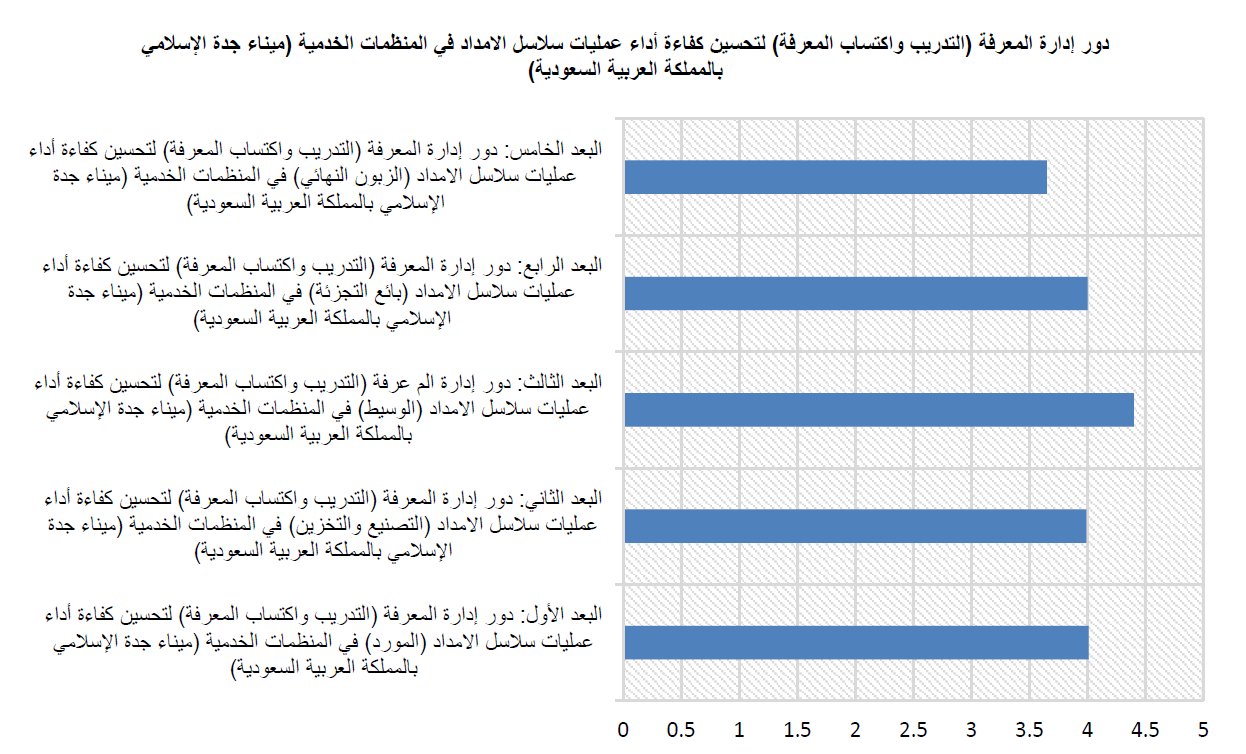
The role of knowledge management (knowledge generation and sharing) in improving the efficiency of supply chain operations in service organizations (Jeddah Islamic Port in the Kingdom of Saudi Arabia) was found to be significant, with an arithmetic mean of 4.01, a standard deviation of 0.359, and a high response rate.
Figure 1 shows that the overall average for the first axis: The Role of Knowledge Management (Knowledge Generation and Sharing) in Improving the Efficiency of Supply Chain Operations in Service Organizations (Jeddah Islamic Port in the Kingdom of Saudi Arabia) had an arithmetic mean of (4.01), a standard deviation of (0.359), and a response rate of (high). The overall average score for the first axis: The role of knowledge management (knowledge generation and sharing) in improving the efficiency of supply chain operations in service organizations (Jeddah Islamic Port in the Kingdom of Saudi Arabia) can be explained by the effectiveness and importance of the role of knowledge management (knowledge generation and sharing) in improving the efficiency of supply chain operations in service organizations (Jeddah Islamic Port in the Kingdom of Saudi Arabia). This may be due to the effective sharing of knowledge through continuous training. Comprehensive and targeted training programs were implemented to enhance the generation and sharing of employees’ skills and knowledge in various aspects of knowledge management, including techniques, processes, and best practices, and continuous knowledge generation. Various platforms and initiatives were created to facilitate knowledge sharing and exchange among employees, which led to the promotion of a culture of continuous
learning. This was also supported by strong leadership, as senior management demonstrated a strong commitment to knowledge management and supported the allocation of the necessary resources to ensure successful implementation. This is consistent with the results of the study by Sangari et al. [8], which indicated a positive relationship between knowledge management processes of generation and sharing and the performance of supply chain operations (planning, sourcing, manufacturing, and delivery). He also agreed with Al-Salmi [31], which indicated that there is a direct, statistically significant positive impact of knowledge management on improving supply chain practices in Saudi industrial companies.
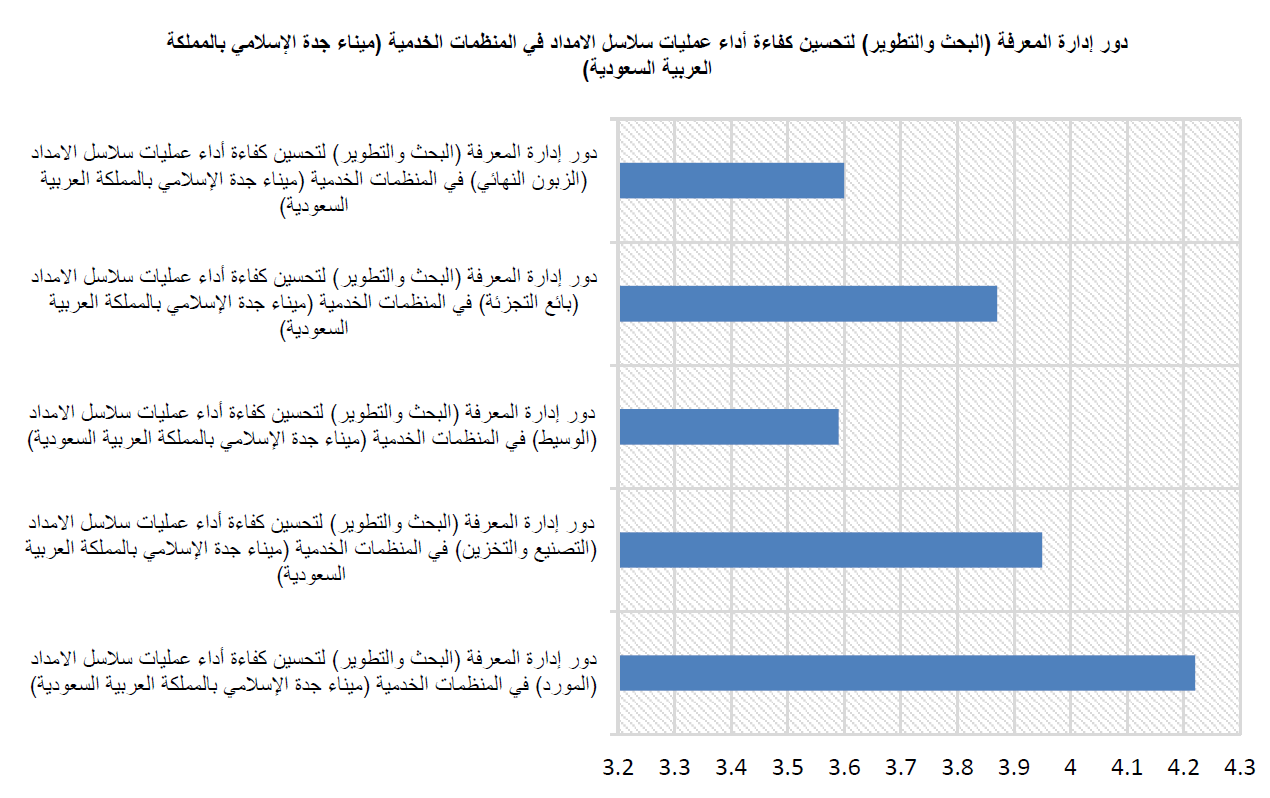
The role of knowledge management (research and development and knowledge storage) in improving the efficiency of supply chain operations in service organizations (Jeddah Islamic Port in the Kingdom of Saudi Arabia) was found to be significant, with an arithmetic mean of 3.85, a standard deviation of 0.487, and a high response rate.
Figure 2 shows that the overall average for the second axis: The Role of Knowledge Management (Research and Development and Knowledge Storage) in Improving the Efficiency of Supply Chain Operations in Service Organizations (Jeddah Islamic Port in the Kingdom of Saudi Arabia) came in at an arithmetic mean of (3.85), a standard deviation of (0.487), and a response rate of (high). The overall average for the second axis: The role of knowledge management (R&D and knowledge storage) in improving the efficiency of supply chain operations in service organizations (Jeddah Islamic Port in the Kingdom of Saudi Arabia) can be explained by a (high) response score to investment in R&D and knowledge storage. Jeddah Islamic Port has allocated significant resources to R&D and storage, focusing on innovations that would improve supply chain efficiency, and cooperation with universities and research centers. Jeddah Islamic Port has established partnerships with universities and research centers to develop new technologies and innovative solutions, and internal research initiatives. The port has established an internal R&D and storage department to focus on improving internal operations and developing new products and services, as well as disseminating results. R&D and knowledge storage results have been widely disseminated through publications and conferences, contributing to general knowledge in the field of supply chain management. This result is consistent with the study Bin Dost and Rehman, which concluded that knowledge management processes, including knowledge storage, have a positive impact on improving the efficiency of supply chain operations in companies. It also showed that knowledge management processes have enhanced the efficiency of supply chain performance in resource utilization. Warehousing, manufacturing, and productivity rates. Knowledge management also enhanced the supply chain's ability to respond and adapt to market fluctuations, increasing the supply chain's ability to meet customer requirements in the shortest possible time, without product delays, and without delivery errors. Bahar et al. [33] found a positive impact of knowledge management capabilities represented by knowledge storage on improving managers' ability to exploit organizational knowledge, and improving coordination and information exchange between customers and suppliers during supply chain operations in the logistics services sector.
Figure 1: The Role of Knowledge Management (Knowledge Generation and Sharing) in Improving the Efficiency of Supply Chain Operations in Service Organizations (Jeddah Islamic Port in the Kingdom of Saudi Arabia)
Figure 2: The Role of Knowledge Management (Research and Development and Knowledge Storage) in Improving the Efficiency of Supply Chain Operations in Service Organizations (Jeddah Islamic Port in the Kingdom of Saudi Arabia)
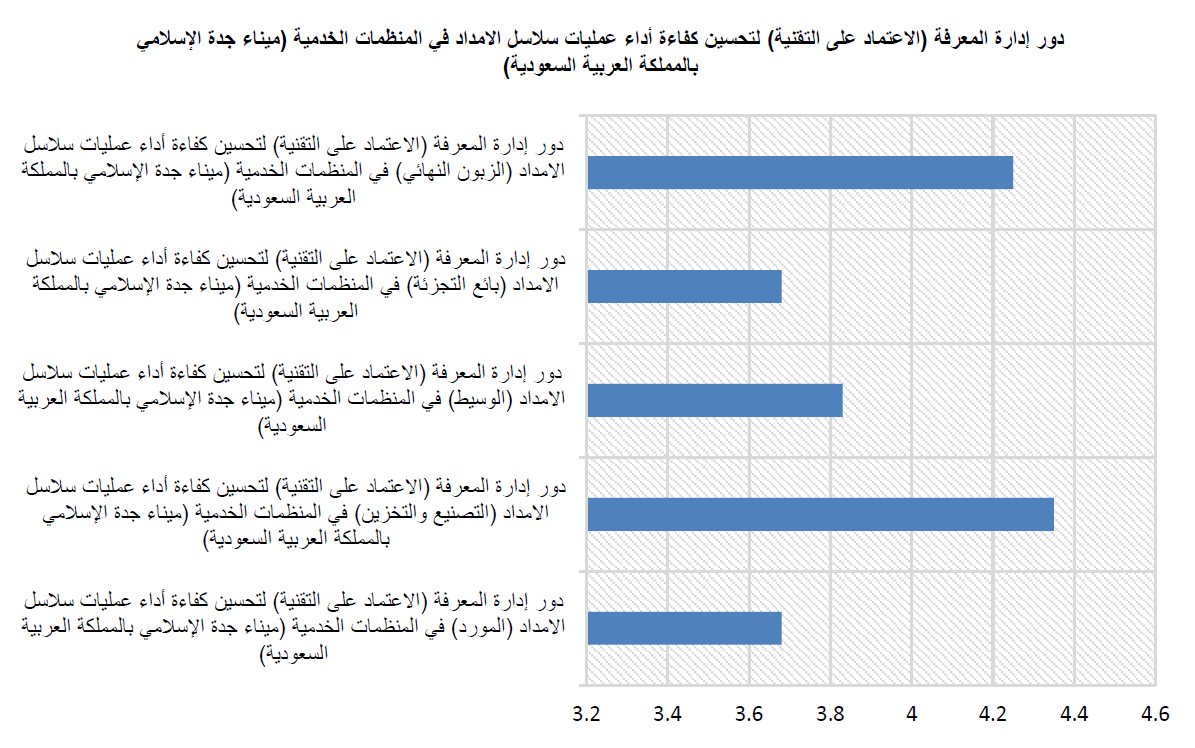
The role of knowledge management (knowledge application and reliance on technology) in improving the efficiency of supply chain operations in service organizations (Jeddah Islamic Port in the Kingdom of Saudi Arabia) was found to be significant, with an arithmetic mean of 3.95, a standard deviation of 0.444, and a high response rate
Figure 3 shows that the overall average for the third axis: The Role of Knowledge Management (Application of Knowledge and Reliance on Technology) in Improving the Efficiency of Supply Chain Operations in Service Organizations (Jeddah Islamic Port in the Kingdom of Saudi Arabia) came in at an arithmetic mean of (3.95), a standard deviation of (0.444), and a response rate of (high). The overall average score for the third axis: The role of knowledge management (knowledge application and reliance on technology) to improve the efficiency of supply chain operations in service organizations (Jeddah Islamic Port in the Kingdom of Saudi Arabia) can be explained by a strong reliance on technology. The port invests heavily in advanced technologies such as customer relationship management (CRM) and supply chain management (SCM) to enhance knowledge management processes. The port also has an effective system for collecting, analyzing, and applying data. The port has been able to collect and analyze large amounts of data from various sources, allowing it to extract insights and improve operations through the direct application of knowledge. The port also has a culture of knowledge sharing and application. The port has encouraged a culture of knowledge sharing and application among employees through training sessions, regular meetings, and comprehensive training plans. The port has provided training plans specifically designed to enhance employees' knowledge management skills. This is consistent with the results of the study by Sangari et al. [8], which indicated a positive impact of integrating information and communication technology into knowledge management processes on improving the quality of supply chain operations performance, improving communication between employees in different parts of the supply chain, and providing a collaborative environment within the organization and with suppliers and customers. Those who constitute the supply chain, which increases the efficiency of supply chain operations performance, [33] which concluded: There is a positive impact of knowledge management capabilities represented in (knowledge application) on improving the ability of managers to exploit organizational knowledge, and improving coordination and information exchange between customers and suppliers during supply chain operations in the logistics services sector. It also showed a positive impact of organizational learning on increasing innovation, and facilitating knowledge management activities, such as sharing, acquiring and applying knowledge, which resulted in improving supply chain operations and increasing levels of organizational performance in the logistics services sector.
Figure 3: The Role of Knowledge Management (Application of Knowledge and Reliance on Technology) in Improving the Efficiency of Supply Chain Operations in Service Organizations (Jeddah Islamic Port in the Kingdom of Saudi Arabia)
There was a statistically significant direct positive effect of knowledge management on improving supply chain practices in service organizations.
Conclusions
Based on the systematic analysis of the aforementioned previous studies, the researcher was able to answer the main research question, which revolves around the role of knowledge management in improving the efficiency of supply chain operations in service organizations, with a focus on the Jeddah Islamic Port in the Kingdom of Saudi Arabia. The results of the systematic analysis of previous studies demonstrated the importance and effectiveness of knowledge management in improving the efficiency of supply chain operations in service organizations. They also demonstrated a statistically significant direct positive effect of knowledge management on improving supply chain practices in service organizations. They also demonstrated a positive relationship between knowledge management processes as a whole and supply chain efficiency. This is consistent with the results of Al-Salmi [31] and Nazir et al. [35]. This may be attributed to the fact that supply chain operations in service organizations, such as the Jeddah Islamic Port, require a high level of coordination and cooperation between various departments and divisions. Knowledge management also relies on the collection, storage, and distribution of knowledge and expertise within the organization, enabling employees to access the information necessary to make informed decisions. Furthermore, by providing a central platform For knowledge, knowledge management can improve communication and reduce barriers between departments, leading to more efficient supply chain operations.
Studies have also shown that organizations with effective knowledge management have better supply chain performance than those without. For example, a study conducted by Michigan State University found that companies that implemented knowledge management experienced a 20% reduction in supply chain costs and a 15% improvement in service quality.
Recommendations
The researcher explained that, in the case of the Jeddah Islamic Port, knowledge management can improve the efficiency of supply chain operations through several recommendations, as follows:
Providing a central platform for sharing best practices and exchanging experiences among employees.
Improving communication between various departments and divisions involved in the supply chain.
Supporting informed decision-making by providing access to relevant information.
Identifying and mitigating supply chain risks by learning from past experiences.
Promoting innovation by providing an environment conducive to the exchange of ideas and collaboration.
CONCLUSION
This study demonstrated the critical role that knowledge management plays in improving the efficiency of supply chain operations in service organizations, with a focus on At Jeddah Islamic Port, Saudi Arabia, the study concluded that the implementation of knowledge management at Jeddah Islamic Port can contribute to improving communication and reducing barriers between different departments and divisions, supporting informed decision-making by providing access to relevant information, identifying and mitigating supply chain risks by learning from past experiences, and promoting innovation by providing a conducive environment for idea exchange and collaboration. Accordingly, the study recommends that Jeddah Islamic Port adopt the activation of the role of knowledge management to improve the efficiency of supply chain operations. By investing in knowledge management, Jeddah Islamic Port can improve its competitiveness and provide high-quality services to its customers.
REFERENCE
AbuAl-Nasr, Medhat Muhammad Mahmoud. "Knowledge Management and Knowledge-Based Management." Arab Journal of Informatics and Information Security, no. 4, 2021, pp. 75-94.
Hamdan, Shaza. "Factors Influencing the Development of Knowledge Management and Its Impact on Business Organizations." Al-Jinan University Journal, no. 11, 2018, pp. 203-224.
AbuAzzam, Muhammad Khalid. Knowledge Management and Knowledge Economy. Dar Zuhdi for Publishing and Distribution, 2021.
Abdullah, Munther Mansour. Knowledge Economy. Dar Al-Janadriyah for Publishing and Distribution, 2019.
Al-Shami, Khaled Naji. "The Degree of Employment of Knowledge Management in Administrative Processes at the Ministry of Education in the Kingdom of Saudi Arabia from the Perspective of Directors-General in the Ministry." Journal of Educational Sciences Studies, vol. 45, no. 4, 2018, pp. 1-21.
Azzam, Yasser Ali Ahmed Haroun. "The Role of Knowledge Sharing in Increasing Supply Chain Efficiency: A Field Study Applied to the Chemical Industries Sector in the Egyptian Arab Republic." The Scientific Journal of Business and Environmental Studies, Suez Canal University, vol. 9, no. 3, 2018, pp. 864-901.
Ayoub, H.F., et al. "The Effect of Supply Chain Integration on Technical Innovation in Jordan: The Mediating Role of Knowledge Management." Benchmarking: An International Journal, vol. 24, no. 3, 2017, pp. 594-616.
Sangari, M.S., et al. "The Impact of Knowledge Management Processes on Supply Chain Performance: An Empirical Study." The International Journal of Logistics Management, vol. 26, no. 3, 2015, pp. 603-626.
Al-Suhaibi, Saud bin Hadhal, and Mohammed Ali Ibrahim. "The Impact of Technological Restructuring on the Productivity of King Abdulaziz Port in Dammam, Kingdom of Saudi Arabia." The Scientific Journal of Business and Environmental Studies, Suez Canal University, vol. 14, no. 3, 2023, pp. 235-255.
Al-Dhabi, Walid bin Munawwar Hamad. "The Reality and Future of Supply Chain and Logistics Activities in the Kingdom of Saudi Arabia, Applied to the Warehousing Sector: Cold Storage as a Model." Egyptian Journal of Business Studies, vol. 48, no. 1, 2024, pp. 1-26.
BinSamhan, Mona Abdullah Saleh. "The Reality of Knowledge Management and Its Impact on Institutional Performance: An Applied Study of the College of Applied Studies and Community Service at King Saud University." International Journal of Research in Educational Sciences, vol. 2, no. 3, 2019, pp. 459-504.
Al-Maatani, Nujoud Daifallah. "The Impact of Information Technology Use on Knowledge Management in the Ministry of Environment, Water, and Agriculture in the Kingdom of Saudi Arabia." International Journal of Scientific Research, vol. 1, no. 1, 2022, pp. 7-48.
Abdulkarim, Karim Ashraf, et al. "The Extent of the Feasibility of Applying the Pre-Registration System for Incoming Shipments to Improve the Performance of King Abdulaziz Port in Dammam, Saudi Arabia: Lessons Learned from the Egyptian Experience." Scientific Journal of Business and Environmental Studies, Suez Canal University, vol. 14, no. 3, 2023, pp. 545-607.
Kadasa, Nasser Aqeel, and Mohammed Hussein Al-Qahtani. "Supply Chain Management Practices Applied to Companies in the Western Region of the Kingdom of Saudi Arabia." Arab Journal of Management, vol. 36, no. 1, 2016, pp. 171-187.
Al-Saedi, Sami Muslim Obaid, et al. "The Impact of Crisis Management Strategies on Corporate Supply Chains." Arab Journal of Arts and Humanities, vol. 8, no. 32, 2024, pp. 175-226.
Al-Hamza, Munir. "Knowledge Management: A New Approach to Human Development and Quality Education." Research in Quality Education, no. 35, 2019, pp. 1063-1092.
Mohsen, Miftah Al-Tayeb, and Nouri Ali Al-Mudawi. "Knowledge Management: Its Reality and Obstacles to Its Implementation: An Applied Study at Al-Asmariya Islamic University." Journal of Economic Studies, vol. 5, no. 4, 2022, pp. 119-192.
Qadri, Mohammed. "Knowledge Management and Economic Intelligence." Journal of Management and Economic Research, no. 4, 2018, pp. 45-60.
Daoudi, Abdelhadi. "The Impact of Knowledge Management on Competitive Advantage: A Field Study on a Sample of Algerian Institutions." Journal of Economics of Finance and Business, vol. 5, no. 3, 2021, pp. 312-326.
BinTata, Atqia Bouchentouf. "The Impact of the Interaction of Information Systems and Knowledge Management on Raising Levels of Creativity in Service Sector Organizations in Algeria." Al-Mithqal Journal of Economic and Administrative Sciences, vol. 5, Special, 2019, pp. 15-135.
Flaq, Ali, et al. "Knowledge Management and Its Role in Activating Creativity in Organizations." The Second Scientific Conference on Information Sciences: Transition to a Knowledge Society: Information Perspectives, April 2016, Egypt.
Khattab, Gamal Saad, et al. "A Study of the Role of Activating Knowledge Management Processes in Improving the Quality of Organizational Performance in the Workplace." Journal of Environmental Sciences, vol. 33, no. 2, 2016, pp. 437-459.
Bogataj, D., et al. "Location Advantages of The Container Port for Perishable Goods in The Murcia Region." Ifac-Papersonline, vol. 55, no. 10, 2022, pp. 2701-2706.
Ndalu, T.C., and A.J. Okene. "Impact of Port Infrastructure and Logistics Efficiency on Economic Growth in Nigeria: The Nigerian Port Authority Experience 2006–2022." Journal of Interdisciplinary Research in Accounting and Finance (JIRAF), vol. 11, no. 1, 2024, pp. 40-55.
Al-Ghazawi, Walid bin Fadl, and Hassan bin Awad Al-Sarihi. "Contemporary Supply Chain Management Through Integration with Knowledge Management Using Grounded Theory and Content Analysis." Ilm, no. 33, 2023, pp. 105-186.
Shaheen, Mohammed Saad. "The Impact of Supply Chain Integration on Its Performance: An Empirical Study of Ceramics Manufacturing Companies in the Arab Republic of Egypt." Journal of Trade and Finance, no. 2, 2014, pp. 193-236.
Zardana, Mohammed, et al. "An Analytical Study of the Impact of the COVID-19 Pandemic on Global Supply Chains." Eliza Journal of Research and Studies, vol. 7, no. 1, 2022, pp. 381-399.
Nawaz, W. The Impact of Supply Chain Management Practices on Organizational Performance of Textile Industry. Unpublished Master’s Thesis, Bahria University, 2020.
Rajamma, V.S., and Shivialingam. "Impact of Supply Chain Management Practices on The Overall Performance of The Organization." International Journal of Business and Management Invention (IJBMI), vol. 9, no. 5, 2020, pp. 45-49.
Oshodin, E.A., and O. Omoregbe. "Supply Chain Management, Competitive Advantage and Organizational Performance in The Nigerian Manufacturing Sector." Oradea Journal of Business and Economics, vol. 6, no. 2, 2021, pp. 57-68.
Al-Salmi, Asaad Nafaa. "The Role of Knowledge Management in Improving Supply Chain Practices in Saudi Industrial Companies." King Abdulaziz University Journal, vol. 31, no. 4, 2023, pp. 181-211.
Hamdi, Abu Al-Qasim, and Jahida Jilani. "Marketing Knowledge Management and Its Implications for Integrated Supply Chain Management in Business Organizations." International Forum on Modern Challenges of Marketing and Information and Communication Technology, December 2018, Algeria.
Bahar, N., et al. "Impact of Knowledge Management Capability on Supply Chain Management and Organizational Practices in Logistics Industry." VINE Journal of Information and Knowledge Management Systems, vol. 51, no. 5, 2021, pp. 677-692.
Takami, S.M.M. "The Relationship Between the Critical Factors for Knowledge Management in Supply Chain Efficiency Amol's Kalleh Dairy Company." International Journal of Social Science and Human Research, vol. 4, no. 3, 2021, pp. 277-288.
Nazir, S., et al. "Enhancing Firm Performance Through Knowledge Sharing, Knowledge Management, Supply Chain Efficiency and Integration: Exploring the Moderating Influence of Reverse Logistic." Kybernetes, 2024, pp. 1-27.
BaniYounis, Asmaa Abdul Muttalib. A Beginner's Guide to General Methods in Scientific Research. Dar Al-Nafayes in Scientific Research, 2018.
Farrah, Rashid, and Adel Qanour. "Knowledge Management and Its Role in Achieving Innovation in Business Organizations." Journal of Financial, Accounting, and Administrative Studies, no. 8, 2017, pp. 406-427.
Abdulnabi, Amr Muhammad Muhammad. "The Impact of Supply Chain Competencies on the Performance of Industrial Organizations: Analyzing the Mediating Role of Supply Chain Response Speed: An Applied Study in the Egyptian Chemical Industries Sector." Journal of Commerce and Finance, Faculty of Commerce, Tanta University, no. 2, 2023, pp. 191-239.
Dubey, S., et al. "A Brief Study of Value Chain and Supply Chain." Agriculture Development and Economic Transformation in Global Scenario, 2020, pp. 177-183.
Ibrahim, Marwa Muhammad Eid. Marketing Strategies for Public Sector Services. Center for Research and Studies, 2016.
Recommended Articles
Research Article
Developing Social Media Marketing Visual Contents to Increase Engagement Rate (A Case Study of Healthy Tails Animal Clinic in Malang City)
Aditya Nirwana,
...
Felicia Joscelind Verrel
Published: 20/11/2022
Download PDF
Research Article
Longitudinal Research into the History of Debts
Kathleen Okafor
Published: 20/03/2022
Download PDF
Research Article
Responsibility Accounting in Food Enterprises – A Case Study at Kinh do Holdings Company Limited
Thi Ngoc Lan,
...
Ta Thi Thuy Hang
Published: 08/07/2023
Download PDF
Research Article
The Determinants of the Financial Behaviour of SMEs: Empirical Evidence from an Emerging Economy
Santiago Hernandez,
...
Remo Roscigno
Published: 20/03/2022
Download PDF
PO Box 101, Nakuru
Kenya.
Email: office@iarconsortium.org
Editorial Office:
J.L Bhavan, Near Radison Blu Hotel,
Jalukbari, Guwahati-India
Eid Alsehly, A. S. (2025). The Effectiveness of the of Knowledge Management Usage in Improving the Efficiency of Supply Chain Operations in Service Organizations: Case Study of Jeddah Islamic Port in the Kingdom of Saudi Arabia. IAR Journal of Business Management, 6(2), 1-12.
MLA
Eid Alsehly, Abdulaziz Saleh. "The Effectiveness of the of Knowledge Management Usage in Improving the Efficiency of Supply Chain Operations in Service Organizations: Case Study of Jeddah Islamic Port in the Kingdom of Saudi Arabia." IAR Journal of Business Management 6.2 (2025): 1-12.
Chicago
Eid Alsehly, Abdulaziz Saleh. "The Effectiveness of the of Knowledge Management Usage in Improving the Efficiency of Supply Chain Operations in Service Organizations: Case Study of Jeddah Islamic Port in the Kingdom of Saudi Arabia." IAR Journal of Business Management 6, no. 2 (2025): 1-12.
Harvard
Eid Alsehly, A. S. (2025) 'The Effectiveness of the of Knowledge Management Usage in Improving the Efficiency of Supply Chain Operations in Service Organizations: Case Study of Jeddah Islamic Port in the Kingdom of Saudi Arabia' IAR Journal of Business Management 6(2), pp. 1-12.
Vancouver
Eid Alsehly AS. The Effectiveness of the of Knowledge Management Usage in Improving the Efficiency of Supply Chain Operations in Service Organizations: Case Study of Jeddah Islamic Port in the Kingdom of Saudi Arabia. IAR Journal of Business Management. 2025 Jul;6(2):1-12.


 Download PDF
 Download XML