Increasing demand of fast food in Bangladesh over the last couple of decades had immense impact on the country’s cultural and socio-economic scenario. Mostly the teenagers consume lots of fast food of different varieties because of its convenience in terms of saving time and toil and being tasty. Brand name, good will, location, and environment of a fast food chain/restaurant, quality, variation, and price of its food; and some other ignored but important factors determine the inflow of customers into their stores. Only the consumers can tell the best why they visit a specific fast food restaurant. This paper attempts to identify the reasons why consumers prefer to visit Pizza Hut in Bangladesh to measure the level of overall attitude they hold about this fast food chain. The authors try to analyze the important factors responsible to shape that attitude, identify the inhibiting issues in the process of forming positive attitude and suggest possible recommendations to resolve those issues. Responses received from 120 consumers in Dhaka on some salient features of their consumption choice, have been analyzed by using Fishbein Multi-Attribute Attitude model. The most favorable attitude has been formed by the store environment and the least by the price and location of the stores. Consumers give highest importance to food quality and are ready to pay appropriate price for it, even if the apparent price may seem high.
Keywords
Fast Food
Attitude
Store-Environment
Consumption
Store Location
Quality
Price
INTRODUCTION
Accelerated Growth of and Active Opposition Against Fast Food Culture in Bangladesh
Food consumption pattern differs among the countries along with the differences in their culture, climate, socio-economic status etc. It may change over the years due to many inevitable and evident factors and many hidden and unnoticed or not so evident factors as well. Like any other Asian country, Bangladesh is also experiencing an increased amount of fast food consumption due to globalization, growth in income and growing number of young population. Consequently, the fast food industry has been growing very rapidly, in a much accelerated rate than anticipated, in spite of continuous criticisms against this food industry and food habit in the local print and electronic media, of creating a lazy and lethargic young generation by making them eat unhealthy food items full of numerous health hazards, in the unsafe store environment, which are sometimes too different from or foreign to traditional Bangalee culture and food habit. Many fast food restaurants have been raided recently on food safety and adultery issues of the fast food stores in Bangladesh. All these criticisms, safety raids etc. have put some seeds of suspicion about the food quality and store environment of the fast food restaurants in Bangladesh.
Since its inception, fast food industry has become one of the largest and most important food industry around the world. Bangladesh is also experiencing enormous popularity of fast foods among most of the people, irrespective of their age. Because of its delicious taste, low price and quick service, fast food is alluring more and more people, especially the youth, to fast food restaurants at their leisure periods and in the intervals of meeting or class. Fast food restaurants or cafes are growing at every corner of the country and serving a huge number of visitors within a very short time. There are big fast food chain shops as well as roadside small fast food retailers that are providing various types of fast foods. Today, fast food restaurants are not only serving the purpose of food consumption but also becoming the perfect places for Facebook check-ins and taking selfies.
Since its growing popularity, researchers have been conducting multiple research projects on fast food industry and enlightening us with huge statistical information. This is to mention here that almost all of the research projects focused on the quality of foods. Gradually researchers started to pay their attention on the marketing strategy of fast food restaurants later on. But there are a few or almost no research projects found which focus on how customers feel about the fast food restaurants in terms of location, price, order cycle time, facilities such as WiFi connection, washroom facilities, customer service, environment etc.
Multiple research projects have been conducted to measure consumer attitude and behavior toward specific fast food restaurants. These research projects have been useful for industry specialists, restaurant owners, managers and also for consumers. Day by day these research works are becoming of great importance to and duly valued by the relevant parties. Results of these research works are used by the concerned parties for the development of fast food industry and for providing appropriate customer service to ensure adequate consumer satisfaction. These studies are trying to identify consumer demands and expectations and evaluate their attitudes, beliefs and behaviors. Similarly, these studies are also making consumers aware of their intrinsic feelings and motives and letting them travel through the inner tunnels of their minds.
This paper on attitude of consumers towards Pizza Hut in Bangladesh is an addition to these existing studies of similar nature and will certainly enrich the field of research based knowledge about the attitude scores of the fast food chains or restaurants.
Industry Overview
By the very end of late eighties, a few local bakery owners might have started thinking of adding some kind of fast food items in their product lines. But in early Nineties, consuming fast food started taking the shape of a new habit among a reasonable size of consumers, to be quickly termed as fast food culture in Bangladesh. Younger section of the large population in the big cities and the corporate sector employees in the same were the initial target segment out of the potentially large future fast food market in Bangladesh. Soon after, that newly grown fast food culture spread all over the country, mainly in the metropolitan cities, like a strong storm.
Bailey road, a very well-known area for holding cultural activities in Dhaka, was the first place to have a fast food shop. Exponential growth of a number of fast food shops in different parts of the Dhaka city, pioneered by the local entrepreneurs as the leaders in this new industry, was quite a noticeable business phenomenon. Some new brands viz. Swiss, Helvetia etc. became an integral component of the new fast food culture leading up to the entry of the first international brand of fast food franchise in the country in early 2000.
Transcom Foods Limited (TFL), a renowned Bangladeshi company, signed franchise agreement with the world’s largest restaurant company Yum! Restaurants International, allowing two of their globally famous subsidiary companies, the widely known and well positioned first food chains/reestaurants Pizza Hut and KFC, to enter into Bangladeshi market for the first time. TFL opened three of each of these two restaurant outlets in Bangladesh within a span of five years. The flagship restaurant of Pizza Hut was opened in Dhaka in 2003. Its grand success in Dhaka inspired the company to open the Chittagong outlet in 2005. The third one was launched in Dhaka in 2008. Kentucky Fried Chicken (KFC) started its operation with a view to create a high level of image or perception as a provider of high-quality fast food in a popular array of complete meals to enrich the consumer’s everyday life in some easily accessible manners. With that vision, TFL launched the flagship KFC in 2006 and succeeded to gain people’s attention towards the taste of its food items, high standard of hygiene, cleanliness, interior attractiveness, affordable pricing etc. Seeing the enormous success of this store, TFL opened two more outlets in 2008.
Fast food industry in Bangladesh had gone through two major shakeups. Eccentric evolution of widespread malpractices like adulterating food by using harmful color hazardous to human health, doing same with fruits by using pesticides and preservatives, selling food items even after their expiry dates etc. throughout the whole country during the late 90s, which in fact turned into collective criminal practices by the start of the 21st century, as to state the worsening situation more frankly and specifically; compelled the government of Bangladesh to plan and prepare an effective action plan to start taking stern actions against those dishonest and unethical business operations as immediately as possible. The execution of the planned expedition ultimately started in September 2005, which was inevitable for the sake of saving public health sector of the country. Both the print and electronic media were prompt and proactive to publicize the outcomes of the everyday actions of this expedition against the said criminal practices in the food industry and thus exposed many renowned restaurants and fast food shops who found guilty and were fined heavily by the concerned authority.
This expedition was a huge negative force or factor or phenomenon in the fast food industry and had a very high influence on the regular fast food consumers and the common people of the country. They became more suspicious and heavily distrustful towards fast food industry resulting into temporary decline of sale of the fast food items. Due to the negative publicities in the media, most of the middle and small fast food shops were closed, or about to close. Only a few expensive restaurants and the franchised fast food shops still continued their businesses in spite of heavy losses due to the declining sales. Besides the regular regulatory actions by the concerned authorities, surprised searching by the mobile courts caused further losses to these shops, which were even heavier than the regular losses as 60% of their usual business declined. After September 2005, the usually buzzing snack shops or fast food shops in Dhaka could not retain or create the same vibrant environment again, as they failed to draw the customers and create equal enthusiasm in them like before about all the attractions they had had. A big portion of the customers at these shops were teenagers and students. Many of which had stopped going to the snack shops following the news reports of stale items being sold (Figure 1).
The Top 12 Fast food restaurants in Bangladesh are:
Pizza Hut
Kentucky Fried Chicken (KFC)
Best Fried Chicken (BFC)
American Fried Chicken (AFC)
Domino’s Pizza
Helvetia
Yummy Yummy
Wimpy
Western Grill
Sausly's
Hot Hut!
Shwarma House
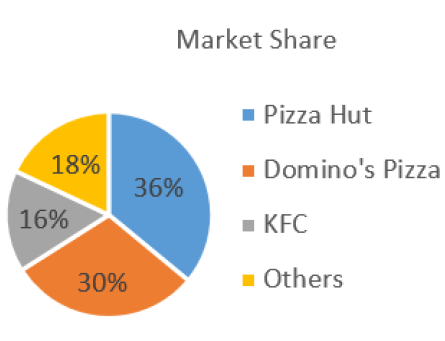
We have found Pizza Hut covering 36% market share, Domino’s Pizza 30%, KFC 16% and others 18% (Light Castle Partners).
Today it is difficult to calculate the total number of fast food restaurants in Bangladesh. Besides the large branded restaurants, there are thousands of restaurants spread around not only the capital city but also in the other cities of the country. These restaurants are serving millions of busy city dwellers every day. It is estimated that there are 105 fast food outlets in the food court of the Dhaka's Bashundhara City Shopping Complex alone [1]. Thus now, fast food restaurants have become a multi-billion-taka industry in the country. The fast food restaurant industry worth around Tk. 8.0 million of sales only in the capital city every day, which puts the gross revenue of these fast food retailers at Tk. 3.0 billion annually [1]. The size of the industry has become up to Tk. 1000 crore and it is still growing [2].
Figure 1: Market Share of Major Fast Food Restaurants in Bangladesh
Even increase in the consumption of poultry farm chicken and potatoes also indicate the growing demand of fast food in Bangladesh [1,3]. According to Akku Choudhury, Executive Director of Transcom Foods Limited, the number of customers and gross revenue increased so tremendously that he is planning to open 50 KFC and Pizza Hut outlets throughout the country by 2015. Even, Helvetia, another leading local fast food chain, is also planning to open around 30 outlets around the country's suburbs through franchises [1]. Over the last ten years, information technology, rapid growth of corporate houses, private universities and hectic life-style has created the new culture that is fast food culture in Bangladesh [2]. The quick serving characteristic of fast food made it popular to the busy urban people. Increased opportunity cost of women‟s time also increases the demand on fast food as those are found ready-made [4]. It is also evident that with growing level of income the eating pattern also becomes Westernized [5].
Company (Pizza Hut) Overview
History of Establishment and Expansion-Compiled from Wikipedia: Pizza Hut is an American multinational restaurant chain and international franchise founded in 1958 in Wichita, Kansas by Dan and Frank Carney, the two brothers both of whom were Wichita state students at that time. It provides pizza and other Italian-American dishes, including pasta, side dishes and desserts. The chain has 18,703 restaurants worldwide as of December 31, 2019, (Yum! Brands. Form 10K 2019) making it the world's largest pizza chain in a number of locations. It is a subsidiary of Yum! Brands, Inc., one of the world's largest restaurant companies (Yum! Brands. Form 10K 2019). Carney brothers opened a Pizza Hut store in June 1958, as a single location in Wichita, Kansas (Encylopedia.com, 2015). Six months later they opened a second outlet and within a year they had six Pizza Hut restaurants. The brothers began franchising in 1959. The iconic Pizza Hut building style was designed in 1963 by Chicago architect George Lindstrom and was implemented in 1969 [6].
PepsiCo acquired Pizza Hut in November 1977 [7,8]. Twenty years later, Pizza Hut (alongside Taco Bell and Kentucky Fried Chicken) were spun off by PepsiCo on May 30, 1997 and all three restaurant chains became part of a new company named Tricon Global Restaurants, Inc. The company assumed the name of Yum! Brands on May 22, 2002. Before closing in 2015, the oldest continuously operating Pizza Hut was in Manhattan, Kansas, in a shopping and tavern district known as Aggieville near Kansas State University. The first Pizza Hut restaurant east of the Mississippi River was opened in Athens, Ohio, in 1966 by Lawrence Berberick and Gary Meyers [9].
The company announced a rebrand that began on November 19, 2014, in an effort to increase sales, which had dropped in the previous two years. The menu was expanded to introduce various items such as crust flavors and 11 new specialty pizzas. Work uniforms for employees were also refreshed [10]. In 2017, Pizza Hut was listed by UK-based company Richtopia at number 24 in the list of 200 Most Influential Brands in the World [11,12]. On June 25 and 27, 2019, it was reported that Pizza Hut was bringing back their logo and the red roof design that was used from 1976 until 1999 [13,14]. On August 7, 2019, Pizza Hut announced its intention to close about 500 of its 7,496 dine-in restaurants in the US, by the middle of 2021 [15]. On August 18, 2020, it was announced that Pizza Hut will be closing 300 restaurants after the bankruptcy of NPC International, one of its franchise providers. A company representative stated, "We have continued to work with NPC and its lenders to optimize NPC's Pizza Hut restaurant footprint and strengthen the portfolio for the future and today's joint agreement to close up to 300 NPC Pizza Hut restaurants is an important step toward a healthier business” [16,17].
Presence in International Market
Pizza Hut's international presence includes Canada and Mexico in North America, India, Bangladesh, Pakistan, Australia, United Kingdom, Sweden, Honduras, Costa Rica, El Salvador, Guatemala, Colombia, Venezuela, Peru, Ecuador, Nicaragua and its Asian presence includes Qatar, The Philippines, Vietnam, Thailand, Malaysia, Indonesia, China, Hong Kong, South Korea and Macau. Pizza Hut was one of the first American franchises to open in Iraq. The company announced a rebrand to begin on November 19, 2014. The rebrand is the result of an effort to increase sales, which dropped in the previous two years. The menu will be expanded to introduce various items such as crust flavors and eleven new specialty pies. Work uniforms for employees were also refreshed.
Entry and Growth in Bangladesh–Compiled from Pizza Hutt Bangladesh Website
Pizza Hut initiated its operations in Bangladesh with its first restaurant way back in 1993. The journey that started then continues to this day, as the chain consists of over 40 outlets spread all across Bangladesh and is arguably the largest restaurant chain in Bangladesh. Dhaka the business hub of the nation also serves as the most populous consumer focal point for Pizza Hut in Bangladesh. The Clifton outlet of Pizza Hut has won numerous regional rewards for exceptionally high sales volumes and Pizza Hutt Bangladesh has been thankful to the loyalty of their customers for all those achievements. The specialized training team at Pizza Hut has launched various amazing flavors and toppings during their time in Bangladesh, in addition to their beloved and timeless classics and continually strived to deliver new and ever-better tastes. The critically acclaimed topping, Chicken Tikka, which has swept the world since its creation, was introduced for the first time in Bangladesh. Pizza Hutt Bangladesh confidently and probably rightfully claims, “Our Customers prefer us because of our innovative products and concepts and the consistently high level of service, quality and standards that we set and meet every day. This is the mantra we uphold in all our restaurants, touching the lives of hundreds and thousands on a daily basis” (Pizza Hut Bangladesh).
Transcom Foods Limited (TFL) started its journey in 2003 as a franchisee of Pizza Hut, the first international chain restaurant in Bangladesh. According to research organization LightCastle Partners, Pizza Hut holds 36% market share in Bangladesh. Considering the fact that the main food item offered by Pizza Hut is Pizza, it can be stated that its main competitors are the other Pizza-based restaurants operating in Bangladesh such as Domino’s Pizza, Pizza Inn etc. Among these restaurants Domino’s Pizza holds second position to Pizza Hut in terms of market share which is 30%. So, Domino’s Pizza is the main competitor of Pizza Hut. Besides other fast food restaurants can also be considered as indirect or secondary competitors of Pizza Hut.
Background of The Study
Purpose and Process: The purpose of the study is to measure consumer attitude toward Pizza Hut which may lead to a better understanding of the importance of each independent variable in order that they may help form a positive attitude in the minds of the consumers. This is obvious that customers have some feeling towards a restaurant- good or bad- in terms of some measurable variables. These variables generally form the attitude of a consumer toward that restaurant. Some consumers might feel that the price is too high for them. Some might visit that restaurant again and again because she or he might feel that the price is perfectly reasonable. Some consumers think that the environment of a restaurant is not at all up to the mark. So, she or he avoids that particular one. To some consumers the environment of a restaurant might seem heavenly. Customer service is often a critical factor that ensures the frequent visit of a consumer. Some consumers hate a particular restaurant because of poor customer service. The quality of food is also a great indicator to whether a restaurant is preferred by a consumer to another or not. Thus countless factors work as reinforcements on whether a restaurant will be preferred over the others or not. However, these factors are confusing at times. As far as we understand, price is an important factor that forms consumer attitude towards restaurants.
Furthermore, there is obvious debate over the two concepts - people choose high price restaurants to feel aristocratic vibes or they choose low price restaurants to spend less. And at this age of show-offs through Facebook or Instagram, price has been a more confusing variable than ever, even when the middle class people of a developing country like Bangladesh are under consideration. Besides, this is within our knowledge that customer service is also a considerable factor while measuring consumer attitude of service industry. However, sometimes service expectations are noticed to be sacrificed at a lower price by some consumers. So, considering all of these things, this is still not clear that actually which particular factors, to what extent, are meant to be present in service industry such as fast foods, in order to form positive consumer attitude. If consumer attitude is not at all good towards a restaurant, it faces poor number of visits. On the contrary, positive consumer attitude results in more and more visits by widespread word of mouth.
Needless to say that consumer attitude must be measured if a restaurant aims to go on continuous development. Perfectly measured consumer attitude gives the restaurant a possible direction to how it should make changes in its services offered, to what extent, which aspects it should give more emphasis on, which aspects it is doing well in and how to achieve overall customer satisfaction. Thus, it is necessary to identify the attitude of the fast food consumers towards the restaurants. In simple terms attitude is a representation of our likes and dislikes. However, attitudes go beyond this and have been described as a lasting, general evaluation of people (including oneself), objects, advertisements or issues' [18].
In this study, we will hover over various factors that are important to consumers when they actually rate Pizza hut as a fast food restaurant. We will also conduct research on what is the consumer attitude toward Pizza Hut and try to numerically explain the overall situation. The information needed for the study is the set of consumers’ opinions about the price, quality of food, quick service, environment and location of Pizza Hut branches in Dhaka. The information will be collected through a questionnaire and then will be tabulated from it. Then the reasonability of price, quality of food, quickness of service, comfort of the environment and convenience of location will be numerically evaluated from the answers of the respondents. On the basis of these numerical values of variables the overall consumer attitude toward Pizza Hut will be determined. Thus the information will be used in decision making.
Problem Definition
Favorable buying decisions are generated by favorable attitudes. Based on this background, the current study aims to explore the consumer attitude towards the fast food restaurants in Bangladesh. Previous studies that were conducted on consumer attitudes toward fast food restaurants solely focused on consumer preferences of fast food items. However, very few studies, according to our knowledge, were conducted to explore consumer attitudes towards services of fast food restaurants.
So, it seems rational to probe into the consumer attitudes coming from deep in their minds toward Pizza Hut by considering the underlying variables. The components of the defined problem are: Consumer attitude, price, quick service, environment, location, food quality.
Objectives of the Study
The broad objective of the research is to explore the consumer attitude towards Pizza Hut Bangladesh. More specifically, the objectives are:
To determine how the local consumers, feel about Pizza Hut Bangladesh
To examine the current attitude of consumers toward Pizza Hut
To determine the importance of the factors contributing to shaping consumer attitude
To identify problems and suggest proper recommendations for possible solutions
Significance of the Study
This study is significant because it will give the fast food restaurants a better understanding of which variables should be taken care of and to what extent to form a positive attitude in the consumers’ minds. This is the right time for this research since people are more interested in visiting restaurants than ever before and the competition among the restaurants to attract more customers has become equally important. Moreover, in Bangladesh new generations have adopted the fast food culture as their daily lifestyle. So, it is far more important to conduct a research on a particular restaurant in Bangladesh to obtain an overall insight into the expectations of the consumers regarding the price, food quality, quick service, environment and location.
In our research literature we have found that there is a debate over the importance of quality of foods. So, in our study we will attempt to determine whether the food quality of Pizza Hut is important to form a positive attitude. The research literature also shows us that the importance of physical environment is also debatable. In our study we will test the importance of physical environment among the consumers of Pizza Hut.
Moreover, in the research literature we find an argument over price. Some industry experts opine that price is the most important factor in the restaurant industry when consumer attitude is concerned. On the other hand, some experts argue that price is not as important in case of fast food restaurants since the price of fast foods is lower than the foods of other restaurants. This is a big research lacuna for our study that we will try to fill up. In this regard, our study has a great scope to determine which argument is more accurate in case of Pizza Hut Bangladesh consumers. The most important thing that our study will contribute to the research literature is that it will give the researchers, industry experts and relevant parties a more sophisticated view of consumer attitude on the basis of the aforementioned variables in the light of the consumer attitude narrowly toward a particular fast food restaurant (Pizza Hut).
Our findings may have several implications of how Pizza Hut is performing, in which fields it has rooms for improvement, how it can improve the situation etc. Since our findings will determine the overall attitude of consumers toward Pizza Hut, it will be very beneficial to this fast food restaurant. The management will be aware of the strengths of the restaurant and the drawbacks as well. Moreover, the other players of this industry will also benefit from this study because they will be provided with deeper insights into consumer expectations and preferences. The students will also benefit from the study by obtaining understanding of the crucial factors of the fast food restaurants.
Literature Review
The term "fast food" was recognized in a dictionary by Merriam–Webster in 1951. Outlets may be stands or kiosks, which may provide no shelter or seating [19], are fast food restaurants also known as quick service restaurants. Originated at USA in 1916, fast food restaurants are now dominating the world [20]. Today fast food restaurant industry is a highly growing sector in Bangladesh [21].
The Bangladesh service industry has gained greater attention in today’s business environment. Despite the growth of it, fast food industry is facing numerous new challenges due to external and internal factors in its business environment, which affect its organizational performance. The external factors include stiff competition from peers and uncertainties in the hospitality industry. Besides the external factors, fast food restaurants have to deal with internal challenges which are related to hospitality management. This internal factor may contribute to their poor performance in terms of low level of service quality [22].
An “attitude” is defined as a kind of psychological tendency that is articulated by assessing a particular entity with some degree of favour or disfavour [23]. The affective, cognitive or behavioural responses resulting from the attitude relate to the process of evaluation [24]. Evaluative responses are those which express approval or disapproval, liking or disliking, attraction or aversion. Attitudes exist towards price or value of a food product, health or nutrition. They cannot directly be observed, but can be inferred from observable responses to questionnaires or interviewers [25]. When consumers visit fast food restaurants, how they feel about those restaurants depends upon a lot of factors. For example, Campbell-Smith [26], introduced in their research the pattern of experience, which explains the elements of a restaurant’s offer. Cousins, Foskett et al. [27], classified the factors in five categories, according to their importance, as food and beverage, serving, cleaning-hygiene, value and ambience.
Kivela, Inbakaran et al. [28], considered some attributes, like the variety of the menu, taste and the consistency of food products, in order to examine their effect on customers. Mattila [29], used the quality of products in restaurants as a way of prediction for measuring the customers’ loyalty. On the other hand, Soriano [30], realized that the quality of products is not the most important thing that determine young people to eat at fast food restaurants. According to Edwards and Gustafsson [31], the most important connection between the restaurant and the consumers is achieved due to the front-office employees and their performance, which can easily influence the consumers’ mood.
Another important element in a restaurant is the physical environment. From this point of view, the restaurant has to be large enough to serve and prepare the food [32]. Bitner [33], named the physical environment of a restaurant as “services cape”. It was defined, according to its dimensions, as: physical conditions for example, the temperature, the noise, the space for example, the equipment, signs, symbols and artifacts for example, direction signs or the decoration style. Moreover, some studies show the fact that the physical environment can be used to influence the consumers’ expectations regarding the qualities of the restaurant [34], as all these factors are part of this catering experience.
Besides this, some studies show the fact that the atmosphere of a restaurant plays a special role in defining customer’s mood, even before they deliver the service. [35]. In a recent research, Voon [36]. analyzed the importance of the environment where the services are offered (the “services cape” and the contact employees), the food quality and the prices, from the young people’s perspective, in three types of restaurants. On one hand, the price is considered as the most important factor in determining the young people's loyalty, it being followed by contact employees. On the other hand, the physical environment “services cape” and the food quality are not so important in influencing young people’s loyalty regarding a catering place.
Qin and Prybutok [37], investigated the role of the price when talking about fast-food consumers and they discovered that the price didn’t play such an important role. This is because fast-food products are cheaper compared to other restaurants’ products. Nevertheless, the price plays an important role in attracting young people, as they have lower income. The factors that help us decide upon a restaurant form an aspect that both the researchers and the managers should keep in mind. Surprisingly, there are only a few studies which analyze the criteria people think about, when they choose a place to eat [38].
According to Martin Fishbein, attitude is an independent measure of affect for or against the attitude object, which is a function of belief strength and evaluative aspect associated with each attribute [39]. Here belief (expectancy) refers to the perceived probability which an object possesses regarding a particular attribute or a behavior that has a particular consequence. And evaluation refers to the degree of affect, positive or negative, toward an attribute or behavioral outcome. Fishbein’s debate, in a nutshell, is about an attitude toward an object is more or less automatically learned as one learns about the object itself. That is, when one learns about a new product, that learning occurs in the form of beliefs about product characteristics or attributes.
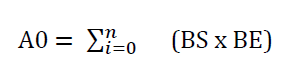
The key proposition in Fishbein’s theory is that people tend to like objects that are associated with “good” characteristics and dislike objects they believe have “bad” attributes. In Fishbein’s multi attribute model, overall attitude toward an object is a function of two factors: the strengths of the salient beliefs associated with the object and the evaluations of those beliefs. Formally, the model proposes that:
where,
A0 : Attitude toward the object
BS : Strength of the belief that the object has attribute i
BE : Evaluation of attribute i
n : Number of salient beliefs about the object
MATERIALS AND METHODS
Clarification of the Terms
The literal and operational meanings used for uniformity and clarity of understanding of some terms used in this study are stated here:
Attitude: An individual’s preference, inclination, views or feelings toward some phenomenon. Attitude is one of the more important notions in marketing literature because it is generally thought that attitudes are related to behavior [40]
Price: The definition of Price according to Philip Kotler is: “Price is the amount of money charged for a product or service.” Broadly, price is the total amount that being exchange by the customer to obtain a benefit of the product or service owning. Stanton define Price as: “Price is the amount of money or goods needed to acquire some combination of another goods and its companying services”
Food Quality: Food quality is the quality characteristics of food that is acceptable to consumers. This includes external factors as appearance (size, shape, color, gloss and consistency), texture and flavor; factors such as federal grade standards (e.g. of eggs) and internal (chemical, physical, microbial)
Quick Service: Quick service also refers to fast food cuisine and minimal table service. Fast food restaurants are also called Quick Service Restaurants (QSR)
Environment: Bitner [33], named the physical environment of a restaurant as “servicescape”. It was defined, according to its dimensions, as: physical conditions (for example, the temperature, the noise), the space (for example, the equipment), signs, symbols and artifacts (for example, direction signs or the decoration style)
Location: An actual place, position or natural setting on which the restaurant stands
Research Design
Descriptive research design, which is used to describe the characteristics and behavioral pattern of a certain group, or a proportion of people in a specified population, has been used in this study. Descriptive studies require a clear specification of who, what, when, where and why of the research. In this regard, it is said by Malhotra and Dash [41], “The major objective of descriptive research is to describe something- usually market characteristics or functions.” The descriptive research is conducted for several reasons, one of which is “to describe the characteristics of relevant groups, such as consumers, salespeople, organizations or market areas.” [41]. So, the descriptive research has been used rightly to describe the opinions of the consumers about Pizza Hut in terms of its price, quality of food, quick service, environment and location. This research was also a cross-sectional study. Cross sectional study is a study in which data is gathered just once, perhaps over the period of days or weeks or months in order to answer a research question [42].
Data Collection
Data were collected from both primary and secondary data sources. Primary data was collected by using a self-administered questionnaire for finding the information from the respondents in sample unit. The type of questionnaire used in this research is closed questionnaire because this type of questionnaire helps the respondents make quick decisions by choosing among several alternatives provided. It also helps the researchers code the information easily for subsequent analysis [42]. Secondary data was collected from several sources such as text books, newspapers, professional journals and internet. The information derived by these procedures provide meaning, concept, model of theory and are used to develop the framework for this study.
The data were collected by sample survey method. This data provided information about consumers’ preferences and perception of price, food quality, quick service, environment and location. The survey method was used because it was considered the most appropriate in this context. Moreover, it is quick and reaches the target group effectively. It is also an economical method. Zikmund [43], stated that a survey can provide quick, inexpensive, efficient and accurate means of assessing information about the population.
Sampling
Since the population size of this study is almost impossible to determine, the non-probability sampling in convenient way was selected in which 120 random people were given questionnaire to fill up. In this case, samples were taken out of the people coming out of 4 Pizza Hut branches of Dhaka City situated at Dhanmondi, Bailey Road, Gulshan and Uttara. Besides, online polls were used to take samples through the Internet. Convenience sampling was used because this method obtains information quickly and it is not expensive [44].
Data Collection Instrument
We used structured questionnaire as the data collection instrument. It is a structured sequence of questions designed to draw out facts and opinions and which provides a vehicle for recording the data [45]. The main advantages of this kind of questionnaire are that it can be collected in a complete form within a short period of time and can be obtained from the target respondent upon the immediate completion of the respondent. This approach is also easily interpreted by the computer. The questionnaire has been attached in the Appendix. The questionnaire attempted to obtain consumer perception of price, quick service, food quality, environment and location for Pizza Hut Bangladesh. There are 10 statement questions. For each statement, the respondent was provided with a five-point scale ranging from 1 Strongly disagree to 5 Strongly agree. There are also 3 general questions that are administered to obtain a better understanding of the consumers’ feelings about Pizza Hut.
We first of all had to revisit our research objectives and determine what information we need to collect. Our questionnaire for the survey has three parts; the first and the second part of the questions are the main parts of the questionnaire that comprises 10 questions each aimed at finding the respondents’ opinions pertaining to the belief evaluation of particular attributes and belief strength of how much those attributes are present in Pizza Hut.
The first part (Statement 1 to 5) is aimed at measuring the belief evaluation of the customers. These are statements that seek to describe what consumers think of those attributes, how much important they think those are for a fast food restaurant. The statements are coined in such a way that they express a desire of the respondents for a particular attribute. The second part (Statement 6 to 10) seeks to measure belief strength. These are also statements that are a description of particular attributes which are strongly believed by the consumers to be present in Pizza Hut. Respondents are expected to rank these statements according to how far they think these statements apply to Pizza Hut from their experience. The last part of the questionnaire seeks to measure the consumers’ overall feeling about Pizza Hut, how often they visit, which branch they visit the most and some basic demographic variables such as age, gender and profession.
All the questions are multiple-choice and close-ended questions. Because of being closed- ended and multiple-choice in nature the results of the questions are easy to compare, tabulate and analyze. In the questions we used 5-point Likert-scale where the respondents were asked to select the most appropriate number that corresponds to extent to which they agree with a statement. The scales in our survey questions is 1 to 5 with “1” denoting “strongly disagree” and “5” denoting “strongly agree”. The original scale of Likert-type scale was developed by Rensis Likert. He reported very satisfactory reliability data for the scales.
Data Analysis Model
The Fishbein Multi Attribute Attitude Model is used to assess consumers’ attitude toward an object. Both belief strength and belief evaluations are measured using a 5-point scale to rate their level of agreement or disagreement (1-strongly disagree and 5- strongly agree), on which the higher numbers indicate higher level of strength or evaluation. Belief evaluation is the amount of importance of a particular attribute to the consumers. On the other hand, belief strength is the amount of relevance of that particular attribute to Pizza Hut. Attitude scores are the summation of the product of belief evaluation and belief strength for a particular attribute. The higher the sum of products, the more favorable the attitude toward that attribute for Pizza Hut. We coded the variables in order to ease our analyses of the data collected. Here is the coding of the variables for analysis:
Price: BE1 Low price is very necessary for a fast food restaurant to attract customers. BS1 Pizza Hut should reduce its price by a substantial amount
Quick Service: BE2 Quick service is not essential at all for a fast food restaurant. BS2 Service is very fast in Pizza Hut
Environment: BE3 A fast food restaurant must have amazing environment to get a good number of visitors. BS3 Environment is the strength of Pizza Hut above all. Location BE4 Convenience of the locations of a fast food restaurant is very necessary. BS4 All the locations of Pizza Hut branches in Dhaka City are in convenient places
Quality of Food: BE5 A fast food restaurant should serve good quality of foods to create customer loyalty
BS5 The quality of food is undoubtedly perfect in Pizza Hut. We carried out a quantitative research and this involved some quantitative analyses with the use of statistical tools (descriptive and inferential). We have used the SPSS package for the analysis of our data. We used descriptive statistics mainly involving the mean, maximum, minimum, standard deviation in the data analysis. The mean simply put is the average of the sum of all values which is representative of a distribution with several discrete or continuous variables that cannot be employed wholly. Standard deviation seeks to measure the average amount of variability in a set of scores between values and measures.
Limitations of the Study
Although there are notable contributions from this study especially for exploring consumer attitude towards Pizza Hut, the result of the study need to be viewed and acknowledged in lights of its limitations.
First, because the selection of survey respondents was done by convenience sampling, the results cannot be projected to a larger population. Second, data may be skewed in some cases due to the sample selection of respondents and the sample size. A greater sample would have yielded more significant and more stable statistics. Third, limited time duration. It would require a lot of time to manage, gather and analyze the primary as well as secondary data. Fourth, due to the resource constraint large sample has not been considered in this study and the study did not cover more cities other than Dhaka.
DISCUSSION
Feelings of local consumers about Pizza Hut
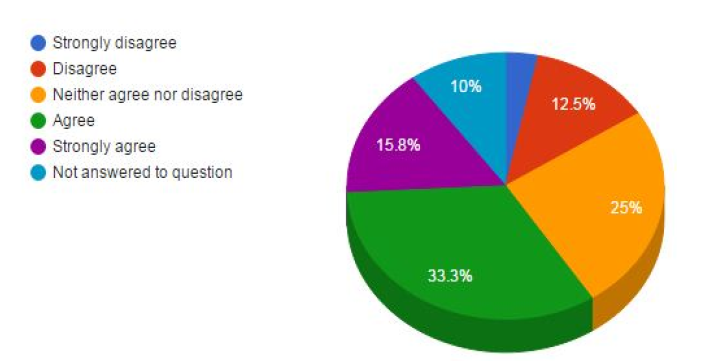
From the third part of our questionnaire we tried to find out how local consumers feel about Pizza Hut Bangladesh. The final outcomes that depict the general feelings and practices of consumers are discussed in Figure 2.
Figure 2: Consumers’ Responses (%) to the Statement ‘Pizza Hut is the Most Popular Fast Food Restaurant in Bangladesh
In our study, 33.3% of the respondents agreed with the statement that Pizza Hut is the most popular fast food restaurant in Bangladesh. 15.8% of the respondents strongly supported the statement. On the other hand, only 12.5% of the respondents could not agree with the statement.
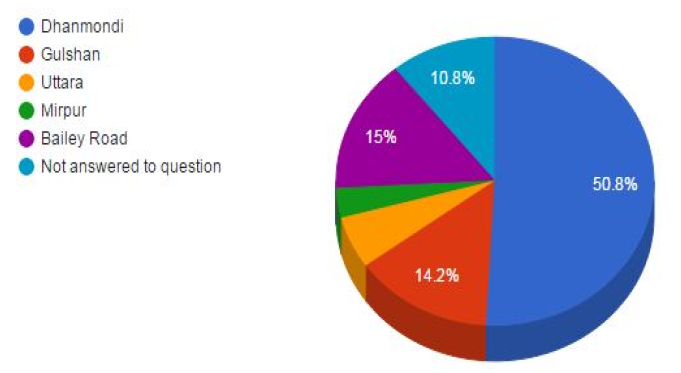
In our study, 50.8% of the respondents told that they visited Dhanmondi branch the most. The second most visited 15% outlet of Pizza Hut is Bailey Road. The least visited outlet, according to our respondents, is the one in Mirpur (Figure 3).
Figure 3: The Most Visited Pizza Hut Branches in Bangladesh According to Respondents
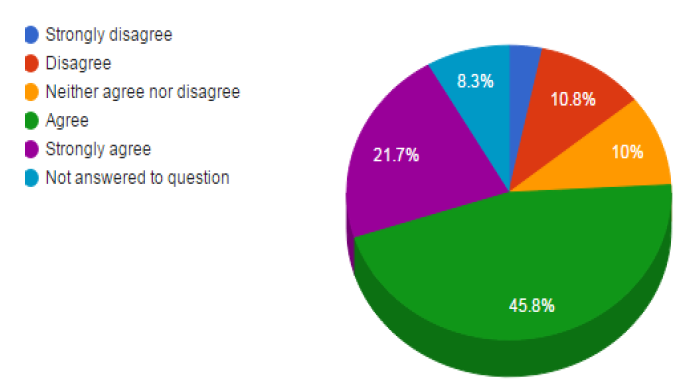
In our study, 45.8% agreed that they visited Pizza Hut on occasions rather than visiting regularly. 21.7% of the respondents strongly agreed with the statement which might indicate that they never thought of visiting Pizza Hut regularly. A very small percentage 3.4 of respondents said that they visited Pizza Hut regularly (Figure 4).
Figure 4: The Rate (%) of Occasional Visits of the Respondents in Pizza Hut Bangladesh
Current Attitude of Consumers Toward Pizza Hut
Using the Fishbein Multi-Attribute Attitude Model, we tried to find out the attitude of consumers toward Pizza Hut. The model is characterized with the estimation of both the evaluation of importance of the attributes and the strength of beliefs about getting those attributes in a particular restaurant. After calculating belief evaluation and belief strength, using SPSS, we multiplied these two dimensions. The calculated sum of the products is the attitude of consumers toward Pizza Hut in term of a particular attribute such as, low price, amazing environment, quick service etc.
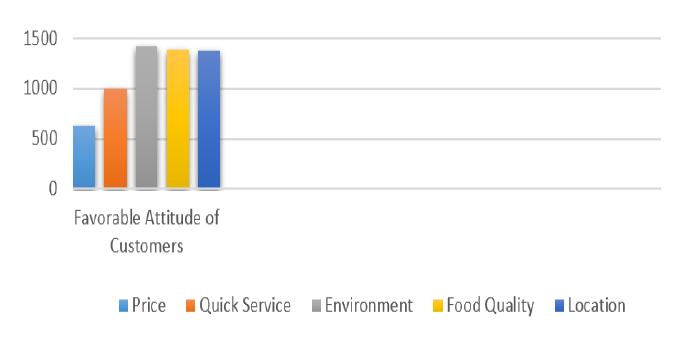
It should be noted that while comparing attitude toward two or more objects (in our case, restaurants), it is widely practiced to calculate the grand total of all the attribute scores for each restaurant and then compare the scores to look for the highest or lowest scores. But in our case, we are not comparing two or more restaurants. So it would not be relevant in our study to calculate the grand total of all the attribute scores with which nothing is to be compared. This is why we evaluated the attitude toward each attribute separately which, we hope, will give us a broader view of consumer attitudes and a better understanding of how these attitudes are formed (Table 1).
Table 1: Measurement of Attitude Scores of Each Attribute/variable for Pizza Hut
Attribute/ Variables
A0 = ∑ (BE x BS)
Low Price
634
Quick Service
1003
Amazing Environment
1422
Convenient Location
1378
Food Quality
1393
On the bar chart (Figure 5), we can see that consumers have the most favorable attitude having the highest score of 1422 toward the environment of Pizza Hut. It might indicate that consumers are very appreciative of the environment of Pizza Hut. Next, consumers have very favorable attitude toward the food quality of Pizza Hut depicted by the second highest score of 1393. Then, their attitudes are gradually becoming less favorable to the location and quick service of Pizza Hut (depicted by the score of 1378 and 1003 respectively). It might indicate that Pizza Hut have room for improvement in the convenience of their location and service delivery time. The most unfavorable attitude of consumers is toward the price of Pizza Hut items having the lowest score of 634. It might indicate that Pizza Hut is charging prices that are not reasonable for the consumers as shown by the respondents’ answers.
Figure 5: Comparison of Consumers' Attitude Scores Toward Each Attribute of Pizza Hut
Strength of the Factors Contributing to Shaping Consumer Attitude
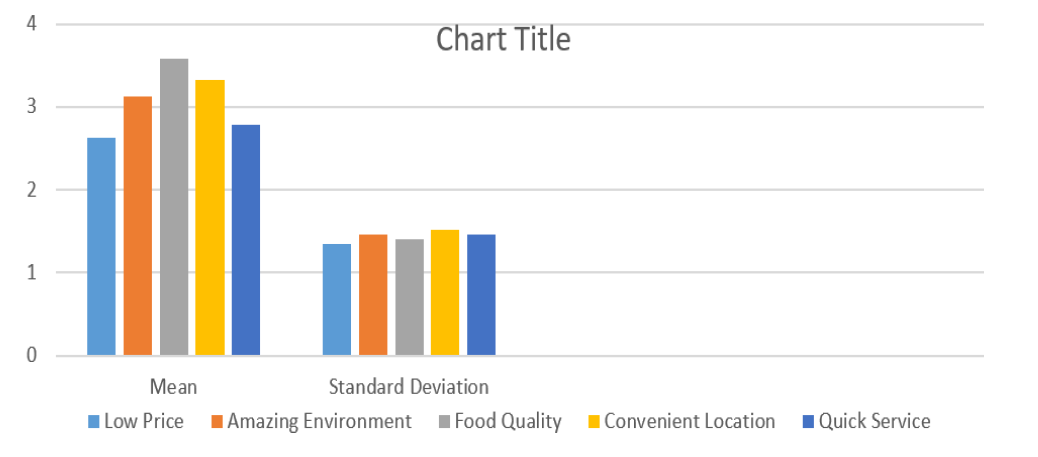
We used the Fishbein Multi-Attribute Attitude Model to find out consumers’ attitude toward Pizza Hut quantitatively. The model, as designed by Mr. Fishbein [37], requires to calculate the Belief Evaluation (BE) of each attribute, i.e. how much important those attributes are to the consumers. So, in our study we had to calculate the Belief Evaluation (BE) of each attribute. Using SPSS, we calculated the mean of the obtained scores of belief evaluation for each attribute that might show the importance of the factors that contribute to shaping consumer attitude. Besides we also calculated the standard deviation in order to measure how close the other values are to the mean. Table 2 showing the minimum, maximum, mean and standard deviation values of belief evaluation and belief strength of each attribute.
From Table 2 we can see that good quality of food has the highest mean value 3.58 of belief evaluation scores in the minds of the consumers, i.e. they think quality of food is the most important attribute that a fast food restaurant should focus on. On The other hand, it has the second lowest value of standard deviation 1.400, i.e., the opinions of the respondents are very close to the mean value in case of food quality.
Table 2: Descriptive Statistics of Belief Strength and Belief Evaluation of Each Attribute for Pizza Hut
Variables
Dimensions
Minimum
Maximum
Mean
Std. Deviation
Low Price
BE1
0
5
2.63
1.341
Low Price
BS1
0
5
3.67
1.486
Quick Service
BE2
0
5
2.78
1.462
Quick Service
BS2
0
5
2.84
1.257
Amazing Environment
BE3
0
5
3.13
1.455
Amazing Environment
BS3
0
5
3.38
1.361
Convenient Location
BE4
0
5
3.32
1.523
Convenient Location
BS4
0
5
3.28
1.455
Good Quality of Food
BE5
0
5
3.58
1.400
Good Quality of Food
BS5
0
5
2.99
1.399
Valid N (listwise) = 120
So, food quality can be considered to be the most important factor that contribute to shaping favorable attitude among consumers.
Convenient Location has the second highest mean value 3.32 of belief evaluation but the highest value of standard deviation 1.523 which means opinions of respondents widely vary and are very far from the mean. So it can be assumed that convenience of location is important but it is contributing to shaping favorable consumer attitude to a very low extent.
Between environment and quick service, environment has slightly greater mean value 3.13 of belief evaluation than quick service 2.78. Also it has lower standard deviation score 1.455 than quick service 1.462. So, environment has absolutely greater importance as an attribute to the consumers than quick service.
The lowest mean value of belief evaluation acquired by low price attribute 2.63 implies that price is the least important to the consumers. The lowest standard deviation 1.341 also indicates that the opinions of all the respondents are very close to the mean which means all the consumers think almost the same in case of low price. So, it can be undoubtedly assumed that price is the least important attribute that a fast food restaurant should focus on. In the above Multi-Attribute Attitude Model, we noticed that attitude score is the lowest in case of price. Now we can understand it might be because of less importance of price attribute to the consumers in case of fast food restaurants. Thus, food quality is the most important factor that contributes to shaping favorable attitude among consumers. On the other hand, price is the least important factor that contribute to shaping favorable attitude (Figure 6).
Figure 6: Comparison of Means and Standard Deviation of Belief Evaluation for all 5 Attribute
Potential Problems and Possible Recommendations
From the mean value of belief evaluation, it is clear that food quality is the most important attribute to the consumers. But, in Pizza Hut, the attitude score for food quality is second highest. So, Pizza Hut might consider making slight improvements in their food quality in order to create more favorable attitude in consumers. Convenient Location has the second highest mean value of belief evaluation meaning that it is very important to the consumers. But the attitude score of Convenience of location, obtained from Fishbein test, is in the middle which means consumers have less favorable attitude toward the convenience of locations of Pizza Hut outlets. So, we recommend that Pizza Hut consider about their locations of outlets, so that they are more convenient for the consumers. Though low price attribute got the lowest attitude score in Fishbein model, but its lowest mean value of belief evaluation indicates that this is not at all important to generate favorable attitude in the minds of the consumers. So, Pizza Hut might be less concerned about this attribute.
CONCLUSION
Fast food culture has been becoming increasingly popular over the passage of every year since its slow start in the early 1990s. Mere convenience to consume has been convincing more and more urban dwellers to prefer eating fast food in the restaurants over cooking food in their homes. The results of this study would certainly be useful for the fast food restaurants to retain and expand their customer base by reinforcing their service qualities as per their customers’ preferences, who are more suspicious about and conscious on choosing the fast food restaurants than ever before, because of the negative images created in their mind about the fast food industry due to the dishonest practices detected and debunked in this industry by the govt. of Bangladesh, along with the widespread media publicity against the harmful aspects of the growing fast food culture. Lastly, the restaurant owners may benefit by modifying their existing business strategies to counter the increasing competition in this industry due the growth of many newly established local and international fast food chains. The study recommends that the fast food restaurants of Bangladesh should focus more on food quality, price, speed of service and environment as the consumers emphasize mostly on these factors to compare among the restaurants while selecting the best possible one to dine out. Thus ensuring superior quality foods with reasonable price and prompt service in a delightful environment will help the fast food restaurants to attract and retain more consumers with increased amount of consumer satisfaction and market share.
REFERENCES
Bhuiyan, M.M. “Dhakaites devour fast foods worth Tk 8.0m a day.” Financial Express, vol. 18, no. 227, 2010.
Farhana, T. “Fast food culture in Dhaka, Bangladesh.” Pickled Politics, January 2011.
Bouis, H.E. et al. Demand for high-valued secondary crops in developing countries: The case of potatoes in Bangladesh and Pakistan. FCND Discussion Paper no. 14, International Food Policy Research Institute, 1996.
Pingali, P. Westernization of Asian diets and the transformation of food systems: Implications for research and policy. ESA Working Paper no. 04-17, Food and Agriculture Organization of the United Nations, 2004.
Regmi, A. et al. “Effects of urbanization on global food demand.” Changing Structures of Global Food Consumption and Trade, edited by A. Regmi, ERS WRS 01-1, USDA Economic Research Service, 2001.
Swanson, A. “Oddly captivating photos show what happened to all those Pizza Hut restaurants.” The Washington Post, October 2015.
Tihen, E.N. “Tihen notes on Pizza Hut.” Wichita State University Libraries, PDF, 2017.
Millman, N. “PepsiCo to spin off restaurants.” Chicago Tribune, January 1997.
“Pizza Hut history.” Pacific.com.vn, April 2021.
Choi, C. “Pizza Hut’s revamp: Curry crusts, balsamic drizzle.” Detroit News, November 2014.
“Jet Airways among top 200 most influential brands in the world.” Economic Times, 2017.
“Brands top 200: From Amazon to Google, these are the most influential brands in the world.” Richtopia, 2017.
De Luce, I. “Pizza Hut is rebooting its iconic ‘red roof’ logo with a retro design.” Business Insider, June 2019.
Valinsky, J. “Pizza Hut brings back its retro logo.” CNN Business, June 2019.
Newcomb, A. “Pizza Hut is closing hundreds of its dine-in restaurants.” Today Show, August 2019.
“Tellpizzahut – Take Pizza Hut survey.” Mysurveyhubz, 2021.
Valinsky, J. “300 Pizza Huts are closing after a giant franchisee goes bankrupt.” CNN Business, August 2020.
Solomon, M.R. et al. Consumer behaviour: A European perspective. 3rd ed., Pearson Education Limited, 2006, p. 138.
Jakle, J. Fast food: Roadside restaurants in the automobile age. Johns Hopkins University Press, 1999.
Bareham, J. Consumer behavior in the food industry: A European perspective. Butterworth-Heinemann, 1995.
Islam, N. et al. “Factors affecting consumers’ preferences on fast food items in Bangladesh.” The Journal of Applied Business Research, vol. 26, no. 4, 2010.
Lau, P.M. et al. “Service quality: A study of the luxury hotels in Malaysia.” The Journal of American Academy of Business, vol. 7, no. 2, 2005, pp. 46–55.
Eagly, A.H. and S. Chaiken. The psychology of attitudes. Harcourt Brace Jovanovich, 1993.
Frewer, L. “Societal issues and public attitudes towards genetically modified foods.” Trends in Food Science and Technology, vol. 14, 2003, pp. 319–332.
MacCorquodale, K. and P.E. Meehl. “On a distinction between hypothetical constructs and intervening variables.” Psychological Review, vol. 55, 1948, pp. 95–107.
Campbell-Smith, G. The marketing of the meal experience. University of Surrey Press, 1967.
Cousins, J. et al. Food and beverage management. 2nd ed., Prentice Hall, 2002.
Kivela, J. et al. “Consumer research in the restaurant environment. Part 3: Analysis, findings and conclusions.” International Journal of Contemporary Hospitality Management, vol. 12, no. 1, 2000, pp. 13–30.
Mattila, A.S. “Emotional bonding and restaurant loyalty.” The Cornell Hotel and Restaurant Administration Quarterly, vol. 42, no. 6, 2001, pp. 73–79.
Soriano, D.R. “Customers’ expectation factors in restaurants: The situation in Spain.” International Journal of Quality and Reliability Management, vol. 19, no. 8–9, 2002, pp. 1055–1067.
Edwards, J.S.A. and I.B. Gustafsson. “The five aspects meal model.” Journal of Foodservice, vol. 19, no. 1, 2008, pp. 4–12.
Carlback, M. “Are the chain operations simply worth it? Five aspects meal model as a development tool for chain operations and franchise organizations.” Journal of Foodservice, vol. 19, no. 1, 2008, pp. 74–79.
Bitner, M.J. “Servicescapes: The impact of physical surroundings on customers and employees.” Journal of Marketing, vol. 56, no. 2, 1992, pp. 57–71.
Baker, J. et al. “The influence of store environment on quality inferences and store image.” Journal of the Academy of Marketing Science, vol. 22, no. 4, 1994, pp. 328–339.
Mattila, A.S. and J. Wirtz. “Congruency of scent and music as a driver of in-store evaluations and behavior.” Journal of Retailing, vol. 77, 2001, pp. 273–289.
Voon, B.H. “Role of service environment for restaurants: The youth customers’ perspective.” Procedia – Social and Behavioral Sciences, vol. 38, 2012, pp. 388–395.
Qin, H. and V.R. Prybutok. “Determinants of customer-perceived service quality in fast-food restaurants and their relationship to customer satisfaction and behavioral intentions.” The Quality Management Journal, vol. 15, no. 2, 2008, pp. 35–50.
Kim, S. and J. Chung. “Restaurant selection criteria: Understanding the roles of restaurant type and customers’ sociodemographic characteristics.” Graduate Student Research Conference in Hospitality and Tourism, 2011.
Fishbein, M. “Attitude and the prediction of behavior.” Readings in Attitude Theory and Measurement, edited by M. Fishbein, John Wiley, 1967.
Ullah, M., Khanam, F. & Al-Zadid, M. O. (2021). Factors Forming Favorable Consumer Attitude towards the Fast Food Restaurants in Bangladesh - A Study on Pizza Hut. IAR Journal of Business Management, 2(2), 1-11.
MLA
Ullah, Mahmud, Fahima Khanam and Md. O. Al-Zadid. "Factors Forming Favorable Consumer Attitude towards the Fast Food Restaurants in Bangladesh - A Study on Pizza Hut." IAR Journal of Business Management 2.2 (2021): 1-11.
Chicago
Ullah, Mahmud, Fahima Khanam and Md. O. Al-Zadid. "Factors Forming Favorable Consumer Attitude towards the Fast Food Restaurants in Bangladesh - A Study on Pizza Hut." IAR Journal of Business Management 2, no. 2 (2021): 1-11.
Harvard
Ullah, M., Khanam, F. and Al-Zadid, M. O. (2021) 'Factors Forming Favorable Consumer Attitude towards the Fast Food Restaurants in Bangladesh - A Study on Pizza Hut' IAR Journal of Business Management 2(2), pp. 1-11.
Vancouver
Ullah M, Khanam F, Al-Zadid MO. Factors Forming Favorable Consumer Attitude towards the Fast Food Restaurants in Bangladesh - A Study on Pizza Hut. IAR Journal of Business Management. 2021 Jul;2(2):1-11.



 Download PDF
 Download XML