Research Article | Volume 1 Issue 2 (July-Dec, 2020) | Pages 1 - 5
What Drives International Entrepreneurial Firms to Expand Overseas: A Case Study Approach
1
Department of International Business, Universiti Tunku Abdul Rahman, Selangor, Malaysia
Under a Creative Commons license
Open Access
Received
July 25, 2020
Revised
Aug. 4, 2020
Accepted
Aug. 9, 2020
Published
Nov. 10, 2020
Abstract

Despite the lack of resources, entrepreneurial firms are able to expand internationally from an early stage of establishment. This study aims to explore and identify the drives of expansion for international entrepreneurial firms. This study employed a multi-case analysis approach through in-depth interviews to identify the drivers of international expansion of such firms. Based on our findings we propose a model to enrich the current understanding on the factors that drive young entrepreneurial firms’ expansion to international markets.

Keywords
INTRODUCTION

Based on the traditional theories,internationalization can be deemed when firms form a strong foundation in the local markets and then slowly start to expand to the overseas markets [1] Therefore, the entrepreneurial firms would enter the international market as the born global or rapid firms to the countries which have great opportunities in terms of the expansion. According to [2] most of the international entrepreneurial firms are capable of entering the international market with the strength of globalization and other added competencies such as the adaption of the culture and technology advancement. Therefore, many of the SMEs firms are motivating themselves to become the regional players in the global market as well. In this paper, we aim to identify those drivers that influence the international entrepreneurial firms to expand into the foreign market. Based on our case study objectives, we had proposed and tested the following  research questions that are related to this research topic such 


as how the key drivers had influenced the international entrepreneurial firms to step into the international market. Besides that, in this study, we found that entrepreneurial firms face many challenges in terms of the high competition, cultural differences and export terms and regulations when the firms enter the new market. With that, useful insight will be provided in this research in order to identify the factors that could support the international entrepreneurial firm to overcome the challenges that are faced during internalization. 

LITERATURE REVIEW

International Expansion or also known as the planned expansion of the company’s business activities into several foreign markets throughout the world. Early   internationalization had been facilitated by the globalization and advanced technologies  of the companies which carry out the terms as born global, international new ventures, born internationals and early internationalize [3] Moreover, the internalization of the born global firms explains the importance role of   the network perspective and dynamic capabilities in the organizations[4]. In that case, it is also important for the born global firms to consider factors such as the culture adaption, language differences, regulatory environments once step into foreign markets [5] Currently, most   of the SMEs companies expand their business to the international market [1]. However, past research done by [6] the authors said that there also challenges or barriers in terms of threats of new entrants, trade investment, capital and financial issues [3] Besides that, according to the literature review, there are also positive relationships between the low cost and product markets such as Malaysia [7] 

The innovativeness refers to the firm’s venture into the international market as well as   achieving the competitive advantage by providing  added or the new resources to the consumers in the global market with add value relative to the competitors, therefore  strategic resources also can be considered to innovativeness [8,9] This fact can be related to the  Malaysian SMEs export activities, because they are more willing to invest in terms of the product innovation rather than developing the programs related marketing communication [2] This is because in order to customize the products that fits to the demand of international consumers, the born  global firms adopt the differentiation strategy that requires strong marketing  competencies[10]. Furthermore, a study has been confirmed that to lead better performance in the international market the product innovation combined with market intelligence and marketing communication capabilities are considered as insufficient[2]. Therefore, to overcome this Malaysian exporting firm should consider pricing capability [2]


The Entrepreneur Orientation defines entrepreneurial firm activities that participate in product market innovation and are willing to undertake risky ventures together coming up with proactive innovation in the way of pulling away from the competitors [9]Therefore, the study confirms that the entrepreneurial orientation and networking capabilities in the emerging market of born global able to develop a robust marketing strategy that leads to the successful performance in foreign markets[3]. entrepreneurial orientation emphasized with three-dimension that is the innovativeness, risk- taking and also proactiveness (9). Finally, the education knowledge, international experience as well as industry experiences do provide the entrepreneur with sort of knowledge which is more related to the industry conditions such as the foreign markets, customer needs and the products [3]


Networking capability defines as the firm’s capacity to integrate and gain the information from the international consumers, suppliers, industry affiliations as well as the big group  of experts that impacts the firm’s ability to achieve superior foreign performance together with developing the knowledge-intensive products [3]. Therefore, the network provides knowledge of the international market which is going to take long term for the local entrepreneurial firm to obtain and without such a relationship, it was difficult for the firm to go into the international market [10] Moreover, there is another research stated the foreign market performance is  not directly impacted by networking capability but it holds a strong position in development of marketing strategy and subsequently foreign market performance [3].Lastly, by having the network ties, its possibilities to reduce the uncertainty of market entry risk, market environment and market competencies [3].

METHODOLOGY

We had adopted the qualitative approach [11].We had conducted in-depth interviews with the key representatives of the SMEs companies that are recognised as the born global. Overall, we have selected three cases; three firms that are export oriented SMEs. Moreover,in this study, the researcher attempts to gather the views of the SMEs owners  from the different sectors to understand their point of views on marker expansion. Basically, all the samples of SMEs firms that have been carried out are located in the Klang Valley area. We conducted interviews with three SMEs owners and the key representatives. Company A from the manufacturing industry. Company B is from the information communication and technology (ICT) industry and Company C is from the construction industry. 

RESULT

Company A was from the manufacturing industry and achieved the SME Award Winning in the year of 2016. This firm is also one of the leading suppliers of the industrial steel storage racks and related structural systems and had started their market expansion journey at the immediate stage of market growth for all major manufacturing and distribution sectors. Perhaps, this firm exports its goods for both local and the international market. Company A is a born global firm.


Company B is the wholesaler and export of variety goods with particular specialization in construction of other engineering and rubber products. Company B obtained the SME Award Winning in the year of 2017. In the early stage of business, the founder starts dealing with the import and export activities in both domestic and international markets at the same time. Company B is a born global firm.


Company C is a technology industry which is expanding rapidly to include a wide range of high quality software focusing on ‘Green IT’, IT security, IT infrastructure and enterprise solutions for business in the various industries. This company obtained the SME Award Winning in the year of 2015. Company D is a rapid firm that already formed a strong position in the local market and starts to expand the business for more market opportunities within the three years of establishment. 

A. The Innovativeness

This factor can influence the Malaysian entrepreneurial firms by upgrading the resources in terms of the product innovation and differentiation strategy that could match the foreign market needs.


For Company A, they had implied the innovation during their internalization journey. With the technology advancement in the international market it enables Company A to produce the advanced racking system that could fit the foreign market demand such as the boltless racking and the light duty of racking system for the industrial purposes. Company B, in terms of the innovation this company entered the international market as the low cost producer and had its own competitive advantage in applying the competitive prices  strategies and product differentiation. Perhaps this factor also can be seen when the company enters international conferences to bid on overseas construction projects and the market opportunities.


For Company C as the technology industry and focuses on IT products had added the innovation in terms of the exportation to the overseas countries. Some of the company products that carry to overseas markets are listed in the principles of manufactures or the developers and being recognized in their websites. With that, those overseas customers that are keenly interested towards the Company C products will contact the firm to update their orders. Besides that, through this innovation  Company C is able to develop their own brand name that is recognized throughout the worldwide.


As the conclusion, all 3 SMEs agreed that through the innovativeness it is able to influence their international expansion journey through the low cost strategy and product differentiation strategy. Perhaps, those SMEs firms had successfully fulfilling the overseas market demands.


B. The Entrepreneur Orientation

The entrepreneur orientation factor reflects the characteristic, academic qualification and the professional experience of the  founder or owner of SMEs firms that were chosen as the participants for this case study. According to the data analysis, we had found that all 3 owners have their own professional experiences in their working field. In terms of the academic qualification 3 out of 2 founders obtain a degree qualification from the established universities in Malaysia. While the other SME founder believes that the attitude in the working field is much more important instead of the paper qualifications. Moreover, as the decision maker in the organization, all 3 SMEs owners have their own different outlook on the consideration factors in the decision making process.


In Company A, the owner does not obtain a degree qualification but he is having almost 20 years of experience in manufacturing the racking items. The reason is because the founder believes that hard working attitude and the capability in grabbing the opportunity in the overseas market is far more important than other qualifications. By having this characteristic, it has made the owner successful not only in the local market but in the international market as well. Perhaps taking the right decision for the organization is the founder’s responsibility. The Company A founder mentioned that in order to sustain in the international market, it is important to be a good service provider perhaps it can bring up our company images as well as create good publicity among the foreign customer. 


In Company B, the founder had completed her degree in Bachelor of Accounting from University Tunku Abdul Rahman. While for professional experience, the founder had 7 years of experience. The journey begins, when the founder starts as the finance manager in one of the MNC in Singapore, where the founder obtains corporate knowledge. After the few years, the founder decides to return back to the home country and start up her own business with his obtained professional experience and academic qualification. While, for the managerial skills is important for the owner to carry out the business to the international market. Based on the founder's viewpoint, the founder mentions that leadership skills and finance skills is one of the important strategies as the company is going to deal with a lot of people from different behaviors and cultures and as the entrepreneur should know how to manage the company’s finances and resources efficiently. 


In Company C, the owner obtained a degree in Bachelor of Business Management and majoring in finance from University Sains Malaysia (USM). This founder begins his entrepreneurship journey as from the finance background while working in the bank. Then the owner left the bank and joined the MNC company to do sales. Perhaps this founder obtains 20 years of professional experience before he starts up his own business as the SDN BHD company after consulting with other partners in the IT industry. Moreover,  according to director views on entrepreneur characteristics that should have in order to carry the business to the international market. An entrepreneur should be a team player. Team players refer that entrepreneurs should be more collectivism to become more successful in their internalization. The entrepreneur should be prepared for adaptation for the change especially in culture issues once they enter the international market.


In conclusion, as the local business expands to the international market it is influenced by the entrepreneur or SMEs owners characteristic, academic qualifications, professional experiences, and lastly their decision making skills in order to sustain in the new foreign market.


C.The Networking Capabilities

According to the data analysis, we found that this network capability as the driver had the most leverage towards three entrepreneurial firms to expand to the international market. Almost the 3 SMEs firms have their own networking relationships such as the government bodies, non-government bodies, banks and also other business players from the international market that could assist the SMEs firms with the knowledge of the international market and the foreign market needs. 


For Company A, the founder says that it is important for international entrepreneurial firms to build the network relationship especially with those government agencies, non-government bodies and other business players in the international market. Based on the current network relationship obtained by Company A, it is able to promote and trade their company product in the international market.  As the born global firm, Company A could reduce the risk as the new entrant in the international market with those built up relationships in the international market.


For Company B, the owner mentions that through the networking capability, it enables the SMEs firms to get overseas business contacts, project tenders or the high volume of sales. The owners do mention that it is crucial for the international entrepreneurial firms to form the right and long term relationship with the overseas market’s suppliers, manufactures, customers and the local partners as they start to expand in the international market.


For Company C, the director says that the networking capability had influenced their firms during the internalization journey in such ways that it is being agreeable for the company to reach their foreign customers and these people will reach out on our company products. Besides that, this networking also helps Company C on spreading the word of mouth while promoting the company’s products. Therefore, the director forms relationships with the partner and reseller from every state in the international market as to expand the network as well for the entrepreneurial firm's future growth.


As we conclude this point, our selected SMEs firms form stable linkage and bonds with the international business players, administration, non-government, banks to add value for the firms and to create competitive advantage in the international market. Based on the scholars opinion, network capability provides knowledge of the international market [12]


Research Model
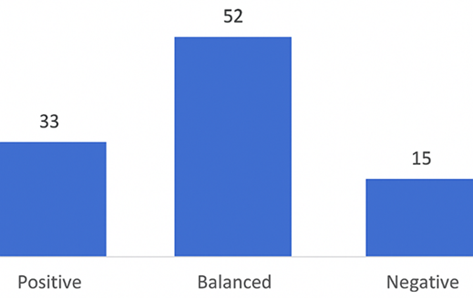
 

Based on the three company findings, the researcher is able to propose a  research model which explains the key determinants of the compile drivers of Malaysian SMEs international expansion. The qualitative approach had been used throughout this study to analyze the roles of these drivers in influencing the SMEs international expansionLooking into the innovativeness factor, it is obvious those selected companies have their own product innovation or added resources when the firms enter the international market. This uniqueness in terms of product differentiation is paramount in delivering their products that could fit the demand of the overseas market. Besides that, the selected Malaysian SMEs focus on being a low cost provider when they enter the neighboring countries such as Thailand, Singapore and Indonesia so that the foreign markets will look on Malaysian SMEs exportation as competitive products. 


The following factor that influences the Malaysian SMEs internalization is the entrepreneur orientation. This factor refers to the SMEs owners’ decisions on how the key managers carry their business forward especially in placing their firms in the overseas market. Therefore, those targeted SMEs owners have their own educational backgrounds and professional experiences which are generally related to the current industry. However, some of their educational backgrounds and professional experiences do not ascribe to the industry but most of them are risk takers in entering the international market. In addition, based on the findings, the entrepreneurs of the born global firms are seen as innovation thinkers. This is because, although the entrepreneurs established a strong foundation in the local market. They are still putting efforts into penetrating into the overseas market as there are a lot of opportunities. Thus some of the SMEs owners are being the risk takers and the innovative thinkers in venturing into the new market and proactively seeking opportunities of the new foreign market.


The factor is about the network capabilities based on the opinions from the selected SMEs firms, the researcher found that the network capability is the most vital factor for them to enter the international market. The most common network relationships obtained by the entrepreneurial firms are government and non-government bodies, as well as other business players who are in the same industry. In short, the network capabilities factor has been influencing the Malaysian SMEs to get into international expansion.
CONCLUSION

As a conclusion, we have achieved the research objectives of this study by identifying the drivers that influence entrepreneurial firms to expand internationally. This innovativeness could help the Malaysian SMEs exportation to deliver the product that could fit the needs of the foreign    consumers in the overseas market by adding resources in terms of the product innovation and product differentiation and low cost provider that influence the Malaysian entrepreneurial firms to expand confidently in the international market. The entrepreneurial orientation characteristic can influence the entrepreneurial firm’s international expansion by owning a strong organizational culture which can support the firm’s capabilities to expand its business to the international market. Perhaps, every SMEs owner or the key managers need to have their own educational background and professional experiences which can provide them the guidelines on expanding their businesses into the foreign market. The empirical evidence suggests that building on network relationships is the basic step that leads to resource acquisition and the enhancement of marketing strategy in the international market. Through this network relationship, Malaysian SMEs are able to generate the information of the international market and with this information the entrepreneurial firms are able to predict the situations of the new market which guide the firms to adapt to  the changes. With that, according to this case study all the drivers have their own strategy to influence the Malaysian entrepreneurial firm to expand to the overseas market.


Conflict of Interest:

The authors declare that they have no conflict of interest

Funding:

No funding sources

Ethical approval:

The study was approved by the Universiti Tunku Abdul Rahman, Selangor

REFERENCES
  1. Yaacob, M., Zainol, F., Wan Daud, W., Mohammad Rizani, N., & Abdul Rahim, M. (2017). Internationalization of SMEs: Does Process Matter?. World Applied        Sciences Journal 35, Retrieved from    https://www.idosi.org/wasj/wasj35(8)17/31.pdf

  2. Falahat, M., Ramayah, T., Soto-Acosta, P., & Lee, Y. Y. (2020). SME internationalization: The role of product innovation, market intelligence,         pricing and marketing communication capabilities as drivers of SMEs’ international performance. Technological Forecasting and Social Change, 152, 119908

  3. Falahat, M., Tehseen, S., & Van Horne, C. (2018). Entrepreneurial Innovativeness  and Its Impact on SMEs Performances.  International Journal of  Entrepreneurship.

  4. Falahat, M., Migin, M. W., Chuan, C. S., & Kong, P. F. (2015). Conceptualising the early and rapid internationalizing firms. Procedia-Social and Behavioral  Sciences, 211, 612-618.

  5. Lundqvist, H., & Kamal, N. (2019). The role of Entrepreneurial Orientation and          Sciences Journal 35, (ISSN 1818-4952). Retrieved from https://www.idosi.org/wasj/wasj35(8)17/31.pdf

  6. Khanna, T., & Rivkin, J. W. (2001). Estimating the performance effects of  business groups in emerging markets. Strategic management journal, 22(1), 45- 74.

  7. Falahat, M., & Migin, M. W. (2017). Export performance of international new ventures in emerging market. International Journal of Business and Globalisation, 19(1), 111-125 .

  8. Bortoluzzi, G., Kadic-Maglajlic, S., Arslanagic-Kalajdzic, M., & Balboni, B.             (2018). Innovativeness as a driver of the international expansion of developing markets’ firms. International Marketing Review.

  9. Falahat, M., Lee, Y. Y., Ramayah, T., & Soto-Acosta, P. (2020 a). Modelling the effects of institutional support and international knowledge on competitive capabilities and international performance: Evidence from an emerging economy. Journal of International Management26(4), 100779.

  10. Falahat, M., Mohamad, O., & Migin, M. W. (2013). Born global firms in developing economies: the case of Malaysia. Australian Journal of Basic and    Applied Sciences, 7(4), 586-594

  11. Bhat, A. (2019). Exploratory Research: Definition, Methods, Types and Examples QuestionPro. Retrieved 5 April 2020 from, https://www.questionpro.com/blog/exploratory-research/

  12. Lee, Y. Y., & Falahat, M. (2019). The Impact of Digitalization and Resources on   Gaining Competitive Advantage in International Markets: Mediating Role of Marketing, Innovation and Learning Capabilities. Technology Innovation  Management Review, 9(11)

Recommended Articles
Research Article
Agentic AI in Information Systems: Toward Autonomous Decision-Making in Organizations
Published: 30/07/2026
Download PDF
Research Article
A Comparative Study of Online Fashion Promotion: Hennes & Mauritz (H&M) and Label in India
Published: 20/07/2021
Download PDF
Research Article
Developing Social Media Marketing Visual Contents to Increase Engagement Rate (A Case Study of Healthy Tails Animal Clinic in Malang City)
...
Published: 20/11/2022
Download PDF
Research Article
The Determinants of the Financial Behaviour of SMEs: Empirical Evidence from an Emerging Economy
...
Published: 20/03/2022
Download PDF
Chat on WhatsApp
Flowbite Logo
PO Box 101, Nakuru
Kenya.
Email: office@iarconsortium.org

Editorial Office:
J.L Bhavan, Near Radison Blu Hotel,
Jalukbari, Guwahati-India
Useful Links
Order Hard Copy
Privacy policy
Terms and Conditions
Refund Policy
Shipping Policy
Others
About Us
Team Members
Contact Us
Online Payments
Join as Editor
Join as Reviewer
Subscribe to our Newsletter
+91 60029-93949
Follow us
MOST SEARCHED KEYWORDS
Copyright © iARCON International LLP . All Rights Reserved.








