Rosemary is a beneficial herb with numerous advantages, widely used in the production of health foods. It possesses a soporific aroma and a variety of nutritional properties, making it a favorable choice for the consumption of healthy and nutritious foods. This study employed a descriptive approach for both the study design and the methods of data collection and analysis. A questionnaire was used to gather data. The study sample consisted of 100 doctors who utilize the herb. The most prominent conclusions include: 1: The majority of findings on rosemary confirm that it is rich in natural compounds with multiple therapeutic effects, 2: The study noted that rosemary continues to provide substantial amounts of antioxidant and anti-inflammatory substances, 3: Data indicate that rosemary, as a component of medicinal preparations, can contribute to maintaining people's health and 4: Advanced studies demonstrate that rosemary is effective in addressing common complications such as heart disorders and diabetes.
Keywords
Rosemary Herb
Health Food Manufacturing
INTRODUCTION
Rosemary, an aromatic herb of the genus Rosmarinus, is scientifically known as Rosmarinus officinalis. It is primarily used in cuisine and is enriched with bioactive plant compounds that have significant health benefits. This herb is frequently incorporated into healthy dishes due to its nutritional and therapeutic qualities.
Rosemary is an exceptional source of essential fatty acids, minerals and antioxidant compounds such as flavonoids and phenols. These compounds are crucial in healthy food formulation because they support cardiovascular health, enhance the body’s defense against diseases and aid in nutrient absorption. Additionally, rosemary promotes healthy cell division and reduces the risk of chronic illnesses [1].
Beyond its health benefits, rosemary is added to health foods for its attractive flavor. It is often included in various formulations, such as meats, soups, salads and bread, making these dishes more appealing due to the rich and unique flavor it imparts. Rosemary is also used in the production of vegetable oils, vinegar and spices.
Due to its numerous health benefits, rosemary is an integral component in strategies aimed at reducing inflammation and enhancing overall health. It is available as a nutritional supplement, can be used to prepare essential oils or can be enjoyed as a tea. When combined with a healthy diet and regular physical activity, the use of rosemary can help prevent inflammation and other diseases.
Overall, rosemary is a valuable natural herb with numerous health benefits. It is often consumed in preventive foods and, in addition to enhancing the taste of food, it also boosts its nutritional value.
Rosemary contains plant compounds, particularly flavonoids and terpenes and is renowned for its aromatic properties. This remarkable plant is effective in relieving and reducing inflammation both internally and externally.
Studies suggest that rosemary extract can help prevent the growth of germs and bacteria that may cause infections [2]. Additionally, research shows that rosemary contains compounds called polyphenols, which are antioxidants. These compounds play an important role in protecting cells from damage caused by oxidation, thus supporting the prevention of inflammation and chronic diseases.
Study Problem
Rosemary has importance in alternative medicine, as it has been used as an antispasmodic, mild analgesic and in the treatment of neuralgia, headache, migraine, insomnia, psychological disorders and depression. Rosemary has great properties that act as an antimicrobial, anti-inflammatory, antioxidant, antitumor, analgesic and anti-neurogenic [1]. Kamli et al. reported that rosemary extracts can be used in the treatment of several neurological disorders including Alzheimer's disease. Rosemary extract is widely used as topical applications for wound healing, anti-aging and anti-disease treatments. This plant produces flavonoids with phenolic structures, those herbaceous chemicals that are highly reactive with other compounds such as reactive oxygen species and large active molecules to neutralize free radicals.
Most of those interested in plants agreed that the aerial parts of the rosemary plant are the parts used in treatment or used in traditional medicine.
From this, the main research question can be formulated:
Is there a role for rosemary and its effectiveness in the manufacture of healthy foods?
Importance of the Study
Identifying the chemical composition by identifying the active compounds in rosemary, through which new health benefits can be identified
Understanding how rosemary affects human health can lead to the development of new treatments or nutritional supplements
Studying the effectiveness of rosemary in the manufacture of healthy foods can contribute to the development of production processes to increase the quality of products
The importance of the research comes from the status of rosemary and its many benefits, especially in treating diseases
The importance of the study stems from providing a theoretical framework about rosemary and its benefits
Study Objectives
Evaluating the nutritional properties by examining the value of nutrients and active compounds in rosemary
Studying its effect on health by identifying the potential health benefits of rosemary on the human body
Analyzing its effectiveness in food manufacturing by examining how rosemary is used in the manufacture of healthy foods and evaluating the effect of this on quality and flavor
The study aims to shed light on the importance of this plant, its multiple benefits and methods of using it in medical, aromatic and other fields
Study Hypotheses
There is a significant effect on the role of rosemary and its effectiveness in the manufacture of healthy foods.
Theoretical Framework
Rosemary
Preface: Since prehistoric times, medicinal plants have been an important resource for combating diseases and infections. To combat diseases, humans depend in particular on medicines from the primary source. Because pathogens are constantly evolving and producing new strains, the percentage of active antibiotics used at the present time that were originally obtained from spontaneous compounds found in cultures, archaea, bacteria and contaminating organisms is estimated at more than 70%. Researchers believe that there are still a huge number of plant extracts and anti-infective substances that have not yet been discovered. Among these plants that have been indicated by many studies and researches for their great medical and nutritional importance and their high content of effective compounds that resist oxidation and their role in strengthening immunity and protecting against infections is the rosemary plant.
Naming the Rosemary Plant
It is an evergreen herbivorous plant belonging to the Lamiaceae family. Its original habitat is the Mediterranean basin and then it was cultivated in various parts of the world, where it reaches a height of 1.5 m [3].
Its needle-like leaves are bright green on the upper surface and silver or brown on the underside. Its surface is smooth to the touch due to the abundance of skin (flax), it is characterized by its distinctive smell and strong flavor.
Its flowers are tubular and bright blue, rarely pink, blue or green and can be seen in pink inflorescences.
The nutritional and medicinal importance of rosemary is attributed to its content of vitamins A-E-C and medicinally active compounds. These are mainly concentrated in the leaves and growing tips of the plant and also contain the volatile oil (rosemary oil). A large number of phenols and diterpenes have been identified in the plant, including secondary compounds with the strongest antioxidant, antimicrobial and anti-inflammatory effects for the lower respiratory tract. Rosemary oil is also commonly used in the manufacture of cosmetics and pharmaceuticals and is used as an aromatic component in creams, soaps, moisturizers and perfumery.
Importance of Rosemary
Rosemary has been used for a long time. The Greeks and Romans wore bird and flower motifs on their clothes, especially on special occasions. It was planted in the gardens of kings as an aromatic and fragrant plant.
It is also used as a memory stimulant in the medical field. The antioxidant activity of rosemary was discovered in 1910 and rosmarinic acid was isolated from the aqueous extract of rosemary in 1990 by scientists Scarbati and Orieente.
This plant was first used as an antioxidant. It was found to contain a range of phenolic compounds, flavonoids, fatty acids, volatile oils, etc. It also contains compounds that preserve brain matter and reduce the risk of radiation such as gamma rays [4].
Benefits of Rosemary
Antioxidant
Antiviral
Antimicrobial
Neuroendocrine and endocrine activities
Anticancer
Anti-inflammatory
Anti-infective
Antitumor [5]
The Effectiveness of Rosemary in the Manufacture of Healthy Foods
Rosemary is a coenosarcomatous plant that has been valued in kitchens and medicine since ancient times due to its positive health effects. It is often regarded as a flavor enhancer because of its strong and distinctive taste but its benefits extend beyond flavor. Rosemary contains numerous plant constituents that are advantageous in the production of health foods.
In addition, rosemary is particularly well-suited for use in the health food sector for enhancing both taste and flavor. Abdul Latif notes that rosemary possesses essential features that contribute to food quality beyond just its color tolerance. He further discusses rosemary within the context of health promotion, highlighting its versatility as both a culinary and pharmacological ingredient. Rosemary can be integrated into food products in various ways, such as between layers of foods, spreads or as a part of confectionery packaging [6].
The statements above highlight the significant role of rosemary in the health food sector, particularly as a flavoring agent. Its benefits are not limited to product formulation alone but also extend to health enhancement, though more research is needed in the clinical context. The most prominent uses of rosemary in health food manufacturing include:
Taste Enhancement: Rosemary is a fragrant herb with a wonderful scent, making it a popular additive in foods designed to enhance flavor
Culinary Uses: Rosemary can be added, fresh or dried, to a variety of dishes, including meats, chicken, vegetables, soups and more
Health-Promoting Properties: Rosemary contains antioxidants and anti-inflammatory compounds that contribute to health. It enhances the nutritional composition of foods and provides therapeutic benefits
Anti-Contamination: Rosemary has natural anti-contamination properties and may help extend the shelf life and preserve the quality of food products
Nutrient Assimilation: Some studies suggest that rosemary may aid in the digestion and assimilation of nutrients, promoting digestive health
Antimicrobial Activity: Rosemary’s antimicrobial properties make it suitable for use in healthy food production, particularly in preventing the growth of pathogenic bacteria
Thus, rosemary can be safely and effectively employed in the health food industry for flavor enhancement and health benefits. Its use not only adds enjoyment to food but also promotes overall health.
Research Methodology and Field Procedures
Research Methodology: This study uses the descriptive analytical method, as it focuses on the theoretical description of the research topic and its precise analysis, in addition to an analytical field study to determine the role of rosemary and its effectiveness in the manufacture of healthy foods.
Research Community and Sample
The Study Community Includes all Users of Rosemary: The study sample was randomly selected from these users from the category of doctors. Their number reached (100) doctors.
Methods and Tools Used in the Research
Means of Collecting Information
Secondary Sources: In this study, we conducted a comprehensive study of our topic by selecting from relevant Arab and foreign references and sources, as well as journals, topics, studies and previous theses related to this topic. We will also search the Internet for more relevant secondary information
As for the Primary Sources in this Study: In this study, the questionnaire was used as a basic tool to collect information, so that it will be divided among the selected sample. The data will be collected and analyzed to answer the research questions and obtain the necessary results to study the various variables in the research center
Tools Used in the Research
The study tool used is the questionnaire: The questionnaire was used as a research tool. A questionnaire was developed that included paragraphs that addressed the dimensions of the research (independent and dependent). It was targeting users of rosemary.
Study Variables
Independent variable: Rosemary
Dependent variable: The effectiveness of rosemary in the manufacture of healthy foods
Determining Research Tests
These analyses and tests will be used:
Mathematical median and standard deviation
Cronbach's alpha test to ensure the stability of the study tool
Simple linear regression test to ensure the validity of the hypotheses
Presentation, Analysis and Discussion of Results
Presentation and Discussion of Results: The questionnaire contains two axes. The first axis contains demographic questions for rosemary users such as gender, age, reason for using it (medical_aromatic_food).
The second axis includes paragraphs of the independent variable and the dependent variable.
The First Axis: The Qualitative Characteristics of the Sample Individuals Appeared as Follows
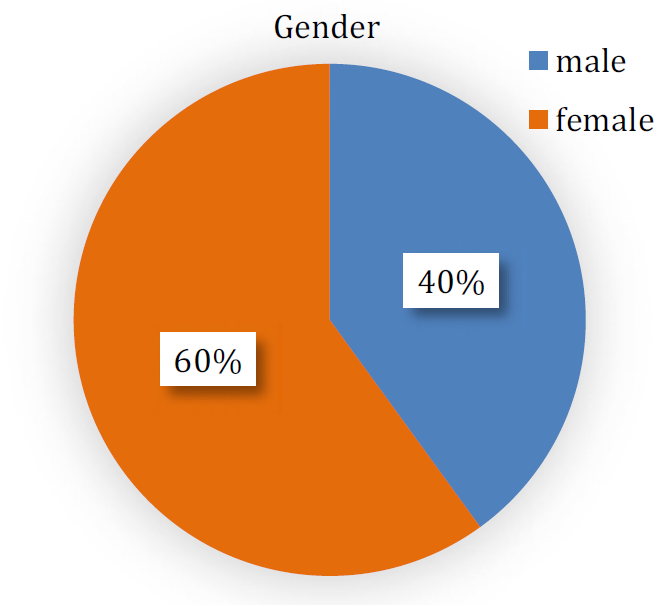
In Terms of Gender: The information in the Table 1 shows the percentage of males and females in the studied sample, as the percentage of males reached 40%, while the percentage of females reached 60%. This distribution is due to the fact that most females use rosemary more than males, whether for medical, nutritional or aromatic purposes (Figure 1).
In Terms of Age
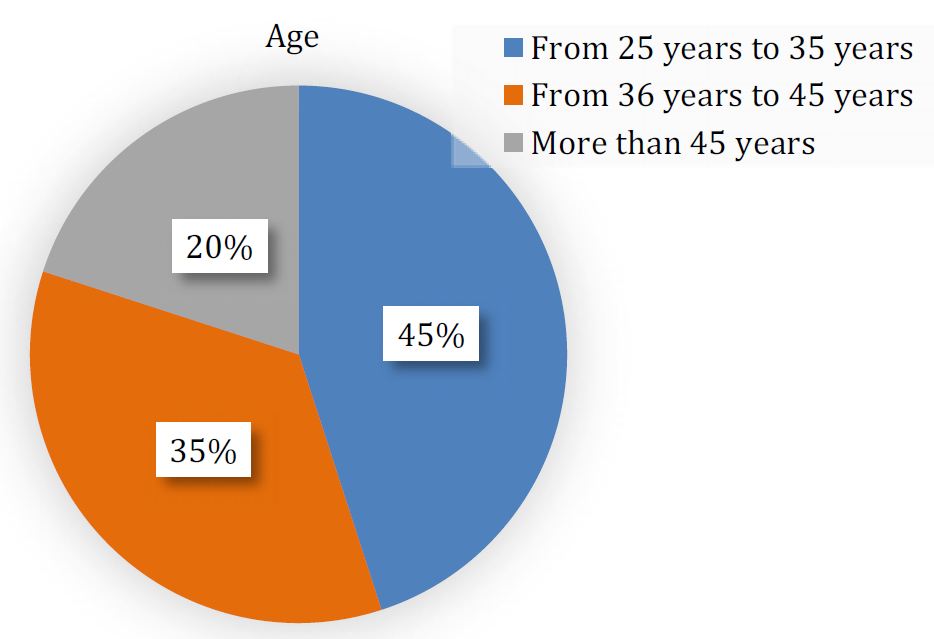
According to the previous Table 2, we note that the largest age group of the sample members are those whose ages range between 25 and 35 years, while the youngest group are those whose ages exceed 45 years. This result is correct, as many young people use rosemary more (Figure 2).
Table 1: Personal Characteristics of the Sample in Terms of Gender
Variable
Count
Column N %
Gender
Female
60
60
Male
40
40
Total
100
100
Reference: SPSS Statistical Package Programs
Table 2: Demographic Characteristics of the Sample According to Age
Variable
Count
Column N %
Age
From 25 years to 35 years
45
45
From 36 years to 45 years
35
35
More than 45 years
20
20
Total
100
100
Source: SPSS Statistical Package
Figure 1: The Gender Distribution of the Sample Members
Figure 2: The Division of Sample Members According to Age
In Terms of the Reason for Using Rosemary
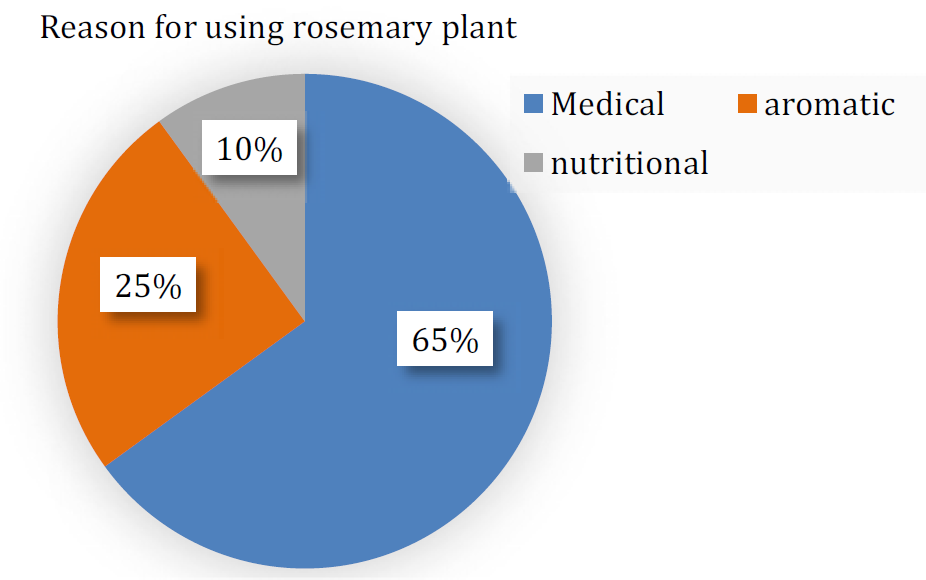
The numbers in the Table 3 show that the use of rosemary was highest for medicinal uses, at 65%, while its use as food was the lowest, at 10% (Figure 3).
The Second Axis
It included questions that focused on the answers of the sample members who use rosemary. The number of questions was (15).
This questionnaire was designed according to a five-point Likert scale. This scale is used when there is no major division in the level of awareness, perception and background of the people being surveyed (Table 4).
The hypothetical mean (3) was determined to compare it with the general arithmetic mean of the paragraphs of the statements and hypotheses. This procedure aims to accept or reject the study hypothesis.
Study Tool Reliability/Cronbach's Alpha Coefficient
Cronbach's alpha scale is often used to measure the reliability of the tool used in the study. Its value ranges from 0-1 and its acceptable value should be greater than 0.60 (60%) if its value is less than that.This indicates that there is no essential relationship between the statements it measures but when it exceeds 0.60 it is acceptable.The closer its value is, the greater the degree of the tool’s durability and its responsibility for exploitation and the result is as shown in Table 5.
Table 3: Characteristics of the Personal Sample in Terms of the Reason for Using Rosemary
Variable
Count
Column N %
Reason for using rosemary plant
Medical
65
65
Aromatic
25
25
Nutritional
10
10
Total
100
100
Reference: SPSS statistical package programs
Table 4: Five-Point Likert Scale
Strongly agree
Agree
Neutral
Disagree
Strongly disagree
5 points
4 points
3 points
2 points
1 point
Source: Prepared by the researcher
Table 5: The results of the Cronbach’s Alpha Test
Variable
Number of statements
Cronbach's alpha
All questionnaire statements
15
0.886
Reference: Prepared by the researcher based on the SPSS statistical package programs
Figure 3: The Distribution of Sample Members According to the Reason for Using the Rosemary Plant
Table 6: Statistical Functions of the Mean and Standard Deviation of the Questionnaire Questions
Questions
Descriptive Statistics
Std. Deviation
Mean
N
Do you order your food products because of the presence of rosemary in them?
0.53112
4.507
100
Do you consider rosemary a special ingredient that sets your products apart from others?
0.66108
4.1408
100
Do you promote the health benefits of rosemary in your product marketing?
0.67434
4.2113
100
Do you consider rosemary an important nutritional supplement in your manufacturing?
0.10383
4.831
100
Does the list of ingredients in your food products include rosemary?
0.97496
4.326
100
Do you prefer to use rosemary as a seasonal ingredient in the manufacturing of your products?
0.72578
4.0423
100
Do you use rosemary to enhance the scent in your products?
0.98785
3.9014
100
Do you think rosemary enhances the flavor in food products?
0.98785
3.9014
100
Do you know about the antioxidant properties of rosemary?
0.67374
4.0563
100
Do you think rosemary increases the shelf life of food products?
0.73542
4.1268
100
Do you use rosemary as a preservative in your products?
0.98443
3.8765
100
Do you add rosemary to your food products for medicinal purposes?
0.22785
3.0765
100
Can rosemary contribute to improving consumers' health?
0.64424
4.0082
100
Do you think rosemary enhances the quality of food products?
0.67374
4.3678
100
Do you use rosemary in your health food products?
0.64985
4.4532
100
Source: SPSS Statistical Package Program
Table 7: Correlation Coefficient for Testing the Hypothesis
Model Summary
Model
R
R Square
Adjusted R Square
Std. Error of the Estimate
1
0.288a
0.161
0.199
0.40187
aPredictors: (Constant), its effectiveness in manufacturing healthy foods
Table 8: Analysis of Variance to Test the Hypothesis
ANOVAa
Model
Sum of Squares
Df
Mean Square
F
Sig.
1
Regression
1.661
1
1.765
10.307
0.000b
Residual
10.307
99
0.435
Total
11.968
100
aDependent Variable: Rosemary, bPredictors: (Constant), Effective in manufacturing healthy foods
Among the conclusions shown in Table 5 is that the value of Cronbach's alpha coefficient was acceptable and reached 0.866. Thus, the researcher confirmed the validity and reliability of the study questionnaire, such that he became fully confident in its validity and legitimacy.
Statistical Functionsof the Mean and Standard Deviation
The results shown in the Table 6 indicate that the arithmetic mean of most of the sample responses was between agree and strongly agree, i.e., (4.8310-4.1408), which is higher than the approved mean (3).
Hypothesis Testing
Main Hypothesis: "There is a significant effect on the role of rosemary and its effectiveness in the manufacture of healthy foods:"
To test the hypothesis, a simple linear regression model was used between the independent variable (rosemary) and the dependent variable (its effectiveness in manufacturing healthy foods), as shown in the Table 7
The analysis of variance of the table appears from the previous tables, where the explanatory power of the overall model is found as the statistical significance F = 10.307 and the mathematical significance (Sig = 0.000), which is smaller than the standard significance Sig = 0.05 for the variable. There is a statistical significance of the effect between f, i.e., accepting the hypothesis (Table 8).
RESULTS AND RECOMMENDATIONS
Results
We conclude from the previous study:
The study showed that rosemary contains natural compounds that have multiple therapeutic properties
The study found that rosemary is a rich source of antioxidants and anti-inflammatory substances
The data indicate that the use of rosemary in the manufacture of medical drugs can contribute to enhancing human health
The results show that rosemary has a positive effect on some chronic diseases such as cardiac disease and diabetes
The lack of Arab research and studies that have studied the role of rosemary and its effectiveness in the manufacture of medical drugs
Hypothesis analysis revealed a significant relationship between rosemary and its effectiveness in the manufacture of medicinal drugs
It has been recorded that compounds in rosemary extracts possess both antibacterial and antifungal properties, which help prevent post-injury infections and, consequently, reduce inflammation
Rosemary is rich in compounds that may protect cells under conditions of oxidative stress, thereby supporting overall body health
Recommendations
It is recommended that further research and investigation into the medicinal uses of rosemary be conducted to fully harness its therapeutic potential
Continuous clinical trials are advised to determine the effective dosage, safety and efficacy of rosemary when used as a medicinal drug
The use of rosemary in drug formulations targeting various diseases should be emphasized
It is recommended that researchers and specialists in this field develop cooperative plans and communication strategies aimed at sharing information and research results
Efforts should continue to educate the public about the benefits of rosemary as an effective natural treatment
Conduct evaluative research to understand the long-term effects of rosemary use on inflammation prevention and overall health
Direct research efforts to increase awareness of the benefits of rosemary in preventing inflammation and how to use it properly
Increase clinical studies to evaluate the effectiveness of rosemary in treating inflammation-related conditions
REFERENCE
Rahbardar, M., et al. “Therapeutic Effects of Rosemary (Rosmarinus officinalis L.) and Its Active Constituents on Nervous System Disorders.” 2020.
Tarad, Nepal Mutair. Medicinal Uses of Rosemary. College of Education for Pure Sciences, University of Karbala, Iraq, 2023.
Zaouali, Y. “Essential Oils Composition in Two Rosmarinus officinalis L. Varieties and Incidence for Antimicrobial and Antioxidant Activities.” 2013.
Khedran, Hanaa. Effect of Solvent on Extracting Phenolic Compounds from Rosemary Plant. Faculty of Applied Sciences of Engineering, University of Kasdi Merbah, Algeria, 2019.
Nima, Zainab Jarallah. “The Role of Rosemary and Its Medically Active Components in Enhancing the Human Immune System and Preventing Coronavirus.” Medicinal and Aromatic Plants Research Unit Scientific Symposium, 2023.
Abdel Latif, Maha. “Study of the Effect of Alcoholic Extract of Rosemary Leaves on Fungal Growth and Secretion of Phalloxin 1B.” Damascus University Journal of Agricultural Sciences, vol. 21, 2020.
Recommended Articles
Research Article
The Reality of E-Extension in Nineveh Governorate (Article Review)
Luma Mother Idress,
...
Ahmed Ibrahim
Published: 20/09/2026
Download PDF
Research Article
Biotechnology and Its Impact on the Microbial Decomposition of Plastics and Achieving Environmental Sustainability: A Review
Sahar Adnan Sheet,
...
Anas Saad Hatem
Published: 30/06/2026
Download PDF
Research Article
Efficacy of Different Maturity Stages of Indian almond Tree Leaves as Anaesthetics in African Catfish (Clarias gariepinus) Fingerlings
O.A. Akinrotimi,
...
J.B. Anyanwu
Published: 30/11/2021
Download PDF
Research Article
Haematological Responses in Sarotherodon melanotheron Exposed to Linear Akylbenzene Sulfonate in the Laboratory
Okenwa U,
...
Otene B.
Published: 30/11/2021
Download PDF
PO Box 101, Nakuru
Kenya.
Email: office@iarconsortium.org
Editorial Office:
J.L Bhavan, Near Radison Blu Hotel,
Jalukbari, Guwahati-India
Ali, B. T. (2025). The Effectiveness of Rosemary in the Manufacture of Healthy Foods. IAR Journal of Agricultural Science and Food Research, 5(1), 1-6.
MLA
Ali, Balasim T.. "The Effectiveness of Rosemary in the Manufacture of Healthy Foods." IAR Journal of Agricultural Science and Food Research 5.1 (2025): 1-6.
Chicago
Ali, Balasim T.. "The Effectiveness of Rosemary in the Manufacture of Healthy Foods." IAR Journal of Agricultural Science and Food Research 5, no. 1 (2025): 1-6.
Harvard
Ali, B. T. (2025) 'The Effectiveness of Rosemary in the Manufacture of Healthy Foods' IAR Journal of Agricultural Science and Food Research 5(1), pp. 1-6.
Vancouver
Ali BT. The Effectiveness of Rosemary in the Manufacture of Healthy Foods. IAR Journal of Agricultural Science and Food Research. 2025 Jan;5(1):1-6.


 Download PDF
 Download XML