Contents
Download PDF
pdf Download XML
1017 Views
505 Downloads
Share this article
Research Article | Volume 2 Issue 2 (July-Dec, 2022) | Pages 1 - 4
Anti-Biofilm Activity of Trigona Honey against Gram-Positive Bacteria
 ,
 ,
1
Department of Community Health Techniques, Kirkuk Technical Institute, Northern Technical University, Iraq
Under a Creative Commons license
Open Access
Received
Sept. 3, 2022
Revised
Oct. 9, 2022
Accepted
Nov. 19, 2022
Published
Dec. 28, 2022
Abstract

In recent years, the continued unplanned application of antibiotics has led to the up growthof resistance to some bacteria, increasing the global burden of infectious disease. Therefore there is an urgent need for actual research on antimicrobial alternatives. This study was conducted to appreciate the effectiveness of Trigona honey (TH) in preventing biofilm formation as well as inhibiting bacterial growth of some common gram-positive bacteria. The biofilm-inhibiting effect of Trigona honey was examined for the following three common bacteria: Staphylococcus aureus, Streptococcus pyogenes and Enterococcus fecalis at different concentrations of 10%, 20% and 40%. The bactericidal/bacteriostatic activity of TH for these three bacteria was adopted by MBC and MIC in vitro assays. The results proved that TH has an inhibitory action upon the biofilm formation of S. pyogenes and E.fecalis at a concentration of 20% (v/v) while that of S. aureus at a concentration of 40% (v/v).It was concluded that 40% Trigona honey has the best cationic bactericidal activity and prevents biofilm formation.

Keywords
INTRODUCTION

Antibiotic side effects along with acquired antibiotic resistance are a major concern to healthcare management systems worldwide [1-2]. It is known that antibiotics have proven their excellent efficacy as a treatment against bacterial aggregation for many years [3]. However, the prolonged implementation of antibiotics has caused the development of resistance to some bacteria. It is not possible to eradicate the resistant bacteria easily due to the evolution in the adaptive model and survival pattern against antibiotics [4-5]. The formation of biofilms is an important aspect of many diseases, as it is considered one of the defense mechanisms of bacteria, where bacteria gather in the form of a complex structure to resist hard conditions [6-7]. It has been established that biofilms can withstand antimicrobial agents at relatively high concentrations, up to 1,000 times higher than those requisite to destroy genetically equivalent planktonic bacteria [8].It is noteworthy that eradication of biofilms from live hosts is very difficult, as they are unusually resistant to phagocytosis. Therefore, there is an accelerated necessity to improve potent strategies to impede and inhibit biofilm formation [9]. Antimicrobial agents are necessary in order to reduce the global burden of infectious disease.In recent years, effectiveness of antibiotics has decreased with the expansion of resistant virulent bacteria [10]. So there is an urgent need for an alternative antimicrobial agent, which has led scientists and researchers to re-evaluate the medicinal utilize of dated remedies like plants and honey [11]. Traditional medicine has been applied of long ago in the medication of various diseases, whether infectious or non-infectious alike [12-13]. In the past, honey was used for nutritional and medicinal purposes, but today, in alternative medicine, bee products are used as a remedy for human ailments, which are called as apitherapy [14]. Several previous studies confirmed the broad-spectrum susceptibility of honey as antibacterial especially to pathogenic and food spoilage strains [15]. In general, honey contains a lot of important compounds in supporting immune and body functions. Besides, hydrogen peroxide is the master antibacterial factor in most types of honey. Trigona honey is considered to have antibacterial activity due to the phenolic compounds, which act as powerful antioxidants and the low pH level may inhibit microbial growth [16]. The current study aimed to in vitro evaluate the antibiofilm activity of Trigona honey upon three bacteria: Staphylococcus aureus, Streptococcus pyogenes and Enterococcus fecalis.

MATERIALS AND METHODS

Trigona Honey

Anaya 100% pure and raw, unfiltered Trigona Honey (TH), organically-farmed, non-GMO, sugar free, medical grade super-food was consumed in this study. Concentrations (v/v) of used TH were as follows: 10%, 20% and 40%.


Bacterial Strains

Three clinical bacterial isolates were used as follows: S.aureus and S. pyogenes isolated from skin infections, as well as E. fecalies isolated from stool. This was done in private medical laboratories.


Culture Medium

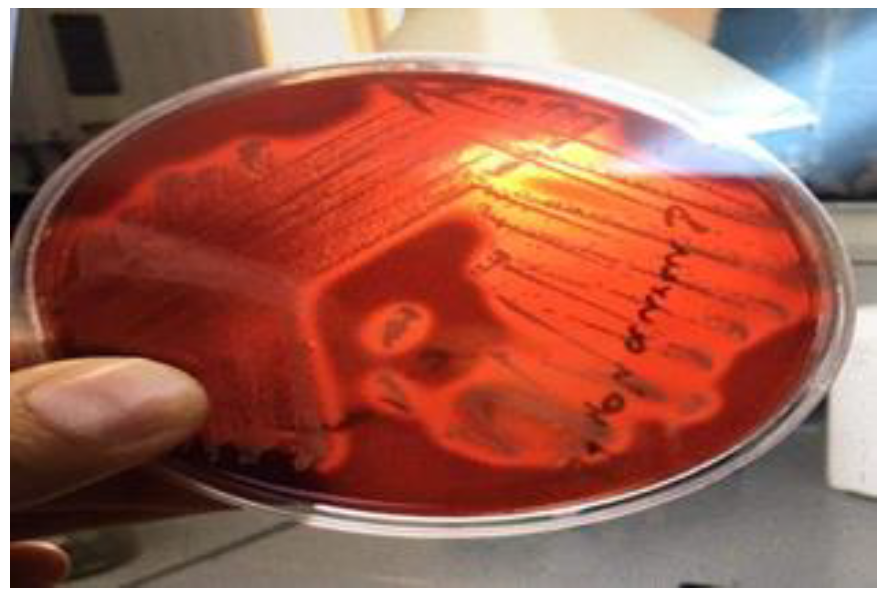
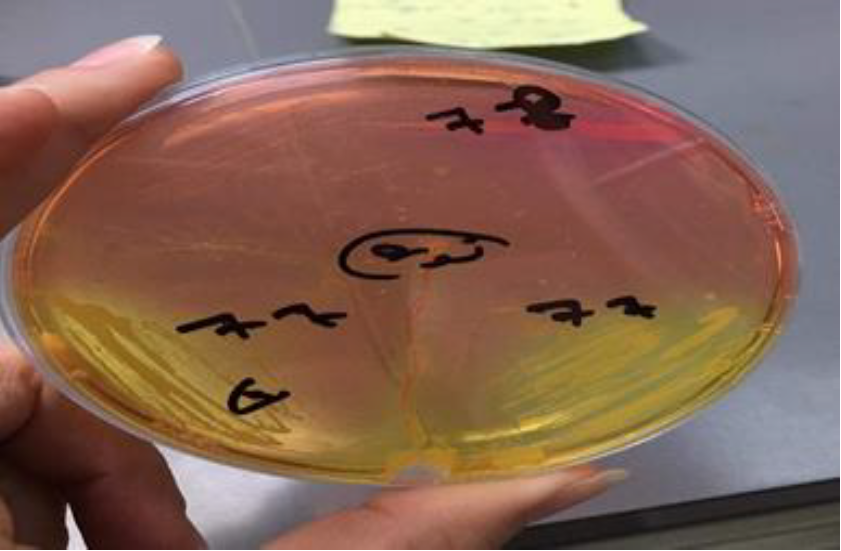
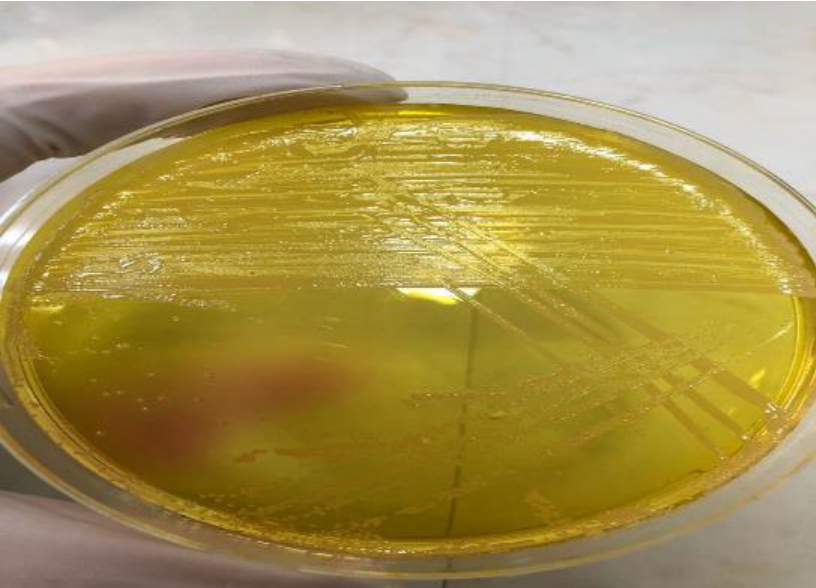
Nutrient broth was used as a culture medium, where in one day three isolated cultivars were grown for the purpose of study in broth (Figures 1-3). The bacterial strains were allowed to grow in the presence of diverse concentricity of TH; approximately 0.1 ml of the culture was inoculated into tubes (10 ml) of nutrient broth and incubated throughout the day with diverse concentricity of TH.Through the serial dilutions the bacterial count was done and on the nutrient agar the colonies were counted.


Measurement of the Antibacterial Activity of Trigona Honey

The minimum inhibitory concentration of Trigona honey was confirmed using the micro-dilution process of broth according to the guidelines established by the institute of clinical standards and laboratories.50 μl of a series of TH dilutions in Muller-Hinton broth were infused into each one of a 96-well micro-titer plate and subsequently treated with 50 μl of bacterial-containing suspensions to obtain a latest yield of 5x10⁵CFU/ml. Then, at 37 °C and for a duration lasts 20 hours, the petri dishes were incubated with the lowest concentricity of TH which showed no apparent growth in the wells was MIC. To find out the minimum concentrations of bactericidal TH, 10 μl of broth was added of holes that did not show growth of Mueller- Hinton plates. These plates were incubated for a whole day at 37°C .The lowest concentration caused a growth drop of 99.99% with clarity less than 5 colonies being considered as MBC.


Making a Positive Biofilm to Evaluate the Antibacterial Activities of Trigona Honey 

Following practical steps suggested in a previous study [17], the three different bacteria were cleared to grow in TSB throughout a day with a dilution of approximately 1 x 10⁶ CFU/ml and a quantity of 200 μl ofbacteria was addition (as a suspension) to the 96-well micro-titer plates. They were incubated at 37°C for a whole day in order to make bacterial biofilms. When assessing the effect of honey on the synthesis of those biofilms, the same steps were followed except for adding the sub-MICs of honey to the TSB to obtain a resultant concentricity of 1/2 MIC of the honey.Then the biofilm was elimination and the holes were washed 3 times with saline solution. Methanol was used for the purpose of fixing the adherent bacteria, while the crystal violet solution was used for staining. Ethanol was harnessed to dissolve the bound dye. As for the fluorescent spectrophoto-meter, it was employed to measure the amount of adherent biofilms. This was done 3 times and calculated the mean light intensity and proportion of biofilm inhibition


Figure 1: Culture of E. Fecalies Colonies


Figure 2: Culture of S.aureus Colonies


Figure 3: Culture of S.pyogenese Colonies 

RESULTS

The results, as presented in Table 1, confirmed that Trigona honey with its different concentrations had a clear effect on the growth of bacteria and inhibiting their biofilm formation, as follows: In the absence of TH, three types of bacteria grew and formed positivity biofilms. When TH was present at a concentration of 10%, it affected the growth of E. fecalies and prevented the production of biofilm.Although it affected the growth of S. pyogenes, it was not able to inhibit the formation of biofilms. As for increasing the concentration of TH to 20%, it affected the growth of E. fecalies and S.pyogenes with inhibited the formation of biofilms. As for the 40% concentration of Trigona honey, it confirmed its susceptibility to the three types of bacteria studied, by preventing them from growing and forming biofilms.


Table 1:   Effects of Trigona Honey on Positive Bacteria Growth and Biofilm Formation


Concentrations of TH %

Positive bacteria 
S.aureusS. pyogenesE. fecalis


0%

Bacteria growth+++
Biofilm+++


10%

Bacteria growth+__
Biofilm++_


20%

Bacteria growth___
Biofilm+__


40%

Bacteria growth___
Biofilm___


DISCUSSION

In spite of the outdated employment of honey as curative source, it has lately been recognized in modern medicine due to its valuable nutritional quality along with its unique properties.Among these pharmacological properties: anti-bacterial, anti-fungal, anti-oxidant, anti-inflammatory, cough suppressant and wound-healing ability. It contains various polyphenols and this substance has been proven to reduce the development of many diseases [18-19]. Regarding honey's antimicrobial action, generally several factors contribute to this, including its high viscosity, as it has been proven that it extends a very small amount of water needed to support the growing of any micro-organism. The high concentration of sugar in honey leads to osmotic pressure on the bacterial cells, which leads to the transfer of water from the bacterial cells by osmosis and the cells become dehydrated and cannot grow and multiply [20]. Besides, the acidity of honey is an important factor that contributes to repelling bacterial growth, with the pH being usually ranged ) 3.2 and 4.5(, because the growth range of most bacteria ranges ( 6.5 and 7.5) [21].It is worth noting that hydrogen peroxide (H2O2) is a key factor in the antibacterial activity of honey. A linear correlation has been reported between the hydrogen peroxide content of honey and the antibacterial activity of honey. Bacterial sensibility to H2O2 produced in honey may be affected by existence of phytochemical compounds in it[22]. Our study showed that Trigona honey has a high antibacterial ability upon S. aureus and this is consistent with Ng and colleagues when they found in their study that methicillin-resistant S. aureus isolates were highly sensitive to the antibacterial effect of Trigona honey [23].In another study by Lutpiatina et al. observed growth inhibition of MRSA as well as VRSA at different concentrations of Trigona honey [24]. As for S. pyogenes, the result of this study came with a line of study carried out by Al-Kafaween and colleagues in 2020, which concluded that honey, may be an efficacious and modulating inhibitor of S. pyogenes virulence through several molecular targets and recommended in vivo investigations [25]. On the other hand, Ashritha conducted a study of the antimicrobial activity of honey against various strains of bacteria, including E.faecalis. The study concluded that honey has an anti-bacterial readiness [26] and this was in agreement with the findings of the current study.

CONCLUSION

This study found that Trigona honey has the ability against biofilm formation of three gram-positive bacteria. It was also proven that the activity of TH upon S. aureus was in a concentration of 40 %, while for the rest (S. pyogenes and E.faecalis) it was at a concentration of 20%. Thus, relatively high concentrations may achieve a better therapeutic effect.

REFERENCE
  1. Peyrani, P. et al. “The Burden of Community-Acquired Bacterial Pneumonia in the Era of Antibiotic Resistance.” Expert Review of Respiratory Medicine, vol. 13, no. 2, 2019, pp. 139–152. https://doi.org/10.1080/17476348.201 9.1562339

  2. Singh, R. et al. “Antibiotic Resistance in Major Rivers in the World: A Systematic Review on Occurrence, Emergence and Management Strategies.” Journal of Cleaner Production, vol. 234, 2019, pp. 1484–1505. https://doi.org/10.1016/j.jclepro.2019.06.196

  3. Wang, Y. et al. “Antibiotic-Free Antibacterial Strategies Enabled by Nanomaterials: Progress and Perspectives.” Advanced Materials, vol. 32, no. 18, 2020, article 1904106. https://doi.org/10.1002/adma.201904106

  4. Christaki, E. et al. “Antimicrobial Resistance in Bacteria: Mechanisms, Evolution and Persistence.” Journal of Molecular Evolution, vol. 88, no. 1, 2020, pp. 26–40. https://doi.org/10.1007/s00239-019-09914-3

  5. Bakkeren, E. et al. “Evolutionary Causes and Consequences of Bacterial Antibiotic Persistence.” Nature Reviews Microbiology, vol. 18, no. 9, 2020, pp. 479–490. https:/ /doi.o rg/10.10 38/s41579-020-0378-z

  6. Araújo, G. R. et al. “The Mechanical Properties of Microbial Surfaces and Biofilms.” The Cell Surface, vol. 5, 2019, article 100028. https://doi.org/10.1016/j.tcsw.2019.100028

  7. Tytgat, H. L. P. et al. “Bowel Biofilms: Tipping Points between a Healthy and Compromised Gut?” Trends in Microbiology, vol. 27, no. 1, 2019, pp. 17–25. https://doi.org/10.1016/j.tim.2018.08.011

  8. Mottola, C. et al. “Susceptibility Patterns of Staphylococcus aureus Biofilms in Diabetic Foot Infections.” BMC Microbiology, vol. 16, 2016, article 1–9. https://doi.org/10. 1186/s12866-016-0680-6

  9. Yin, W. et al. “Ways to Control Harmful Biofilms: Prevention, Inhibition and Eradication.” Critical Reviews in Microbiology, vol. 47, no. 1, 2021, pp. 57–78. https://doi.org/10.1080/1040841X.2020.1843431

  10. Abushaheen, M. A. et al. “Antimicrobial Resistance, Mechanisms and Its Clinical Significance.” Disease-a-Month, vol. 66, no. 6, 2020, article 100971. https://doi.org/10.1016/j.disamonth.2020.100971

  11. Walther, B. A. et al. “Biodiversity and Health: Lessons and Recommendations from an Interdisciplinary Conference.” Infection, Genetics and Evolution, vol. 40, 2016, pp. 29–46. https://doi.org/10.1016/j.meegid.2016.02.003

  12. Ghareeb, O. A. “Hepato-Renal Dysfunctions Induced by Gold Nanoparticles and Preservative Efficacy of Black Seed Oil.” Journal of Medicinal and Chemical Sciences, vol. 5, no. 1, 2022, pp. 137–143.

  13. Ramadhan, S. A. and O. A. Ghareeb. “Efficiency of Cichorium intybus in Reducing Hepatotoxicity Induced by Zinc Oxide Nanoparticles.” Annals of Medical and Health Sciences Research, vol. 12, no. 3, 2022, pp. 93–96.

  14. Kolayli, S. and M. Keskin. “Natural Bee Products and Their Apitherapeutic Applications.” Studies in Natural Products Chemistry, vol. 66, 2020, pp. 175–196. https://doi.org/ 10.1016/B978-0-444-64328-0.00006-7

  15. Saranraj, P. et al. “Pharmacology of Honey: A Review.” Advances in Biological Research, vol. 10, no. 4, 2016, pp. 271–289.

  16. Szweda, P. “Antimicrobial Activity of Honey.” Honey Analysis, vol. 3, 2017, pp. 15–25. https://doi.or g/10.1007/978-3-319-65755-4_2

  17. Abbas, H. A. “Comparative Antibacterial and Antibiofilm Activities of Manuka Honey and Egyptian Clover Honey.” Asian Journal of Applied Sciences, vol. 2, no. 2, 2014.

  18. Zulkhairi Amin, F. A. et al. “Therapeutic Properties of Stingless Bee Honey in Comparison with European Bee Honey.” Advances in Pharmacological Sciences, 2018, article ID 6179596. https://doi.org/10.1 155/2018/6179596

  19. Yupanqui Mieles, J. et al. “Honey: An Advanced Antimicrobial and Wound Healing Biomaterial for Tissue Engineering Applications.” Pharmaceutics, vol. 14, no. 8, 2022, article 1663. https://doi.org/10.3390/phar maceutics14081663

  20. Kwakman, P. H. S. and S. A. J. Zaat. “Antibacterial Components of Honey.” IUBMB Life, vol. 64, no. 1, 2012, pp. 48–55. https://doi.org/10.1002/iub.578

  21. Albaridi, N. A. “Antibacterial Potency of Honey.” International Journal of Microbiology, 2019, article ID 2464507. https://doi.org/10.1155/2019/2464507

  22. Almasaudi, S. “The Antibacterial Activities of Honey.” Saudi Journal of Biological Sciences, vol. 28, no. 4, 2021, pp. 2188–2196. https://doi.org/10.1016/j.sjbs.2020.10.017

  23. Ng, W. J. et al. “Antioxidant Properties and Inhibitory Effects of Trigona Honey against Staphylococcus aureus.” GEOMATE Journal, vol. 13, no. 37, 2017, pp. 28–33.

  24. Lutpiatina, L. et al. “Inhibition of Propolis and Trigona spp. Honey towards MRSA and VRSA.” Indian Journal of Public Health Research & Development, vol. 9, no. 10, 2018.

  25. Al-Kafaween, M. A. et al. “Pseudomonas aeruginosa and Streptococcus pyogenes Exposed to Malaysian Trigona Honey In Vitro.” Iranian Journal of Biotechnology, vol. 18, no. 4, 2020, article e2542. https://doi.or g/10.30498/ijb.2020.140450

  26. Ashritha, M. “Comparative Analysis on the Antimicrobial Action of Honey, Orange Peel and Chlorhexidine.” Natural Volatiles & Essential Oils, vol. 8, no. 5, 2021, pp. 5978–5988.
Recommended Articles
Research Article
Differences in the Response to Iron Supplementation on Oxidative Stress, Inflammation, and Hematological Parameters in Nonanemic and Anemic Pregnant Women
Published: 01/04/2026
Download PDF
Research Article
Evaluation of Mortality at One Year Follow-Up of Patients Having Early Tumors of Oropharynx Undergoing Trans-Oral Robotic Surgery in a Tertiary Care Hospital
Published: 27/01/2025
Download PDF
Research Article
Molecular Study to Detect Some Virulence Factors in Methicillin – Resistance Staphlococcus Aureus Isolated from Eye Infections in Wasit Province
Published: 15/12/2023
Download PDF
Research Article
Evaluating Knowledge and Perceptions of Hypothyroidism During Pregnancy in Chamba District, Himachal Pradesh
Published: 05/04/2025
Download PDF
Chat on WhatsApp
Flowbite Logo
PO Box 101, Nakuru
Kenya.
Email: office@iarconsortium.org

Editorial Office:
J.L Bhavan, Near Radison Blu Hotel,
Jalukbari, Guwahati-India
Useful Links
Order Hard Copy
Privacy policy
Terms and Conditions
Refund Policy
Shipping Policy
Others
About Us
Team Members
Contact Us
Online Payments
Join as Editor
Join as Reviewer
Subscribe to our Newsletter
+91 60029-93949
Follow us
MOST SEARCHED KEYWORDS
Copyright © iARCON International LLP . All Rights Reserved.