Sodium fluoride causes increased oxidative stress and increased free radicals, which cause kidney disorders and can cause ischemia. This requires Ziziphus spina-christi extract for its antioxidant properties and to scavenge free radicals. The purpose of this research is to ascertain whether the alcoholic extract of the fruit of the Ziziphus spina-christi tree can reduce oxidative stress and renal disorders resulting from exposure to sodium fluoride (Naf) in male albino rats. 40 albino male rats were divided into 4 groups, each with 10 rats. The first group, Control: was dosed orally with 5 mL/kg distilled water. The second group, Ziziphus: was dosed orally with the alcoholic extract of Sidr fruits 200 mg/kg daily for three months at a dose of 3 ml. The third group, Naf: was injected peritoneally with a sodium fluoride solution 50 mg/kg every other day for 3 months at a dose of 0.1 mL. The fourth group, Ziziphus Naf+: was injected peritoneally with 50 mg/kg of a sodium fluoride solution (every other day) for 3 months, after which it was dosed with 200 mg/kg of the alcoholic extract of Sidr fruits at the same dose for the second and third groups. In a study, male rats were injected with sodium fluoride (Naf) intraperitoneally, resulting in increased kidney function concentrations and MDA levels. However, antioxidant enzymes (GSH, SOD and CAT) were significantly decreased in the third group compared to the first group. In the second group, the antioxidant enzymes were increased, while the third group showed a decrease. The kidneys of the third group showed histological changes, including collapse of the renal glomerulus, atrophy and damage to the cortex. The fourth group showed improvement in kidney function, with normal glomerulus, small expansion in Bowman's space and improvement in convoluted tubules. The combined treatment showed similar improvements to the control group and the second group. The study reveals that the alcoholic extract of Ziziphus fruits exhibits high antioxidant activity, effectively reducing the effects of NaF injections on the kidneys of male albino rats.
Keywords
Ziziphus
Kidneys
Renal Risk
Oxidative Stress
Sodium Fluoride
INTRODUCTION
Environmental pollution with chemical compounds is a significant health issue due to industrial and technological advancements resulting from industrial waste and long-term toxic properties, posing a direct threat to human health [1]. Certain elements are beneficial to the body in certain proportions, but high doses can cause acute or chronic toxicity, affecting vital organs in the body[2]. Compounds pose risks to all vital organs, including kidneys, which are crucial for removing toxins and may be damaged or destroyed [3].
Fluoride, a chemical element, significantly impacts environmental pollution due to its widespread presence in industries like aluminum, battery and iron production. It is crucial for humans and animals but accumulates in tissues [4]. The consumption of fluoride directly correlates with its levels in blood plasma, with its spread varying based on environmental exposure and age [5,6]. Fluoride poisoning harms soft tissues, bones and teeth, causing oxidative stress and increasing Reactive Oxygen Radicals (ROS) in cells, surpassing antioxidant capacity and potentially leading to cell destruction [6].
Modern studies are exploring the use of medicinal plants for treating diseases and eliminating toxins. The World Health Organization prioritizes this approach, recognizing the rare medicinal treasures in plants and the potential side effects of manufactured active ingredients [7]. Pharmaceutical conferences aim to reduce drug circulation and promote medicinal plants as a safe source for the drug industry. Plant extracts, including phenols, inhibit ROS, a major cause of diseases and researchers are increasingly testing natural antioxidants as a safe alternative[8, 9].
The Ziziphus spina-christi (L.) tree is one of the perennial plants spread in most countries and is widely used in the therapeutic field because its fruits are rich in antioxidants[10]. Ziziphus plant fruits are highly beneficial in treating various diseases, including digestive and liver issues, obesity, diabetes and skin injuries. They are also used in alternative medicine for anti-diabetic properties and analgesics [10,11].
MATERIALS AND METHODS
Preparation of Extracts
The alcoholic extract of Z. spina-christi fruit was prepared using a Soxhlet extraction apparatus. Where 25 g of powder was taken and 500 ml of absolute ethanol alcohol was added. The solvent was absorbed for 10 minutes, with a 20:1 ratio between material and solvent. The device was operated at boiling temperature for two and a half to three hours. The extracted solution was dried in an oven at 40–50°C and collected in a sterile vial for use [9].
Experimental Animals
The research presented here was conducted at Anbar University, College of Education for Pure Sciences and Department of Biology. Forty adult male mice were provided from the College of Veterinary Medicine and Pharmaceutical Research Laboratory at the University of Baghdad. They were between 12 and 16 weeks old and their average weight was 200 to 225 grams. The animals were housed in clean and sterile environments, such as metal cages and bottles. During the entire study, participants had unrestricted access to food and drink. 40 albino male mice were used and divided into 4 groups of 10:
The First Group, Control: Was given an oral dose of (5 mL/kg) distilled water
The Second Group, Ziziphus: Was dosed orally with the alcoholic extract of Ziziphus fruits (200 mg/kg) daily for three months at a dose of 3 mL)
The Third Group, Naf: Was injected intraperitoneally with a sodium fluoride solution (50 mg/kg) every day for 3 months at a dose of 0.1 mL
The Fourth Group, Ziziphus Naf+: Was injected intraperitoneally with (50 mg/kg) of sodium fluoride solution (every other day) for 3 months and then dosed with (200 mg/kg) of the alcoholic extract of Ziziphus fruits at the same dose for the second and third groups
Blood Solution Preparation
The experiment lasted for three months. It included starvation, drugging and sacrifice. Blood is drawn from the heart, stored in tubes and centrifuged for 15 minutes. The serum was separated and stored at −20°C. The livers were washed with physiological saline and studied histologically in a 10% formalin fixation solution. All information was recorded for biochemical tests.
Histological Study
Live rat livers were removed, fixed in 10% formalin and dehydrated with progressively higher concentrations of ethanol. Tissue samples were dehydrated before washing in two different types of xylene, impregnated in two different types of liquid paraffin wax, embedded and also blocked. Fore thick tissue slides were stained with hematoxylin and eosin [12].
Statistical Analysis
The results were statistically analyzed using GraphPad Prism V.8 software to extract the significant difference between the values of the treated groups. Analysis of variance was done using the ANOVA Table and the arithmetic mean and standard deviation were extracted at the probability level (p≤0.05) based on basic measurement methods in statistics and statistical analyses were conducted [13].
Ethical Approval
The experimental protocol was approved under Order (197 on 2/20/2023) issued by the Ethical Committee for the Care and Use of Laboratory Animals in the Department of Biology - College of Education for Pure Sciences - Anbar University.
RESULTS
Estimation of Oxidation Balance-Antioxidants In Blood Serum
The statistical results obtained regarding the oxidation balance in the current study show that there is a significant increase at the probability level (p≤0.05) in the effectiveness of (MDA) Malondialdehyde in animals of the third group (nmol/mL (±0.848916.62) when compared with the group Control nmol/mL (1.014±7.674) and respectively. The analysis results of the current study recorded a decrease in the effectiveness of (MDA) for the animals of the second group, nmol/mL (5.826±0.9459), compared to the control group. On the one hand, there was a significant decrease in (MDA) in the animals of the fourth group, nmol/mL (8.127±1.141), compared with the control group. At the same time, there is a significant significant decrease in the level of MDA in the fourth group compared to the third group injected with sodium fluoride.
The results obtained regarding antioxidants show a significant increase in the activity of the enzyme (GSH), (SOD) and (CAT) in the second group, U/L (±0.9300 13.79), U/L (1.736±14.58) and U/L (4.459±40.86) after comparing it with the control group, U/L (11.15±0.3908), U/L (14.10±1.831) and U/L (3.260±37.77), respectively.
While the results of the statistical analysis in this study recorded a significant decrease in the activity of the enzyme (GSH), (SOD) and (CAT) in the animals of the third group, U/L (0.9329±5.980), U/L (6.074±0.9343) and U/L (19.87±2.997), respectively, compared to the control group.
And the enzymes (GSH), (SOD) and (CAT) in the fourth group, U/L (9.465±1.341), U/L (12.01±1.809) and U/L (3.803±33.71), the statistical results showed a significant increase for these enzymes compared to the third group, Table 1.
Table 1: Significant Increase for these Enzymes Compared to the Third Group
Variables
Control
Ziz
NaF
NaF+Ziz
MDA nmol/mL
Mean
7.674 a
5.826 b
16.62 c
8.127 ad
±SD
1.014
0.9459
0.8489
1.141
SOD U/mL
Mean
14.10 a
14.58 a
6.074 b
12.01 ac
±SD
1.831
1.736
0.9343
1.809
CAT U/mL
Mean
37.77 a
40.86 a
19.87 b
33.71 ac
±SD
3.260
4.459
2.997
3.803
GSH µ mol/L
Mean
11.15 a
13.79 b
5.980 c
9.465 d
±SD
0.3908
0.9300
0.9329
1.341
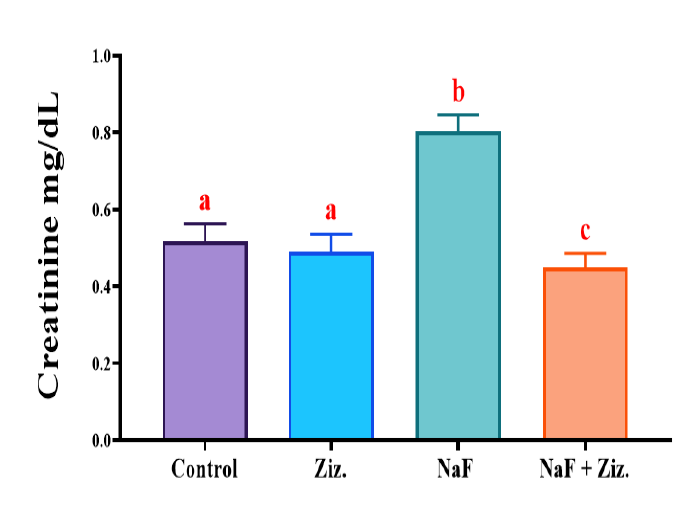
Figure 1: The Effect of the Alcoholic Extract of the Fruits of the Sidr Plant, Ziziphus Spina-Christi (L.), on the Level of Creatinine in the Blood Serum of Male Rats Treated with Sodium Fluoride
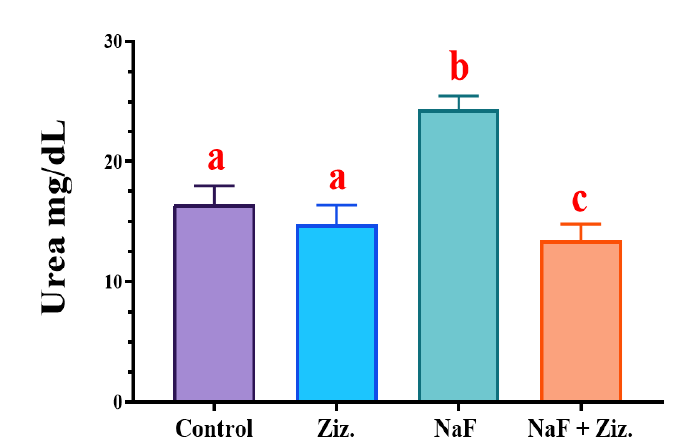
Figure 2: The Effect of the Alcoholic Extract of the Fruits of the Sidr Plant, Ziziphus Spina-Christi (L.), on the Level of Urea in The Blood Serum of Male Rats Treated with Sodium Fluoride
Kidney Functions
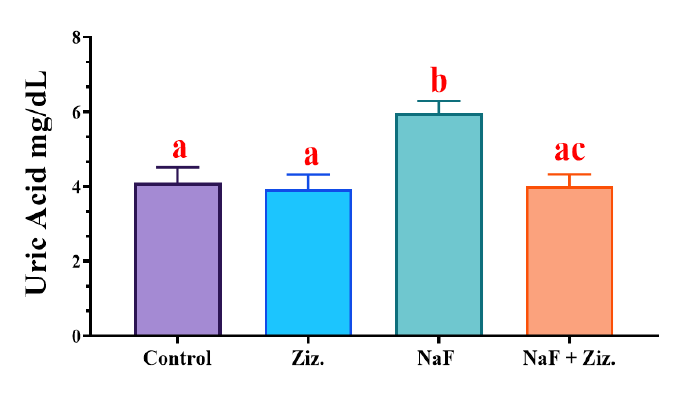
The results obtained regarding kidney functions in the current study show that there is a significant increase in (Creatinine), (Urea) and (Uric Acid) at the probability level (p≤0.05) in the blood serum of animals of the third group, mg/dL (0.04310 0.8030). ± (20.30±1.138) and (0.33085.964±), compared to the control group mg/dL (0.5168±0.04575), (16.43±1.578) and (4.104±0.4165), respectively.
The results of the statistical analysis of the current study did not indicate a clear significant difference for (Creatinine), (Urea) and (Uric Acid) in the second group compared to the control group.
While the statistical results showed a significant decrease in (Creatinine), (Urea) and (Uric Acid) in the fourth group, as follows: mg/dL (0.4486±0.03709), (±1.376 13.41) and (4.028±0.3049), in comparison, with the control group. There was also a significant decrease in (Creatinine), (Urea) and (Uric Acid) mg/dL for the fourth group (0.4486±0.03709), (13.41±1.376) and (4.028±0.3049), compared to the third group (Figures 1,2 and 3).
Figure 3: The Effect of the Alcoholic Extract of the Fruits of the Sidr Plant, Ziziphus Spina-Christi (L.), on the Level of Uric Acid in the Blood Serum of Male
Histological Study
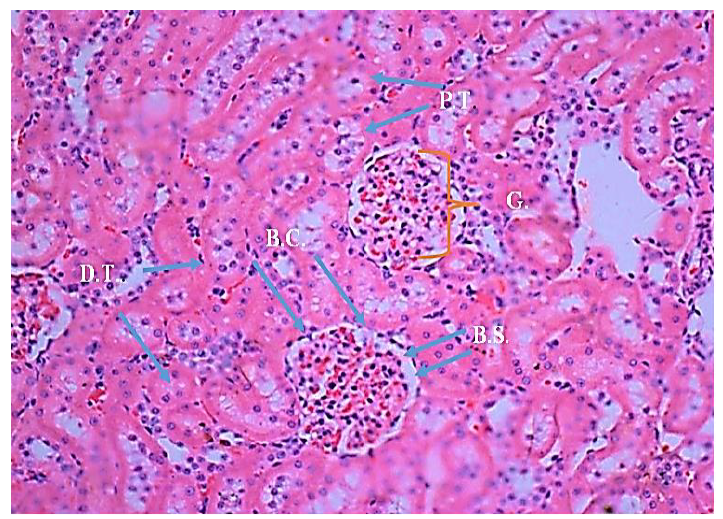
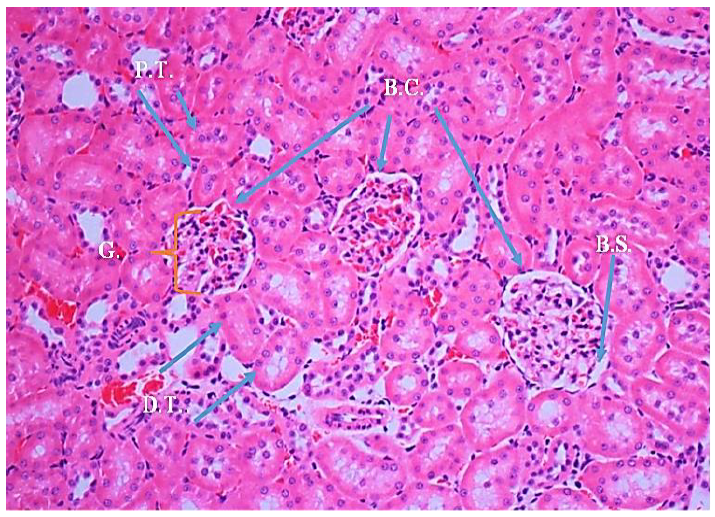
The results of the histological analysis of the kidneys of the first control group showed that the renal tissue was normal. The renal glomerulus, Bowman’s capsule and Bowman’s space appeared normal and regular. The same applies to renal cells and their nuclei. The proximal and distal convoluted tubules appeared to have a healthy structural structure. These results demonstrate the function of the kidney in ridding the body of metabolic wastes such as urea and creatinine and regulating bodily fluids, Figure 4.
The current results showed Figure 5 of the histological study in the second group treated with Ziziphus fruit extract through microscopic examination of the kidneys. The renal glomerulus, Bowman's capsule and Bowman's space appeared normal. The proximal convoluted tubules also appeared in intact transverse and longitudinal sections. The distal convoluted tubules showed a wide lumen with intact epithelial cells. This group was similar to the first group in that the tissue appeared normal.
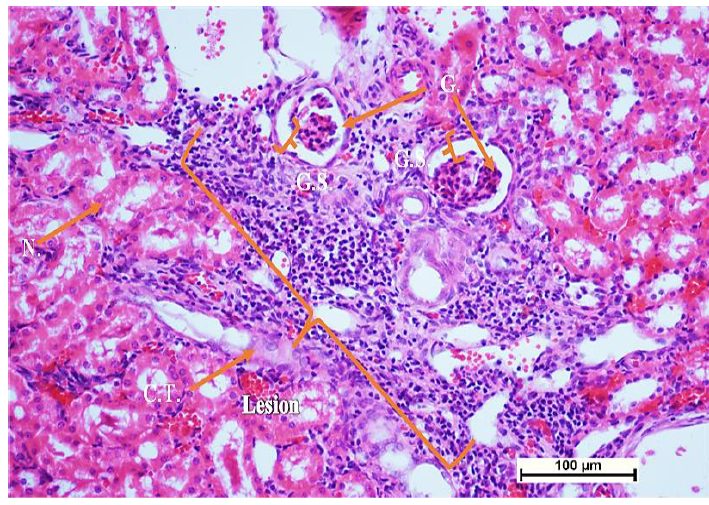
Results of microscopic examination of kidney tissue in our study of the third group treated with sodium fluoride, as shown in Figure 6. Infiltration of inflammatory cells was observed in the tissue, with atrophy and damage to the renal glomerulus, destruction of the surrounding cortex of Bowman's capsule, a significant expansion of Bowman's space and the proliferation of adjacent renal cells that generate the enzyme renin, which contributes to raising blood pressure.
Figure 4: A Cross-Section of Kidney Tissue in the First Group (Control), Showing: Glomerulus (G), Bowman's Capsule (B.C.), Bowman's Space (B.S.), Proximal tubules (P.T.), Distal tubule Distal tubules (D.T) (H & E – 400X)
Figure 5: A Cross-Section of kidney Tissue in the Second Group Treated with Alcoholic Extract of Sidr Fruits, Administered Orally, Showing: Glomerulus (G), Bowman's Capsule (B.C), Bowman's Space (BS) and Proximal Tubules (P.T)), Distal Tubules (D.T) (H & E–400X)
Figure 6: A Cross-Section of Kidney Tissue in the Third Group Treated with Sodium Nitrate Peritoneal Injection, Showing: Destruction of the Glomerulus (G), Destruction of the Cortex of Bowman's Capsule (BC), Significant Expansion of Bowman's Space (BS) and Tubule Proximal Tubules (P.T), Distal Tubules (D.T), Collecting Tubule (C.T), Necrosis (N), (H & E – 400X).
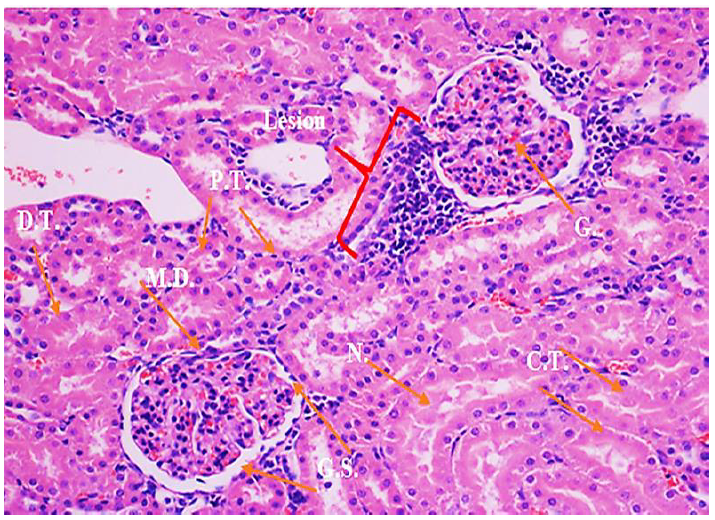
Figure 7: A Cross-Section of Kidney Tissue in the Fourth Group Treated with Sodium Fluoride, injected into the Peritoneum and Then Dosed with Sidr Fruit Extract, Showing: Glomerulus (G), Bowman’s Capsule (B.C), Slight Expansion of Bowman’s Space (BS). Proximal Tubules (p), Distal Tubules (D.T), Collecting Tubule (C.T), Necrosis (N), (H & E – 400X)
Destruction of the proximal and distal renal convoluted tubules with severe degeneration and necrosis was observed.
The results of the renal tissue examination of the fourth group treated with sodium fluoride and then Ziziphus fruit extract showed an improvement in the tissues. The glomerulus and Bowman's capsule regained normal shape with a slight widening of Bowman's space. Likewise, the proximal and distal convoluted tubules regained their normal structure, with the appearance of red blood cells interspersed between them. A slight degeneration was observed in some renal cells (Figure 7).
DISCUSSION
The MDA represents a marker for moderate free fats. The results of the current study confirmed an increase in the MDA level of groups treated with sodium fluoride due to its effect on stimulating the coenzyme Fatty-acetyl-COA. It is an important part of metabolic processes and directs the oxidation of fatty acids, which leads to increased production of hydrogen peroxide (H2O2) of endogenous origin. Thus, it contributes to the production of lipid peroxidation [14,15]. Fluoride poisoning causes an increase in the rate of lipid peroxidation and loss of membrane integrity, which may be a risk factor in the change in lipid metabolism and high blood lipid levels.
Ziziphus fruit extract works to inhibit the process of lipid oxidation in cell membranes as a result of oxidative stress that leads to programmed cell death. It also inhibits fat oxidation through its active ingredients, such as Rosmanol, carnosol and Epirosmanol phenolic. In addition, it has a protective role against hyperglycemia and hypercholesterolemia caused by oxidative stress, which maintains blood flow balance [16].
The decrease in the level of antioxidants in white rats treated with sodium fluoride compared to the control group may be attributed to the occurrence of a state of oxidative stress due to continuous treatment with sodium fluoride. A result of the participation of effective antioxidants in preventing oxidation in cases of oxidative stress, either through the direct removal of free radicals or through enzymes that are essential substances for them, such as glutathione peroxidase. Which leads to increased consumption of glutathione and its transformation into its inactive form, Glutathione dimercaptopropano [17]. The results of our study are consistent with the study of [18], which confirmed a decrease in antioxidant levels as a result of NaF injection in laboratory rats.
The use of Ziziphus alcoholic extract is characterized by its active ingredients, such as phenolic compounds, flavonoids, tannins, glycosides and vitamins. These components work to combat liver toxicity caused by sodium fluoride (Naf) by removing free radicals, increasing the efficiency of the antioxidant defense system and working to increase the total antioxidant capacity in the body. In addition, the plant contains the elements zinc (Zn) and manganese (Mn), which are involved in the chemical structure of GSH, SOD and CAT. Zinc preserves the sulfhydryl group that makes up GSH.
The increase in antioxidant levels in single or combined treatments with fluoride is due to the alcoholic extract of the fruits of the Ziziphus plant, which contains high percentages of active compounds, all of which are characterized by their strong antioxidant properties.
A previous study [19] reported the effect of Ziziphus extract against liver fibrosis caused by Carbon Tetrachloride (CCl4). He explained that the extract restored the normal levels of internal control activities SOD, CAT and GSH to the normal level. Our current study also confirms this. The increase in antioxidants may be attributed to the chemical content of Ziziphus fruit extract, which is rich in antioxidant compounds, all of which work to remove free radicals. It also works to increase the activity of antioxidant enzymes such as CAT, SOD and GSH, which can protect against oxidative stress by absorbing the radicals. Especially free ROS and stimulate lipid peroxidation.
The results of the current study showed a significant increase in the levels of creatine, urea and uric acid in the blood serum of animals treated with sodium fluoride, which can be attributed to fluoride poisoning, which leads to kidney failure. The low rate of urea excretion into urine leads to an increase in the level of urea in the blood and fluoride poisoning leads to a deficiency in kidney function and an increase in the level of urea in the blood [20]. This is consistent with what was confirmed by [18], that there was an increase in the levels of urea in the blood of rats treated with sodium fluoride upon intraperitoneal injection [21]. It also indicated an increase in the level of urea in the blood when treated and an increase in blood pressure due to fluoride.
High levels of urea, creatinine and urea acid may be due to an increase in free radicals that may be formed by sodium fluoride. It works to oxidize proteins and amino acids. This leads to an increase in the concentration of urea in the serum as a byproduct. In addition, oxidative stress causes a functional disorder in the cells of the inner layer of the glomerular capillaries in the kidney, which leads to an increase in the concentration of creatinine in the blood and a decrease in the urine. In addition to chronic complications resulting from an increase in free radicals, including nephropathy, which leads to high levels of urea and creatinine.
The decrease in the combined coefficients of the levels of (Creatinine), (Urea) and (Uric Acid) in the fourth group compared to the third group and the levels of creatinine and urea in the fourth group compared to the control group are attributed to the preventive and therapeutic pharmacological effectiveness of the antioxidant and anti-inflammatory compounds of the alcoholic extract of Ziziphus fruits. The results of our study are consistent with the study of [22]. This was explained by the protective role of Sidr fruit compounds in alleviating renal toxicity and significantly reducing tubular necrosis [23] confirmed in his study on measuring the basic parameters of the kidneys of rats dosed with Sidr extract that there was a slight decrease compared to the control group and this confirms the pharmacological effectiveness of Ziziphus extract in our current study. The low concentration of urea and creatinine may be due to the alcoholic extract of Ziziphus fruit containing important compounds that oxidize proteins and amino acids and thus reduce urea production in the body. In addition to its contribution to reducing or repairing damage resulting from oxidative stress to renal cells and thus increasing the glomerular filtration rate.
The results of the histological examination of the kidney were confirmatory of the results of kidney function. Dosing rats with the alcoholic extract of Sidr fruits did not show any harmful effects of the Sidr fruit extract on the tissue structure of the kidneys. This is due to the compounds the plant contains that do not cause any toxic effects on tissues and do not induce the generation of free radicals or oxidative stress.
The results of our study were consistent with the results of a study that reported that a group of rats treated with Sidr fruit extract did not show harmful tissue changes. Rather, the tissue appeared naturally and this is due to the role of antioxidants in the Sidr fruit extract in strengthening and improving the tissue structure [24]. The biological activities of Sidr fruit extracts are mainly attributed to their high concentration of phenolic components, which are known to be natural antioxidants that scavenge free radicals and inhibit their production. The normal structure of kidney tissue appeared in the group dosed with alcoholic Sidr fruit extract, which works to reduce the oxidation of lipids in renal cell membranes. Thus protecting cells from free radicals.
Results of microscopic examination of kidney tissue in our study of the third group treated with sodium fluoride, Figure 3. Infiltration of inflammatory cells was observed in the tissue, with atrophy and damage to the renal glomerulus, destruction of the surrounding cortex of Bowman's capsule, a significant expansion of Bowman's space and the proliferation of adjacent renal cells that generate the enzyme renin, which contributes to raising blood pressure. Destruction of the proximal and distal renal convoluted tubules with severe degeneration and necrosis was observed. The results of our study were consistent with a study that reported that the kidneys are one of the main organs in the body affected by fluoride poisoning. Rats treated with sodium fluoride showed renal histological changes, collapse of the glomerulus, destruction of convoluted tubules, degeneration of cells, expansion of Bowman's space with destruction of the outer capsular cortex and an increase in the rate of Reactive Oxygen Species (ROS) [18].
These changes in the kidneys lead to impairment in renal function due to chronic fluoride poisoning. The cause of necrosis in renal cells may be due to the formation of a group of compounds that have a special affinity for calcium since calcium fluoride increases its absorption in the presence of calcium [25]. Phosphoric acid plays a role in this, as most of the calcified calcium in kidney cells is found in the form of calcium phosphate [26].
Accumulation of sodium fluoride leads to poisoning and death of tubule cells due to insufficient oxygen. Its metabolic effectiveness depends on the oxygen supplied to it by blood vessels and any necrosis or narrowing of the renal artery and the vessels connected to it leads to poor blood flow. Consequently, the cells are not supplied with oxygen. The presence of bleeding and congestion in the kidney tissue is evidence of this, as there is a breakdown of the epithelial cells lining the blood vessels.
In our study of the fourth group treated with sodium fluoride and then with Ziziphus fruit extract, an improvement in the histological structure of the kidney showed an improvement in its tissues. This marked improvement is due to the therapeutic and preventive effectiveness of Ziziphus fruit extract. The results of a study were consistent with the results of a study [27] where they reported that dosing white rats treated with carbon tetrachloride with Ziziphus fruit extract worked to reduce the toxicity of the compound through antioxidant activity that works to scavenge free radicals.
Decreased concentration of kidney function indicators in our study as a result of dosing with Ziziphus alcoholic extract due to increased glomerular filtration and prevention of lipid oxidation of renal cell membranes, as evidenced by a decrease in MDA with an increase in levels of antioxidants, especially GSH.
CONCLUSION
We concluded that Ziziphus fruit extract has therapeutic effects by inhibiting the toxic effect of sodium fluoride by suppressing free radicals, possibly due to its high content of antioxidants and other active substances. Our present study examined the effect of Ziziphus on the toxic effect induced by intraperitoneal sodium fluoride injection.
REFERENCES
Alengebawy, A. et al. “Heavy metals and pesticide toxicity in agricultural soil and plants: Ecological risks and human health implications.” Toxics, vol. 9, no. 3, 2021, pp. 42.
Henríquez-Hernández, L.A. et al. “Hofmann vs. paracelsus: Do psychedelics defy the basics of toxicology: A systematic review of the main ergotamines, simple tryptamines and phenylethylamines.” Toxics, vol. 11, no. 2, 2023, pp. 148.
Kumari, M. and A. Kumar. “Identification of component-based approach for prediction of joint chemical mixture toxicity risk assessment with respect to human health: A critical review.” Food and Chemical Toxicology, vol. 143, 2020, pp. 111458.
Tolkou, A.K. et al. “Simultaneous REMOVAL of as (III) and fluoride ions from water using manganese oxide supported on graphene nanostructures (GO–MnO₂).” Sustainability, vol. 15, no. 2, 2023, pp. 1179.
Das, S. et al. “Attenuation of fluoride-induced hepatorenal oxidative stress by ferulic acid in vivo: An approach with in-silico analysis and interaction informatics of ferulic acid.” Journal of Trace Elements in Medicine and Biology, 2023, pp. 127133.
Lubojanski, A. et al. “The safety of fluoride compounds and their effect on the human body: A narrative review.” Materials, vol. 16, no. 3, 2023, pp. 1242.
Mariod, A. et al. “Medicinal plants and phytomedicines used to treat or prevent illnesses in Sudan: A review.” Traditional Medicine Research, vol. 8, no. 1, 2023, pp. 3.
Abdulhadi, H.L. “Role of Apple Seed Extract on Rat Liver Toxicity Caused by Tramadol.” Biochemical and Cellular Archives, vol. 20, no. 1, 2020.
Dabdoub, B.R. et al. “Ganoderma lucidum attenuates and prevents CCl₄-induced hepatic and renal damage in sprague–dawley rats.” Systematic Reviews in Pharmacy, vol. 11, 2020, pp. 1704–1709.
Moulessehoul, Y.I. et al. “Ethnobotanical study on ziziphus lotus l. in western algeria (Relizane).” Egyptian Academic Journal of Biological Sciences C: Physiology and Molecular Biology, vol. 15, no. 1, 2023, pp. 143–151.
Jimoh, F. et al. “Polyphenolic contents and biological activities of Rumex ecklonianus.” Pharmaceutical Biology, vol. 46, no. 5, 2008, pp. 333–340.
Saleh, A.H. “Potential effect of green zinc oxide nanoparticles in treatment of kidney lesions induced by Burkholderia mallei in albino male rats.” Biochemical and Cellular Archives, vol. 19, 2019, pp. 2439–2443.
Herrera, C.-N. et al. “Psychiatric boarding patterns among publicly insured youths evaluated by mobile crisis teams before and during the covid-19 pandemic.” JAMA Network Open, vol. 6, no. 7, 2023, pp. e2321798–e2321798.
Basha, M.P. and N. Sujitha. “Chronic fluoride toxicity and myocardial damage: Antioxidant-offered protection in second-generation rats.” Toxicology International, vol. 18, no. 2, 2011, pp. 99.
Abdulhadi, H.L. et al. “The function of melatonin hormone in the reorganization of oxidative stress induced by bisphenol an in hyperlipidemia along with diabetes in Rat serum.” Annals of Tropical Medicine and Public Health, vol. 23, no. 4, 2020, p. S481.
Labban, L. et al. “The effects of rosemary (Rosmarinus officinalis) leaves powder on glucose level, lipid profile and lipid peroxidation.” International Journal of Clinical Medicine, vol. 5, no. 6, 2014, pp. 297–304.
Demir, S. et al. “Role of free radicals in peptic ulcer and gastritis.” Turkish Journal of Gastroenterology, 2003.
Sharma, P. et al. “Impact of chronic sodium fluoride toxicity on antioxidant capacity, biochemical parameters and histomorphology in cardiac, hepatic and renal tissues of wistar rats.” Biological Trace Element Research, vol. 201, no. 1, 2023, pp. 229–241.
Nacaia, H. et al. “Antioxidative action of flavonoids quercetin and catechin, mediated by the activation of glutathione peroxidase.” Tokai Journal of Experimental and Clinical Medicine, vol. 24, 1999, pp. 1–12.
Grucka-Mamczar, E. et al. “Disturbances of kidney function in rats with fluoride-induced hyperglycemia after acute poisoning by sodium fluoride.” Fluoride, vol. 38, no. 1, 2005, pp. 48–51.
Oyagbemi, A.A. et al. “Cardioprotective and renoprotective effects of melatonin and vitamin E on fluoride-induced hypertension and renal dysfunction in rats.” Comparative Clinical Pathology, 2023, pp. 1–13.
Mohammed, A. et al. “Anti-hyperglycaemic and selected organ protective effects of Ziziphus spina-christi hydroethanol leaf extract in alloxan-induced diabetic rats.” Gadau Journal of Pure and Allied Sciences, vol. 2, no. 2, 2023, pp. 146–155.
Abbas, H.H. et al. “Green synthesis of zinc oxide nanoparticles from Ziziphus spina-christi leaves extract: Characterization and their protective effects against liver disturbances in adenine-exposed male rats.” Trends in Sciences, vol. 20, no. 10, 2023, pp. 6909–6909.
Kandimalla, R. et al. “Protective Effect of bioactivity-guided fractions of Ziziphus jujuba Mill. root bark against hepatic injury and chronic inflammation via inhibiting inflammatory markers and oxidative stress.” Frontiers in Pharmacology, vol. 7, 2016, pp. 298.
Soetan, K. et al. “The importance of mineral elements for humans, domestic animals and plants: A review.” African Journal of Food Science, vol. 4, no. 5, 2010, pp. 200–222.
Liang, F. and B. Yan. “Oxidative damage in the liver and kidney induced by dermal exposure to Diisononyl phthalate in Balb/c Mice.” Toxicology and Industrial Health, vol. 36, no. 1, 2020, pp. 30–40.
Al-Ghamdi, A.A.M. et al. “Hepatoprotective, nephroprotective, anti-amylase and antiglucosidase effects of Ziziphus spina-christi (L.) against carbon tetrachloride-induced toxicity in rats.” Tropical Journal of Pharmaceutical Research, vol. 18, no. 4, 2019, pp. 781–790.
Recommended Articles
Research Article
Is Traditional-Knowledge, Attitude and Practices (T-KAP) a Barrier to Accessing Modern Health Care Facilities in the Tribal population in India? A Systematic Review
Download PDF
Research Article
Current Status of Coronavirus disease (COVID–19) its related causes and severity: An Indian Scenario
Rabbya ul Qalab Ruyida,
Nahida Yousuf
Download PDF
Research Article
Advancing Awareness: Bridging Knowledge Gaps in Colon Cancer Awareness among the Population of District Mandi, Himachal Pradesh
Vandna Thakur,
Deep Kumar
Published: 20/10/2023
Download PDF
Research Article
Empowering Women's Health: A Comprehensive Assessment of Uterine Fibroids and Uterine Cancer Awareness in the Reproductive Age females of District Solan, Himachal Pradesh
Kanika Dhiman,
Vipasha Gupta
Published: 30/12/2023
Download PDF
PO Box 101, Nakuru
Kenya.
Email: office@iarconsortium.org
Editorial Office:
J.L Bhavan, Near Radison Blu Hotel,
Jalukbari, Guwahati-India
Abduameer, S. M. & Abdulhadi, L. H. (2023). The Role of Ziziphus Spina-Christi Fruit Extract in Modifying Oxidative Stress and Renal Risk Factors Resulting from Exposure to Sodium Fluoride. Scientific Research Journal of Medicine, 3(2), 1-7.
MLA
Abduameer, S. Mohammed and L. Haitham Abdulhadi. "The Role of Ziziphus Spina-Christi Fruit Extract in Modifying Oxidative Stress and Renal Risk Factors Resulting from Exposure to Sodium Fluoride." Scientific Research Journal of Medicine 3.2 (2023): 1-7.
Chicago
Abduameer, S. Mohammed and L. Haitham Abdulhadi. "The Role of Ziziphus Spina-Christi Fruit Extract in Modifying Oxidative Stress and Renal Risk Factors Resulting from Exposure to Sodium Fluoride." Scientific Research Journal of Medicine 3, no. 2 (2023): 1-7.
Harvard
Abduameer, S. M. and Abdulhadi, L. H. (2023) 'The Role of Ziziphus Spina-Christi Fruit Extract in Modifying Oxidative Stress and Renal Risk Factors Resulting from Exposure to Sodium Fluoride' Scientific Research Journal of Medicine 3(2), pp. 1-7.
Vancouver
Abduameer SM, Abdulhadi LH. The Role of Ziziphus Spina-Christi Fruit Extract in Modifying Oxidative Stress and Renal Risk Factors Resulting from Exposure to Sodium Fluoride. Scientific Research Journal of Medicine. 2023 Jul;3(2):1-7.


 Download PDF
 Download XML