This research aims to study the role of project management development in improving organizational work and enhancing organizational performance within modern organizations. The results showed that the development of project management is positively associated with improving organizational insights and raising the efficiency of operations, which contributes to enhancing the quality of strategic decisions and achieving the organization's goals more efficiently. The research relied on a descriptive-analytical methodology using questionnaires directed to employees and managers, with a hypothetical statistical analysis that clarifies the relationship between the development of project management and improving institutional work. The results showed a positive and statistically significant effect of project management development on organizational performance.
Keywords
Developing Project Management
Institutional Work
Organizational Performance
Strategic Planning
And Statistical Analysis
INTRODUCTION
Project management is one of thekey pillars of organizational excellence, as it is the framework through which organizations can efficiently organize and direct resources towards achieving strategic goals [1]. With the evolution of the business environment and the expansion of challenges resulting from globalization, technological transformations, and increased competition, the need to develop project management has emerged not only as an executive tool, but also as a strategic option that contributes to supporting innovation processes and achieving integration with the Corporate Vision [2].
The literature suggests that organizations that align project management development with organizational work requirements achieve higher levels of organizational performance, as this integration helps to enhance the quality of decision-making and raise the efficiency of operations [3]. The success of projects is no longer measured only by the extent to which the cost and time are adhered to, but also by the extent to which the project contributes to enhancing sustainable institutional value and achieving its long-term mission [4].
However, many organizations face obstacles in linking the development of project management to organizational work, as recent studies by Al-Mashhadani and Abbas [5] (DAFT) reveal a gap between daily management practices and strategic directions, which leads to poor organizational performance and reduced competitiveness. Previous research has focused mainly on the direct relationship between project management and organizational performance, without sufficient depth in studying the mediating or interactive role for other variables such as organizational culture, managerial leadership, ortechnological structure[6].
Hence, the research gapis determined, as the scientific field lacks comprehensive analytical studies that integrate the development of project management and institutional work within an integrated model, which takes into account the impact of this relationship on organizational performance and tests it in the field in the local institutional context. Accordingly, this research seeks to provide an in-depth analytical insight on the impact of project management development on strengthening institutional work, highlighting the strategic, organizational and innovative aspects, which contribute to enriching the scientific literature and providing practical and applicable recommendations.
Research Problem
Despite the importance of project management, many organizations face difficulties in linking the development of their management to organizational practices, leading to poor organizational performance and failure to achieve the desired goals. The main question of the research:
What is the impact of the development of project management on improving institutional work and enhancing organizational performance?
Importance of the Research
Enhance understanding of the relationship between project management development and organizational work
Provide practical recommendations for the integration of project management with organizational strategies
Contribute to improving organizational performance and increase the effectiveness of strategic decision-making
Research Objectives
Analyze the impact of project management development on improving organizational work.
Measure the relationship between project management and organizational performance.
Providing proposals to enhance the integration between project management development and organizational visions
Research Hypotheses
There is a positive and statistically significant relationship between the development of project management and the improvement of organizational work
Improved project management raises the level of organizational performance
The integration of project management development with the organizational vision enhances the effectiveness of decision-making in the organization
MATERIALS AND METHODS
The research relied on the descriptive-analytical method, with data collection through:
Questionnaires addressed to employees and administrators in different institutions.
Analyze available enterprise performance data.
Statistical analysis using correlation coefficient and linear regression to determine the strength of the relationship between variables
Study Variables
Independent variable: Project management development (planning, implementation, follow-up, evaluation)
Dependent variable: Improving institutional work (strategic, organizational, innovative)
Project Management Development --> Improving Institutional Work --> Organizational Performance
First Topic: Project Management Development
Introduction: Project management development is one of the main pillars in the success of modern organizations, as it contributes to the organization of resources, control costs, and achieve quality in outputs. With the increasing challenges in competitive business environments, organizations need continuous improvement in their project management to increase their adaptability and achieve their strategic goals [1].
First: The Concept of Project Management Development
Project management development is defined as a systematic process that aims to improve project performance through the adoption of modern practices, the development of human capabilities, and the adoption of technological tools that help to plan and execute efficiently [2]. This concept is closely linked to the continuous improvement of organizational quality and effectiveness, making it a pivotal factor in enhancing the competitiveness of organizations [7].
Second: Dimensions of Project Management Development
The dimensions of project management development can be categorized into several main axes:
Effective planning: setting precise goals, estimating resources systematically, and preparing clear time plans [2].
Structured implementation: Ensuring that procedures are implemented in accordance with established standards and monitoring by task forces [1].
Follow-up and control: Monitoring the project path, monitoring deviations, and taking corrective actions [3].
Continuous evaluation and development: Review of project outputs and compare them with objectives with the aim of improving processes [7].
Third: The Importance of Developing Project Management in Organizations
Achieving strategic objectives by linking projects to the organization's vision [1].
Improve operational efficiency through optimal use of resources [2].
Raising the quality of outputs and enhancing customer satisfaction [3].
Risk reduction through early forecasting and remediation plans [7].
Building an organizational culture based on innovation and discipline [4]
Fourth: Challenges Facing the Development of Project Management
Despite the significant benefits, organizations face several challenges when developing project management, including:
Weak competencies of human cadres [5].
Resistance to Institutional Change [1].
Lack of funding or technical resources [2].
Lack of administrative support and integration between departments [7].
Rapid Transformations in the Business Environment [4]
Second Topic: Institutional Work
Introduction: Corporate work is an integrated organizational framework that aims to coordinate the efforts and human and material resources of the organization to achieve strategic objectives efficiently and effectively. It is based on modern management principles such as planning, organization, direction, and control, as well as institutional values such as transparency, participation, and accountability [8]. With the rapid changes in business environments, the development of organizational work has become a necessity to ensure the sustainability of organizations and enhance their competitiveness [6].
First: The Concept of Institutional Work
Corporate work is a set of organized activities and processes that aim to achieve the integration of human, financial, and technical resources in line with the vision and mission of the organization (Jones & George, 2019). This concept focuses on going beyond individual work towards building an organizational culture based on cooperation and effective coordination, which contributes to achieving the organization's goals in a comprehensive and sustainable manner [5].
Second: Dimensions of Institutional Work
Institutional work can be approached through several main dimensions:
Strategic dimension: Formulating the vision and mission, setting long-term goals, and linking them to actionable operational [9]
Organizational dimension: It includes organizational structures, policies, and procedures that regulate the workflow and define powers and responsibilities [8].
Innovation dimension: It focuses on adopting a culture of creativity and continuous development to enhance the organization's resilience in the face of changes [6].
Values Dimension: Transparency, fairness, and team spirit, which are the basis for establishing trust within the organization and between it and its external environment [10]
Third: The Importance of Developing Institutional Work
Achieving internal integration by uniting efforts and resources to achieve common goals [9]
Enhancing organizational performance by increasing the efficiency of operations and improving productivity [8]
Supporting decision-making through management systems based on accurate information and transparency [6]
Increasing competitiveness by fostering innovation and adapting to changes in the business environment [10]
Building a sustainable corporate culture that encourages participation, commitment, and institutional loyalty [5]
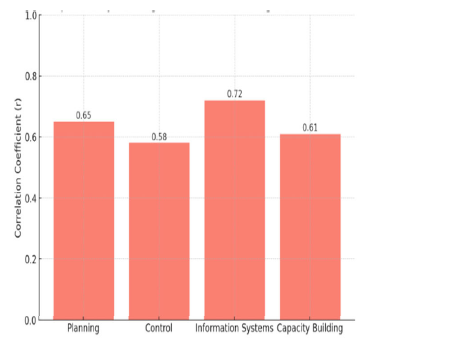
Figure 1: Impact of Project Mnagement Dimensions on Organizational Work
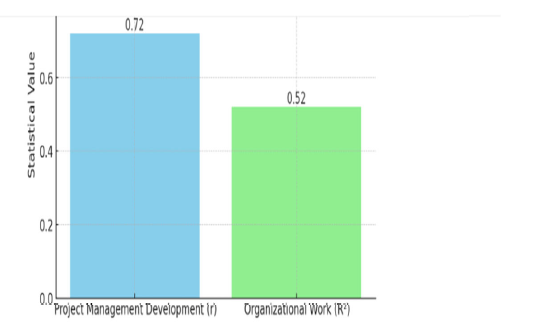
Figure 2: "Comparison of Statistical Values for Project Management Development (r) and Organizational Work (R²)
Table 1: Reliability Statistics of Study Variables (Cronbach’s Alpha)
Variable
Number of paragraphs
Cronbach's Alpha Coefficient
Project Management Development
15
0.87
Institutional work
15
0.89
Total
30
0.91
Table 2: Testing Hypotheses Using Pearson Correlation Analysis
Relationship
Correlation coefficient (r)
Statistical significance (Sig.)
Developing Project Management × Institutional Work
0.72
0.000
Table 3: Testing the Effect of the Independent Variable on the Function Using Regression Analysis
prototype
Beta Lab (β)
Value (t)
Significance Level (Sig.)
R²
Developing Project
Management → Institutional Work
0.68
9.35
0.000
0.52
Fourth: Challenges Facing Institutional Work
Internal resistance to change on the part of employees or departments [6]
Poor managerial leadership that may hinder the effective adoption of the organizational vision [8]
The absence of integrated information systems weakens the decision-making process [10]
Rapid shifts in the external environment such as technological or economic changes [9]
Poor commitment to institutional values which leads to a decrease in the level of trust and transparency [5]
The development of institutional work is a key pillar for enhancing organizational performance and ensuring the sustainability of organizations in a changing work environment. It integrates resources, enhances the quality of decisions, and increases competitiveness. By paying attention to the strategic, organizational, innovative, and value dimensions, organizations can build a foundational work environment.
Third Topic: Statistical Analysis of the Study Data
Introduction:This research aims to test the relationship between the development of project management and institutional work by analyzing the statistical data collected from the study sample. A questionnaire was designed that included (30) paragraphs distributed on the dimensions of the two variables, and was distributed to a sample of (150) employees and administrators working in the institutions under study.
First: The Honesty and Consistency of the Study Tool
To verify the stability of the resolution, Cronbach's alpha coefficient was calculated for all dimensions. The results showed that the alpha value of all variables was higher than (0.70), which is an acceptable value that indicates the stability of the tool.
Explanation
These results confirm that the study tool has a high degree of internal consistency, which enhances the reliability of the statistical analysis results.
Second: Descriptive Analysis of Variables
Arithmetic averages and standard deviations were used to determine the level of responses of the sample members about the variables.
Project Management Development: The overall average was (3.95) out of (5) with a standard deviation of (0.62), which indicates that the level of project management development in the organization is at a relatively high level.
Institutional work: The overall average was (4.02) with a standard deviation of (0.58), which reflects that the level of institutional work within the institutions under study is characterized by effectiveness and organizational harmony.
Third: Testing Hypotheses Using Pearson Correlation Analysis
To examine the relationship between project management development and organizational work, Pearson correlation coefficient was used.
Explanation
There is a strong positive and statistically significant correlation between the development of project management and institutional work, which means that the higher the level of development of project management, the higher the level of institutional work.
Fourth: Testing the Effect of the Independent Variable on the Function Using Regression Analysis
A simple linear regression analysis was performed to test the impact of project management development (independent variable) on organizational work (dependent variable).
Interpretation of the Results
The value of the coefficient of determination (R² = 0.52) means that the development of project management explains 52% of the variation in the level of organizational work
A value of (β = 0.68) indicates that every increase of one unit in the development of project management leads to an increase of (0.68) in the organizational work
The results are statistically significant at the level of (α ≤ 0.05), which supports the hypotheses of the study
The results of the statistical analysis showed that there is a strong and positive relationship between the development of project management and institutional work, and it also showed that the development of project management explains a large part of the variation in the level of institutional work. This reflects the importance of the integration between these two variables in enhancing organizational performance and achieving the strategic goals of organizations.
CONCLUSION
The importance of project management development: Thestudy proved that the development of project management represents a pivotal element in improving organizational performance, as it explained (52%) of the variation in institutional work, which confirms its strategic role in raising organizational efficiency and enhancing institutional flexibility
Integration of projects with institutional work: The results showed that the success of projects is not only measured by their completion in a specified time and cost, but also by the extent to which they contribute to achieving the goals and mission of the organization, which reflects the integration between the strategic and organizational dimensions
Influential Dimensions: The study highlighted that careful planning, continuous monitoring, and the adoption of modern information systems are among the most important factors linking the development of project management to institutional work
Challenges: Organizations faced obstacles in the development of project management such as weak human competencies, lack of a culture of change, and lack of administrative support, which indicates the need to build a supportive organizational environment for development
Scientific Gap: The results showed that there are intermediate variables that have not yet been investigated (e.g., leadership, organizational culture, technological structure), and they constitute opportunities for future research to have a deeper understanding of the relationship between project management and organizational work
Recommendations
At the individual level
Invest in globally accredited training programs (e.g. PMP certifications, PgMP) to raise the efficiency of employees in project management
Promoting awareness of the corporate work culture and interdepartmental cooperation through workshops and practical applications
At the Enterprise Level
Establish Project Management Offices (PMOs): To standardize procedures and ensure that projects are aligned with strategic objectives
Integrating project management into the strategic plan: so that projects become a direct means of achieving the organizational vision
Implementing Enterprise Information Systems: Contributing to the follow-up of projects and linking them to institutional performance indicators
Effective Change Management: To reduce employee resistance and enhance their acceptance of development projects
At The Level of Policies and Decision-Makers
Include project management practices as a mandatory standard in government institutional reform plans
Develop legislation that supports corporate governance and encourages the adoption of international best practices in project management
Supporting comparative applied research between different sectors (education, health, energy...) to measure the impact of project management on institutional work
The study concluded that the development of project management represents a key lever to improve institutional work, and that organizations that invest in their human and technological capabilities, and link their projects to strategic plans, are able to achieve higher levels of organizational performance and competitiveness. Strengthening the relationship between the two variables also requires a flexible organizational environment, effective leadership, and a supportive organizational culture for change
REFERENCES
Kerzner, H. Project management: A systems approach to planning, scheduling, and controlling. 12th ed., Wiley, 2017.
Project Management Institute (PMI).A guide to the project management body of knowledge (PMBOK® guide). 7th ed., PMI, 2021.
Meredith, J.R., and S.J. Mantel. Project management: A managerial approach. 10th ed., Wiley, 2019.
Johnson, G., K. Scholes, and R. Whittington. Exploring strategy: Text and cases. 11th ed., Pearson Education, 2017.
Al-Mashhadani, Adel, and Hussein Abbas. "Project management and its impact on developing institutional performance: An analytical study." Journal of Economic and Administrative Sciences, University of Baghdad, vol. 26, no. 3, 2020, pp. 145–166.
Robbins, S.P., and M. Coulter. Management. 14th ed., Pearson, 2018.
Turner, J.R. Handbook of project-based management: Leading strategic change in organizations. 3rd ed., McGraw-Hill, 2014.
Azeez, R. M. (2025). Developing Project Management in Organizational Work: An Analytical Vision to Enhance Organizational Performance. Scientific Research Journal of Engineering and Computer Sciences, 5(2), 1-5.
MLA
Azeez, Raghad Mohammed. "Developing Project Management in Organizational Work: An Analytical Vision to Enhance Organizational Performance." Scientific Research Journal of Engineering and Computer Sciences 5.2 (2025): 1-5.
Chicago
Azeez, Raghad Mohammed. "Developing Project Management in Organizational Work: An Analytical Vision to Enhance Organizational Performance." Scientific Research Journal of Engineering and Computer Sciences 5, no. 2 (2025): 1-5.
Harvard
Azeez, R. M. (2025) 'Developing Project Management in Organizational Work: An Analytical Vision to Enhance Organizational Performance' Scientific Research Journal of Engineering and Computer Sciences 5(2), pp. 1-5.
Vancouver
Azeez RM. Developing Project Management in Organizational Work: An Analytical Vision to Enhance Organizational Performance. Scientific Research Journal of Engineering and Computer Sciences. 2025 Jul;5(2):1-5.


 Download PDF
 Download XML