People across the country are demanding for better services from government and the public sector in order to improve and maintain their quality of life. Municipalities in Zimbabwe have a key and important role to play in improving and changing people’s lives through provision of safe water for domestic use, good sanitation infrastructure and proper disposal of waste. The need to institutionalize M&E systems in municipalities across the country in order to enhance their performance is highly recognized. The introduction of a comprehensive M&E system will help the municipality to improve its service delivery through the use of evidence-based practices. The paper seeks to examine the challenges faced by municipalities in institutionalizing M&E systems in Zimbabwe using Chegutu municipality as a case study. Purposive sampling technique was used in the selection of the respondents. A total of 82 participants provided their views and opinions on the challenges being faced by Chegutu municipality in institutionalizing the M&E system. The study also made use of interviews to senior management and some shop floor workers and the interviews allowed the observation of non-verbal cues which were basically important during data analysis stage. The results show that Chegutu municipality is providing compromised services to the public as a result of a weaker M&E system. The challenges being experienced by Chegutu municipality which are impacting the process of institutionalizing the M&E system are M&E not viewed as a priority by senior management, no legislative and regulatory framework for M&E, inadequate human resource or people trained in M&E and lack of resources or funding for M&E and these challenges are hampering successful implementation of M&E in the municipality. Numerous recommendations were made to Chegutu municipality as steps to take for proper institutionalization of M&E in the organization.
Keywords
Challenges
Institutionalizing
Monitoring
Evaluation
System
Municipality
INTRODUCTION
Monitoring and Evaluation (M&E) system is often referred to as a set of organizational structures, management processes, standards, strategies, plans, indicators, information systems, reporting lines and accountability relationships which enable an organization to effectively discharge its M&E functions [1]. The M&E system helps to measure the level of municipal achievements in terms of set goals and the generation of the needed evidence to ensure strong municipal accountability to rate payers and various stakeholders. In some cases, municipalities’ M&E systems are poorly institutionalized and as a result, the M&E systems are not adequately utilized [2]. Monitoring and Evaluation are crucial for government departments in ensuring accountability, effectiveness, efficiency and evidence-based practices [3]. According to Mackay [4] institutionalization is the creation of an M&E system which produces monitoring information and evaluation findings which are judged to be valuable by key stakeholders. This means that M&E is so crucial in helping municipalities to develop the necessary predictive capacity to better plan and effectively implement their policies. People are demanding better and more services from national and local governments to maintain or improve their quality of life [5] and accountability for results, transparent and provision of more efficient and effective services [6]. Furthermore, the advent of globalization has not helped much in championing these problems instead it has mounted more pressure on municipalities, organizations and governments around the globe to respond to the demands of citizens for better service delivery. The genesis of M&E in Zimbabwe has been donor driven through donor programmes, which brought with them theories, methodologies and standards that are largely foreign in nature and origin. Many donors have of necessity became key players and stakeholders in driving institutional agenda for M&E in the public sector. The Zimbabwean government has relied heavily on the donors to fund, to design and to establish M&E systems in various government institutions and departments.
Municipalities in Zimbabwe have an important role to play in improving and changing the lives of the citizens through provision of basic services. In order to improve service delivery, municipalities should design a comprehensive monitoring and evaluation (M&E) systems which facilitates continues assessment of municipal structures, systems and processes [5]. In Zimbabwe, municipalities are grappling with challenges of ensuring increased efficiency and effectiveness in the delivery of goods and services. The fundamental causes of these challenges are attributed to a weaker or no M&E system in the public sector. The quality of service delivery in most municipalities in Zimbabwe is generally compromised. The need to institutionalize M&E systems across the country is highly recognized. Better M&E systems will make it possible for policy design and implementation to be based on scientific evidence on what works and what does not. The M&E system helps municipalities in capturing household data, population dynamics at ward level, and produce analytic reports that would facilitate good planning and budgeting. Chegutu municipality is basically composed of 12 wards and has a total population of 50 590 [7]. The M&E system assists in the coordination of municipal activities through strengthening management of information systems, setting up of performance indicators, facilitating baseline data surveys, and the development of M&E skills. The purpose of this study is to examine the challenges being faced by municipalities and make recommendations on strategies to be used in the institutionalization of M&E systems.
MATERIALS AND METHODS
This paper employed a case study approach which incorporated the quantitative and qualitative research designs. Data were collected using the interviews and some structured-interview-based questionnaires. A total of 82 questionnaires were distributed and completed by the respondents. The use of interviews helped the researcher to observe non-verbal cues which were critical during data analysis stage. The interviews also allowed the researcher to elicit the views and opinions of the respondents through probing and asking questions for clarification. The study was conducted at Chegutu municipality and purposive sampling was used in selecting the respondents. In purposive sampling, the respondents are known and the selection is based on the individual’s relevant knowledge and experience with which to contribute to the study [8]. In addition, Creswell [9] states that in purposeful sampling, the inquirer selects individuals and sites for the study because they can purposefully inform an understanding of the research problem and central phenomenon in the study. In this study, participants were selected based on their contribution to the study and their potential to add valuable information. The data for this study was collected and discussed. There were ethical considerations which were considered in this study. Informed consent was taken from all the study participants. No name appeared on the questionnaire to maintain confidentiality and anonymity. A letter of clearance was obtained from the municipality to conduct the study.
RESULTS AND DISCUSSION
Lack of M&E Prioritization by the Municipal Senior Management
In Figure 1, 95% (78) of the respondents reported lack of M&E prioritization by the municipality’s senior management as one of the problems affecting the institutionalization of M&E systems in the municipality. Unless management knows why M&E is necessary and useful to the organization, neither management nor organizational staff will be motivated to amend the organizational structure to include M&E function [10]. A senior manager in the municipality indicated: “Senior management at the municipality who are supposed to drive the process of institutionalizing the M&E system are not enlightened on how to go about it. We do not have a clear understanding of what it entails and who should be involved. We know the importance of M&E and we have in the past send the HR Officer to M&E workshops called by government and other stakeholders. We have not managed as a municipality to adopt and operationalize M&E in the organization”.
This means lack of understanding by municipality senior management on the merits of the M&E system has hampered its institutionalization. Institutionalization of the M&E system requires strong leadership and greater commitment of all the actors to achieve a culture of learning and utilization of results [11] In other words, strong leadership for M&E is crucial if the M&E function is to be successfully institutionalized.
No Legal Framework for M&E
According to Cuesta and Guzman [10] turning M&E into one of the pillars of management, it is imperative to have a legal framework that establishes the extent of its use and defines the interdependence between planning and budget formulation. As shown by Figure 1, 98.8% (81) of the respondents indicated that the municipality does not have a policy or legal framework that promotes the implementation of the M&E system. In other words, the municipality has not yet adopted or approved regulations or policies that defines M&E processes and M&E institutional responsibilities. Both the participants who responded to the interviews and the questionnaires agreed that the municipality does not have a legal framework to guide the implementation of M&E.
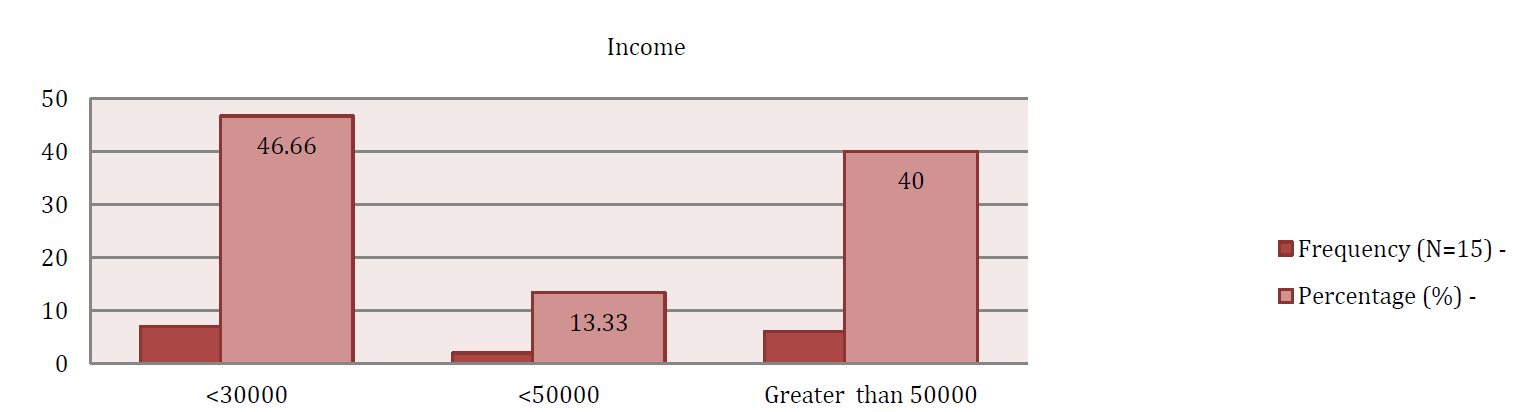
Figure 1: Lack of M&E prioritization
Inadequate Human Resources or People Trained in M&E
As shown by Figure 1, 97.6% (80) of the respondents indicated that the municipality does not have adequate human resources or people who are trained in M&E. This means that the municipality does not have skilled personnel in M&E who can effectively execute M&E functions. The M&E system cannot function without skilled people who effectively execute the M&E tasks for which they are responsible [2,12]. In support of this challenge, one of the shop floor workers had this to say:
“The municipality do not have workers who are trained in M&E that we know of. I am sure thus the reason why up to this stage the municipality has not yet institutionalize the M&E system. This has resulted in management using information from department which is not verified and validated and in some cases the information is doctored and misleading”.
There was a general agreement among respondents that inadequate human resources for M&E is negatively affecting any effort towards establishing M&E system in the municipality. Therefore, understanding the skills needed and the capacity of people to be involved and addressing the skills gap is critical for M&E institutionalization in an organization.
The ideal scenario is to establish the skills requirements and human resource capacity development plan before implementing the M&E system.
Lack of Funding or Resources For M&E
The challenge of inadequate resources affects the financing of projects or programs at the departmental level. Several projects are abandoned and some became dead on arrival due to inadequate funding.
As shown by Figure 1, 90% (74) of the respondents indicated that institutionalization of M&E system is affected by lack of funding or resources. Bamberger et al. [14] argue that project and program budgets often include insufficient or no funds at all for M&E. During the interview, one of the responded remarked:
“The municipality does not allocate resources for M&E in its annual budget and this is because it does not have a proper M&E system. This explains why it is not investing any resources in its knowledge management.”
According to Mthethwa and Jill [5], mismanagement of funds and corruption in municipalities, hinder successful implementation of M&E, completion of projects, which in turn leads to dissatisfaction among citizens and violent service delivery protests. Literature has revealed that poor service delivery by the municipality are symptoms of mismanagement of council resources, corruption, inflation and failure to use appropriately the scarce resources.
Recommendations
From the foregoing discussions, it is recommended that:
Conduct M and E diagnosis
Chegutu municipality must conduct an M&E diagnosis. An M&E diagnosis is often referred to an analysis of what is and is not working in a country’s (sector’s or region’s) M&E activities, with recommendations for improving activities and systems [15]. M&E diagnosis is a form of evaluation which must be initiated before the municipality establishes the M&E system. The M&E diagnosis helps to establish what M&E functions currently exist in the municipality. The M&E diagnosis is important since it provides an opportunity to get key stakeholders and senior management to focus on the issue of institutionalizing the M&E system. A formal diagnosis helps identify the municipality’s current strengths and weaknesses in terms of the conduct, quality and utilization of the M&E products. This exercise can be used by the municipality as a vehicle for raising awareness of the importance of M&E and ways of strengthening it.
Identify a Powerful M&E Champion
For a proper institutionalization of M&E system, Chegutu municipality should identify an M&E champion. The individual must be highly placed in order to drive the need to establish the M&E system in the organization. As such, senior-level commitment and champions at both senior and operational levels are important elements to ensure sustainability through the long period of developing and implementing the M&E system [11]. A champion in an organization is critical to the success and stability of the M&E system [6]. In a study conducted by Habtemichael [12], the Executive Mayor of Khandla municipality in South Africa was chosen as an M&E champion to drive the process of institutionalizing M&E in the municipality. The Champion should give a strong voice on the need to change what informs decision making and should channel his or her efforts towards M&E institutionalization through adoption of sound regulations, legislation and decrees.
Demand Creation for M&E Information
For a successful institutionalization of the M&E system, there is need for the municipality to create demand for utilization of the M&E information by all staff and key stakeholders. The M&E system must generate monitoring information and evaluation findings that are valuable to the councillors, management and key stakeholders for it to be used. When decision makers want to use evidence from monitoring and evaluation (M&E) systems to assist them in making choices, there is demand for M&E [16]. Creating demand for M&E information has two sides of the same coin, it covers the supply side (those generating the M&E information) and the demand side (those utilizing M&E information). The supply-and-demand-sides plays important roles in an M&E system which requires adequate capacity for effective production of quality information. The M&E system should be linked to planning and budgeting. The absence of linkages with plans and budgets jeopardise the validity of the information, thereby leading to a lack of demand for M&E information [13]. However, Mackay [17] correctly argue that an attempt to build an M&E system will fail unless real demand for M&E information exists. According to Lopez-Acevedo et al. [11] the goal is to move M&E beyond the point of being a special project to one in which it is a normal part of doing business and the management practice of the organization. The demand for the utilization of the M&E information is likely to increase in the municipality once government ministries, management, councillors and other stakeholders are made aware of the relevance and cost-effectiveness of M&E.
Resources Allocation for M&E
For the M&E system to be functional, the municipality need to invest resources in it. Mackay [4] indicated that it takes time to create and strengthen data systems; to train or recruit qualified staff; to plan, manage and conduct evaluations; to build systems for sharing M&E information among relevant ministries and to train staff to be able to use M&E information in their day-to-day work. The municipality must set aside a budget for monitoring and evaluation activities. Literature has shown that a good rule of thumb is to allocate at least between 5-10% of total project costs for M&E activities.
Provision of M&E Incentives
For the municipality’s M&E system to be done well and be utilized, introduction of strong incentives becomes imperative. Mackay [4] argue that simply having M&E information does not guarantee its usage by program managers, budget officials or policy makers responsible for accountability oversight. Incentives are needed for M&E information to be used by program managers in their day-to-day work, by budget and planning officials responsible for advising on policy options, or by legislature responsible for accountability oversight [15]. Literature has shown that the demand for M&E information has been created through the use of incentives and this has been applied successfully in both developed and developing nations. A good example of incentives is the use of “carrots, sticks, and sermons” [15]. A good example of a carrot is the delivery of greater autonomy to program managers who demonstrate through the use of reliable M&E information, better performance of their projects, programs and institutions. A good example of a stick is to set challenging but realistic performance goals to be met by each municipal department and manager. A good example of a sermon is a high-level declaration of support for M&E from an influential person in the municipality, such as the Mayor or the Town Clerk.
Establish a Capable M&E Unit or Department to Drive the M&E System
The municipality must establish a capable M&E unit to drive the M&E system. The literature varies in its views on the correct placement of the M&E unit within the organization [10]. However, the M&E unit once constituted should work in collaboration with the planning and budget functions. Literature has shown that what has worked in other context is to place M&E unit within the policy and planning unit and create a senior post to lead the M&E unit. This gives the M&E unit sufficient power and autonomy to initiates new actions and to get their budget approved. The M&E staff who are going to be manning the M&E unit should be qualified enough to fulfil the functions of the Unit. For the M&E system to be sustained, it is critical to have adequate human resources with the needed skills sets.
Establish M&E Protocols and Guidelines
Lack of M&E protocols and guidelines in the municipality serves a major impediment to the operationalization of the M&E system. It is important for the municipality to establish legal protocols and guidelines that makes it compulsory to link M&E to decision making. The municipality must adopt and approve guidelines that clearly defines how the institutionalization of M&E process will evolve. The protocols and guidelines must create an enabling environment for all departments in the municipality to plan, implement and to be able to measure their performance. All municipal departments should set appropriate key performance indicators which will be used as yardstick for measuring performance.
M&E Training
It is crucially important for the municipality to continually develop the capacity of its workforce for M&E. Both formal training and on-the-job training are important approaches the municipality could use in developing capacity for M&E for its staff and key stakeholders. M&E training helps the municipality’s human resource to improve and perform better. It is essential that M&E functions of the municipality and its staff are clearly defined and those recruited should have the necessary skills to execute their functions well. UNAIDS [18] states that it is necessary to have dedicated and adequate number of M&E staff who has the right skills for the work. The institutionalization of M&E processes can take up a decade of resource allocation to M&E, continuous capacity building and learning processes (through trial and error), all of which need political commitment in order to ensure sustainability, coordination and continuity of the processes [13]. All stakeholders involved in the M&E system need to be trained in order to effectively execute their part in the operation of the M&E system. Investing in human capacity building for M&E will in the long run improve the quality of the M&E system.
M&E Products Utilization
Utilization of M&E information by all key stakeholders in influencing decision making is one of the pillars of a functional M&E system. The M&E system will play an important role in helping the municipality to achieve its mandate and mission. The M&E system will provide the necessary information which will help the municipality to solve the problems and challenges it is facing in its work and to achieve the results it aims for. Cuesta and Guzman (2014) argue that even the most robust and comprehensive M&E system is useless if the information the system produces is not consumed. If the municipality does not use M&E information in its decision-making process, then M&E is of no value. Provision of incentives will help facilitate and encourage the use of M&E findings to improve program design and implementation: increase accountability: improve efficiency in resource allocation and ensure M&E sustainability in the long run. A successful M&E system should be measured by its utility and actual use.
CONCLUSION
The results of the study showed that M&E is not viewed as a priority by Senior Management, no legislative and regulatory framework for M&E, inadequate human resource or people trained in M&E and lack of resources or funding for M&E are challenges affecting the successful implementation of M&E in the Chegutu municipality. In order to improve service delivery, the municipality must establish a comprehensive M&E system which facilitates continuous assessment of its performance. Numerous recommendations were made to Chegutu municipality as steps to take for it to properly institutionalize M&E in the organization. The M&E system will enable the municipality to measure performance in relation to inputs, outputs, outcomes and impact levels. The M&E should be used by the municipality as the only way in which all municipal projects are considered and allocated resources. It is our hope that if the municipality implements these recommendations step by step, we will witness a successful institutionalization of the M&E system.
REFERENCE
Motaung, M.J. An Analysis of the Monitoring and Evaluation System of the Public Service Commission. North-West University, South Africa, 2018. Unpublished thesis.
Motingoe, R.S., and van der Waldt, G. “A Monitoring and Evaluation System Utilization Model for Support to South African Municipalities.” Politeia: South African Journal for Political Science and Public Administration, vol. 32, no. 3, 2013, pp. 4–29.
Jacobs, L. An Exploratory Study of the Institutionalisation of a Monitoring and Evaluation System in the Case of the Intellectual Disability Programme of the Western Cape Department of Health. Stellenbosch University, South Africa, 2019. Unpublished thesis.
Mackay, K. Institutionalization of Monitoring and Evaluation Systems to Improve Public Sector Management. ECD Working Paper Series no. 15, Independent Evaluation Group, The World Bank, 2006.
Mthethwa, R.M., and Jill, N.N. “Challenges in Implementing Monitoring and Evaluation (M&E): The Case of the Mfolozi Municipality.” African Journal of Public Affairs, vol. 9, no. 4, 2016, pp. 102–113.
Kusek, J.Z., and Rist, R.C. “Building a Performance-Based Monitoring and Evaluation System: The Challenges Facing Developing Countries.” Evaluation Journal of Australasia, vol. 1, new series, no. 2, December 2001, pp. 14–23.
Zimbabwe National Statistic Agency. Mashonaland West Provincial Report. Harare: ZIMSTAT, 2012.
Gentles, S.J., et al. “Sampling in Qualitative Research: Insights from an Overview of the Methods Literature.” The Qualitative Report, vol. 20, no. 11, 2015, pp. 1772–1789. http://nsuworks.nova.edu/tqr/vol20/iss11/5.
Creswell, J.W. Qualitative Inquiry and Research Design: Choosing Among Five Approaches. 2nd ed., Thousand Oaks, California: Sage, 2007.
Gorgens, M., and Kusek, J.Z. Making Monitoring and Evaluation Systems Work: A Capacity Developing Toolkit. The International Bank for Reconstruction and Development/World Bank, Washington, D.C., 2009.
Lopez-Acevedo, G., et al.Challenges in Monitoring and Evaluation: An Opportunity for Institutionalizing M&E Systems. Inter-American Development Bank and The World Bank, 2010.
Habtemichael, F. Institutionalization of Local Municipality-Wide M&E and Community-Based Outcome Monitoring System in Nkandla, Kwazulu-Natal, South Africa. Unpublished manuscript, 2011.
Kimaro, J.R., et al. “Institutionalisation of Monitoring and Evaluation (M&E): Considerations Influencing the Interrelationships Between Performance, Performance Management and M&E.” Administratio Publica, vol. 26, no. 4, 2018, pp. 196–219.
Bamberger, M., et al.RealWorld Evaluation: Working under Budget, Time, Data and Political Constraints. Thousand Oaks, CA: Sage, 2006.
Lopez-Acevedo, G., et al., editors. Building Better Policies: The Nuts and Bolts of Monitoring and Evaluation Systems. International Bank for Reconstruction and Development/World Bank, Washington, D.C., 2012.
Porter, S., and Goldman, I. “A Growing Demand for Monitoring and Evaluation in Africa.” African Evaluation Journal, vol. 1, no. 1, 2013, Art. #25, 9 pages. https://doi.org/10.4102/aej.v1i1.25.
Mackay, K. How to Build M&E Systems to Support Better Government. Independent Evaluation Group, The World Bank, 2007.
UNAIDS. Organizing Framework for a Functional HIV Monitoring and Evaluation System. Geneva: UNAIDS, 2008.
Recommended Articles
Research Article
Climate change and its impact on Akoko rural farmers' productivity, in Ondo State, Nigeria
Download PDF
Research Article
Investigating Students’ Culture Shock during International Credit Transfer in Philippines
Download PDF
Research Article
Laparoscopic Cholecystectomy and find out Risk operator for Conversion in Al-Ramadi Teaching Hospital Retrospective Analysis
Download PDF
Research Article
A Rare Esophageal Atresia in a Trisomy 21 Newborn
Narjes Hazimeh,
...
Haidar Houmani
Published: 20/01/2021
Download PDF
PO Box 101, Nakuru
Kenya.
Email: office@iarconsortium.org
Editorial Office:
J.L Bhavan, Near Radison Blu Hotel,
Jalukbari, Guwahati-India
Nyamambi, E. (2021). Challenges faced by municipalities in institutionalizing Monitoring and Evaluation Systems: The case of Chegutu Municipality in Zimbabwe. IAR Journal of Humanities and Social Science, 2(1), 1-5.
MLA
Nyamambi, Elimon. "Challenges faced by municipalities in institutionalizing Monitoring and Evaluation Systems: The case of Chegutu Municipality in Zimbabwe." IAR Journal of Humanities and Social Science 2.1 (2021): 1-5.
Chicago
Nyamambi, Elimon. "Challenges faced by municipalities in institutionalizing Monitoring and Evaluation Systems: The case of Chegutu Municipality in Zimbabwe." IAR Journal of Humanities and Social Science 2, no. 1 (2021): 1-5.
Harvard
Nyamambi, E. (2021) 'Challenges faced by municipalities in institutionalizing Monitoring and Evaluation Systems: The case of Chegutu Municipality in Zimbabwe' IAR Journal of Humanities and Social Science 2(1), pp. 1-5.
Vancouver
Nyamambi E. Challenges faced by municipalities in institutionalizing Monitoring and Evaluation Systems: The case of Chegutu Municipality in Zimbabwe. IAR Journal of Humanities and Social Science. 2021 Jan;2(1):1-5.


 Download PDF
 Download XML